DEPRESSION
-Meru Yale(intern)
Topics
• Definition
• History
• Epidemiology
• Etiology
• Clinical features
• Classification
depression
• Depression is a normal response to loss or misfortune.
• Depression is abnormal when it is out of proportion to the misfortune or
unduly prolonged.
• Depressive mood coupled with other changes- lowering of self esteem,self
criticism and pessimistic thinking.
• Sad person has characteristic expression- turned corners of mouth,furrowed
brow, hunched dejected posture.
• According to Diagnostic and Statistical Manual of Mental Disorders(DSM-IV-
TR), a major depressive disorder occurs without a history of manic,mixed,or
hypomanic episode.
• A major depressive episode must last at least for 2 weeks, and typically a person
with a diagnaosis of a major depressive episode also experiences at least 4
symptoms from a list that includes
1. -change in appetite and weight
2. -changes in sleep and activity
3. -lack of energy
4. -feelings of guilt
5. -problems thinking and making decisions
6. -recurring thoughts of death or suicide
history
• The old testament describes King saul as suffering from severe depressive
episodes and responding to Davids soothing music.
• Aretaeus first described mania and depression
• Emil Kraepelin – Kahlbaum,Falret and Baillarger described manic-depressive
illness.
epidemiology
Lifetime risk 10-20%
Sex ration(M:F) 1:2
First degree relatives 10-15%
Average Age of onset 27 years
etiology
• Genetics
• Abnormalities in neurotransmitters
• Low O2 and glucose utilization
• Cognitive theories
• Social and environment
Clinical features
• Low mood
• Lack of enjoyment
• Negative thinking
• Reduced energy
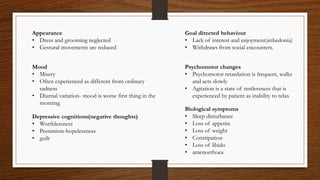
Appearance
• Dress and grooming neglected
• Gestural movements are reduced
Mood
• Misery
• Often experienced as different from ordinary
sadness
• Diurnal variation- mood is worse first thing in the
morning.
Depressive cognitions(negative thoughts)
• Worthlessness
• Pessimism-hopelessness
• guilt
Goal directed behaviour
• Lack of interest and enjoyment(anhedonia)
• Withdraws from social encounters.
Psychomotor changes
• Psychomotor retardation is frequent, walks
and acts slowly
• Agitation is a state of restlessness that is
experienced by patient as inability to relax
Biological symptoms
• Sleep disturbance
• Loss of appetite
• Loss of weight
• Constipation
• Loss of libido
• amenorrhoea
classification
• Based on presumed aetiology- (reactive v/s endogenous)
• Based on symptomatic picture-(melancholic v/s neurotic)
• Based on course -(unipolar versus bipolar)
Depression

Depression

  • 1.
  • 2.
    Topics • Definition • History •Epidemiology • Etiology • Clinical features • Classification
  • 3.
    depression • Depression isa normal response to loss or misfortune. • Depression is abnormal when it is out of proportion to the misfortune or unduly prolonged. • Depressive mood coupled with other changes- lowering of self esteem,self criticism and pessimistic thinking. • Sad person has characteristic expression- turned corners of mouth,furrowed brow, hunched dejected posture.
  • 4.
    • According toDiagnostic and Statistical Manual of Mental Disorders(DSM-IV- TR), a major depressive disorder occurs without a history of manic,mixed,or hypomanic episode. • A major depressive episode must last at least for 2 weeks, and typically a person with a diagnaosis of a major depressive episode also experiences at least 4 symptoms from a list that includes 1. -change in appetite and weight 2. -changes in sleep and activity 3. -lack of energy 4. -feelings of guilt 5. -problems thinking and making decisions 6. -recurring thoughts of death or suicide
  • 5.
    history • The oldtestament describes King saul as suffering from severe depressive episodes and responding to Davids soothing music. • Aretaeus first described mania and depression • Emil Kraepelin – Kahlbaum,Falret and Baillarger described manic-depressive illness.
  • 6.
    epidemiology Lifetime risk 10-20% Sexration(M:F) 1:2 First degree relatives 10-15% Average Age of onset 27 years
  • 7.
    etiology • Genetics • Abnormalitiesin neurotransmitters • Low O2 and glucose utilization • Cognitive theories • Social and environment
  • 8.
    Clinical features • Lowmood • Lack of enjoyment • Negative thinking • Reduced energy
  • 9.
    Appearance • Dress andgrooming neglected • Gestural movements are reduced Mood • Misery • Often experienced as different from ordinary sadness • Diurnal variation- mood is worse first thing in the morning. Depressive cognitions(negative thoughts) • Worthlessness • Pessimism-hopelessness • guilt Goal directed behaviour • Lack of interest and enjoyment(anhedonia) • Withdraws from social encounters. Psychomotor changes • Psychomotor retardation is frequent, walks and acts slowly • Agitation is a state of restlessness that is experienced by patient as inability to relax Biological symptoms • Sleep disturbance • Loss of appetite • Loss of weight • Constipation • Loss of libido • amenorrhoea
  • 10.
    classification • Based onpresumed aetiology- (reactive v/s endogenous) • Based on symptomatic picture-(melancholic v/s neurotic) • Based on course -(unipolar versus bipolar)