WELCOME
APPROACHES-
INFUSION AND
PROBLEM SOLVING.
APPROACHES
Approaches, is a
mechanism for
transferring information
and skills to students to
bring out a change in their
behavior.
TWO TYPES OF
APPROACHES
1.INFUSION
2.PROBLEM SOLVING
INFUSION
-To infuse means to focus instill to
integrate a new dimension without
changing the innate nature of the
subject or the discipline.
-Infusion approach may be defined
as a process of integrating content
and skills into existing courses
without jeopardizing the integrity
of the courses themselves.
- In the present context, infusion
means to focus on EE concepts
in the already existing content in
the school curriculum.
PROCESS OF INFUSION
Analyzing the contents of the
school curriculum into specific
concept and integrating them
with the concepts emerging
from an analysis of the
environmental problems or
issues could achieve infusion.
TWO GENERAL APPROACH USED
TO INFUSE ENVIRONMENTAL
PERSPECTIVES:
1.INTER DISCIPLINARY
APPROACH
2.MULTI DISCIPLINARY
APPROACH
INTERDISCIPLINARY
APPROACH
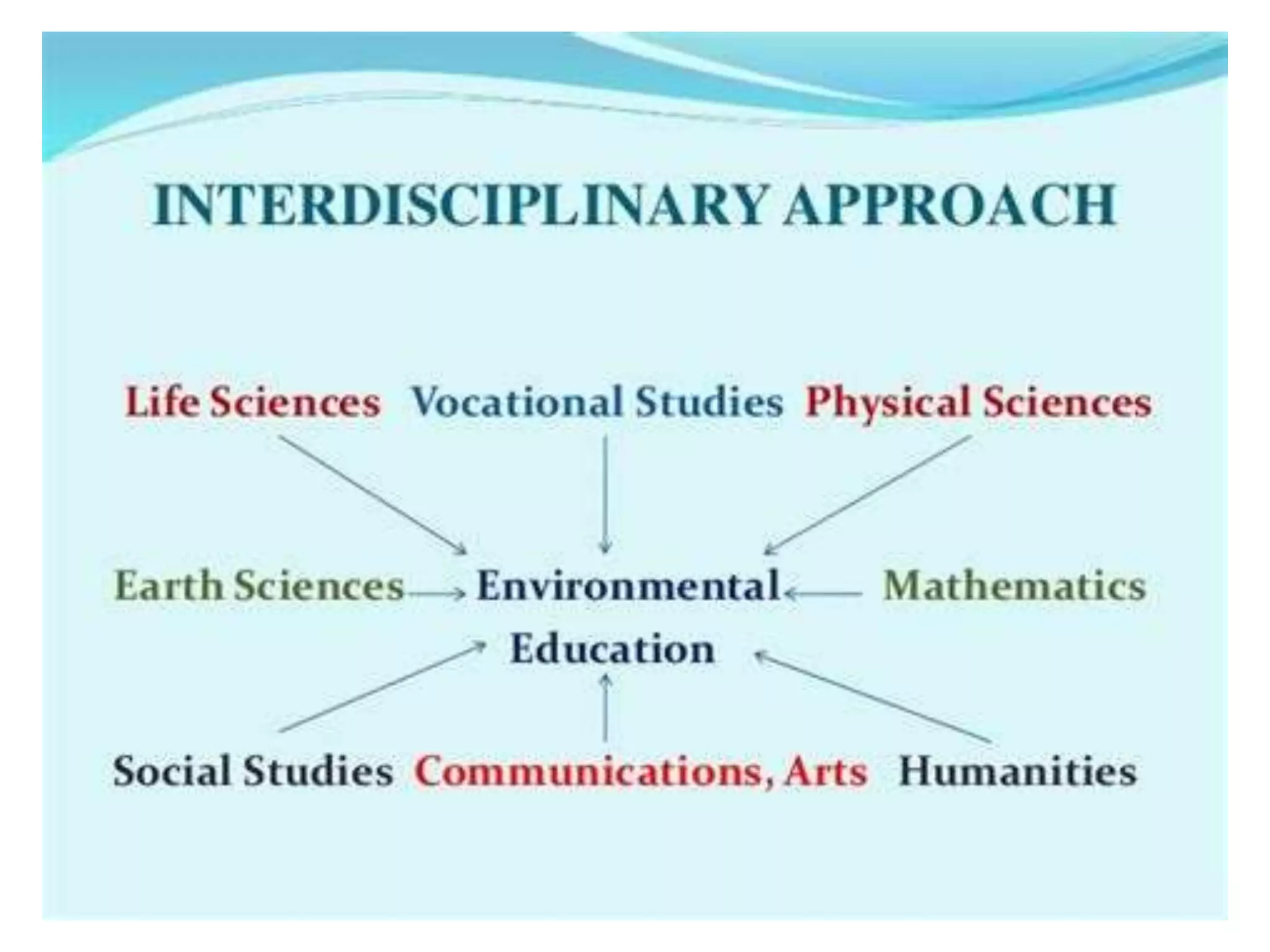
It is an approach where in
concepts from various
disciplines or subjects will be
utilized to highlight the
environmental perspective or
analyze an environmental
problem or issue.
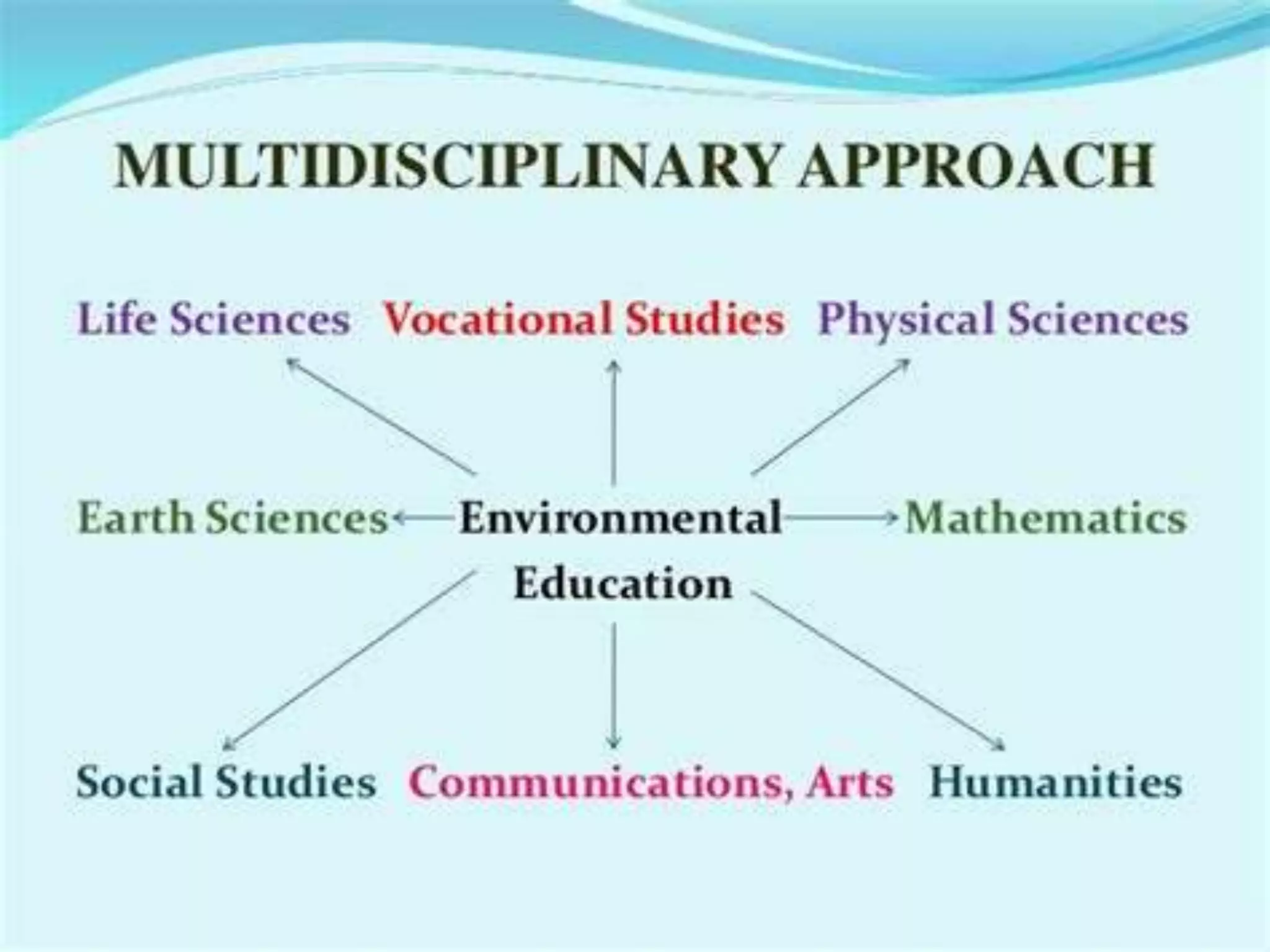
MULTI DISCIPLINARY APPROACH
In the multidisciplinary approach,
environment topics are dispersed or
infused into various single
disciplinary courses. In the other
words, the environmental
perspective is integrated into the
other disciplines.
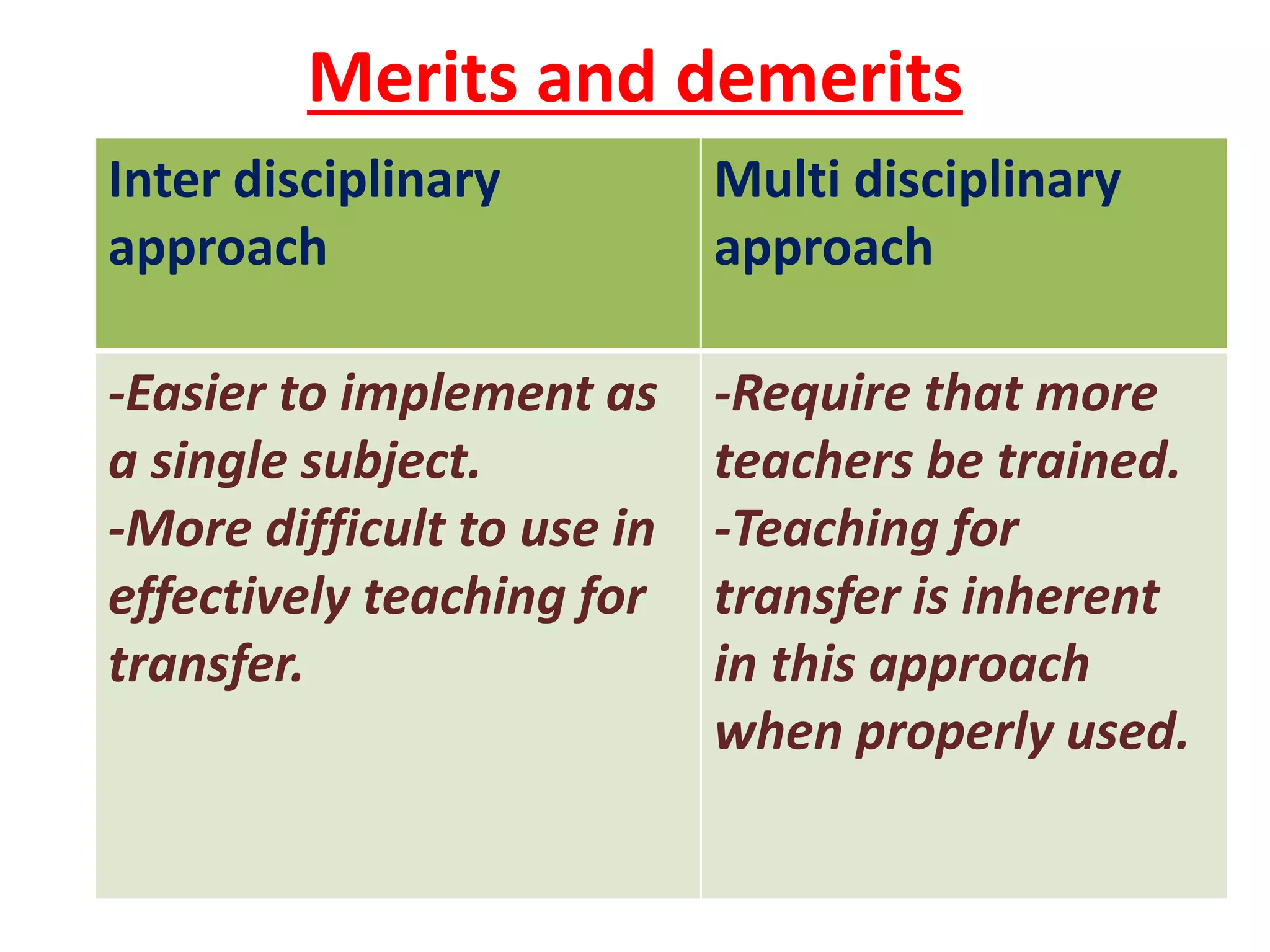
Merits and demerits
Inter disciplinary
approach
Multi disciplinary
approach
-Easier to implement as
a single subject.
-More difficult to use in
effectively teaching for
transfer.
-Require that more
teachers be trained.
-Teaching for
transfer is inherent
in this approach
when properly used.
PROBLEM
The dictionary meaning of a
problem is that it could be a
novel, a doubtful or a
difficult situation requiring
a solution.
PROBLEM SOLVING
-Problem solving is a method
aimed to help the participants
arrive at a solution or alternative
solutions for a given problem.
-It is a teaching learning approach,
which centers on environmental
issues, or a problem and generally
involves investigation.
SOLID WASTE DISPOSAL
AND MANAGEMENT
Step 1:problem identification.
-How did the problem arise?
-What are the
consequences of the
problem for the present?
Step 2: Problem Analysis.
-What are the reasons
for this problem?
-What would be its
future consequences?
Step 3:Develop a questionnaire.
-What is being thrown away as solid
waste?
-Can the solid waste be easily
segregated?
-How can these items be classified?
-What are the methods used to dispose
solid waste?
-What are the problems caused
because of unhygienic solid ways of
disposing the waste?
Step 4:Plan implementation.
-Discuss and summaries the main
points emerging from the
information collected.
-Identifying alternative solution.
-Identifying key people for
effecting implementation.
-Working out details of the
solutions.
Step 5:Plan evaluation.
-Outlining the roles of the
individuals in containing the
problem.
-Meeting people in
authority and ensuring
action.
-Coke in the extraction of
iron
SIGNIFICANT FEATURES OF
PROBLEM SOLVING
-It is process oriented rather
than content oriented.
-It is conceptual rather than
factual.
-It is a student- centered.
-It is activity based.
Advantages to problem-
solving in education:
Students learn to form an
opinion, and make choices and
decisions that will directly affect
their lives and those of their
families, as well as society as a
whole.
It develops their critical thinking
and their evaluation skills through
actual, concrete situations.
-It is a way to facilitate the
transfer of knowledge to
situations outside of school.
- It allows students to reason,
summarize, question
themselves, evaluate, use their
previous knowledge, and
constantly visualize the
problem.
CONCLUSION
Approaches, is a mechanism for
transferring information and skills to
students to bring out a change in their
behavior. Different strategies are adopted
for enhancing the effectiveness of the
approach. Infusion and problem solving
are the two approaches used in
environmental education.
APPROACHES IN ENVIRONMENTAL EDUCATION

APPROACHES IN ENVIRONMENTAL EDUCATION

  • 1.
  • 2.
  • 3.
    APPROACHES Approaches, is a mechanismfor transferring information and skills to students to bring out a change in their behavior.
  • 4.
  • 5.
    INFUSION -To infuse meansto focus instill to integrate a new dimension without changing the innate nature of the subject or the discipline. -Infusion approach may be defined as a process of integrating content and skills into existing courses without jeopardizing the integrity of the courses themselves.
  • 6.
    - In thepresent context, infusion means to focus on EE concepts in the already existing content in the school curriculum.
  • 7.
    PROCESS OF INFUSION Analyzingthe contents of the school curriculum into specific concept and integrating them with the concepts emerging from an analysis of the environmental problems or issues could achieve infusion.
  • 8.
    TWO GENERAL APPROACHUSED TO INFUSE ENVIRONMENTAL PERSPECTIVES: 1.INTER DISCIPLINARY APPROACH 2.MULTI DISCIPLINARY APPROACH
  • 9.
    INTERDISCIPLINARY APPROACH It is anapproach where in concepts from various disciplines or subjects will be utilized to highlight the environmental perspective or analyze an environmental problem or issue.
  • 11.
    MULTI DISCIPLINARY APPROACH Inthe multidisciplinary approach, environment topics are dispersed or infused into various single disciplinary courses. In the other words, the environmental perspective is integrated into the other disciplines.
  • 13.
    Merits and demerits Interdisciplinary approach Multi disciplinary approach -Easier to implement as a single subject. -More difficult to use in effectively teaching for transfer. -Require that more teachers be trained. -Teaching for transfer is inherent in this approach when properly used.
  • 15.
    PROBLEM The dictionary meaningof a problem is that it could be a novel, a doubtful or a difficult situation requiring a solution.
  • 16.
    PROBLEM SOLVING -Problem solvingis a method aimed to help the participants arrive at a solution or alternative solutions for a given problem. -It is a teaching learning approach, which centers on environmental issues, or a problem and generally involves investigation.
  • 18.
  • 19.
    Step 1:problem identification. -Howdid the problem arise? -What are the consequences of the problem for the present?
  • 20.
    Step 2: ProblemAnalysis. -What are the reasons for this problem? -What would be its future consequences?
  • 21.
    Step 3:Develop aquestionnaire. -What is being thrown away as solid waste? -Can the solid waste be easily segregated? -How can these items be classified? -What are the methods used to dispose solid waste? -What are the problems caused because of unhygienic solid ways of disposing the waste?
  • 22.
    Step 4:Plan implementation. -Discussand summaries the main points emerging from the information collected. -Identifying alternative solution. -Identifying key people for effecting implementation. -Working out details of the solutions.
  • 23.
    Step 5:Plan evaluation. -Outliningthe roles of the individuals in containing the problem. -Meeting people in authority and ensuring action.
  • 24.
    -Coke in theextraction of iron
  • 25.
    SIGNIFICANT FEATURES OF PROBLEMSOLVING -It is process oriented rather than content oriented. -It is conceptual rather than factual. -It is a student- centered. -It is activity based.
  • 26.
    Advantages to problem- solvingin education: Students learn to form an opinion, and make choices and decisions that will directly affect their lives and those of their families, as well as society as a whole. It develops their critical thinking and their evaluation skills through actual, concrete situations.
  • 27.
    -It is away to facilitate the transfer of knowledge to situations outside of school. - It allows students to reason, summarize, question themselves, evaluate, use their previous knowledge, and constantly visualize the problem.
  • 28.
    CONCLUSION Approaches, is amechanism for transferring information and skills to students to bring out a change in their behavior. Different strategies are adopted for enhancing the effectiveness of the approach. Infusion and problem solving are the two approaches used in environmental education.