Approach to Coma
OBJECTIVESPrimary Objective:  Able to stabilize, evaluate, and treat the comatose patient in the emergent setting. To understand this involves an organized, sequential, prioritized approach.
The Comatose PatientPrimary ObjectivesAirwayBreathingCirculationTreatment of rapidly progressive, dangerous metabolic causes of coma (hypoglycemia)Evaluation as to whether there is significant increased ICP or mass lesions.Treatment of ICP to temporize until surgical intervention is possible.
The Comatose PatientSecondary ObjectivesUnderstand and recognize:ComaSigns of supratentorial mass lesionsSigns of subtentorial mass lesionsHerniation syndromesAble to develop the differential diagnosis of metabolic coma.
Why Coma managementCommon medical emergency 3-5%Large proportion of comatose patient recoverUntreated coma may lead to further brain damage
Is it Coma ?Coma is prolonged Unconsciousness
ConsciousnessPerception -Awareness of self and environment ( Sensory System)Reaction – Meaningful responsiveness (Motor system)Wakefulness – (Sleep wave cycle)
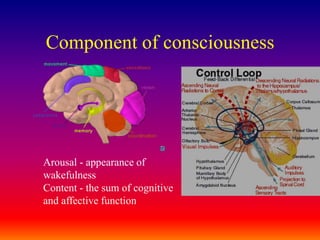
Component of consciousnessArousal - appearance of wakefulnessContent - the sum of cognitive and affective function
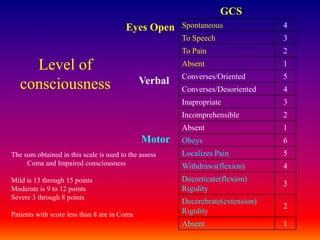
GCSEyes OpenLevel of consciousnessVerbalMotorThe sum obtained in this scale is used to the assess Coma and Impaired consciousness Mild is 13 through 15 pointsModerate is 9 to 12 pointsSevere 3 through 8 pointsPatients with score less than 8 are in Coma
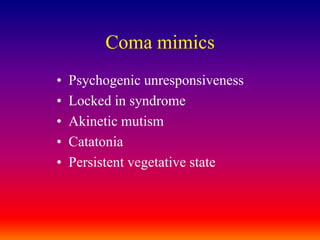
Coma mimicsPsychogenic unresponsivenessLocked in syndromeAkineticmutismCatatoniaPersistent vegetative state
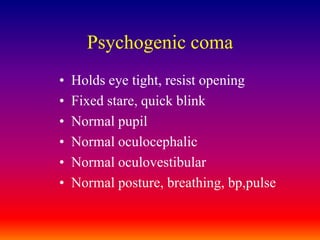
Psychogenic comaHolds eye tight, resist openingFixed stare, quick blinkNormal pupilNormal oculocephalicNormal oculovestibularNormal posture, breathing, bp,pulse
Coma PathophysiologyComa implies dysfunction of:Ascending Reticular Activating System orBoth hemi-corticesAnatomically, this meanscentral brainstem structures (bilaterally) from caudal medulla to rostral midbrainboth hemispheres
Coma - AetiologyMetabolic:-Ischemic hypoxicHypoglycaemicOrgan failureElectrolyte disturbanceToxicStructural:-Supratentorial bilateralUnilateral large lesion with transtentorial herniationInfratentorial
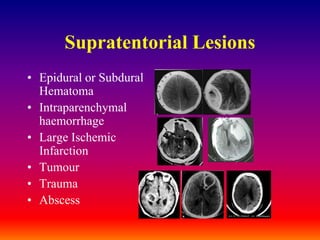
Supratentorial LesionsEpidural or Subdural Hematoma Intraparenchymal haemorrhageLarge Ischemic InfarctionTumourTraumaAbscess
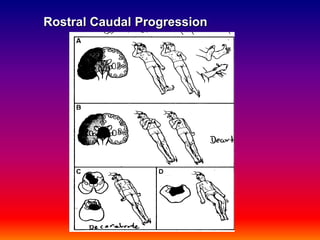
Supratentorial Mass LesionsDifferential CharacteristicsInitiating signs usually of focal cerebral dysfunctionSigns of dysfunction progress rostral to caudalNeurologic signs at any given time point to one anatomic area - diencephalon, midbrain, brainstemMotor signs are often asymmetricalPlum and Posner, 1982
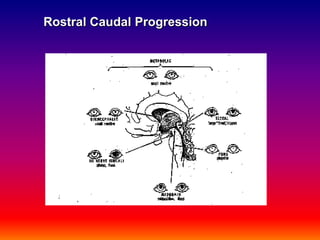
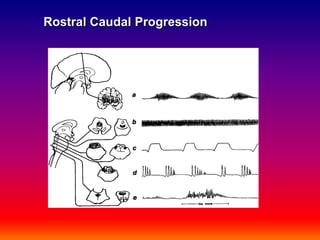
Rostral Caudal Progression
Infratentorial LesionsCause coma by affecting reticular activating system in ponsBrainstem nuclei and tracts usually involved with resultant focal brainstem findings
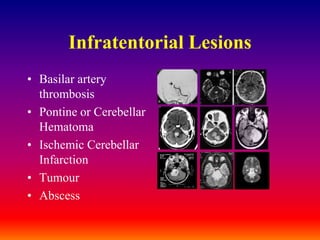
Infratentorial LesionsBasilar artery thrombosisPontine or Cerebellar HematomaIschemic Cerebellar InfarctionTumourAbscess
Infratentorial Mass LesionsDifferential CharacteristicsHistory of preceding brainstem dysfunction or sudden onset of comaLocalizing brainstem signs precede or accompany onset of coma and always include oculovestibular abnormalityCranial nerve palsies usually present“Bizarre” respiratory patterns common, usually present at onset of comaPlum and Posner, 1982
Metabolic encephalopathyConfusional state -> coma ,  fluctuationNo focal neurological signNo neck stiffnessNormal brainstem reflexesCoarse tremor 8-10hzMultifocal myoclonusAsterixisGeneralized/periodic myoclonus
HistoryCircumstances and temporal profileOf the onset of comaDetails of preceding neurologicalSymptoms headache, weakness seizureAny fallUse of drug and alcoholPrevious medical illness liver,kidneyPrevious psychiatric illness
Other symptoms of comaYawningPoor localizing valuePosterior fossa expanding lesionMedial temporal, third ventricular HiccupMedullary lesion in the region of Third ventricleVomitingLateral reticular formation of the medullaProjectile ( usually nausea)Medulloblastoma ependymomaRaised icp -> compression of medullaBasal meningitisIvh -> irritating fourth ventricleLateral medullary infarct (vestibular
ExaminationGeneral physical examinationEvidence of external injuryColour of skin and mucosaOdour of breathEvidence of systemic illnessHeart lung
Neurological examinationFunduscopyPupil size and response to lightOcular movementsPosture and limb movementReflexes
CirculationKocher-Cushing response -  rise in BP->bradycardia due to rise in ICP -> compression of floor of the iv ventricle fall in BP and tachycardia usually terminal event due to medullary failure
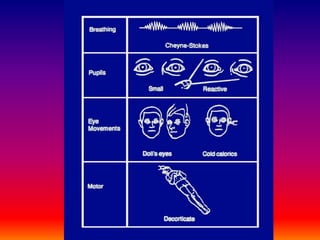
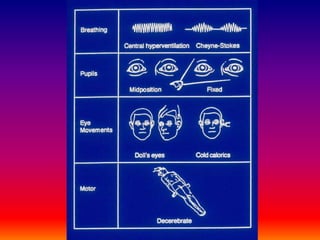
BreathingForebrain	Post hyperventilation apneaCheyne stoke respirationHypothalamus midbrainCentral neurogenic hyperventilationBasis pontisPseudobulbar paralysis of voluntary center
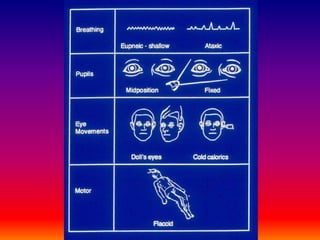
Breathing in comaLower pontine tegmentumApneustic breathingCluster breathingShort cycle periodic breathingAtaxic breathingMedullaAtaxic breathingSlow regular respirationGasping
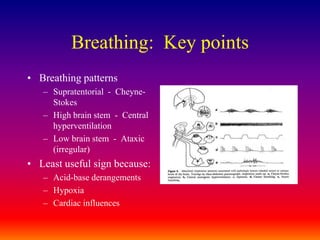
Breathing:  Key pointsBreathing patternsSupratentorial  -  Cheyne-StokesHigh brain stem  -  Central hyperventilationLow brain stem  -  Ataxic (irregular)Least useful sign because:Acid-base derangementsHypoxiaCardiac influences
Cranial Nerve ExamSystematic assessment of brainstem function via reflexesCranial Nerve ExamPupillary light response (CN 2-3)Occulocephalic/calorics (CN 3,4,6,8)Corneal reflex (CN 5,7)Gag refelx (CN 9,10)
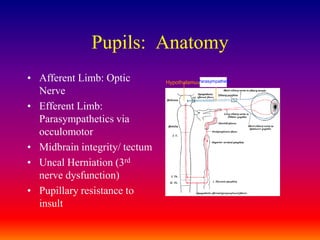
Pupils:  AnatomyAfferent Limb: Optic NerveEfferent Limb: Parasympathetics via occulomotorMidbrain integrity/ tectumUncal Herniation (3rd nerve dysfunction)Pupillary resistance to insultParasympatheticHypothalamus
Pupils:  Key pointsSize dependent on sympathetic and parasympathetic inputAnatomically near the RASResistant to metabolic influencesSmall and reactive with metabolic causesUnilateral dilation indicates uncal herniation
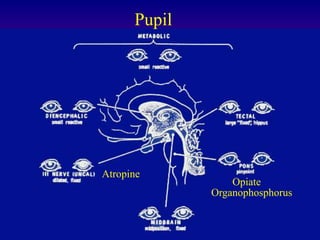
PupilAtropineOpiateOrganophosphorus
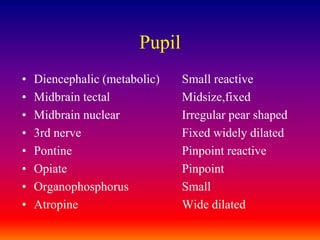
PupilDiencephalic (metabolic) 	Small reactiveMidbrain tectal 			Midsize,fixedMidbrain nuclear 		Irregular pear shaped3rd nerve 				Fixed widely dilatedPontine				Pinpoint reactiveOpiate				PinpointOrganophosphorus 		SmallAtropine 				Wide dilated
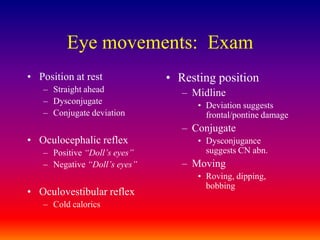
Eye movements:  ExamPosition at restStraight aheadDysconjugateConjugate deviationOculocephalic reflexPositive “Doll’s eyes”Negative “Doll’s eyes”Oculovestibular reflexCold caloricsResting positionMidlineDeviation suggests frontal/pontine damageConjugateDysconjugance suggests CN abn.MovingRoving, dipping, bobbing
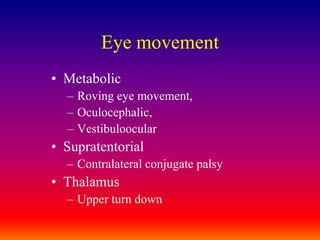
Eye movementMetabolic Roving eye movement,Oculocephalic,VestibuloocularSupratentorial Contralateral conjugate palsyThalamusUpper turn down
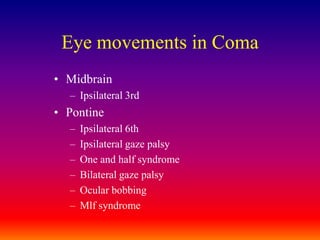
Eye movements in ComaMidbrainIpsilateral 3rdPontineIpsilateral 6thIpsilateral gaze palsyOne and half syndromeBilateral gaze palsyOcular bobbingMlf syndrome
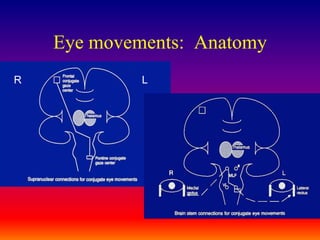
Eye movements:  AnatomyRL
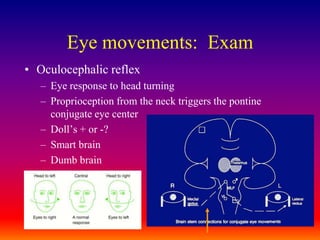
Eye movements:  ExamOculocephalic reflexEye response to head turningProprioception from the neck triggers the pontine conjugate eye centerDoll’s + or -?Smart brainDumb brain
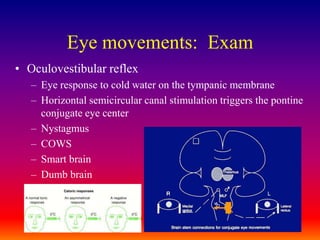
Eye movements:  ExamOculovestibular reflexEye response to cold water on the tympanic membraneHorizontal semicircular canal stimulation triggers the pontine conjugate eye centerNystagmusCOWSSmart brainDumb brain
Caloric reflexEnsure TM integrityElevation of head to 30 degrees (so that lateral semicircular canal is vertical)Instillation of up to 120 ml of ice waterAwake: deviation toward,nystagmus awayComatose: deviation towardWait 5 minutes, do other earWatch for conjugance of deviationTo test vertical eye movementsBoth ears, cold water-downward gazeBoth ears, warm water-upward gaze
Eye movements:  Key pointsSymmetric responses seen with metabolic or structural causesAsymmetric responses seen with structural causesThe hemispheres (smart) are responsible for:Inhibiting Doll’s eyesFast component of nystagmusThe brain stem (dumb) is responsible for:Allowing Doll’s eyesSlow component of nystagmus
Motor Exam Key Points:Assess tone, presence of asterixisResponse to painful stimulinoneabnormal flexorabnormal extensornormal localization/withdrawalSymmetric responses seen with metabolic or structural causesAsymmetric responses seen with structural causes
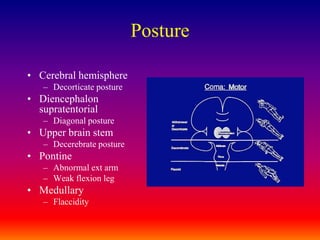
PostureCerebral hemisphere Decorticate postureDiencephalon supratentorial Diagonal postureUpper brain stem Decerebrate posturePontineAbnormal ext armWeak flexion legMedullaryFlaccidity
InvestigationComplete blood count, MP, B.sugarBlood urea, s. creatinine, s.electrolyteBlood gases, ALT, ASTCSF examinationCT scan/ MRIX-ray chest, ECG
ECG changes in coma(SAH, ICH, INFARCT)Tall T, prolonged QTQ wave with st depressionSVT, AF, AFLSinus bradycardia,arrest, nodal rhythmA-V block or dissociationPVc's, VFL, VF
Agitated ReassuranceNarcoticsSmall doses administeredIntravenouslySedationShould follow analgesia
Sedation in   presence of pain causes agitation,
Titrate intravenously so that agitation is blunted,
Do not induce excessive drowsinessAgitated patient General managementFace a window for day/night orientation

Approach to coma

  • 1.
  • 2.
    OBJECTIVESPrimary Objective: Able to stabilize, evaluate, and treat the comatose patient in the emergent setting. To understand this involves an organized, sequential, prioritized approach.
  • 3.
    The Comatose PatientPrimaryObjectivesAirwayBreathingCirculationTreatment of rapidly progressive, dangerous metabolic causes of coma (hypoglycemia)Evaluation as to whether there is significant increased ICP or mass lesions.Treatment of ICP to temporize until surgical intervention is possible.
  • 4.
    The Comatose PatientSecondaryObjectivesUnderstand and recognize:ComaSigns of supratentorial mass lesionsSigns of subtentorial mass lesionsHerniation syndromesAble to develop the differential diagnosis of metabolic coma.
  • 5.
    Why Coma managementCommonmedical emergency 3-5%Large proportion of comatose patient recoverUntreated coma may lead to further brain damage
  • 6.
    Is it Coma?Coma is prolonged Unconsciousness
  • 7.
    ConsciousnessPerception -Awareness ofself and environment ( Sensory System)Reaction – Meaningful responsiveness (Motor system)Wakefulness – (Sleep wave cycle)
  • 8.
    Component of consciousnessArousal- appearance of wakefulnessContent - the sum of cognitive and affective function
  • 9.
    GCSEyes OpenLevel ofconsciousnessVerbalMotorThe sum obtained in this scale is used to the assess Coma and Impaired consciousness Mild is 13 through 15 pointsModerate is 9 to 12 pointsSevere 3 through 8 pointsPatients with score less than 8 are in Coma
  • 10.
    Coma mimicsPsychogenic unresponsivenessLockedin syndromeAkineticmutismCatatoniaPersistent vegetative state
  • 11.
    Psychogenic comaHolds eyetight, resist openingFixed stare, quick blinkNormal pupilNormal oculocephalicNormal oculovestibularNormal posture, breathing, bp,pulse
  • 12.
    Coma PathophysiologyComa impliesdysfunction of:Ascending Reticular Activating System orBoth hemi-corticesAnatomically, this meanscentral brainstem structures (bilaterally) from caudal medulla to rostral midbrainboth hemispheres
  • 13.
    Coma - AetiologyMetabolic:-IschemichypoxicHypoglycaemicOrgan failureElectrolyte disturbanceToxicStructural:-Supratentorial bilateralUnilateral large lesion with transtentorial herniationInfratentorial
  • 14.
    Supratentorial LesionsEpidural orSubdural Hematoma Intraparenchymal haemorrhageLarge Ischemic InfarctionTumourTraumaAbscess
  • 15.
    Supratentorial Mass LesionsDifferentialCharacteristicsInitiating signs usually of focal cerebral dysfunctionSigns of dysfunction progress rostral to caudalNeurologic signs at any given time point to one anatomic area - diencephalon, midbrain, brainstemMotor signs are often asymmetricalPlum and Posner, 1982
  • 16.
  • 17.
  • 18.
  • 19.
    Infratentorial LesionsCause comaby affecting reticular activating system in ponsBrainstem nuclei and tracts usually involved with resultant focal brainstem findings
  • 20.
    Infratentorial LesionsBasilar arterythrombosisPontine or Cerebellar HematomaIschemic Cerebellar InfarctionTumourAbscess
  • 21.
    Infratentorial Mass LesionsDifferentialCharacteristicsHistory of preceding brainstem dysfunction or sudden onset of comaLocalizing brainstem signs precede or accompany onset of coma and always include oculovestibular abnormalityCranial nerve palsies usually present“Bizarre” respiratory patterns common, usually present at onset of comaPlum and Posner, 1982
  • 22.
    Metabolic encephalopathyConfusional state-> coma , fluctuationNo focal neurological signNo neck stiffnessNormal brainstem reflexesCoarse tremor 8-10hzMultifocal myoclonusAsterixisGeneralized/periodic myoclonus
  • 23.
    HistoryCircumstances and temporalprofileOf the onset of comaDetails of preceding neurologicalSymptoms headache, weakness seizureAny fallUse of drug and alcoholPrevious medical illness liver,kidneyPrevious psychiatric illness
  • 24.
    Other symptoms ofcomaYawningPoor localizing valuePosterior fossa expanding lesionMedial temporal, third ventricular HiccupMedullary lesion in the region of Third ventricleVomitingLateral reticular formation of the medullaProjectile ( usually nausea)Medulloblastoma ependymomaRaised icp -> compression of medullaBasal meningitisIvh -> irritating fourth ventricleLateral medullary infarct (vestibular
  • 25.
    ExaminationGeneral physical examinationEvidenceof external injuryColour of skin and mucosaOdour of breathEvidence of systemic illnessHeart lung
  • 26.
    Neurological examinationFunduscopyPupil sizeand response to lightOcular movementsPosture and limb movementReflexes
  • 27.
    CirculationKocher-Cushing response - rise in BP->bradycardia due to rise in ICP -> compression of floor of the iv ventricle fall in BP and tachycardia usually terminal event due to medullary failure
  • 28.
    BreathingForebrain Post hyperventilation apneaCheynestoke respirationHypothalamus midbrainCentral neurogenic hyperventilationBasis pontisPseudobulbar paralysis of voluntary center
  • 29.
    Breathing in comaLowerpontine tegmentumApneustic breathingCluster breathingShort cycle periodic breathingAtaxic breathingMedullaAtaxic breathingSlow regular respirationGasping
  • 30.
    Breathing: KeypointsBreathing patternsSupratentorial - Cheyne-StokesHigh brain stem - Central hyperventilationLow brain stem - Ataxic (irregular)Least useful sign because:Acid-base derangementsHypoxiaCardiac influences
  • 31.
    Cranial Nerve ExamSystematicassessment of brainstem function via reflexesCranial Nerve ExamPupillary light response (CN 2-3)Occulocephalic/calorics (CN 3,4,6,8)Corneal reflex (CN 5,7)Gag refelx (CN 9,10)
  • 32.
    Pupils: AnatomyAfferentLimb: Optic NerveEfferent Limb: Parasympathetics via occulomotorMidbrain integrity/ tectumUncal Herniation (3rd nerve dysfunction)Pupillary resistance to insultParasympatheticHypothalamus
  • 33.
    Pupils: KeypointsSize dependent on sympathetic and parasympathetic inputAnatomically near the RASResistant to metabolic influencesSmall and reactive with metabolic causesUnilateral dilation indicates uncal herniation
  • 34.
  • 35.
    PupilDiencephalic (metabolic) SmallreactiveMidbrain tectal Midsize,fixedMidbrain nuclear Irregular pear shaped3rd nerve Fixed widely dilatedPontine Pinpoint reactiveOpiate PinpointOrganophosphorus SmallAtropine Wide dilated
  • 36.
    Eye movements: ExamPosition at restStraight aheadDysconjugateConjugate deviationOculocephalic reflexPositive “Doll’s eyes”Negative “Doll’s eyes”Oculovestibular reflexCold caloricsResting positionMidlineDeviation suggests frontal/pontine damageConjugateDysconjugance suggests CN abn.MovingRoving, dipping, bobbing
  • 37.
    Eye movementMetabolic Rovingeye movement,Oculocephalic,VestibuloocularSupratentorial Contralateral conjugate palsyThalamusUpper turn down
  • 38.
    Eye movements inComaMidbrainIpsilateral 3rdPontineIpsilateral 6thIpsilateral gaze palsyOne and half syndromeBilateral gaze palsyOcular bobbingMlf syndrome
  • 39.
  • 40.
    Eye movements: ExamOculocephalic reflexEye response to head turningProprioception from the neck triggers the pontine conjugate eye centerDoll’s + or -?Smart brainDumb brain
  • 41.
    Eye movements: ExamOculovestibular reflexEye response to cold water on the tympanic membraneHorizontal semicircular canal stimulation triggers the pontine conjugate eye centerNystagmusCOWSSmart brainDumb brain
  • 42.
    Caloric reflexEnsure TMintegrityElevation of head to 30 degrees (so that lateral semicircular canal is vertical)Instillation of up to 120 ml of ice waterAwake: deviation toward,nystagmus awayComatose: deviation towardWait 5 minutes, do other earWatch for conjugance of deviationTo test vertical eye movementsBoth ears, cold water-downward gazeBoth ears, warm water-upward gaze
  • 43.
    Eye movements: Key pointsSymmetric responses seen with metabolic or structural causesAsymmetric responses seen with structural causesThe hemispheres (smart) are responsible for:Inhibiting Doll’s eyesFast component of nystagmusThe brain stem (dumb) is responsible for:Allowing Doll’s eyesSlow component of nystagmus
  • 44.
    Motor Exam KeyPoints:Assess tone, presence of asterixisResponse to painful stimulinoneabnormal flexorabnormal extensornormal localization/withdrawalSymmetric responses seen with metabolic or structural causesAsymmetric responses seen with structural causes
  • 45.
    PostureCerebral hemisphere DecorticatepostureDiencephalon supratentorial Diagonal postureUpper brain stem Decerebrate posturePontineAbnormal ext armWeak flexion legMedullaryFlaccidity
  • 49.
    InvestigationComplete blood count,MP, B.sugarBlood urea, s. creatinine, s.electrolyteBlood gases, ALT, ASTCSF examinationCT scan/ MRIX-ray chest, ECG
  • 50.
    ECG changes incoma(SAH, ICH, INFARCT)Tall T, prolonged QTQ wave with st depressionSVT, AF, AFLSinus bradycardia,arrest, nodal rhythmA-V block or dissociationPVc's, VFL, VF
  • 51.
    Agitated ReassuranceNarcoticsSmall dosesadministeredIntravenouslySedationShould follow analgesia
  • 52.
    Sedation in presence of pain causes agitation,
  • 53.
    Titrate intravenously sothat agitation is blunted,
  • 54.
    Do not induceexcessive drowsinessAgitated patient General managementFace a window for day/night orientation
  • 55.
  • 56.
    Have friend orfamily member stay with patient
  • 57.
    Light the roomif illusions, paranoia occur at night
  • 58.
  • 59.
    Have staff identifythemselves to patient
  • 60.
  • 61.
    Provide radio, reading,TVComa Subsequent managementEye, mouth, skinFluid electrolyte, feedingRespiration, circulationUrine, bowelStimulationInfection
  • 62.