APPROACH TO ANEMIA-
Pallor+++
Student- Dr. Swati P.
Guide- Dr. Girish Nanoti
Definition of Anemia
• Reduction of Hemoglobin concentration or red blood
cells volume below the range of values occuring in
healthy persons.
• Anemia can be functionally defined as an insufficient
RBC mass to adequately deliver oxygen to peripheral
tissues.
History
• Duration of symptoms?
• Onset- insidious/acute?
• Family history- bleeding,
jaundice, gallstones,
splenectomy?
• Travel to- malarious/
infectious areas?
• Drug history?
• Dietary history?
• Surgery done in the past?
• Change in stool habits?
• Adolscent girls- menstrual
history?
• Associated fever?
• Pain in limbs, parasthesia,
difficulty in walking?
• Colour of urine?
• Bruises, ecchymoses and
petechiae?
• Symptoms s/o chronic
disease or infection?
PHYSICAL EXAMINATION
• Pallor
• Scleral Icterus
• Sternal tenderness (middle/ lower 1/3rd)
• Palpation of liver, spleen and systemic
lymphadenopathy
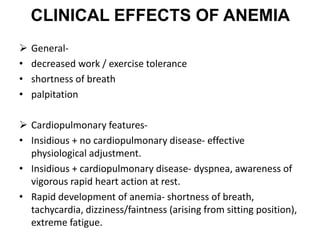
CLINICAL EFFECTS OF ANEMIA
 General-
• decreased work / exercise tolerance
• shortness of breath
• palpitation
 Cardiopulmonary features-
• Insidious + no cardiopulmonary disease- effective
physiological adjustment.
• Insidious + cardiopulmonary disease- dyspnea, awareness of
vigorous rapid heart action at rest.
• Rapid development of anemia- shortness of breath,
tachycardia, dizziness/faintness (arising from sitting position),
extreme fatigue.
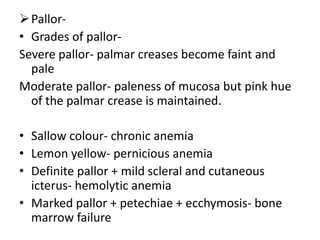
Pallor-
• Grades of pallor-
Severe pallor- palmar creases become faint and
pale
Moderate pallor- paleness of mucosa but pink hue
of the palmar crease is maintained.
• Sallow colour- chronic anemia
• Lemon yellow- pernicious anemia
• Definite pallor + mild scleral and cutaneous
icterus- hemolytic anemia
• Marked pallor + petechiae + ecchymosis- bone
marrow failure
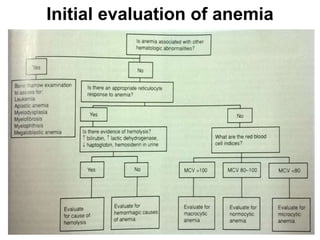
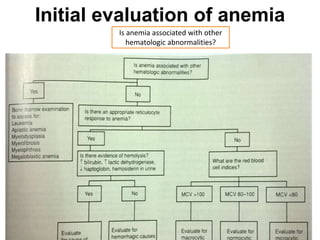
Initial evaluation of anemia
Is anemia associated with other
hematologic abnormalities?
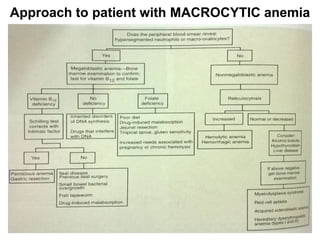
Approach to patient with MACROCYTIC anemia
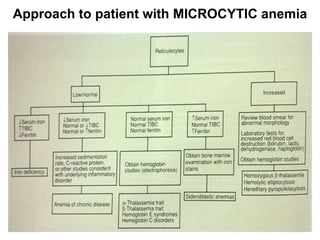
Approach to patient with MICROCYTIC anemia
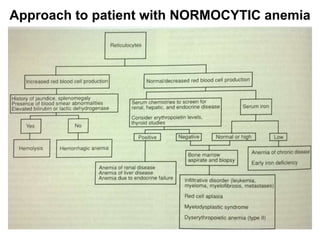
Approach to patient with NORMOCYTIC anemia
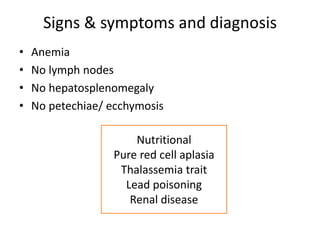
Signs & symptoms and diagnosis
• Anemia
• No lymph nodes
• No hepatosplenomegaly
• No petechiae/ ecchymosis
Nutritional
Pure red cell aplasia
Thalassemia trait
Lead poisoning
Renal disease
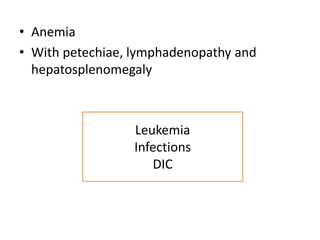
• Anemia
• With petechiae, lymphadenopathy and
hepatosplenomegaly
Leukemia
Infections
DIC
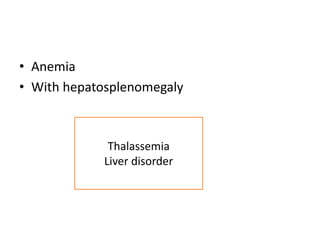
• Anemia
• With hepatosplenomegaly
Thalassemia
Liver disorder
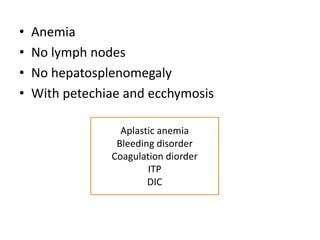
• Anemia
• No lymph nodes
• No hepatosplenomegaly
• With petechiae and ecchymosis
Aplastic anemia
Bleeding disorder
Coagulation diorder
ITP
DIC

Approach to anemia

  • 1.
    APPROACH TO ANEMIA- Pallor+++ Student-Dr. Swati P. Guide- Dr. Girish Nanoti
  • 2.
    Definition of Anemia •Reduction of Hemoglobin concentration or red blood cells volume below the range of values occuring in healthy persons. • Anemia can be functionally defined as an insufficient RBC mass to adequately deliver oxygen to peripheral tissues.
  • 3.
    History • Duration ofsymptoms? • Onset- insidious/acute? • Family history- bleeding, jaundice, gallstones, splenectomy? • Travel to- malarious/ infectious areas? • Drug history? • Dietary history? • Surgery done in the past? • Change in stool habits? • Adolscent girls- menstrual history? • Associated fever? • Pain in limbs, parasthesia, difficulty in walking? • Colour of urine? • Bruises, ecchymoses and petechiae? • Symptoms s/o chronic disease or infection?
  • 4.
    PHYSICAL EXAMINATION • Pallor •Scleral Icterus • Sternal tenderness (middle/ lower 1/3rd) • Palpation of liver, spleen and systemic lymphadenopathy
  • 5.
    CLINICAL EFFECTS OFANEMIA  General- • decreased work / exercise tolerance • shortness of breath • palpitation  Cardiopulmonary features- • Insidious + no cardiopulmonary disease- effective physiological adjustment. • Insidious + cardiopulmonary disease- dyspnea, awareness of vigorous rapid heart action at rest. • Rapid development of anemia- shortness of breath, tachycardia, dizziness/faintness (arising from sitting position), extreme fatigue.
  • 6.
    Pallor- • Grades ofpallor- Severe pallor- palmar creases become faint and pale Moderate pallor- paleness of mucosa but pink hue of the palmar crease is maintained. • Sallow colour- chronic anemia • Lemon yellow- pernicious anemia • Definite pallor + mild scleral and cutaneous icterus- hemolytic anemia • Marked pallor + petechiae + ecchymosis- bone marrow failure
  • 7.
  • 8.
    Initial evaluation ofanemia Is anemia associated with other hematologic abnormalities?
  • 9.
    Approach to patientwith MACROCYTIC anemia
  • 10.
    Approach to patientwith MICROCYTIC anemia
  • 11.
    Approach to patientwith NORMOCYTIC anemia
  • 12.
    Signs & symptomsand diagnosis • Anemia • No lymph nodes • No hepatosplenomegaly • No petechiae/ ecchymosis Nutritional Pure red cell aplasia Thalassemia trait Lead poisoning Renal disease
  • 13.
    • Anemia • Withpetechiae, lymphadenopathy and hepatosplenomegaly Leukemia Infections DIC
  • 14.
    • Anemia • Withhepatosplenomegaly Thalassemia Liver disorder
  • 15.
    • Anemia • Nolymph nodes • No hepatosplenomegaly • With petechiae and ecchymosis Aplastic anemia Bleeding disorder Coagulation diorder ITP DIC