CHRONIC KIDNEY DISEASE
Christos Argyropoulos MD, PhD, FASN
University of New Mexico School of Medicine
Overview – Learning Objectives
Chronic Kidney Disease Basics
◦ Assessment of kidney function and kidney damage
◦ Definition and Epidemiology of CKD
◦ Complications and Clinical Manifestations
◦ CKD in primary care
◦ CKD in special populations:
◦ Geriatric patients
◦ Diabetes in CKD and ESRD
◦ Case discussion
CKD Basics
Measurement of kidney function and assessment
of kidney damage
EGFR AND ALBUMINURIA
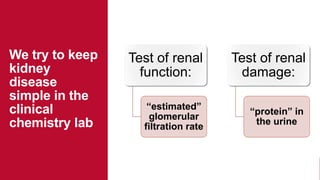
We try to keep
kidney
disease
simple in the
clinical
chemistry lab
Test of renal
function:
“estimated”
glomerular
filtration rate
Test of renal
damage:
“protein” in
the urine
GFR is equal to
the sum of the
filtration rates in
all of the
functioning
nephrons.
01
GFR is not
routinely
measured in
clinical settings.
02
Estimation of the
GFR (eGFR) gives
a rough measure
of the number of
functioning
nephrons.
03
What is the
estimated
glomerular
filtration
rate (GFR)?
eGFR is not the measured GFR.
The formula to estimate GFR was
derived from a population-based study.
• MDRD, CKD-Epi, etc www.kidney.org/GFR.
eGFR is based on serum creatinine
levels.
Previous methods to estimate kidney
function also are based on serum
creatinine.
Creatinine assays are now
standardized.
• Isotope Dilution Mass Spectrometry (IDMS)
Estimated
GFR (eGFR)
estimates
the
measured
GFR
• Rapidly changing creatinine levels
• Example: acute kidney injury
• Extremes in muscle mass, body size, or
altered diet patterns
• Medications that interfere with the
measurement of serum creatinine
(trimethoprim, vitamin D analogs, tenofovir
etc)
Do not use with:
• MDRD (the first formula) is “blind” above 60
ml/min/1.73m2
• UNM uses the CKD-EPI formula (which can
be used to report actual values >
60ml/min/1.73m2)
Not all estimating equations are
created equally
Creatinine-
based
estimates of
kidney
function
have
limitations
Cystatin – C v.s. Creatinine
Cystatin – C is a “novel” measure
of renal function
Estimating equations have been
developed to use Cys-C alone or
with SCr
These equations do not always
agree !
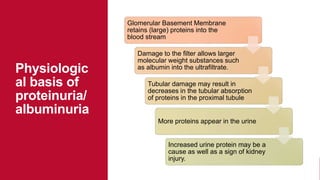
Glomerular Basement Membrane
retains (large) proteins into the
blood stream
Damage to the filter allows larger
molecular weight substances such
as albumin into the ultrafiltrate.
Tubular damage may result in
decreases in the tubular absorption
of proteins in the proximal tubule
More proteins appear in the urine
Increased urine protein may be a
cause as well as a sign of kidney
injury.
Physiologic
al basis of
proteinuria/
albuminuria
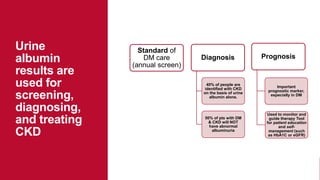
Standard of
DM care
(annual screen)
Diagnosis
40% of people are
identified with CKD
on the basis of urine
albumin alone.
50% of pts with DM
& CKD will NOT
have abnormal
albuminuria
Prognosis
Important
prognostic marker,
especially in DM
Used to monitor and
guide therapy Tool
for patient education
and self-
management (such
as HbA1C or eGFR)
Urine
albumin
results are
used for
screening,
diagnosing,
and treating
CKD
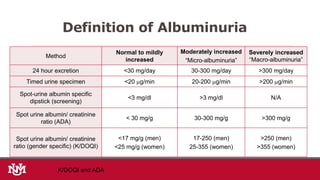
Definition of Albuminuria
Method
Normal to mildly
increased
Moderately increased
“Micro-albuminuria”
Severely increased
“Macro-albuminuria”
24 hour excretion <30 mg/day 30-300 mg/day >300 mg/day
Timed urine specimen <20 g/min 20-200 g/min >200 g/min
Spot-urine albumin specific
dipstick (screening)
<3 mg/dl >3 mg/dl N/A
Spot urine albumin/ creatinine
ratio (ADA)
< 30 mg/g 30-300 mg/g >300 mg/g
Spot urine albumin/ creatinine
ratio (gender specific) (K/DOQI)
<17 mg/g (men)
<25 mg/g (women)
17-250 (men)
25-355 (women)
>250 (men)
>355 (women)
K/DOQI and ADA
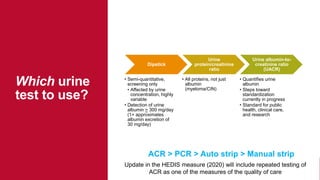
Dipstick
• Semi-quantitative,
screening only
• Affected by urine
concentration, highly
variable
• Detection of urine
albumin > 300 mg/day
(1+ approximates
albumin excretion of
30 mg/day)
Urine
protein/creatinine
ratio
• All proteins, not just
albumin
(myeloma/CIN)
Urine albumin-to-
creatinine ratio
(UACR)
• Quantifies urine
albumin
• Steps toward
standardization
currently in progress
• Standard for public
health, clinical care,
and research
Which urine
test to use?
ACR > PCR > Auto strip > Manual strip
Update in the HEDIS measure (2020) will include repeated testing of
ACR as one of the measures of the quality of care
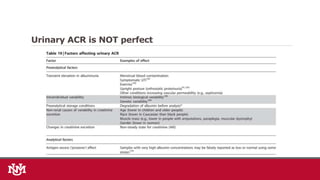
Urinary ACR is NOT perfect
Definition and
epidemiology of CKD
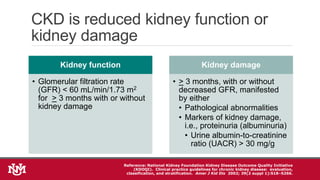
CKD is reduced kidney function or
kidney damage
Kidney function
• Glomerular filtration rate
(GFR) < 60 mL/min/1.73 m2
for > 3 months with or without
kidney damage
Kidney damage
• > 3 months, with or without
decreased GFR, manifested
by either
• Pathological abnormalities
• Markers of kidney damage,
i.e., proteinuria (albuminuria)
• Urine albumin-to-creatinine
ratio (UACR) > 30 mg/g
Reference: National Kidney Foundation Kidney Disease Outcome Quality Initiative
(KDOQI). Clinical practice guidelines for chronic kidney disease: evaluation,
classification, and stratification. Amer J Kid Dis 2002; 39(2 suppl 1):S18–S266.
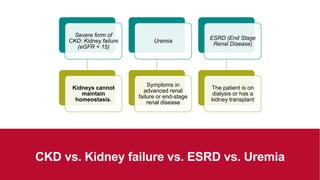
Severe form of
CKD: Kidney failure
(eGFR < 15)
Kidneys cannot
maintain
homeostasis.
Uremia
Symptoms in
advanced renal
failure or end-stage
renal disease
ESRD (End Stage
Renal Disease)
The patient is on
dialysis or has a
kidney transplant
CKD vs. Kidney failure vs. ESRD vs. Uremia
Worse Clinical Outcomes in Patients with CKD
Acute kidney injury
Progression of kidney disease
Kidney Failure
Increased cardiovascular and total
morbidity and mortality
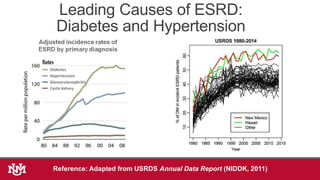
Leading Causes of ESRD:
Diabetes and Hypertension
Reference: Adapted from USRDS Annual Data Report (NIDDK, 2011)
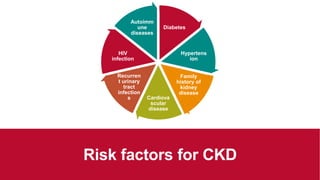
Diabetes
Hypertens
ion
Family
history of
kidney
disease
Cardiova
scular
disease
Recurren
t urinary
tract
infection
s
HIV
infection
Autoimm
une
diseases
Risk factors for CKD
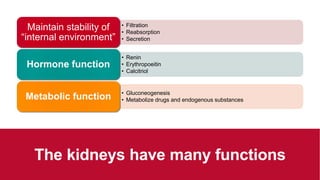
Pathophysiology of complications
• Filtration
• Reabsorption
• Secretion
Maintain stability of
“internal environment”
• Renin
• Erythropoeitin
• Calcitriol
Hormone function
• Gluconeogenesis
• Metabolize drugs and endogenous substancesMetabolic function
The kidneys have many functions
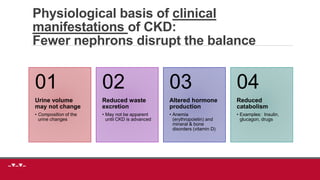
Urine volume
may not change
• Composition of the
urine changes
01
Reduced waste
excretion
• May not be apparent
until CKD is advanced
02
Altered hormone
production
• Anemia
(erythropoietin) and
mineral & bone
disorders (vitamin D)
03
Reduced
catabolism
• Examples: Insulin,
glucagon, drugs
04
Physiological basis of clinical
manifestations of CKD:
Fewer nephrons disrupt the balance
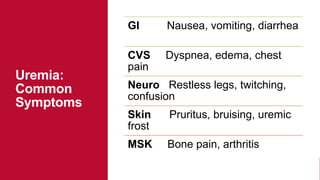
Uremia:
Common
Symptoms
GI Nausea, vomiting, diarrhea
CVS Dyspnea, edema, chest
pain
Neuro Restless legs, twitching,
confusion
Skin Pruritus, bruising, uremic
frost
MSK Bone pain, arthritis
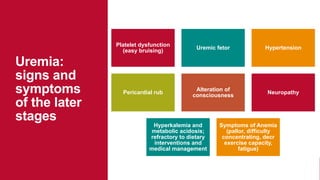
Uremia:
signs and
symptoms
of the later
stages
Platelet dysfunction
(easy bruising)
Uremic fetor Hypertension
Pericardial rub
Alteration of
consciousness
Neuropathy
Hyperkalemia and
metabolic acidosis;
refractory to dietary
interventions and
medical management
Symptoms of Anemia
(pallor, difficulty
concentrating, decr
exercise capacity,
fatigue)
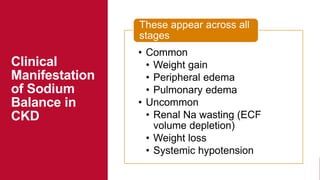
Clinical
Manifestation
of Sodium
Balance in
CKD
• Common
• Weight gain
• Peripheral edema
• Pulmonary edema
• Uncommon
• Renal Na wasting (ECF
volume depletion)
• Weight loss
• Systemic hypotension
These appear across all
stages
CKD in Primary Care
PRIMARY CARE PHYSICIANS ARE THE FIRST
LINE OF DEFENSE AGAINST CKD
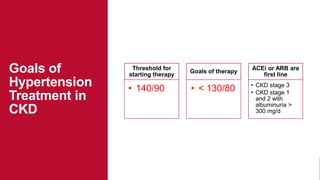
Goals of
Hypertension
Treatment in
CKD
Threshold for
starting therapy
• 140/90
Goals of therapy
• < 130/80
ACEi or ARB are
first line
• CKD stage 3
• CKD stage 1
and 2 with
albuminuria >
300 mg/d
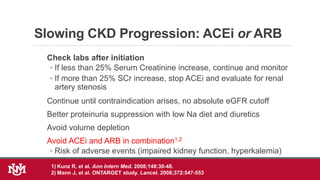
Slowing CKD Progression: ACEi or ARB
Check labs after initiation
◦ If less than 25% Serum Creatinine increase, continue and monitor
◦ If more than 25% SCr increase, stop ACEi and evaluate for renal
artery stenosis
Continue until contraindication arises, no absolute eGFR cutoff
Better proteinuria suppression with low Na diet and diuretics
Avoid volume depletion
Avoid ACEi and ARB in combination1,2
◦ Risk of adverse events (impaired kidney function, hyperkalemia)
1) Kunz R, et al. Ann Intern Med. 2008;148:30-48.
2) Mann J, et al. ONTARGET study. Lancet. 2008;372:547-553.
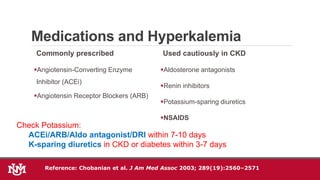
Medications and Hyperkalemia
Commonly prescribed
Angiotensin-Converting Enzyme
Inhibitor (ACEi)
Angiotensin Receptor Blockers (ARB)
Used cautiously in CKD
Aldosterone antagonists
Renin inhibitors
Potassium-sparing diuretics
NSAIDS
Check Potassium:
ACEi/ARB/Aldo antagonist/DRI within 7-10 days
K-sparing diuretics in CKD or diabetes within 3-7 days
Reference: Chobanian et al. J Am Med Assoc 2003; 289(19):2560–2571
Management of Hyperkalemia
o Reduce dietary potassium
o Stop medications causing hyperkalemia [NSAIDs, COX-2 inhibitors,
potassium sparing diuretics (aldactone)]
o Stop or reduce beta-blockers, ACEi/ARBs
o Avoid salt substitutes that contain potassium
o Use diuretics to increase renal potassium excretion
o Use Potassium binding resins (patiromer, ZS9)
1) Mahajan, et al. Kidney Int. 2010;78:303-309.
2) de Brito-Ashurst I, et al. J Am Soc Nephrol. 2009;20:2075-2084.
Things to remember in CKD : drugs that cause hyperkalemia (previous slide), measurement of
renal function 10 days after ACEI/ARB (for K and Renal Artery Stenosis) general principles of
management of hyperkalemia
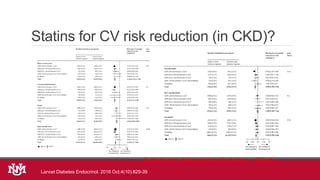
Statins for CV risk reduction (in CKD)?
Lancet Diabetes Endocrinol. 2016 Oct;4(10):829-39
Subject level meta-analysis 28 studies, ~183k pts
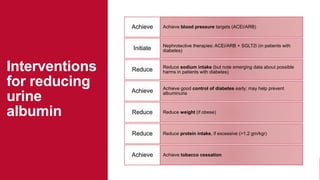
Achieve blood pressure targets (ACEi/ARB)Achieve
Nephrotective therapies: ACEi/ARB + SGLT2i (in patients with
diabetes)Initiate
Reduce sodium intake (but note emerging data about possible
harms in patients with diabetes)Reduce
Achieve good control of diabetes early; may help prevent
albuminuriaAchieve
Reduce weight (if obese)Reduce
Reduce protein intake, if excessive (>1.2 gm/kgr)Reduce
Achieve tobacco cessationAchieve
Interventions
for reducing
urine
albumin
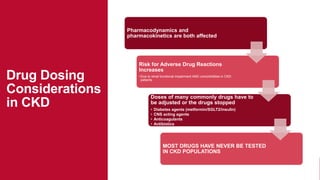
Drug Dosing
Considerations
in CKD
Pharmacodynamics and
pharmacokinetics are both affected
Risk for Adverse Drug Reactions
Increases
•Due to renal functional impairment AND comorbidities in CKD
patients
Doses of many commonly drugs have to
be adjusted or the drugs stopped
• Diabetes agents (metformin/SGLT2/insulin)
• CNS acting agents
• Anticoagulants
• Antibiotics
MOST DRUGS HAVE NEVER BE TESTED
IN CKD POPULATIONS
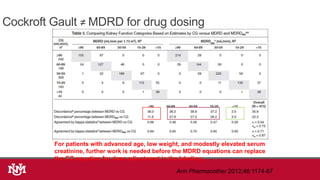
Cockroft Gault ≠ MDRD for drug dosing
Ann Pharmacother 2012;46:1174-87
For patients with advanced age, low weight, and modestly elevated serum
creatinine, further work is needed before the MDRD equations can replace
the CG equation for dose adjustment in the labeling.
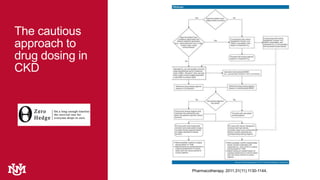
The cautious
approach to
drug dosing in
CKD
Pharmacotherapy. 2011;31(11):1130-1144.
Alternatives to warfarin that are licensed for use without
Therapeutic Drug Monitoring
◦ Rivaroxaban (Xarelto) : Xa inhibitor
◦ Apixaban (Eliquis): Xa inhibitor
◦ Dabigatran (Pradaxa): DRI
They are removed by the kidneys
Safety signals for older individuals with renal impairment
Dialytic clearance substantial only for dabigatran
Novel Oral AntiCoagulants (NOACs) in CKD
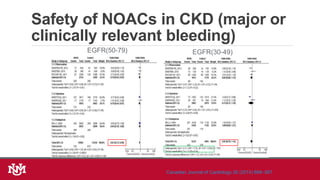
Safety of NOACs in CKD (major or
clinically relevant bleeding)
EGFR(50-79) EGFR(30-49)
Canadian Journal of Cardiology 30 (2014) 888- 897
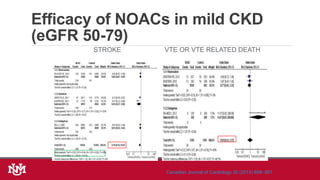
Efficacy of NOACs in mild CKD
(eGFR 50-79)
STROKE VTE OR VTE RELATED DEATH
Canadian Journal of Cardiology 30 (2014) 888- 897
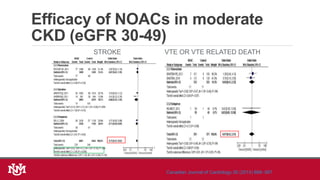
Efficacy of NOACs in moderate
CKD (eGFR 30-49)
STROKE VTE OR VTE RELATED DEATH
Canadian Journal of Cardiology 30 (2014) 888- 897
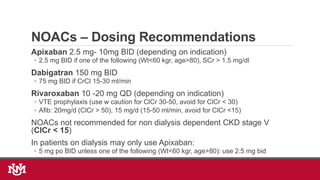
NOACs – Dosing Recommendations
Apixaban 2.5 mg- 10mg BID (depending on indication)
◦ 2.5 mg BID if one of the following (Wt<60 kgr, age>80), SCr > 1.5 mg/dl
Dabigatran 150 mg BID
◦ 75 mg BID if CrCl 15-30 ml/min
Rivaroxaban 10 -20 mg QD (depending on indication)
◦ VTE prophylaxis (use w caution for ClCr 30-50, avoid for ClCr < 30)
◦ Afib: 20mg/d (ClCr > 50), 15 mg/d (15-50 ml/min, avoid for ClCr <15)
NOACs not recommended for non dialysis dependent CKD stage V
(ClCr < 15)
In patients on dialysis may only use Apixaban:
◦ 5 mg po BID unless one of the following (Wt<60 kgr, age>80): use 2.5 mg bid
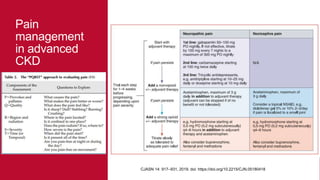
Pain
management
in advanced
CKD
CJASN 14: 917–931, 2019. doi: https://doi.org/10.2215/CJN.05180418
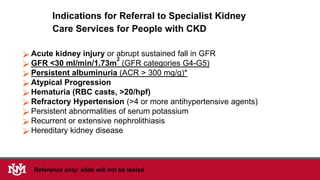
Indications for Referral to Specialist Kidney
Care Services for People with CKD
Acute kidney injury or abrupt sustained fall in GFR
GFR <30 ml/min/1.73m
2
(GFR categories G4-G5)
Persistent albuminuria (ACR > 300 mg/g)*
Atypical Progression
Hematuria (RBC casts, >20/hpf)
Refractory Hypertension (>4 or more antihypertensive agents)
Persistent abnormalities of serum potassium
Recurrent or extensive nephrolithiasis
Hereditary kidney disease
Reference only: slide will not be tested
CKD in Special
Populations
CKD IN GERIATRIC PATIENTS
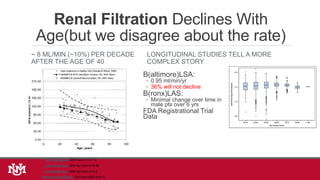
Renal Filtration Declines With
Age(but we disagree about the rate)
~ 8 ML/MIN (~10%) PER DECADE
AFTER THE AGE OF 40
LONGITUDINAL STUDIES TELL A MORE
COMPLEX STORY
B(altimore)LSA:
◦ 0.95 ml/min/yr
◦ 36% will not decline
B(ronx)LAS:
◦ Minimal change over time in
male pts over 6 yrs
FDA Registrational Trial
Data
Am J Kidney Dis. 2003 Jan;41(1):1-12.
J Am Geriatr Soc. 1985 Apr;33(4):278-85.
J Am Geriatr Soc. 1995 Apr;43(4):412-4.
Biopharm Drug Dispos. 2015 Dec;36(9):613-21
Tubular Function Age Related
Changes
Failure to conserve sodium under salt deprivation (risk for prerenal
AKI/ARF)
Renal Acidosis Type IV (hyperkalemia)
Maximal Concentrating Capacity Diminishes
◦ Nocturia
◦ Dehydration
◦ Hypernatremia
Maximal Diluting Capacity Diminishes
◦ Hyponatremia when fluid challenged
Kidney Int. 2008 Sep;74(6):710-20.
Endocrine Function Age Related
Changes
Levels of EPO will slightly increase with age
◦ However anemic elderly patients have lower levels than
anemic young ones (esp in iron deficiency)
Lower levels of calcitriol (osteoporosis AND falls)
◦ Calcitriol supplementation reduced falls by ~50%
Insulin Clearance Declines
◦ Insulin Resistance Increases
Kidney Int. 2008 Sep;74(6):710-20.
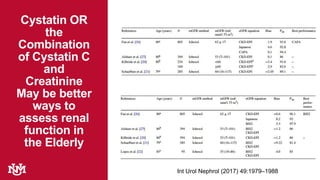
Cystatin OR
the
Combination
of Cystatin C
and
Creatinine
May be better
ways to
assess renal
function in
the Elderly
Int Urol Nephrol (2017) 49:1979–1988
Screening for CKD
1. Guidelines disagree (ACP/USPSTF vs ASN)
2. One will find low eGFR in the elderly if one looks for it
3. Consensus is that patients with diabetes should be
screened (eGFR/albuminuria) but ?? older people (>60 y/o)
or those with hypertension
4. Cost-effectiveness of screening largely dependent on the
health care system
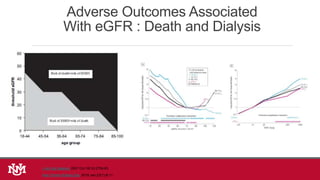
Adverse Outcomes Associated
With eGFR : Death and Dialysis
Adv Chronic Kidney Dis. 2016 Jan;23(1):8-11
J Am Soc Nephrol. 2007 Oct;18(10):2758-65.
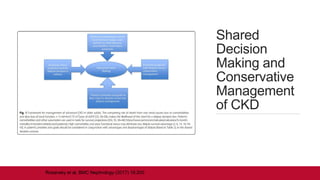
Shared
Decision
Making and
Conservative
Management
of CKD
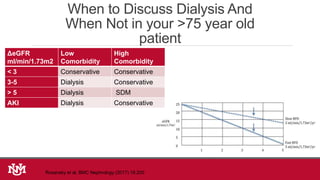
Rosansky et al. BMC Nephrology (2017) 18:200
When to Discuss Dialysis And
When Not in your >75 year old
patient
Rosansky et al. BMC Nephrology (2017) 18:200
ΔeGFR
ml/min/1.73m2
Low
Comorbidity
High
Comorbidity
< 3 Conservative Conservative
3-5 Dialysis Conservative
> 5 Dialysis SDM
AKI Dialysis Conservative
CKD in Special
Populations
CKD AND DIABETES
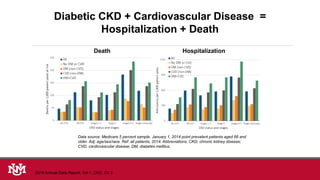
Diabetic CKD + Cardiovascular Disease =
Hospitalization + Death
Data source: Medicare 5 percent sample. January 1, 2014 point prevalent patients aged 66 and
older. Adj: age/sex/race. Ref: all patients, 2014. Abbreviations: CKD, chronic kidney disease;
CVD, cardiovascular disease; DM, diabetes mellitus.
Death Hospitalization
2016 Annual Data Report, Vol 1, CKD, Ch 3
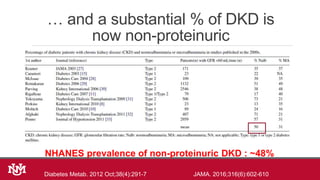
… and a substantial % of DKD is
now non-proteinuric
Diabetes Metab. 2012 Oct;38(4):291-7 JAMA. 2016;316(6):602-610
NHANES prevalence of non-proteinuric DKD : ~48%
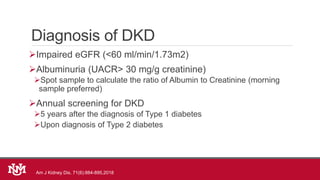
Diagnosis of DKD
Impaired eGFR (<60 ml/min/1.73m2)
Albuminuria (UACR> 30 mg/g creatinine)
Spot sample to calculate the ratio of Albumin to Creatinine (morning
sample preferred)
Annual screening for DKD
5 years after the diagnosis of Type 1 diabetes
Upon diagnosis of Type 2 diabetes
Am J Kidney Dis. 71(6):884-895,2018
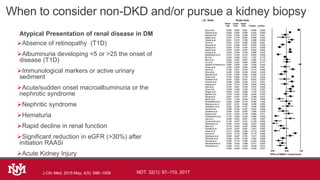
When to consider non-DKD and/or pursue a kidney biopsy
Atypical Presentation of renal disease in DM
Absence of retinopathy (T1D)
Albuminuria developing <5 or >25 the onset of
disease (T1D)
Immunological markers or active urinary
sediment
Acute/sudden onset macroalbuminuria or the
nephrotic syndrome
Nephritic syndrome
Hematuria
Rapid decline in renal function
Significant reduction in eGFR (>30%) after
initiation RAASi
Acute Kidney Injury
J Clin Med. 2015 May; 4(5): 998–1009 NDT. 32(1): 97–110, 2017
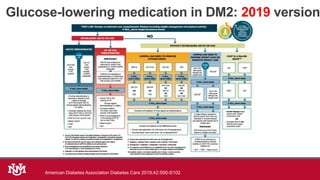
Glucose-lowering medication in DM2: 2019 version
American Diabetes Association Diabetes Care 2019;42:S90-S102
Diabetes and
Kidney Disease
2019: August
Special Section
https://www.kidneynews.org/kidney
-news/current-issue/diabetes-and-
kidney-disease-2019-august-
special-section
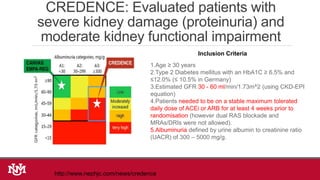
CREDENCE: Evaluated patients with
severe kidney damage (proteinuria) and
moderate kidney functional impairment
http://www.nephjc.com/news/credence
1.Age ≥ 30 years
2.Type 2 Diabetes mellitus with an HbA1C ≥ 6.5% and
≤12.0% (≤ 10.5% in Germany)
3.Estimated GFR 30 - 60 ml/min/1.73m^2 (using CKD-EPI
equation)
4.Patients needed to be on a stable maximum tolerated
daily dose of ACEi or ARB for at least 4 weeks prior to
randomisation (however dual RAS blockade and
MRAs/DRIs were not allowed).
5.Albuminuria defined by urine albumin to creatinine ratio
(UACR) of 300 – 5000 mg/g.
Inclusion Criteria
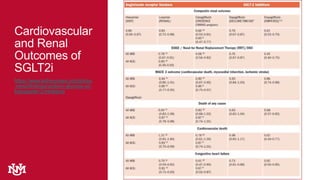
Cardiovascular
and Renal
Outcomes of
SGLT2i
https://www.kidneynews.org/kidney
-news/findings/sodium-glucose-co-
transporter-2-inhibitors
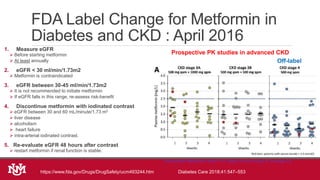
FDA Label Change for Metformin in
Diabetes and CKD : April 2016
1. Measure eGFR
 Before starting metformin
 At least annually
2. eGFR < 30 ml/min/1.73m2
 Metformin is contraindicated
3. eGFR between 30-45 ml/min/1.73m2
 It is not recommended to initiate metformin
 If eGFR falls in this range, re-assess risk-benefit
4. Discontinue metformin with iodinated contrast
 eGFR between 30 and 60 mL/minute/1.73 m2
 liver disease
 alcoholism
 heart failure
 intra-arterial iodinated contrast.
5. Re-evaluate eGFR 48 hours after contrast
 restart metformin if renal function is stable.
https://www.fda.gov/Drugs/DrugSafety/ucm493244.htm Diabetes Care 2018;41:547–553
Prospective PK studies in advanced CKD
Therapeutic Metformin level: 1-4 / peak not to exceed 5, average 2.5
Off-label
Which anti-glycemic agents to use in
CKD?
1. Patient’s cardiorenal risk
2. Cardiovascular and renal end-points
◦ Medical literature
◦ Regulatory submission documents
3. Safety profile
4.Level of renal function
5.What the insurance will pay
6.The copay the patient can afford
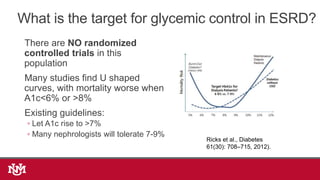
There are NO randomized
controlled trials in this
population
Many studies find U shaped
curves, with mortality worse when
A1c<6% or >8%
Existing guidelines:
◦ Let A1c rise to >7%
◦ Many nephrologists will tolerate 7-9%
What is the target for glycemic control in ESRD?
Ricks et al., Diabetes
61(30): 708–715, 2012).
Dose: To prevent hypoglycemia, insulin may have to be reduced by 50% when
the eGFR<10 (many patients are firmly on their way to dialysis by then)
Timing: a single study suggests lowering basal insulin by 25% on the day
after dialysis to provent hypoglycemia
Titration: In insulin-naïve dialysis patients start at 10-12 units
Many nephrologists consider insulin based regimens the treatment of choice for
patients with DM and ESRD
Treatment of Diabetes in Dialysis: Insulin
Nephrol Dial Transplant (2016) 31 (1): 8-15. DOI: https://doi.org/10.1093/ndt/gfv258
Sulfonylureas: glipizide is the agent of choice
Meglitinides:
− repaglinide is >90% metabolized by the liver
− Start at 0.5 mg po tid with meals
− May be used as monotherapy in ESRD
Biguanides (metformin): no-no
Thiazolidinedione (pioglitazone):
− Overall low risk of hypoglycemia
− As monotherapy may reduce A1c by 0.5-1% in ESRD
− Pioglitazone may be associated with impr survival
Treatment of Diabetes in Dialysis: Non-insulin agents I
DPP4:
− Lina(gliptin) is the only one that is cleared by the liver (no dose
adjustment): 5 mg po daily
− Sita: 25mg/day (irrespective of timing of dialysis)
 Similar efficacy to glipizide with less severe hypoglycemia in a double blind, RCT
− Saxa 2.5 mg/day (give after dialysis – removes 25%)
− Alo: 6.25 mg/day
GLP-1 (exenatide, liraglutide): not recommended in patients on dialysis
Alpha-glucosidase inhibitors: not recommended in patients on dialysis
Amylin analog (pramalintide): renal clearance – not recommended
SGLT2 inhibitors: cannot be used
Treatment of Diabetes in Dialysis: Non-insulin agents II
Am J Kidney Dis. 2013 Apr;61(4):579-87. doi:
10.1053/j.ajkd.2012.11.043
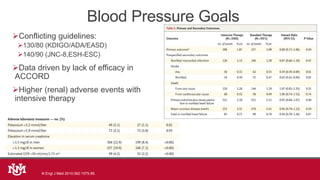
Conflicting guidelines:
130/80 (KDIGO/ADA/EASD)
140/90 (JNC-8,ESH-ESC)
Data driven by lack of efficacy in
ACCORD
Higher (renal) adverse events with
intensive therapy
Blood Pressure Goals
N Engl J Med 2010;362:1575-85.
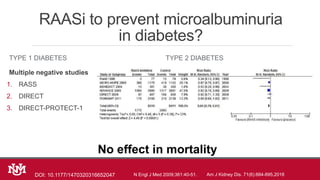
RAASi to prevent microalbuminuria
in diabetes?
TYPE 1 DIABETES TYPE 2 DIABETES
DOI: 10.1177/1470320316652047
Multiple negative studies
1. RASS
2. DIRECT
3. DIRECT-PROTECT-1
No effect in mortality
N Engl J Med 2009;361:40-51. Am J Kidney Dis. 71(6):884-895,2018
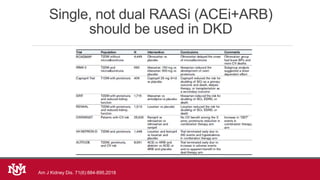
Single, not dual RAASi (ACEi+ARB)
should be used in DKD
Am J Kidney Dis. 71(6):884-895,2018
The combination of RAASi + Aldosterone antagonists
improves proteinuria and blood pressure control
PROTEINURIA SYSTOLIC BLOOD PRESSURE
Diastolic BP: -1.73 [ -2.83, -0.62 ]
Cochrane Database of Systematic Reviews 2014, Issue 4. Art. No.: CD007004.
DOI: 10.1002/14651858.CD007004.pub3.
eGFR -2.55 [ -5.61, 0.51 ] (favors SPL, NS)
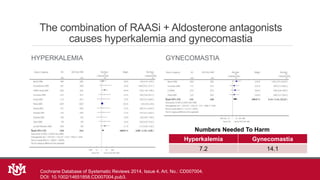
The combination of RAASi + Aldosterone antagonists
causes hyperkalemia and gynecomastia
HYPERKALEMIA GYNECOMASTIA
Cochrane Database of Systematic Reviews 2014, Issue 4. Art. No.: CD007004.
DOI: 10.1002/14651858.CD007004.pub3.
Hyperkalemia Gynecomastia
7.2 14.1
Numbers Needed To Harm
The role of the nephrologist in the
changing landscape of DKD therapeutics
1. Initiate and sustain evidence- based pharmacological therapy
ACEi/ARB / ? Aldo antagonists
2. Treat the complications of CKD
Hyperkalemia (diuretics/patiromer)
Volume overload
CKD complications (anemia, second hyperparathyroidism)
3. Consult referring physicians about renal safety/efficacy/dosing
of anti-glycemic therapies
Metformin/SGLT2i/GLP-1RA/DPP-4i
CASES
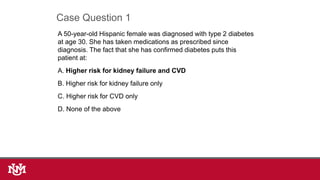
A 50-year-old Hispanic female was diagnosed with type 2 diabetes
at age 30. She has taken medications as prescribed since
diagnosis. The fact that she has confirmed diabetes puts this
patient at:
A. Higher risk for kidney failure and CVD
B. Higher risk for kidney failure only
C. Higher risk for CVD only
D. None of the above
Case Question 1
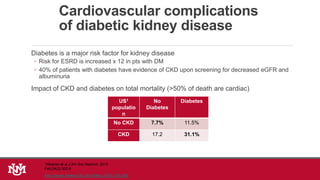
Cardiovascular complications
of diabetic kidney disease
Diabetes is a major risk factor for kidney disease
◦ Risk for ESRD is increased x 12 in pts with DM
◦ 40% of patients with diabetes have evidence of CKD upon screening for decreased eGFR and
albuminuria
Impact of CKD and diabetes on total mortality (>50% of death are cardiac)
US1
populatio
n
No
Diabetes
Diabetes
No CKD 7.7% 11.5%
CKD 17.2 31.1%
Adv Chronic Kidney Dis. 2014 May; 21(3): 273–280.
1Afkarian et al J Am Soc Nephrol. 2013
Feb;24(2):302-8
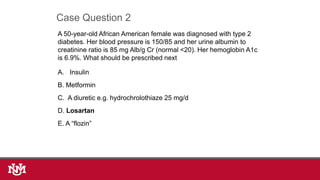
A 50-year-old African American female was diagnosed with type 2
diabetes. Her blood pressure is 150/85 and her urine albumin to
creatinine ratio is 85 mg Alb/g Cr (normal <20). Her hemoglobin A1c
is 6.9%. What should be prescribed next
A. Insulin
B. Metformin
C. A diuretic e.g. hydrochrolothiaze 25 mg/d
D. Losartan
E. A “flozin”
Case Question 2
Improving outcomes in diabetes
Guidelines for the treatment of patients with diabetes recommend that
1. Target A1c of ~7%
2. Treat blood pressure in patients with proteinuria
3. Use an Angiotensin Receptor Blocker or an Angiotensin Converting
Enzyme inhibitor to treat patients with proteinuria (albuminuria) and
diabetes
4. Sodium Glucose Transporter 2 Inhibitors on top of Standard of Care
ACEi/ARB
Kidney Int. 2012 Apr;81(7):674-83
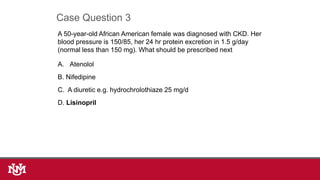
A 50-year-old African American female was diagnosed with CKD. Her
blood pressure is 150/85, her 24 hr protein excretion in 1.5 g/day
(normal less than 150 mg). What should be prescribed next
A. Atenolol
B. Nifedipine
C. A diuretic e.g. hydrochrolothiaze 25 mg/d
D. Lisinopril
Case Question 3
Use of ACE and treatment of
HTN slows rate of progression
•Maintain blood pressure
less than
130/80 mmHg
• Sarnak Annals 2005
•Use an ACE Inhibitor or
ARB
- Giatras, et al., 1997
- Psait, et al., 2000
- Jafar, et al., 2001
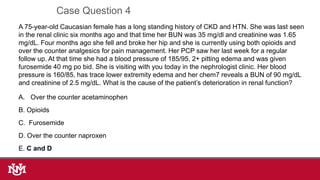
A 75-year-old Caucasian female has a long standing history of CKD and HTN. She was last seen
in the renal clinic six months ago and that time her BUN was 35 mg/dl and creatinine was 1.65
mg/dL. Four months ago she fell and broke her hip and she is currently using both opioids and
over the counter analgesics for pain management. Her PCP saw her last week for a regular
follow up. At that time she had a blood pressure of 185/95, 2+ pitting edema and was given
furosemide 40 mg po bid. She is visiting with you today in the nephrologist clinic. Her blood
pressure is 160/85, has trace lower extremity edema and her chem7 reveals a BUN of 90 mg/dL
and creatinine of 2.5 mg/dL. What is the cause of the patient’s deterioration in renal function?
A. Over the counter acetaminophen
B. Opioids
C. Furosemide
D. Over the counter naproxen
E. C and D
Case Question 4
Identification of Reversible
Decreases in Renal Function in CKD
Decreased renal perfusion (prerenal picture with BUN/Cr > 20)
◦ Hypotension (myocardial dysfunction, pericarditis, CHF)
◦ Volume depletion (vomiting, diarrhea, diuretic use)
◦ Infection (sepsis)
◦ Use of drugs that lower GFR (NSAIDs and ACEIs)
Administration of nephrotoxic drugs
◦ Aminoglycoside antibiotics
◦ Radiographic contrast material
Urinary tract obstruction
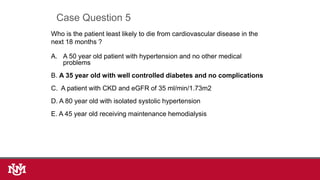
Who is the patient least likely to die from cardiovascular disease in the
next 18 months ?
A. A 50 year old patient with hypertension and no other medical
problems
B. A 35 year old with well controlled diabetes and no complications
C. A patient with CKD and eGFR of 35 ml/min/1.73m2
D. A 80 year old with isolated systolic hypertension
E. A 45 year old receiving maintenance hemodialysis
Case Question 5
Far more CKD patients die due to CVD than reach ESRD
CKD is considered by some to be a coronary artery disease equivalent
◦ Data indicate that patients with lower GFRs (<45ml/min) and
microalbuminuria or proteinuria carry a very high CVD risk (~ equivalent to a
prior history of coronary disease).
CVD risk in CKD
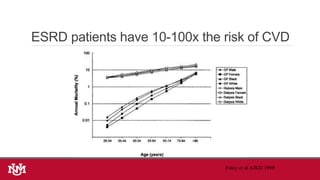
ESRD patients have 10-100x the risk of CVD
Foley et al AJKD 1998
Risk Factors for CVD in CKD
Age
Diabetes mellitus
Smoking
Hypertension
Dyslipidemia
Physical inactivity
Menopause
Obesity
Anemia
Hyperparathyroidism
Hyperphosphatemia
Hypocalcemia
Effects of dialysis
Hypoalbuminemia and malnutrition
Systemic inflammation
Hyperhomocysteinemia
Volume overload
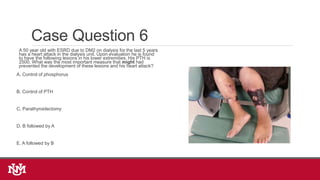
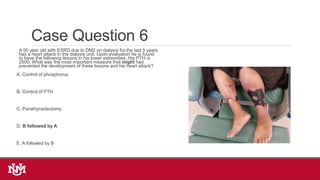
Case Question 6
A 50 year old with ESRD due to DM2 on dialysis for the last 5 years
has a heart attack in the dialysis unit. Upon evaluation he is found
to have the following lesions in his lower extremities. His PTH is
2500. What was the most important measure that might had
prevented the development of these lesions and his heart attack?
A. Control of phosphorus
B. Control of PTH
C. Parathyroidectomy
D. B followed by A
E. A followed by B
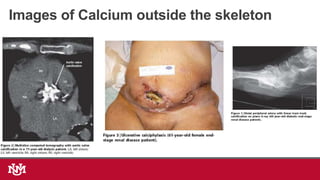
Vascular Calcification in CKD
•Extraskeletal calcification is highly prevalent in CKD and starts early
•50% of incident HD patients have evidence of coronary artery calcification (CAC)
•Vascular calcification prevalence in dialysis patients ranges from 50%-90%
•Age and dialysis vintage are consistently associated with CAC
•Use of calcium-based phosphate binders and elevated phosphorus levels are risk
•Two types of vascular calcification
◦ Intimal calcification leads to plaques or circumferentially calcified atherosclerosis
◦ Medial calcification is nonocclusive and leads to vascular stiffening and LVH
•Traditionally, the CAC score obtained by electron beam computed tomography (CT) is used to
quantify calcification burden
•Other available techniques can provide semiquantitative evidence of calcification, including duplex
ultrasonography, echocardiography, pulse wave velocity, and even plain radiographs
•A study of these techniques showed good correlation between lateral abdominal aortic radiographs and
electron beam CT in quantifying calcification
Reference only: slide will not be tested
Images of Calcium outside the skeleton
Figure 5
Source: American Journal of Kidney Diseases 2011; 58:1022-1036
(DOI:10.1053/j.ajkd.2011.08.009 )
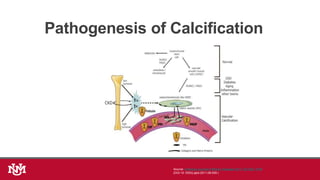
Pathogenesis of Calcification
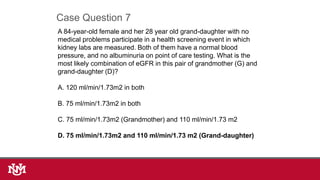
A 84-year-old female and her 28 year old grand-daughter with no
medical problems participate in a health screening event in which
kidney labs are measured. Both of them have a normal blood
pressure, and no albuminuria on point of care testing. What is the
most likely combination of eGFR in this pair of grandmother (G) and
grand-daughter (D)?
A. 120 ml/min/1.73m2 in both
B. 75 ml/min/1.73m2 in both
C. 75 ml/min/1.73m2 (G) and 110 ml/min/1.73 m2 (D)
D. 75 ml/min/1.73m2 (D) and 110 ml/min/1.73 m2 (G)
Case Question 7
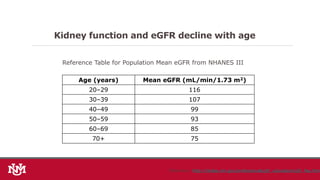
Reference Table for Population Mean eGFR from NHANES III
Kidney function and eGFR decline with age
Reference: http://nkdep.nih.gov/professionals/gfr_calculators/gfr_faq.htm
Age (years) Mean eGFR (mL/min/1.73 m2)
20–29 116
30–39 107
40–49 99
50–59 93
60–69 85
70+ 75
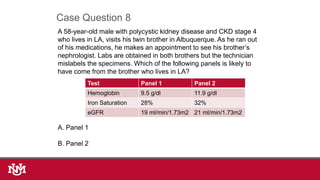
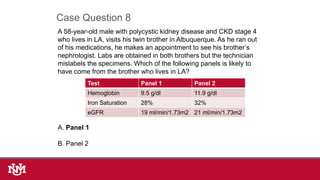
A 58-year-old male with polycystic kidney disease and CKD stage 4
who lives in LA, visits his twin brother in Albuquerque. As he ran out
of his medications, he makes an appointment to see his brother’s
nephrologist. Labs are obtained in both brothers but the technician
mislabels the specimens. Which of the following panels is likely to
have come from the brother who lives in LA?
A. Panel 1
B. Panel 2
Case Question 8
Test Panel 1 Panel 2
Hemoglobin 9.5 g/dl 11.9 g/dl
Iron Saturation 28% 32%
eGFR 19 ml/min/1.73m2 21 ml/min/1.73m2
ANSWERS
A 50-year-old Hispanic female was diagnosed with type 2 diabetes
at age 30. She has taken medications as prescribed since
diagnosis. The fact that she has confirmed diabetes puts this
patient at:
A. Higher risk for kidney failure and CVD
B. Higher risk for kidney failure only
C. Higher risk for CVD only
D. None of the above
Case Question 1
A 50-year-old African American female was diagnosed with type 2
diabetes. Her blood pressure is 150/85 and her urine albumin to
creatinine ratio is 85 mg Alb/g Cr (normal <20). Her hemoglobin A1c
is 6.9%. What should be prescribed next
A. Insulin
B. Metformin
C. A diuretic e.g. hydrochrolothiaze 25 mg/d
D. Losartan
E. A “flozin”
Case Question 2
A 50-year-old African American female was diagnosed with CKD. Her
blood pressure is 150/85, her 24 hr protein excretion in 1.5 g/day
(normal less than 150 mg). What should be prescribed next
A. Atenolol
B. Nifedipine
C. A diuretic e.g. hydrochrolothiaze 25 mg/d
D. Lisinopril
Case Question 3
A 75-year-old Caucasian female has a long standing history of CKD and HTN. She was last seen
in the renal clinic six months ago and that time her BUN was 35 mg/dl and creatinine was 1.65
mg/dL. Four months ago she fell and broke her hip and she is currently using both opioids and
over the counter analgesics for pain management. Her PCP saw her last week for a regular
follow up. At that time she had a blood pressure of 185/95, 2+ pitting edema and was given
furosemide 40 mg po bid. She is visiting with you today in the nephrologist clinic. Her blood
pressure is 160/85, has trace lower extremity edema and her chem7 reveals a BUN of 90 mg/dL
and creatinine of 2.5 mg/dL. What is the cause of the patient’s deterioration in renal function?
A. Over the counter acetaminophen
B. Opioids
C. Furosemide
D. Over the counter naproxen
E. C and D
Case Question 4
Who is the patient least likely to die from cardiovascular disease in the
next 18 months ?
A. A 50 year old patient with hypertension and no other medical
problems
B. A 35 year old with well controlled diabetes and no complications
C. A patient with CKD and eGFR of 35 ml/min/1.73m2
D. A 80 year old with isolated systolic hypertension
E. A 45 year old receiving maintenance hemodialysis
Case Question 5
Case Question 6
A 50 year old with ESRD due to DM2 on dialysis for the last 5 years
has a heart attack in the dialysis unit. Upon evaluation he is found
to have the following lesions in his lower extremities. His PTH is
2500. What was the most important measure that might had
prevented the development of these lesions and his heart attack?
A. Control of phosphorus
B. Control of PTH
C. Parathyroidectomy
D. B followed by A
E. A followed by B
A 84-year-old female and her 28 year old grand-daughter with no
medical problems participate in a health screening event in which
kidney labs are measured. Both of them have a normal blood
pressure, and no albuminuria on point of care testing. What is the
most likely combination of eGFR in this pair of grandmother (G) and
grand-daughter (D)?
A. 120 ml/min/1.73m2 in both
B. 75 ml/min/1.73m2 in both
C. 75 ml/min/1.73m2 (Grandmother) and 110 ml/min/1.73 m2
D. 75 ml/min/1.73m2 and 110 ml/min/1.73 m2 (Grand-daughter)
Case Question 7
A 58-year-old male with polycystic kidney disease and CKD stage 4
who lives in LA, visits his twin brother in Albuquerque. As he ran out
of his medications, he makes an appointment to see his brother’s
nephrologist. Labs are obtained in both brothers but the technician
mislabels the specimens. Which of the following panels is likely to
have come from the brother who lives in LA?
A. Panel 1
B. Panel 2
Case Question 8
Test Panel 1 Panel 2
Hemoglobin 9.5 g/dl 11.9 g/dl
Iron Saturation 28% 32%
eGFR 19 ml/min/1.73m2 21 ml/min/1.73m2

Chronic Kidney Disease Update 2019

  • 1.
    CHRONIC KIDNEY DISEASE ChristosArgyropoulos MD, PhD, FASN University of New Mexico School of Medicine
  • 2.
    Overview – LearningObjectives Chronic Kidney Disease Basics ◦ Assessment of kidney function and kidney damage ◦ Definition and Epidemiology of CKD ◦ Complications and Clinical Manifestations ◦ CKD in primary care ◦ CKD in special populations: ◦ Geriatric patients ◦ Diabetes in CKD and ESRD ◦ Case discussion
  • 3.
  • 4.
    Measurement of kidneyfunction and assessment of kidney damage EGFR AND ALBUMINURIA
  • 5.
    We try tokeep kidney disease simple in the clinical chemistry lab Test of renal function: “estimated” glomerular filtration rate Test of renal damage: “protein” in the urine
  • 6.
    GFR is equalto the sum of the filtration rates in all of the functioning nephrons. 01 GFR is not routinely measured in clinical settings. 02 Estimation of the GFR (eGFR) gives a rough measure of the number of functioning nephrons. 03 What is the estimated glomerular filtration rate (GFR)?
  • 7.
    eGFR is notthe measured GFR. The formula to estimate GFR was derived from a population-based study. • MDRD, CKD-Epi, etc www.kidney.org/GFR. eGFR is based on serum creatinine levels. Previous methods to estimate kidney function also are based on serum creatinine. Creatinine assays are now standardized. • Isotope Dilution Mass Spectrometry (IDMS) Estimated GFR (eGFR) estimates the measured GFR
  • 8.
    • Rapidly changingcreatinine levels • Example: acute kidney injury • Extremes in muscle mass, body size, or altered diet patterns • Medications that interfere with the measurement of serum creatinine (trimethoprim, vitamin D analogs, tenofovir etc) Do not use with: • MDRD (the first formula) is “blind” above 60 ml/min/1.73m2 • UNM uses the CKD-EPI formula (which can be used to report actual values > 60ml/min/1.73m2) Not all estimating equations are created equally Creatinine- based estimates of kidney function have limitations
  • 9.
    Cystatin – Cv.s. Creatinine Cystatin – C is a “novel” measure of renal function Estimating equations have been developed to use Cys-C alone or with SCr These equations do not always agree !
  • 10.
    Glomerular Basement Membrane retains(large) proteins into the blood stream Damage to the filter allows larger molecular weight substances such as albumin into the ultrafiltrate. Tubular damage may result in decreases in the tubular absorption of proteins in the proximal tubule More proteins appear in the urine Increased urine protein may be a cause as well as a sign of kidney injury. Physiologic al basis of proteinuria/ albuminuria
  • 11.
    Standard of DM care (annualscreen) Diagnosis 40% of people are identified with CKD on the basis of urine albumin alone. 50% of pts with DM & CKD will NOT have abnormal albuminuria Prognosis Important prognostic marker, especially in DM Used to monitor and guide therapy Tool for patient education and self- management (such as HbA1C or eGFR) Urine albumin results are used for screening, diagnosing, and treating CKD
  • 12.
    Definition of Albuminuria Method Normalto mildly increased Moderately increased “Micro-albuminuria” Severely increased “Macro-albuminuria” 24 hour excretion <30 mg/day 30-300 mg/day >300 mg/day Timed urine specimen <20 g/min 20-200 g/min >200 g/min Spot-urine albumin specific dipstick (screening) <3 mg/dl >3 mg/dl N/A Spot urine albumin/ creatinine ratio (ADA) < 30 mg/g 30-300 mg/g >300 mg/g Spot urine albumin/ creatinine ratio (gender specific) (K/DOQI) <17 mg/g (men) <25 mg/g (women) 17-250 (men) 25-355 (women) >250 (men) >355 (women) K/DOQI and ADA
  • 13.
    Dipstick • Semi-quantitative, screening only •Affected by urine concentration, highly variable • Detection of urine albumin > 300 mg/day (1+ approximates albumin excretion of 30 mg/day) Urine protein/creatinine ratio • All proteins, not just albumin (myeloma/CIN) Urine albumin-to- creatinine ratio (UACR) • Quantifies urine albumin • Steps toward standardization currently in progress • Standard for public health, clinical care, and research Which urine test to use? ACR > PCR > Auto strip > Manual strip Update in the HEDIS measure (2020) will include repeated testing of ACR as one of the measures of the quality of care
  • 14.
    Urinary ACR isNOT perfect
  • 15.
  • 16.
    CKD is reducedkidney function or kidney damage Kidney function • Glomerular filtration rate (GFR) < 60 mL/min/1.73 m2 for > 3 months with or without kidney damage Kidney damage • > 3 months, with or without decreased GFR, manifested by either • Pathological abnormalities • Markers of kidney damage, i.e., proteinuria (albuminuria) • Urine albumin-to-creatinine ratio (UACR) > 30 mg/g Reference: National Kidney Foundation Kidney Disease Outcome Quality Initiative (KDOQI). Clinical practice guidelines for chronic kidney disease: evaluation, classification, and stratification. Amer J Kid Dis 2002; 39(2 suppl 1):S18–S266.
  • 17.
    Severe form of CKD:Kidney failure (eGFR < 15) Kidneys cannot maintain homeostasis. Uremia Symptoms in advanced renal failure or end-stage renal disease ESRD (End Stage Renal Disease) The patient is on dialysis or has a kidney transplant CKD vs. Kidney failure vs. ESRD vs. Uremia
  • 19.
    Worse Clinical Outcomesin Patients with CKD Acute kidney injury Progression of kidney disease Kidney Failure Increased cardiovascular and total morbidity and mortality
  • 20.
    Leading Causes ofESRD: Diabetes and Hypertension Reference: Adapted from USRDS Annual Data Report (NIDDK, 2011)
  • 21.
  • 22.
  • 23.
    • Filtration • Reabsorption •Secretion Maintain stability of “internal environment” • Renin • Erythropoeitin • Calcitriol Hormone function • Gluconeogenesis • Metabolize drugs and endogenous substancesMetabolic function The kidneys have many functions
  • 24.
    Urine volume may notchange • Composition of the urine changes 01 Reduced waste excretion • May not be apparent until CKD is advanced 02 Altered hormone production • Anemia (erythropoietin) and mineral & bone disorders (vitamin D) 03 Reduced catabolism • Examples: Insulin, glucagon, drugs 04 Physiological basis of clinical manifestations of CKD: Fewer nephrons disrupt the balance
  • 25.
    Uremia: Common Symptoms GI Nausea, vomiting,diarrhea CVS Dyspnea, edema, chest pain Neuro Restless legs, twitching, confusion Skin Pruritus, bruising, uremic frost MSK Bone pain, arthritis
  • 26.
    Uremia: signs and symptoms of thelater stages Platelet dysfunction (easy bruising) Uremic fetor Hypertension Pericardial rub Alteration of consciousness Neuropathy Hyperkalemia and metabolic acidosis; refractory to dietary interventions and medical management Symptoms of Anemia (pallor, difficulty concentrating, decr exercise capacity, fatigue)
  • 27.
    Clinical Manifestation of Sodium Balance in CKD •Common • Weight gain • Peripheral edema • Pulmonary edema • Uncommon • Renal Na wasting (ECF volume depletion) • Weight loss • Systemic hypotension These appear across all stages
  • 28.
    CKD in PrimaryCare PRIMARY CARE PHYSICIANS ARE THE FIRST LINE OF DEFENSE AGAINST CKD
  • 29.
    Goals of Hypertension Treatment in CKD Thresholdfor starting therapy • 140/90 Goals of therapy • < 130/80 ACEi or ARB are first line • CKD stage 3 • CKD stage 1 and 2 with albuminuria > 300 mg/d
  • 30.
    Slowing CKD Progression:ACEi or ARB Check labs after initiation ◦ If less than 25% Serum Creatinine increase, continue and monitor ◦ If more than 25% SCr increase, stop ACEi and evaluate for renal artery stenosis Continue until contraindication arises, no absolute eGFR cutoff Better proteinuria suppression with low Na diet and diuretics Avoid volume depletion Avoid ACEi and ARB in combination1,2 ◦ Risk of adverse events (impaired kidney function, hyperkalemia) 1) Kunz R, et al. Ann Intern Med. 2008;148:30-48. 2) Mann J, et al. ONTARGET study. Lancet. 2008;372:547-553.
  • 31.
    Medications and Hyperkalemia Commonlyprescribed Angiotensin-Converting Enzyme Inhibitor (ACEi) Angiotensin Receptor Blockers (ARB) Used cautiously in CKD Aldosterone antagonists Renin inhibitors Potassium-sparing diuretics NSAIDS Check Potassium: ACEi/ARB/Aldo antagonist/DRI within 7-10 days K-sparing diuretics in CKD or diabetes within 3-7 days Reference: Chobanian et al. J Am Med Assoc 2003; 289(19):2560–2571
  • 32.
    Management of Hyperkalemia oReduce dietary potassium o Stop medications causing hyperkalemia [NSAIDs, COX-2 inhibitors, potassium sparing diuretics (aldactone)] o Stop or reduce beta-blockers, ACEi/ARBs o Avoid salt substitutes that contain potassium o Use diuretics to increase renal potassium excretion o Use Potassium binding resins (patiromer, ZS9) 1) Mahajan, et al. Kidney Int. 2010;78:303-309. 2) de Brito-Ashurst I, et al. J Am Soc Nephrol. 2009;20:2075-2084. Things to remember in CKD : drugs that cause hyperkalemia (previous slide), measurement of renal function 10 days after ACEI/ARB (for K and Renal Artery Stenosis) general principles of management of hyperkalemia
  • 33.
    Statins for CVrisk reduction (in CKD)? Lancet Diabetes Endocrinol. 2016 Oct;4(10):829-39 Subject level meta-analysis 28 studies, ~183k pts
  • 34.
    Achieve blood pressuretargets (ACEi/ARB)Achieve Nephrotective therapies: ACEi/ARB + SGLT2i (in patients with diabetes)Initiate Reduce sodium intake (but note emerging data about possible harms in patients with diabetes)Reduce Achieve good control of diabetes early; may help prevent albuminuriaAchieve Reduce weight (if obese)Reduce Reduce protein intake, if excessive (>1.2 gm/kgr)Reduce Achieve tobacco cessationAchieve Interventions for reducing urine albumin
  • 35.
    Drug Dosing Considerations in CKD Pharmacodynamicsand pharmacokinetics are both affected Risk for Adverse Drug Reactions Increases •Due to renal functional impairment AND comorbidities in CKD patients Doses of many commonly drugs have to be adjusted or the drugs stopped • Diabetes agents (metformin/SGLT2/insulin) • CNS acting agents • Anticoagulants • Antibiotics MOST DRUGS HAVE NEVER BE TESTED IN CKD POPULATIONS
  • 36.
    Cockroft Gault ≠MDRD for drug dosing Ann Pharmacother 2012;46:1174-87 For patients with advanced age, low weight, and modestly elevated serum creatinine, further work is needed before the MDRD equations can replace the CG equation for dose adjustment in the labeling.
  • 37.
    The cautious approach to drugdosing in CKD Pharmacotherapy. 2011;31(11):1130-1144.
  • 38.
    Alternatives to warfarinthat are licensed for use without Therapeutic Drug Monitoring ◦ Rivaroxaban (Xarelto) : Xa inhibitor ◦ Apixaban (Eliquis): Xa inhibitor ◦ Dabigatran (Pradaxa): DRI They are removed by the kidneys Safety signals for older individuals with renal impairment Dialytic clearance substantial only for dabigatran Novel Oral AntiCoagulants (NOACs) in CKD
  • 39.
    Safety of NOACsin CKD (major or clinically relevant bleeding) EGFR(50-79) EGFR(30-49) Canadian Journal of Cardiology 30 (2014) 888- 897
  • 40.
    Efficacy of NOACsin mild CKD (eGFR 50-79) STROKE VTE OR VTE RELATED DEATH Canadian Journal of Cardiology 30 (2014) 888- 897
  • 41.
    Efficacy of NOACsin moderate CKD (eGFR 30-49) STROKE VTE OR VTE RELATED DEATH Canadian Journal of Cardiology 30 (2014) 888- 897
  • 42.
    NOACs – DosingRecommendations Apixaban 2.5 mg- 10mg BID (depending on indication) ◦ 2.5 mg BID if one of the following (Wt<60 kgr, age>80), SCr > 1.5 mg/dl Dabigatran 150 mg BID ◦ 75 mg BID if CrCl 15-30 ml/min Rivaroxaban 10 -20 mg QD (depending on indication) ◦ VTE prophylaxis (use w caution for ClCr 30-50, avoid for ClCr < 30) ◦ Afib: 20mg/d (ClCr > 50), 15 mg/d (15-50 ml/min, avoid for ClCr <15) NOACs not recommended for non dialysis dependent CKD stage V (ClCr < 15) In patients on dialysis may only use Apixaban: ◦ 5 mg po BID unless one of the following (Wt<60 kgr, age>80): use 2.5 mg bid
  • 43.
    Pain management in advanced CKD CJASN 14:917–931, 2019. doi: https://doi.org/10.2215/CJN.05180418
  • 44.
    Indications for Referralto Specialist Kidney Care Services for People with CKD Acute kidney injury or abrupt sustained fall in GFR GFR <30 ml/min/1.73m 2 (GFR categories G4-G5) Persistent albuminuria (ACR > 300 mg/g)* Atypical Progression Hematuria (RBC casts, >20/hpf) Refractory Hypertension (>4 or more antihypertensive agents) Persistent abnormalities of serum potassium Recurrent or extensive nephrolithiasis Hereditary kidney disease Reference only: slide will not be tested
  • 45.
    CKD in Special Populations CKDIN GERIATRIC PATIENTS
  • 46.
    Renal Filtration DeclinesWith Age(but we disagree about the rate) ~ 8 ML/MIN (~10%) PER DECADE AFTER THE AGE OF 40 LONGITUDINAL STUDIES TELL A MORE COMPLEX STORY B(altimore)LSA: ◦ 0.95 ml/min/yr ◦ 36% will not decline B(ronx)LAS: ◦ Minimal change over time in male pts over 6 yrs FDA Registrational Trial Data Am J Kidney Dis. 2003 Jan;41(1):1-12. J Am Geriatr Soc. 1985 Apr;33(4):278-85. J Am Geriatr Soc. 1995 Apr;43(4):412-4. Biopharm Drug Dispos. 2015 Dec;36(9):613-21
  • 47.
    Tubular Function AgeRelated Changes Failure to conserve sodium under salt deprivation (risk for prerenal AKI/ARF) Renal Acidosis Type IV (hyperkalemia) Maximal Concentrating Capacity Diminishes ◦ Nocturia ◦ Dehydration ◦ Hypernatremia Maximal Diluting Capacity Diminishes ◦ Hyponatremia when fluid challenged Kidney Int. 2008 Sep;74(6):710-20.
  • 48.
    Endocrine Function AgeRelated Changes Levels of EPO will slightly increase with age ◦ However anemic elderly patients have lower levels than anemic young ones (esp in iron deficiency) Lower levels of calcitriol (osteoporosis AND falls) ◦ Calcitriol supplementation reduced falls by ~50% Insulin Clearance Declines ◦ Insulin Resistance Increases Kidney Int. 2008 Sep;74(6):710-20.
  • 49.
    Cystatin OR the Combination of CystatinC and Creatinine May be better ways to assess renal function in the Elderly Int Urol Nephrol (2017) 49:1979–1988
  • 50.
    Screening for CKD 1.Guidelines disagree (ACP/USPSTF vs ASN) 2. One will find low eGFR in the elderly if one looks for it 3. Consensus is that patients with diabetes should be screened (eGFR/albuminuria) but ?? older people (>60 y/o) or those with hypertension 4. Cost-effectiveness of screening largely dependent on the health care system
  • 51.
    Adverse Outcomes Associated WitheGFR : Death and Dialysis Adv Chronic Kidney Dis. 2016 Jan;23(1):8-11 J Am Soc Nephrol. 2007 Oct;18(10):2758-65.
  • 52.
  • 53.
    When to DiscussDialysis And When Not in your >75 year old patient Rosansky et al. BMC Nephrology (2017) 18:200 ΔeGFR ml/min/1.73m2 Low Comorbidity High Comorbidity < 3 Conservative Conservative 3-5 Dialysis Conservative > 5 Dialysis SDM AKI Dialysis Conservative
  • 54.
  • 55.
    Diabetic CKD +Cardiovascular Disease = Hospitalization + Death Data source: Medicare 5 percent sample. January 1, 2014 point prevalent patients aged 66 and older. Adj: age/sex/race. Ref: all patients, 2014. Abbreviations: CKD, chronic kidney disease; CVD, cardiovascular disease; DM, diabetes mellitus. Death Hospitalization 2016 Annual Data Report, Vol 1, CKD, Ch 3
  • 56.
    … and asubstantial % of DKD is now non-proteinuric Diabetes Metab. 2012 Oct;38(4):291-7 JAMA. 2016;316(6):602-610 NHANES prevalence of non-proteinuric DKD : ~48%
  • 57.
    Diagnosis of DKD ImpairedeGFR (<60 ml/min/1.73m2) Albuminuria (UACR> 30 mg/g creatinine) Spot sample to calculate the ratio of Albumin to Creatinine (morning sample preferred) Annual screening for DKD 5 years after the diagnosis of Type 1 diabetes Upon diagnosis of Type 2 diabetes Am J Kidney Dis. 71(6):884-895,2018
  • 58.
    When to considernon-DKD and/or pursue a kidney biopsy Atypical Presentation of renal disease in DM Absence of retinopathy (T1D) Albuminuria developing <5 or >25 the onset of disease (T1D) Immunological markers or active urinary sediment Acute/sudden onset macroalbuminuria or the nephrotic syndrome Nephritic syndrome Hematuria Rapid decline in renal function Significant reduction in eGFR (>30%) after initiation RAASi Acute Kidney Injury J Clin Med. 2015 May; 4(5): 998–1009 NDT. 32(1): 97–110, 2017
  • 59.
    Glucose-lowering medication inDM2: 2019 version American Diabetes Association Diabetes Care 2019;42:S90-S102
  • 60.
    Diabetes and Kidney Disease 2019:August Special Section https://www.kidneynews.org/kidney -news/current-issue/diabetes-and- kidney-disease-2019-august- special-section
  • 61.
    CREDENCE: Evaluated patientswith severe kidney damage (proteinuria) and moderate kidney functional impairment http://www.nephjc.com/news/credence 1.Age ≥ 30 years 2.Type 2 Diabetes mellitus with an HbA1C ≥ 6.5% and ≤12.0% (≤ 10.5% in Germany) 3.Estimated GFR 30 - 60 ml/min/1.73m^2 (using CKD-EPI equation) 4.Patients needed to be on a stable maximum tolerated daily dose of ACEi or ARB for at least 4 weeks prior to randomisation (however dual RAS blockade and MRAs/DRIs were not allowed). 5.Albuminuria defined by urine albumin to creatinine ratio (UACR) of 300 – 5000 mg/g. Inclusion Criteria
  • 62.
  • 63.
    FDA Label Changefor Metformin in Diabetes and CKD : April 2016 1. Measure eGFR  Before starting metformin  At least annually 2. eGFR < 30 ml/min/1.73m2  Metformin is contraindicated 3. eGFR between 30-45 ml/min/1.73m2  It is not recommended to initiate metformin  If eGFR falls in this range, re-assess risk-benefit 4. Discontinue metformin with iodinated contrast  eGFR between 30 and 60 mL/minute/1.73 m2  liver disease  alcoholism  heart failure  intra-arterial iodinated contrast. 5. Re-evaluate eGFR 48 hours after contrast  restart metformin if renal function is stable. https://www.fda.gov/Drugs/DrugSafety/ucm493244.htm Diabetes Care 2018;41:547–553 Prospective PK studies in advanced CKD Therapeutic Metformin level: 1-4 / peak not to exceed 5, average 2.5 Off-label
  • 64.
    Which anti-glycemic agentsto use in CKD? 1. Patient’s cardiorenal risk 2. Cardiovascular and renal end-points ◦ Medical literature ◦ Regulatory submission documents 3. Safety profile 4.Level of renal function 5.What the insurance will pay 6.The copay the patient can afford
  • 65.
    There are NOrandomized controlled trials in this population Many studies find U shaped curves, with mortality worse when A1c<6% or >8% Existing guidelines: ◦ Let A1c rise to >7% ◦ Many nephrologists will tolerate 7-9% What is the target for glycemic control in ESRD? Ricks et al., Diabetes 61(30): 708–715, 2012).
  • 66.
    Dose: To preventhypoglycemia, insulin may have to be reduced by 50% when the eGFR<10 (many patients are firmly on their way to dialysis by then) Timing: a single study suggests lowering basal insulin by 25% on the day after dialysis to provent hypoglycemia Titration: In insulin-naïve dialysis patients start at 10-12 units Many nephrologists consider insulin based regimens the treatment of choice for patients with DM and ESRD Treatment of Diabetes in Dialysis: Insulin Nephrol Dial Transplant (2016) 31 (1): 8-15. DOI: https://doi.org/10.1093/ndt/gfv258
  • 67.
    Sulfonylureas: glipizide isthe agent of choice Meglitinides: − repaglinide is >90% metabolized by the liver − Start at 0.5 mg po tid with meals − May be used as monotherapy in ESRD Biguanides (metformin): no-no Thiazolidinedione (pioglitazone): − Overall low risk of hypoglycemia − As monotherapy may reduce A1c by 0.5-1% in ESRD − Pioglitazone may be associated with impr survival Treatment of Diabetes in Dialysis: Non-insulin agents I
  • 68.
    DPP4: − Lina(gliptin) isthe only one that is cleared by the liver (no dose adjustment): 5 mg po daily − Sita: 25mg/day (irrespective of timing of dialysis)  Similar efficacy to glipizide with less severe hypoglycemia in a double blind, RCT − Saxa 2.5 mg/day (give after dialysis – removes 25%) − Alo: 6.25 mg/day GLP-1 (exenatide, liraglutide): not recommended in patients on dialysis Alpha-glucosidase inhibitors: not recommended in patients on dialysis Amylin analog (pramalintide): renal clearance – not recommended SGLT2 inhibitors: cannot be used Treatment of Diabetes in Dialysis: Non-insulin agents II Am J Kidney Dis. 2013 Apr;61(4):579-87. doi: 10.1053/j.ajkd.2012.11.043
  • 69.
    Conflicting guidelines: 130/80 (KDIGO/ADA/EASD) 140/90(JNC-8,ESH-ESC) Data driven by lack of efficacy in ACCORD Higher (renal) adverse events with intensive therapy Blood Pressure Goals N Engl J Med 2010;362:1575-85.
  • 70.
    RAASi to preventmicroalbuminuria in diabetes? TYPE 1 DIABETES TYPE 2 DIABETES DOI: 10.1177/1470320316652047 Multiple negative studies 1. RASS 2. DIRECT 3. DIRECT-PROTECT-1 No effect in mortality N Engl J Med 2009;361:40-51. Am J Kidney Dis. 71(6):884-895,2018
  • 71.
    Single, not dualRAASi (ACEi+ARB) should be used in DKD Am J Kidney Dis. 71(6):884-895,2018
  • 72.
    The combination ofRAASi + Aldosterone antagonists improves proteinuria and blood pressure control PROTEINURIA SYSTOLIC BLOOD PRESSURE Diastolic BP: -1.73 [ -2.83, -0.62 ] Cochrane Database of Systematic Reviews 2014, Issue 4. Art. No.: CD007004. DOI: 10.1002/14651858.CD007004.pub3. eGFR -2.55 [ -5.61, 0.51 ] (favors SPL, NS)
  • 73.
    The combination ofRAASi + Aldosterone antagonists causes hyperkalemia and gynecomastia HYPERKALEMIA GYNECOMASTIA Cochrane Database of Systematic Reviews 2014, Issue 4. Art. No.: CD007004. DOI: 10.1002/14651858.CD007004.pub3. Hyperkalemia Gynecomastia 7.2 14.1 Numbers Needed To Harm
  • 74.
    The role ofthe nephrologist in the changing landscape of DKD therapeutics 1. Initiate and sustain evidence- based pharmacological therapy ACEi/ARB / ? Aldo antagonists 2. Treat the complications of CKD Hyperkalemia (diuretics/patiromer) Volume overload CKD complications (anemia, second hyperparathyroidism) 3. Consult referring physicians about renal safety/efficacy/dosing of anti-glycemic therapies Metformin/SGLT2i/GLP-1RA/DPP-4i
  • 75.
  • 76.
    A 50-year-old Hispanicfemale was diagnosed with type 2 diabetes at age 30. She has taken medications as prescribed since diagnosis. The fact that she has confirmed diabetes puts this patient at: A. Higher risk for kidney failure and CVD B. Higher risk for kidney failure only C. Higher risk for CVD only D. None of the above Case Question 1
  • 77.
    Cardiovascular complications of diabetickidney disease Diabetes is a major risk factor for kidney disease ◦ Risk for ESRD is increased x 12 in pts with DM ◦ 40% of patients with diabetes have evidence of CKD upon screening for decreased eGFR and albuminuria Impact of CKD and diabetes on total mortality (>50% of death are cardiac) US1 populatio n No Diabetes Diabetes No CKD 7.7% 11.5% CKD 17.2 31.1% Adv Chronic Kidney Dis. 2014 May; 21(3): 273–280. 1Afkarian et al J Am Soc Nephrol. 2013 Feb;24(2):302-8
  • 78.
    A 50-year-old AfricanAmerican female was diagnosed with type 2 diabetes. Her blood pressure is 150/85 and her urine albumin to creatinine ratio is 85 mg Alb/g Cr (normal <20). Her hemoglobin A1c is 6.9%. What should be prescribed next A. Insulin B. Metformin C. A diuretic e.g. hydrochrolothiaze 25 mg/d D. Losartan E. A “flozin” Case Question 2
  • 79.
    Improving outcomes indiabetes Guidelines for the treatment of patients with diabetes recommend that 1. Target A1c of ~7% 2. Treat blood pressure in patients with proteinuria 3. Use an Angiotensin Receptor Blocker or an Angiotensin Converting Enzyme inhibitor to treat patients with proteinuria (albuminuria) and diabetes 4. Sodium Glucose Transporter 2 Inhibitors on top of Standard of Care ACEi/ARB Kidney Int. 2012 Apr;81(7):674-83
  • 80.
    A 50-year-old AfricanAmerican female was diagnosed with CKD. Her blood pressure is 150/85, her 24 hr protein excretion in 1.5 g/day (normal less than 150 mg). What should be prescribed next A. Atenolol B. Nifedipine C. A diuretic e.g. hydrochrolothiaze 25 mg/d D. Lisinopril Case Question 3
  • 81.
    Use of ACEand treatment of HTN slows rate of progression •Maintain blood pressure less than 130/80 mmHg • Sarnak Annals 2005 •Use an ACE Inhibitor or ARB - Giatras, et al., 1997 - Psait, et al., 2000 - Jafar, et al., 2001
  • 82.
    A 75-year-old Caucasianfemale has a long standing history of CKD and HTN. She was last seen in the renal clinic six months ago and that time her BUN was 35 mg/dl and creatinine was 1.65 mg/dL. Four months ago she fell and broke her hip and she is currently using both opioids and over the counter analgesics for pain management. Her PCP saw her last week for a regular follow up. At that time she had a blood pressure of 185/95, 2+ pitting edema and was given furosemide 40 mg po bid. She is visiting with you today in the nephrologist clinic. Her blood pressure is 160/85, has trace lower extremity edema and her chem7 reveals a BUN of 90 mg/dL and creatinine of 2.5 mg/dL. What is the cause of the patient’s deterioration in renal function? A. Over the counter acetaminophen B. Opioids C. Furosemide D. Over the counter naproxen E. C and D Case Question 4
  • 83.
    Identification of Reversible Decreasesin Renal Function in CKD Decreased renal perfusion (prerenal picture with BUN/Cr > 20) ◦ Hypotension (myocardial dysfunction, pericarditis, CHF) ◦ Volume depletion (vomiting, diarrhea, diuretic use) ◦ Infection (sepsis) ◦ Use of drugs that lower GFR (NSAIDs and ACEIs) Administration of nephrotoxic drugs ◦ Aminoglycoside antibiotics ◦ Radiographic contrast material Urinary tract obstruction
  • 84.
    Who is thepatient least likely to die from cardiovascular disease in the next 18 months ? A. A 50 year old patient with hypertension and no other medical problems B. A 35 year old with well controlled diabetes and no complications C. A patient with CKD and eGFR of 35 ml/min/1.73m2 D. A 80 year old with isolated systolic hypertension E. A 45 year old receiving maintenance hemodialysis Case Question 5
  • 85.
    Far more CKDpatients die due to CVD than reach ESRD CKD is considered by some to be a coronary artery disease equivalent ◦ Data indicate that patients with lower GFRs (<45ml/min) and microalbuminuria or proteinuria carry a very high CVD risk (~ equivalent to a prior history of coronary disease). CVD risk in CKD
  • 86.
    ESRD patients have10-100x the risk of CVD Foley et al AJKD 1998
  • 87.
    Risk Factors forCVD in CKD Age Diabetes mellitus Smoking Hypertension Dyslipidemia Physical inactivity Menopause Obesity Anemia Hyperparathyroidism Hyperphosphatemia Hypocalcemia Effects of dialysis Hypoalbuminemia and malnutrition Systemic inflammation Hyperhomocysteinemia Volume overload
  • 88.
    Case Question 6 A50 year old with ESRD due to DM2 on dialysis for the last 5 years has a heart attack in the dialysis unit. Upon evaluation he is found to have the following lesions in his lower extremities. His PTH is 2500. What was the most important measure that might had prevented the development of these lesions and his heart attack? A. Control of phosphorus B. Control of PTH C. Parathyroidectomy D. B followed by A E. A followed by B
  • 89.
    Vascular Calcification inCKD •Extraskeletal calcification is highly prevalent in CKD and starts early •50% of incident HD patients have evidence of coronary artery calcification (CAC) •Vascular calcification prevalence in dialysis patients ranges from 50%-90% •Age and dialysis vintage are consistently associated with CAC •Use of calcium-based phosphate binders and elevated phosphorus levels are risk •Two types of vascular calcification ◦ Intimal calcification leads to plaques or circumferentially calcified atherosclerosis ◦ Medial calcification is nonocclusive and leads to vascular stiffening and LVH •Traditionally, the CAC score obtained by electron beam computed tomography (CT) is used to quantify calcification burden •Other available techniques can provide semiquantitative evidence of calcification, including duplex ultrasonography, echocardiography, pulse wave velocity, and even plain radiographs •A study of these techniques showed good correlation between lateral abdominal aortic radiographs and electron beam CT in quantifying calcification Reference only: slide will not be tested
  • 90.
    Images of Calciumoutside the skeleton
  • 91.
    Figure 5 Source: AmericanJournal of Kidney Diseases 2011; 58:1022-1036 (DOI:10.1053/j.ajkd.2011.08.009 ) Pathogenesis of Calcification
  • 92.
    A 84-year-old femaleand her 28 year old grand-daughter with no medical problems participate in a health screening event in which kidney labs are measured. Both of them have a normal blood pressure, and no albuminuria on point of care testing. What is the most likely combination of eGFR in this pair of grandmother (G) and grand-daughter (D)? A. 120 ml/min/1.73m2 in both B. 75 ml/min/1.73m2 in both C. 75 ml/min/1.73m2 (G) and 110 ml/min/1.73 m2 (D) D. 75 ml/min/1.73m2 (D) and 110 ml/min/1.73 m2 (G) Case Question 7
  • 93.
    Reference Table forPopulation Mean eGFR from NHANES III Kidney function and eGFR decline with age Reference: http://nkdep.nih.gov/professionals/gfr_calculators/gfr_faq.htm Age (years) Mean eGFR (mL/min/1.73 m2) 20–29 116 30–39 107 40–49 99 50–59 93 60–69 85 70+ 75
  • 94.
    A 58-year-old malewith polycystic kidney disease and CKD stage 4 who lives in LA, visits his twin brother in Albuquerque. As he ran out of his medications, he makes an appointment to see his brother’s nephrologist. Labs are obtained in both brothers but the technician mislabels the specimens. Which of the following panels is likely to have come from the brother who lives in LA? A. Panel 1 B. Panel 2 Case Question 8 Test Panel 1 Panel 2 Hemoglobin 9.5 g/dl 11.9 g/dl Iron Saturation 28% 32% eGFR 19 ml/min/1.73m2 21 ml/min/1.73m2
  • 95.
  • 96.
    A 50-year-old Hispanicfemale was diagnosed with type 2 diabetes at age 30. She has taken medications as prescribed since diagnosis. The fact that she has confirmed diabetes puts this patient at: A. Higher risk for kidney failure and CVD B. Higher risk for kidney failure only C. Higher risk for CVD only D. None of the above Case Question 1
  • 97.
    A 50-year-old AfricanAmerican female was diagnosed with type 2 diabetes. Her blood pressure is 150/85 and her urine albumin to creatinine ratio is 85 mg Alb/g Cr (normal <20). Her hemoglobin A1c is 6.9%. What should be prescribed next A. Insulin B. Metformin C. A diuretic e.g. hydrochrolothiaze 25 mg/d D. Losartan E. A “flozin” Case Question 2
  • 98.
    A 50-year-old AfricanAmerican female was diagnosed with CKD. Her blood pressure is 150/85, her 24 hr protein excretion in 1.5 g/day (normal less than 150 mg). What should be prescribed next A. Atenolol B. Nifedipine C. A diuretic e.g. hydrochrolothiaze 25 mg/d D. Lisinopril Case Question 3
  • 99.
    A 75-year-old Caucasianfemale has a long standing history of CKD and HTN. She was last seen in the renal clinic six months ago and that time her BUN was 35 mg/dl and creatinine was 1.65 mg/dL. Four months ago she fell and broke her hip and she is currently using both opioids and over the counter analgesics for pain management. Her PCP saw her last week for a regular follow up. At that time she had a blood pressure of 185/95, 2+ pitting edema and was given furosemide 40 mg po bid. She is visiting with you today in the nephrologist clinic. Her blood pressure is 160/85, has trace lower extremity edema and her chem7 reveals a BUN of 90 mg/dL and creatinine of 2.5 mg/dL. What is the cause of the patient’s deterioration in renal function? A. Over the counter acetaminophen B. Opioids C. Furosemide D. Over the counter naproxen E. C and D Case Question 4
  • 100.
    Who is thepatient least likely to die from cardiovascular disease in the next 18 months ? A. A 50 year old patient with hypertension and no other medical problems B. A 35 year old with well controlled diabetes and no complications C. A patient with CKD and eGFR of 35 ml/min/1.73m2 D. A 80 year old with isolated systolic hypertension E. A 45 year old receiving maintenance hemodialysis Case Question 5
  • 101.
    Case Question 6 A50 year old with ESRD due to DM2 on dialysis for the last 5 years has a heart attack in the dialysis unit. Upon evaluation he is found to have the following lesions in his lower extremities. His PTH is 2500. What was the most important measure that might had prevented the development of these lesions and his heart attack? A. Control of phosphorus B. Control of PTH C. Parathyroidectomy D. B followed by A E. A followed by B
  • 102.
    A 84-year-old femaleand her 28 year old grand-daughter with no medical problems participate in a health screening event in which kidney labs are measured. Both of them have a normal blood pressure, and no albuminuria on point of care testing. What is the most likely combination of eGFR in this pair of grandmother (G) and grand-daughter (D)? A. 120 ml/min/1.73m2 in both B. 75 ml/min/1.73m2 in both C. 75 ml/min/1.73m2 (Grandmother) and 110 ml/min/1.73 m2 D. 75 ml/min/1.73m2 and 110 ml/min/1.73 m2 (Grand-daughter) Case Question 7
  • 103.
    A 58-year-old malewith polycystic kidney disease and CKD stage 4 who lives in LA, visits his twin brother in Albuquerque. As he ran out of his medications, he makes an appointment to see his brother’s nephrologist. Labs are obtained in both brothers but the technician mislabels the specimens. Which of the following panels is likely to have come from the brother who lives in LA? A. Panel 1 B. Panel 2 Case Question 8 Test Panel 1 Panel 2 Hemoglobin 9.5 g/dl 11.9 g/dl Iron Saturation 28% 32% eGFR 19 ml/min/1.73m2 21 ml/min/1.73m2