APPROACH TO A CASE OF
ANEMIA
Presented By: Dr. Gaurav Singh Raghuwanshi
PG Resident IInd Year
Moderator: Dr. Ajay Kumar
Professor, Dept. Of Medicine
ANEMIA
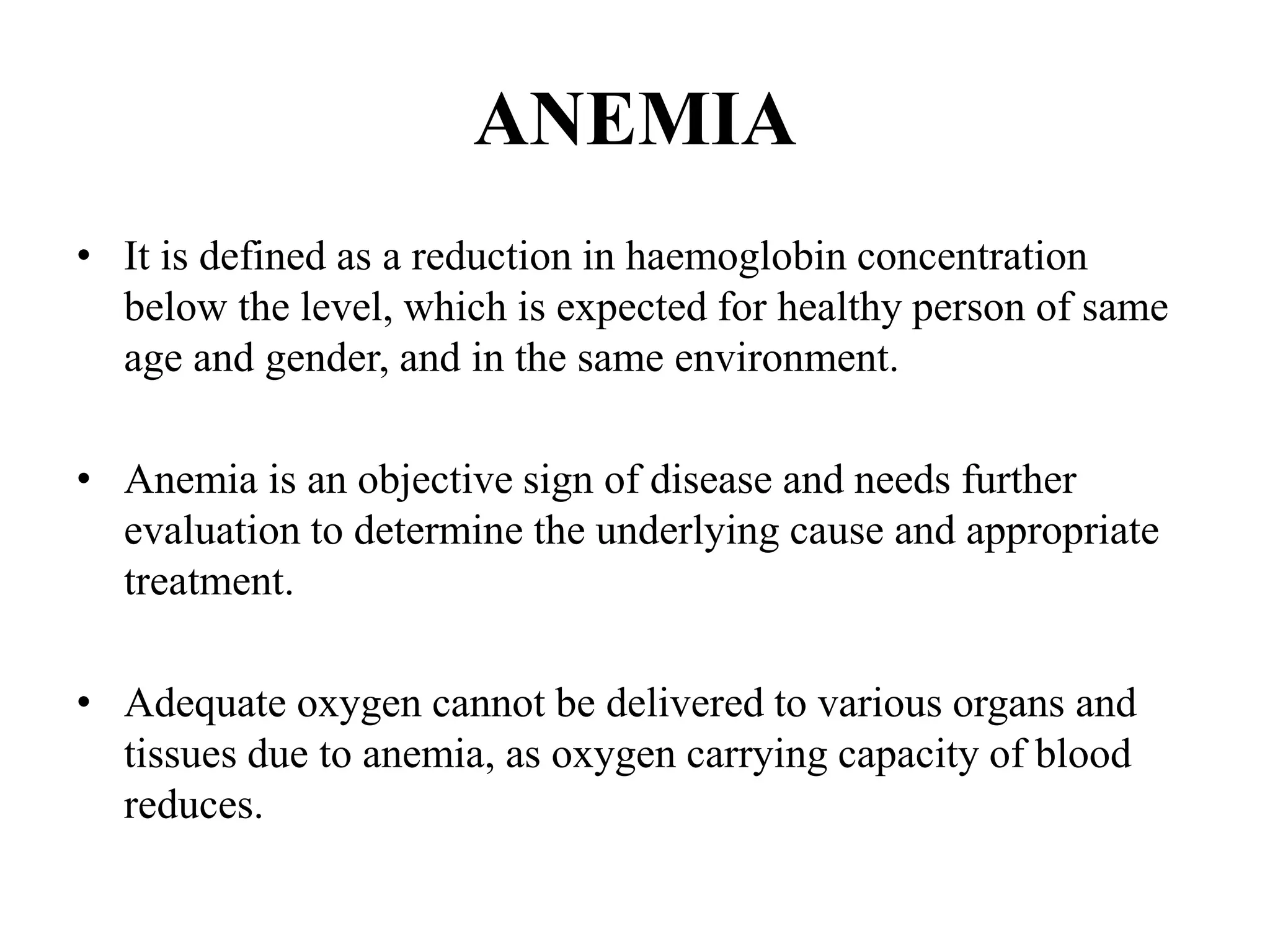
• It is defined as a reduction in haemoglobin concentration
below the level, which is expected for healthy person of same
age and gender, and in the same environment.
• Anemia is an objective sign of disease and needs further
evaluation to determine the underlying cause and appropriate
treatment.
• Adequate oxygen cannot be delivered to various organs and
tissues due to anemia, as oxygen carrying capacity of blood
reduces.
• Generally, anemia is recognized in the laboratory when a
patient’s hemoglobin level or hematocrit is reduced below an
expected value (the normal range).
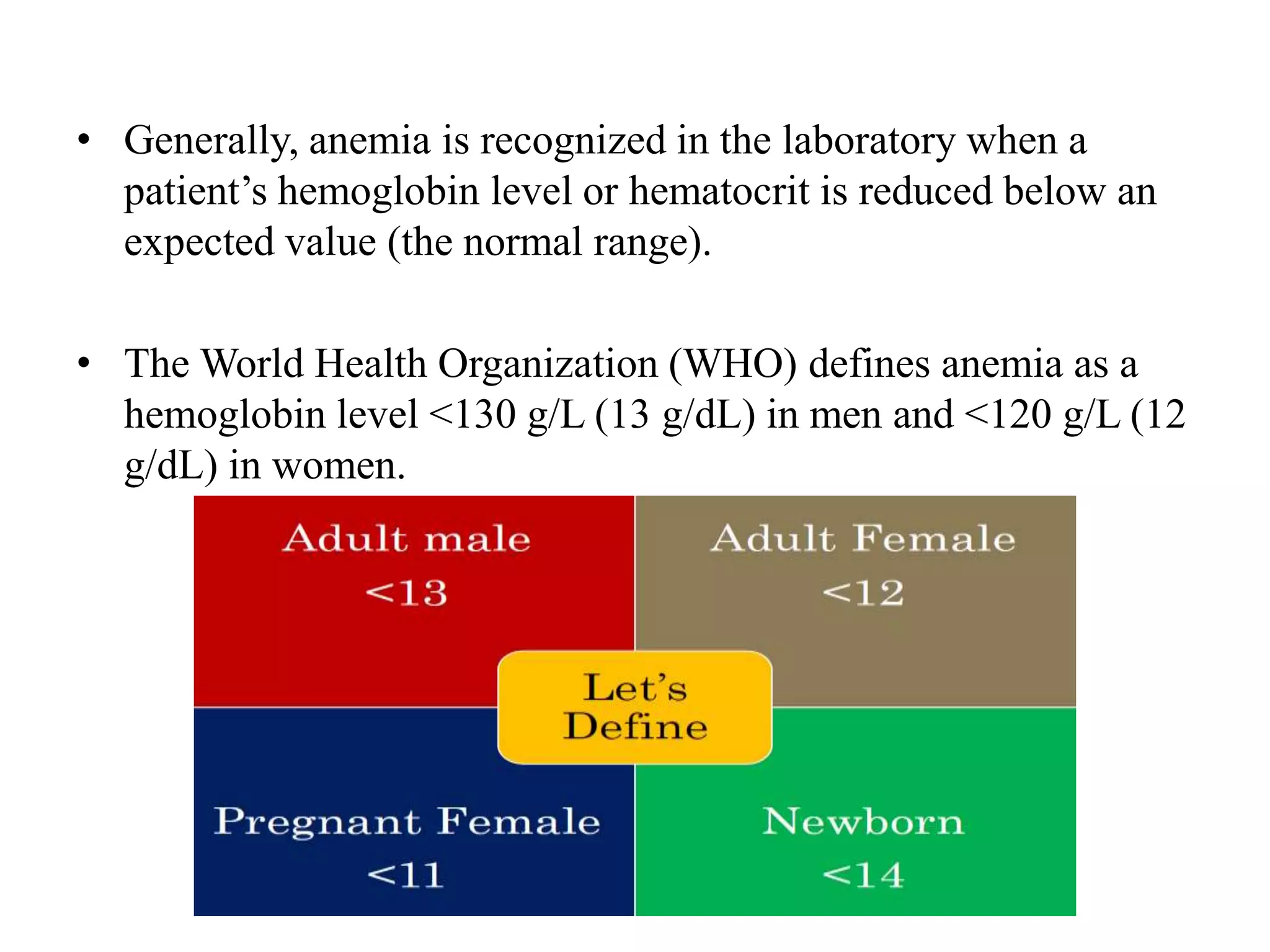
• The World Health Organization (WHO) defines anemia as a
hemoglobin level <130 g/L (13 g/dL) in men and <120 g/L (12
g/dL) in women.
RBC LIFE CYCLE
NORMAL RED CELL INDICES
• Red Cell Count:
• Male: 4.5 - 5.5 million/cumm
• Females: 3.8 - 4.8 million/cumm
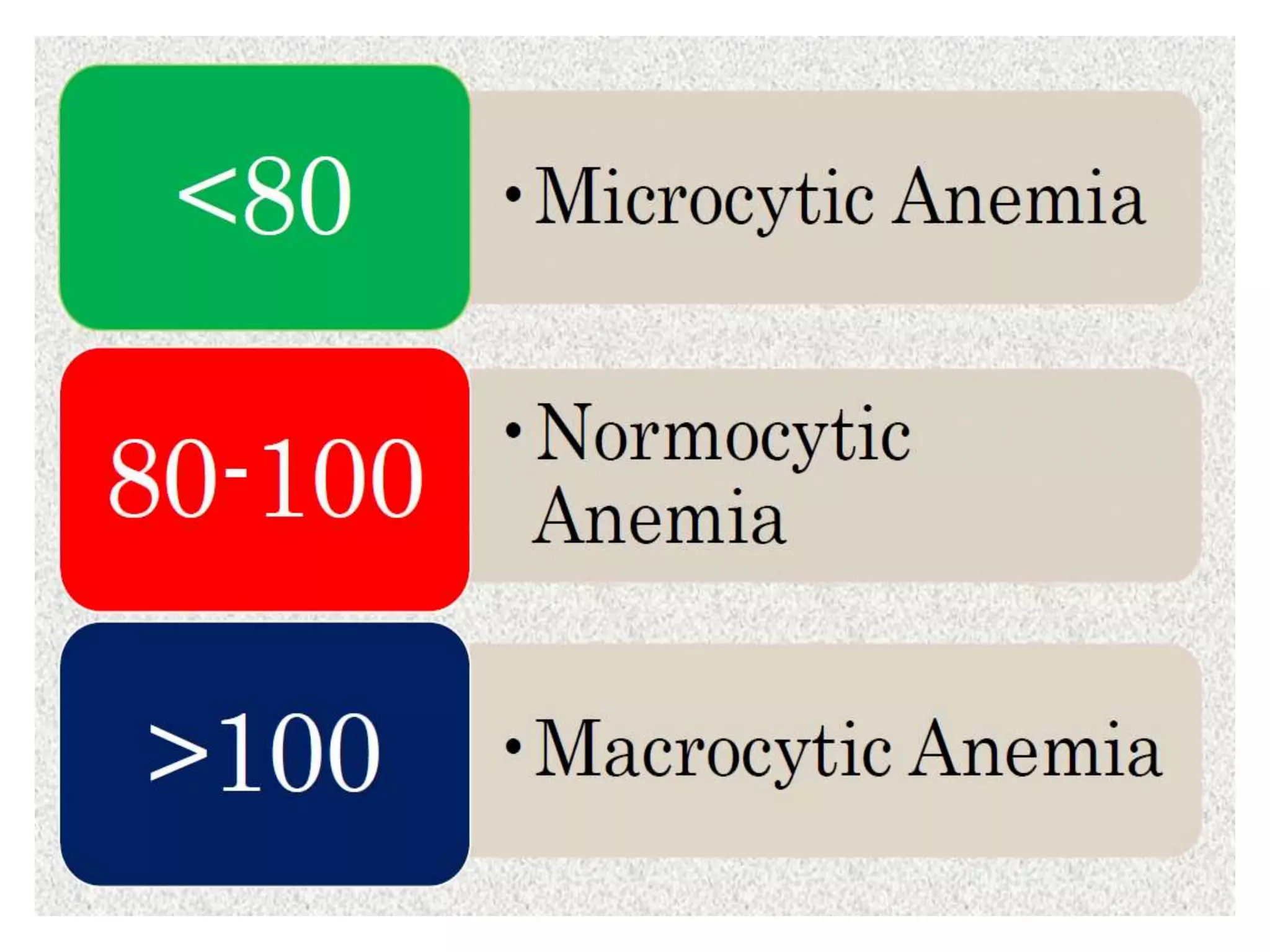
• Mean Corpuscular Volume: 80 - 100 fl
• Mean Corpuscular Hemoglobin: 27 - 32 pg
• Mean Corpuscular Hemoglobin Concentration: 32 - 36 g/dl
• Red Cell Distribution Width: 9 - 14.5
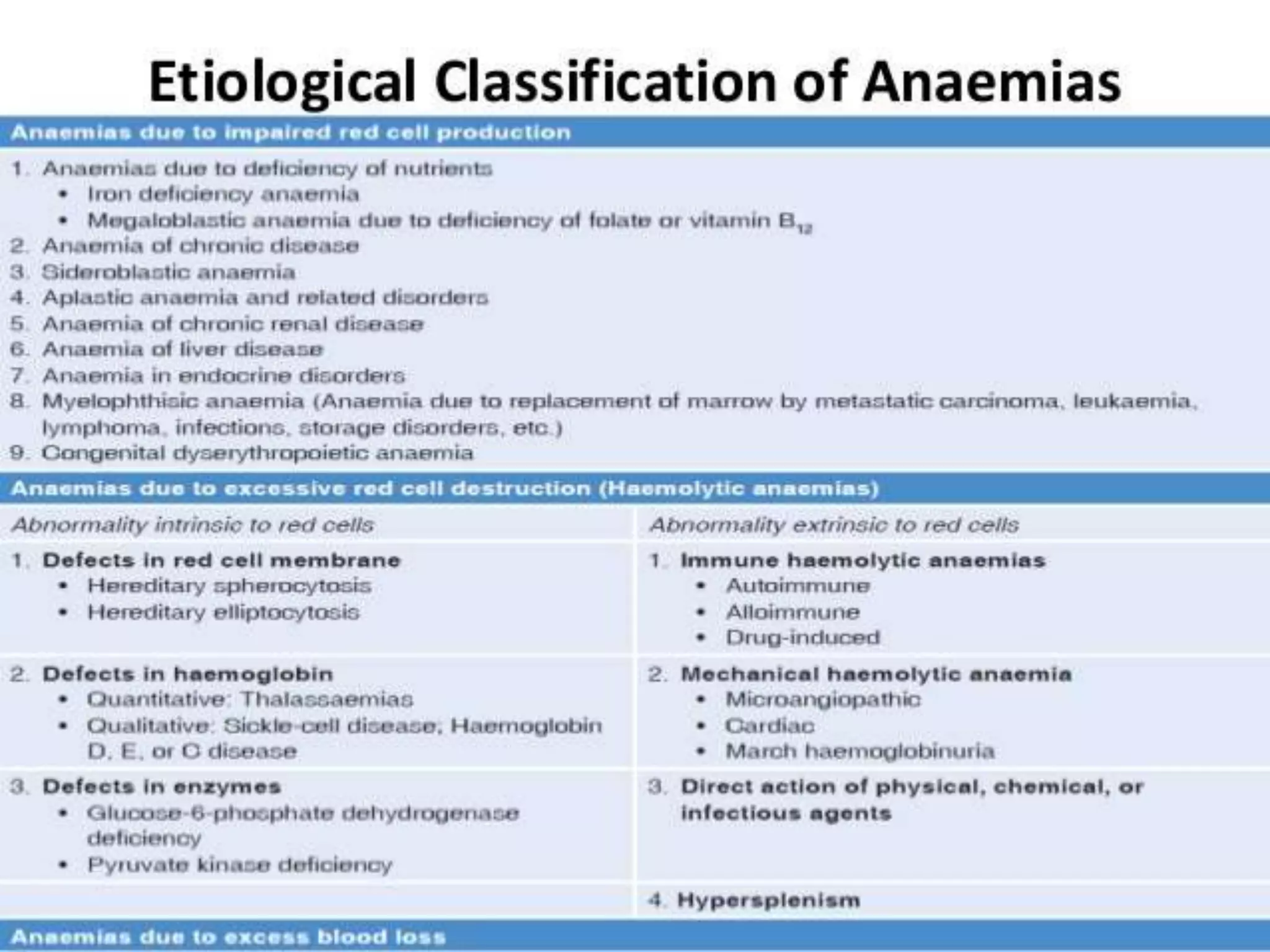
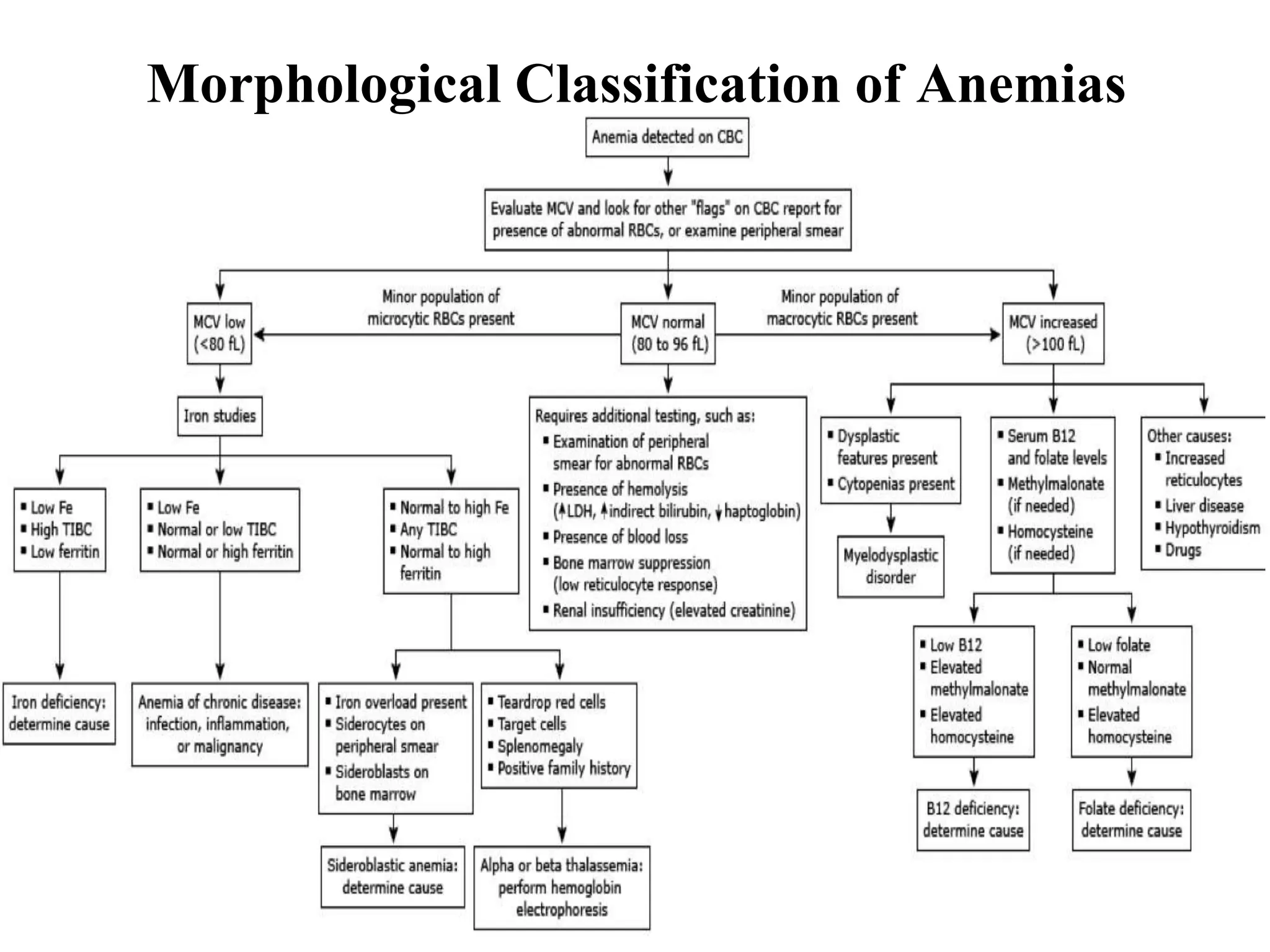
CLASSIFICATION
• Anemia is classified in two ways:
• Etiological classification
• Morphological classification.
Morphological Classification of Anemias
WORKUP
• History
• Physical Examination
• Laboratory Investigation
• Complete blood cell count
• Peripheral blood smear
• Reticulocyte count
• Other specialised test
HISTORY
• Family H/o Hemoglobinopathies, Bleeding Disorders
• H/o Jaundice, Gallstones, Spleenectomy and Bleeding
• H/o Recent Travel
• H/o Drug Intake
• H/o Dietary Intake (vegetarian, non-vegetarian, malnourished)
• H/o any major surgery
• H/o any worm in stool or dark tarry stools
• H/o Fever (infections, malignancies, connective tissue
disorders)
• H/o Excessive Menstruation (defined as flow duration
exceeding 7 days, more than 12 pads used, clots after 1st day
of menstruation).
PHYSICAL EXAMINATION
• General Examination:
• Scleral icterus
• Lymphadenopathy
• Sternal Tenderness
• Palpation of Liver and Spleen
• Fundus Examination
• Thorough examination of other systems
• Cardio-Vascular & Pulmonary Features:
• Exertional Fatigue, Dizziness, Faintness, Palpitations
• Severe Anemia can lead to Congestive Cardiac Failure,
Angina Pectoris & Intermittent Claudication
• On Examination Systolic Flow Murmurs can be heard.
• Skin And Mucosal features:
• Pallor (Palpebral conjunctiva, Tongue, Mucous Membrane
of Mouth and Pharynx, Nail Bed Skin & Creases of the
Palms)
• Nails may become brittle and early graying of hair
• Associated Jaundice (Hemolytic anemias, malignancies).
• Associated Petechiae (May suggest bone marrow failure or
anemia due to bleeding disorder)
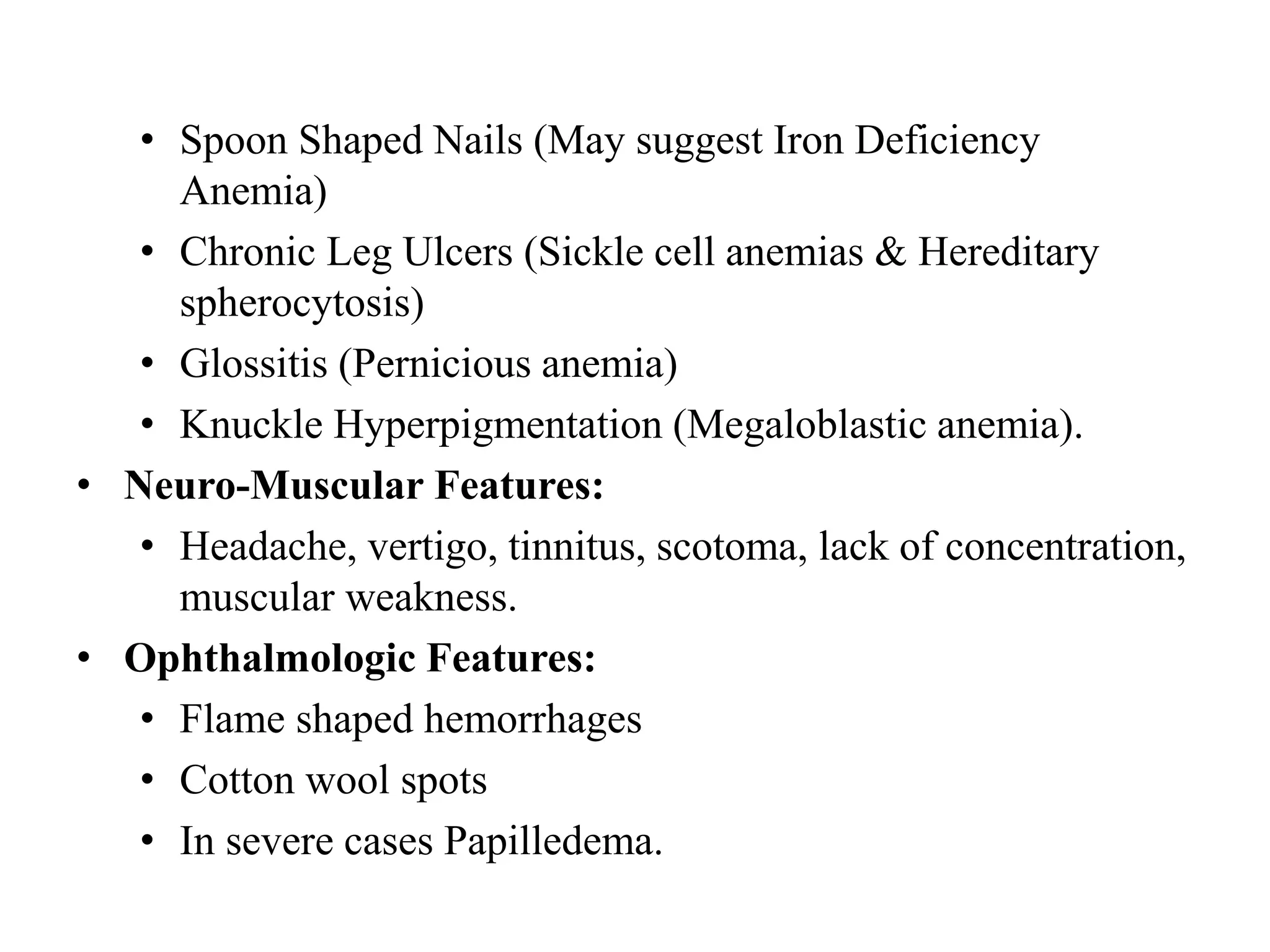
• Spoon Shaped Nails (May suggest Iron Deficiency
Anemia)
• Chronic Leg Ulcers (Sickle cell anemias & Hereditary
spherocytosis)
• Glossitis (Pernicious anemia)
• Knuckle Hyperpigmentation (Megaloblastic anemia).
• Neuro-Muscular Features:
• Headache, vertigo, tinnitus, scotoma, lack of concentration,
muscular weakness.
• Ophthalmologic Features:
• Flame shaped hemorrhages
• Cotton wool spots
• In severe cases Papilledema.
• Gastro-Intestinal Features:
• Dysphagia can be seen in Iron deficiency anemia
• Occult GI blood loss can cause Iron deficiency anemia
• Painful ulcerative lesions in mouth and pharynx can be
seen as a part of associated neutropenia.
LABORATORY INVESTIGATION
PERIPHERAL SMEAR
FINDINGS
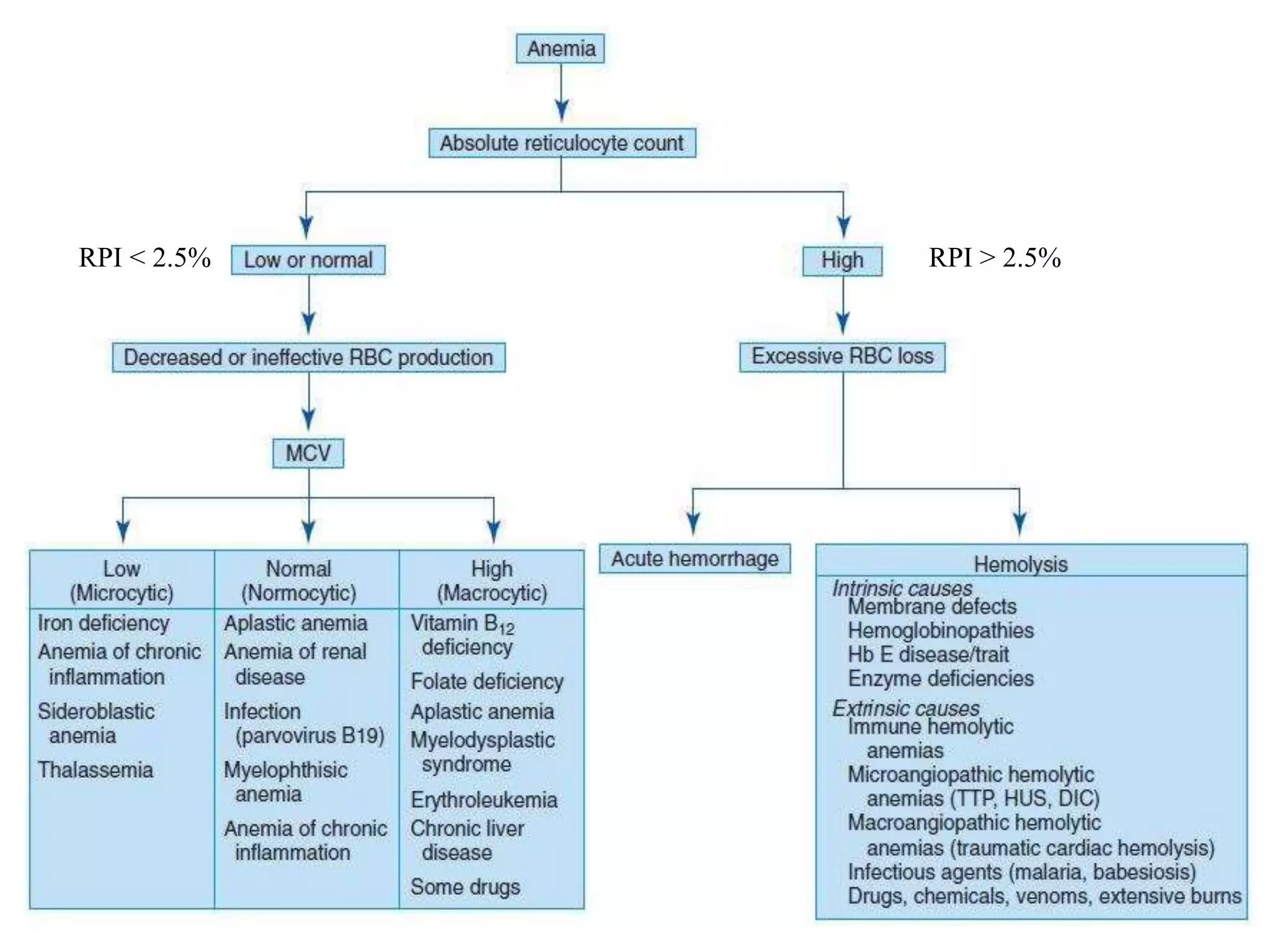
RPI > 2.5%
RPI < 2.5%
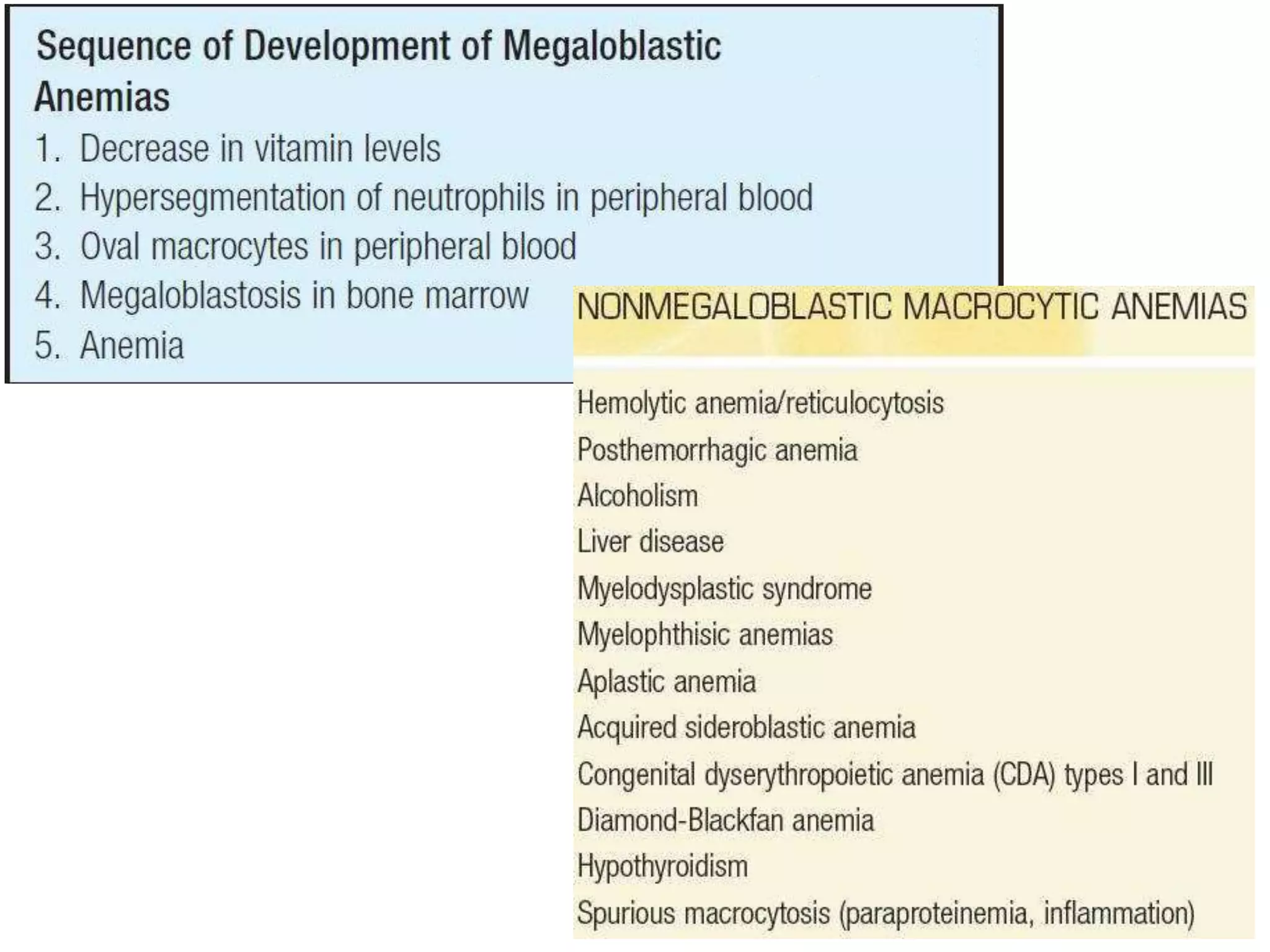
EVALUATION OF MACROCYTIC
ANEMIA
MCV 110-130 MCV 100-110
DRUGS CAUSING
MEGALOBLASTIC ANEMIA
• Folate antagonists (e.g., methotrexate)
• Purine antagonists (e.g., 6-mercaptopurine)
• Pyrimidine antagonists (e.g., cytosine arabinoside)
• Alkylating agents (e.g., cyclophosphamide)
• Zidovudine (AZT, Retrovir)
• Trimethoprim
• Oral contraceptives
• Nitrous oxide
• Arsenic
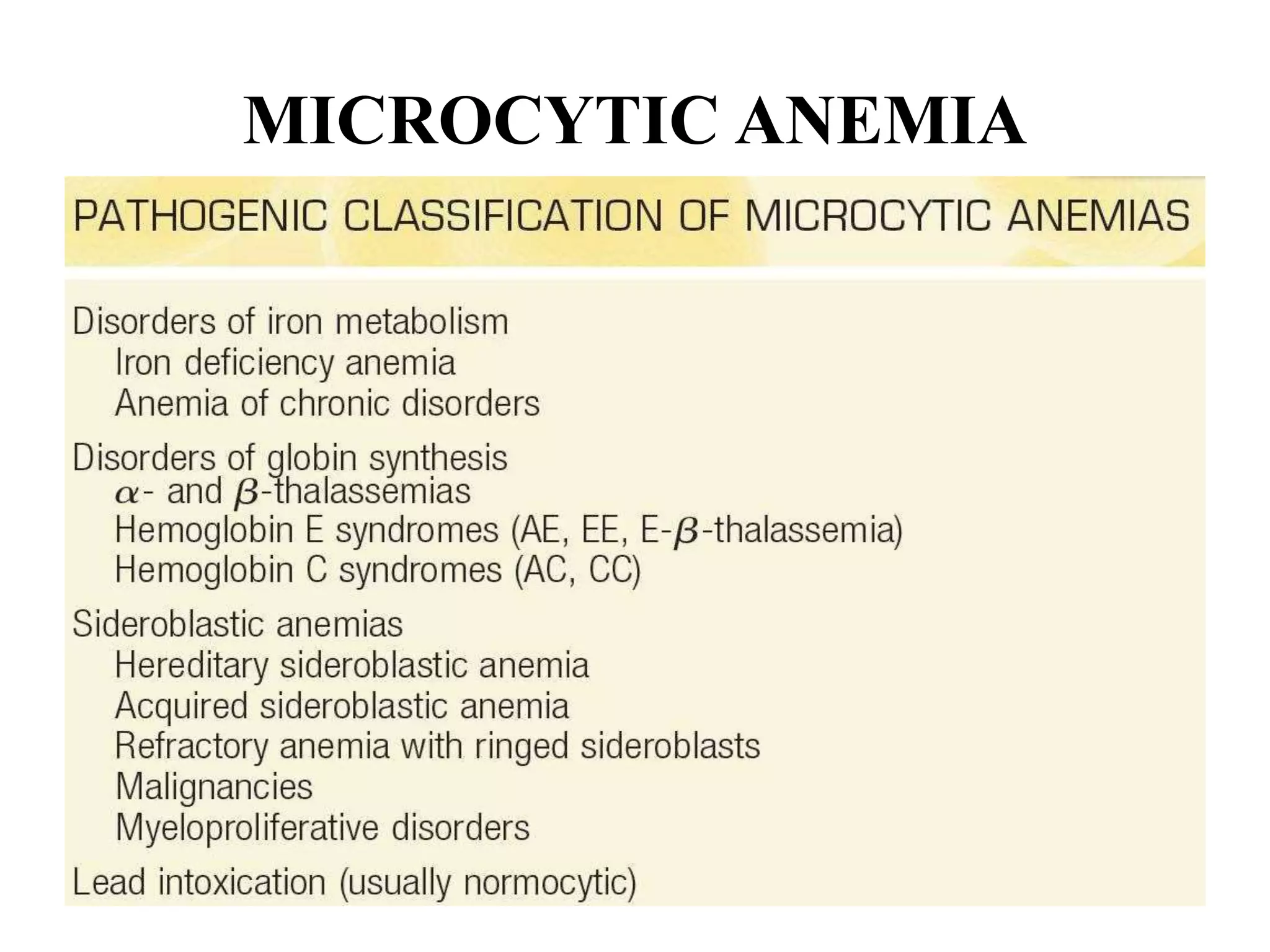
MICROCYTIC ANEMIA
IRON STORE
FEP/ZPP - Free erythrocyte protoporphyrin / Zinc protoporphyrin
• Serum Iron - Measures Iron bound to Transferrin 70-200 ug/dl
• TIBC - Total Iron binding capacity - 250-435 ug/dl
• TIBC saturation (Transferrin saturation) 20% - 45%
• Serum Ferritin - Males 20-500 ug/dl Females 10-200 ug/dl
• Bone Marrow Iron Stores Graded 0 to 6
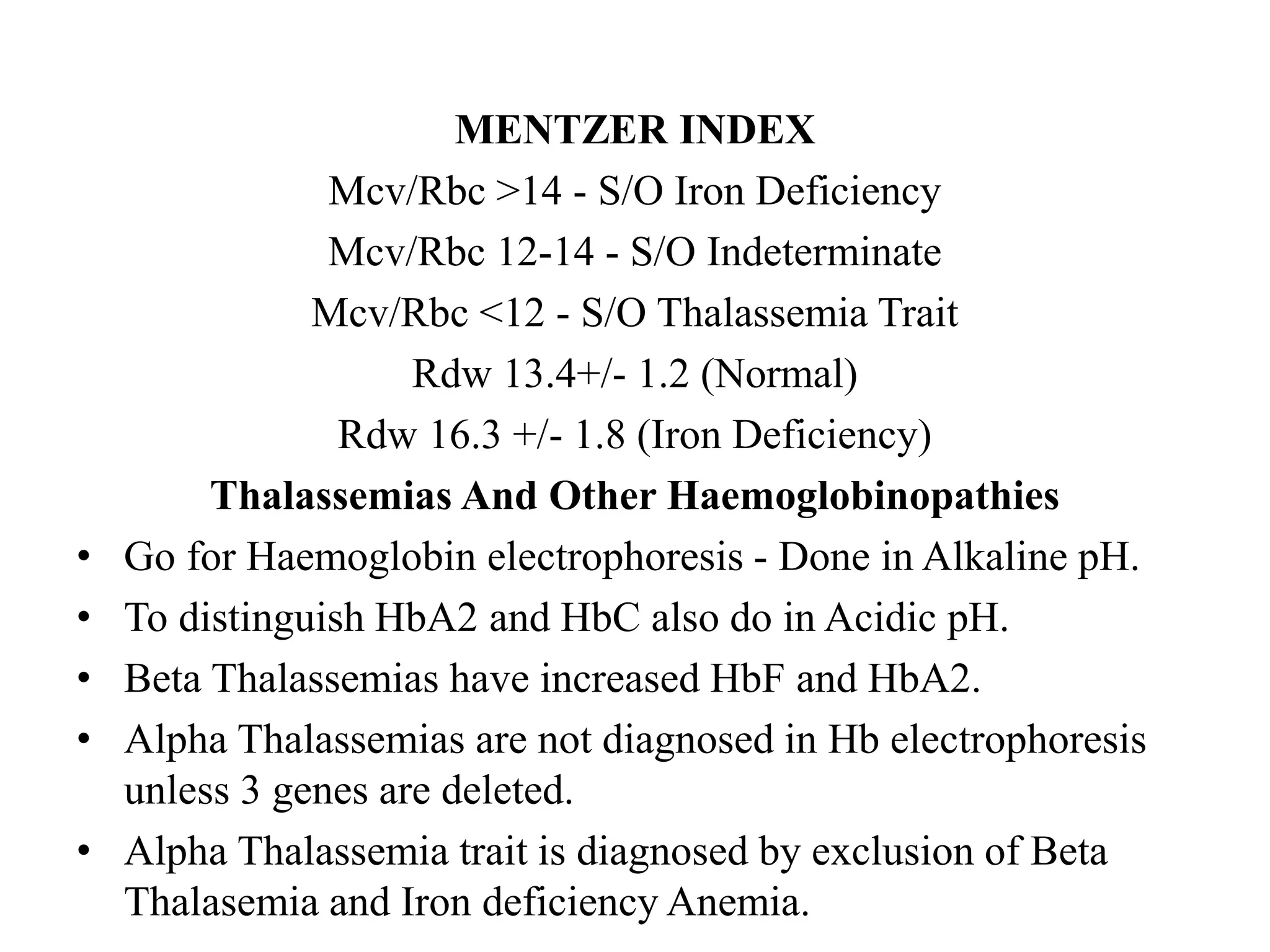
MENTZER INDEX
Mcv/Rbc >14 - S/O Iron Deficiency
Mcv/Rbc 12-14 - S/O Indeterminate
Mcv/Rbc <12 - S/O Thalassemia Trait
Rdw 13.4+/- 1.2 (Normal)
Rdw 16.3 +/- 1.8 (Iron Deficiency)
Thalassemias And Other Haemoglobinopathies
• Go for Haemoglobin electrophoresis - Done in Alkaline pH.
• To distinguish HbA2 and HbC also do in Acidic pH.
• Beta Thalassemias have increased HbF and HbA2.
• Alpha Thalassemias are not diagnosed in Hb electrophoresis
unless 3 genes are deleted.
• Alpha Thalassemia trait is diagnosed by exclusion of Beta
Thalasemia and Iron deficiency Anemia.
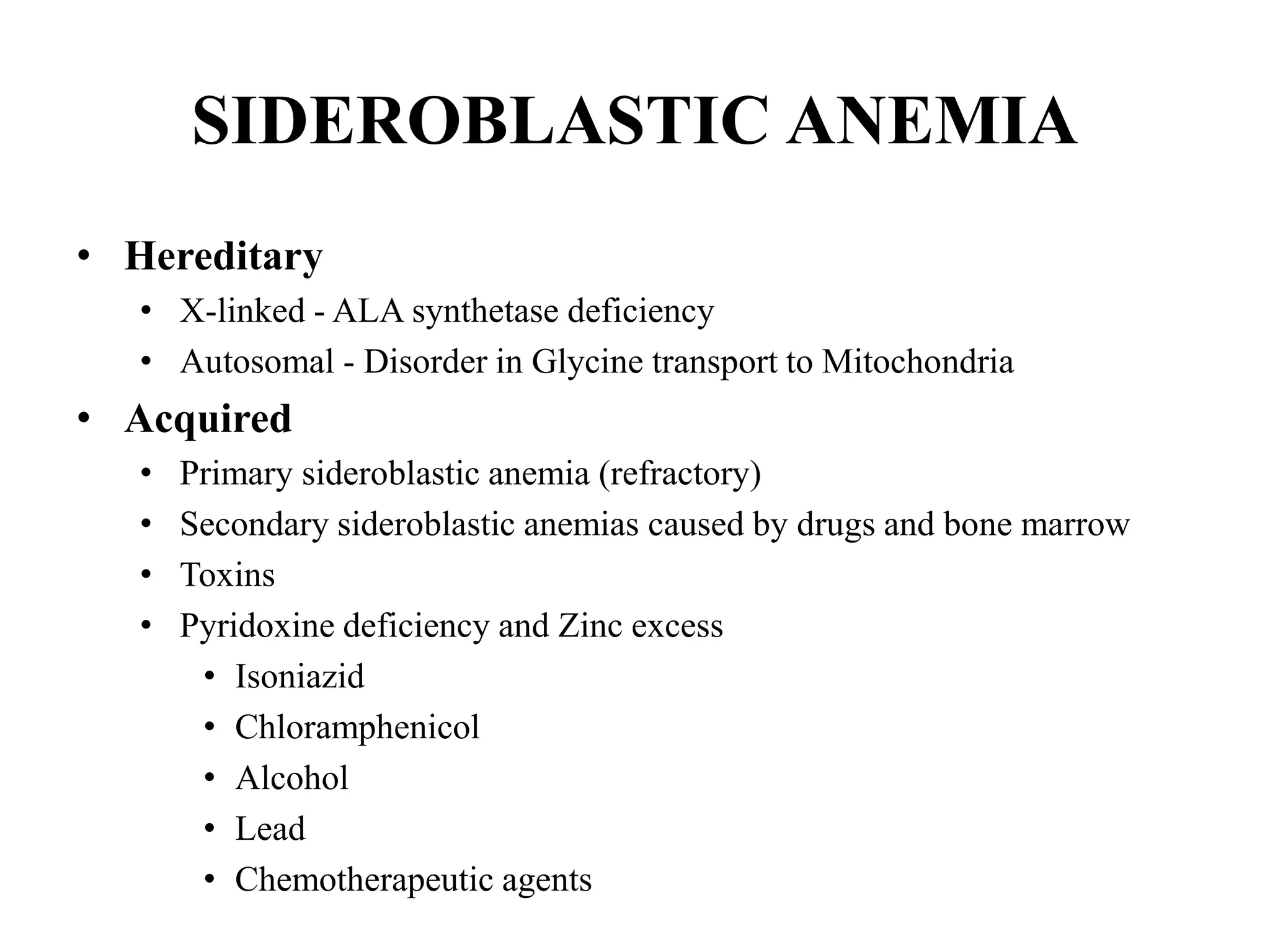
SIDEROBLASTIC ANEMIA
• Hereditary
• X-linked - ALA synthetase deficiency
• Autosomal - Disorder in Glycine transport to Mitochondria
• Acquired
• Primary sideroblastic anemia (refractory)
• Secondary sideroblastic anemias caused by drugs and bone marrow
• Toxins
• Pyridoxine deficiency and Zinc excess
• Isoniazid
• Chloramphenicol
• Alcohol
• Lead
• Chemotherapeutic agents
NORMOCYTIC ANEMIA
• Anemia associated with
appropriately increased
erythrocyte production
• Posthemorrhagic anemia
• Hemolytic anemia
• Decreased erythropoietin
secretion
• Renal: anemia of renal
insufficiency
• Hepatic: anemia of liver disease
• Anemia of endocrine deficiency
• Protein-calorie malnutrition
• Anemia of chronic disorders
• Anemia with impaired
marrow response
• Red blood cell aplasia
• Acquired pure red cell aplasia
in adults
• Transient aplastic crises
associated with hemolysis
• Aplastic anemia (pancytopenia)
• Bone marrow infiltrative
disorders
• Leukemia
• Myeloma
• Myelodysplastic anemias
• Congenital dyserythropoietic
anemia ([CDA] type II)
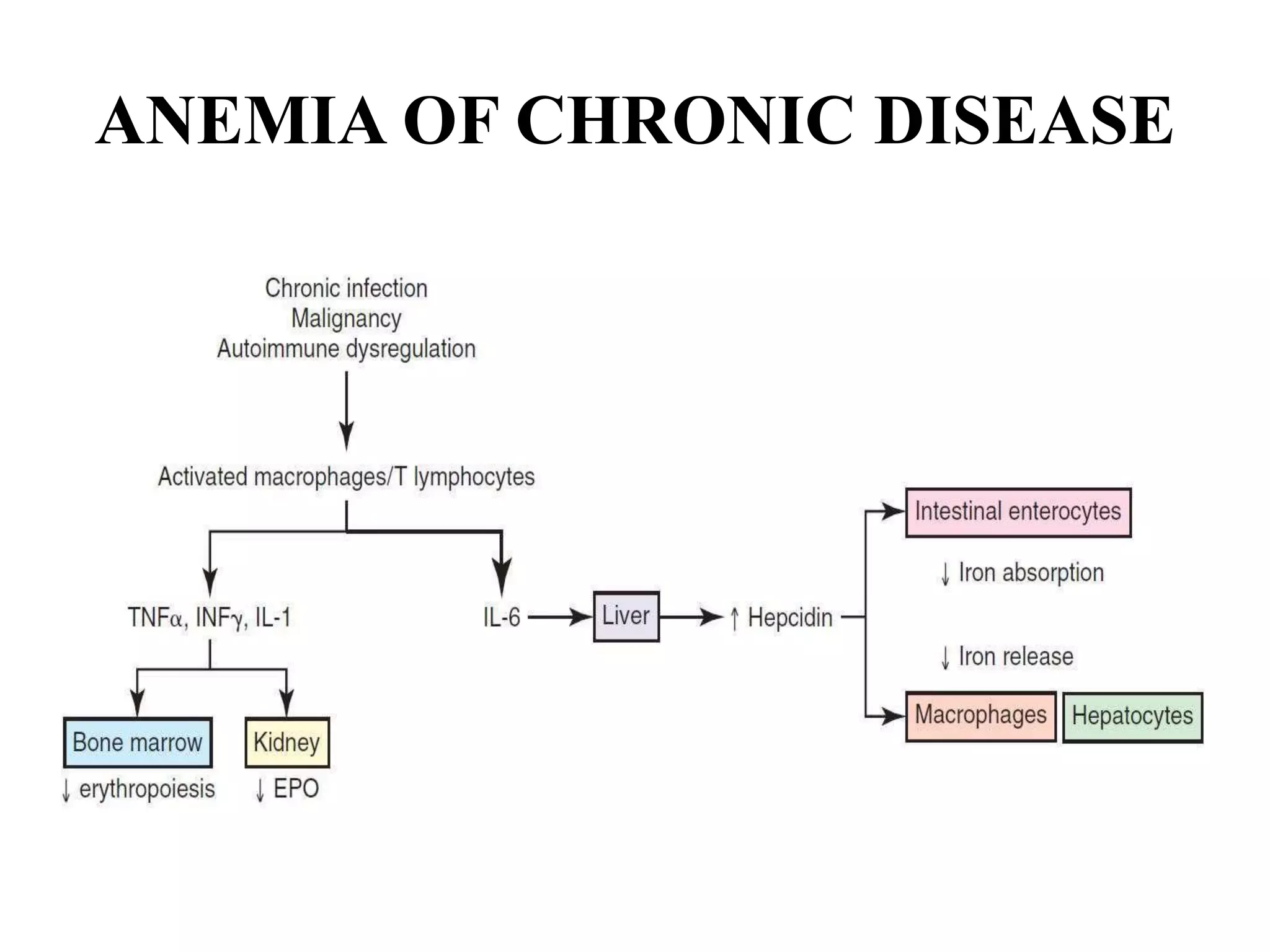
ANEMIA OF CHRONIC DISEASE
• Chronic Infections
• Pulmonary infections:
abscesses, TB, pneumonia
• Subacute bacterial endocarditis
• Pelvic inflammatory disease
• Osteomyelitis
• Chronic urinary tract infections
• Chronic fungal disease
• Meningitis
• Human immunodeficiency
virus
• Chronic, Noninfectious
Inflammations
• Rheumatoid arthritis
• Rheumatic fever
• Systemic lupus erythematosus
• Severe trauma
• Thermal injury
• Vasculitis
• Malignant Diseases
• Carcinoma
• Hodgkin disease
• Non-Hodgkin lymphoma
• Leukemia
• Multiple myeloma
• Miscellaneous
• Alcoholic liver disease
• Congestive heart failure
• Thrombophlebitis
• Ischemic heart disease
• Idiopathic
ANEMIA DUE TO IMPAIRED
BONE MARROW RESPONSE
• Red Blood Cell Aplasia
• Aplastic Anemia
• Myelodysplasia
• Leukemias
• Myelophthisic Anemia
• Marrow Infiltration
• Myeloma
• Congenital Dyserythropoietic Anemias
When to do Bone marrow cytology
or biopsy in a case of anemia?
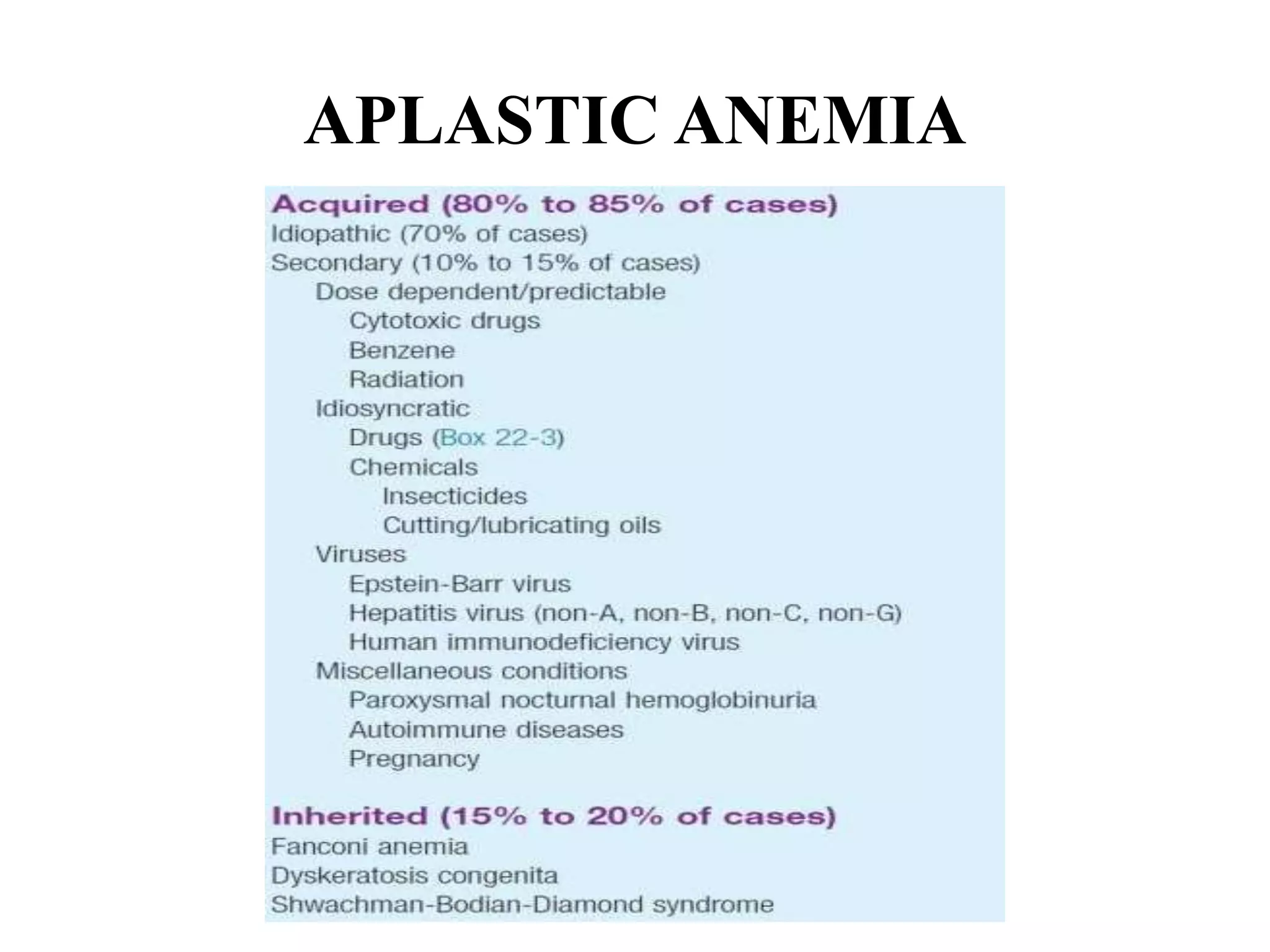
APLASTIC ANEMIA
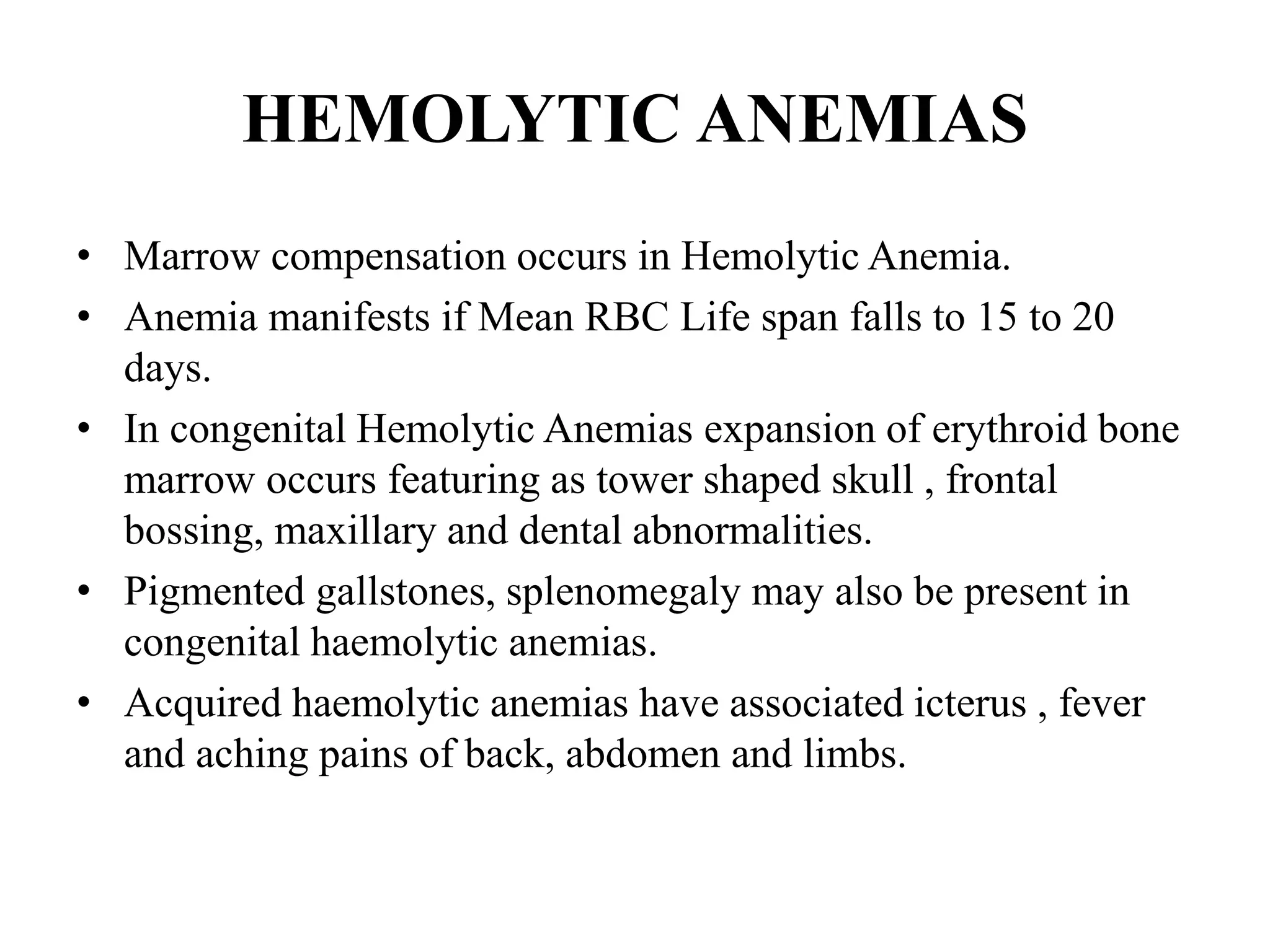
HEMOLYTIC ANEMIAS
HEMOLYTIC ANEMIAS
• Marrow compensation occurs in Hemolytic Anemia.
• Anemia manifests if Mean RBC Life span falls to 15 to 20
days.
• In congenital Hemolytic Anemias expansion of erythroid bone
marrow occurs featuring as tower shaped skull , frontal
bossing, maxillary and dental abnormalities.
• Pigmented gallstones, splenomegaly may also be present in
congenital haemolytic anemias.
• Acquired haemolytic anemias have associated icterus , fever
and aching pains of back, abdomen and limbs.
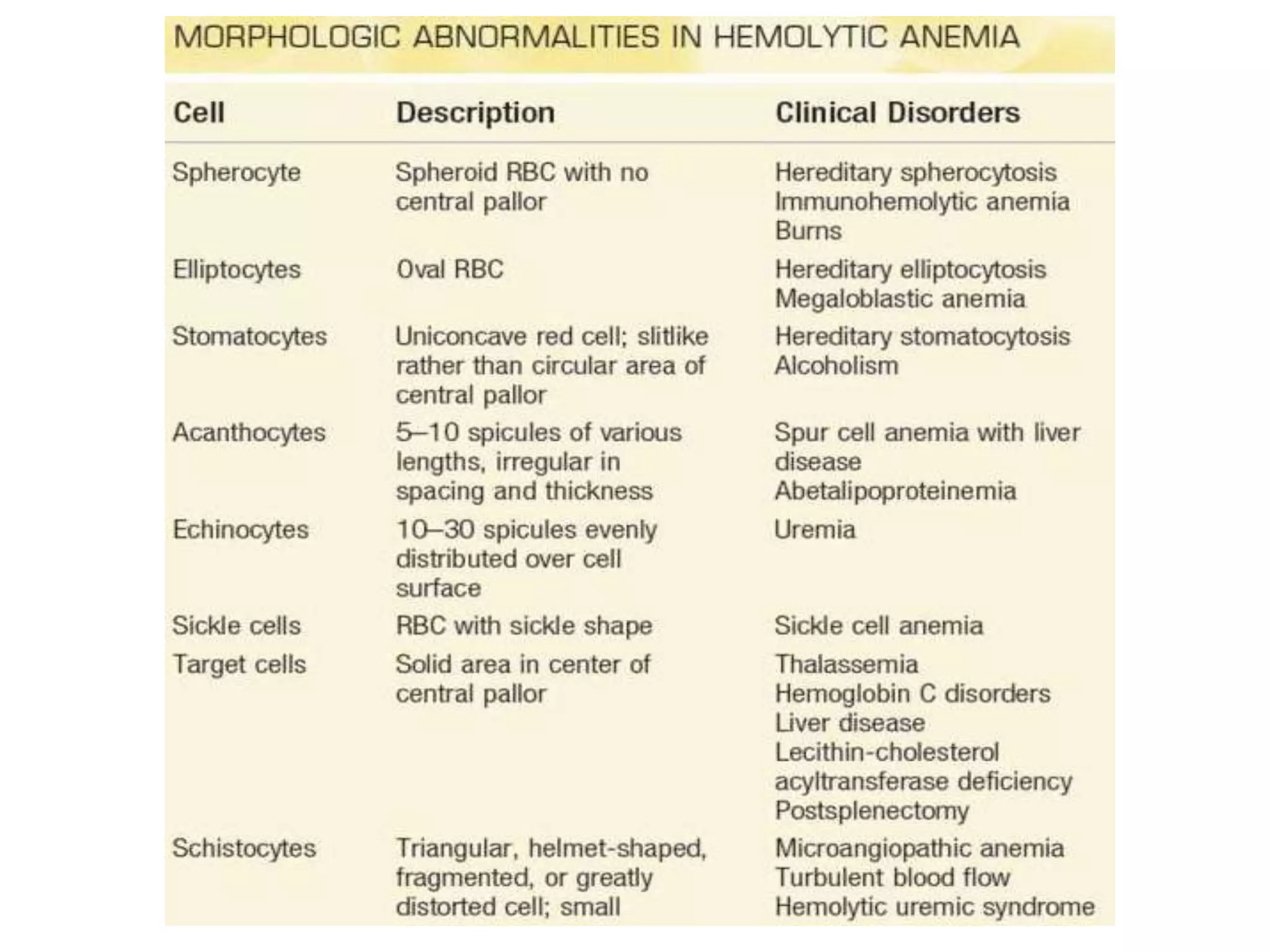
LABORATORY SIGNS OF
HEMOLYSIS
• Increased Indirect Bilirubin
• Increased serum LDH
• Decreased Serum
Haptoglobin
• Increased Carbon Monoxide
Production
• Intravascular Hemolysis
• Haemoglobinemia
• Haemoglobinuria
• Methaemalbuminaemia
• Reticulocytosis
• Peripheral smear
• Polychromatophilia
• Basophilic stippling
• Erythroblastosis
• Schistocytes
SICKLE CELLANEMIA
• Toddlers
• Splenomegaly & Sequestration
• Frequent infections
• Dactylitis
• Childhood
• Painful crises
• Acute chest syndrome
• Osteonecrosis
• Adolescence
• Painful crises
• Stroke
• Priapism
• Psychosocial problems
• Adults
• Painful crises
• Pulmonary Hypertension
• Renal insufficiency
• Osteonecrosis
• Retinopathy
• Leg Ulcers
Clinical complications of sickle cell anemia
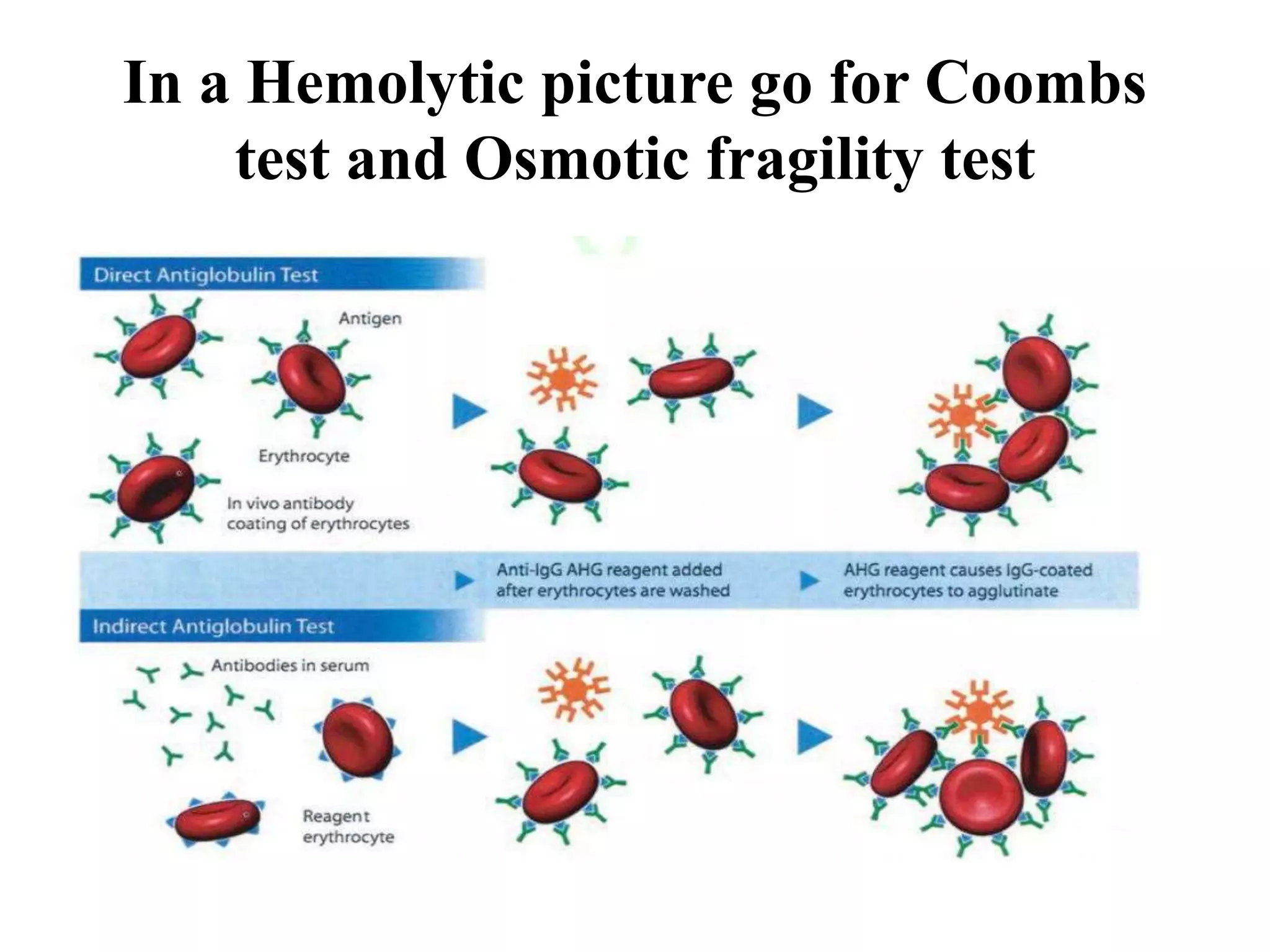
In a Hemolytic picture go for Coombs
test and Osmotic fragility test
DISEASES OR CONDITIONS
ASSOCIATED WITH WARM
AUTOIMMUNE ANTIBODIES
• Autoimmune disorders
• Systemic lupus erythematosus
• Rheumatoid arthritis
• Scleroderma
• Ulcerative colitis
• Antiphospholipid antibodies
• Lymphoproliferative
disorders
• Chronic lymphocytic leukemia
• Acute myelocytic leukemia
• Hodgkin’s lymphoma
• Non-Hodgkin’s lymphoma
• Multiple myeloma
• Other Neoplastic disorders
• Thymoma
• Teratoma
• Kaposi sarcoma
• Viral Infections
• EBV
• KIV
• Hepatitis C
• Other
• DPT Vaccination
• Bone Marrow Transplantation
• Hypogammaglobulinemia
• Pregnancy
DISORDERS ASSOCIATED WITH
COLD AUTOIMMUNE ANTIBODIES
• Idiopathic Cold agglutinin
disease
• Paroxysmal Cold
Hemoglobinuria
• Neoplasms
• Waldenstrom
Macroglobulinemia
• CLL
• Myeloma
• Kaposi sarcoma
• Infections
• Mycoplasma
• EBV
• Adenovirus
• Influenza
• Rubella
• Mumps
• Varicella
• HIV
• E Coli
• Legionnaires disease
• Malaria
• Trypanasomiasis
• Syphilis
• Tropical Eosinophilia
CASE 1
• A 12 year old white female came to the physician complaining
of weakness, lethargy and inability to do work for the past 2
month. Upon questioning she revealed that she just had her
first menstrual cycle (menarche) last month and it lasted for 20
days. Also this month she is having heavy periods. Today is
her 15th day . She has breathlessness and palpitations while
climbing stairs. Also she had episodes of dizziness but no
fainting. Family hx is positive for menorrhagia.
• Vitals: BP= 110/ 74; HR= 115; RR= 16; T= 36.8
• Examination showed overall pallor, pale nail bed , pale
conjunctiva and pale gums. No yellow discoloration of the
sclera or skin.
• CVS Heart murmur II/VI.
• RS Normal breath sound.
• PA Soft lax and non-tender.
• Pelvic Normal.
• CBC:
• WBC- 6000
• Hb- 5g/dl
• RBC count: 3 million/ mm3
• Hct= 18%
• MCV- 56 fl
• MCH- 20 pg
• MCHC- 26 g/dl
• Platelet- 200,000/mm
• Reticulocyte-8%
• Serum Iron- 30mcg/dL
• TIBC- 450
• Ferritin-9 ng/ml
• Transferrin saturation- 7%
• What do you infer from
here?
• Microcytic Hypochromic
Anemia
• What kind of anemia is
this?
• Iron Deficiency Anemia
IRON DEFICIENCY ANEMIA
• Most common type of anemia worldwide.
• Causes:
• Blood loss - overt/occult
• Decreased Iron absorption - Celiac disease, atrophic gastritis,
H. Pylori gastritis
• Gastric Bypass surgery
• Clinical Presentation- weakness, headache, irritability,
fatigue, exercise intolerance and pica
• Diagnosis- Microcytic hypochromic anemia with high RDW,
low serum Iron, Low ferritin, low transferrin saturation and
High TIBC
TREATMENT
• Oral Iron Therapy
• The recommended dose for IDA in adults is 150-200mg/day.
• Three forms are available:
• Ferrous fumarate- 106 mg of elemental Iron/tablet
• Ferrous Sulfate- 65mg of EI/tablet
• Ferrous gluconate- 28- 36mg of EI/tablet
• Parental Iron therapy
• Indication-Excessive bleeding, IBD, CKD, Cancer patient or unable
tolerate orally.
• Ferric gluconate 125 mg diluted in 100ml of isotonic saline over 30-60
minutes
• Blood Transfusion
• Hemodynamically unstable
• Evidence of end-organ damage due to ischemia
• In HF patient.
CASE 2
• A 19 year old male presented to the clinic in tertiary care due
to fatigue, abdominal pain, joint pain and a general feeling of
being unwell since 2-3 months. He says that he was diagnosed
to have a blood disorder at the age of 1 year. Since then he has
received several blood transfusion.
• On examination, he is a thin built with relatively short stature,
sitting comfortably, not in distress. He is vitally stable.
• General examination showed pallor, hyperpigmentation of the
skin and yellowish discoloration of the sclera. Head and neck
examination reveal depressed cranial vault, frontal bossing,
maxillary expansion and exposure of upper teeth. Abdominal
examination shows hepatomegaly and splenomegaly.
• CBC:
• Hb- 8.4 g/dL
• MCV- 90.1 fl
• WBC- 11.6 x 10⁹/L
• Platelets- 161 x 106/L
• Reticulocytes- 5%
• PBS- microcytic,
hypochromic, polychromasia,
nucleated RBCs, target cells,
poikilocytosis and
anisocytosis
• Bilirubin (Indirect)-
1.9mg/dL
• Hb Electropheresis-
• HbA- 87.5%
• Hb A2- 2.2%
• Hb F- 10.3%
• Iron Studies:
• Serum Iron- 219 mcg/dL
• Ferritin- 1000ng/ml
• TIBC- 250mcg/dL
• LFTs:
• ALT- 90 U/L
• AST- 75 U/L
• What is diagnosis?
• Beta-thalassemia (Major)
• What do you infer from above tests?
• Iron overload
• How to manage this patient?
• Admit the patient
• Packed RBC transfusion
• Chelation therapy- deferoxamine
• Also do cardiac and liver MRI.
• Other investigations: TSH, LH, FSH, testosterone, FBS,
HbA1c
BETA THALASSEMIA
• Thalassemia results when mutations affecting the genes
involved in Hb biosynthesis, lead to decreased Hb production.
• Clinical presentation: fatigue, weakness, palpitation, short
stature, frontal bossing maxillary expansion, abnormal teeth,
hepatomegaly, splenomegaly etc.
• If Iron overload: joint pain, abdominal pain, bronze skin,
palpitations, depression.
• Diagnosis:
• Microcytic hypochromic anemia
• Peripheral blood film shows- microcytosis, hypochromia,
polychromasia, target cells and nucleated RBCs
• Hb Electropheresis- decreased amount of hbA, variable
amount of Hb A2 and increased HbF.
• Complications:
• Iron overload ( cirrhosis, cardiomyopathy)
• Endocrinopathies
• Cortical destruction and impaired bone function
• Arterial venous thromboembolism.
• Management:
• Transfusion:
• Chronic transfusion has become the accepted regimen for BTM patients
in order to maintain a Hb 0f 9-10 g/dL.
• The usual transfusion regimen involves infusion of one to three units of
packed red cells every three to five weeks.
• Chelation therapy:
• Initiated usually after 20-25 unit of transfusion.
• Current regimens for DFO treatment in transfusion-dependent beta
thalassemia call for a nightly 10 to 12 hour continuous subcutaneous
infusion of about 2 g of DFO using a small battery-driven pump.
• Endocrine therapy:
• Administration of deficient hormones (sex and thyroid
hormones)
• Treatment of Diabetes
• Use of fertility agent
• Supportive care: cardiac monitoring, monitoring for
osteoporosis and osteopenia, folic acid, zinc replacement etc.
• Splenectomy: Indicated in patients with beta-thalassemia
major and intermedia requiring an increase of 50 percent or
more in the red cell transfusion over a one-year.
• HCT: definitive treatment for appropriately selected patients.
CASE 3
• An 25 year old man comes to the clinic for evaluation of
weakness and fatigue lasting for 6 weeks. Before the past 6
weeks he reports being fairly healthy. He did how ever had a
recent case of ‘flu’. On reviewing his medical records it seems
that approximately two months ago patient had a mild hepatitis
(serology for Hep A, B & C were negative).
• Before this illness, he has been healthy, takes no medication
and has no family history of any disease. No history of blood
transfusion. He does not smoke or use illicit drugs and is
sexually inactive.
• Physical examination revealed marked pallor and a non-
radiating systolic murmur heard best at the right upper sternal
border. Abdominal examination reveals few scattered petichae
but no hepato-splenomegaly.
• Labs:
• Hb- 5.0g/dL
• Hct- 15%
• WBC- 4000/cumm
• Differentials normal
• Reticulocytes- 0.5%
• What do you infer from the results?
• Pancytopenia
• Other chemistries and liver function was normal.
• What is the next most important test you would do?
• Bone marrow biopsy- It showed cellularity of < 5% with
normal cellular morphology and no organism on gram stain.
• Diagnosis: Aplastic Anemia.
APLASTIC ANEMIA
• Aplastic anemia is characterized by diminished or absent
hematopoietic precursors in the bone marrow, most often due
to injury to the pluripotent stem cell.
• Causes- drugs ( antiepileptic drugs, nifedipine), viral
infections (hepatitis), radiation.
• Clinical presentation: fatigue, dizziness, palpitations,
infections, fever, petechia, pallor, easy bruising, menorrhagia,
etc.
• Lab findings: pancytopenia, low reticulocyte count, reduced
cellular elements (morphologically normal). Bone marrow
biopsy shows decreased cellularity.
• Management:
• Withdrawal of the potentially offending agent.
• Supportive Care ( transfusion, Antibiotics/ Antiviral).
• For patients under age of 20 years allogenic HCT is the
treatment of choice.
• For patients between 20-45 if the patient is healthy and has a
full HLA- matched sibling donor, the Allogenic HCT is the
choice.
• Over 45 years Immunosuppressive therapy with combined use
of anti-thymocyte globulin, cyclosporine , and corticosteroids,
without granulocyte-colony stimulating factor, is
recommended.
• In older adults, treatment should be provided based upon age
and comorbidities present.
CASE 4
• A 15 year old African- American presented to the ER with
acute onset of Left hemiparesis that started 3 hours ago. The
patient has no history of thromboembolic disease, no family
history of venous or arterial thrombosis, and no atherosclerotic
risk factors for stroke.
• But he says he has a blood disease where he gets frequent
pains in legs, joints, chest and needs to come to hospital for IV
pain medication.
• Physical Exam shows scleral jaundice, no splenomegaly.
• CBC:
• Hb- 8.0g/dL
• MCV- 82.3 fl
• WBC- 9800/cumm
• ANC- 8500
• Platelets- 465000/cumm
• Reticulocyte- 7%
• Indirect Bilirubin- 84mg/dL
• PBS- Numerous Sickle cell
• Non-contrast CT brain showed acute RT MCA infarct
• What is the most likely diagnosis?
• Sickle Cell Crisis
SICKLE CELLANEMIA
• AR disease where there is a substitution of valine for glutamic
acid in the beta globin chain of Hb which produces Hb
tetramer which poorly soluble when deoxygenated.
• Clinical presentation- anemia, jaundice and painful episodes,
delayed growth and puberty, neurocognitive impairment,
osteonecrosis, infections.
• Laboratory findings- Mild to moderate anemia,
reticulocytosis, unconjugated hyperbilirubinemia, increased
level of LDH and decreased level of Haptoglobin.
• Peripheral Blood Smear reveal normocytic normochromic red
cells sickled red cells, polychromasia and Howell jolly bodies
reflecting asplenia.
MANAGEMENT
• Routine Evaluation
• Hydroxyurea
• Pain Management With Analgesics
• Prophylactic Antibiotics
• Appropriate Immunization
• Blood Transfusion.
CASE 5
• A 35 year old man being treated with phenytoin for epilepsy
comes to the physician for routine check-up examination. He
has been seizure free for the past 3 years.
• Physical exam reveals pallor of the skin and mucosa and slight
jaundiced discoloration of the sclera and a red and a shiny
tongue. He denies paresthesia and sensation is normal on
neurological exam.
• CBC:
• Hb- 8.5 g/dL
• Hct- 28%
• MCV- 130 fl
• MCH- 35 pg
• WBC- 4800/cumm
• Platelets- 140,000/cumm
• Reticulocyte- 0.2%
• Bilirubin
• Total- 2.0 mg/dL
• Direct- 0.3 mg/dL
• Peripheral Blood Smear:
Macrocytes, ovalocytes, &
hypersegmented neutrophil.
• LDH- 600U/L
• Additional test:
• Folate level- 1 ng/ml (2-
20ng/ml)
• Vitamin B12 level- 300 pg/ml
(200-500pg/ml)
• Most likely Diagnosis?
• Folate Deficiency Anemia
VITAMIN B12 & FOLATE
DEFICIENCY
• Vitamin B12 deficiency
• Takes years to develop
• Neurological Symptoms are present- ataxia, paresthesia loss of
vibration sense etc.
• Folate deficiency
• Take months to develop
• No neurological deficits.
• How to differentiate between Folate and Vitamin B12
deficiency?
• Assays of serum or red cell folate, serum B12,
methylmalonate, and homocysteine.
• Lab Findings: macrovalocytic anemia, elevated level of iron,
indirect bilirubin and LDH and low level of haptoglobins
• PBS: macrovalocytes, occasional megaloblasts and
hypersegmented neutrophil.
• Treatment:
• Folate Deficiency Anemia
• Folate deficiency is treated with folic acid (1 to 5 mg/day
orally) for one to four months, or until complete hematologic
recovery occurs.
• Vitamin B12 Deficiency Anemia
• Parenteral Cobalmin is given to patient with Perinicious
Anemia.
• The recommended dose is 1000mcg to 2000mcg.
CASE 6
• A 12 year old girl presented to the Emergency Department
with fever (38.6 C) headache, abdominal pain, vomiting and
yellowish discoloration of eyes of 5 days duration.
• Physical examination revealed marked pallor, fever,
tachycardia, tachypnea and icterus. There was no
lymphadenopathy, edema, rash, petichae or bruises.
• Cardio vascular examination revealed a 3/6 systolic murmur
along the left sternal border. A non tender soft hepatomegaly
with a span of 14 cm and a soft spleen 3 cm below the left
costal margin was noted. Lung fields were clear and
neurological examination was normal.
• CBC:
• WBC- 9000/cumm
• Hb- 3g/dL
• MCV- 128 fl
• MCH- 50.9 pg
• MCHC- 39.7 g/dL
• Platelets- 170,000/cumm
• Reticulocyte- 10%
• Total Bilirubin- 4.5mg/dL
• Indirect Bilirubin- 3.2 mg/dL
• PBS- Agglutination of RBCs was noted that separated on
warming. Smear showed anisopikilocytosis with predominant
macrocytes, hypochromia and nucleated red blood cells.
• LFT & Urinalysis were normal.
• What is the next important test to be done ?
• DAT- strongly positive
• Most likely Diagnosis?
• Auto Immune Hemolytic Anemia
AUTOIMMUNE HEMOLYTIC
ANEMIA
• Hemolytic anemias which results from the development of
auto antibodies directed against antigens on the surface of
patient’s own red blood cells.
• Causes- associated with infections, malignancy and other
autoimmune disease.
• Clinical manifestation- anemia, jaundice, splenomegaly.
• Diagnosis: Reticulocytosis, raised serum bilirubin and positive
DAT. The presence of agglutination at T <37 C suggest cold
auto-antibodies. Monospecific DAT will help to differentiate
between warm and cold antibodies.
• How to manage this patient?
• Admit the patient
• 2 units Packed RBC transfusion
• IV prednisolone 2mg/kg/day
• IV ceftriaxone
• Treatment:
• Transfusion of red cell if Hb is considerably low. It is
complicated because of cross matching problems and rapid in
vivo destruction of transfused cells due to the presence of auto
antibodies.
• Corticosteroid is the main stay of therapy for warm AIHA.
• Immunosuppressive agent including monoclonal Anti-CD20
(Rituximab) proves useful in CAD and refractory warm AIHA.
• Splenectomy benefit in refractory cases of warm AIHA.
CASE 7
• A 50 year old man comes to the physician because of gingival
bleeding, epistaxis and fever for 2 days. He appears acutely ill.
• His temperature is 39 C, BP- 120/70, HR- 120/min and
respiration of 22 /min. Bilateral rhonchi is heard on chest
auscultation. He is admitted for further evaluation.
• Chest x- ray shows bibasilar infiltrates consistent with
bronchopneumonia.
• CBC:
• WBC- 16,900/cumm (numerous blasts)
• Hb- 7.5 g/dL
• Platelets- 15000/cumm
• Bone Marrow Biopsy- It shows hypercellular bone marrow
with 35% blasts.
• Elongated cytoplasmic inclusion could be appreciated in
peripheral and marrow blast
• What is the diagnosis?
• AML
• Treatment :
• Induction and consolidation Chemotherapy.
REMEMBER
• Anemia is rather a presentation of an underlying condition.
Anemia due to nutritional deficiencies are common. Early
detection is important to prevent permanent neurological
deficits.
• CBC, reticulocyte count, PBS, Indirect Bilirubin level are
preliminary test in diagnosis of anemia.
• Low Hb with high reticulocyte count indicates normal
functioning bone marrow.
• Low Hb with normal or low reticulocyte suggests bone
marrow failure.
• Pancytopenia represent either bone marrow dysfunction or
Hypersplenism.
• Jaundice, high indirect bilirubin, presence of schistocytes,
increased LDH is suggestive of hemolysis.
• Presence of blast cell in the peripheral blood smear point
towards malignancy.
• Always aim to stabilize the patient first, before investigating
for cause of anemia.
• Hb< 7g/dL or patient with acute blood loss and symptomatic is
indication for transfusion.
• While diagnosing IDA, GI causes and bleeding disorder
should be always kept in mind.
• In patient receiving chronic transfusion, ferritin and iron level
should be monitored along with careful observation of signs
and symptoms of iron overload.
THANK YOU

approach to anemia

  • 1.
    APPROACH TO ACASE OF ANEMIA Presented By: Dr. Gaurav Singh Raghuwanshi PG Resident IInd Year Moderator: Dr. Ajay Kumar Professor, Dept. Of Medicine
  • 2.
    ANEMIA • It isdefined as a reduction in haemoglobin concentration below the level, which is expected for healthy person of same age and gender, and in the same environment. • Anemia is an objective sign of disease and needs further evaluation to determine the underlying cause and appropriate treatment. • Adequate oxygen cannot be delivered to various organs and tissues due to anemia, as oxygen carrying capacity of blood reduces.
  • 3.
    • Generally, anemiais recognized in the laboratory when a patient’s hemoglobin level or hematocrit is reduced below an expected value (the normal range). • The World Health Organization (WHO) defines anemia as a hemoglobin level <130 g/L (13 g/dL) in men and <120 g/L (12 g/dL) in women.
  • 4.
  • 5.
    NORMAL RED CELLINDICES • Red Cell Count: • Male: 4.5 - 5.5 million/cumm • Females: 3.8 - 4.8 million/cumm • Mean Corpuscular Volume: 80 - 100 fl • Mean Corpuscular Hemoglobin: 27 - 32 pg • Mean Corpuscular Hemoglobin Concentration: 32 - 36 g/dl • Red Cell Distribution Width: 9 - 14.5
  • 6.
    CLASSIFICATION • Anemia isclassified in two ways: • Etiological classification • Morphological classification.
  • 8.
  • 10.
    WORKUP • History • PhysicalExamination • Laboratory Investigation • Complete blood cell count • Peripheral blood smear • Reticulocyte count • Other specialised test
  • 11.
    HISTORY • Family H/oHemoglobinopathies, Bleeding Disorders • H/o Jaundice, Gallstones, Spleenectomy and Bleeding • H/o Recent Travel • H/o Drug Intake • H/o Dietary Intake (vegetarian, non-vegetarian, malnourished) • H/o any major surgery • H/o any worm in stool or dark tarry stools • H/o Fever (infections, malignancies, connective tissue disorders) • H/o Excessive Menstruation (defined as flow duration exceeding 7 days, more than 12 pads used, clots after 1st day of menstruation).
  • 12.
    PHYSICAL EXAMINATION • GeneralExamination: • Scleral icterus • Lymphadenopathy • Sternal Tenderness • Palpation of Liver and Spleen • Fundus Examination • Thorough examination of other systems
  • 13.
    • Cardio-Vascular &Pulmonary Features: • Exertional Fatigue, Dizziness, Faintness, Palpitations • Severe Anemia can lead to Congestive Cardiac Failure, Angina Pectoris & Intermittent Claudication • On Examination Systolic Flow Murmurs can be heard. • Skin And Mucosal features: • Pallor (Palpebral conjunctiva, Tongue, Mucous Membrane of Mouth and Pharynx, Nail Bed Skin & Creases of the Palms) • Nails may become brittle and early graying of hair • Associated Jaundice (Hemolytic anemias, malignancies). • Associated Petechiae (May suggest bone marrow failure or anemia due to bleeding disorder)
  • 14.
    • Spoon ShapedNails (May suggest Iron Deficiency Anemia) • Chronic Leg Ulcers (Sickle cell anemias & Hereditary spherocytosis) • Glossitis (Pernicious anemia) • Knuckle Hyperpigmentation (Megaloblastic anemia). • Neuro-Muscular Features: • Headache, vertigo, tinnitus, scotoma, lack of concentration, muscular weakness. • Ophthalmologic Features: • Flame shaped hemorrhages • Cotton wool spots • In severe cases Papilledema.
  • 15.
    • Gastro-Intestinal Features: •Dysphagia can be seen in Iron deficiency anemia • Occult GI blood loss can cause Iron deficiency anemia • Painful ulcerative lesions in mouth and pharynx can be seen as a part of associated neutropenia.
  • 16.
  • 17.
  • 20.
  • 25.
  • 28.
    DRUGS CAUSING MEGALOBLASTIC ANEMIA •Folate antagonists (e.g., methotrexate) • Purine antagonists (e.g., 6-mercaptopurine) • Pyrimidine antagonists (e.g., cytosine arabinoside) • Alkylating agents (e.g., cyclophosphamide) • Zidovudine (AZT, Retrovir) • Trimethoprim • Oral contraceptives • Nitrous oxide • Arsenic
  • 29.
  • 30.
  • 31.
    FEP/ZPP - Freeerythrocyte protoporphyrin / Zinc protoporphyrin • Serum Iron - Measures Iron bound to Transferrin 70-200 ug/dl • TIBC - Total Iron binding capacity - 250-435 ug/dl • TIBC saturation (Transferrin saturation) 20% - 45% • Serum Ferritin - Males 20-500 ug/dl Females 10-200 ug/dl • Bone Marrow Iron Stores Graded 0 to 6
  • 33.
    MENTZER INDEX Mcv/Rbc >14- S/O Iron Deficiency Mcv/Rbc 12-14 - S/O Indeterminate Mcv/Rbc <12 - S/O Thalassemia Trait Rdw 13.4+/- 1.2 (Normal) Rdw 16.3 +/- 1.8 (Iron Deficiency) Thalassemias And Other Haemoglobinopathies • Go for Haemoglobin electrophoresis - Done in Alkaline pH. • To distinguish HbA2 and HbC also do in Acidic pH. • Beta Thalassemias have increased HbF and HbA2. • Alpha Thalassemias are not diagnosed in Hb electrophoresis unless 3 genes are deleted. • Alpha Thalassemia trait is diagnosed by exclusion of Beta Thalasemia and Iron deficiency Anemia.
  • 35.
    SIDEROBLASTIC ANEMIA • Hereditary •X-linked - ALA synthetase deficiency • Autosomal - Disorder in Glycine transport to Mitochondria • Acquired • Primary sideroblastic anemia (refractory) • Secondary sideroblastic anemias caused by drugs and bone marrow • Toxins • Pyridoxine deficiency and Zinc excess • Isoniazid • Chloramphenicol • Alcohol • Lead • Chemotherapeutic agents
  • 36.
  • 37.
    • Anemia associatedwith appropriately increased erythrocyte production • Posthemorrhagic anemia • Hemolytic anemia • Decreased erythropoietin secretion • Renal: anemia of renal insufficiency • Hepatic: anemia of liver disease • Anemia of endocrine deficiency • Protein-calorie malnutrition • Anemia of chronic disorders • Anemia with impaired marrow response • Red blood cell aplasia • Acquired pure red cell aplasia in adults • Transient aplastic crises associated with hemolysis • Aplastic anemia (pancytopenia) • Bone marrow infiltrative disorders • Leukemia • Myeloma • Myelodysplastic anemias • Congenital dyserythropoietic anemia ([CDA] type II)
  • 38.
  • 39.
    • Chronic Infections •Pulmonary infections: abscesses, TB, pneumonia • Subacute bacterial endocarditis • Pelvic inflammatory disease • Osteomyelitis • Chronic urinary tract infections • Chronic fungal disease • Meningitis • Human immunodeficiency virus • Chronic, Noninfectious Inflammations • Rheumatoid arthritis • Rheumatic fever • Systemic lupus erythematosus • Severe trauma • Thermal injury • Vasculitis • Malignant Diseases • Carcinoma • Hodgkin disease • Non-Hodgkin lymphoma • Leukemia • Multiple myeloma • Miscellaneous • Alcoholic liver disease • Congestive heart failure • Thrombophlebitis • Ischemic heart disease • Idiopathic
  • 40.
    ANEMIA DUE TOIMPAIRED BONE MARROW RESPONSE • Red Blood Cell Aplasia • Aplastic Anemia • Myelodysplasia • Leukemias • Myelophthisic Anemia • Marrow Infiltration • Myeloma • Congenital Dyserythropoietic Anemias
  • 41.
    When to doBone marrow cytology or biopsy in a case of anemia?
  • 42.
  • 43.
  • 44.
    HEMOLYTIC ANEMIAS • Marrowcompensation occurs in Hemolytic Anemia. • Anemia manifests if Mean RBC Life span falls to 15 to 20 days. • In congenital Hemolytic Anemias expansion of erythroid bone marrow occurs featuring as tower shaped skull , frontal bossing, maxillary and dental abnormalities. • Pigmented gallstones, splenomegaly may also be present in congenital haemolytic anemias. • Acquired haemolytic anemias have associated icterus , fever and aching pains of back, abdomen and limbs.
  • 45.
    LABORATORY SIGNS OF HEMOLYSIS •Increased Indirect Bilirubin • Increased serum LDH • Decreased Serum Haptoglobin • Increased Carbon Monoxide Production • Intravascular Hemolysis • Haemoglobinemia • Haemoglobinuria • Methaemalbuminaemia • Reticulocytosis • Peripheral smear • Polychromatophilia • Basophilic stippling • Erythroblastosis • Schistocytes
  • 47.
    SICKLE CELLANEMIA • Toddlers •Splenomegaly & Sequestration • Frequent infections • Dactylitis • Childhood • Painful crises • Acute chest syndrome • Osteonecrosis • Adolescence • Painful crises • Stroke • Priapism • Psychosocial problems • Adults • Painful crises • Pulmonary Hypertension • Renal insufficiency • Osteonecrosis • Retinopathy • Leg Ulcers Clinical complications of sickle cell anemia
  • 48.
    In a Hemolyticpicture go for Coombs test and Osmotic fragility test
  • 49.
    DISEASES OR CONDITIONS ASSOCIATEDWITH WARM AUTOIMMUNE ANTIBODIES • Autoimmune disorders • Systemic lupus erythematosus • Rheumatoid arthritis • Scleroderma • Ulcerative colitis • Antiphospholipid antibodies • Lymphoproliferative disorders • Chronic lymphocytic leukemia • Acute myelocytic leukemia • Hodgkin’s lymphoma • Non-Hodgkin’s lymphoma • Multiple myeloma • Other Neoplastic disorders • Thymoma • Teratoma • Kaposi sarcoma • Viral Infections • EBV • KIV • Hepatitis C • Other • DPT Vaccination • Bone Marrow Transplantation • Hypogammaglobulinemia • Pregnancy
  • 50.
    DISORDERS ASSOCIATED WITH COLDAUTOIMMUNE ANTIBODIES • Idiopathic Cold agglutinin disease • Paroxysmal Cold Hemoglobinuria • Neoplasms • Waldenstrom Macroglobulinemia • CLL • Myeloma • Kaposi sarcoma • Infections • Mycoplasma • EBV • Adenovirus • Influenza • Rubella • Mumps • Varicella • HIV • E Coli • Legionnaires disease • Malaria • Trypanasomiasis • Syphilis • Tropical Eosinophilia
  • 52.
    CASE 1 • A12 year old white female came to the physician complaining of weakness, lethargy and inability to do work for the past 2 month. Upon questioning she revealed that she just had her first menstrual cycle (menarche) last month and it lasted for 20 days. Also this month she is having heavy periods. Today is her 15th day . She has breathlessness and palpitations while climbing stairs. Also she had episodes of dizziness but no fainting. Family hx is positive for menorrhagia. • Vitals: BP= 110/ 74; HR= 115; RR= 16; T= 36.8 • Examination showed overall pallor, pale nail bed , pale conjunctiva and pale gums. No yellow discoloration of the sclera or skin.
  • 53.
    • CVS Heartmurmur II/VI. • RS Normal breath sound. • PA Soft lax and non-tender. • Pelvic Normal. • CBC: • WBC- 6000 • Hb- 5g/dl • RBC count: 3 million/ mm3 • Hct= 18% • MCV- 56 fl • MCH- 20 pg • MCHC- 26 g/dl • Platelet- 200,000/mm • Reticulocyte-8% • Serum Iron- 30mcg/dL • TIBC- 450 • Ferritin-9 ng/ml • Transferrin saturation- 7% • What do you infer from here? • Microcytic Hypochromic Anemia • What kind of anemia is this? • Iron Deficiency Anemia
  • 54.
    IRON DEFICIENCY ANEMIA •Most common type of anemia worldwide. • Causes: • Blood loss - overt/occult • Decreased Iron absorption - Celiac disease, atrophic gastritis, H. Pylori gastritis • Gastric Bypass surgery • Clinical Presentation- weakness, headache, irritability, fatigue, exercise intolerance and pica • Diagnosis- Microcytic hypochromic anemia with high RDW, low serum Iron, Low ferritin, low transferrin saturation and High TIBC
  • 55.
    TREATMENT • Oral IronTherapy • The recommended dose for IDA in adults is 150-200mg/day. • Three forms are available: • Ferrous fumarate- 106 mg of elemental Iron/tablet • Ferrous Sulfate- 65mg of EI/tablet • Ferrous gluconate- 28- 36mg of EI/tablet • Parental Iron therapy • Indication-Excessive bleeding, IBD, CKD, Cancer patient or unable tolerate orally. • Ferric gluconate 125 mg diluted in 100ml of isotonic saline over 30-60 minutes • Blood Transfusion • Hemodynamically unstable • Evidence of end-organ damage due to ischemia • In HF patient.
  • 56.
    CASE 2 • A19 year old male presented to the clinic in tertiary care due to fatigue, abdominal pain, joint pain and a general feeling of being unwell since 2-3 months. He says that he was diagnosed to have a blood disorder at the age of 1 year. Since then he has received several blood transfusion. • On examination, he is a thin built with relatively short stature, sitting comfortably, not in distress. He is vitally stable. • General examination showed pallor, hyperpigmentation of the skin and yellowish discoloration of the sclera. Head and neck examination reveal depressed cranial vault, frontal bossing, maxillary expansion and exposure of upper teeth. Abdominal examination shows hepatomegaly and splenomegaly.
  • 57.
    • CBC: • Hb-8.4 g/dL • MCV- 90.1 fl • WBC- 11.6 x 10⁹/L • Platelets- 161 x 106/L • Reticulocytes- 5% • PBS- microcytic, hypochromic, polychromasia, nucleated RBCs, target cells, poikilocytosis and anisocytosis • Bilirubin (Indirect)- 1.9mg/dL • Hb Electropheresis- • HbA- 87.5% • Hb A2- 2.2% • Hb F- 10.3% • Iron Studies: • Serum Iron- 219 mcg/dL • Ferritin- 1000ng/ml • TIBC- 250mcg/dL • LFTs: • ALT- 90 U/L • AST- 75 U/L
  • 58.
    • What isdiagnosis? • Beta-thalassemia (Major) • What do you infer from above tests? • Iron overload • How to manage this patient? • Admit the patient • Packed RBC transfusion • Chelation therapy- deferoxamine • Also do cardiac and liver MRI. • Other investigations: TSH, LH, FSH, testosterone, FBS, HbA1c
  • 59.
    BETA THALASSEMIA • Thalassemiaresults when mutations affecting the genes involved in Hb biosynthesis, lead to decreased Hb production. • Clinical presentation: fatigue, weakness, palpitation, short stature, frontal bossing maxillary expansion, abnormal teeth, hepatomegaly, splenomegaly etc. • If Iron overload: joint pain, abdominal pain, bronze skin, palpitations, depression. • Diagnosis: • Microcytic hypochromic anemia • Peripheral blood film shows- microcytosis, hypochromia, polychromasia, target cells and nucleated RBCs • Hb Electropheresis- decreased amount of hbA, variable amount of Hb A2 and increased HbF.
  • 60.
    • Complications: • Ironoverload ( cirrhosis, cardiomyopathy) • Endocrinopathies • Cortical destruction and impaired bone function • Arterial venous thromboembolism. • Management: • Transfusion: • Chronic transfusion has become the accepted regimen for BTM patients in order to maintain a Hb 0f 9-10 g/dL. • The usual transfusion regimen involves infusion of one to three units of packed red cells every three to five weeks. • Chelation therapy: • Initiated usually after 20-25 unit of transfusion. • Current regimens for DFO treatment in transfusion-dependent beta thalassemia call for a nightly 10 to 12 hour continuous subcutaneous infusion of about 2 g of DFO using a small battery-driven pump.
  • 61.
    • Endocrine therapy: •Administration of deficient hormones (sex and thyroid hormones) • Treatment of Diabetes • Use of fertility agent • Supportive care: cardiac monitoring, monitoring for osteoporosis and osteopenia, folic acid, zinc replacement etc. • Splenectomy: Indicated in patients with beta-thalassemia major and intermedia requiring an increase of 50 percent or more in the red cell transfusion over a one-year. • HCT: definitive treatment for appropriately selected patients.
  • 62.
    CASE 3 • An25 year old man comes to the clinic for evaluation of weakness and fatigue lasting for 6 weeks. Before the past 6 weeks he reports being fairly healthy. He did how ever had a recent case of ‘flu’. On reviewing his medical records it seems that approximately two months ago patient had a mild hepatitis (serology for Hep A, B & C were negative). • Before this illness, he has been healthy, takes no medication and has no family history of any disease. No history of blood transfusion. He does not smoke or use illicit drugs and is sexually inactive. • Physical examination revealed marked pallor and a non- radiating systolic murmur heard best at the right upper sternal border. Abdominal examination reveals few scattered petichae but no hepato-splenomegaly.
  • 63.
    • Labs: • Hb-5.0g/dL • Hct- 15% • WBC- 4000/cumm • Differentials normal • Reticulocytes- 0.5% • What do you infer from the results? • Pancytopenia • Other chemistries and liver function was normal. • What is the next most important test you would do? • Bone marrow biopsy- It showed cellularity of < 5% with normal cellular morphology and no organism on gram stain. • Diagnosis: Aplastic Anemia.
  • 64.
    APLASTIC ANEMIA • Aplasticanemia is characterized by diminished or absent hematopoietic precursors in the bone marrow, most often due to injury to the pluripotent stem cell. • Causes- drugs ( antiepileptic drugs, nifedipine), viral infections (hepatitis), radiation. • Clinical presentation: fatigue, dizziness, palpitations, infections, fever, petechia, pallor, easy bruising, menorrhagia, etc. • Lab findings: pancytopenia, low reticulocyte count, reduced cellular elements (morphologically normal). Bone marrow biopsy shows decreased cellularity.
  • 65.
    • Management: • Withdrawalof the potentially offending agent. • Supportive Care ( transfusion, Antibiotics/ Antiviral). • For patients under age of 20 years allogenic HCT is the treatment of choice. • For patients between 20-45 if the patient is healthy and has a full HLA- matched sibling donor, the Allogenic HCT is the choice. • Over 45 years Immunosuppressive therapy with combined use of anti-thymocyte globulin, cyclosporine , and corticosteroids, without granulocyte-colony stimulating factor, is recommended. • In older adults, treatment should be provided based upon age and comorbidities present.
  • 66.
    CASE 4 • A15 year old African- American presented to the ER with acute onset of Left hemiparesis that started 3 hours ago. The patient has no history of thromboembolic disease, no family history of venous or arterial thrombosis, and no atherosclerotic risk factors for stroke. • But he says he has a blood disease where he gets frequent pains in legs, joints, chest and needs to come to hospital for IV pain medication. • Physical Exam shows scleral jaundice, no splenomegaly.
  • 67.
    • CBC: • Hb-8.0g/dL • MCV- 82.3 fl • WBC- 9800/cumm • ANC- 8500 • Platelets- 465000/cumm • Reticulocyte- 7% • Indirect Bilirubin- 84mg/dL • PBS- Numerous Sickle cell • Non-contrast CT brain showed acute RT MCA infarct • What is the most likely diagnosis? • Sickle Cell Crisis
  • 68.
    SICKLE CELLANEMIA • ARdisease where there is a substitution of valine for glutamic acid in the beta globin chain of Hb which produces Hb tetramer which poorly soluble when deoxygenated. • Clinical presentation- anemia, jaundice and painful episodes, delayed growth and puberty, neurocognitive impairment, osteonecrosis, infections. • Laboratory findings- Mild to moderate anemia, reticulocytosis, unconjugated hyperbilirubinemia, increased level of LDH and decreased level of Haptoglobin. • Peripheral Blood Smear reveal normocytic normochromic red cells sickled red cells, polychromasia and Howell jolly bodies reflecting asplenia.
  • 69.
    MANAGEMENT • Routine Evaluation •Hydroxyurea • Pain Management With Analgesics • Prophylactic Antibiotics • Appropriate Immunization • Blood Transfusion.
  • 70.
    CASE 5 • A35 year old man being treated with phenytoin for epilepsy comes to the physician for routine check-up examination. He has been seizure free for the past 3 years. • Physical exam reveals pallor of the skin and mucosa and slight jaundiced discoloration of the sclera and a red and a shiny tongue. He denies paresthesia and sensation is normal on neurological exam.
  • 71.
    • CBC: • Hb-8.5 g/dL • Hct- 28% • MCV- 130 fl • MCH- 35 pg • WBC- 4800/cumm • Platelets- 140,000/cumm • Reticulocyte- 0.2% • Bilirubin • Total- 2.0 mg/dL • Direct- 0.3 mg/dL • Peripheral Blood Smear: Macrocytes, ovalocytes, & hypersegmented neutrophil. • LDH- 600U/L • Additional test: • Folate level- 1 ng/ml (2- 20ng/ml) • Vitamin B12 level- 300 pg/ml (200-500pg/ml) • Most likely Diagnosis? • Folate Deficiency Anemia
  • 72.
    VITAMIN B12 &FOLATE DEFICIENCY • Vitamin B12 deficiency • Takes years to develop • Neurological Symptoms are present- ataxia, paresthesia loss of vibration sense etc. • Folate deficiency • Take months to develop • No neurological deficits. • How to differentiate between Folate and Vitamin B12 deficiency? • Assays of serum or red cell folate, serum B12, methylmalonate, and homocysteine.
  • 73.
    • Lab Findings:macrovalocytic anemia, elevated level of iron, indirect bilirubin and LDH and low level of haptoglobins • PBS: macrovalocytes, occasional megaloblasts and hypersegmented neutrophil. • Treatment: • Folate Deficiency Anemia • Folate deficiency is treated with folic acid (1 to 5 mg/day orally) for one to four months, or until complete hematologic recovery occurs. • Vitamin B12 Deficiency Anemia • Parenteral Cobalmin is given to patient with Perinicious Anemia. • The recommended dose is 1000mcg to 2000mcg.
  • 74.
    CASE 6 • A12 year old girl presented to the Emergency Department with fever (38.6 C) headache, abdominal pain, vomiting and yellowish discoloration of eyes of 5 days duration. • Physical examination revealed marked pallor, fever, tachycardia, tachypnea and icterus. There was no lymphadenopathy, edema, rash, petichae or bruises. • Cardio vascular examination revealed a 3/6 systolic murmur along the left sternal border. A non tender soft hepatomegaly with a span of 14 cm and a soft spleen 3 cm below the left costal margin was noted. Lung fields were clear and neurological examination was normal.
  • 75.
    • CBC: • WBC-9000/cumm • Hb- 3g/dL • MCV- 128 fl • MCH- 50.9 pg • MCHC- 39.7 g/dL • Platelets- 170,000/cumm • Reticulocyte- 10% • Total Bilirubin- 4.5mg/dL • Indirect Bilirubin- 3.2 mg/dL • PBS- Agglutination of RBCs was noted that separated on warming. Smear showed anisopikilocytosis with predominant macrocytes, hypochromia and nucleated red blood cells. • LFT & Urinalysis were normal.
  • 76.
    • What isthe next important test to be done ? • DAT- strongly positive • Most likely Diagnosis? • Auto Immune Hemolytic Anemia
  • 77.
    AUTOIMMUNE HEMOLYTIC ANEMIA • Hemolyticanemias which results from the development of auto antibodies directed against antigens on the surface of patient’s own red blood cells. • Causes- associated with infections, malignancy and other autoimmune disease. • Clinical manifestation- anemia, jaundice, splenomegaly. • Diagnosis: Reticulocytosis, raised serum bilirubin and positive DAT. The presence of agglutination at T <37 C suggest cold auto-antibodies. Monospecific DAT will help to differentiate between warm and cold antibodies.
  • 78.
    • How tomanage this patient? • Admit the patient • 2 units Packed RBC transfusion • IV prednisolone 2mg/kg/day • IV ceftriaxone • Treatment: • Transfusion of red cell if Hb is considerably low. It is complicated because of cross matching problems and rapid in vivo destruction of transfused cells due to the presence of auto antibodies. • Corticosteroid is the main stay of therapy for warm AIHA. • Immunosuppressive agent including monoclonal Anti-CD20 (Rituximab) proves useful in CAD and refractory warm AIHA. • Splenectomy benefit in refractory cases of warm AIHA.
  • 79.
    CASE 7 • A50 year old man comes to the physician because of gingival bleeding, epistaxis and fever for 2 days. He appears acutely ill. • His temperature is 39 C, BP- 120/70, HR- 120/min and respiration of 22 /min. Bilateral rhonchi is heard on chest auscultation. He is admitted for further evaluation. • Chest x- ray shows bibasilar infiltrates consistent with bronchopneumonia. • CBC: • WBC- 16,900/cumm (numerous blasts) • Hb- 7.5 g/dL • Platelets- 15000/cumm
  • 80.
    • Bone MarrowBiopsy- It shows hypercellular bone marrow with 35% blasts. • Elongated cytoplasmic inclusion could be appreciated in peripheral and marrow blast • What is the diagnosis? • AML • Treatment : • Induction and consolidation Chemotherapy.
  • 81.
    REMEMBER • Anemia israther a presentation of an underlying condition. Anemia due to nutritional deficiencies are common. Early detection is important to prevent permanent neurological deficits. • CBC, reticulocyte count, PBS, Indirect Bilirubin level are preliminary test in diagnosis of anemia. • Low Hb with high reticulocyte count indicates normal functioning bone marrow. • Low Hb with normal or low reticulocyte suggests bone marrow failure. • Pancytopenia represent either bone marrow dysfunction or Hypersplenism.
  • 82.
    • Jaundice, highindirect bilirubin, presence of schistocytes, increased LDH is suggestive of hemolysis. • Presence of blast cell in the peripheral blood smear point towards malignancy. • Always aim to stabilize the patient first, before investigating for cause of anemia. • Hb< 7g/dL or patient with acute blood loss and symptomatic is indication for transfusion. • While diagnosing IDA, GI causes and bleeding disorder should be always kept in mind. • In patient receiving chronic transfusion, ferritin and iron level should be monitored along with careful observation of signs and symptoms of iron overload.
  • 83.