Chronic kidney disease is defined as kidney damage or reduced kidney function (glomerular filtration rate below 60 mL/min/1.73m2) lasting at least 3 months. It is a progressive condition that leads to complete kidney failure if left untreated. Common causes include diabetes, hypertension, and cardiovascular disease. Symptoms are often nonspecific until late stages and include fatigue, pruritis, and neurological problems. Treatment focuses on slowing progression through blood pressure control and managing complications like anemia, bone disease, and fluid and electrolyte imbalances. Dialysis or kidney transplantation are required once kidney function has declined sufficiently.
Chronic Kidney DiseaseEssentials of diagnosis Progressive azotemia over months to years Symptoms and signs of uremia when nearing end-stage dz HTN in majority Isosthenuria and broad casts in urinary sediment are common Bilateral small kidneys on US
5.
Chronic Kidney DiseaseNational Kidney Foundation (NKF) defines CKD as evidence of renal damage (based on abnormal UA [proteinuria, hematuria] or structural abnormalities found with US) or GFR < 60 mL/min for 3 or more months
Chronic Kidney DiseaseOver 28 million affected…number increasing daily Over 400,000 Americans currently treated with renal replacement therapy Most common RF for CKD include DM, HTN, CVD, FHx of CKD, and age > 60 yrs Major outcomes of CKD include CVD, progression to renal failure, and development of complications of impaired renal function, such as anemia, d/o of mineral metabolism, and secondary hyperparathyroidism
8.
Chronic Kidney DiseaseIn CKD, reduced clearance of certain solutes principally excreted by the kidney results in their retention in the body fluids. The solutes are end products of the metabolism of substances of exogenous origin (eg, food) or endogenous origin (eg, catabolism of tissue)
9.
Chronic Kidney DiseaseCKD is rarely reversible and leads to progressive decline in renal function. Reduction in renal mass leads to hypertrophy of the remaining nephrons with hyperfiltration, and the glomerular filtration rate in these nephrons is transiently at supranormal levels. These adaptations place a burden on remaining nephrons, leading to progressive glomerular sclerosis and interstitial fibrosis, suggesting that hyperfiltration may worsen renal function
10.
Chronic Kidney DiseaseSymptoms develop slowly and are nonspecific Pts may remain asymptomatic until renal failure is far-advanced (GFR < 10-15 ml/min) Manifestations can include fatigue, malaise, weakness, pruritis GI c/o anorexia, n/v, metallic taste and hiccups are common
11.
Chronic Kidney DiseaseNeurologic problems include irritability, difficulty concentrating, insomnia, and forgetfulness Menstrual irregularities, infertility, and loss of libido are also common as condition progresses
12.
Chronic Kidney DiseasePE reveals a chronically ill-appearing pt Look for possible underlying cause (DM, lupus) HTN is common Skin may be yellow, with evidence of easy bruising Uremic fetor (fishy breath) may be present Cardiopulmonary and mental status changes are frequently noted also. See CMDT
13.
Chronic Kidney DiseaseLabs Dx made by documenting elevations of BUN and serum creatinine concentrations GFR…once < 60, refer to Nephrologist Persistent proteinuria is suggestive of CKD, regardless of GFR level UA: broad, waxy casts (evidence of loss of tubular concentrating ability)
14.
Chronic Kidney DiseaseLabs (cont) May see anemia, metabolic acidosis, hyperphosphatemia, hypocalcemia, and hyperkalemia…with both acute and chronic renal failure Further eval needed to differentiate between acute and chronic renal failure Evidence of previously elevated BUN and creatinine, abnormal prior UA, and stable but abnormal serum creatinine on successive days is most consistent with a chronic process
15.
Chronic Kidney DiseaseImaging Finding of small echogenic kidneys b/l (<10 cm) by US supports dx of CKD/irrev. dz Radiological evidence of renal osteodystrophy is another helpful finding Check phalanges of hands
16.
Chronic Kidney DiseaseComplications (of uremia) Hyperkalemia Acid-base d/o Cardiovascular Hematologic Neurologic Disorders of mineral metabolism Endocrine d/o
17.
Chronic Kidney DiseaseHyperkalemia Potassium balance usually remains intact until GFR < 10-20 mL/min Tx of acute hyperkalemia involves cardiac monitoring, IV calcium chloride or gluconate, insulin with glucose, bicarbonate, and sodium polystyrene sulfonate Chronic hyperkalemia tx’d with dietary potassium restriction, and sodium polystyrene PRN
18.
Chronic Kidney DiseaseAcid-base d/o Damaged kidneys are unable to excrete the 1 mEq/kg/d of acid generated by metabolism of dietary proteins. The resultant metabolic acidosis is primarily due to loss of renal mass Tx Maintain serum bicarb level at > 21 mEq/L Alkali supplements include sodium bicarbonate, calcium bicarbonate, and sodium citrate
19.
Chronic Kidney DiseaseCardiovascular complications (HTN) HTN is most common complication of ESRD HTN control with weight loss and tobacco cessation Salt intake reduced to 2g/day Initial RX to include ACE inhibitor or angiotensin II receptor blocker (ARB) If serum potassium and GFR permit (recheck 1 wk) Goal BP is <130/80 mm Hg; for those with proteinuria > 1-2 g/d, goal is < 125/75 mm Hg
20.
Chronic Kidney DiseaseCardiovascular complications (pericarditis) Pericarditis may develop with uremia Cause believed to be retention of metabolic toxins Symptoms include CP and fever. May have pulsus paradoxus and friction rub on exam Pericarditis is an absolute indication for initiation of hemodialysis
21.
Chronic Kidney DiseaseCardiovascular complications (CHF) Pts with ESRD tend toward a high cardiac output. Often have extracellular fluid overload, shunting of blood through AV fistula for dialysis, and anemia. In addition to HTN, this causes increased myocardial work and oxygen demand. There is also increased rate of atherosclerosis. All of this contributes to LVH and dilation, present in 75% of pts starting dialysis. Tx with loop diuretics, ACE inhibitors, and regulation of salt and water
22.
Chronic Kidney DiseaseHematologic complications Anemia Normochromic, normocytic Due to decreased erythropoiesis and RBC survival Many pts are also iron deficient Recombinant erythropoietin (epoetin alfa) used in pts whose hematocrits are < 33% Iron supplement PRN also
23.
Chronic Kidney DiseaseHematologic complications Coagulopathy Mainly caused by platelet dysfunction Platelet counts only mildly decreased, but bleeding time is prolonged Platelets show abnormal adhesiveness and aggregation Pts may present with petechiae, purpura, and increased bleeding during surgery Dialysis improves bleeding time but doesn’t normalize it Tx goal = Hct increased to 30%
24.
Chronic Kidney DiseaseNeurologic complications Uremic encephalopathy does not occur until GFR falls below 10-15 mL/min Symptoms begin with diff. concentrating and can progress to lethargy, confusion, and coma Neuropathy found in 65% of pts on or nearing dialysis but not until GFR is 10% of normal Earlier initiation of dialysis may prevent peripheral neuropathies
25.
Chronic Kidney DiseaseDisorders of mineral metabolism D/o of calcium, phosphorus, and bone are referred to as renal osteodystrophy Most common d/o is osteitis fibrosa cystica – the bony changes of secondary hyperparathyroidism…affecting 50% of pts nearing ESRD Radiographically, lesions most prominent in phalanges and lateral ends of clavicles
26.
Chronic Kidney DiseaseDisorders of mineral metabolism May also have osteomalacia or adynamic bone dz All of the above may cause bony pain, proximal muscle weakness, and spontaneous bone fractures Tx may consist of dietary phosphorus restriction, oral phosphorus-binding agents such as calcium carbonate or Renogel, and vitamin D Hyperparathyroidism tx’d with calcitriol or Sensipar
27.
Chronic Kidney DiseaseEndocrine d/o Circulating insulin levels are higher because of decreased renal insulin clearance Glucose intolerance can occur in chronic renal failure when GFR is < 10-20 mL/min. This is mainly due to peripheral insulin resistance Decreased libido and impotence are common. Men have decreased testosterone; women are often anovulatory
28.
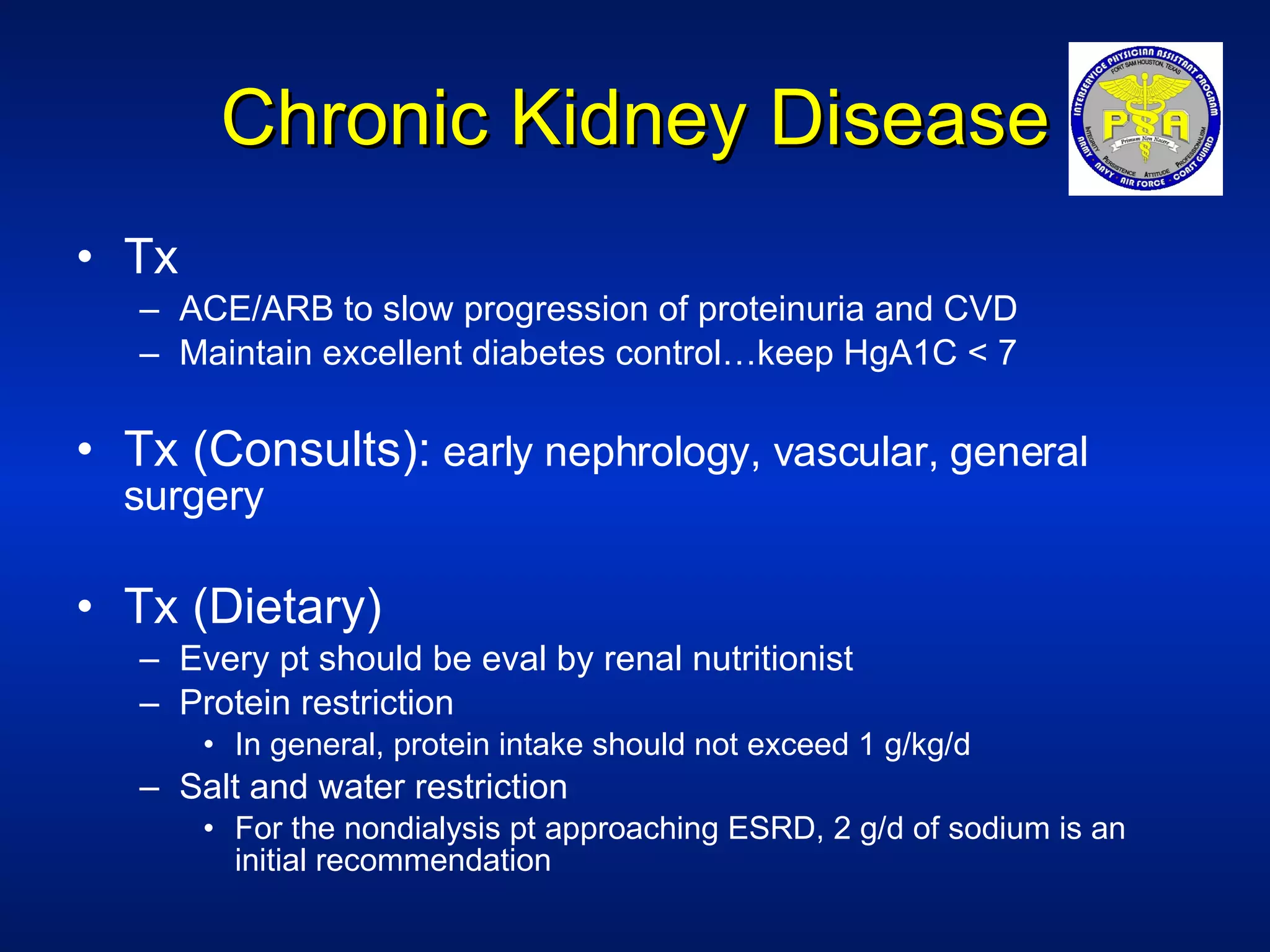
Chronic Kidney DiseaseTx ACE/ARB to slow progression of proteinuria and CVD Maintain excellent diabetes control…keep HgA1C < 7 Tx (Consults): early nephrology, vascular, general surgery Tx (Dietary) Every pt should be eval by renal nutritionist Protein restriction In general, protein intake should not exceed 1 g/kg/d Salt and water restriction For the nondialysis pt approaching ESRD, 2 g/d of sodium is an initial recommendation
29.
Chronic Kidney DiseasePotassium restriction Once GFR has fallen below 10-20 mL/min, potassium intake should be limited to < 60-70 mEq/d Phosphorus restriction Phosphorus level should be < 4.6 mg/dL Phosphorus binders required if GFR < 20-30 mL/min Magnesium restriction No magnesium-containing laxatives or antacids
30.
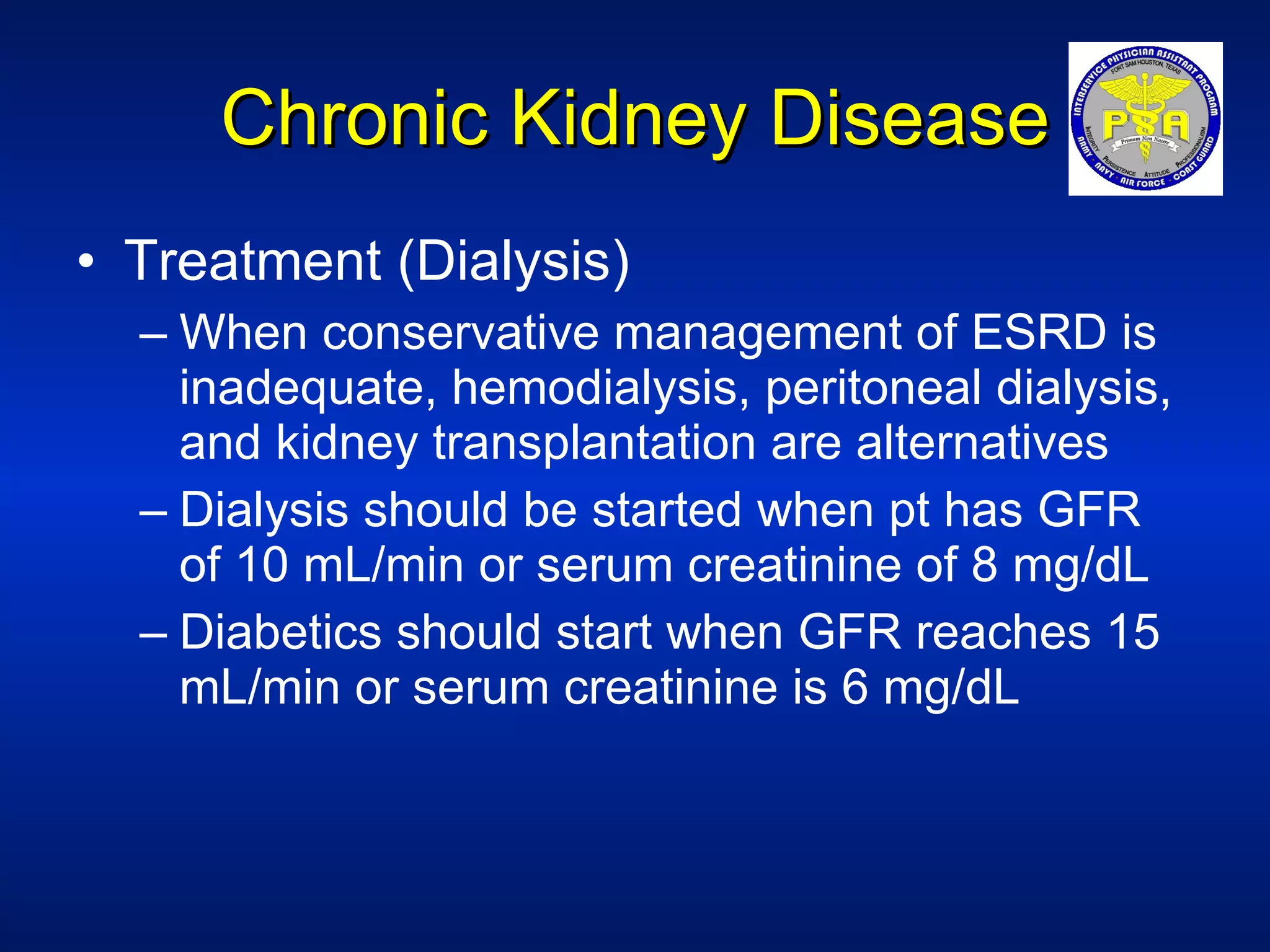
Chronic Kidney DiseaseTreatment (Dialysis) When conservative management of ESRD is inadequate, hemodialysis, peritoneal dialysis, and kidney transplantation are alternatives Dialysis should be started when pt has GFR of 10 mL/min or serum creatinine of 8 mg/dL Diabetics should start when GFR reaches 15 mL/min or serum creatinine is 6 mg/dL
31.
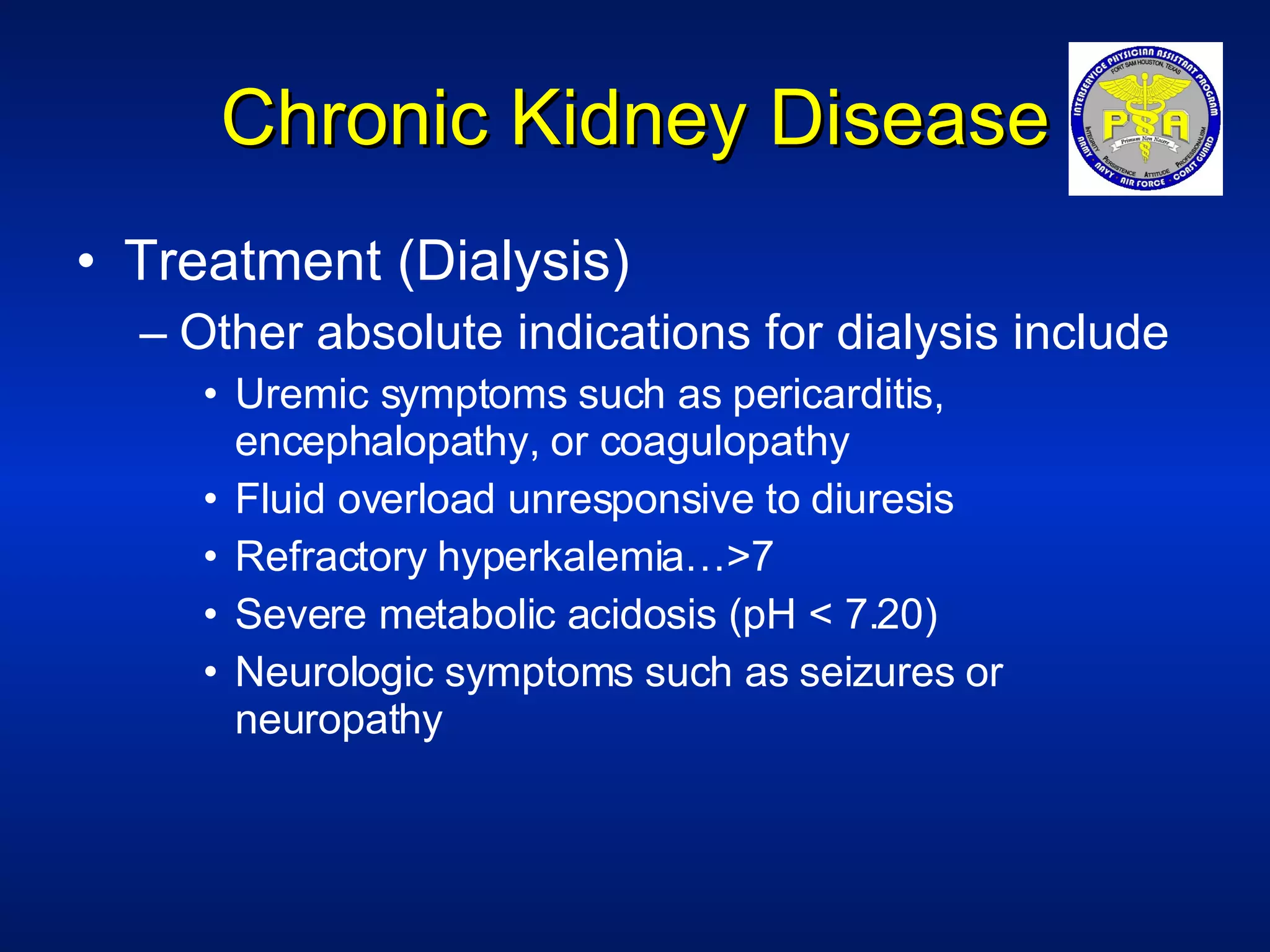
Chronic Kidney DiseaseTreatment (Dialysis) Other absolute indications for dialysis include Uremic symptoms such as pericarditis, encephalopathy, or coagulopathy Fluid overload unresponsive to diuresis Refractory hyperkalemia…>7 Severe metabolic acidosis (pH < 7.20) Neurologic symptoms such as seizures or neuropathy
32.
Chronic Kidney DiseaseHemodialysis (choice for 90% of pts) Vascular access accomplished by an a/v fistula (preferred) or prosthetic graft Infection, thrombosis, and aneurysm formation are complications seen more often in grafts than fistulas. Staphylococcus aureus is most common infecting agent Pts typically require hemodialysis 3x/wk…sessions last 3-5 hrs each Home dialysis also now available Ensure pt getting regular labs to include PTH and ALK PHOS
Chronic Kidney DiseasePeritoneal dialysis The peritoneal membrane is the “dialyzer” Most common type is continuous ambulatory peritoneal dialysis (CAPD) Pts exchange dialysate 4-6 times/day Continuous cyclic peritoneal dialysis (CCPD) utilizes a cycler machine to automatically perform exchanges at night Most common complication = peritonitis Most common pathogen = S aureus
Chronic Kidney DiseaseTotal costs of both types of dialysis are about the same ($35,000 - $60,000/yr) Pts undergoing dialysis have an average life expectancy of 3-4 yrs Studies are conflicting regarding the survival advantage assoc. with either peritoneal dialysis or hemodialysis
37.
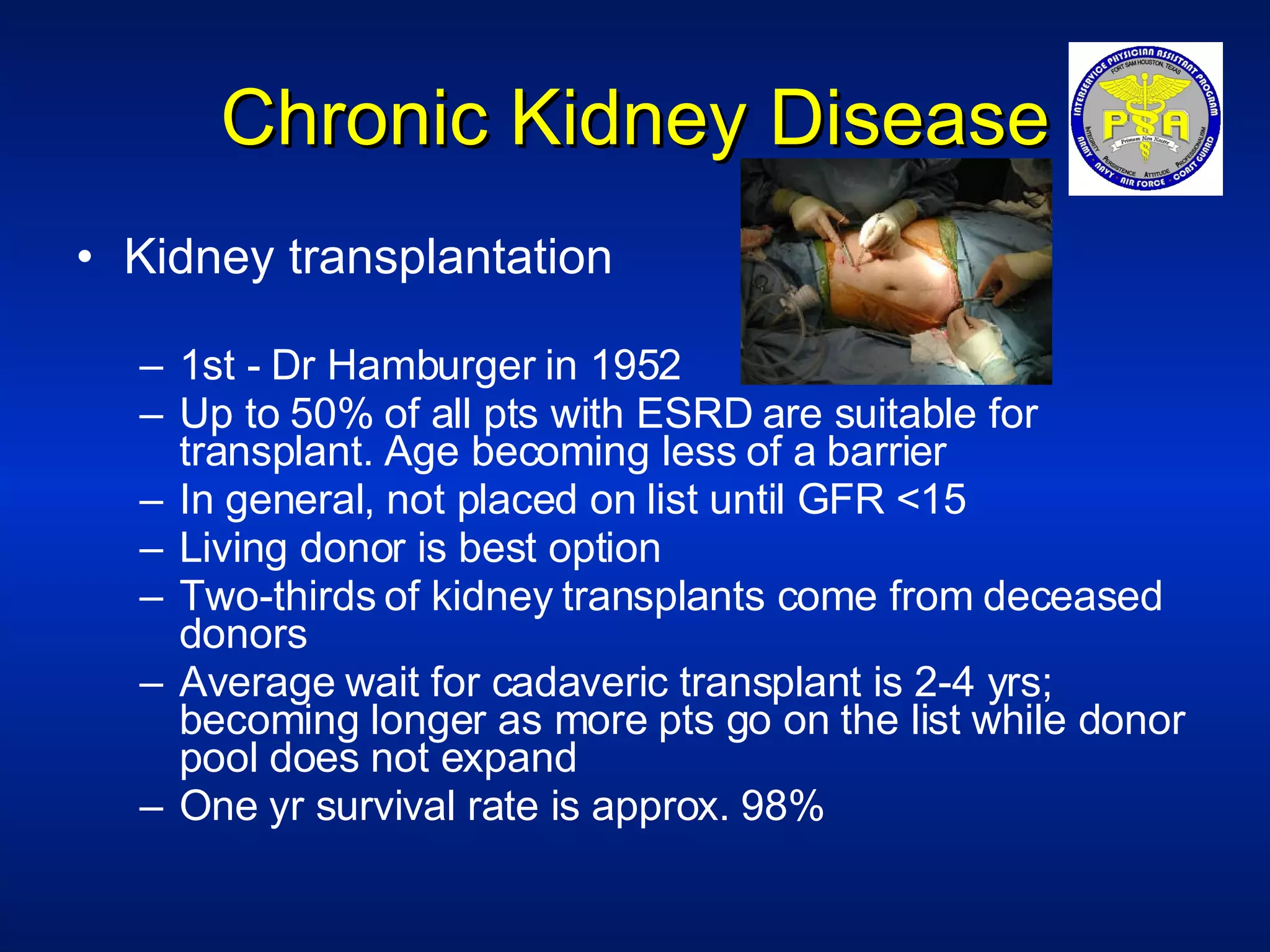
Chronic Kidney DiseaseKidney transplantation 1st - Dr Hamburger in 1952 Up to 50% of all pts with ESRD are suitable for transplant. Age becoming less of a barrier In general, not placed on list until GFR <15 Living donor is best option Two-thirds of kidney transplants come from deceased donors Average wait for cadaveric transplant is 2-4 yrs; becoming longer as more pts go on the list while donor pool does not expand One yr survival rate is approx. 98%
38.
Chronic Kidney DiseaseCKD prognosis Mortality higher for pts on dialysis than for age-matched controls Expected remaining lifetime for the age group 55-64 is 22 yrs, whereas that of ESRD population is 5 yrs Most common cause of death is cardiac dysfunction For those who require dialysis to sustain life, but decide against it, death ensues within days to wks
39.
Chronic Kidney DiseaseOverall…medical care of CKD focuses on delaying or halting progression of CKD Tx underlying cause(s) Tx HTN and Diabetes Avoid nephrotoxins Tx complications Lastly…watch out for meds that are renally excreted. You will need to adjust dose in pts with renal failure