Dr Vishu P Bhasin
DCP Resident,
Santosh Medical College
Approach to a Case of Pancytopenia
 Pancytopenia is a
 reduction in the number of
 RBCs,
 WBCs and,
 platelets
 in the peripheral blood
 below the lower limits of the age-adjusted normal
range for healthy people.
 Therefore it is the combination of anemia,
leukopenia, and thrombocytopenia :-
 Hb < 13.5 in males & 11.5 in females
 Leucocyte count < 4x10⁹
/l
 Platelet count < 150x109
/l
 It may result from
 decreased production of blood cells or bone
marrow failure,
 Defective stem cells,
 from their immune-mediated destruction or
 non-immune-mediated sequestration in the
periphery,
 Deficiency of factors stimulating haematopoiesis
• The diagnosis is made from the results of CBC,
preferably automated and a P/S
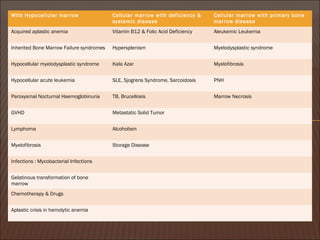
With Hypocellular marrow Cellular marrow with deficiency &
systemic disease
Cellular marrow with primary bone
marrow disease
Acquired aplastic anemia Vitamin B12 & Folic Acid Deficiency Aleukemic Leukemia
Inherited Bone Marrow Failure syndromes Hypersplenism Myelodysplastic syndrome
Hypocellular myelodysplastic syndrome Kala Azar Myelofibrosis
Hypocellular acute leukemia SLE, Sjogrens Syndrome, Sarcoidosis PNH
Paroxysmal Nocturnal Haemoglobinuria TB, Brucellosis Marrow Necrosis
GVHD Metastatic Solid Tumor
Lymphoma Alcoholism
Myelofibrosis Storage Disease
Infections : Mycobacterial Infections
Gelatinous transformation of bone
marrow
Chemotherapy & Drugs
Aplastic crisis in hemolytic anemia
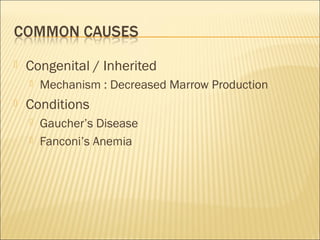
 Congenital / Inherited
 Mechanism : Decreased Marrow Production
 Conditions
 Gaucher’s Disease
 Fanconi’s Anemia
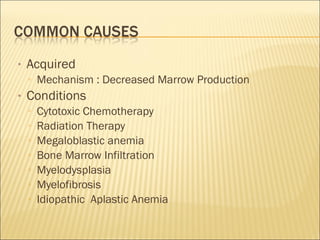
• Acquired
▫ Mechanism : Decreased Marrow Production
• Conditions
▫ Cytotoxic Chemotherapy
▫ Radiation Therapy
▫ Megaloblastic anemia
▫ Bone Marrow Infiltration
▫ Myelodysplasia
▫ Myelofibrosis
▫ Idiopathic Aplastic Anemia
 Acquired
 Mechanism : Increased destruction/Sequestration
 Conditions
 Liver disease
 Portal hypertension
 Acquired
 Mechanism : Increased destruction/Sequestration
+ Decreased Marrow Production
 Conditions
 Connective tissue disorders like SLE, Rheumatoid
Arthritis
 Acute Viral Infections like CMV, EBV, HIV
 HIV Infections
 Mycobacterial disease
 Congenital
 Mechanism : Decreased Marrow Production
 Conditions
 Various childhood metabolic & complex
multisystem disorders & inherited bone marrow
failure syndromes
(ex dyskeratosis congenita, congenital
amegakaryocytic thrombocyotopenia, Shwachman
Syndrome)
 Acquired
 Mechanism : Decreased Marrow Production
 Conditions
 PNH
 Anorexia nervosa
 Transfusion associated – GVHD
 Heavy metal poisoning
 Infection – Parvo virus B19, HHV6 or CMV in
transplant recipients, Legionnaire disease)
 Acquired
 Mechanism : Increased destruction sequestration
 Conditions
 Hypersplenism secondary to
myelolymphoproliferative disorders
 Hemophagocytic syndromes
 Drug induced immune pancytopenia
 Evans syndrome with tricytopenia
 Infection (brucellosis, visceral leishmaniasis)
 History
 Clinical Examination
 CBC
 Peripheral smear examination
 Bone Marrow Aspiration
 Bone Marrow Biopsy
 Other specific investigations
 Mild pancytopenia is often symptomless and detected incidentally when a full blood count/CBC
is performed for another reason.
 Duration of symptoms
 H/o Transfusions
 H/o Haemoglobinuria
 Dietary history
 Socio economic status
 Exposure to –
 Drugs
 Anti cancer, Antibiotic, Anti epileptics, Anti thyroid (Aplastic)
 Barbiturates, Phenytoin, OCP ( B12 & FA)
 Chemicals (Aplastic)
 Radiation (Aplastic)
 Infections (Aplastic)
 Weight loss, fever – malignancy & inflammatory
 Jaundice – Hep B & C
 Infections – TB, Malaria
 Joint Pain – SLE
 Blood Loss
• A thorough physical exam is required, preferably by a hematologist.
• Weight loss and/or anorexia are harbingers of underlying infection (either
precedent to the pancytopenia or as a result of it) and malignancy.
• Spontaneous mucosal bleeding (gums, GI tract), petechiae, and purpura
with easy bruising secondary to thrombocytopenia are usually the first signs
to develop directly related to more severe pancytopenia.
• These signs are often accompanied by lymphadenopathy (underlying
infection, mononucleosis, lymphoproliferative disorder, and malignancy).
• Abdominal discomfort is a common presentation of splenomegaly and
associated conditions.
• Widespread bone pain and loss of height suggest myeloma, joint pain
systemic lupus erythematosus (SLE), and sore throat mononucleosis.
The following reference points to specific organ systems and associated conditions and is helpful to guide
the examination.
• Eye examination
▫ Retinal hemorrhage (thrombocytopenia)
▫ Leukemic infiltrates (acute leukemia)
▫ Jaundiced sclera (paroxysmal nocturnal hemoglobinuria, hepatitis, cirrhosis)
▫ Epiphora (dyskeratosis congenita)
• Oral examination
▫ Oral petechiae or hemorrhage (thrombocytopenia)
▫ Stomatitis or cheilitis (neutropenia, vitamin B12 deficiency)
▫ Gingival hyperplasia (leukemia)
▫ Oral candidiasis or pharyngeal exudate (neutropenia, herpes family virus infections)
• Cardiovascular examination
▫ Tachycardia, edema, congestive cardiac failure (all signs of symptomatic anemia)
▫ Evidence of prior cardiac surgery (cardiac disease associated with congenital syndromes)
▫ Respiratory examination
▫ Clubbing (lung cancer)
▫ Tachypnea (sign of symptomatic anemia)
• Abdominal examination
▫ Right upper quadrant tenderness (hepatitis)
▫ Lymphadenopathy (infection, lymphoproliferative disorder, HIV disease)
• Signs of chronic liver disease
▫ Splenomegaly (infection, myeloproliferative and lymphoproliferative disorders)
▫ Skin examination
▫ Malar rash (SLE)
▫ Purpura/bruising (thrombocytopenia)
▫ Reticular pigmentation, dysplastic nails (dyskeratosis congenita)
▫ Hypopigmented areas
• Hyperpigmentation, café au lait (Fanconi anemia)
• Musculoskeletal examination
▫ Short stature (Fanconi anemia, other congenital syndromes)
▫ Swelling/synovitis (SLE)
▫ Abnormal thumbs (e.g., Fanconi anemia)
• Signs associated with HIV disease
▫ Morbilliform rash early
▫ Kaposi sarcoma, ulcerating nodules later
• A CBC and examination of peripheral blood film by
a hematologist are essential. A standard battery of
evaluative tests may include:
▫ Serum reticulocyte count
▫ Serum LFTs
▫ Hepatic serology
▫ Serum coagulation profile, bleeding time, fibrinogen,
and D-dimer
▫ Serum direct antiglobulin test
▫ Serum B12 and folate
▫ Serum HIV and nucleic acid testing.
Red Cell Morphology
 Normocytic normochromic with no anisopoikilocytosis, few macrocytes, no nRBCs,
reticulocytopenia – Aplastic anemia
 Macro ovalocytes with Howell Jolly Bodies – Megaloblastic anemias
 Tear drop cells, HJ bodies & Basophilic stippling – MDS
 nRBCs, Sickle cells – Aplastic crisis in Hemolytic anemia
WBCs
 Leucopenia (mostly mature ~80%) – Aplastic anemia
 Neutrophils present in increased number with toxic granules, shift to left – Infections
 Basophilic stippling, hypersegmented neutrophils – Megaloblastic anemia
 Blasts – subleukemic leukemia
 Hypogranular neutrophils, pseudo Pelger Heut Anomaly – MDS
Platelets
 Normal count – rules out aplastic anemia
 Giant platelets – MDS/ Hypersplenism
• Examination of bone marrow is almost always indicated in cases of
pancytopenia unless the cause is otherwise apparent (e.g., established liver
disease with portal hypertension).
• The bone marrow exam consists of both an aspirate and a trephine biopsy,
• The differential diagnosis of pancytopenia may be broadly classified based
on the
▫ bone marrow cellularity (reduced cellularity indicates decreased production of blood cells,
▫ whereas normal/increased cellularity indicates ineffective production or increased
destruction or sequestration of blood cells).
• Specifically, bone marrow aspirate permits examination of:
• Cytology (megaloblastic change, dysplastic changes, abnormal cell
infiltrates, hemophagocytosis, and infection [e.g., Leishman-Donovan
bodies])
• Immunophenotyping (acute and chronic leukemias, lymphoproliferative
disorders)
• Cytogenetics (myelodysplasia, acute and chronic leukemias,
lymphoproliferative disorders).
Aspiration
 Empty particles, markedly hypocellular, only scattered mature
lymphocytes & sometimes excess plasma cells – aplastic
anemias
 Pockets of cellularity with widespread hypocellularity – evolving
aplastic anemia
 Hypocellular with BM Blasts (>20%) – hypoplastic leulemia
 Hypocellular BM with dysplastic megakaryocytes – hypoplastic
MDS
 Scattered proerythroblasts with large nuclear inclusions in
hypocellular BM - Parvovirus
Biopsy
 Erythroid hyperplasia with megablastosis –
megaloblastic anemia
 Trilineage dysplasis with ringed sideroblasts on pearl’s
stain – MDS
 Infiltration by RS Cells – HL
 Infiltration with malignant cells – metastasis
 In PNH & Fanconi’s anemia – early stage will show
hypercellular normal appearing marrow
• Specific testing pinpoints diagnosis in the following conditions:
▫ Fanconi anemia: diepoxybutane (DEB) test for chromosomal breakage in
peripheral blood lymphocytes
▫ Lymphoproliferative disorders: immunophenotyping, cytogenetics, lymph
node biopsy
▫ Multiple myeloma: immunoelectrophoresis
▫ Paroxysmal nocturnal hemoglobinuria (PNH): peripheral blood
immunophenotyping for deficiency of phosphatidylinositol-glycan-linked
molecules on peripheral blood cells (e.g., CD55, CD59)
▫ CMV infection: serum IgM and IgG
▫ Epstein-Barr: serum monospot, viral capsid antigen (VCA), and Epstein-
Barr nuclear antibody (EBNA)
▫ Leishmaniasis and other rare infections: blood and bone marrow culture,
serum ELISA
▫ Rare genetic and metabolic disease: leukocyte glucocerebrosides
▫ Serum PSA in suspect cases of prostatic malignancy.
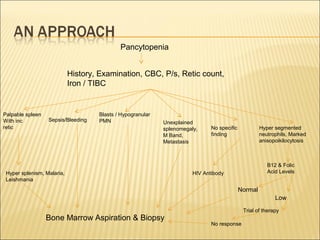
Pancytopenia
History, Examination, CBC, P/s, Retic count,
Iron / TIBC
Palpable spleen
With inc
retic
Sepsis/Bleeding
Blasts / Hypogranular
PMN Unexplained
splenomegaly,
M Band,
Metastasis
No specific
finding
Hyper segmented
neutrophils, Marked
anisopoikilocytosis
B12 & Folic
Acid LevelsHyper splenism, Malaria,
Leishmania
Bone Marrow Aspiration & Biopsy
HIV Antibody
Normal
Low
Trial of therapy
No response
Chemotherapy &
Radiotherapy
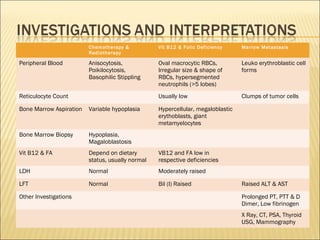
Vit B12 & Folic Deficiency Marrow Metastasis
Peripheral Blood Anisocytosis,
Poikilocytosis,
Basophilic Stippling
Oval macrocytic RBCs,
Irregular size & shape of
RBCs, hypersegmented
neutrophils (>5 lobes)
Leuko erythroblastic cell
forms
Reticulocyte Count Usually low Clumps of tumor cells
Bone Marrow Aspiration Variable hypoplasia Hypercellular, megaloblastic
erythoblasts, giant
metamyelocytes
Bone Marrow Biopsy Hypoplasia,
Magaloblastosis
Vit B12 & FA Depend on dietary
status, usually normal
VB12 and FA low in
respective deficiencies
LDH Normal Moderately raised
LFT Normal Bil (I) Raised Raised ALT & AST
Other Investigations Prolonged PT, PTT & D
Dimer, Low fibrinogen
X Ray, CT, PSA, Thyroid
USG, Mammography
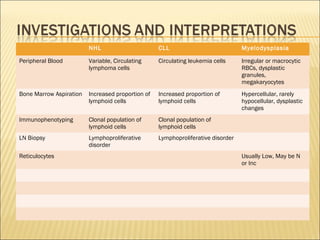
NHL CLL Myelodysplasia
Peripheral Blood Variable, Circulating
lymphoma cells
Circulating leukemia cells Irregular or macrocytic
RBCs, dysplastic
granules,
megakaryocytes
Bone Marrow Aspiration Increased proportion of
lymphoid cells
Increased proportion of
lymphoid cells
Hypercellular, rarely
hypocellular, dysplastic
changes
Immunophenotyping Clonal population of
lymphoid cells
Clonal population of
lymphoid cells
LN Biopsy Lymphoproliferative
disorder
Lymphoproliferative disorder
Reticulocytes Usually Low, May be N
or Inc
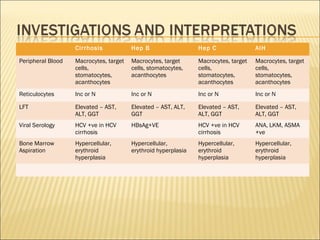
Cirrhosis Hep B Hep C AIH
Peripheral Blood Macrocytes, target
cells,
stomatocytes,
acanthocytes
Macrocytes, target
cells, stomatocytes,
acanthocytes
Macrocytes, target
cells,
stomatocytes,
acanthocytes
Macrocytes, target
cells,
stomatocytes,
acanthocytes
Reticulocytes Inc or N Inc or N Inc or N Inc or N
LFT Elevated – AST,
ALT, GGT
Elevated – AST, ALT,
GGT
Elevated – AST,
ALT, GGT
Elevated – AST,
ALT, GGT
Viral Serology HCV +ve in HCV
cirrhosis
HBsAg+VE HCV +ve in HCV
cirrhosis
ANA, LKM, ASMA
+ve
Bone Marrow
Aspiration
Hypercellular,
erythroid
hyperplasia
Hypercellular,
erythroid hyperplasia
Hypercellular,
erythroid
hyperplasia
Hypercellular,
erythroid
hyperplasia

Pancytopenia Approach

  • 1.
    Dr Vishu PBhasin DCP Resident, Santosh Medical College
  • 2.
    Approach to aCase of Pancytopenia
  • 3.
     Pancytopenia isa  reduction in the number of  RBCs,  WBCs and,  platelets  in the peripheral blood  below the lower limits of the age-adjusted normal range for healthy people.
  • 4.
     Therefore itis the combination of anemia, leukopenia, and thrombocytopenia :-  Hb < 13.5 in males & 11.5 in females  Leucocyte count < 4x10⁹ /l  Platelet count < 150x109 /l
  • 5.
     It mayresult from  decreased production of blood cells or bone marrow failure,  Defective stem cells,  from their immune-mediated destruction or  non-immune-mediated sequestration in the periphery,  Deficiency of factors stimulating haematopoiesis
  • 6.
    • The diagnosisis made from the results of CBC, preferably automated and a P/S
  • 8.
    With Hypocellular marrowCellular marrow with deficiency & systemic disease Cellular marrow with primary bone marrow disease Acquired aplastic anemia Vitamin B12 & Folic Acid Deficiency Aleukemic Leukemia Inherited Bone Marrow Failure syndromes Hypersplenism Myelodysplastic syndrome Hypocellular myelodysplastic syndrome Kala Azar Myelofibrosis Hypocellular acute leukemia SLE, Sjogrens Syndrome, Sarcoidosis PNH Paroxysmal Nocturnal Haemoglobinuria TB, Brucellosis Marrow Necrosis GVHD Metastatic Solid Tumor Lymphoma Alcoholism Myelofibrosis Storage Disease Infections : Mycobacterial Infections Gelatinous transformation of bone marrow Chemotherapy & Drugs Aplastic crisis in hemolytic anemia
  • 9.
     Congenital /Inherited  Mechanism : Decreased Marrow Production  Conditions  Gaucher’s Disease  Fanconi’s Anemia
  • 10.
    • Acquired ▫ Mechanism: Decreased Marrow Production • Conditions ▫ Cytotoxic Chemotherapy ▫ Radiation Therapy ▫ Megaloblastic anemia ▫ Bone Marrow Infiltration ▫ Myelodysplasia ▫ Myelofibrosis ▫ Idiopathic Aplastic Anemia
  • 11.
     Acquired  Mechanism: Increased destruction/Sequestration  Conditions  Liver disease  Portal hypertension
  • 12.
     Acquired  Mechanism: Increased destruction/Sequestration + Decreased Marrow Production  Conditions  Connective tissue disorders like SLE, Rheumatoid Arthritis  Acute Viral Infections like CMV, EBV, HIV  HIV Infections  Mycobacterial disease
  • 13.
     Congenital  Mechanism: Decreased Marrow Production  Conditions  Various childhood metabolic & complex multisystem disorders & inherited bone marrow failure syndromes (ex dyskeratosis congenita, congenital amegakaryocytic thrombocyotopenia, Shwachman Syndrome)
  • 14.
     Acquired  Mechanism: Decreased Marrow Production  Conditions  PNH  Anorexia nervosa  Transfusion associated – GVHD  Heavy metal poisoning  Infection – Parvo virus B19, HHV6 or CMV in transplant recipients, Legionnaire disease)
  • 15.
     Acquired  Mechanism: Increased destruction sequestration  Conditions  Hypersplenism secondary to myelolymphoproliferative disorders  Hemophagocytic syndromes  Drug induced immune pancytopenia  Evans syndrome with tricytopenia  Infection (brucellosis, visceral leishmaniasis)
  • 16.
     History  ClinicalExamination  CBC  Peripheral smear examination  Bone Marrow Aspiration  Bone Marrow Biopsy  Other specific investigations
  • 17.
     Mild pancytopeniais often symptomless and detected incidentally when a full blood count/CBC is performed for another reason.  Duration of symptoms  H/o Transfusions  H/o Haemoglobinuria  Dietary history  Socio economic status  Exposure to –  Drugs  Anti cancer, Antibiotic, Anti epileptics, Anti thyroid (Aplastic)  Barbiturates, Phenytoin, OCP ( B12 & FA)  Chemicals (Aplastic)  Radiation (Aplastic)  Infections (Aplastic)  Weight loss, fever – malignancy & inflammatory  Jaundice – Hep B & C  Infections – TB, Malaria  Joint Pain – SLE  Blood Loss
  • 18.
    • A thoroughphysical exam is required, preferably by a hematologist. • Weight loss and/or anorexia are harbingers of underlying infection (either precedent to the pancytopenia or as a result of it) and malignancy. • Spontaneous mucosal bleeding (gums, GI tract), petechiae, and purpura with easy bruising secondary to thrombocytopenia are usually the first signs to develop directly related to more severe pancytopenia. • These signs are often accompanied by lymphadenopathy (underlying infection, mononucleosis, lymphoproliferative disorder, and malignancy). • Abdominal discomfort is a common presentation of splenomegaly and associated conditions. • Widespread bone pain and loss of height suggest myeloma, joint pain systemic lupus erythematosus (SLE), and sore throat mononucleosis.
  • 19.
    The following referencepoints to specific organ systems and associated conditions and is helpful to guide the examination. • Eye examination ▫ Retinal hemorrhage (thrombocytopenia) ▫ Leukemic infiltrates (acute leukemia) ▫ Jaundiced sclera (paroxysmal nocturnal hemoglobinuria, hepatitis, cirrhosis) ▫ Epiphora (dyskeratosis congenita) • Oral examination ▫ Oral petechiae or hemorrhage (thrombocytopenia) ▫ Stomatitis or cheilitis (neutropenia, vitamin B12 deficiency) ▫ Gingival hyperplasia (leukemia) ▫ Oral candidiasis or pharyngeal exudate (neutropenia, herpes family virus infections) • Cardiovascular examination ▫ Tachycardia, edema, congestive cardiac failure (all signs of symptomatic anemia) ▫ Evidence of prior cardiac surgery (cardiac disease associated with congenital syndromes) ▫ Respiratory examination ▫ Clubbing (lung cancer) ▫ Tachypnea (sign of symptomatic anemia) • Abdominal examination ▫ Right upper quadrant tenderness (hepatitis) ▫ Lymphadenopathy (infection, lymphoproliferative disorder, HIV disease)
  • 20.
    • Signs ofchronic liver disease ▫ Splenomegaly (infection, myeloproliferative and lymphoproliferative disorders) ▫ Skin examination ▫ Malar rash (SLE) ▫ Purpura/bruising (thrombocytopenia) ▫ Reticular pigmentation, dysplastic nails (dyskeratosis congenita) ▫ Hypopigmented areas • Hyperpigmentation, café au lait (Fanconi anemia) • Musculoskeletal examination ▫ Short stature (Fanconi anemia, other congenital syndromes) ▫ Swelling/synovitis (SLE) ▫ Abnormal thumbs (e.g., Fanconi anemia) • Signs associated with HIV disease ▫ Morbilliform rash early ▫ Kaposi sarcoma, ulcerating nodules later
  • 21.
    • A CBCand examination of peripheral blood film by a hematologist are essential. A standard battery of evaluative tests may include: ▫ Serum reticulocyte count ▫ Serum LFTs ▫ Hepatic serology ▫ Serum coagulation profile, bleeding time, fibrinogen, and D-dimer ▫ Serum direct antiglobulin test ▫ Serum B12 and folate ▫ Serum HIV and nucleic acid testing.
  • 22.
    Red Cell Morphology Normocytic normochromic with no anisopoikilocytosis, few macrocytes, no nRBCs, reticulocytopenia – Aplastic anemia  Macro ovalocytes with Howell Jolly Bodies – Megaloblastic anemias  Tear drop cells, HJ bodies & Basophilic stippling – MDS  nRBCs, Sickle cells – Aplastic crisis in Hemolytic anemia WBCs  Leucopenia (mostly mature ~80%) – Aplastic anemia  Neutrophils present in increased number with toxic granules, shift to left – Infections  Basophilic stippling, hypersegmented neutrophils – Megaloblastic anemia  Blasts – subleukemic leukemia  Hypogranular neutrophils, pseudo Pelger Heut Anomaly – MDS Platelets  Normal count – rules out aplastic anemia  Giant platelets – MDS/ Hypersplenism
  • 23.
    • Examination ofbone marrow is almost always indicated in cases of pancytopenia unless the cause is otherwise apparent (e.g., established liver disease with portal hypertension). • The bone marrow exam consists of both an aspirate and a trephine biopsy, • The differential diagnosis of pancytopenia may be broadly classified based on the ▫ bone marrow cellularity (reduced cellularity indicates decreased production of blood cells, ▫ whereas normal/increased cellularity indicates ineffective production or increased destruction or sequestration of blood cells). • Specifically, bone marrow aspirate permits examination of: • Cytology (megaloblastic change, dysplastic changes, abnormal cell infiltrates, hemophagocytosis, and infection [e.g., Leishman-Donovan bodies]) • Immunophenotyping (acute and chronic leukemias, lymphoproliferative disorders) • Cytogenetics (myelodysplasia, acute and chronic leukemias, lymphoproliferative disorders).
  • 24.
    Aspiration  Empty particles,markedly hypocellular, only scattered mature lymphocytes & sometimes excess plasma cells – aplastic anemias  Pockets of cellularity with widespread hypocellularity – evolving aplastic anemia  Hypocellular with BM Blasts (>20%) – hypoplastic leulemia  Hypocellular BM with dysplastic megakaryocytes – hypoplastic MDS  Scattered proerythroblasts with large nuclear inclusions in hypocellular BM - Parvovirus
  • 25.
    Biopsy  Erythroid hyperplasiawith megablastosis – megaloblastic anemia  Trilineage dysplasis with ringed sideroblasts on pearl’s stain – MDS  Infiltration by RS Cells – HL  Infiltration with malignant cells – metastasis  In PNH & Fanconi’s anemia – early stage will show hypercellular normal appearing marrow
  • 26.
    • Specific testingpinpoints diagnosis in the following conditions: ▫ Fanconi anemia: diepoxybutane (DEB) test for chromosomal breakage in peripheral blood lymphocytes ▫ Lymphoproliferative disorders: immunophenotyping, cytogenetics, lymph node biopsy ▫ Multiple myeloma: immunoelectrophoresis ▫ Paroxysmal nocturnal hemoglobinuria (PNH): peripheral blood immunophenotyping for deficiency of phosphatidylinositol-glycan-linked molecules on peripheral blood cells (e.g., CD55, CD59) ▫ CMV infection: serum IgM and IgG ▫ Epstein-Barr: serum monospot, viral capsid antigen (VCA), and Epstein- Barr nuclear antibody (EBNA) ▫ Leishmaniasis and other rare infections: blood and bone marrow culture, serum ELISA ▫ Rare genetic and metabolic disease: leukocyte glucocerebrosides ▫ Serum PSA in suspect cases of prostatic malignancy.
  • 27.
    Pancytopenia History, Examination, CBC,P/s, Retic count, Iron / TIBC Palpable spleen With inc retic Sepsis/Bleeding Blasts / Hypogranular PMN Unexplained splenomegaly, M Band, Metastasis No specific finding Hyper segmented neutrophils, Marked anisopoikilocytosis B12 & Folic Acid LevelsHyper splenism, Malaria, Leishmania Bone Marrow Aspiration & Biopsy HIV Antibody Normal Low Trial of therapy No response
  • 28.
    Chemotherapy & Radiotherapy Vit B12& Folic Deficiency Marrow Metastasis Peripheral Blood Anisocytosis, Poikilocytosis, Basophilic Stippling Oval macrocytic RBCs, Irregular size & shape of RBCs, hypersegmented neutrophils (>5 lobes) Leuko erythroblastic cell forms Reticulocyte Count Usually low Clumps of tumor cells Bone Marrow Aspiration Variable hypoplasia Hypercellular, megaloblastic erythoblasts, giant metamyelocytes Bone Marrow Biopsy Hypoplasia, Magaloblastosis Vit B12 & FA Depend on dietary status, usually normal VB12 and FA low in respective deficiencies LDH Normal Moderately raised LFT Normal Bil (I) Raised Raised ALT & AST Other Investigations Prolonged PT, PTT & D Dimer, Low fibrinogen X Ray, CT, PSA, Thyroid USG, Mammography
  • 29.
    NHL CLL Myelodysplasia PeripheralBlood Variable, Circulating lymphoma cells Circulating leukemia cells Irregular or macrocytic RBCs, dysplastic granules, megakaryocytes Bone Marrow Aspiration Increased proportion of lymphoid cells Increased proportion of lymphoid cells Hypercellular, rarely hypocellular, dysplastic changes Immunophenotyping Clonal population of lymphoid cells Clonal population of lymphoid cells LN Biopsy Lymphoproliferative disorder Lymphoproliferative disorder Reticulocytes Usually Low, May be N or Inc
  • 30.
    Cirrhosis Hep BHep C AIH Peripheral Blood Macrocytes, target cells, stomatocytes, acanthocytes Macrocytes, target cells, stomatocytes, acanthocytes Macrocytes, target cells, stomatocytes, acanthocytes Macrocytes, target cells, stomatocytes, acanthocytes Reticulocytes Inc or N Inc or N Inc or N Inc or N LFT Elevated – AST, ALT, GGT Elevated – AST, ALT, GGT Elevated – AST, ALT, GGT Elevated – AST, ALT, GGT Viral Serology HCV +ve in HCV cirrhosis HBsAg+VE HCV +ve in HCV cirrhosis ANA, LKM, ASMA +ve Bone Marrow Aspiration Hypercellular, erythroid hyperplasia Hypercellular, erythroid hyperplasia Hypercellular, erythroid hyperplasia Hypercellular, erythroid hyperplasia