APLASTIC AND
HYPOPLASTIC
ANEMIAS
WHAT HAPPENS WHEN
THE BONE MARROW
SHUTS DOWN?
Aplastic anemia
 Aplastic anemia is a severe, life threatening syndrome in
which production of erythrocytes, WBCs, and platelets
has failed.
 Aplastic anemia may occur in all age groups and both
genders.
 The disease is characterized by peripheral
pancytopenia and accompanied by a hypocellular
bone marrow.
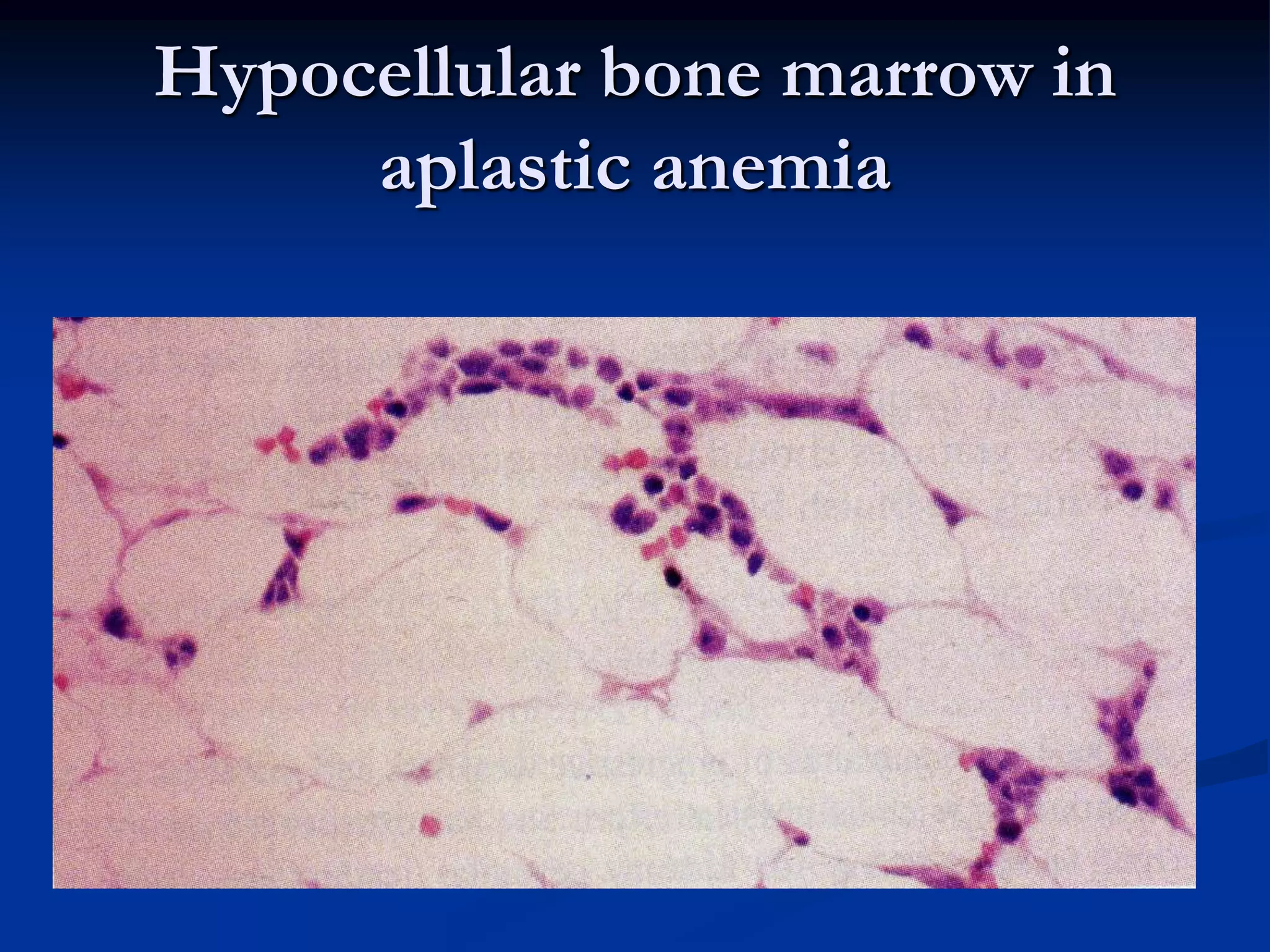
Hypocellular bone marrow in
aplastic anemia
Aplastic anemia
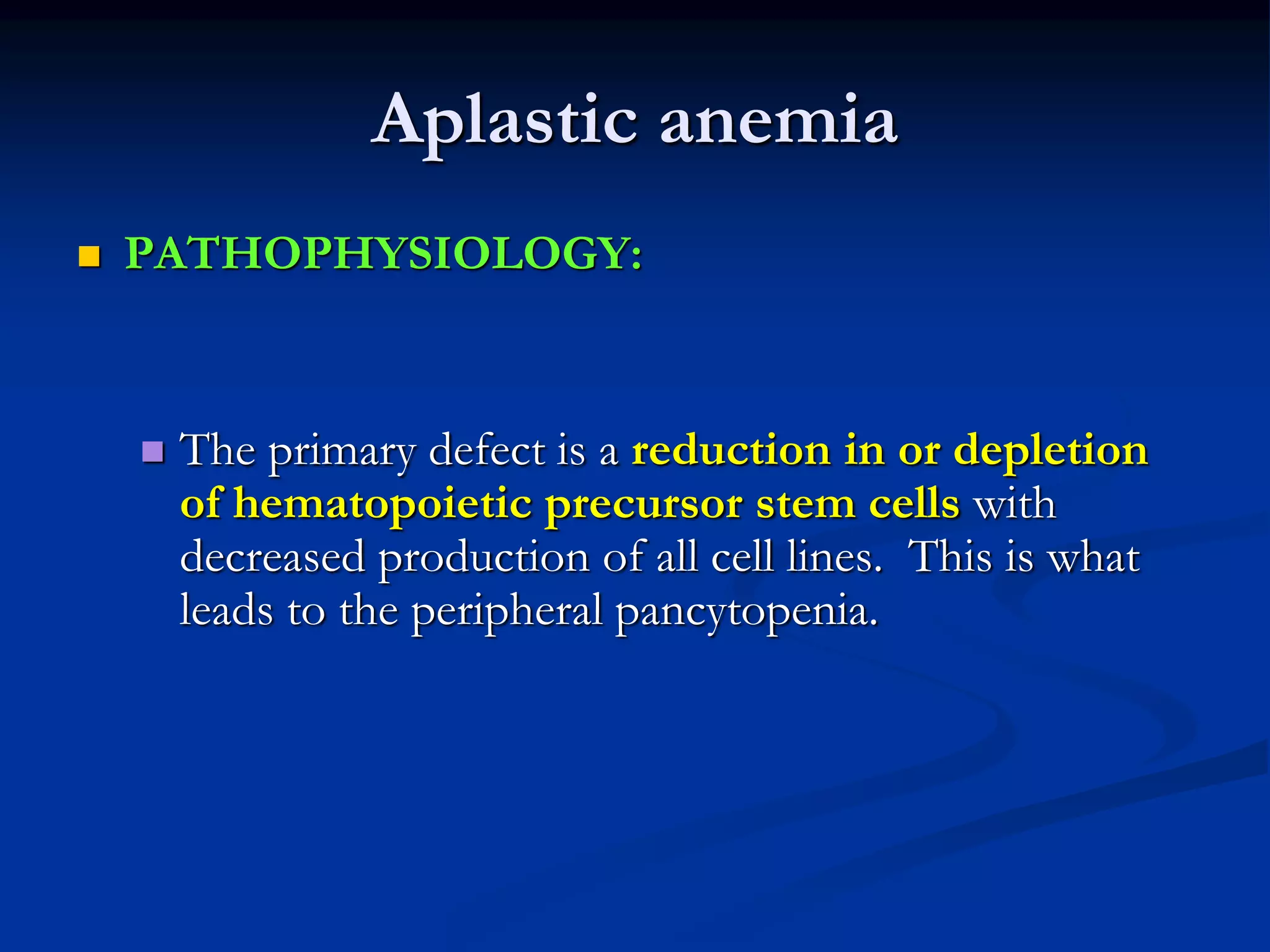
 PATHOPHYSIOLOGY:
 The primary defect is a reduction in or depletion
of hematopoietic precursor stem cells with
decreased production of all cell lines. This is what
leads to the peripheral pancytopenia.
 This may be due to quantitative or qualitative damage
to the pluripotential stem cell.
 In rare instances it is the result of
1. Abnormal hormonal stimulation of stem cell
proliferation or
2. The result of a defective bone marrow
microenvironment or
3. From cellular or humoral immunosuppression of
hematopoiesis.
ETIOLOGY
ACQUIRED
CONGENITAL
Aplastic anemia
ACQUIRED
 Most cases of aplastic anemia are idiopathic and
there is no history of exposure to substances known
to be causative agents of the disease
 Exposure to ionizing radiation – hematopoietic
cells are especially susceptible to ionizing radiation.
Whole body radiation of 300-500 rads can
completely wipe out the bone marrow. With
sublethal doses, the bone marrow eventually
recovers.
 Chemical agents – include chemical agents with a
benzene ring, chemotherapeutic agents, and certain
insecticides.
 Idiosyncratic reactions to some commonly used
drugs such as chloramphenicol or quinacrine.
Aplastic anemia
 Infections – viral and bacterial infections such as
infectious mononucleosis, infectious hepatitis,
cytomegalovirus infections, and miliary
tuberculosis occasionally lead to aplastic anemia
 Pregnancy (rare)
 Paroxysmal nocturnal hemoglobinuria – this is
a stem cell disease in which the membranes of
RBCs, WBCs and platlets have an abnormality
making them susceptible to complement mediated
lysis.
 Other diseases – preleukemia and carcinoma
Aplastic anemia
 CONGENITAL DISORDERS
 Fanconi’s anemia – the disorder usually
becomes symptomatic ~ 5 years of age and is
associated with progressive bone marrow
hypoplasia. Congenital defects such as skin
hyperpigmentation and small stature are also seen
in affected individuals.
 Familial aplastic anemia – a subset of Fanconi’s
anemia in which the congenital defects are absent.
ETIOLOGY
ACQUIRED CONGENITAL
1. Idiopathic
2. Ionizing radiation
3. Chemical agents
4. Idiosynratic reactions
5. Infections
6. Pregnancy
7. PNH
8. others
1. Fanconi,s
anemia
2. Familial aplastic
anemia
CLINICAL MANIFESTATIONS
 Fatigue
 Heart palpitations
 Pallor
 Infections
 Petechiae
 Mucosal bleeding
Aplastic anemia
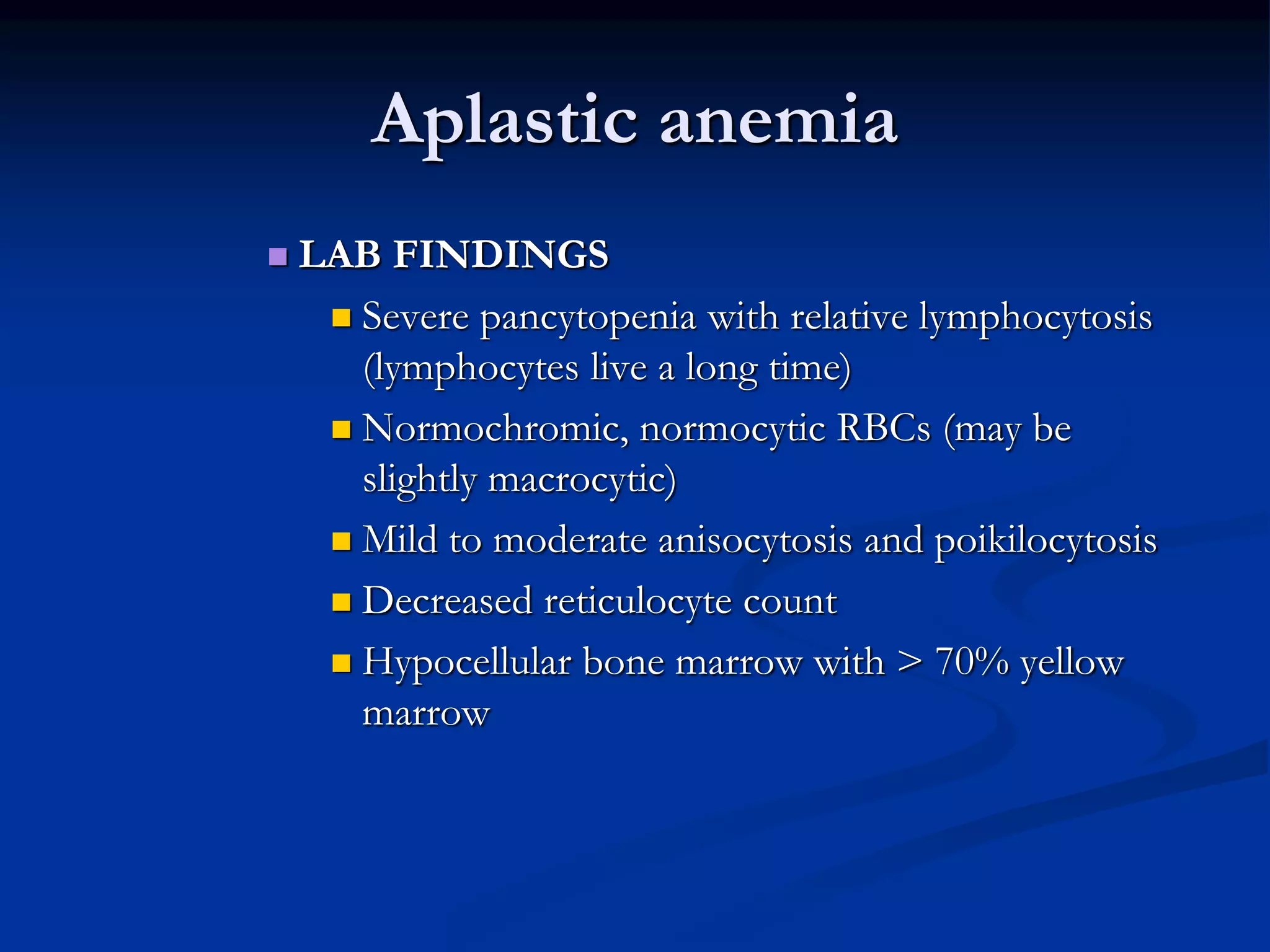
 LAB FINDINGS
 Severe pancytopenia with relative lymphocytosis
(lymphocytes live a long time)
 Normochromic, normocytic RBCs (may be
slightly macrocytic)
 Mild to moderate anisocytosis and poikilocytosis
 Decreased reticulocyte count
 Hypocellular bone marrow with > 70% yellow
marrow
TREATMENT
 in untreated cases the prognosis is poor
 Remove causative agent, if known
 Multiple transfusions
 Bone marrow transplant
Related disorders
 Disorders in which there is peripheral
pancytopenia, but the bone marrow is
normocellular, hypercellular, or infiltrated with
abnormal cellular elements
 Myelopthesic anemia – replacement of bone
marrow by fibrotic, granulomatous, or neoplastic
cells
Related disorders
 MYELODYSPLASTIC SYNDROMES – are primary,
neoplastic stem cell disorders that tend to terminate in acute
leukemia.
 The bone marrow is usually normocellular, or hypercellular
with evidence of qualitative abnormalities in one or more cell
lines resulting on ineffective erythropoiesis and/or
granulopoiesis and/or megakaryopoiesis.
 The peripheral smear shows dysplastic (abnormality in
development) cells including nucleated RBCs, oval
macrocytes, pseudo-Pelger-Huet PMNs (hyposegmented
neutrophils) with hyperchromatin clumping, hypogranulated
neutrophils, and giant bizarre platlets.
 HYPERSPLENISM – why can this lead to pancytopenia?
Pure Red Cell Aplasia
 Pure red cell aplasia is characterized by a selective
decrease in erythroid precursor cells in the bone
marrow. WBCs and platlets are unaffected.
 ACQUIRED
 Transitory with viral or bacterial infections
 Patients with hemolytic anemias may suddenly halt
erythropoiesis
 Patients with thymoma – T-cell mediated responses
against bone marrow erythroblasts or erythropoietin are
sometimes produced.
Pure Red Cell Aplasia
 CONGENITAL
 Diamond-Blackfan syndrome – occurs in young
children and is progressive. It is probably due to an
intrinsic or regulatory defect in the committed erythroid
stem cell.
OTHER HYPOPROLIFERATIVE
ANEMIAS
 Renal disease – due to decreased erythropoietin
 Endocrine deficiencies – may lead to decreased
erythropoietin production. For example:
hypothyroidism leads to decreased demand for
oxygen from tissues; decreased androgens in
males; decreased pituitary function
Thank you

Aplastic and hypoproliferative anemias

  • 1.
  • 2.
    WHAT HAPPENS WHEN THEBONE MARROW SHUTS DOWN?
  • 3.
    Aplastic anemia  Aplasticanemia is a severe, life threatening syndrome in which production of erythrocytes, WBCs, and platelets has failed.  Aplastic anemia may occur in all age groups and both genders.  The disease is characterized by peripheral pancytopenia and accompanied by a hypocellular bone marrow.
  • 4.
    Hypocellular bone marrowin aplastic anemia
  • 5.
    Aplastic anemia  PATHOPHYSIOLOGY: The primary defect is a reduction in or depletion of hematopoietic precursor stem cells with decreased production of all cell lines. This is what leads to the peripheral pancytopenia.
  • 6.
     This maybe due to quantitative or qualitative damage to the pluripotential stem cell.  In rare instances it is the result of 1. Abnormal hormonal stimulation of stem cell proliferation or 2. The result of a defective bone marrow microenvironment or 3. From cellular or humoral immunosuppression of hematopoiesis.
  • 7.
  • 8.
    Aplastic anemia ACQUIRED  Mostcases of aplastic anemia are idiopathic and there is no history of exposure to substances known to be causative agents of the disease  Exposure to ionizing radiation – hematopoietic cells are especially susceptible to ionizing radiation. Whole body radiation of 300-500 rads can completely wipe out the bone marrow. With sublethal doses, the bone marrow eventually recovers.  Chemical agents – include chemical agents with a benzene ring, chemotherapeutic agents, and certain insecticides.  Idiosyncratic reactions to some commonly used drugs such as chloramphenicol or quinacrine.
  • 9.
    Aplastic anemia  Infections– viral and bacterial infections such as infectious mononucleosis, infectious hepatitis, cytomegalovirus infections, and miliary tuberculosis occasionally lead to aplastic anemia  Pregnancy (rare)  Paroxysmal nocturnal hemoglobinuria – this is a stem cell disease in which the membranes of RBCs, WBCs and platlets have an abnormality making them susceptible to complement mediated lysis.  Other diseases – preleukemia and carcinoma
  • 10.
    Aplastic anemia  CONGENITALDISORDERS  Fanconi’s anemia – the disorder usually becomes symptomatic ~ 5 years of age and is associated with progressive bone marrow hypoplasia. Congenital defects such as skin hyperpigmentation and small stature are also seen in affected individuals.  Familial aplastic anemia – a subset of Fanconi’s anemia in which the congenital defects are absent.
  • 11.
    ETIOLOGY ACQUIRED CONGENITAL 1. Idiopathic 2.Ionizing radiation 3. Chemical agents 4. Idiosynratic reactions 5. Infections 6. Pregnancy 7. PNH 8. others 1. Fanconi,s anemia 2. Familial aplastic anemia
  • 12.
    CLINICAL MANIFESTATIONS  Fatigue Heart palpitations  Pallor  Infections  Petechiae  Mucosal bleeding
  • 13.
    Aplastic anemia  LABFINDINGS  Severe pancytopenia with relative lymphocytosis (lymphocytes live a long time)  Normochromic, normocytic RBCs (may be slightly macrocytic)  Mild to moderate anisocytosis and poikilocytosis  Decreased reticulocyte count  Hypocellular bone marrow with > 70% yellow marrow
  • 14.
    TREATMENT  in untreatedcases the prognosis is poor  Remove causative agent, if known  Multiple transfusions  Bone marrow transplant
  • 15.
    Related disorders  Disordersin which there is peripheral pancytopenia, but the bone marrow is normocellular, hypercellular, or infiltrated with abnormal cellular elements  Myelopthesic anemia – replacement of bone marrow by fibrotic, granulomatous, or neoplastic cells
  • 16.
    Related disorders  MYELODYSPLASTICSYNDROMES – are primary, neoplastic stem cell disorders that tend to terminate in acute leukemia.  The bone marrow is usually normocellular, or hypercellular with evidence of qualitative abnormalities in one or more cell lines resulting on ineffective erythropoiesis and/or granulopoiesis and/or megakaryopoiesis.  The peripheral smear shows dysplastic (abnormality in development) cells including nucleated RBCs, oval macrocytes, pseudo-Pelger-Huet PMNs (hyposegmented neutrophils) with hyperchromatin clumping, hypogranulated neutrophils, and giant bizarre platlets.  HYPERSPLENISM – why can this lead to pancytopenia?
  • 17.
    Pure Red CellAplasia  Pure red cell aplasia is characterized by a selective decrease in erythroid precursor cells in the bone marrow. WBCs and platlets are unaffected.  ACQUIRED  Transitory with viral or bacterial infections  Patients with hemolytic anemias may suddenly halt erythropoiesis  Patients with thymoma – T-cell mediated responses against bone marrow erythroblasts or erythropoietin are sometimes produced.
  • 18.
    Pure Red CellAplasia  CONGENITAL  Diamond-Blackfan syndrome – occurs in young children and is progressive. It is probably due to an intrinsic or regulatory defect in the committed erythroid stem cell.
  • 19.
    OTHER HYPOPROLIFERATIVE ANEMIAS  Renaldisease – due to decreased erythropoietin  Endocrine deficiencies – may lead to decreased erythropoietin production. For example: hypothyroidism leads to decreased demand for oxygen from tissues; decreased androgens in males; decreased pituitary function
  • 22.