Prepared by,
Dhanushya .G,
I M.Pharmacy ,
Department of Pharmacology,
PSG College of Pharmacy
ROLE OF FREE RADICALS IN
DIABETES
August 23
1 PSG COP
CONTENT
1.Free radicals
2.Oxidative stress & Diabetes
3.Diabetes
3.1.Mechanism of OS in Diabetes
4.Post diabetic-complications
4.1.Mechanism of OS in Post-diabetic complications
5.Specific Complications & Mechanisms
6.Reference
August 23
2 PSG COP
1.FREE RADICALS
 Free radicals are oxygen containing unstable
molecules with uneven no.of electrons.These
radicals are highly reactive since they are
unpaired.
 These electrons like to be in pairs,so they
scavenge the body to seek out electrons to
become a pair.
 When these free radicals & anti-oxidants are out
of balance, it leads to Oxidative stress.
 The Oxidative stress causes cell & tissue damage
leading to a no.of diseases overtime.
August 23
3 PSG COP
2.OXIDATIVE STRESS &
DIABETES
 Increase in Oxidative stress(OS) is linked with
diabetes & post-diabetic complications.
 OS leads to
Oxidation of major biomolecules inside the cell
Alteration in cell signaling mechanism,cell
permeability,basic genetic mechanism.
 In diabetes,
Type-I pancreatic cells are damaged decreased
production/utilization of insulin hyperglycemia.
Type II Intracellular glucose concentration rises
post-diabetic complications.
August 23
4 PSG COP
August 23
PSG COP
5
3.DIABETES
Type I diabetes Type II diabetes
 Insulin –dependent/
Juvenile-onset
diabetes
 Autoimmune disorder
in which T cells attack
the b-cells
loss of b-cells in the
islets of Langerhans
 Environmental &
genetic factors are
involved
 Insulin-independent/
Adult-onset diabetes
 Lack of insulin
sensitivity in glucose-
utilizing cells
 Associated with
modern lifestyle
August 23
6 PSG COP
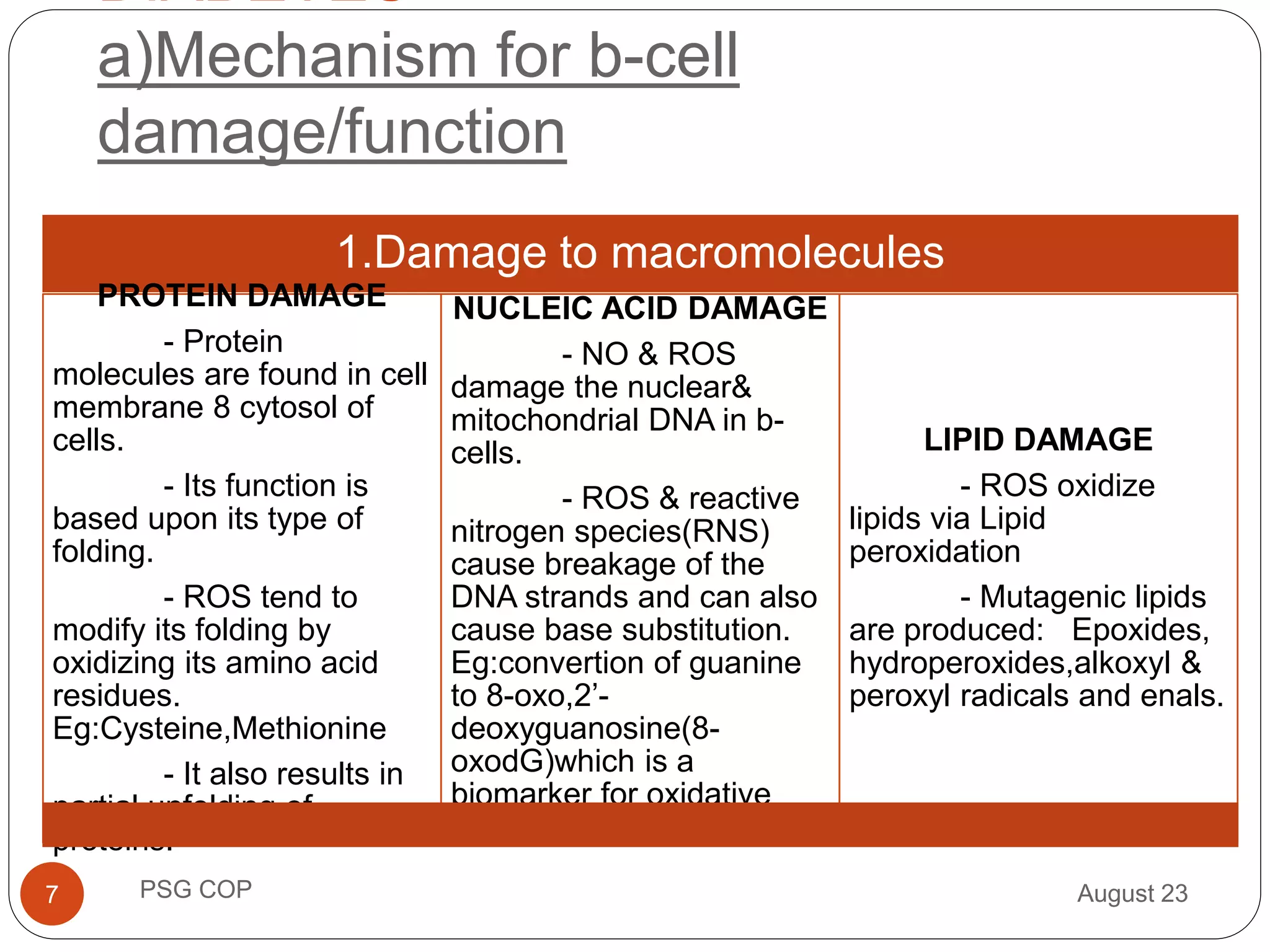
DIABETES
a)Mechanism for b-cell
damage/function
1.Damage to macromolecules
PROTEIN DAMAGE
- Protein
molecules are found in cell
membrane 8 cytosol of
cells.
- Its function is
based upon its type of
folding.
- ROS tend to
modify its folding by
oxidizing its amino acid
residues.
Eg:Cysteine,Methionine
- It also results in
partial unfolding of
proteins.
NUCLEIC ACID DAMAGE
- NO & ROS
damage the nuclear&
mitochondrial DNA in b-
cells.
- ROS & reactive
nitrogen species(RNS)
cause breakage of the
DNA strands and can also
cause base substitution.
Eg:convertion of guanine
to 8-oxo,2’-
deoxyguanosine(8-
oxodG)which is a
biomarker for oxidative
DNA damage.
LIPID DAMAGE
- ROS oxidize
lipids via Lipid
peroxidation
- Mutagenic lipids
are produced: Epoxides,
hydroperoxides,alkoxyl &
peroxyl radicals and enals.
August 23
7 PSG COP
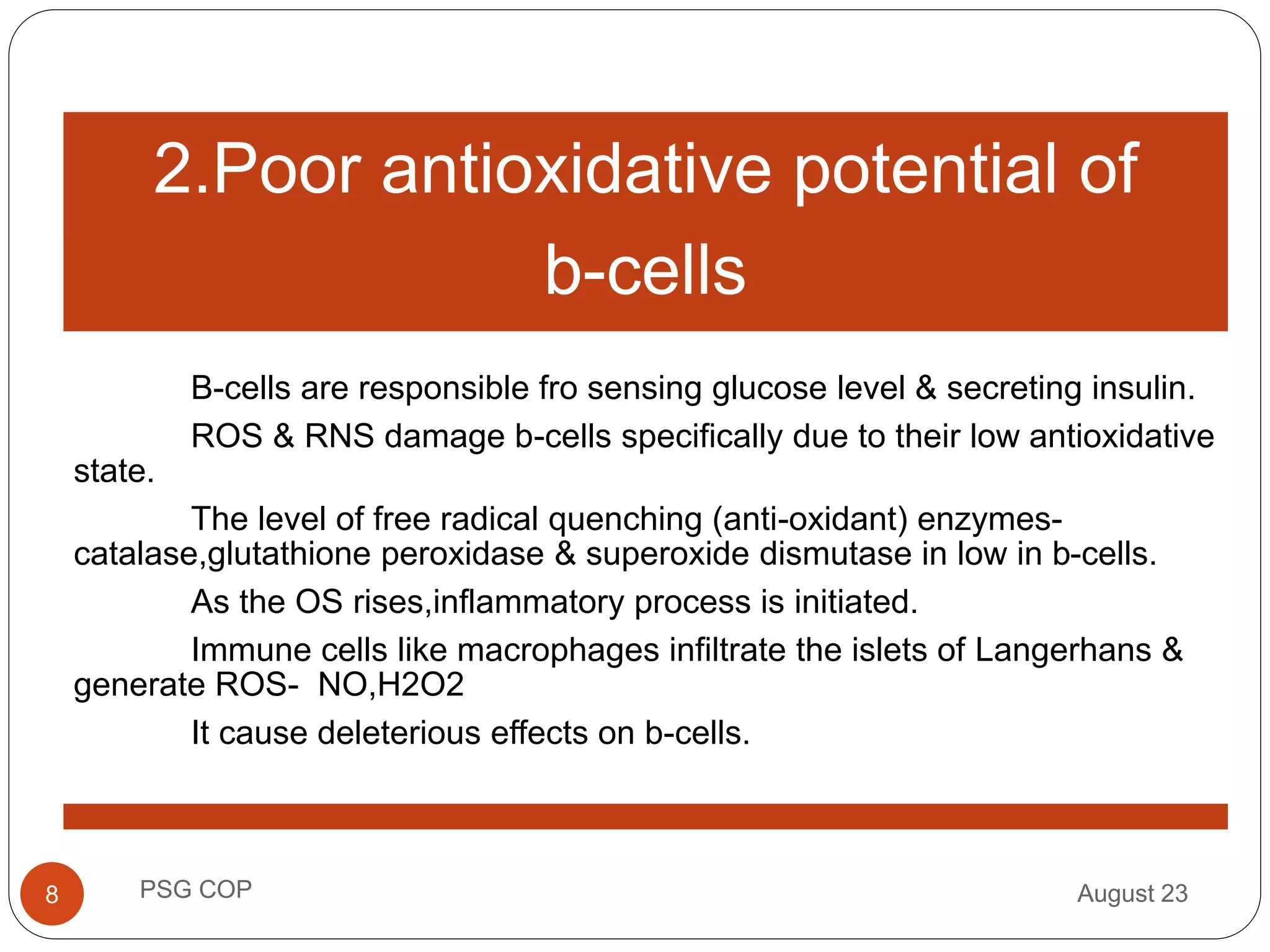
2.Poor antioxidative potential of
b-cells
B-cells are responsible fro sensing glucose level & secreting insulin.
ROS & RNS damage b-cells specifically due to their low antioxidative
state.
The level of free radical quenching (anti-oxidant) enzymes-
catalase,glutathione peroxidase & superoxide dismutase in low in b-cells.
As the OS rises,inflammatory process is initiated.
Immune cells like macrophages infiltrate the islets of Langerhans &
generate ROS- NO,H2O2
It cause deleterious effects on b-cells.
August 23
8 PSG COP
3.Triggers to inflammatory
pathway
The pathogenesis of type I diabetes involves an
interplay between the cells of immune system & the b-cell.
The prediabetic phase of the disease is characterized
by macrophages & T cells,resulting in insulitis.
Cytokines play a major role in prediabetic situation.the
local release of cytokines-IL 1β,IFN-γ, TNF-α induce the
onflammatory pathways in b-cells leading to insulin deficiency
& hyperglycemia.
August 23
9 PSG COP
August 23
PSG COP
10
4.ER stress pathway
ER stress is associated with diabetes.
Prolonged episodes of ER stress lead to the
death of b-cells.
A mixture of pro-inflammatory mediators
(cytokines) activate ER stress in b-cells.
Cytokines activate ER stress by decreasing the
Ca pump SERCA2B leads to depletion in the ER calcium
stores.
b)Mechanism for decrease in insulin
secretion:
August 23
PSG COP
11
 The secretion of insulin is regulated by
mitochondrial glucose metabolism.
 ROS- H2O2 increase intracellular calcium,
decreases ATP/ADP ratio & inhibits glucose-
stimulated insulin secretion in response to a
glucose stimulus.
 OS to mitochondria leads to decreased insulin
secretion
 ER stress is also involved in decreased insulin
secretion.It can activate NF-KB which promotes
defects in insulin secretion.
4.POST-DIABETIC
COMPLICATIONS
 Chronic increase in blood glucose level in both
type I diabetes & type II diabetes leads to various
post-diabetic complications.
 Increased concentration of glucose
increase in OS.
 The cells in retina ,nerves & kidney being more
fragile due to weak antioxidative state lose their
ability to fight the OS.
 Complications are:
Retinopathy
Neuropathy
Nephropathy
Macrovascular complications August 23
12 PSG COP
4.1.MECHANISM OF OS IN POST-
DIABETIC COMPLICATIONS
August 23
PSG COP
13
 Excess generation of highly ROS & RNS- key component in
development of complications invoked by hyperglycemia.
 ROS directly oxidize & damage DNA,protein & lipids
diminish their metabolic functions.
 ROS activate a no.of cellular stress-sensitive pathways
cellular damage
 Mechanism involved in generation of ROS by hyperglycemia:
 Oxidative phosphorylation
 Glucose auto-oxidation
 Increased lipoxygenase expression
 Changes in regulation & expression of
o nitric oxide synthase(NOS) isoforms(eNOS,iNOS,nNOS)
o ONOO- production
a)Mechanism involved in damage
August 23
PSG COP
14
• Modification of enzymes:
• ROS on interaction with enzymes leads to formation of abnormal
products
• Eg: Peroxynitrite on reaction with proteins inhibit their function &
attack iron-sulfur centres of enzyme to release iron atoms & inhibit
their activity.
• Nonenzymatic glycation :
• Metal-catalysed glucose autooxidation – glucose toxicity.
• It is non-enzymatic glycation process that occurs due to high
glucose concentration in blood & cells.
• This is due to ROS-superoxide & hydroxyl formation through
transition
• Modification of transcription factors:
• ROS attacks transcription factors and change their genetic
mechanism.
• Oxidative modification leads to
• Decreased expression of apoptosis inhibitory factor,complex I,Bcl-
2
• Increased expression of Stress proteins- proapoptotic(COX
Modification of proteins
August 23
PSG COP
15
• DNA modification is the most important consequence of OS.
• In diabetes, DNA strand breaks have been observed.
• Serum 8-OHdG(a modified nucleic acid due to OS) – increased in
diabetic patients which plays a major role in mutagenesis. It is
found to be in large amounts in retinopathy,neuropathy &
nephropathy.
Modification of DNA
• In type 2 diabetes,a correlation exists between fasting plasma FFA
& ratio of reduced/oxidized(endogenous antioxidant).
• Elevated FFA has adverse effects on mitochondrial function.
• It impairs endogenous antioxidant defenses by reducing
intracellular glutathione.
Modification of Lipids
• Increase in FFA leads to decrease in GSH level
• Decrease in GSH levels in cells renders it susceptible to oxidative
injury.
Decrease in antioxidant content
b)Pathways involved:
August 23
PSG COP
16
Polyol
pathway
s
• Increase in glucose leads to activation of polyol pathway.
• Glucose is reduced to sorbitol which depletes NADPH,a
cofactor to generate GSH,an antioxidant.
Hexos-
amine
pathway
• Excessive flux of glucose/FFA into cells-activates this pathway
• Fructose generated via polyol pathway on further conversions
yields uridine diphosphate – N-acetylglucosamine attacks
serine & threonine residues of transcription factors
overexpression of TGF & PAF-1
NF-KB
pathway
• Mediates immune & inflammatory responses & apoptosis.
August 23
PSG COP
17
JNK/SAPK
& p38
pathway
• These are members of complex superfamily of MAP
serine/threonine protein kinases which are stress activated
• These are responsive to exo- & endogenous stress-inducing
stimuli-hyperglycemia,ROS,cytokines
• This pathway leads to apoptosis
PKC
pathway
• Family of 11 isoforms.
• Linked with OS
• Hyperglycemia stimlates DAG formation which activates the
isoforms which affects the balance of gene expression & induces
OS
Inflammatio
n
• All the above pathways leads to inflammation.
• ROS leads to inflammation which further adds up to increase in
ROS.
• Two main inflammatory agents- C-reactive protein & TNF-α
5.SPECIFIC COMPLICATIONS &
MECHANISMS
August 23
PSG COP
18
 A cyclic relationship exists between DM & OS
triggers deleterious cellular processes.
1.NEUROPATHY:
 Its incidence increases with duration of diabetes
 Accelerated by poor control of glucose level.
 Neurons are lost & their ability to regenerate is impaired
 Mechanism:
 Proteins & lipids are important in structural & functional
aspects.Modified proteins are unable to perform axonal transport
& signaling.
 Loss of function in neurons promotes necrosis & apoptosis.
 Neuropathy – denegeration & regeneration occur simultaneously
 Schwann cells involved in regeneration are affected in OS due to
hyperglycemia.
August 23
PSG COP
19
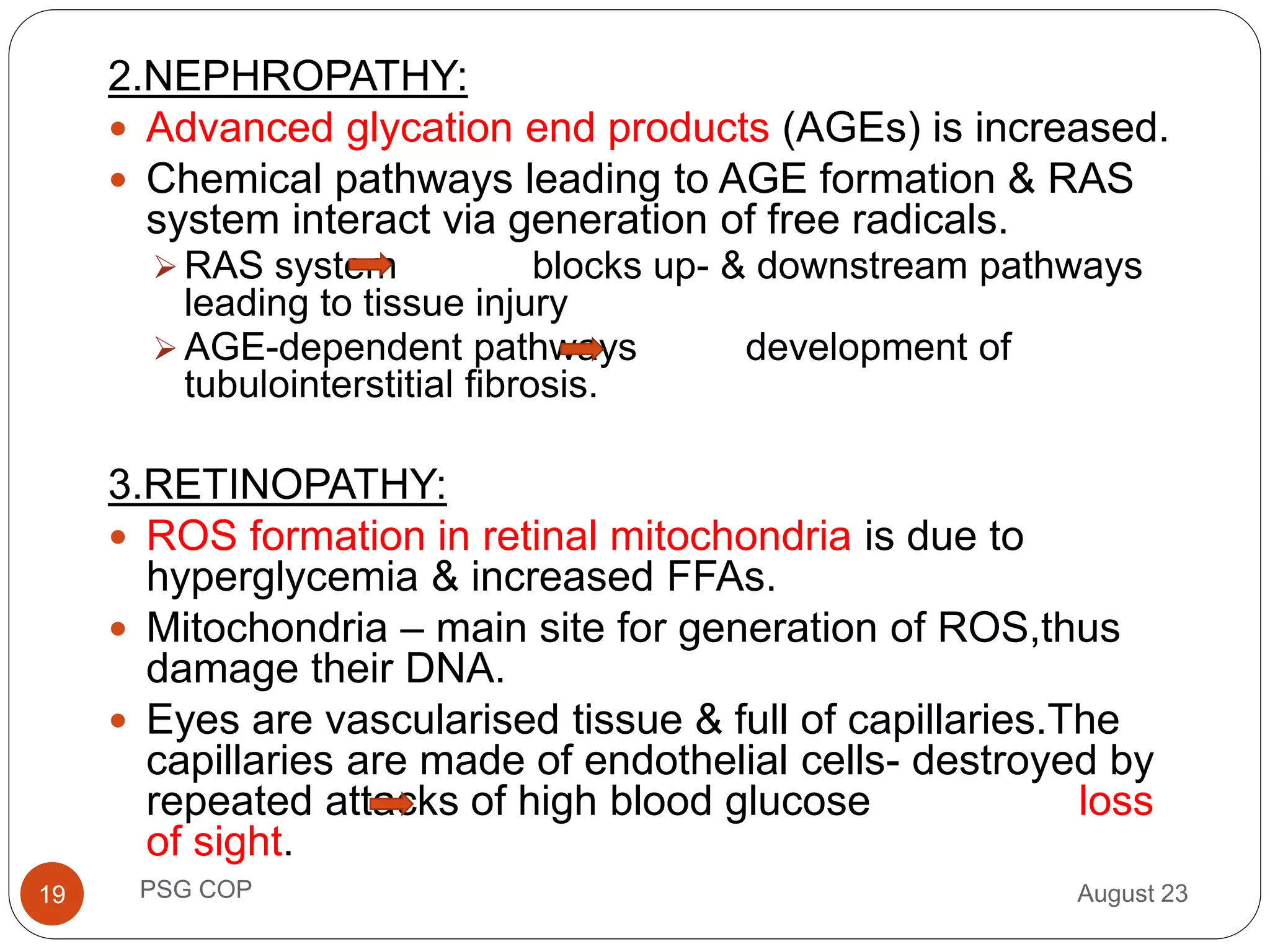
2.NEPHROPATHY:
 Advanced glycation end products (AGEs) is increased.
 Chemical pathways leading to AGE formation & RAS
system interact via generation of free radicals.
 RAS system blocks up- & downstream pathways
leading to tissue injury
 AGE-dependent pathways development of
tubulointerstitial fibrosis.
3.RETINOPATHY:
 ROS formation in retinal mitochondria is due to
hyperglycemia & increased FFAs.
 Mitochondria – main site for generation of ROS,thus
damage their DNA.
 Eyes are vascularised tissue & full of capillaries.The
capillaries are made of endothelial cells- destroyed by
repeated attacks of high blood glucose loss
of sight.
August 23
PSG COP
20
4.DIABETES & MACROVASCULAR DYSFUNCTION:
 Macrovascular complications are associated with
diabetes.
 The endothelial cells lining the arterial vasculature
balances thrombosis & fibrinolysis.This balance is linked
to NO production by eNOS. Imbalance between these
two results in peripheral arterial disease(PAD) in which
C-reactive protein(CRP) acts as a biomarker.
 Hyperglycemia affects the endothelial cells & eNOS
activity.
 Insulin resistance – loss of normal NO homeostasis &
produce ROS.
 High glucose concentration affects vascular smooth
muscle cell(VSMC) accelerates atherosclerosis
& plaque destabilization
6.REFERENCE
August 23
PSG COP
21
 Free Radicals in Human Health and
Disease,2015, Vabhi Rani,Umesh Chand Singh
Yadav

ROLE OF FREE RADICALS IN DIABETES.pptx

  • 1.
    Prepared by, Dhanushya .G, IM.Pharmacy , Department of Pharmacology, PSG College of Pharmacy ROLE OF FREE RADICALS IN DIABETES August 23 1 PSG COP
  • 2.
    CONTENT 1.Free radicals 2.Oxidative stress& Diabetes 3.Diabetes 3.1.Mechanism of OS in Diabetes 4.Post diabetic-complications 4.1.Mechanism of OS in Post-diabetic complications 5.Specific Complications & Mechanisms 6.Reference August 23 2 PSG COP
  • 3.
    1.FREE RADICALS  Freeradicals are oxygen containing unstable molecules with uneven no.of electrons.These radicals are highly reactive since they are unpaired.  These electrons like to be in pairs,so they scavenge the body to seek out electrons to become a pair.  When these free radicals & anti-oxidants are out of balance, it leads to Oxidative stress.  The Oxidative stress causes cell & tissue damage leading to a no.of diseases overtime. August 23 3 PSG COP
  • 4.
    2.OXIDATIVE STRESS & DIABETES Increase in Oxidative stress(OS) is linked with diabetes & post-diabetic complications.  OS leads to Oxidation of major biomolecules inside the cell Alteration in cell signaling mechanism,cell permeability,basic genetic mechanism.  In diabetes, Type-I pancreatic cells are damaged decreased production/utilization of insulin hyperglycemia. Type II Intracellular glucose concentration rises post-diabetic complications. August 23 4 PSG COP
  • 5.
  • 6.
    3.DIABETES Type I diabetesType II diabetes  Insulin –dependent/ Juvenile-onset diabetes  Autoimmune disorder in which T cells attack the b-cells loss of b-cells in the islets of Langerhans  Environmental & genetic factors are involved  Insulin-independent/ Adult-onset diabetes  Lack of insulin sensitivity in glucose- utilizing cells  Associated with modern lifestyle August 23 6 PSG COP
  • 7.
    DIABETES a)Mechanism for b-cell damage/function 1.Damageto macromolecules PROTEIN DAMAGE - Protein molecules are found in cell membrane 8 cytosol of cells. - Its function is based upon its type of folding. - ROS tend to modify its folding by oxidizing its amino acid residues. Eg:Cysteine,Methionine - It also results in partial unfolding of proteins. NUCLEIC ACID DAMAGE - NO & ROS damage the nuclear& mitochondrial DNA in b- cells. - ROS & reactive nitrogen species(RNS) cause breakage of the DNA strands and can also cause base substitution. Eg:convertion of guanine to 8-oxo,2’- deoxyguanosine(8- oxodG)which is a biomarker for oxidative DNA damage. LIPID DAMAGE - ROS oxidize lipids via Lipid peroxidation - Mutagenic lipids are produced: Epoxides, hydroperoxides,alkoxyl & peroxyl radicals and enals. August 23 7 PSG COP
  • 8.
    2.Poor antioxidative potentialof b-cells B-cells are responsible fro sensing glucose level & secreting insulin. ROS & RNS damage b-cells specifically due to their low antioxidative state. The level of free radical quenching (anti-oxidant) enzymes- catalase,glutathione peroxidase & superoxide dismutase in low in b-cells. As the OS rises,inflammatory process is initiated. Immune cells like macrophages infiltrate the islets of Langerhans & generate ROS- NO,H2O2 It cause deleterious effects on b-cells. August 23 8 PSG COP
  • 9.
    3.Triggers to inflammatory pathway Thepathogenesis of type I diabetes involves an interplay between the cells of immune system & the b-cell. The prediabetic phase of the disease is characterized by macrophages & T cells,resulting in insulitis. Cytokines play a major role in prediabetic situation.the local release of cytokines-IL 1β,IFN-γ, TNF-α induce the onflammatory pathways in b-cells leading to insulin deficiency & hyperglycemia. August 23 9 PSG COP
  • 10.
    August 23 PSG COP 10 4.ERstress pathway ER stress is associated with diabetes. Prolonged episodes of ER stress lead to the death of b-cells. A mixture of pro-inflammatory mediators (cytokines) activate ER stress in b-cells. Cytokines activate ER stress by decreasing the Ca pump SERCA2B leads to depletion in the ER calcium stores.
  • 11.
    b)Mechanism for decreasein insulin secretion: August 23 PSG COP 11  The secretion of insulin is regulated by mitochondrial glucose metabolism.  ROS- H2O2 increase intracellular calcium, decreases ATP/ADP ratio & inhibits glucose- stimulated insulin secretion in response to a glucose stimulus.  OS to mitochondria leads to decreased insulin secretion  ER stress is also involved in decreased insulin secretion.It can activate NF-KB which promotes defects in insulin secretion.
  • 12.
    4.POST-DIABETIC COMPLICATIONS  Chronic increasein blood glucose level in both type I diabetes & type II diabetes leads to various post-diabetic complications.  Increased concentration of glucose increase in OS.  The cells in retina ,nerves & kidney being more fragile due to weak antioxidative state lose their ability to fight the OS.  Complications are: Retinopathy Neuropathy Nephropathy Macrovascular complications August 23 12 PSG COP
  • 13.
    4.1.MECHANISM OF OSIN POST- DIABETIC COMPLICATIONS August 23 PSG COP 13  Excess generation of highly ROS & RNS- key component in development of complications invoked by hyperglycemia.  ROS directly oxidize & damage DNA,protein & lipids diminish their metabolic functions.  ROS activate a no.of cellular stress-sensitive pathways cellular damage  Mechanism involved in generation of ROS by hyperglycemia:  Oxidative phosphorylation  Glucose auto-oxidation  Increased lipoxygenase expression  Changes in regulation & expression of o nitric oxide synthase(NOS) isoforms(eNOS,iNOS,nNOS) o ONOO- production
  • 14.
    a)Mechanism involved indamage August 23 PSG COP 14 • Modification of enzymes: • ROS on interaction with enzymes leads to formation of abnormal products • Eg: Peroxynitrite on reaction with proteins inhibit their function & attack iron-sulfur centres of enzyme to release iron atoms & inhibit their activity. • Nonenzymatic glycation : • Metal-catalysed glucose autooxidation – glucose toxicity. • It is non-enzymatic glycation process that occurs due to high glucose concentration in blood & cells. • This is due to ROS-superoxide & hydroxyl formation through transition • Modification of transcription factors: • ROS attacks transcription factors and change their genetic mechanism. • Oxidative modification leads to • Decreased expression of apoptosis inhibitory factor,complex I,Bcl- 2 • Increased expression of Stress proteins- proapoptotic(COX Modification of proteins
  • 15.
    August 23 PSG COP 15 •DNA modification is the most important consequence of OS. • In diabetes, DNA strand breaks have been observed. • Serum 8-OHdG(a modified nucleic acid due to OS) – increased in diabetic patients which plays a major role in mutagenesis. It is found to be in large amounts in retinopathy,neuropathy & nephropathy. Modification of DNA • In type 2 diabetes,a correlation exists between fasting plasma FFA & ratio of reduced/oxidized(endogenous antioxidant). • Elevated FFA has adverse effects on mitochondrial function. • It impairs endogenous antioxidant defenses by reducing intracellular glutathione. Modification of Lipids • Increase in FFA leads to decrease in GSH level • Decrease in GSH levels in cells renders it susceptible to oxidative injury. Decrease in antioxidant content
  • 16.
    b)Pathways involved: August 23 PSGCOP 16 Polyol pathway s • Increase in glucose leads to activation of polyol pathway. • Glucose is reduced to sorbitol which depletes NADPH,a cofactor to generate GSH,an antioxidant. Hexos- amine pathway • Excessive flux of glucose/FFA into cells-activates this pathway • Fructose generated via polyol pathway on further conversions yields uridine diphosphate – N-acetylglucosamine attacks serine & threonine residues of transcription factors overexpression of TGF & PAF-1 NF-KB pathway • Mediates immune & inflammatory responses & apoptosis.
  • 17.
    August 23 PSG COP 17 JNK/SAPK &p38 pathway • These are members of complex superfamily of MAP serine/threonine protein kinases which are stress activated • These are responsive to exo- & endogenous stress-inducing stimuli-hyperglycemia,ROS,cytokines • This pathway leads to apoptosis PKC pathway • Family of 11 isoforms. • Linked with OS • Hyperglycemia stimlates DAG formation which activates the isoforms which affects the balance of gene expression & induces OS Inflammatio n • All the above pathways leads to inflammation. • ROS leads to inflammation which further adds up to increase in ROS. • Two main inflammatory agents- C-reactive protein & TNF-α
  • 18.
    5.SPECIFIC COMPLICATIONS & MECHANISMS August23 PSG COP 18  A cyclic relationship exists between DM & OS triggers deleterious cellular processes. 1.NEUROPATHY:  Its incidence increases with duration of diabetes  Accelerated by poor control of glucose level.  Neurons are lost & their ability to regenerate is impaired  Mechanism:  Proteins & lipids are important in structural & functional aspects.Modified proteins are unable to perform axonal transport & signaling.  Loss of function in neurons promotes necrosis & apoptosis.  Neuropathy – denegeration & regeneration occur simultaneously  Schwann cells involved in regeneration are affected in OS due to hyperglycemia.
  • 19.
    August 23 PSG COP 19 2.NEPHROPATHY: Advanced glycation end products (AGEs) is increased.  Chemical pathways leading to AGE formation & RAS system interact via generation of free radicals.  RAS system blocks up- & downstream pathways leading to tissue injury  AGE-dependent pathways development of tubulointerstitial fibrosis. 3.RETINOPATHY:  ROS formation in retinal mitochondria is due to hyperglycemia & increased FFAs.  Mitochondria – main site for generation of ROS,thus damage their DNA.  Eyes are vascularised tissue & full of capillaries.The capillaries are made of endothelial cells- destroyed by repeated attacks of high blood glucose loss of sight.
  • 20.
    August 23 PSG COP 20 4.DIABETES& MACROVASCULAR DYSFUNCTION:  Macrovascular complications are associated with diabetes.  The endothelial cells lining the arterial vasculature balances thrombosis & fibrinolysis.This balance is linked to NO production by eNOS. Imbalance between these two results in peripheral arterial disease(PAD) in which C-reactive protein(CRP) acts as a biomarker.  Hyperglycemia affects the endothelial cells & eNOS activity.  Insulin resistance – loss of normal NO homeostasis & produce ROS.  High glucose concentration affects vascular smooth muscle cell(VSMC) accelerates atherosclerosis & plaque destabilization
  • 21.
    6.REFERENCE August 23 PSG COP 21 Free Radicals in Human Health and Disease,2015, Vabhi Rani,Umesh Chand Singh Yadav