Oligonucleotide Therapeutics: Basic Principles and Delivery Strategies Ashish Sarode February 17, 2006
Outline Introduction Basic Principles Delivery Strategies Summary Conclusion
Introduction
Definitions Oligonucleotide (ON) is a molecule composed of 25 or fewer nucleotides ON strategies designed to treat disease by altering gene expression of an affected individual
Past and Present 1,2 First synthetic oligonucleotide – Zamecnik and Stephenson (1978) – RS virus First oligonucleotide drug – Fomivirsen (Vitravene) – FDA approval (1998/99) – Cytomegalovirus (CMV) retinitis – AIDS Approximately 70 to 80 oligonucleotides are currently in clinical trials
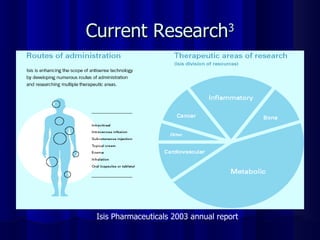
Current Research 3 Isis Pharmaceuticals 2003 annual report
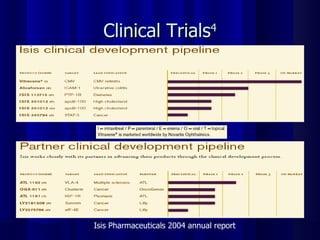
Clinical Trials 4 Isis Pharmaceuticals 2004 annual report
Basic Principles
Gene Therapy vs. ON Therapy 5 Gene Therapy Missing or defective  genes are added or  replaced with functional  versions ON Therapy Existing but abnormally  expressed genes are  modulated
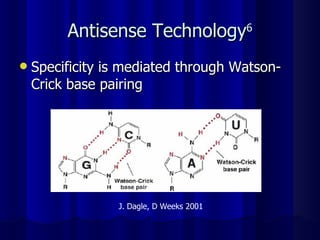
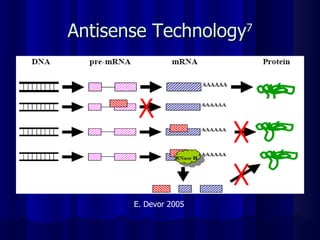
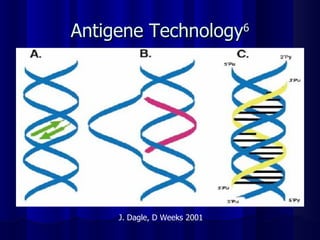
Modulation of gene expression 2,6 Antisense technology ONs are synthesized that  are complementary to  the RNA of interest (Control of translation) Antigene technology ONs are synthesized for  direct binding to DNA (Control of transcription)
Antisense Technology 6 Specificity is mediated through Watson-Crick base pairing J. Dagle, D Weeks 2001
Antisense Technology 7 E. Devor 2005
Antigene Technology 6 J. Dagle, D Weeks 2001
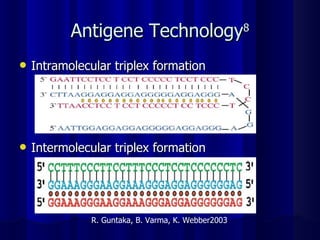
Antigene Technology 8 Intramolecular triplex formation Intermolecular triplex formation R. Guntaka, B. Varma, K. Webber2003
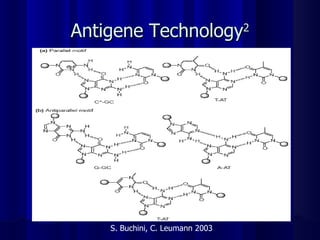
Antigene Technology 2 S. Buchini, C. Leumann 2003
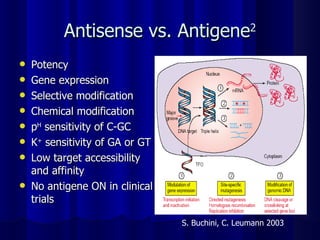
Antisense vs. Antigene 2 Potency Gene expression Selective modification Chemical modification p H  sensitivity of C-GC K +  sensitivity of GA or GT Low target accessibility and affinity No antigene ON in clinical trials S. Buchini, C. Leumann 2003
Steps in successful ON therapy 9 Design and chemistry Stability Cell association and entry Net accumulation (influx > efflux) Avoid compartmentalization Localization at active sites Exert activity
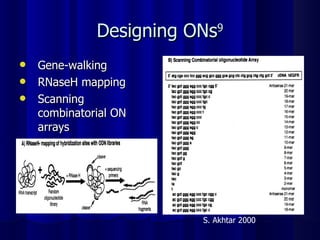
Designing ONs 9 Gene-walking RNaseH mapping Scanning combinatorial ON arrays S. Akhtar 2000
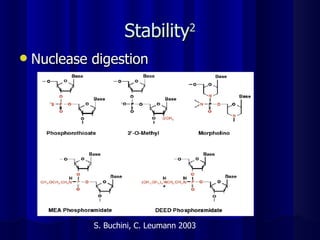
Stability 2 Nuclease digestion S. Buchini, C. Leumann 2003
Delivery Strategies
Delivery Strategies 9 Liposomes Dendrimers Carrier peptide-mediated Receptor-mediated Polymers (microsphere formulations)
Liposomes 10 Anionic liposomes pH sensitive liposomes Immunoliposomes Fusogenic liposomes Cationic liposomes
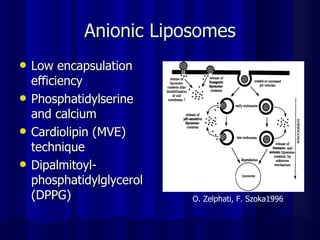
Anionic Liposomes Low encapsulation efficiency Phosphatidylserine and calcium Cardiolipin (MVE) technique Dipalmitoyl-phosphatidylglycerol (DPPG) O. Zelphati, F. Szoka1996
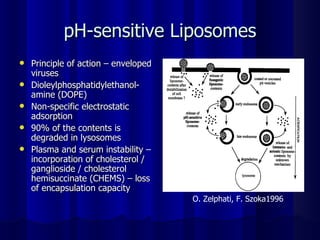
pH-sensitive Liposomes Principle of action – enveloped viruses Dioleylphosphatidylethanol-amine (DOPE) Non-specific electrostatic adsorption 90% of the contents is degraded in lysosomes Plasma and serum instability – incorporation of cholesterol / ganglioside / cholesterol hemisuccinate (CHEMS) – loss of encapsulation capacity O. Zelphati, F. Szoka1996
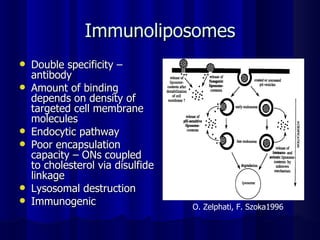
Immunoliposomes Double specificity – antibody Amount of binding depends on density of targeted cell membrane molecules Endocytic pathway Poor encapsulation capacity – ONs coupled to cholesterol via disulfide linkage Lysosomal destruction Immunogenic O. Zelphati, F. Szoka1996
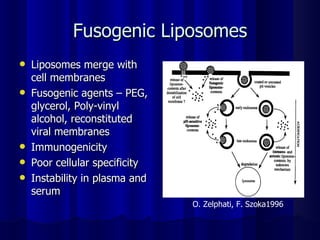
Fusogenic Liposomes Liposomes merge with cell membranes Fusogenic agents – PEG, glycerol, Poly-vinyl alcohol, reconstituted viral membranes Immunogenicity Poor cellular specificity Instability in plasma and serum O. Zelphati, F. Szoka1996
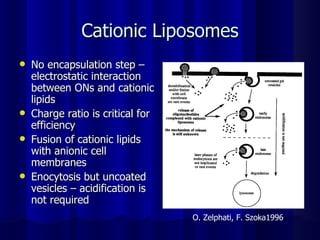
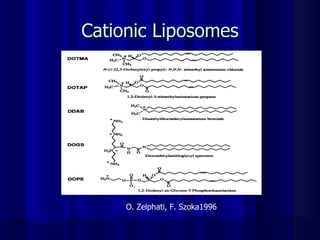
Cationic Liposomes No encapsulation step – electrostatic interaction between ONs and cationic lipids Charge ratio is critical for efficiency Fusion of cationic lipids with anionic cell membranes Enocytosis but uncoated vesicles – acidification is not required O. Zelphati, F. Szoka1996
Cationic Liposomes O. Zelphati, F. Szoka1996
Dendrimers 9 Supermolecular delivery systems – Polymerization – monodisperse, reproducible product Several functional groups – versatile Polyamidoamine (PAMAM) starburst dendrimers – hydrocarbon core – charged surface amino groups Stable complex – plasma and serum Reduce degradation of ONs in serum and lysosomes
Carrier peptide-mediated 5,9 Poly-L-lysine (PLL) – polycationic drug carrier Non-specific adsorptive endocytosis PLL interacts nonspecifically with negatively charged molecules on the cell membrane Cytotoxicity and nonspecificity Specific peptides can be conjugated to PLL
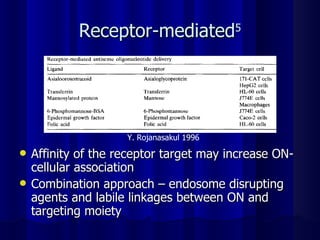
Receptor-mediated 5 Affinity of the receptor target may increase ON-cellular association Combination approach – endosome disrupting agents and labile linkages between ON and targeting moiety Y. Rojanasakul 1996
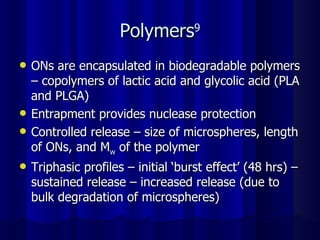
Polymers 9 ONs are encapsulated in biodegradable polymers – copolymers of lactic acid and glycolic acid (PLA and PLGA) Entrapment provides nuclease protection Controlled release – size of microspheres, length of ONs, and M w  of the polymer Triphasic profiles – initial ‘burst effect’ (48 hrs) – sustained release – increased release (due to bulk degradation of microspheres)
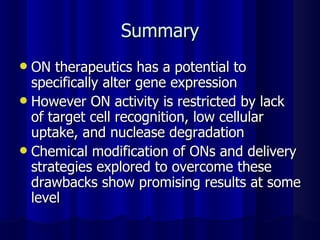
Summary ON therapeutics has a potential to specifically alter gene expression However ON activity is restricted by lack of target cell recognition, low cellular uptake, and nuclease degradation Chemical modification of ONs and delivery strategies explored to overcome these drawbacks show promising results at some level
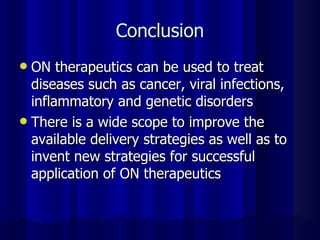
Conclusion ON therapeutics can be used to treat diseases such as cancer, viral infections, inflammatory and genetic disorders There is a wide scope to improve the available delivery strategies as well as to invent new strategies for successful application of ON therapeutics
References J. Rossi. A society of our own. Oligonucleotides. 2005; 15:71-71 S. Buchini, C. Leumann. Recent improvements in antigene technology. Current opinion in chemical biology. 2003; 7:717-726 Isis Pharmaceuticals 2003 annual report Isis Pharmaceuticals 2004 annual report Y. Rojanasakul. Antisense oligonucleotide therapeutics: drug delivery and targeting. ADDR. 1996; 18:115-131 J. Dagle, D Weeks. Oligonucleotide-based strategies to reduce gene expression. Differentiation. 2001; 69:75-82 E. Devor. ID Tutorial: Antisense Technologies. Integrated DNA technologies. 2005 R. Guntaka, B. Varma, K. Webber. Triplex forming oligonucleotides as modulators of gene expression. IJBCB. 2003; 35:22-31 S. Akhtar, M. Hughes, A. Khan, M. Bibby, M. Hussain, Q. Nawaz, J Double, P. Sayyed. The delivery of antisense therapeutics. ADDR. 2000; 44:3-21 O. Zelphati, F. Szoka. Liposomes as a carrier for intracellular delivery of antisense oligonucleotides: a real or magic bullet? Journal of controlled release. 1996; 41:99-119
Acknowledgement Dr. S. Kislalioglu Dr. H. Zia

Oligonucleotide Therapeutics

  • 1.
    Oligonucleotide Therapeutics: BasicPrinciples and Delivery Strategies Ashish Sarode February 17, 2006
  • 2.
    Outline Introduction BasicPrinciples Delivery Strategies Summary Conclusion
  • 3.
  • 4.
    Definitions Oligonucleotide (ON)is a molecule composed of 25 or fewer nucleotides ON strategies designed to treat disease by altering gene expression of an affected individual
  • 5.
    Past and Present1,2 First synthetic oligonucleotide – Zamecnik and Stephenson (1978) – RS virus First oligonucleotide drug – Fomivirsen (Vitravene) – FDA approval (1998/99) – Cytomegalovirus (CMV) retinitis – AIDS Approximately 70 to 80 oligonucleotides are currently in clinical trials
  • 6.
    Current Research 3Isis Pharmaceuticals 2003 annual report
  • 7.
    Clinical Trials 4Isis Pharmaceuticals 2004 annual report
  • 8.
  • 9.
    Gene Therapy vs.ON Therapy 5 Gene Therapy Missing or defective genes are added or replaced with functional versions ON Therapy Existing but abnormally expressed genes are modulated
  • 10.
    Modulation of geneexpression 2,6 Antisense technology ONs are synthesized that are complementary to the RNA of interest (Control of translation) Antigene technology ONs are synthesized for direct binding to DNA (Control of transcription)
  • 11.
    Antisense Technology 6Specificity is mediated through Watson-Crick base pairing J. Dagle, D Weeks 2001
  • 12.
  • 13.
    Antigene Technology 6J. Dagle, D Weeks 2001
  • 14.
    Antigene Technology 8Intramolecular triplex formation Intermolecular triplex formation R. Guntaka, B. Varma, K. Webber2003
  • 15.
    Antigene Technology 2S. Buchini, C. Leumann 2003
  • 16.
    Antisense vs. Antigene2 Potency Gene expression Selective modification Chemical modification p H sensitivity of C-GC K + sensitivity of GA or GT Low target accessibility and affinity No antigene ON in clinical trials S. Buchini, C. Leumann 2003
  • 17.
    Steps in successfulON therapy 9 Design and chemistry Stability Cell association and entry Net accumulation (influx > efflux) Avoid compartmentalization Localization at active sites Exert activity
  • 18.
    Designing ONs 9Gene-walking RNaseH mapping Scanning combinatorial ON arrays S. Akhtar 2000
  • 19.
    Stability 2 Nucleasedigestion S. Buchini, C. Leumann 2003
  • 20.
  • 21.
    Delivery Strategies 9Liposomes Dendrimers Carrier peptide-mediated Receptor-mediated Polymers (microsphere formulations)
  • 22.
    Liposomes 10 Anionicliposomes pH sensitive liposomes Immunoliposomes Fusogenic liposomes Cationic liposomes
  • 23.
    Anionic Liposomes Lowencapsulation efficiency Phosphatidylserine and calcium Cardiolipin (MVE) technique Dipalmitoyl-phosphatidylglycerol (DPPG) O. Zelphati, F. Szoka1996
  • 24.
    pH-sensitive Liposomes Principleof action – enveloped viruses Dioleylphosphatidylethanol-amine (DOPE) Non-specific electrostatic adsorption 90% of the contents is degraded in lysosomes Plasma and serum instability – incorporation of cholesterol / ganglioside / cholesterol hemisuccinate (CHEMS) – loss of encapsulation capacity O. Zelphati, F. Szoka1996
  • 25.
    Immunoliposomes Double specificity– antibody Amount of binding depends on density of targeted cell membrane molecules Endocytic pathway Poor encapsulation capacity – ONs coupled to cholesterol via disulfide linkage Lysosomal destruction Immunogenic O. Zelphati, F. Szoka1996
  • 26.
    Fusogenic Liposomes Liposomesmerge with cell membranes Fusogenic agents – PEG, glycerol, Poly-vinyl alcohol, reconstituted viral membranes Immunogenicity Poor cellular specificity Instability in plasma and serum O. Zelphati, F. Szoka1996
  • 27.
    Cationic Liposomes Noencapsulation step – electrostatic interaction between ONs and cationic lipids Charge ratio is critical for efficiency Fusion of cationic lipids with anionic cell membranes Enocytosis but uncoated vesicles – acidification is not required O. Zelphati, F. Szoka1996
  • 28.
    Cationic Liposomes O.Zelphati, F. Szoka1996
  • 29.
    Dendrimers 9 Supermoleculardelivery systems – Polymerization – monodisperse, reproducible product Several functional groups – versatile Polyamidoamine (PAMAM) starburst dendrimers – hydrocarbon core – charged surface amino groups Stable complex – plasma and serum Reduce degradation of ONs in serum and lysosomes
  • 30.
    Carrier peptide-mediated 5,9Poly-L-lysine (PLL) – polycationic drug carrier Non-specific adsorptive endocytosis PLL interacts nonspecifically with negatively charged molecules on the cell membrane Cytotoxicity and nonspecificity Specific peptides can be conjugated to PLL
  • 31.
    Receptor-mediated 5 Affinityof the receptor target may increase ON-cellular association Combination approach – endosome disrupting agents and labile linkages between ON and targeting moiety Y. Rojanasakul 1996
  • 32.
    Polymers 9 ONsare encapsulated in biodegradable polymers – copolymers of lactic acid and glycolic acid (PLA and PLGA) Entrapment provides nuclease protection Controlled release – size of microspheres, length of ONs, and M w of the polymer Triphasic profiles – initial ‘burst effect’ (48 hrs) – sustained release – increased release (due to bulk degradation of microspheres)
  • 33.
    Summary ON therapeuticshas a potential to specifically alter gene expression However ON activity is restricted by lack of target cell recognition, low cellular uptake, and nuclease degradation Chemical modification of ONs and delivery strategies explored to overcome these drawbacks show promising results at some level
  • 34.
    Conclusion ON therapeuticscan be used to treat diseases such as cancer, viral infections, inflammatory and genetic disorders There is a wide scope to improve the available delivery strategies as well as to invent new strategies for successful application of ON therapeutics
  • 35.
    References J. Rossi.A society of our own. Oligonucleotides. 2005; 15:71-71 S. Buchini, C. Leumann. Recent improvements in antigene technology. Current opinion in chemical biology. 2003; 7:717-726 Isis Pharmaceuticals 2003 annual report Isis Pharmaceuticals 2004 annual report Y. Rojanasakul. Antisense oligonucleotide therapeutics: drug delivery and targeting. ADDR. 1996; 18:115-131 J. Dagle, D Weeks. Oligonucleotide-based strategies to reduce gene expression. Differentiation. 2001; 69:75-82 E. Devor. ID Tutorial: Antisense Technologies. Integrated DNA technologies. 2005 R. Guntaka, B. Varma, K. Webber. Triplex forming oligonucleotides as modulators of gene expression. IJBCB. 2003; 35:22-31 S. Akhtar, M. Hughes, A. Khan, M. Bibby, M. Hussain, Q. Nawaz, J Double, P. Sayyed. The delivery of antisense therapeutics. ADDR. 2000; 44:3-21 O. Zelphati, F. Szoka. Liposomes as a carrier for intracellular delivery of antisense oligonucleotides: a real or magic bullet? Journal of controlled release. 1996; 41:99-119
  • 36.
    Acknowledgement Dr. S.Kislalioglu Dr. H. Zia