ANTISENSE
TECHNOLOGY
ROLE IN DRUG
DISCOVERY
LALITA SHAHGOND
M.PHARM
SEM II
pharmacology
Introduction
Conventional definition of antisense:
manipulation and/or modification of DNA or
RNA
so that its component (nucleotides) forms a
complementary copy of normal or “sense”
messenger RNA.
What is Antisense technology
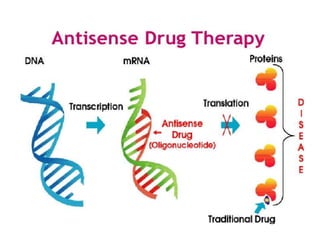
• The technique in which translation of mRNA
into proteins is inhibited by introducing single
stranded nucleotide ( oligo de oxy nucleotides)
• The oligonucleotides are complementary to the
mRNA, which physically binds to the mRNA
• This technology prevent the synthesis of
specific proteins.
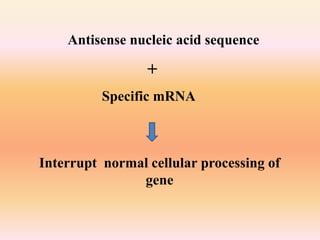
Antisense nucleic acid sequence
+
Specific mRNA
Interrupt normal cellular processing of
gene
Antisense technologies are a suite
of techniques that, together form a
very powerful weapon for
studying gene function and for
discovering more specific
treatments of disease.
What is Antisense Oligonucleotides
• Oligodeoxynucleotides are 15-20 units
nucleotides, which can hybridize with specific
target mRNA.
• Oligonucleotides can hybridize with
- different types of RNA
- transcripts – mRNAs
- intron-exons
- double stranded RNAs
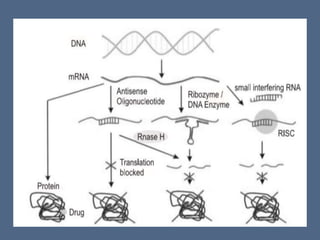
3 types of anti mRNA strategies
• Using Single stranded antisense
oligonucleotides
• By triggering RNA cleavage through
catalytically active oligonucleotides
(ribozymes)
• RNA interference induced by small
interfering RNAs (siRNA)
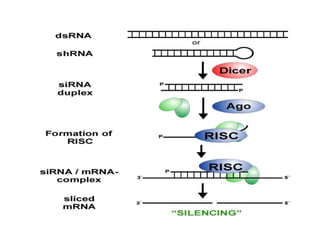
siRNA
• Known as silencing RNA
• Commonly used RNAi (interference)
• Double stranded RNA, 20-25 base pair,
similar to miRNA and operate with RNA
interference pathway.
Application
• Medical application
- in cancer chemotherapy.
- in AIDS therapy.
• Veterinary application
- medicine and pharmaceuticals
- transgenic animals for improved milk
production.
- swine fewer, avian flu
• Agricultural application
- genetic application of fruit ripening
- modification of flower color in
decorative flower.
• Industrial application
- new drug discovery
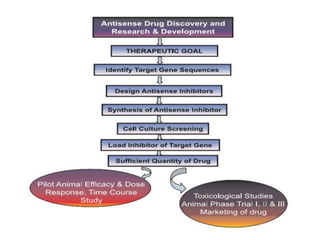
Role In Drug Discovery
• In recent years, Antisense oligonucleotides
(AS-OD) technologies have been widely used
as potent and promising tools for drug
discovery and development.
• Diseases are connected to insufficient or
excess production of certain proteins.
• If the production of these proteins are
interrupted then many diseases can be cured.
• Antisense technology is a method
which can disrupt protein production.
• it may be used to design new
therapeutics for disease
whose pathology involves specific
protein playing a crucial role
• The essential steps in rational drug
design are
- the identification of an
appropriate target responsible for a
certain disease
- development of a drug with a
specific affinity to that target.
• One of the most general approaches of
drug targeting is the specific
manipulation of gene expression at the
DNA or RNA stage of protein synthesis.
• No doubt, antisense oligonucleotides
(AS-ODs) are recognized to be very
efficient tools for the inhibition of gene
expression in a sequence-specific way
• Drug discovery efforts have
historically focused on the search for
compounds that modulate the protein
products of genes.
• The vast majority of drugs available
today either act at the protein level,
or the drugs themselves are proteins.
• It is most advance and genomically
based drug discovery technology.
• Antisense technology provides a
rapid and specific method for
determination of gene function, both
in vitro and in vivo.
• The antisense approach could reduce the cost
of drug discovery by expediting the
identification of lead targets for
pharmaceutical intervention.
• Major improvements have been achieved by
the development of modified nucleotides that
provide high target affinity, enhanced
biostability and low toxicity.
Antisense technology

Antisense technology

  • 1.
    ANTISENSE TECHNOLOGY ROLE IN DRUG DISCOVERY LALITASHAHGOND M.PHARM SEM II pharmacology
  • 2.
    Introduction Conventional definition ofantisense: manipulation and/or modification of DNA or RNA so that its component (nucleotides) forms a complementary copy of normal or “sense” messenger RNA.
  • 3.
    What is Antisensetechnology • The technique in which translation of mRNA into proteins is inhibited by introducing single stranded nucleotide ( oligo de oxy nucleotides) • The oligonucleotides are complementary to the mRNA, which physically binds to the mRNA • This technology prevent the synthesis of specific proteins.
  • 4.
    Antisense nucleic acidsequence + Specific mRNA Interrupt normal cellular processing of gene
  • 5.
    Antisense technologies area suite of techniques that, together form a very powerful weapon for studying gene function and for discovering more specific treatments of disease.
  • 6.
    What is AntisenseOligonucleotides • Oligodeoxynucleotides are 15-20 units nucleotides, which can hybridize with specific target mRNA. • Oligonucleotides can hybridize with - different types of RNA - transcripts – mRNAs - intron-exons - double stranded RNAs
  • 8.
    3 types ofanti mRNA strategies • Using Single stranded antisense oligonucleotides • By triggering RNA cleavage through catalytically active oligonucleotides (ribozymes) • RNA interference induced by small interfering RNAs (siRNA)
  • 10.
    siRNA • Known assilencing RNA • Commonly used RNAi (interference) • Double stranded RNA, 20-25 base pair, similar to miRNA and operate with RNA interference pathway.
  • 12.
    Application • Medical application -in cancer chemotherapy. - in AIDS therapy. • Veterinary application - medicine and pharmaceuticals - transgenic animals for improved milk production.
  • 13.
    - swine fewer,avian flu • Agricultural application - genetic application of fruit ripening - modification of flower color in decorative flower. • Industrial application - new drug discovery
  • 14.
    Role In DrugDiscovery • In recent years, Antisense oligonucleotides (AS-OD) technologies have been widely used as potent and promising tools for drug discovery and development. • Diseases are connected to insufficient or excess production of certain proteins. • If the production of these proteins are interrupted then many diseases can be cured.
  • 15.
    • Antisense technologyis a method which can disrupt protein production. • it may be used to design new therapeutics for disease whose pathology involves specific protein playing a crucial role
  • 16.
    • The essentialsteps in rational drug design are - the identification of an appropriate target responsible for a certain disease - development of a drug with a specific affinity to that target.
  • 17.
    • One ofthe most general approaches of drug targeting is the specific manipulation of gene expression at the DNA or RNA stage of protein synthesis. • No doubt, antisense oligonucleotides (AS-ODs) are recognized to be very efficient tools for the inhibition of gene expression in a sequence-specific way
  • 18.
    • Drug discoveryefforts have historically focused on the search for compounds that modulate the protein products of genes. • The vast majority of drugs available today either act at the protein level, or the drugs themselves are proteins.
  • 19.
    • It ismost advance and genomically based drug discovery technology. • Antisense technology provides a rapid and specific method for determination of gene function, both in vitro and in vivo.
  • 20.
    • The antisenseapproach could reduce the cost of drug discovery by expediting the identification of lead targets for pharmaceutical intervention. • Major improvements have been achieved by the development of modified nucleotides that provide high target affinity, enhanced biostability and low toxicity.