PRESENTED BY
ASHISH
M PHARM FIRST YEAR
(PHARMACOLOGY)
 Introduction of drug discovery
 Need of Drug Discovery
 Target Identification
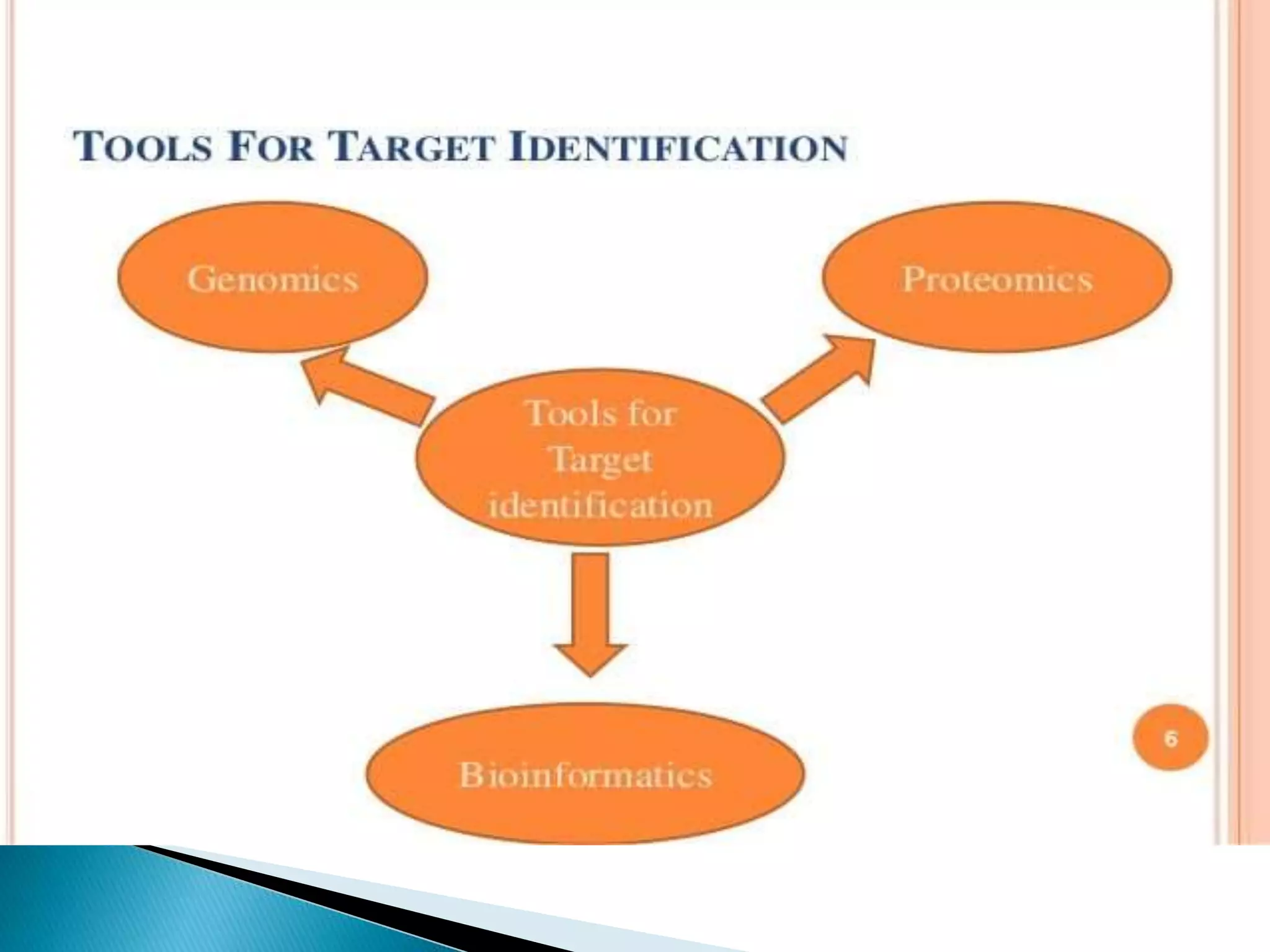
Genomics
Proteomics
Bioinformatics
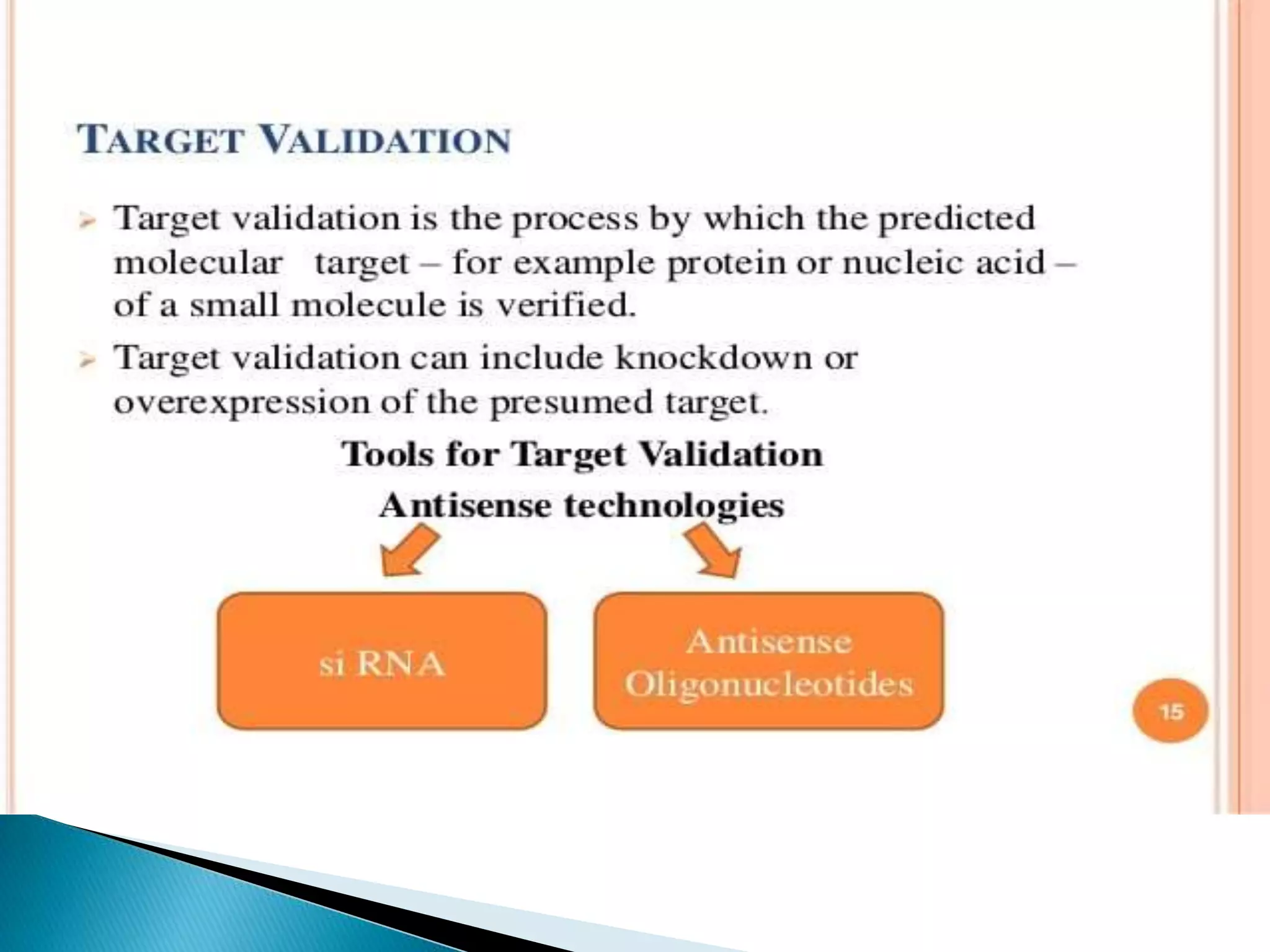
 Target Validation
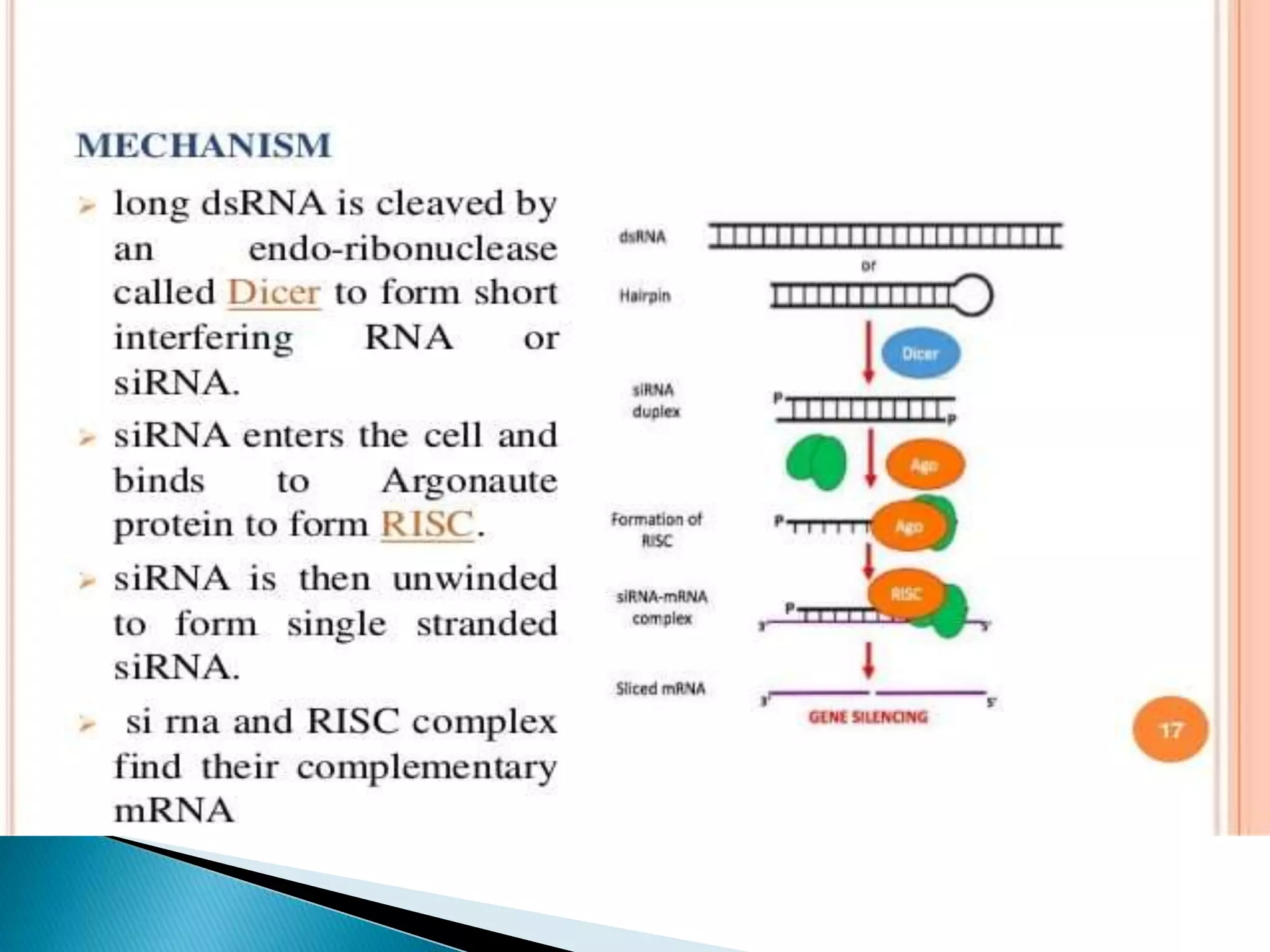
si Rna
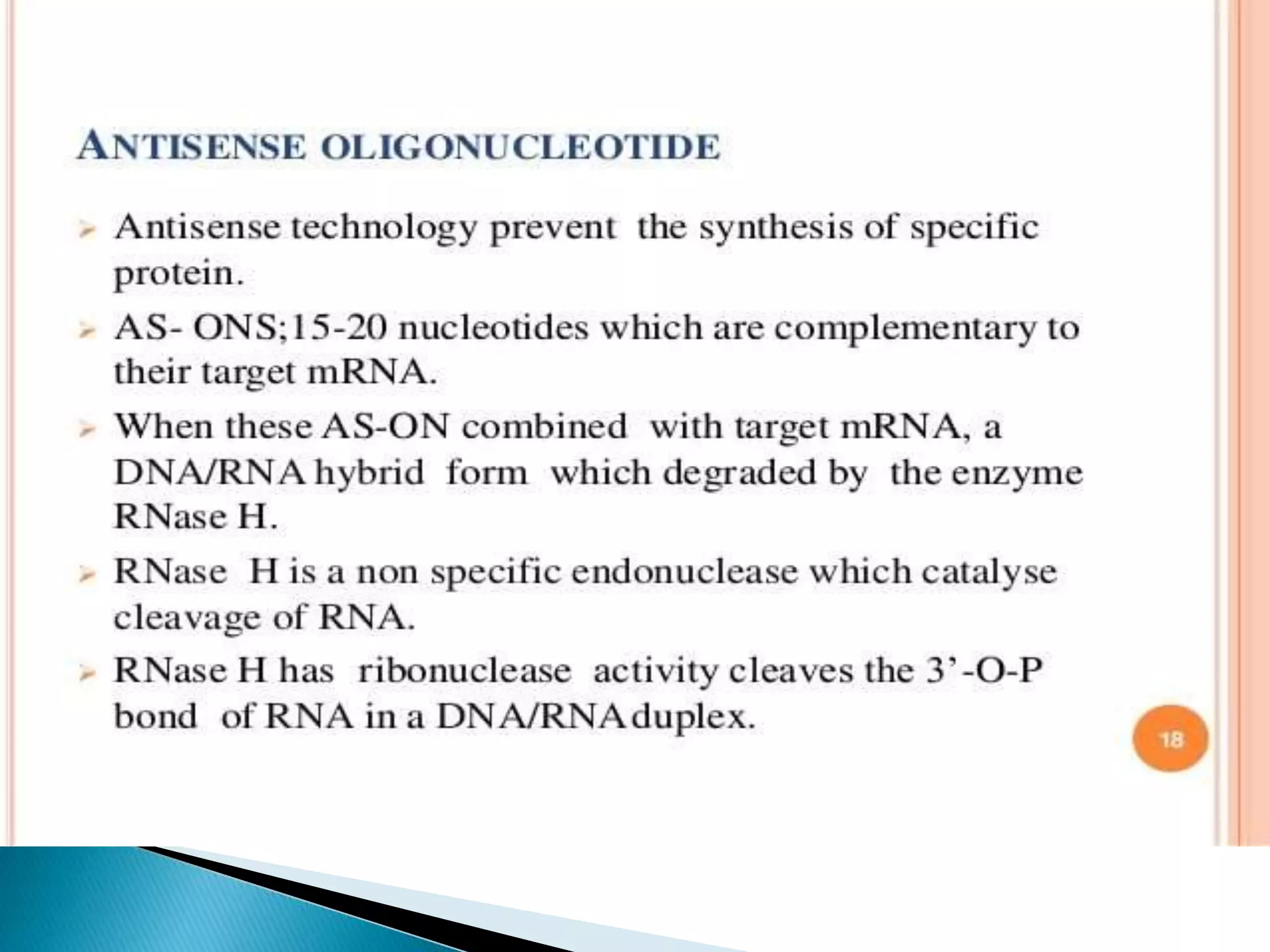
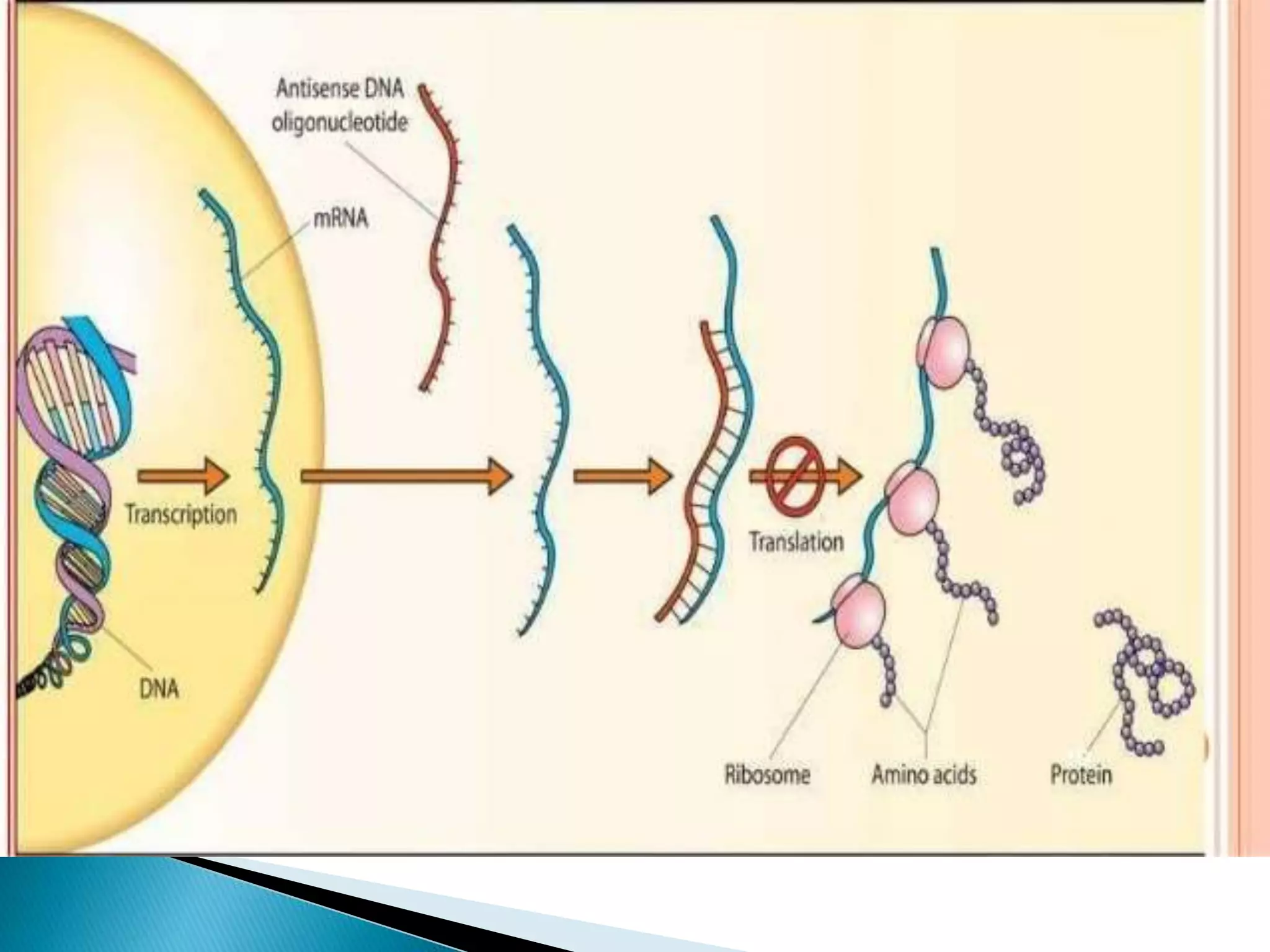
Antisense oligonucleotide
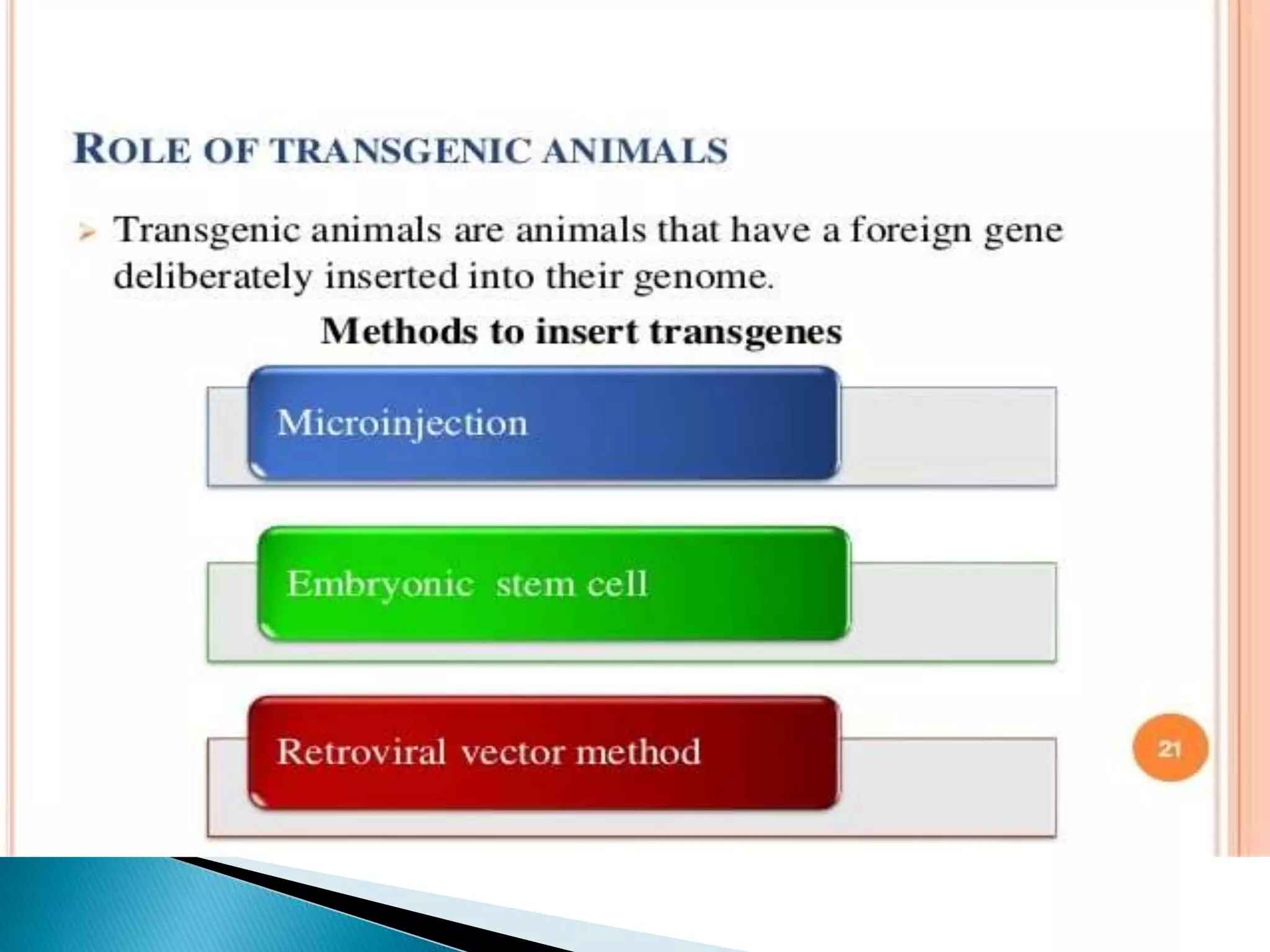
 Role of transgenic animals
 References
 Drug Discovery is the process through which
potential new medicines are identified.
 drugs were discovered by identifying the active
ingredient from traditional remedies or by
serendipitous discovery, as with penicillin.
 Various steps In drug discovery-
Step 1: Discovery and Development.
Step 2: Preclinical Research.
Step 3: Clinical Research.
Step 4: FDA Drug Review.
Step 5: FDA Post-Market Drug Safety
Monitoring.
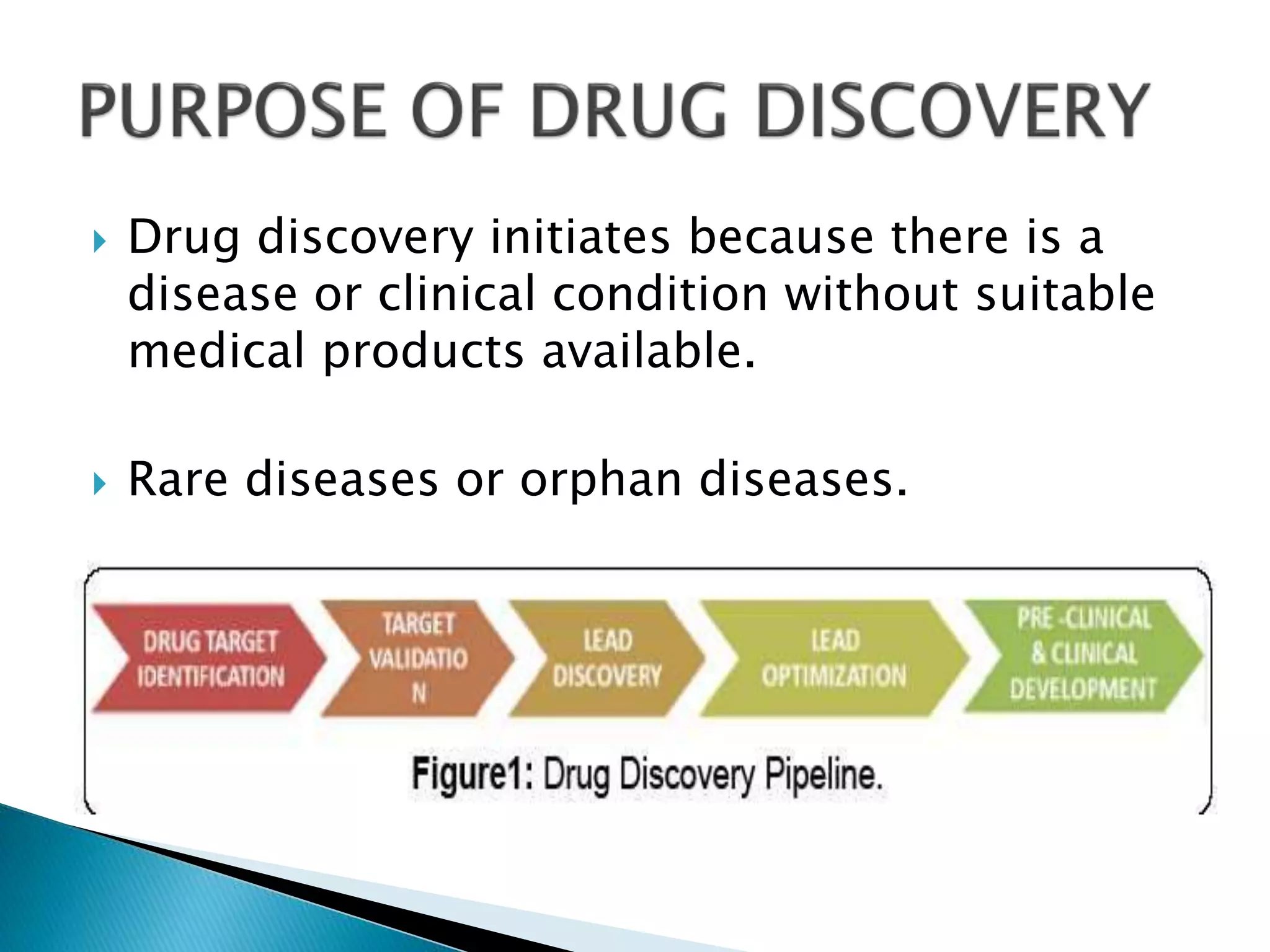
 Drug discovery initiates because there is a
disease or clinical condition without suitable
medical products available.
 Rare diseases or orphan diseases.
 Target :- It is a cellular or molecular structures
involved in pathology which are responsible for
disease.
They may be :-
1. Receptors
2. Enzyme
3. Nucleic acid
4. Hormone
5. Ion Channel
 Target Identification :- It is the process of identifying
the direct molecular target i.e protein, nucleic acid.
It is aimed at finding the efficacy target of a drug.
It is the first step in drug discovery
 Genome :-It is an organism complete set of
DNA.
 Genomics :-
1.It is the field of science focusing on
structure, function, mapping of Genomes.
2. It is concerned with sequencing and
analysis of an organism genome.
 Types of Genomics
Structural Genomics
Functional Genomics
 It is used to describe 3- D structure of every protein
encoded by a given genome.
 It has potential to inform knowledge of protein
function.
 It characterize genome structures.
 Attempts to determine structure of every protein
encoded by genome rather than focusing on one
particular protein.
 Various techniques used to determine structure of
genome:-
 De novo methods
 Sequence based Modeling
 Shortgun Sequencing
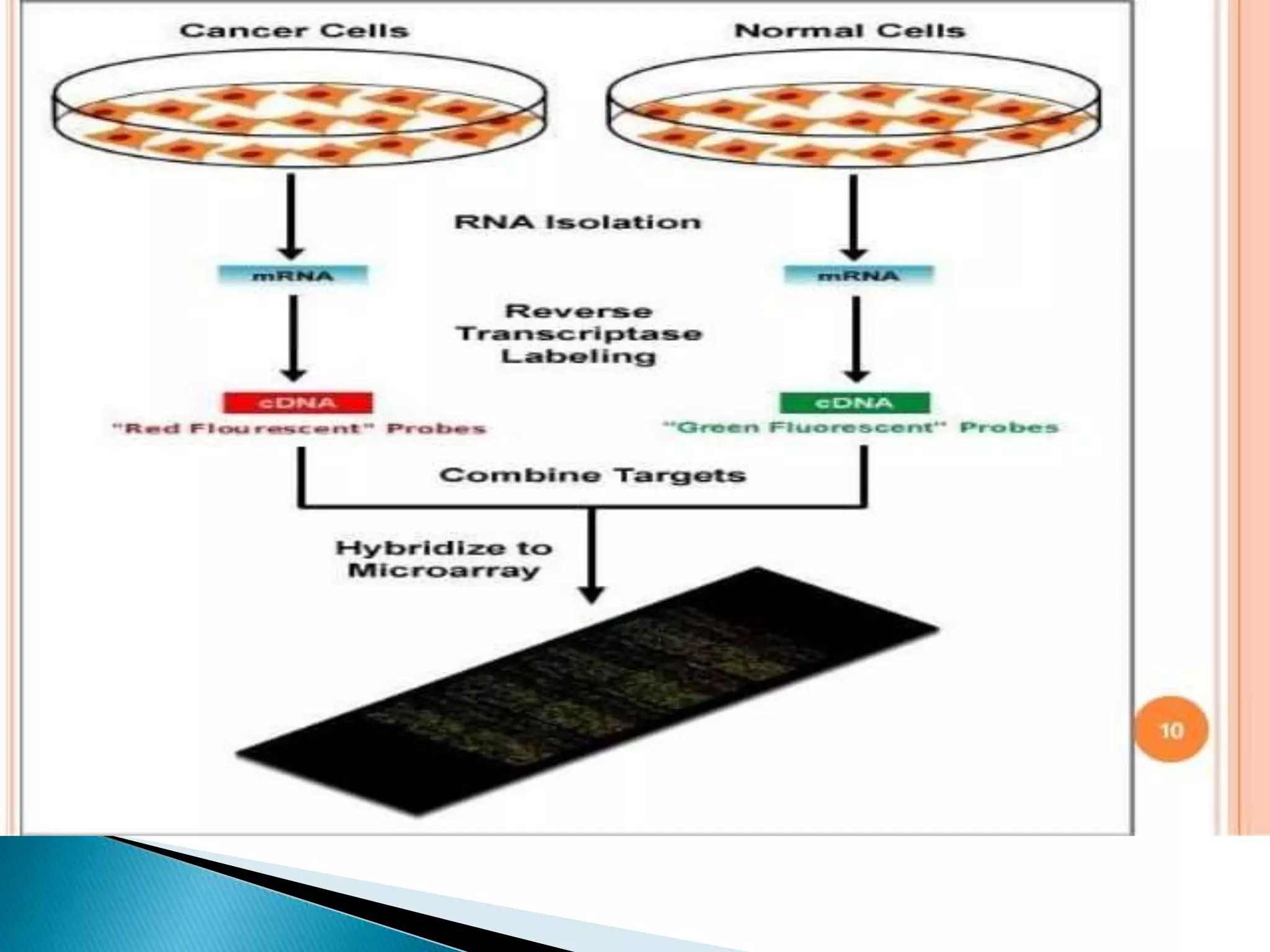
 Focus on gene transcription, translation,
regulation of gene expression and protein-
protein interactions.
 Goal is to understand relationship between an
organism genome and its phenotype.
 Measure all gene products like mRNA or
proteins within biological sample.
 Technique used:-
DNA Microarray
CONTD...
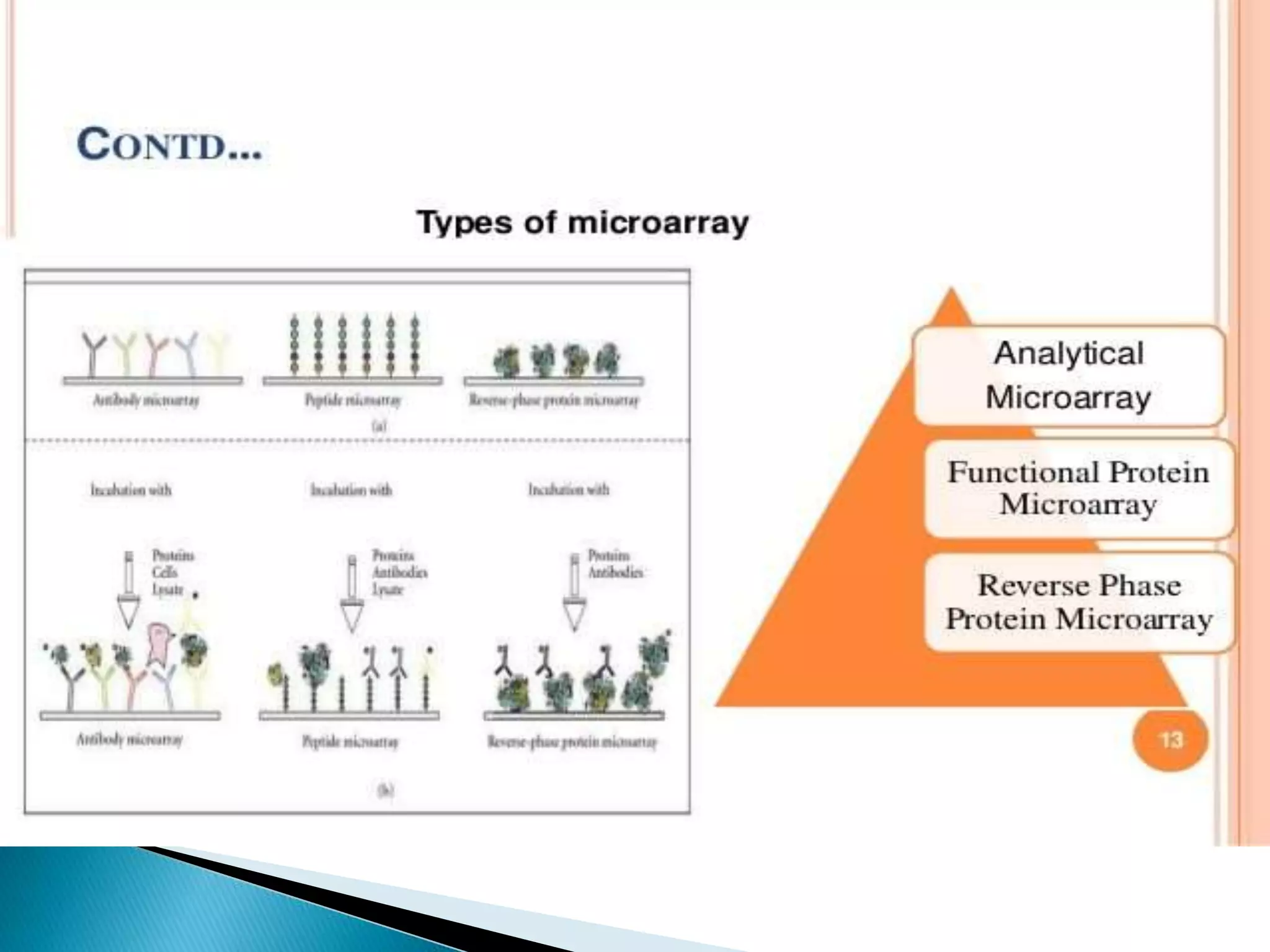
 Protein Microarray
High throughput method used to track the
interactions & activities of proteins and to
determine their functions.
Method
Proteins are immobilised on slides then they
are probed for variety of functions.
Probe are labelled with fluoroscent dyes.
When probe bind to protein gives fluoroscent
signal.
 Bioinformatics has become an important part
of many areas of biology. In experimental
molecular biology, bioinformatics techniques
such as image and signal processing allow
extraction of useful results from large
amounts of raw data. In the field of genetics
and genomics, it aids in sequencing and
annotating genomes and their observed
mutations.
Target identification and validation

Target identification and validation

  • 1.
    PRESENTED BY ASHISH M PHARMFIRST YEAR (PHARMACOLOGY)
  • 2.
     Introduction ofdrug discovery  Need of Drug Discovery  Target Identification Genomics Proteomics Bioinformatics  Target Validation si Rna Antisense oligonucleotide  Role of transgenic animals  References
  • 3.
     Drug Discoveryis the process through which potential new medicines are identified.  drugs were discovered by identifying the active ingredient from traditional remedies or by serendipitous discovery, as with penicillin.  Various steps In drug discovery- Step 1: Discovery and Development. Step 2: Preclinical Research. Step 3: Clinical Research. Step 4: FDA Drug Review. Step 5: FDA Post-Market Drug Safety Monitoring.
  • 4.
     Drug discoveryinitiates because there is a disease or clinical condition without suitable medical products available.  Rare diseases or orphan diseases.
  • 5.
     Target :-It is a cellular or molecular structures involved in pathology which are responsible for disease. They may be :- 1. Receptors 2. Enzyme 3. Nucleic acid 4. Hormone 5. Ion Channel  Target Identification :- It is the process of identifying the direct molecular target i.e protein, nucleic acid. It is aimed at finding the efficacy target of a drug. It is the first step in drug discovery
  • 7.
     Genome :-Itis an organism complete set of DNA.  Genomics :- 1.It is the field of science focusing on structure, function, mapping of Genomes. 2. It is concerned with sequencing and analysis of an organism genome.  Types of Genomics Structural Genomics Functional Genomics
  • 8.
     It isused to describe 3- D structure of every protein encoded by a given genome.  It has potential to inform knowledge of protein function.  It characterize genome structures.  Attempts to determine structure of every protein encoded by genome rather than focusing on one particular protein.  Various techniques used to determine structure of genome:-  De novo methods  Sequence based Modeling  Shortgun Sequencing
  • 9.
     Focus ongene transcription, translation, regulation of gene expression and protein- protein interactions.  Goal is to understand relationship between an organism genome and its phenotype.  Measure all gene products like mRNA or proteins within biological sample.  Technique used:- DNA Microarray
  • 12.
    CONTD...  Protein Microarray Highthroughput method used to track the interactions & activities of proteins and to determine their functions. Method Proteins are immobilised on slides then they are probed for variety of functions. Probe are labelled with fluoroscent dyes. When probe bind to protein gives fluoroscent signal.
  • 14.
     Bioinformatics hasbecome an important part of many areas of biology. In experimental molecular biology, bioinformatics techniques such as image and signal processing allow extraction of useful results from large amounts of raw data. In the field of genetics and genomics, it aids in sequencing and annotating genomes and their observed mutations.