INTODUCTION
• Antisense
therapy is not
strictly a form of
gene therapy, but
it is genetically
mediated therapy
and is often
considered
together with
other methods
ANTISENSE THERAPY
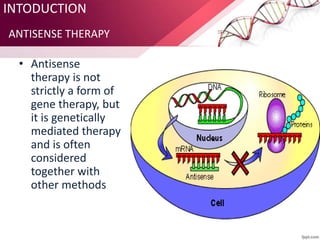
 Antisense therapy is a form of treatment for genetic disorders or infections.
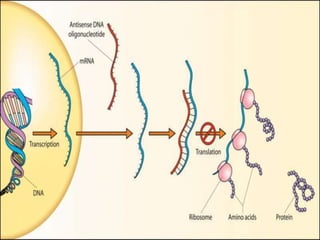
 When the genetic sequence of a particular gene is known to be causative of a
particular disease, it is possible to synthesize a strand of nucleic acid (DNA, RNA
or a chemical analogue) that will bind to the messenger RNA (mRNA) produced
by that gene and inactivate it, effectively turning that gene "off".
 This is because mRNA has to be single stranded for it to be translated.
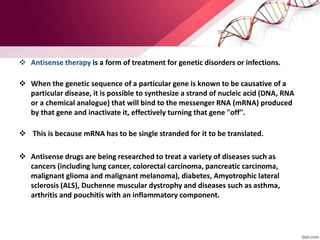
 Antisense drugs are being researched to treat a variety of diseases such as
cancers (including lung cancer, colorectal carcinoma, pancreatic carcinoma,
malignant glioma and malignant melanoma), diabetes, Amyotrophic lateral
sclerosis (ALS), Duchenne muscular dystrophy and diseases such as asthma,
arthritis and pouchitis with an inflammatory component.
Slide Title
Antisense Oligonucleotides
 The antisense effect of a oligonucleotide sequence was
first demonstrated in 1970s by Zamecnik and
Stephenson, in Rous sarcoma virus.
 AS-ONs usually consist of 15–20 nucleotides, which are
complementary to their target mRNA.
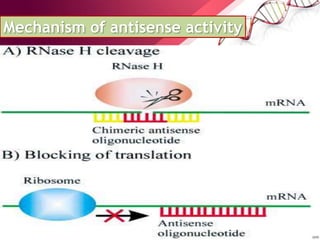
 When these AS-ON combined with target mRNA, a
DNA/RNA hybrid form,which degraded by the enzyme
RNase H.
RNase H
 RNase H is a non-specific endonuclease, catalyzes the
cleavage of RNA via hydrolytic mechanism.
 RNase H has ribonuclease activity cleaves the 3’-O-P
bond of RNA in a DNA/RNA duplex.
Mechanism of antisense activity
 Thomas and coworkers coined the term
‘ribozymes’.
 Ribozymes are RNA molecules that have catalytic
activity.
 Ribozyme bind to the target RNA moiety and
inactivate it by cleaving the phosphodiester
backbone at a specific cutting site.
Ribozymes
Mechanism of Ribozymes
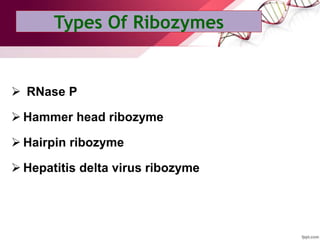
 RNase P
 Hammer head ribozyme
 Hairpin ribozyme
 Hepatitis delta virus ribozyme
Types Of Ribozymes
Cycle of RNA cleavage by hammerhead
ribozyme
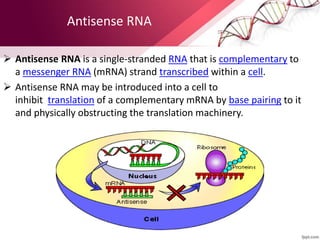
Antisense RNA
 Antisense RNA is a single-stranded RNA that is complementary to
a messenger RNA (mRNA) strand transcribed within a cell.
 Antisense RNA may be introduced into a cell to
inhibit translation of a complementary mRNA by base pairing to it
and physically obstructing the translation machinery.
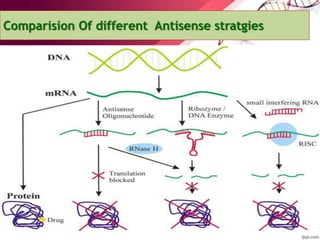
Comparision Of different Antisense stratgies
ß-thalassemia
Cytomegalovirus retinitis
Hemorrhagic fever viruses
Duchenne muscular dystrophy
Cancer
HIV/AIDS
High cholesterol
Antisense therapy
Antisense drug therapy
Antisense therapy

Antisense therapy

  • 2.
    INTODUCTION • Antisense therapy isnot strictly a form of gene therapy, but it is genetically mediated therapy and is often considered together with other methods ANTISENSE THERAPY
  • 3.
     Antisense therapyis a form of treatment for genetic disorders or infections.  When the genetic sequence of a particular gene is known to be causative of a particular disease, it is possible to synthesize a strand of nucleic acid (DNA, RNA or a chemical analogue) that will bind to the messenger RNA (mRNA) produced by that gene and inactivate it, effectively turning that gene "off".  This is because mRNA has to be single stranded for it to be translated.  Antisense drugs are being researched to treat a variety of diseases such as cancers (including lung cancer, colorectal carcinoma, pancreatic carcinoma, malignant glioma and malignant melanoma), diabetes, Amyotrophic lateral sclerosis (ALS), Duchenne muscular dystrophy and diseases such as asthma, arthritis and pouchitis with an inflammatory component.
  • 4.
  • 5.
    Antisense Oligonucleotides  Theantisense effect of a oligonucleotide sequence was first demonstrated in 1970s by Zamecnik and Stephenson, in Rous sarcoma virus.  AS-ONs usually consist of 15–20 nucleotides, which are complementary to their target mRNA.  When these AS-ON combined with target mRNA, a DNA/RNA hybrid form,which degraded by the enzyme RNase H. RNase H
  • 6.
     RNase His a non-specific endonuclease, catalyzes the cleavage of RNA via hydrolytic mechanism.  RNase H has ribonuclease activity cleaves the 3’-O-P bond of RNA in a DNA/RNA duplex.
  • 7.
  • 8.
     Thomas andcoworkers coined the term ‘ribozymes’.  Ribozymes are RNA molecules that have catalytic activity.  Ribozyme bind to the target RNA moiety and inactivate it by cleaving the phosphodiester backbone at a specific cutting site. Ribozymes
  • 9.
  • 10.
     RNase P Hammer head ribozyme  Hairpin ribozyme  Hepatitis delta virus ribozyme Types Of Ribozymes
  • 11.
    Cycle of RNAcleavage by hammerhead ribozyme
  • 12.
    Antisense RNA  AntisenseRNA is a single-stranded RNA that is complementary to a messenger RNA (mRNA) strand transcribed within a cell.  Antisense RNA may be introduced into a cell to inhibit translation of a complementary mRNA by base pairing to it and physically obstructing the translation machinery.
  • 13.
    Comparision Of differentAntisense stratgies
  • 14.
    ß-thalassemia Cytomegalovirus retinitis Hemorrhagic feverviruses Duchenne muscular dystrophy Cancer HIV/AIDS High cholesterol Antisense therapy
  • 15.