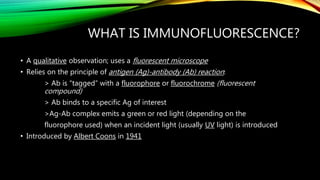
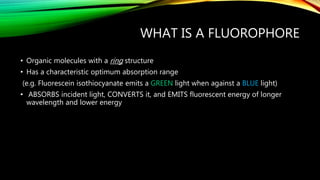
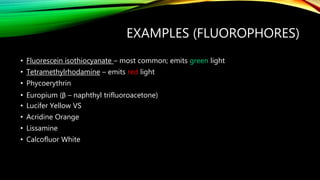
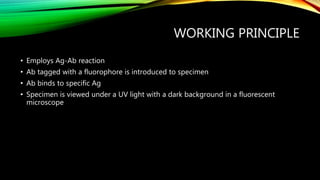
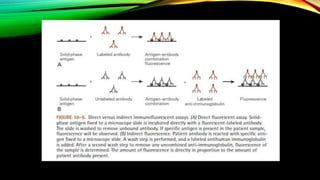
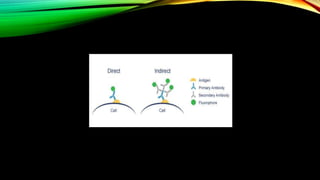
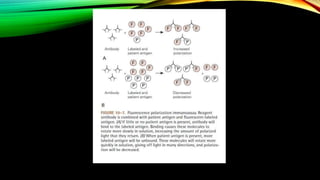
Immunofluorescence is a technique that uses the binding of antibodies to antigens to detect the presence of substances. It relies on tagging antibodies with fluorescent dyes called fluorophores. When exposed to ultraviolet light, the fluorophore-tagged antibody complexes emit visible light that can be seen using a fluorescent microscope. There are several types of immunofluorescence assays including direct, indirect, and quantitative assays that are used to detect microorganisms, antibodies, and other biomolecules through the antigen-antibody reaction and fluorescent signal produced.












![IMMUNODIAGNOSTICS seminar final [2].pptx](https://cdn.slidesharecdn.com/ss_thumbnails/immunodiagnostics2-251119101657-7a9d73de-thumbnail.jpg?width=640&height=640&fit=bounds)


