Immune Response I
DR. SUFI H. Z. RAHMAN
MBBS, MD (IMMUNOLOGY)
LECTURER, MEDICAL FACULTY, AUCMS
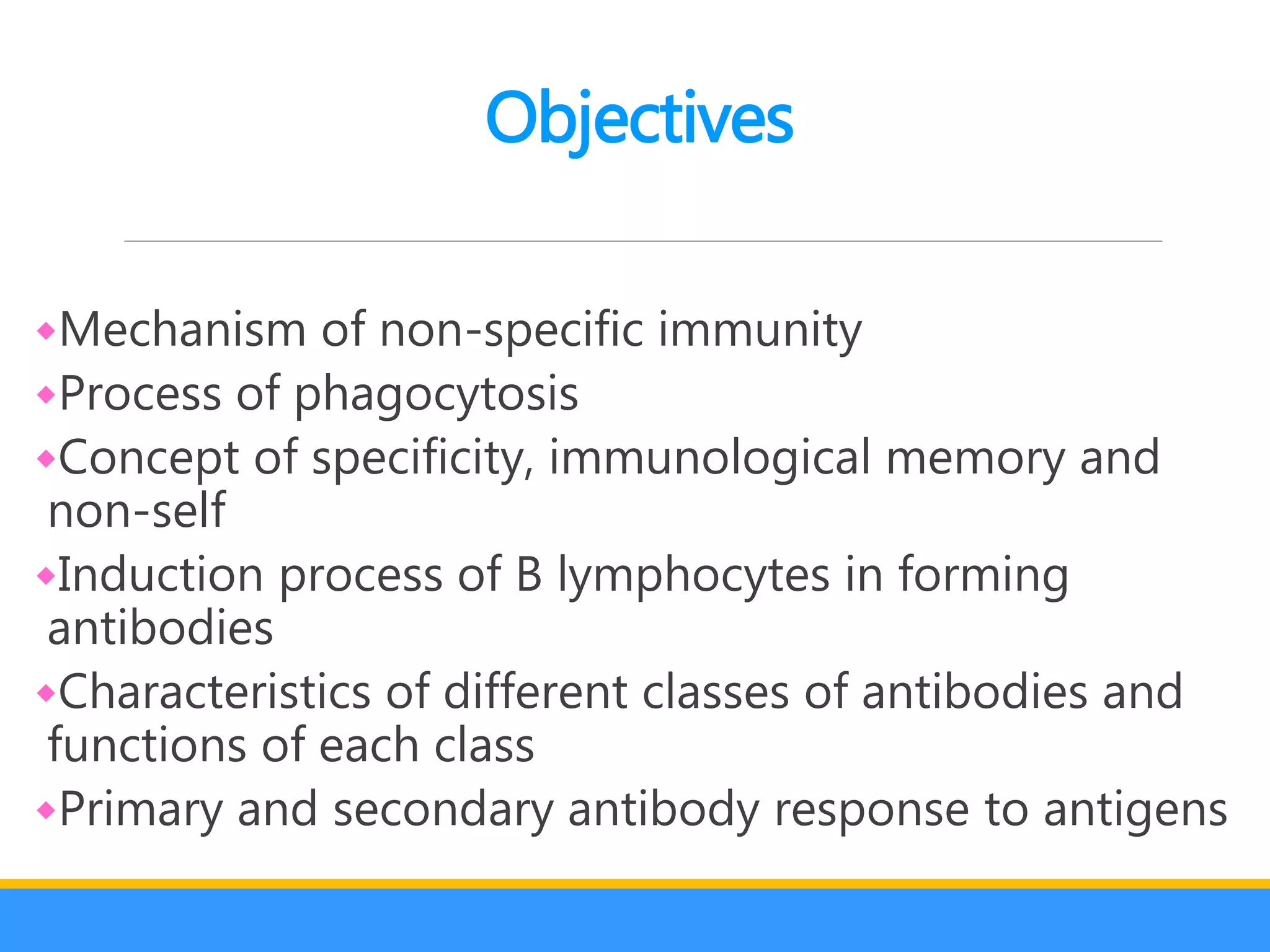
Objectives
◆Mechanism of non-specific immunity
◆Process of phagocytosis
◆Concept of specificity, immunological memory and
non-self
◆Induction process of B lymphocytes in forming
antibodies
◆Characteristics of different classes of antibodies and
functions of each class
◆Primary and secondary antibody response to antigens
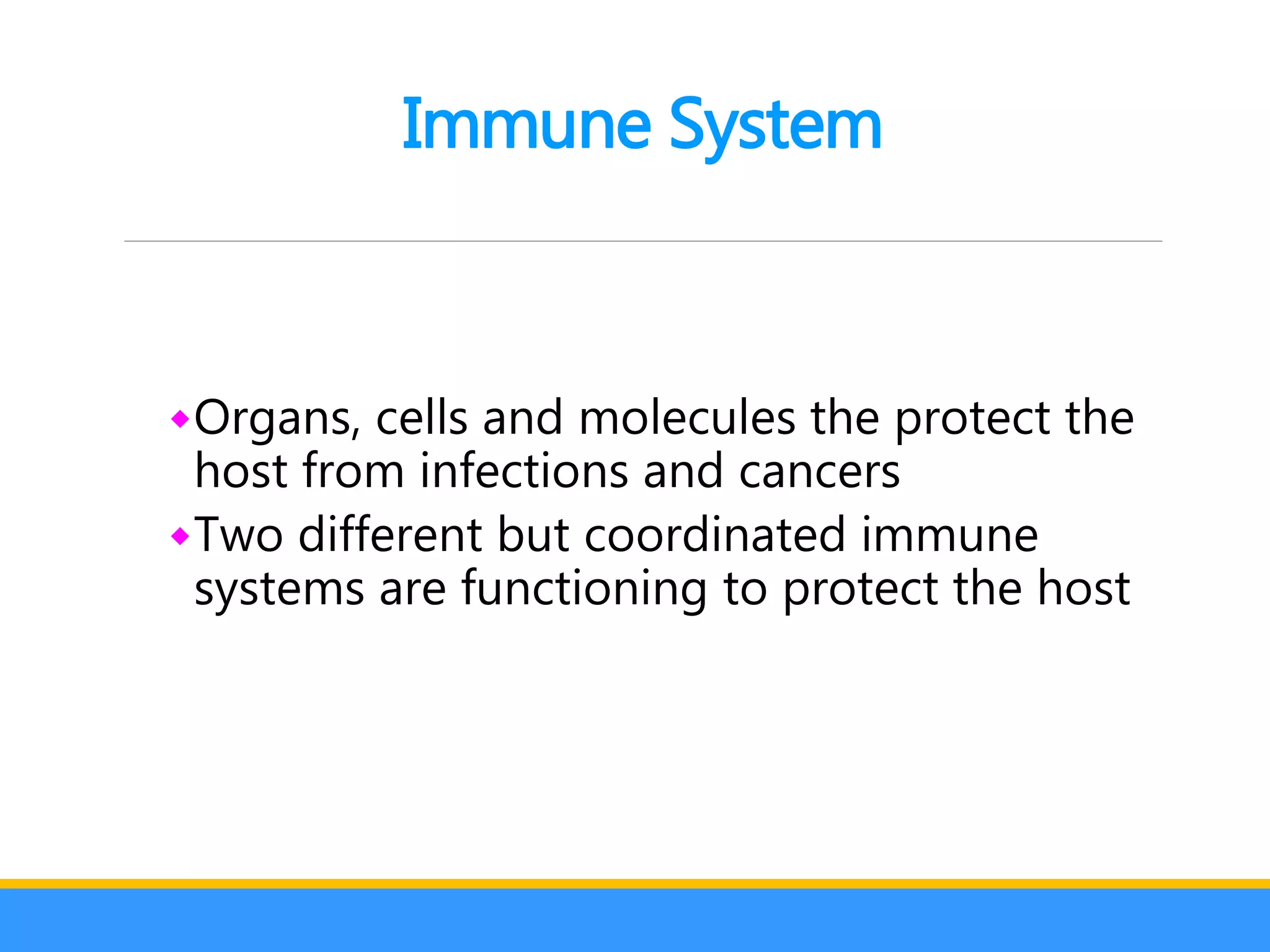
Immune System
◆Organs, cells and molecules the protect the
host from infections and cancers
◆Two different but coordinated immune
systems are functioning to protect the host
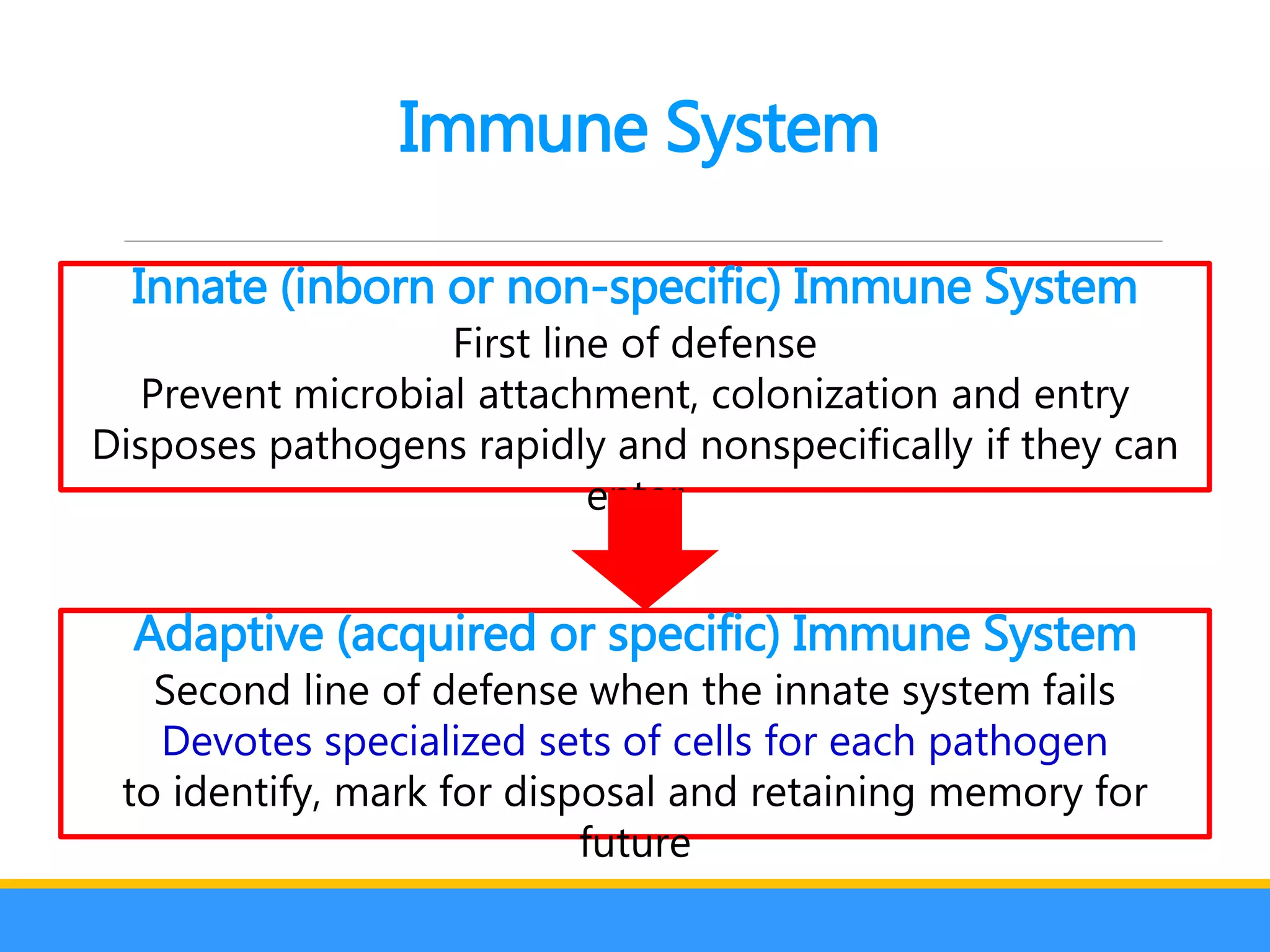
Immune System
Innate (inborn or non-specific) Immune System
First line of defense
Prevent microbial attachment, colonization and entry
Disposes pathogens rapidly and nonspecifically if they can
enter
Adaptive (acquired or specific) Immune System
Second line of defense when the innate system fails
Devotes specialized sets of cells for each pathogen
to identify, mark for disposal and retaining memory for
future
Comparison between
Innate and Adaptive Immunity
Attribute Innate Immunity Adaptive Immunity
Activation Active prior to exposure
exposure to any
microbe or antigen
Activated by exposure
exposure to microbes or
or antigens
Lag phase Absent
Response is immediate
Present
Response takes few
days
Specificity Limited
Targets all pathogens
High
Targets specific
pathogen
Memory Absent
Same response in 1st
Present
Amplified response in
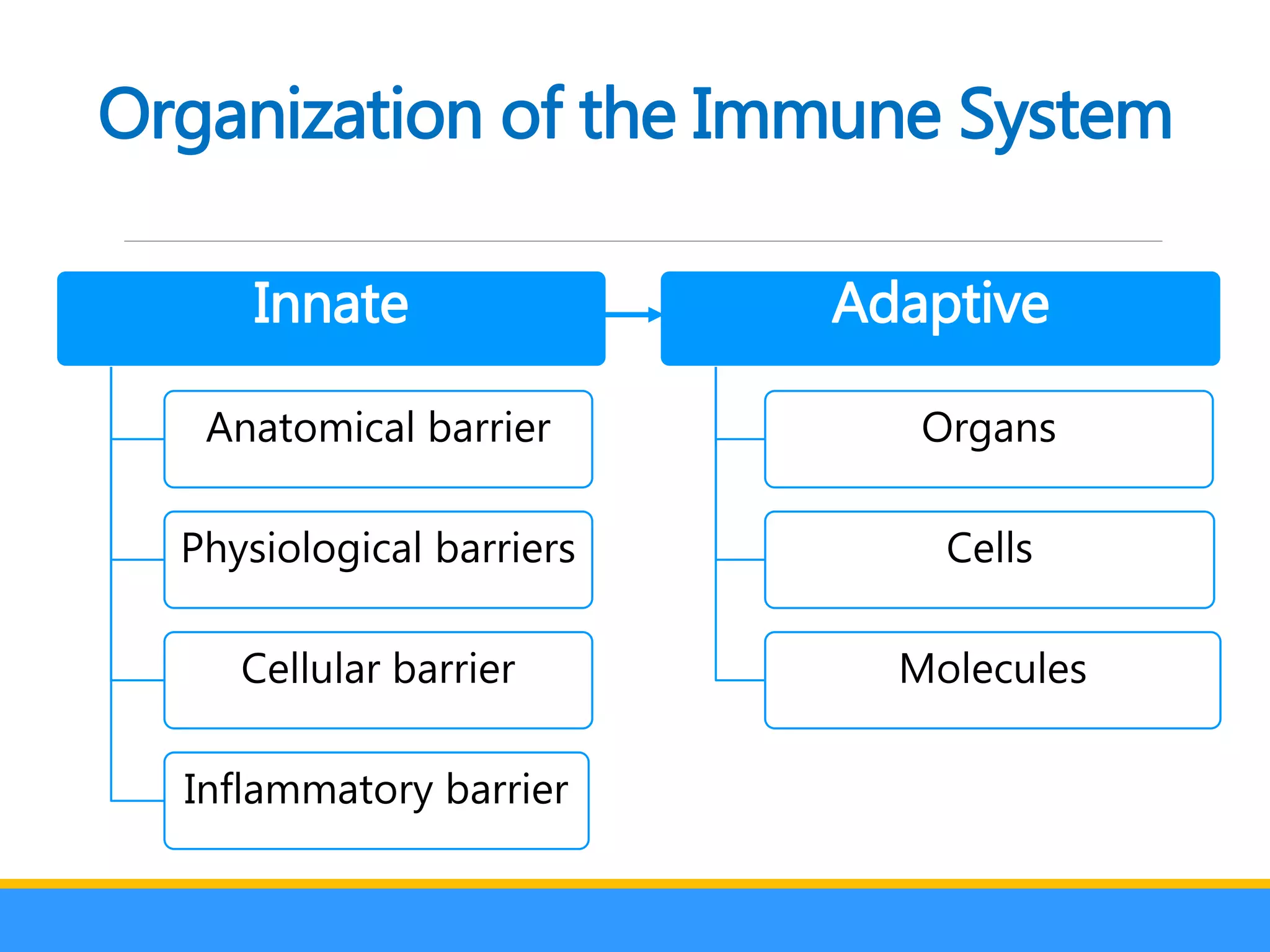
Organization of the Immune System
Innate
Anatomical barrier
Physiological barriers
Cellular barrier
Inflammatory barrier
Adaptive
Organs
Cells
Molecules
Innate Immunity
◆Skin
• Epidermis acts as mechanical
barrier and retards entry of
microorganisms
• Acidic environment (pH 3- 5)
retards growth of microorganisms
◆Mucous membrane
• Normal microbial flora compete
with pathogenic microorganisms
for attachment and nutrients
• Mucus entraps foreign
microorganisms
• Cilia of surface epithelium propel
microbes out of the body
Anatomical Barrier
Innate Immunity
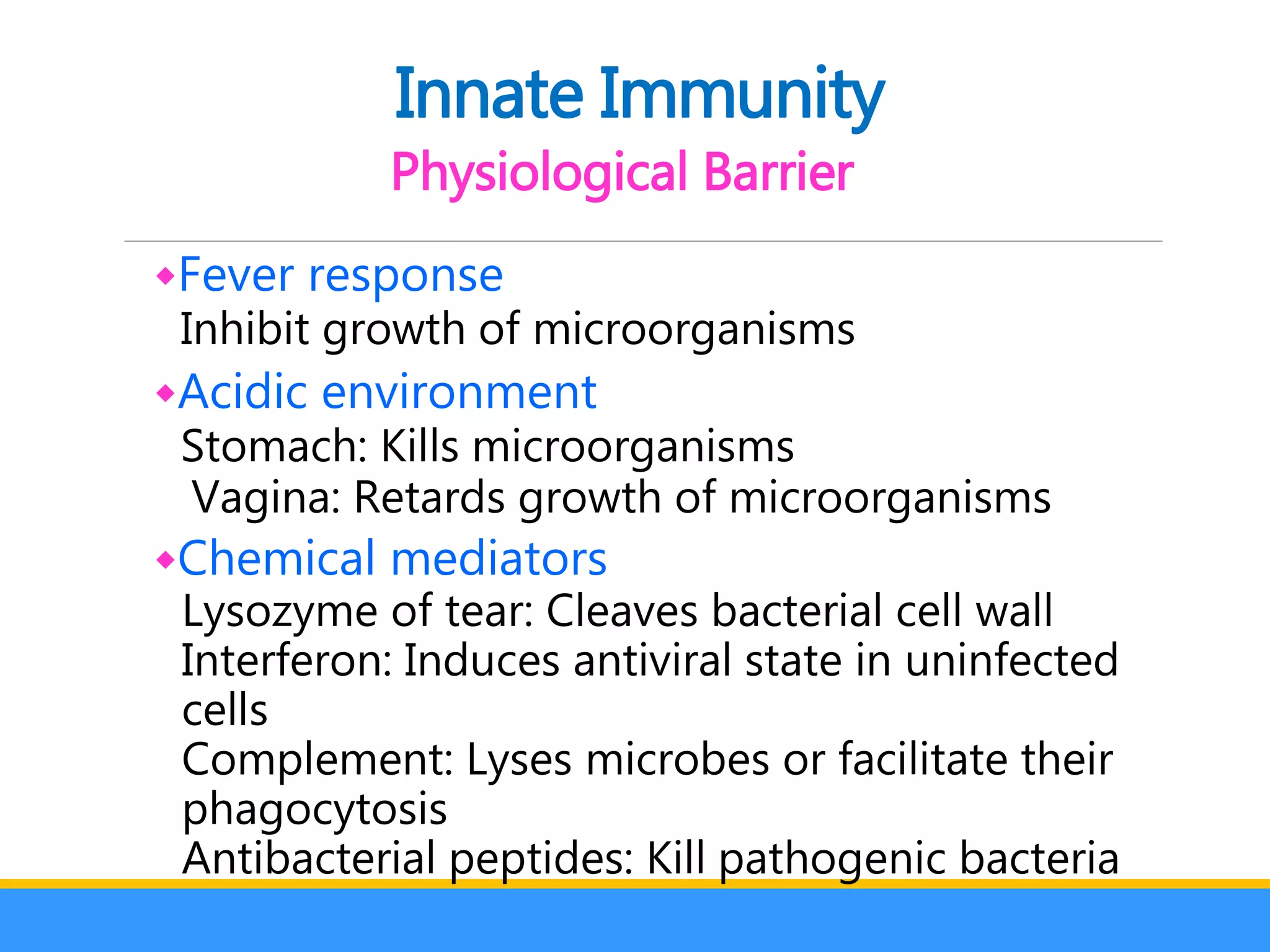
◆Fever response
Inhibit growth of microorganisms
◆Acidic environment
Stomach: Kills microorganisms
Vagina: Retards growth of microorganisms
◆Chemical mediators
Lysozyme of tear: Cleaves bacterial cell wall
Interferon: Induces antiviral state in uninfected
cells
Complement: Lyses microbes or facilitate their
phagocytosis
Antibacterial peptides: Kill pathogenic bacteria
Physiological Barrier
Innate Immunity
◆Phagocytic cells
• Neutrophils
• Monocytes and Macrophages
• Dendritic cells
• Eosinophils (?)
Detect Pathogen associated molecular pattern
(PAMP) on the surface of microbes by their Pattern
recognition receptors (PRR), internalize
(phagocytose) and kill them
◆Non-phagocytic killer cells
• Natural killer (NK) cells
Induce apoptosis of virus infected and tumour cells
Cellular Barrier
Innate Immunity
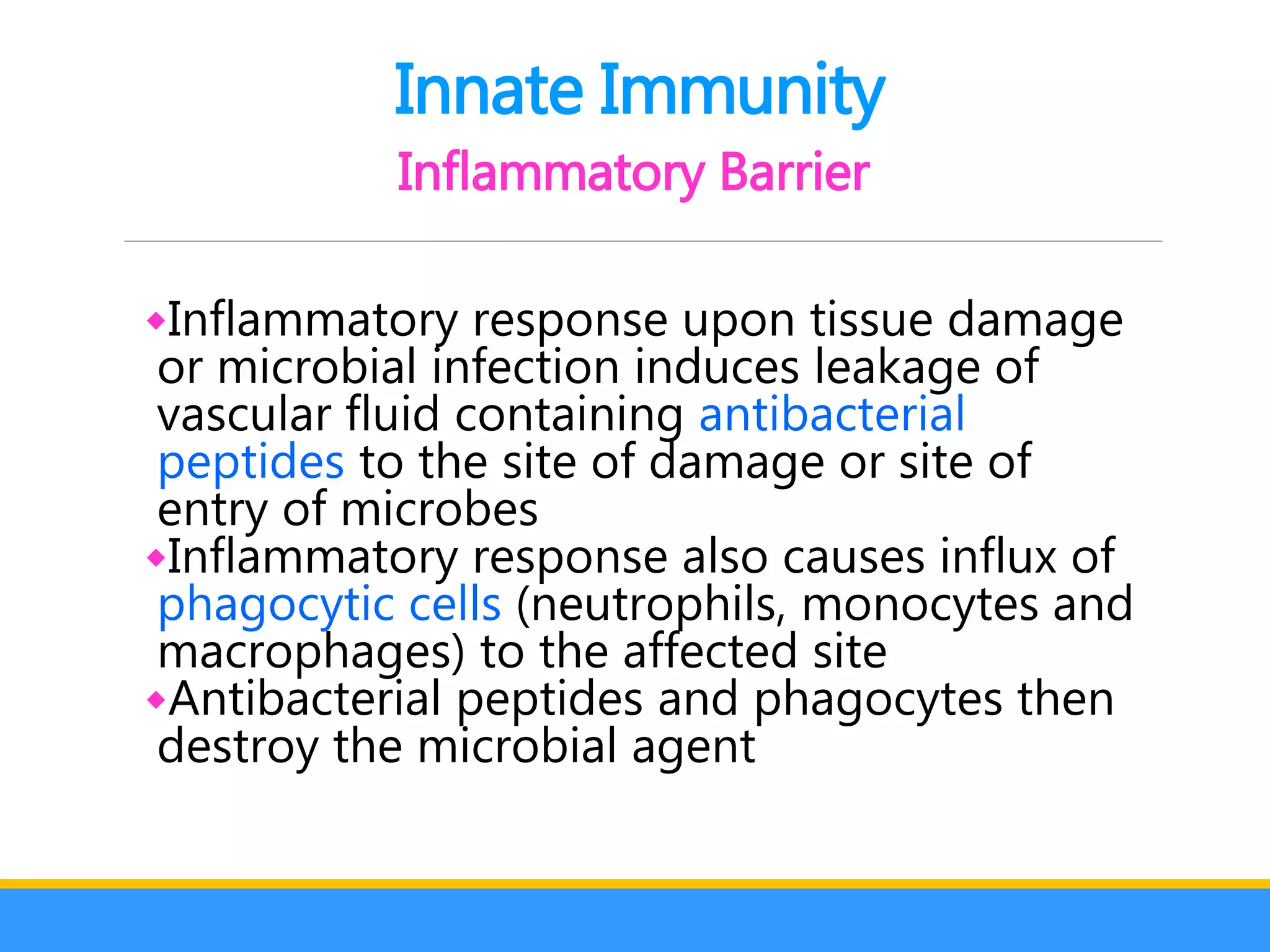
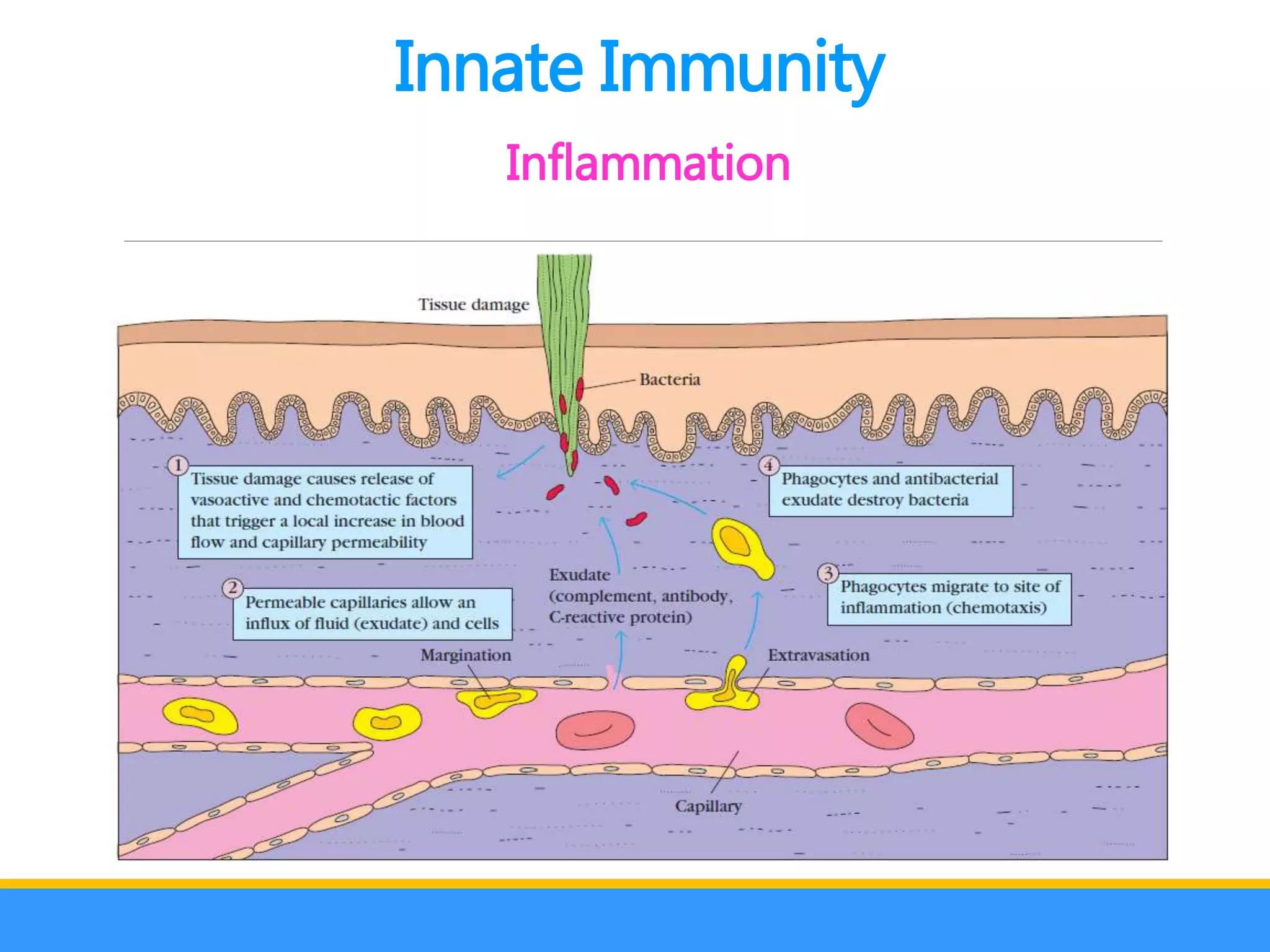
◆Inflammatory response upon tissue damage
or microbial infection induces leakage of
vascular fluid containing antibacterial
peptides to the site of damage or site of
entry of microbes
◆Inflammatory response also causes influx of
phagocytic cells (neutrophils, monocytes and
macrophages) to the affected site
◆Antibacterial peptides and phagocytes then
destroy the microbial agent
Inflammatory Barrier
Innate Immunity
Inflammation
Innate Immunity
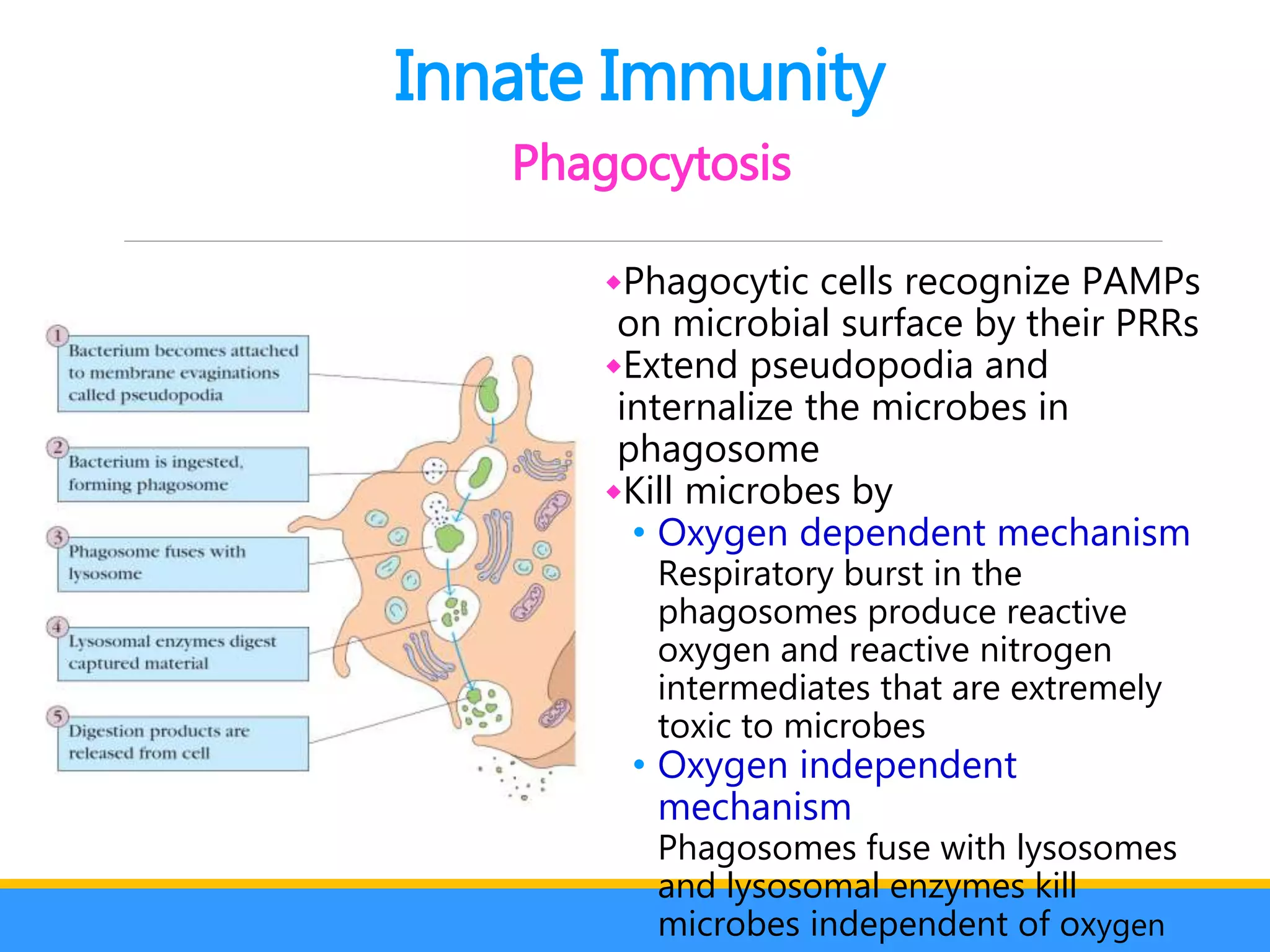
◆Phagocytic cells recognize PAMPs
on microbial surface by their PRRs
◆Extend pseudopodia and
internalize the microbes in
phagosome
◆Kill microbes by
• Oxygen dependent mechanism
Respiratory burst in the
phagosomes produce reactive
oxygen and reactive nitrogen
intermediates that are extremely
toxic to microbes
• Oxygen independent
mechanism
Phagosomes fuse with lysosomes
and lysosomal enzymes kill
microbes independent of oxygen
Phagocytosis
Innate Immunity
Phagocytosis
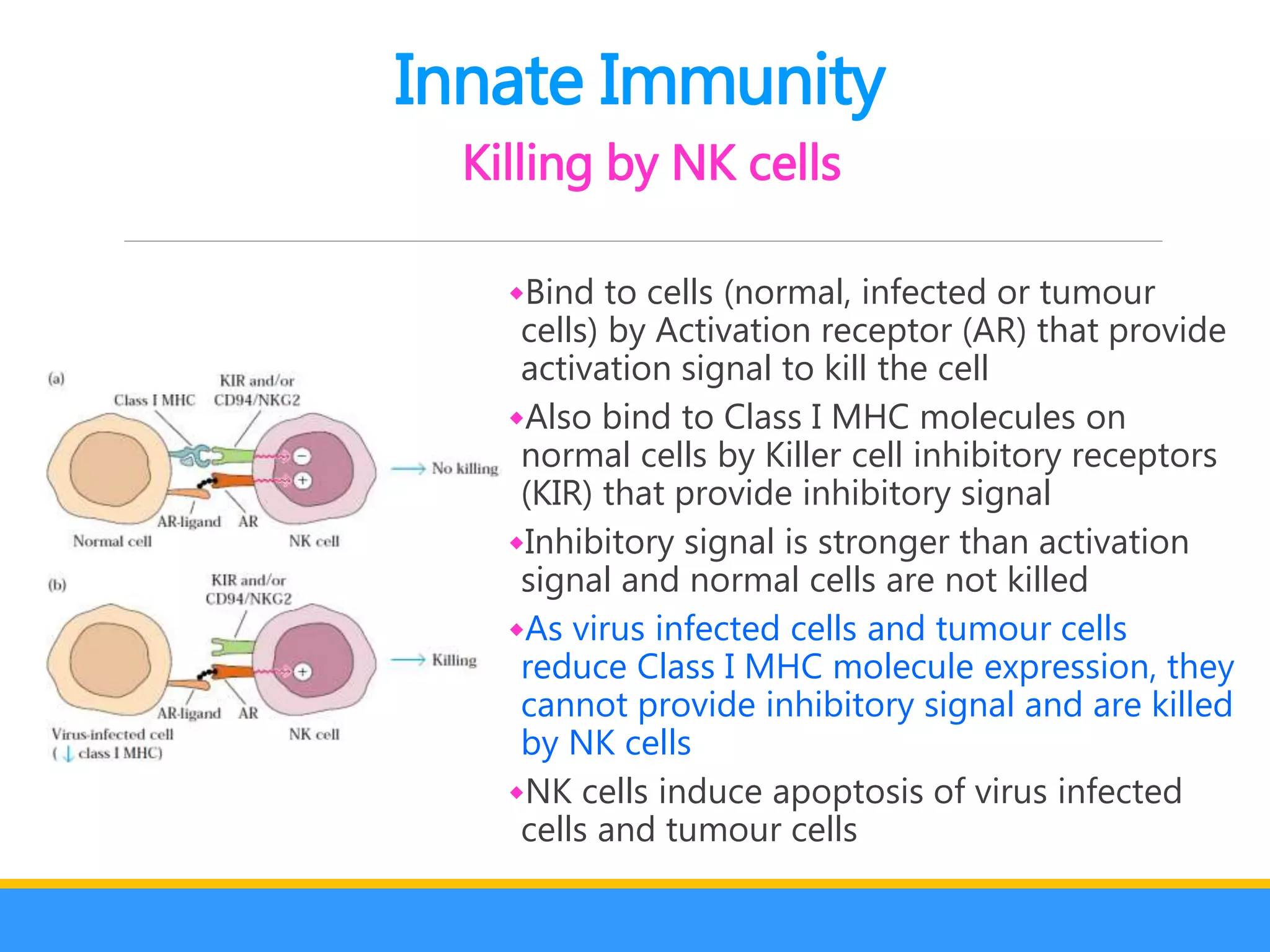
Killing by NK cells
Innate Immunity
◆Bind to cells (normal, infected or tumour
cells) by Activation receptor (AR) that provide
activation signal to kill the cell
◆Also bind to Class I MHC molecules on
normal cells by Killer cell inhibitory receptors
(KIR) that provide inhibitory signal
◆Inhibitory signal is stronger than activation
signal and normal cells are not killed
◆As virus infected cells and tumour cells
reduce Class I MHC molecule expression, they
cannot provide inhibitory signal and are killed
by NK cells
◆NK cells induce apoptosis of virus infected
cells and tumour cells
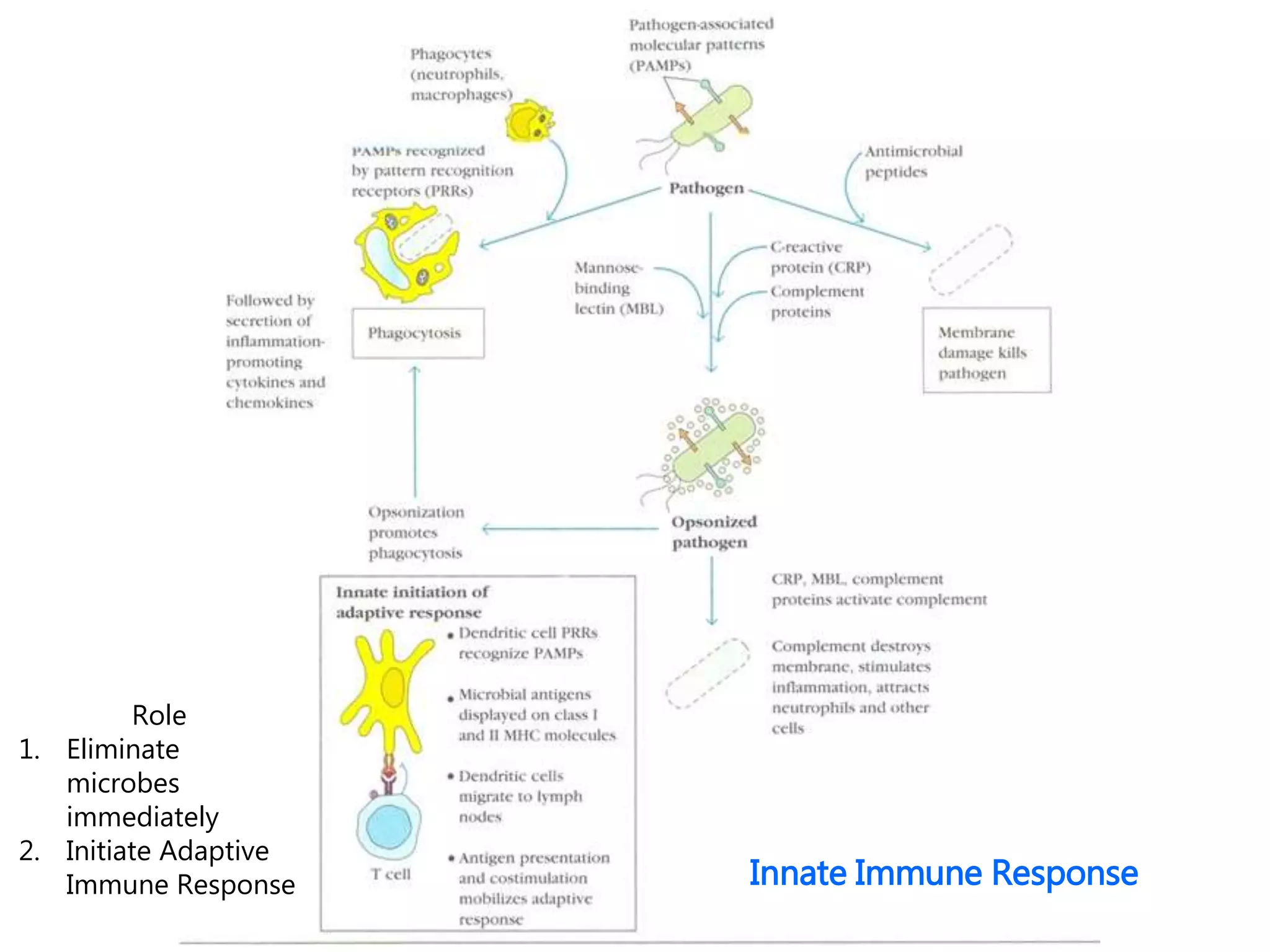
Innate Immune Response
Role
1. Eliminate
microbes
immediately
2. Initiate Adaptive
Immune Response
Adaptive Immunity
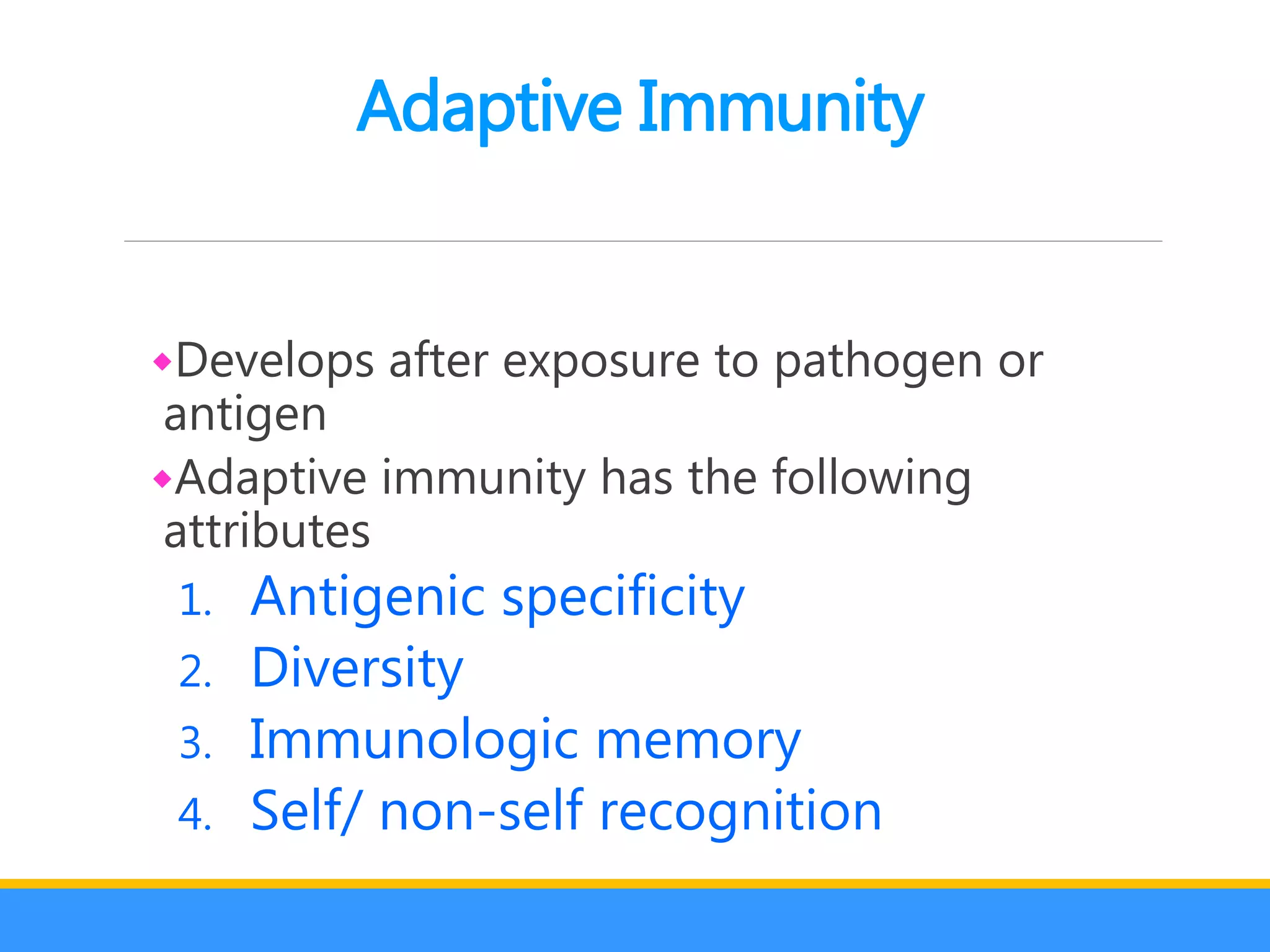
◆Develops after exposure to pathogen or
antigen
◆Adaptive immunity has the following
attributes
1. Antigenic specificity
2. Diversity
3. Immunologic memory
4. Self/ non-self recognition
Adaptive Immunity
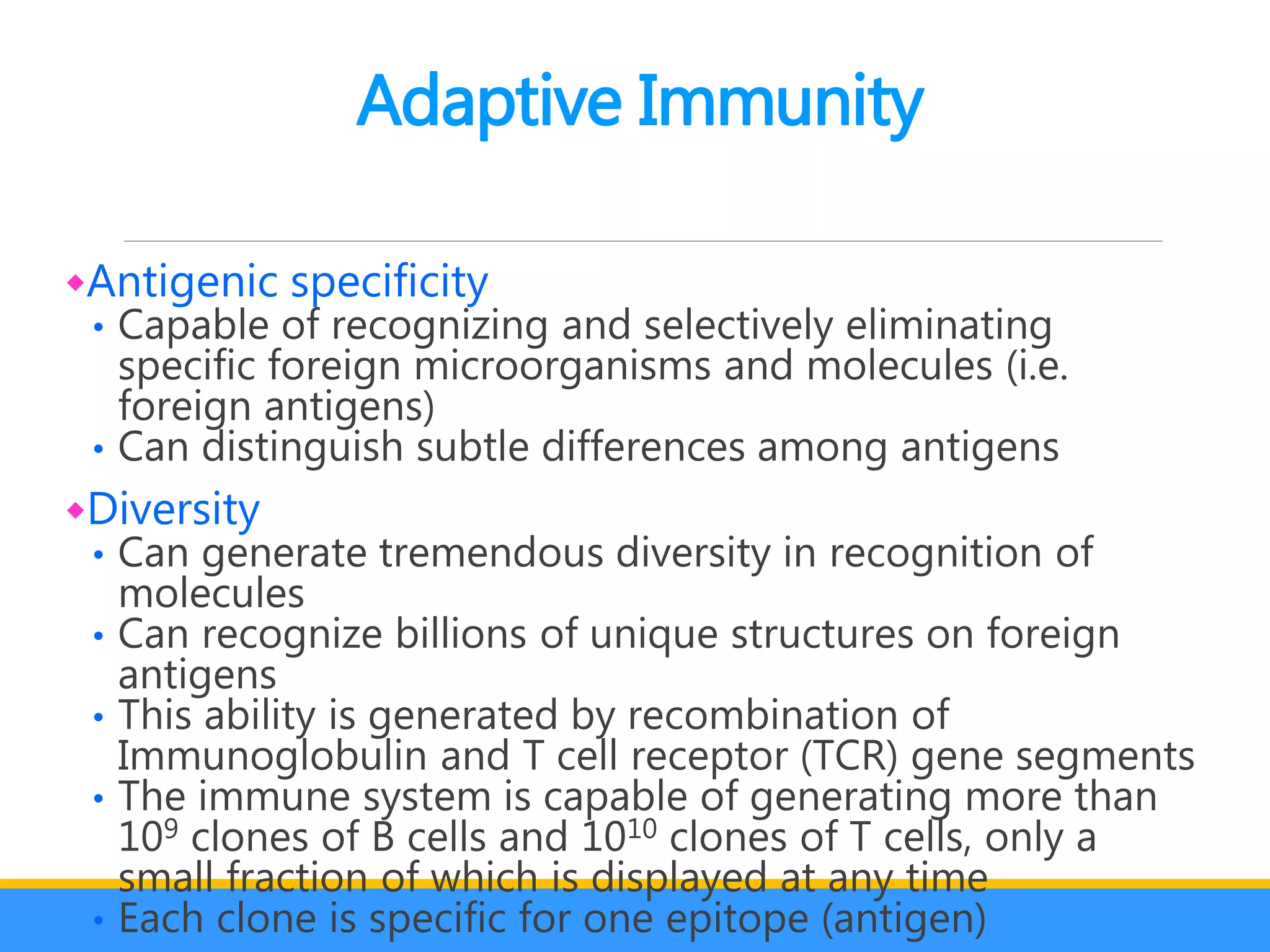
◆Antigenic specificity
• Capable of recognizing and selectively eliminating
specific foreign microorganisms and molecules (i.e.
foreign antigens)
• Can distinguish subtle differences among antigens
◆Diversity
• Can generate tremendous diversity in recognition of
molecules
• Can recognize billions of unique structures on foreign
antigens
• This ability is generated by recombination of
Immunoglobulin and T cell receptor (TCR) gene segments
• The immune system is capable of generating more than
109 clones of B cells and 1010 clones of T cells, only a
small fraction of which is displayed at any time
• Each clone is specific for one epitope (antigen)
Adaptive Immunity
◆Immunologic memory
• Exhibits memory of an antigen to which it is
exposed
• A second exposure to the same antigen induces a
heightened state of immunological reactivity
• Because of this attribute, adaptive immune system
can confer life-long immunity to many infectious
agents after an initial encounter
◆Self/ non-self recognition
• Capable of distinguishing self from non-self
• Normally responds only to foreign antigens
• This is due to development of self tolerance during
maturation of B and T lymphocytes
Adaptive Immunity
Adaptive immune system has two arms
Adaptive Immunity
Humoral Immunity Cell mediated Immunity
• Provided by B lymphocytes
• Can recognize protein,
polysaccharide, phospholipid and
nucleic acid antigens
• Can act against soluble or free
antigens
• Provides immunity to
extracellular bacteria, viruses and
toxins
• Causes Type I, II & III
hypersensitivity
• Provided by T lymphocytes
• Can recognize only protein
antigens
• Recognizes antigens presented
by APCs with Class I or Class II
MHC molecule
• Provides immunity to
intracellular bacteria, viruses,
fungi and protozoa
• Causes Type IV hypersensitivity
• Causes acute graft rejection
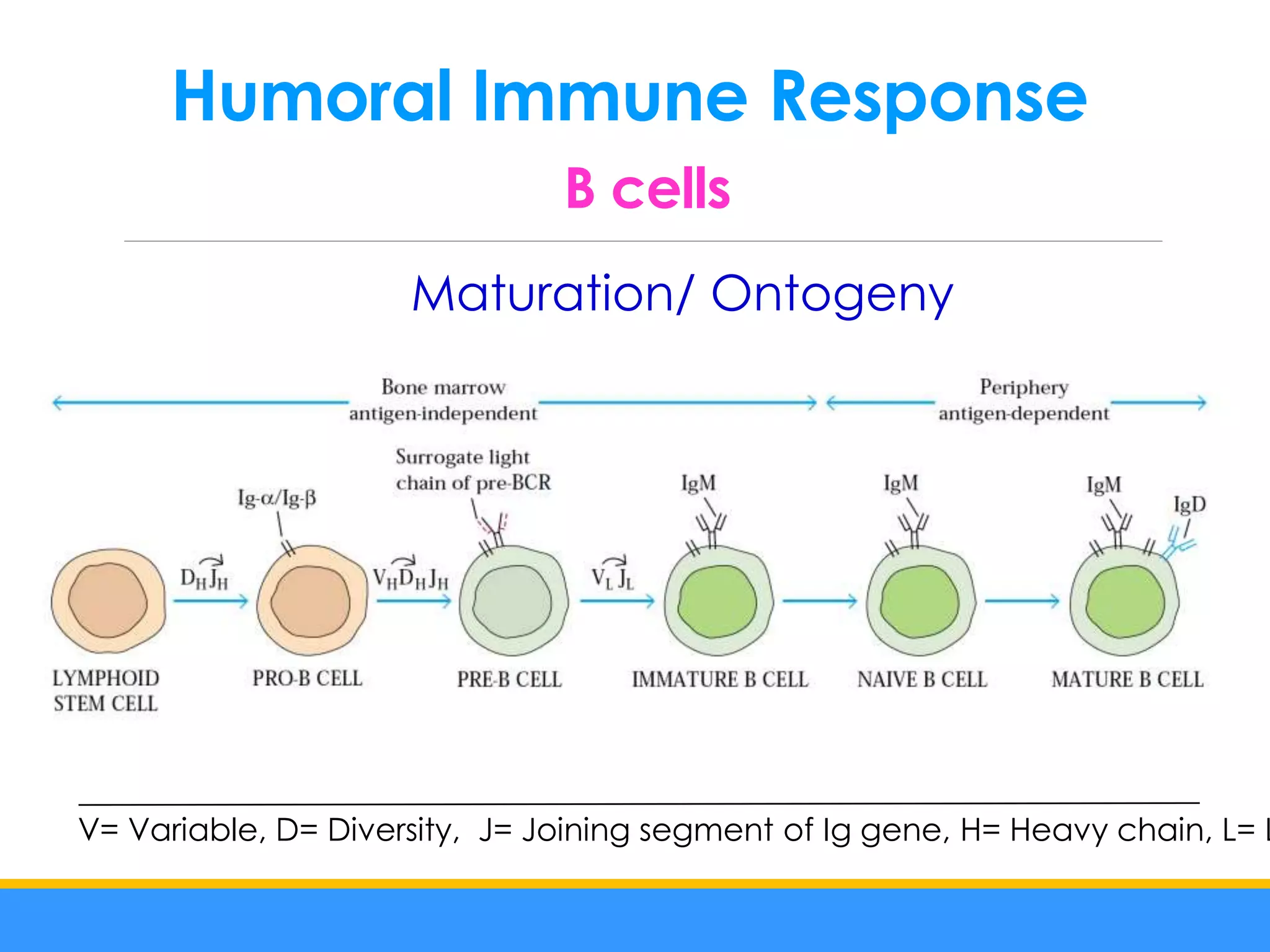
V= Variable, D= Diversity, J= Joining segment of Ig gene, H= Heavy chain, L= L
B cells
Humoral Immune Response
Maturation/ Ontogeny
Humoral Immune Response
◆Mature B cells express membrane bound immunoglobulin
(mIg)
◆Naïve B cells express mIgM and mIgD on their surface
◆mIgM acts as antigen receptor called B cell receptor (BCR)
◆Each B cell contains 105 BCRs, all specific for a single
epitope
◆Each clone of B cell is specific for a single epitope
◆109 clones of B cells can recognize 109 epitopes
B cells
Humoral Immune Response
◆Mature B cells circulate in the blood and lymph and are
carried to the secondary lymphoid organs e.g. lymph
nodes and spleen
◆Antigens are also carried by blood or lymph to the
secondary lymphoid organs
◆B cells usually meet their specific antigens in these organs
◆An antigen binds to a B cell (or a clone of B cells) which
carries mIgM specific for that antigen and activates it
(clonal selection)
◆B cell activated by an antigen starts to proliferate and
increase number of cells (clonal expansion)
◆ After expansion, the cells differentiate to plasma cells and
memory B cells
B cell activation
Humoral Immune Response
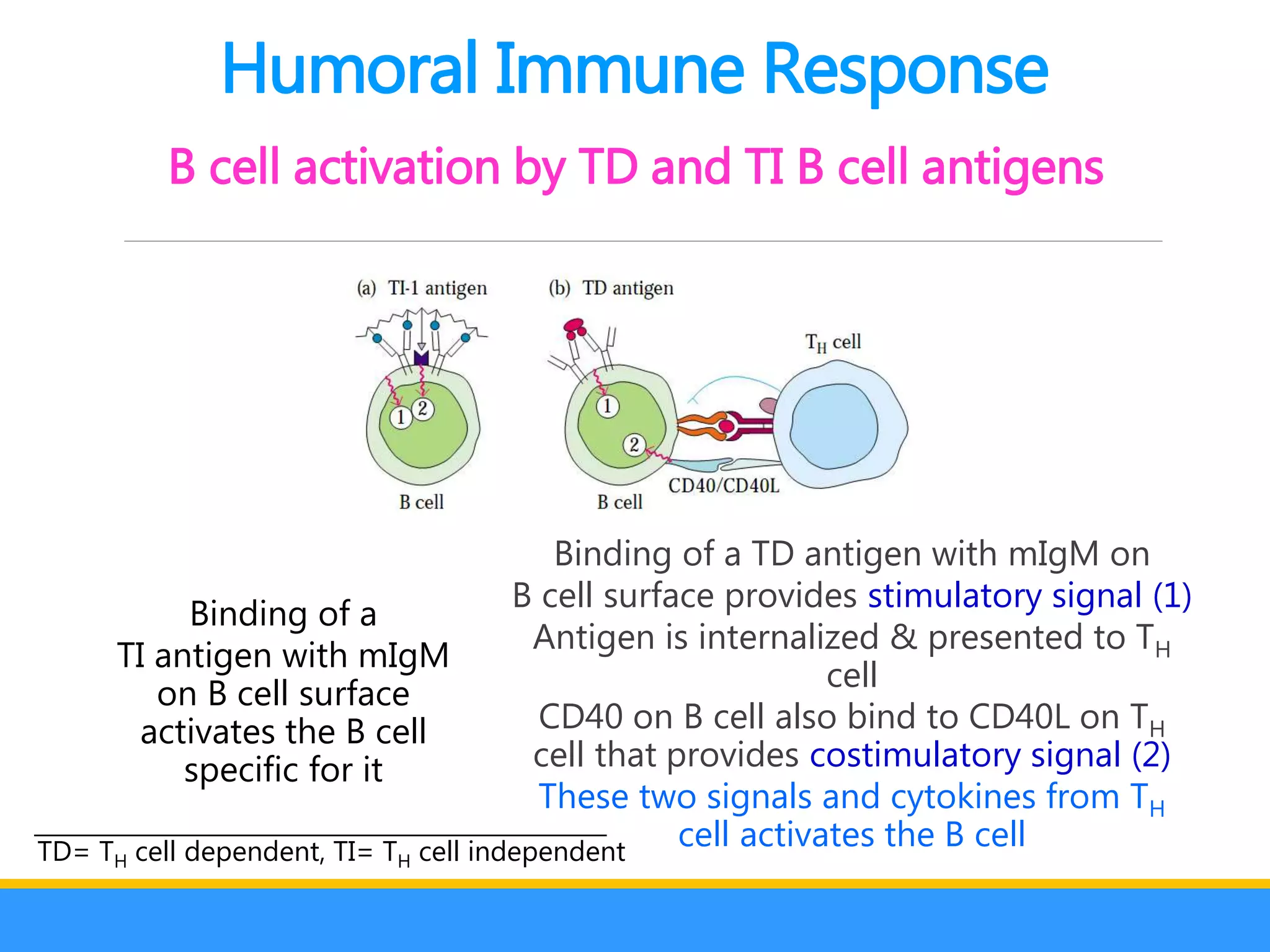
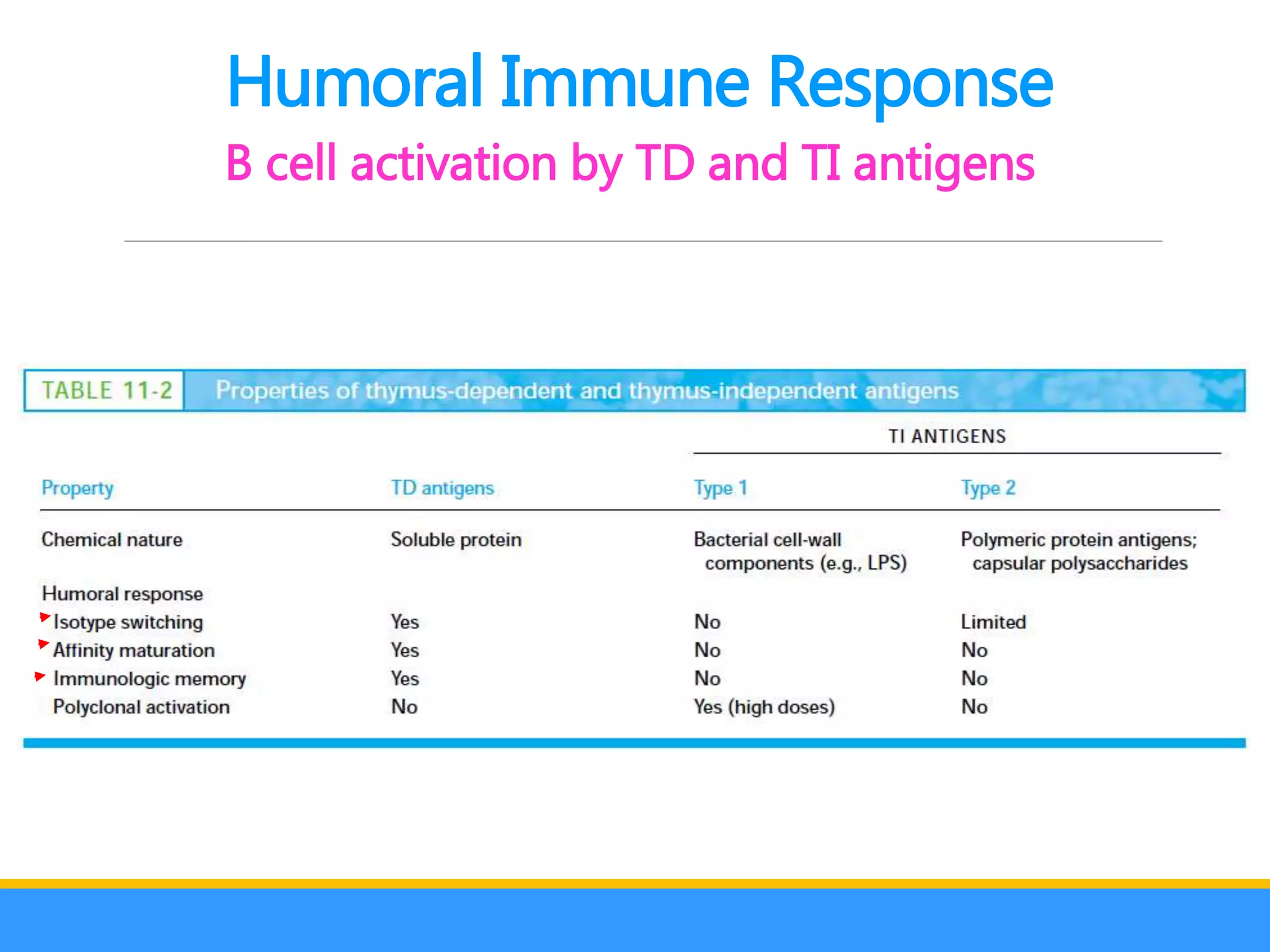
Binding of a
TI antigen with mIgM
on B cell surface
activates the B cell
specific for it
B cell activation by TD and TI B cell antigens
Binding of a TD antigen with mIgM on
B cell surface provides stimulatory signal (1)
Antigen is internalized & presented to TH
cell
CD40 on B cell also bind to CD40L on TH
cell that provides costimulatory signal (2)
These two signals and cytokines from TH
cell activates the B cellTD= TH cell dependent, TI= TH cell independent
Humoral Immune Response
B cell activation by TD and TI antigens
Humoral Immune Response
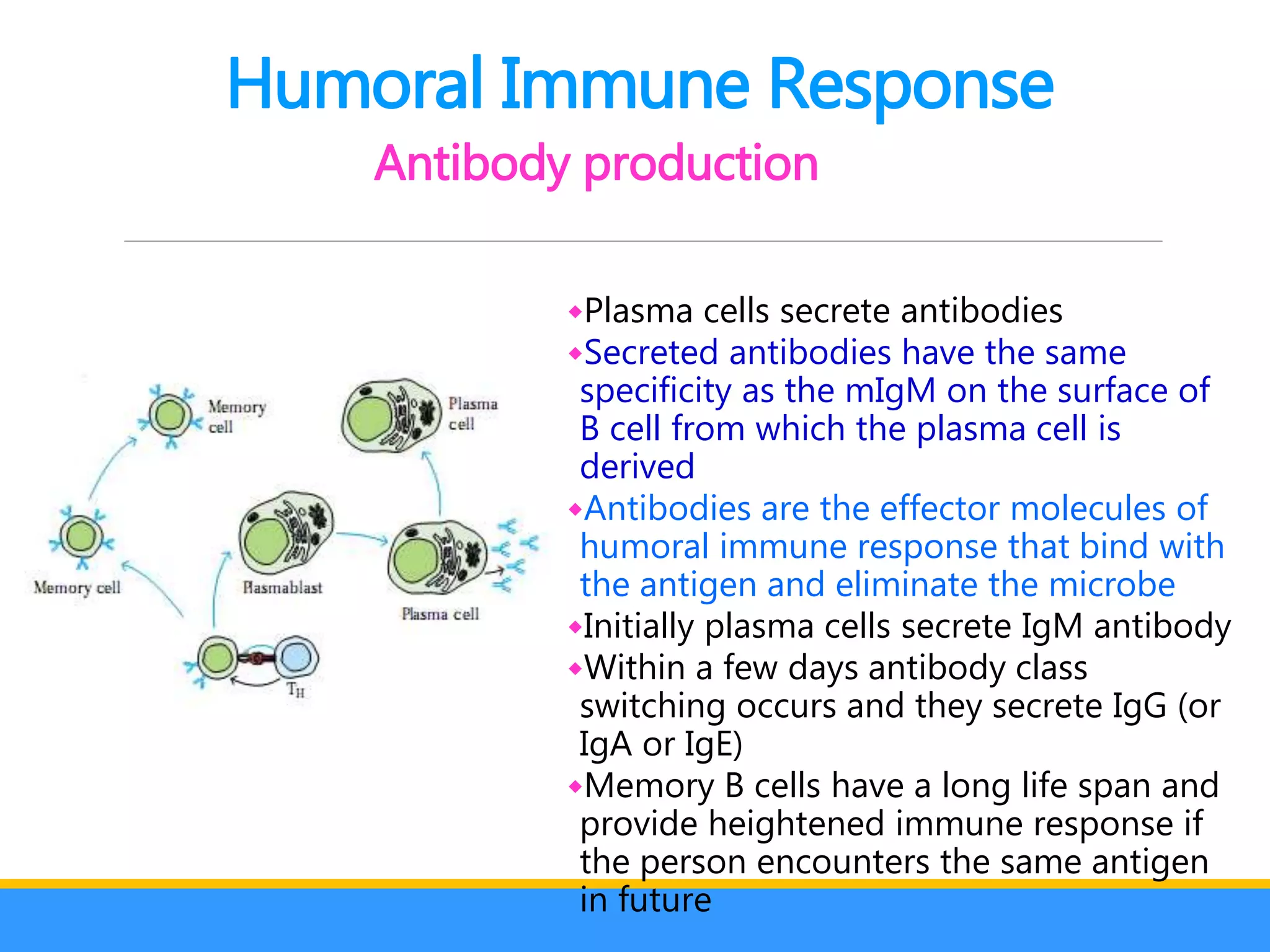
◆Plasma cells secrete antibodies
◆Secreted antibodies have the same
specificity as the mIgM on the surface of
B cell from which the plasma cell is
derived
◆Antibodies are the effector molecules of
humoral immune response that bind with
the antigen and eliminate the microbe
◆Initially plasma cells secrete IgM antibody
◆Within a few days antibody class
switching occurs and they secrete IgG (or
IgA or IgE)
◆Memory B cells have a long life span and
provide heightened immune response if
the person encounters the same antigen
in future
Antibody production
Humoral Immune Response
Antigen Elimination
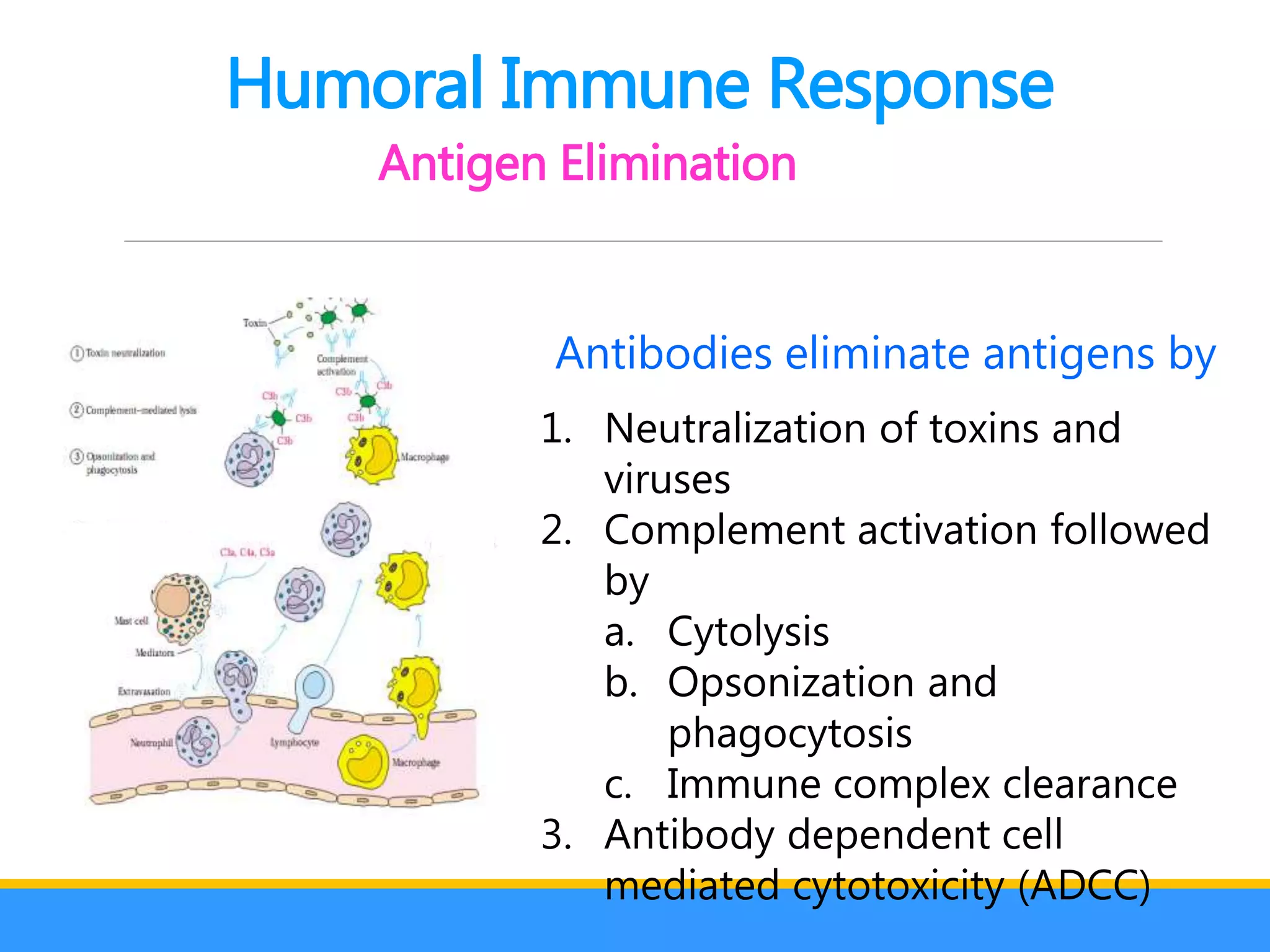
Antibodies eliminate antigens by
1. Neutralization of toxins and
viruses
2. Complement activation followed
by
a. Cytolysis
b. Opsonization and
phagocytosis
c. Immune complex clearance
3. Antibody dependent cell
mediated cytotoxicity (ADCC)
Humoral Immune Response
Antigen Elimination
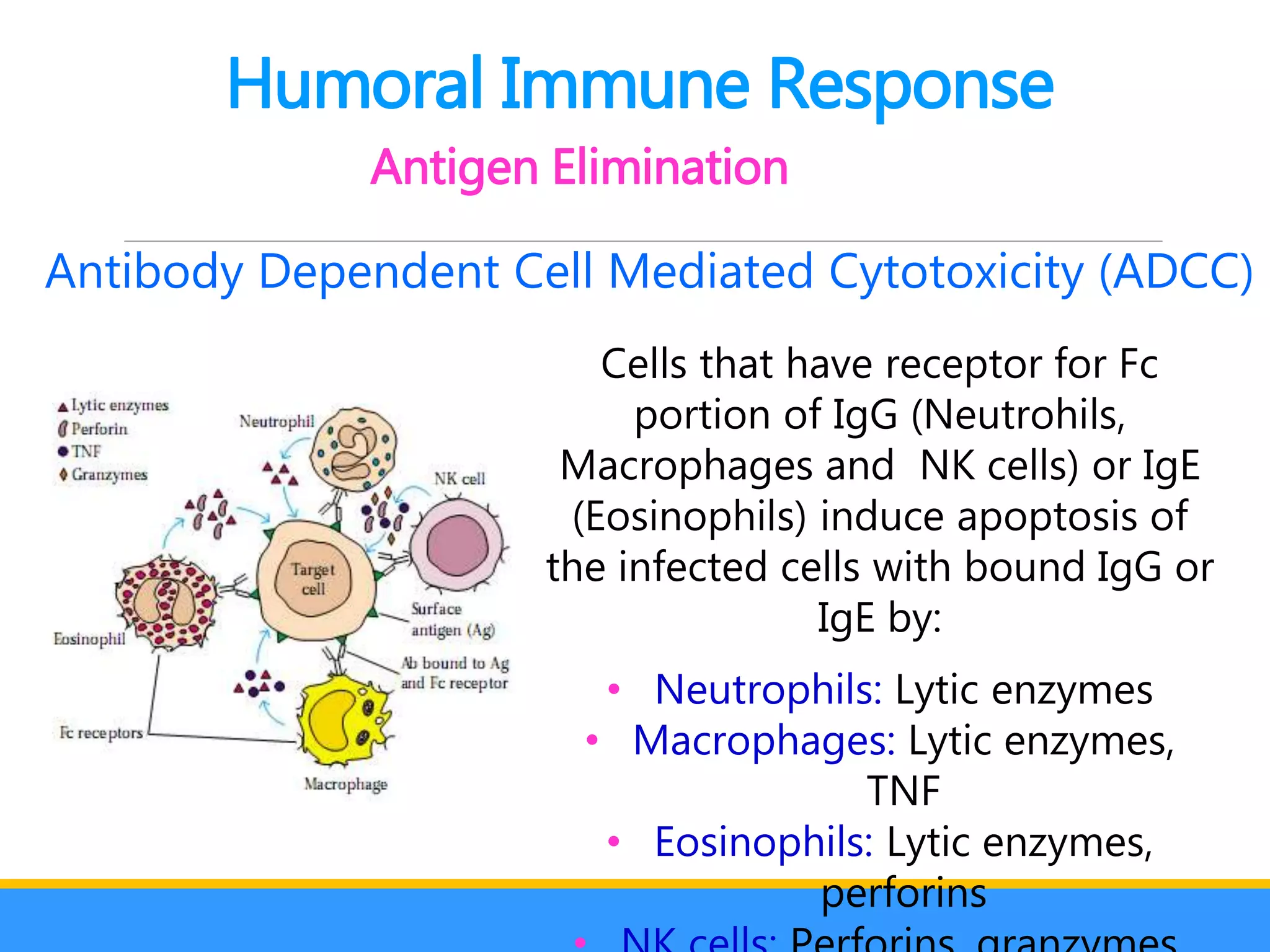
Antibody Dependent Cell Mediated Cytotoxicity (ADCC)
Cells that have receptor for Fc
portion of IgG (Neutrohils,
Macrophages and NK cells) or IgE
(Eosinophils) induce apoptosis of
the infected cells with bound IgG or
IgE by:
• Neutrophils: Lytic enzymes
• Macrophages: Lytic enzymes,
TNF
• Eosinophils: Lytic enzymes,
perforins
Humoral Immune Response
Antibody
◆ Antibodies are antigen binding proteins present on B
cell membrane and secreted (immunoglobulins) by
plasma cells
◆ Membrane-bound antibody confers antigenic
specificity to B cells; antigen-specific proliferation of
B-cell clone is elicited by the interaction of
membrane-bound antibody with its specific antigen
◆ Secreted antibodies circulate in the blood, where they
serve as the effectors of humoral immunity by
searching and neutralizing antigens or marking them
for elimination
◆ All antibodies share structural features, bind to
Humoral Immune Response
Antibody Molecule
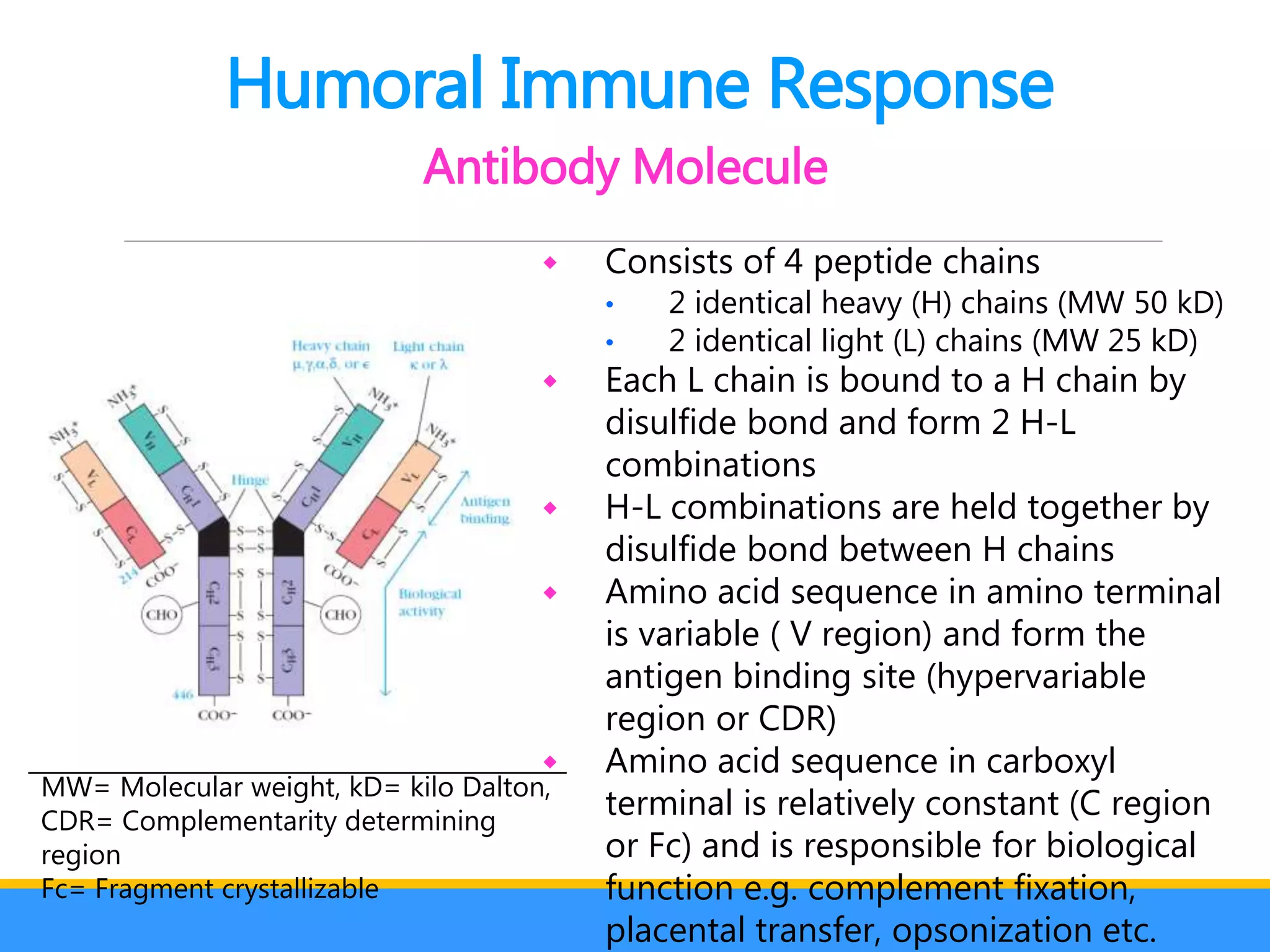
◆ Consists of 4 peptide chains
• 2 identical heavy (H) chains (MW 50 kD)
• 2 identical light (L) chains (MW 25 kD)
◆ Each L chain is bound to a H chain by
disulfide bond and form 2 H-L
combinations
◆ H-L combinations are held together by
disulfide bond between H chains
◆ Amino acid sequence in amino terminal
is variable ( V region) and form the
antigen binding site (hypervariable
region or CDR)
◆ Amino acid sequence in carboxyl
terminal is relatively constant (C region
or Fc) and is responsible for biological
function e.g. complement fixation,
placental transfer, opsonization etc.
MW= Molecular weight, kD= kilo Dalton,
CDR= Complementarity determining
region
Fc= Fragment crystallizable
Humoral Immune Response
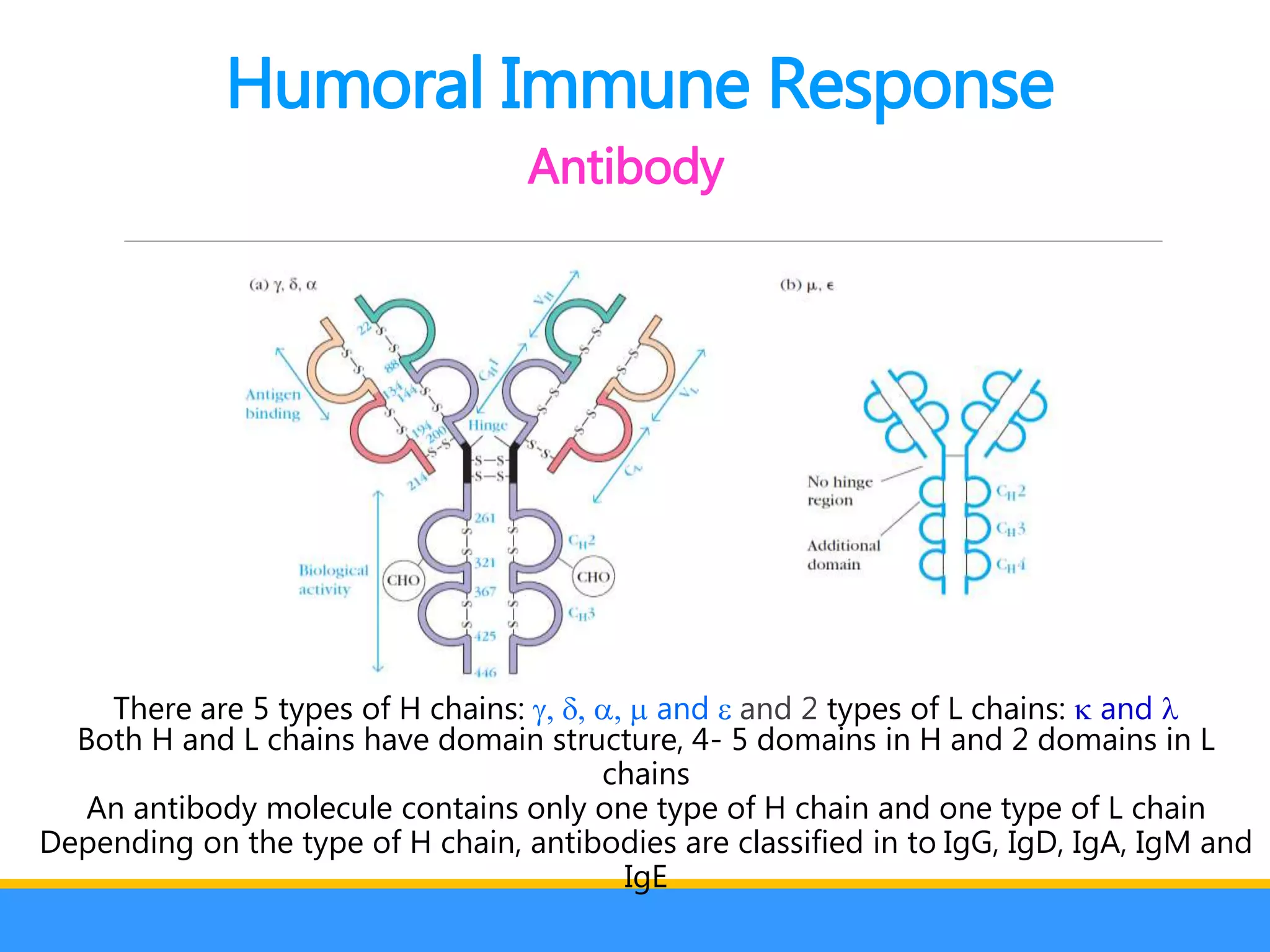
There are 5 types of H chains: g, d, a, m and e and 2 types of L chains: k and l
Both H and L chains have domain structure, 4- 5 domains in H and 2 domains in L
chains
An antibody molecule contains only one type of H chain and one type of L chain
Depending on the type of H chain, antibodies are classified in to IgG, IgD, IgA, IgM and
IgE
Antibody
Humoral Immune Response
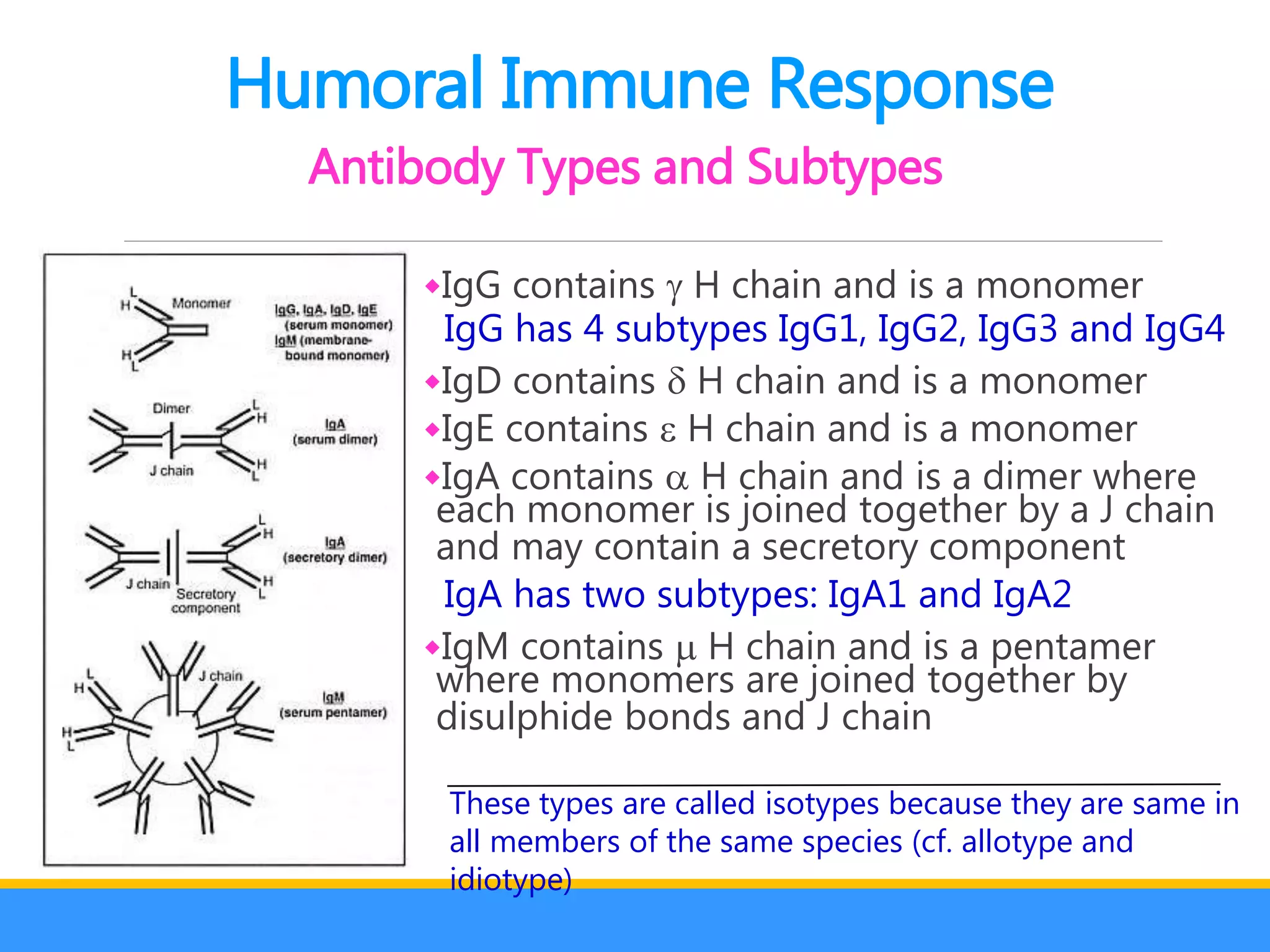
◆IgG contains g H chain and is a monomer
IgG has 4 subtypes IgG1, IgG2, IgG3 and IgG4
◆IgD contains d H chain and is a monomer
◆IgE contains e H chain and is a monomer
◆IgA contains a H chain and is a dimer where
each monomer is joined together by a J chain
and may contain a secretory component
IgA has two subtypes: IgA1 and IgA2
◆IgM contains m H chain and is a pentamer
where monomers are joined together by
disulphide bonds and J chain
Antibody Types and Subtypes
These types are called isotypes because they are same in
all members of the same species (cf. allotype and
idiotype)
eosinophils
Humoral Immune Response
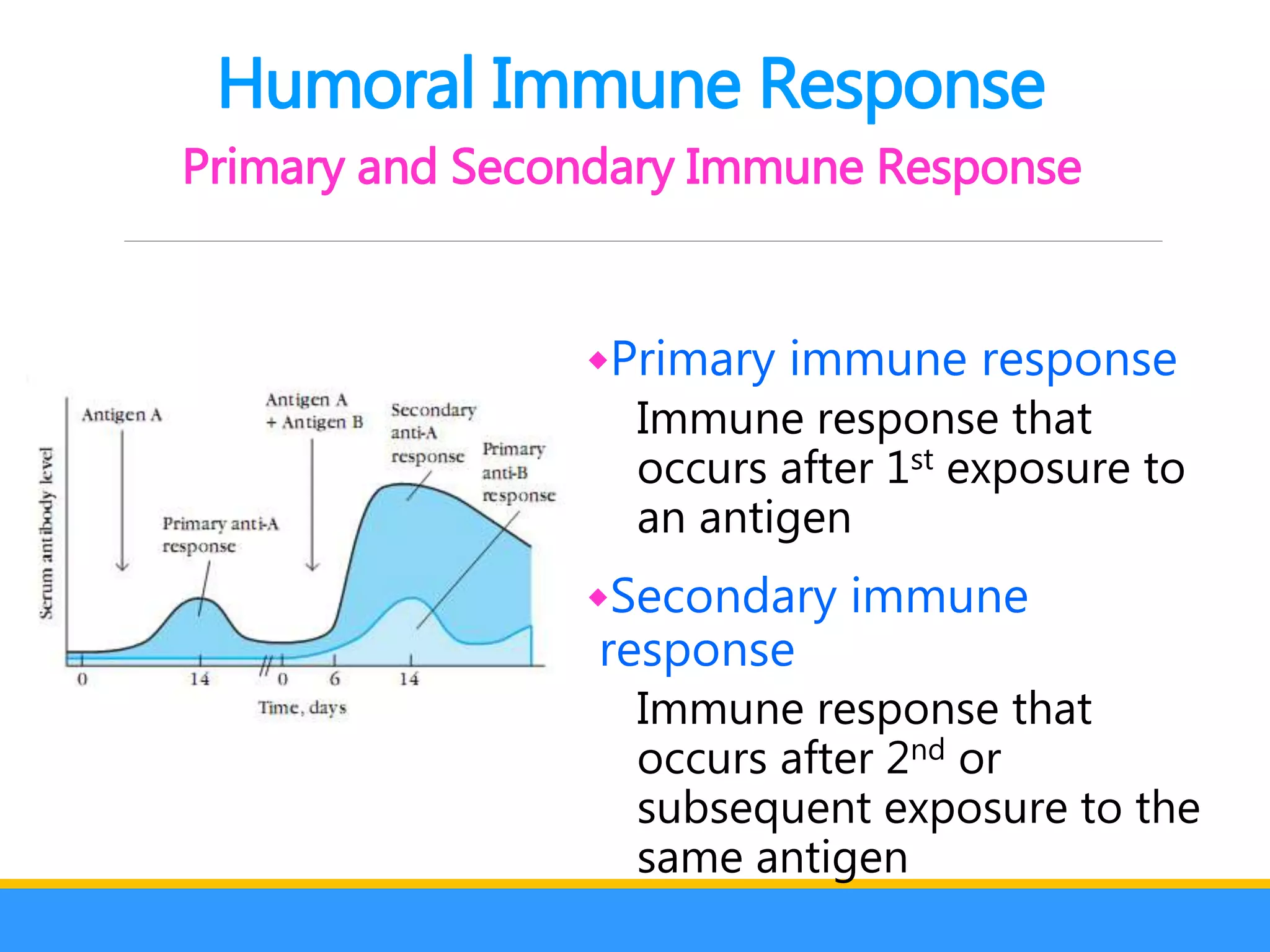
◆Primary immune response
Immune response that
occurs after 1st exposure to
an antigen
◆Secondary immune
response
Immune response that
occurs after 2nd or
subsequent exposure to the
same antigen
Primary and Secondary Immune Response
Humoral Immune Response
Primary and Secondary Immune Response
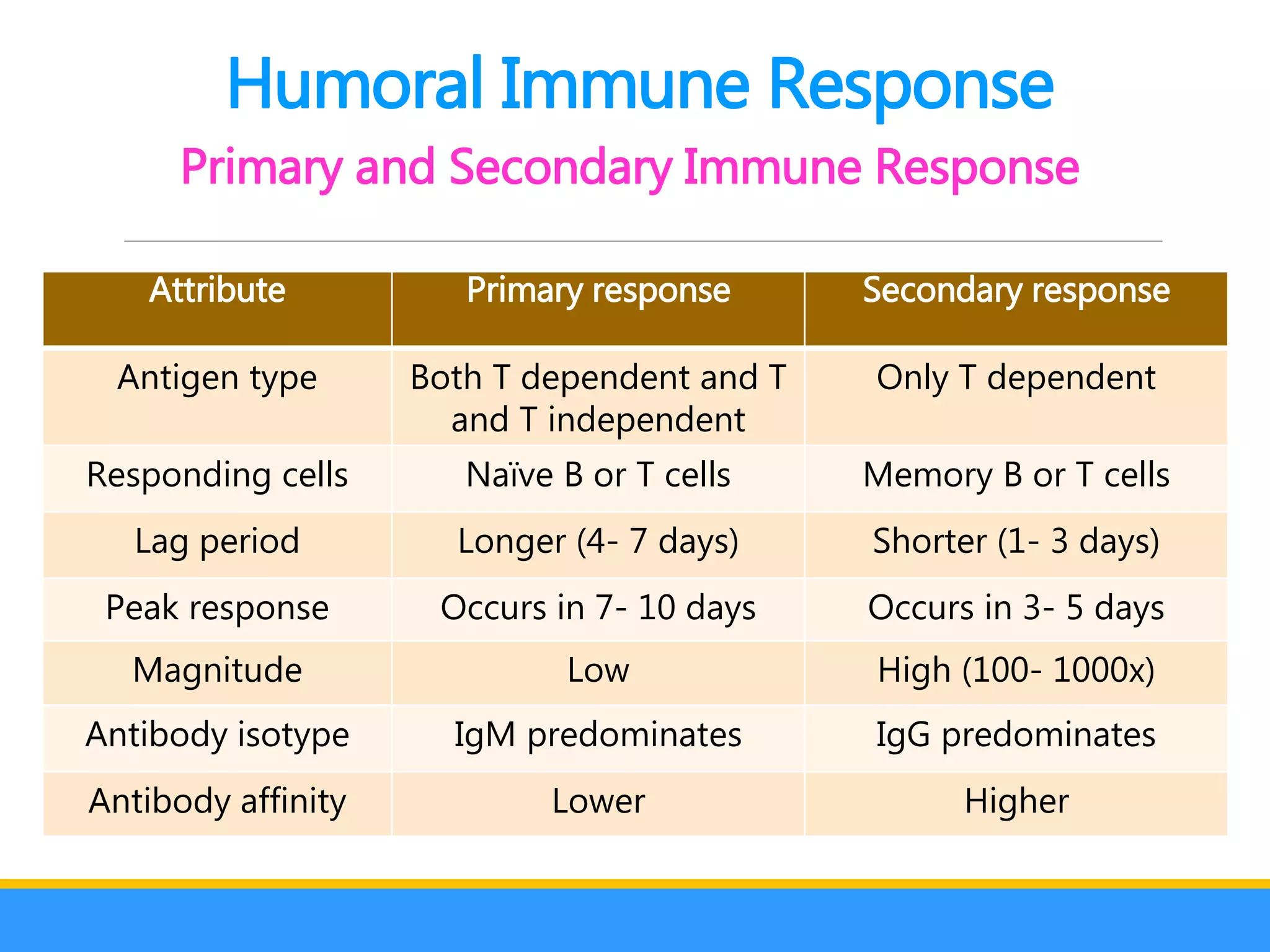
Attribute Primary response Secondary response
Antigen type Both T dependent and T
and T independent
Only T dependent
Responding cells Naïve B or T cells Memory B or T cells
Lag period Longer (4- 7 days) Shorter (1- 3 days)
Peak response Occurs in 7- 10 days Occurs in 3- 5 days
Magnitude Low High (100- 1000x)
Antibody isotype IgM predominates IgG predominates
Antibody affinity Lower Higher
Humoral Immune Response
Primary and Secondary Immune Response
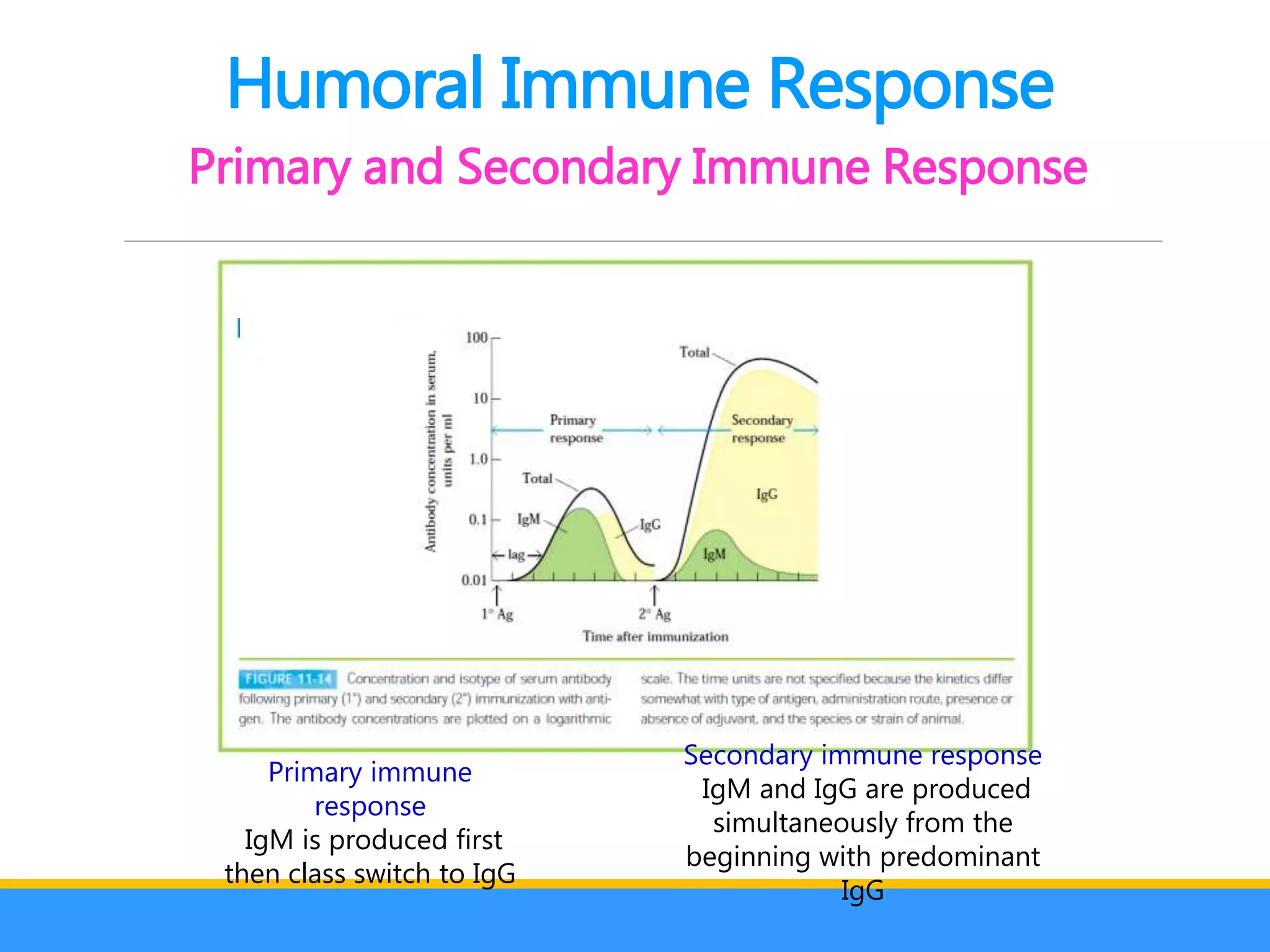
Primary immune
response
IgM is produced first
then class switch to IgG
Secondary immune response
IgM and IgG are produced
simultaneously from the
beginning with predominant
IgG
Induction of Adaptive Immunity
Cooperation between
Innate and Adaptive Immunity
◆Adaptive immunity is not independent of innate
immunity
◆The phagocytic cells crucial to nonspecific immune
responses are intimately involved in activating the
specific immune response
◆Various soluble factors produced by a specific
immune response have been shown to augment the
activity of these phagocytic cells
◆Through the carefully regulated interplay of adaptive
and innate immunity, the two systems work together
to eliminate a foreign invader
Cooperation between
Innate and Adaptive Immunity
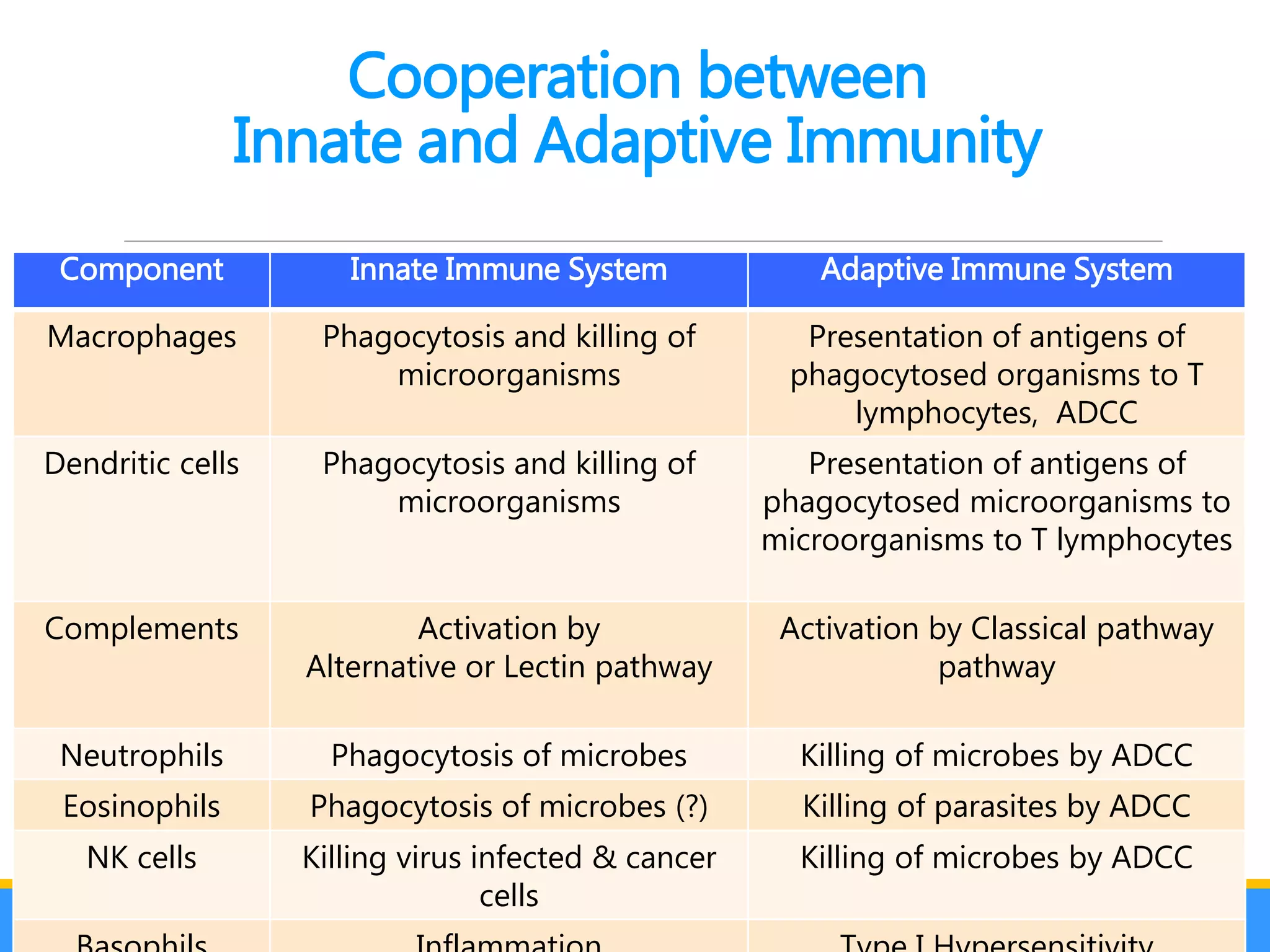
Component Innate Immune System Adaptive Immune System
Macrophages Phagocytosis and killing of
microorganisms
Presentation of antigens of
phagocytosed organisms to T
lymphocytes, ADCC
Dendritic cells Phagocytosis and killing of
microorganisms
Presentation of antigens of
phagocytosed microorganisms to
microorganisms to T lymphocytes
Complements Activation by
Alternative or Lectin pathway
Activation by Classical pathway
pathway
Neutrophils Phagocytosis of microbes Killing of microbes by ADCC
Eosinophils Phagocytosis of microbes (?) Killing of parasites by ADCC
NK cells Killing virus infected & cancer
cells
Killing of microbes by ADCC
Further Review
◆Levinson W. Review of Medical
Microbiology and Immunology. 11th edition.
McGraw Hill, 2008.
◆Kindt TJ, Goldsby RA, Osborne BA. Kuby
Immunology. 6th ed. WH Freeman, 2006.
◆Abbas AK, Lichman AH. Basic Immunology.
3rd edition. Elsevier, 2011.

Humoral immune response

  • 1.
    Immune Response I DR.SUFI H. Z. RAHMAN MBBS, MD (IMMUNOLOGY) LECTURER, MEDICAL FACULTY, AUCMS
  • 2.
    Objectives ◆Mechanism of non-specificimmunity ◆Process of phagocytosis ◆Concept of specificity, immunological memory and non-self ◆Induction process of B lymphocytes in forming antibodies ◆Characteristics of different classes of antibodies and functions of each class ◆Primary and secondary antibody response to antigens
  • 3.
    Immune System ◆Organs, cellsand molecules the protect the host from infections and cancers ◆Two different but coordinated immune systems are functioning to protect the host
  • 4.
    Immune System Innate (inbornor non-specific) Immune System First line of defense Prevent microbial attachment, colonization and entry Disposes pathogens rapidly and nonspecifically if they can enter Adaptive (acquired or specific) Immune System Second line of defense when the innate system fails Devotes specialized sets of cells for each pathogen to identify, mark for disposal and retaining memory for future
  • 5.
    Comparison between Innate andAdaptive Immunity Attribute Innate Immunity Adaptive Immunity Activation Active prior to exposure exposure to any microbe or antigen Activated by exposure exposure to microbes or or antigens Lag phase Absent Response is immediate Present Response takes few days Specificity Limited Targets all pathogens High Targets specific pathogen Memory Absent Same response in 1st Present Amplified response in
  • 6.
    Organization of theImmune System Innate Anatomical barrier Physiological barriers Cellular barrier Inflammatory barrier Adaptive Organs Cells Molecules
  • 7.
    Innate Immunity ◆Skin • Epidermisacts as mechanical barrier and retards entry of microorganisms • Acidic environment (pH 3- 5) retards growth of microorganisms ◆Mucous membrane • Normal microbial flora compete with pathogenic microorganisms for attachment and nutrients • Mucus entraps foreign microorganisms • Cilia of surface epithelium propel microbes out of the body Anatomical Barrier
  • 8.
    Innate Immunity ◆Fever response Inhibitgrowth of microorganisms ◆Acidic environment Stomach: Kills microorganisms Vagina: Retards growth of microorganisms ◆Chemical mediators Lysozyme of tear: Cleaves bacterial cell wall Interferon: Induces antiviral state in uninfected cells Complement: Lyses microbes or facilitate their phagocytosis Antibacterial peptides: Kill pathogenic bacteria Physiological Barrier
  • 9.
    Innate Immunity ◆Phagocytic cells •Neutrophils • Monocytes and Macrophages • Dendritic cells • Eosinophils (?) Detect Pathogen associated molecular pattern (PAMP) on the surface of microbes by their Pattern recognition receptors (PRR), internalize (phagocytose) and kill them ◆Non-phagocytic killer cells • Natural killer (NK) cells Induce apoptosis of virus infected and tumour cells Cellular Barrier
  • 10.
    Innate Immunity ◆Inflammatory responseupon tissue damage or microbial infection induces leakage of vascular fluid containing antibacterial peptides to the site of damage or site of entry of microbes ◆Inflammatory response also causes influx of phagocytic cells (neutrophils, monocytes and macrophages) to the affected site ◆Antibacterial peptides and phagocytes then destroy the microbial agent Inflammatory Barrier
  • 11.
  • 12.
    Innate Immunity ◆Phagocytic cellsrecognize PAMPs on microbial surface by their PRRs ◆Extend pseudopodia and internalize the microbes in phagosome ◆Kill microbes by • Oxygen dependent mechanism Respiratory burst in the phagosomes produce reactive oxygen and reactive nitrogen intermediates that are extremely toxic to microbes • Oxygen independent mechanism Phagosomes fuse with lysosomes and lysosomal enzymes kill microbes independent of oxygen Phagocytosis
  • 13.
  • 14.
    Killing by NKcells Innate Immunity ◆Bind to cells (normal, infected or tumour cells) by Activation receptor (AR) that provide activation signal to kill the cell ◆Also bind to Class I MHC molecules on normal cells by Killer cell inhibitory receptors (KIR) that provide inhibitory signal ◆Inhibitory signal is stronger than activation signal and normal cells are not killed ◆As virus infected cells and tumour cells reduce Class I MHC molecule expression, they cannot provide inhibitory signal and are killed by NK cells ◆NK cells induce apoptosis of virus infected cells and tumour cells
  • 15.
    Innate Immune Response Role 1.Eliminate microbes immediately 2. Initiate Adaptive Immune Response
  • 16.
    Adaptive Immunity ◆Develops afterexposure to pathogen or antigen ◆Adaptive immunity has the following attributes 1. Antigenic specificity 2. Diversity 3. Immunologic memory 4. Self/ non-self recognition
  • 17.
    Adaptive Immunity ◆Antigenic specificity •Capable of recognizing and selectively eliminating specific foreign microorganisms and molecules (i.e. foreign antigens) • Can distinguish subtle differences among antigens ◆Diversity • Can generate tremendous diversity in recognition of molecules • Can recognize billions of unique structures on foreign antigens • This ability is generated by recombination of Immunoglobulin and T cell receptor (TCR) gene segments • The immune system is capable of generating more than 109 clones of B cells and 1010 clones of T cells, only a small fraction of which is displayed at any time • Each clone is specific for one epitope (antigen)
  • 18.
    Adaptive Immunity ◆Immunologic memory •Exhibits memory of an antigen to which it is exposed • A second exposure to the same antigen induces a heightened state of immunological reactivity • Because of this attribute, adaptive immune system can confer life-long immunity to many infectious agents after an initial encounter ◆Self/ non-self recognition • Capable of distinguishing self from non-self • Normally responds only to foreign antigens • This is due to development of self tolerance during maturation of B and T lymphocytes
  • 19.
    Adaptive Immunity Adaptive immunesystem has two arms Adaptive Immunity Humoral Immunity Cell mediated Immunity • Provided by B lymphocytes • Can recognize protein, polysaccharide, phospholipid and nucleic acid antigens • Can act against soluble or free antigens • Provides immunity to extracellular bacteria, viruses and toxins • Causes Type I, II & III hypersensitivity • Provided by T lymphocytes • Can recognize only protein antigens • Recognizes antigens presented by APCs with Class I or Class II MHC molecule • Provides immunity to intracellular bacteria, viruses, fungi and protozoa • Causes Type IV hypersensitivity • Causes acute graft rejection
  • 20.
    V= Variable, D=Diversity, J= Joining segment of Ig gene, H= Heavy chain, L= L B cells Humoral Immune Response Maturation/ Ontogeny
  • 21.
    Humoral Immune Response ◆MatureB cells express membrane bound immunoglobulin (mIg) ◆Naïve B cells express mIgM and mIgD on their surface ◆mIgM acts as antigen receptor called B cell receptor (BCR) ◆Each B cell contains 105 BCRs, all specific for a single epitope ◆Each clone of B cell is specific for a single epitope ◆109 clones of B cells can recognize 109 epitopes B cells
  • 22.
    Humoral Immune Response ◆MatureB cells circulate in the blood and lymph and are carried to the secondary lymphoid organs e.g. lymph nodes and spleen ◆Antigens are also carried by blood or lymph to the secondary lymphoid organs ◆B cells usually meet their specific antigens in these organs ◆An antigen binds to a B cell (or a clone of B cells) which carries mIgM specific for that antigen and activates it (clonal selection) ◆B cell activated by an antigen starts to proliferate and increase number of cells (clonal expansion) ◆ After expansion, the cells differentiate to plasma cells and memory B cells B cell activation
  • 24.
    Humoral Immune Response Bindingof a TI antigen with mIgM on B cell surface activates the B cell specific for it B cell activation by TD and TI B cell antigens Binding of a TD antigen with mIgM on B cell surface provides stimulatory signal (1) Antigen is internalized & presented to TH cell CD40 on B cell also bind to CD40L on TH cell that provides costimulatory signal (2) These two signals and cytokines from TH cell activates the B cellTD= TH cell dependent, TI= TH cell independent
  • 25.
    Humoral Immune Response Bcell activation by TD and TI antigens
  • 26.
    Humoral Immune Response ◆Plasmacells secrete antibodies ◆Secreted antibodies have the same specificity as the mIgM on the surface of B cell from which the plasma cell is derived ◆Antibodies are the effector molecules of humoral immune response that bind with the antigen and eliminate the microbe ◆Initially plasma cells secrete IgM antibody ◆Within a few days antibody class switching occurs and they secrete IgG (or IgA or IgE) ◆Memory B cells have a long life span and provide heightened immune response if the person encounters the same antigen in future Antibody production
  • 27.
    Humoral Immune Response AntigenElimination Antibodies eliminate antigens by 1. Neutralization of toxins and viruses 2. Complement activation followed by a. Cytolysis b. Opsonization and phagocytosis c. Immune complex clearance 3. Antibody dependent cell mediated cytotoxicity (ADCC)
  • 28.
    Humoral Immune Response AntigenElimination Antibody Dependent Cell Mediated Cytotoxicity (ADCC) Cells that have receptor for Fc portion of IgG (Neutrohils, Macrophages and NK cells) or IgE (Eosinophils) induce apoptosis of the infected cells with bound IgG or IgE by: • Neutrophils: Lytic enzymes • Macrophages: Lytic enzymes, TNF • Eosinophils: Lytic enzymes, perforins
  • 29.
    Humoral Immune Response Antibody ◆Antibodies are antigen binding proteins present on B cell membrane and secreted (immunoglobulins) by plasma cells ◆ Membrane-bound antibody confers antigenic specificity to B cells; antigen-specific proliferation of B-cell clone is elicited by the interaction of membrane-bound antibody with its specific antigen ◆ Secreted antibodies circulate in the blood, where they serve as the effectors of humoral immunity by searching and neutralizing antigens or marking them for elimination ◆ All antibodies share structural features, bind to
  • 30.
    Humoral Immune Response AntibodyMolecule ◆ Consists of 4 peptide chains • 2 identical heavy (H) chains (MW 50 kD) • 2 identical light (L) chains (MW 25 kD) ◆ Each L chain is bound to a H chain by disulfide bond and form 2 H-L combinations ◆ H-L combinations are held together by disulfide bond between H chains ◆ Amino acid sequence in amino terminal is variable ( V region) and form the antigen binding site (hypervariable region or CDR) ◆ Amino acid sequence in carboxyl terminal is relatively constant (C region or Fc) and is responsible for biological function e.g. complement fixation, placental transfer, opsonization etc. MW= Molecular weight, kD= kilo Dalton, CDR= Complementarity determining region Fc= Fragment crystallizable
  • 31.
    Humoral Immune Response Thereare 5 types of H chains: g, d, a, m and e and 2 types of L chains: k and l Both H and L chains have domain structure, 4- 5 domains in H and 2 domains in L chains An antibody molecule contains only one type of H chain and one type of L chain Depending on the type of H chain, antibodies are classified in to IgG, IgD, IgA, IgM and IgE Antibody
  • 32.
    Humoral Immune Response ◆IgGcontains g H chain and is a monomer IgG has 4 subtypes IgG1, IgG2, IgG3 and IgG4 ◆IgD contains d H chain and is a monomer ◆IgE contains e H chain and is a monomer ◆IgA contains a H chain and is a dimer where each monomer is joined together by a J chain and may contain a secretory component IgA has two subtypes: IgA1 and IgA2 ◆IgM contains m H chain and is a pentamer where monomers are joined together by disulphide bonds and J chain Antibody Types and Subtypes These types are called isotypes because they are same in all members of the same species (cf. allotype and idiotype)
  • 33.
  • 34.
    Humoral Immune Response ◆Primaryimmune response Immune response that occurs after 1st exposure to an antigen ◆Secondary immune response Immune response that occurs after 2nd or subsequent exposure to the same antigen Primary and Secondary Immune Response
  • 35.
    Humoral Immune Response Primaryand Secondary Immune Response Attribute Primary response Secondary response Antigen type Both T dependent and T and T independent Only T dependent Responding cells Naïve B or T cells Memory B or T cells Lag period Longer (4- 7 days) Shorter (1- 3 days) Peak response Occurs in 7- 10 days Occurs in 3- 5 days Magnitude Low High (100- 1000x) Antibody isotype IgM predominates IgG predominates Antibody affinity Lower Higher
  • 36.
    Humoral Immune Response Primaryand Secondary Immune Response Primary immune response IgM is produced first then class switch to IgG Secondary immune response IgM and IgG are produced simultaneously from the beginning with predominant IgG
  • 37.
  • 38.
  • 39.
    Cooperation between Innate andAdaptive Immunity ◆Adaptive immunity is not independent of innate immunity ◆The phagocytic cells crucial to nonspecific immune responses are intimately involved in activating the specific immune response ◆Various soluble factors produced by a specific immune response have been shown to augment the activity of these phagocytic cells ◆Through the carefully regulated interplay of adaptive and innate immunity, the two systems work together to eliminate a foreign invader
  • 40.
    Cooperation between Innate andAdaptive Immunity Component Innate Immune System Adaptive Immune System Macrophages Phagocytosis and killing of microorganisms Presentation of antigens of phagocytosed organisms to T lymphocytes, ADCC Dendritic cells Phagocytosis and killing of microorganisms Presentation of antigens of phagocytosed microorganisms to microorganisms to T lymphocytes Complements Activation by Alternative or Lectin pathway Activation by Classical pathway pathway Neutrophils Phagocytosis of microbes Killing of microbes by ADCC Eosinophils Phagocytosis of microbes (?) Killing of parasites by ADCC NK cells Killing virus infected & cancer cells Killing of microbes by ADCC
  • 41.
    Further Review ◆Levinson W.Review of Medical Microbiology and Immunology. 11th edition. McGraw Hill, 2008. ◆Kindt TJ, Goldsby RA, Osborne BA. Kuby Immunology. 6th ed. WH Freeman, 2006. ◆Abbas AK, Lichman AH. Basic Immunology. 3rd edition. Elsevier, 2011.