ANTIDEPRESSANTS
Depression – most common psychiatric
disorder
Depression – 3 to 5% of population is
depressed
Life time prevalence – around 10%
 Lowered mood, varying from mild sadness to
intense feelings of guilt, worthlessness, and
hopelessness.
 Difficulty in thinking, including inability to
concentrate, and lack of decisiveness.
 Loss of interest, with diminished involvement in
work and recreation.
 Somatic complaints such as headache; disrupted,
lessened, or excessive sleep; loss of energy; change in
appetite; decreased sexual drive.
 Delusions of a hypochondriacal or persecutory
nature.
 Withdrawal from activities.
 Suicidal ideation.
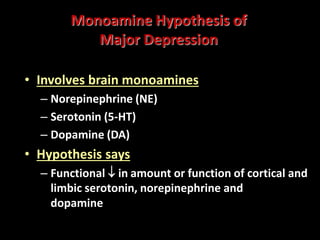
Monoamine Hypothesis of
Major Depression
• Involves brain monoamines
– Norepinephrine (NE)
– Serotonin (5-HT)
– Dopamine (DA)
• Hypothesis says
– Functional  in amount or function of cortical and
limbic serotonin, norepinephrine and
dopamineresulting in depression
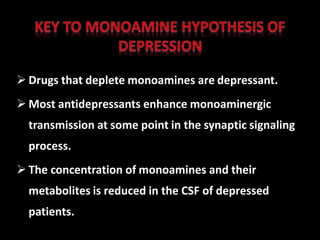
 Drugs that deplete monoamines are depressant.
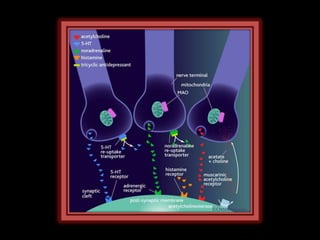
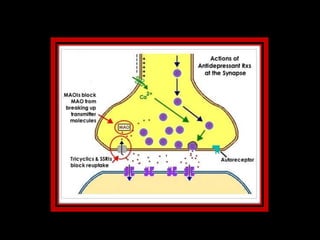
 Most antidepressants enhance monoaminergic
transmission at some point in the synaptic signaling
process.
 The concentration of monoamines and their
metabolites is reduced in the CSF of depressed
patients.
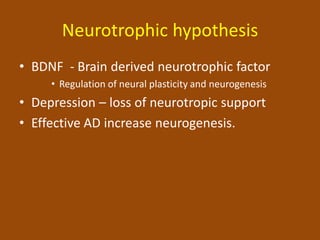
Neurotrophic hypothesis
• BDNF - Brain derived neurotrophic factor
• Regulation of neural plasticity and neurogenesis
• Depression – loss of neurotropic support
• Effective AD increase neurogenesis.
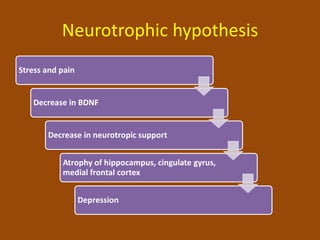
Neurotrophic hypothesis
Stress and pain
Decrease in BDNF
Decrease in neurotropic support
Atrophy of hippocampus, cingulate gyrus,
medial frontal cortex
Depression
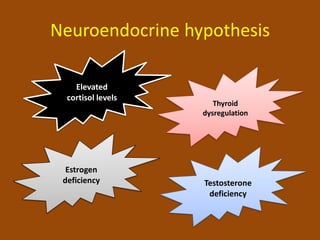
Neuroendocrine hypothesis
Elevated
cortisol levels
Thyroid
dysregulation
Estrogen
deficiency Testosterone
deficiency
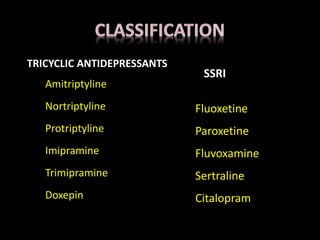
TRICYCLIC ANTIDEPRESSANTS
Amitriptyline
Nortriptyline
Protriptyline
Imipramine
Trimipramine
Doxepin
SSRI
Fluoxetine
Paroxetine
Fluvoxamine
Sertraline
Citalopram
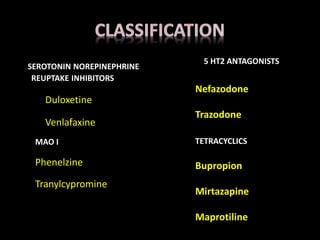
SEROTONIN NOREPINEPHRINE
REUPTAKE INHIBITORS
Duloxetine
Venlafaxine
MAO I
Phenelzine
Tranylcypromine
5 HT2 ANTAGONISTS
Nefazodone
Trazodone
TETRACYCLICS
Bupropion
Mirtazapine
Maprotiline
Tricyclic Antidepressants (TCAs)
• Characteristic three ring nucleus.
Mechanism of Action:
- Inhibition of NT and 5 HT reuptake.
- Immediate action = > NE and 5-HT in synapse.
- Takes up to 4 weeks for all TCA antidepressants to
have an effect
Tricyclic Antidepressants (TCAs)
Side Effects:
• Atropine-like side effects: dry mouth,
constipation, blurred vision, mydriasis,
metallic taste, urine retention => muscarinic
blockade.
• Orthostatic hypotension => 1-AR blockade.
• Drowsiness, sedation and weight gain =>
Histamine-Receptor blockade.
Tricyclic Antidepressants (TCAs)
Side Effects (con’t):
• Most serious side effect is cardiac toxicity.
• Sexual dysfunction, including loss of libido,
impaired erection and ejaculation and
anorgasmia
.  COMPLIANCE
Tricyclic Antidepressants (TCAs)
Other effects (con’t):
• Can lower seizure threshold.
• All potentiate CNS depressants (BZDs, Barbs,
ETOH) => coma and death.
• TCA administration in bipolar disorder may
precipitate acute mania or rapid cycling.
• Fatal in overdose (a 2 wk supply can kill anyone).
Tricyclic Antidepressants (TCAs)
• Drugs quite effective.
– Decline in use not related to efficacy
– Have low margin of safety in overdose, poor adverse
reaction profiles and drug interaction profiles.
– Children and elderly particularly susceptible
• Display
– M1, H1, 1 blockade
– ADR:
• Dry mouth, constipation, urinary retention, sinus tachycardia,
blurred vision, postural hypotension, sedation, sexual dysfunction.
• Quinidine-like effects on cardiac conduction
• Cost effective
What are the indications for
antidepressants?
Indications
• Depression
• Anxiety disorders
– Obsessive Compulsive disorder
– Generalised Anxiety Disorder.
– Post traumatic stress disorder
– Social phobia
– Panic disorder
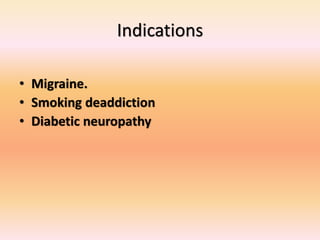
Indications
• Migraine.
• Smoking deaddiction
• Diabetic neuropathy
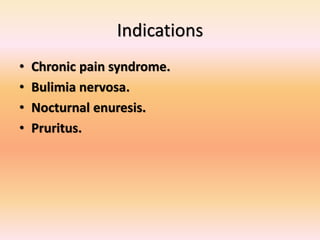
Indications
• Chronic pain syndrome.
• Bulimia nervosa.
• Nocturnal enuresis.
• Pruritus.
Compare and contrast TCA
and SSRI
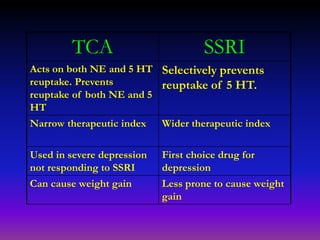
TCA SSRI
Acts on both NE and 5 HT
reuptake. Prevents
reuptake of both NE and 5
HT
Selectively prevents
reuptake of 5 HT.
Narrow therapeutic index Wider therapeutic index
Used in severe depression
not responding to SSRI
First choice drug for
depression
Can cause weight gain Less prone to cause weight
gain
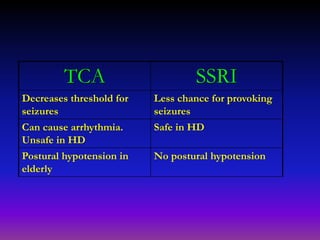
TCA SSRI
Decreases threshold for
seizures
Less chance for provoking
seizures
Can cause arrhythmia.
Unsafe in HD
Safe in HD
Postural hypotension in
elderly
No postural hypotension
Antidepressants  ppt final

Antidepressants ppt final

  • 1.
  • 2.
    Depression – mostcommon psychiatric disorder Depression – 3 to 5% of population is depressed Life time prevalence – around 10%
  • 3.
     Lowered mood,varying from mild sadness to intense feelings of guilt, worthlessness, and hopelessness.  Difficulty in thinking, including inability to concentrate, and lack of decisiveness.  Loss of interest, with diminished involvement in work and recreation.
  • 4.
     Somatic complaintssuch as headache; disrupted, lessened, or excessive sleep; loss of energy; change in appetite; decreased sexual drive.  Delusions of a hypochondriacal or persecutory nature.  Withdrawal from activities.  Suicidal ideation.
  • 5.
    Monoamine Hypothesis of MajorDepression • Involves brain monoamines – Norepinephrine (NE) – Serotonin (5-HT) – Dopamine (DA) • Hypothesis says – Functional  in amount or function of cortical and limbic serotonin, norepinephrine and dopamineresulting in depression
  • 6.
     Drugs thatdeplete monoamines are depressant.  Most antidepressants enhance monoaminergic transmission at some point in the synaptic signaling process.  The concentration of monoamines and their metabolites is reduced in the CSF of depressed patients.
  • 9.
    Neurotrophic hypothesis • BDNF- Brain derived neurotrophic factor • Regulation of neural plasticity and neurogenesis • Depression – loss of neurotropic support • Effective AD increase neurogenesis.
  • 10.
    Neurotrophic hypothesis Stress andpain Decrease in BDNF Decrease in neurotropic support Atrophy of hippocampus, cingulate gyrus, medial frontal cortex Depression
  • 11.
  • 12.
  • 13.
    SEROTONIN NOREPINEPHRINE REUPTAKE INHIBITORS Duloxetine Venlafaxine MAOI Phenelzine Tranylcypromine 5 HT2 ANTAGONISTS Nefazodone Trazodone TETRACYCLICS Bupropion Mirtazapine Maprotiline
  • 14.
    Tricyclic Antidepressants (TCAs) •Characteristic three ring nucleus. Mechanism of Action: - Inhibition of NT and 5 HT reuptake. - Immediate action = > NE and 5-HT in synapse. - Takes up to 4 weeks for all TCA antidepressants to have an effect Tricyclic Antidepressants (TCAs)
  • 15.
    Side Effects: • Atropine-likeside effects: dry mouth, constipation, blurred vision, mydriasis, metallic taste, urine retention => muscarinic blockade. • Orthostatic hypotension => 1-AR blockade. • Drowsiness, sedation and weight gain => Histamine-Receptor blockade. Tricyclic Antidepressants (TCAs)
  • 16.
    Side Effects (con’t): •Most serious side effect is cardiac toxicity. • Sexual dysfunction, including loss of libido, impaired erection and ejaculation and anorgasmia .  COMPLIANCE Tricyclic Antidepressants (TCAs)
  • 17.
    Other effects (con’t): •Can lower seizure threshold. • All potentiate CNS depressants (BZDs, Barbs, ETOH) => coma and death. • TCA administration in bipolar disorder may precipitate acute mania or rapid cycling. • Fatal in overdose (a 2 wk supply can kill anyone). Tricyclic Antidepressants (TCAs)
  • 18.
    • Drugs quiteeffective. – Decline in use not related to efficacy – Have low margin of safety in overdose, poor adverse reaction profiles and drug interaction profiles. – Children and elderly particularly susceptible • Display – M1, H1, 1 blockade – ADR: • Dry mouth, constipation, urinary retention, sinus tachycardia, blurred vision, postural hypotension, sedation, sexual dysfunction. • Quinidine-like effects on cardiac conduction • Cost effective
  • 19.
    What are theindications for antidepressants?
  • 20.
    Indications • Depression • Anxietydisorders – Obsessive Compulsive disorder – Generalised Anxiety Disorder. – Post traumatic stress disorder – Social phobia – Panic disorder
  • 21.
    Indications • Migraine. • Smokingdeaddiction • Diabetic neuropathy
  • 22.
    Indications • Chronic painsyndrome. • Bulimia nervosa. • Nocturnal enuresis. • Pruritus.
  • 23.
  • 24.
    TCA SSRI Acts onboth NE and 5 HT reuptake. Prevents reuptake of both NE and 5 HT Selectively prevents reuptake of 5 HT. Narrow therapeutic index Wider therapeutic index Used in severe depression not responding to SSRI First choice drug for depression Can cause weight gain Less prone to cause weight gain
  • 25.
    TCA SSRI Decreases thresholdfor seizures Less chance for provoking seizures Can cause arrhythmia. Unsafe in HD Safe in HD Postural hypotension in elderly No postural hypotension