TRICYCLIC
ANTIDEPRESSANTS
 The TCAs are structurally related to each
other and, consequently, possess related
biological properties that can be summarized
as characteristic of the group.
 The TCAs are extremely lipophilic and,
accordingly, very highly tissue bound outside
the CNS. Because they have anticholinergic
and noradrenergic effects, both central and
peripheral side effects are often unpleasant
and sometimes dangerous.
 Products:
Imipramine Hydrochloride
- It is the lead compound of the TCAs. It is
also a close relative of the antipsychotic
phenothiazines.
- It has weaker D2 postsynaptic blocking
activity than promazine and mainly affects
amines via the transporters.
Imipramine Hydrochloride
(Tofranil)
Desipramine Hydrochloride
- Among tricyclics, desipramine would be
considered when few anticholinergic effects
or a low level of sedation are important.
 Norpramin (Desipramine Hydrochloride, USP) is
an antidepressant drug of the tricyclic type, and
is chemically: 5H-Dibenz[bƒ]azepine-5-
propanamine,10,11-dihydro-N-methyl-,
monohydrochloride.
Clomipramine Hydrochloride
- It is an up to 50 times as potent as
imipramine in some bioassays.
- This does not imply clinical superiority,
but it might be informative about tricyclic
and, possibly, other reuptake inhibitors.
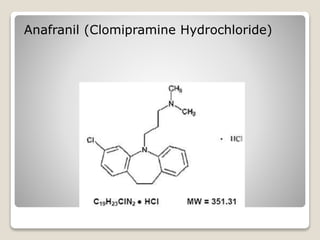
Anafranil (Clomipramine Hydrochloride)
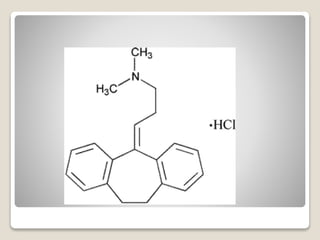
 Amitriptyline Hydrochloride
- It is one of the most anticholinergic and
sedative of TCAs. Because it lacks the ring-
electron-enriching nitrogen atom of
imipramine.
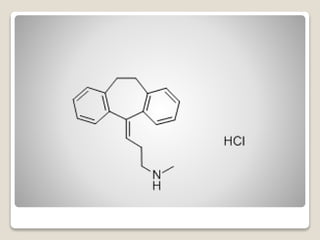
 Nortriptyline Hydrochloride
- Nortriptyline is a selective NE transporter
inhibitor.
- Metabolic inactivation are like those of
amitriptyline.
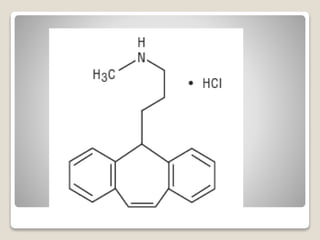
 Protriptyline Hydrochloride
- Protriptyline is a structural isomer of
nortriptyline.
- Inactivation can be expected to involve
the relatively localized double bond.
 Trimipramine Maleate
- It is used as the racemic mixture.
- Biological properties reported resemble
those of imipramine
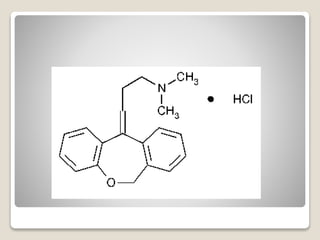
 Doxepin Hydrochloride
- It is an oxa congener of amitriptyline, as
can be seen in it’s structure.
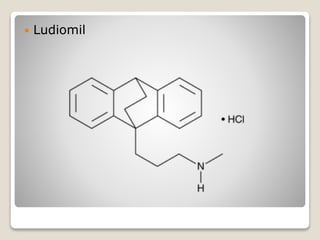
 Maprotiline Hydrochloride
- It is sometimes described as a tetracyclic
rather than a tricyclic antidepressant.
- The compound is not strongly
anticholinergic and has stimulant
properties. It can have effects on the
cardiovascular system.
 Ludiomil
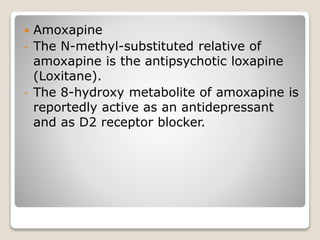
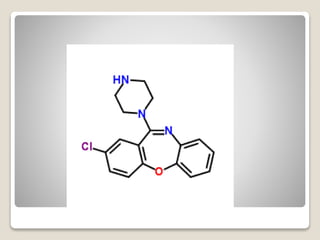
 Amoxapine
- The N-methyl-substituted relative of
amoxapine is the antipsychotic loxapine
(Loxitane).
- The 8-hydroxy metabolite of amoxapine is
reportedly active as an antidepressant
and as D2 receptor blocker.
Selective Serotonin Reuptake
Inhibitors
 Structurally, the SSRIs differ from the
tricyclics, in that the tricyclic system has
been taken apart in the center.
 Many of the dimethylamino tricyclics are,
in fact, SSRIs. Because they are
extensively N-demethylated in vivo to
compounds, which are usually SNERIs,
however, the overall effect is not
selective.
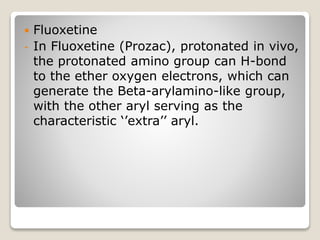
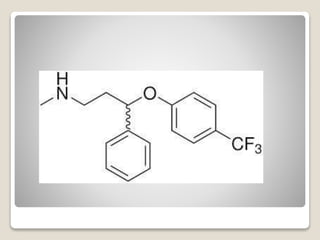
 Fluoxetine
- In Fluoxetine (Prozac), protonated in vivo,
the protonated amino group can H-bond
to the ether oxygen electrons, which can
generate the Beta-arylamino-like group,
with the other aryl serving as the
characteristic ‘’extra’’ aryl.
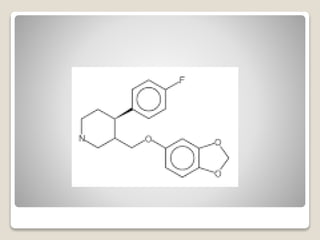
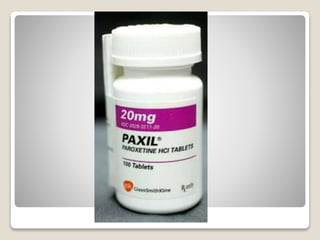
 Paroxetine
- It is an effective antidepressant and
anxiolytic.
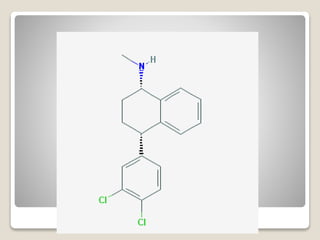
 Sertraline
- Inspection of sertraline (Zoloft) reveals
the pharmacophore for SERT inhibition..
- The substituents also predict tropism for a
5-HT system.
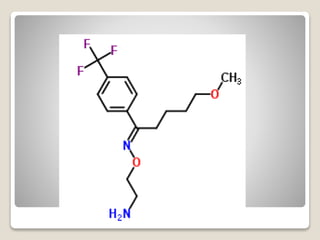
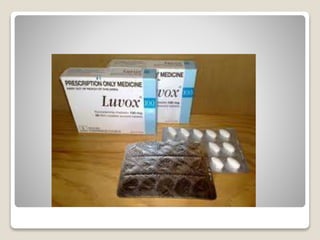
 Fluvoxamine
- The E-isomer of fluvoxamine (Luvox) can
fold after protonation to the Beta-
arylamine-like grouping.
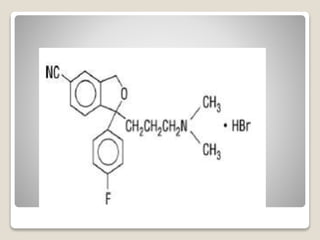
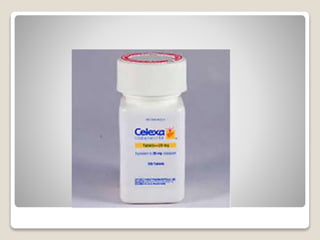
 Citalopram
- Citalopram (Celexa) is a racemic mixture
and is very SERT selective.
- The N-monodemethylated compound is
slightly less potent but is as selective.
 Selective Norepinephrine Reuptake
Inhibitors
 The discussion of fluoxetine opened the
subject SNERIs. That is, movement of the
para substituent of fluoxetine to an ortho
position produces SNERI.
 Nisoxetine
- Nisoxetine is a SNERI and is an
antidepressant. Most activity resides in the
Beta-isomer.
 Reboxetine
- It is claimed to be superior to fluoxetine in
severe depression.
- They, of course, have typical
characteristic TCA side effects but lower
anticholinergic and H1-antihistaminic
(sedative) effects than dimethyl
compounds.
Tricyclic antidepressants

Tricyclic antidepressants

  • 1.
  • 2.
     The TCAsare structurally related to each other and, consequently, possess related biological properties that can be summarized as characteristic of the group.  The TCAs are extremely lipophilic and, accordingly, very highly tissue bound outside the CNS. Because they have anticholinergic and noradrenergic effects, both central and peripheral side effects are often unpleasant and sometimes dangerous.
  • 3.
     Products: Imipramine Hydrochloride -It is the lead compound of the TCAs. It is also a close relative of the antipsychotic phenothiazines. - It has weaker D2 postsynaptic blocking activity than promazine and mainly affects amines via the transporters.
  • 4.
  • 5.
    Desipramine Hydrochloride - Amongtricyclics, desipramine would be considered when few anticholinergic effects or a low level of sedation are important.
  • 6.
     Norpramin (DesipramineHydrochloride, USP) is an antidepressant drug of the tricyclic type, and is chemically: 5H-Dibenz[bƒ]azepine-5- propanamine,10,11-dihydro-N-methyl-, monohydrochloride.
  • 7.
    Clomipramine Hydrochloride - Itis an up to 50 times as potent as imipramine in some bioassays. - This does not imply clinical superiority, but it might be informative about tricyclic and, possibly, other reuptake inhibitors.
  • 8.
  • 9.
     Amitriptyline Hydrochloride -It is one of the most anticholinergic and sedative of TCAs. Because it lacks the ring- electron-enriching nitrogen atom of imipramine.
  • 11.
     Nortriptyline Hydrochloride -Nortriptyline is a selective NE transporter inhibitor. - Metabolic inactivation are like those of amitriptyline.
  • 13.
     Protriptyline Hydrochloride -Protriptyline is a structural isomer of nortriptyline. - Inactivation can be expected to involve the relatively localized double bond.
  • 15.
     Trimipramine Maleate -It is used as the racemic mixture. - Biological properties reported resemble those of imipramine
  • 16.
     Doxepin Hydrochloride -It is an oxa congener of amitriptyline, as can be seen in it’s structure.
  • 18.
     Maprotiline Hydrochloride -It is sometimes described as a tetracyclic rather than a tricyclic antidepressant. - The compound is not strongly anticholinergic and has stimulant properties. It can have effects on the cardiovascular system.
  • 19.
  • 20.
     Amoxapine - TheN-methyl-substituted relative of amoxapine is the antipsychotic loxapine (Loxitane). - The 8-hydroxy metabolite of amoxapine is reportedly active as an antidepressant and as D2 receptor blocker.
  • 22.
  • 23.
     Structurally, theSSRIs differ from the tricyclics, in that the tricyclic system has been taken apart in the center.  Many of the dimethylamino tricyclics are, in fact, SSRIs. Because they are extensively N-demethylated in vivo to compounds, which are usually SNERIs, however, the overall effect is not selective.
  • 24.
     Fluoxetine - InFluoxetine (Prozac), protonated in vivo, the protonated amino group can H-bond to the ether oxygen electrons, which can generate the Beta-arylamino-like group, with the other aryl serving as the characteristic ‘’extra’’ aryl.
  • 27.
     Paroxetine - Itis an effective antidepressant and anxiolytic.
  • 30.
     Sertraline - Inspectionof sertraline (Zoloft) reveals the pharmacophore for SERT inhibition.. - The substituents also predict tropism for a 5-HT system.
  • 33.
     Fluvoxamine - TheE-isomer of fluvoxamine (Luvox) can fold after protonation to the Beta- arylamine-like grouping.
  • 36.
     Citalopram - Citalopram(Celexa) is a racemic mixture and is very SERT selective. - The N-monodemethylated compound is slightly less potent but is as selective.
  • 39.
     Selective NorepinephrineReuptake Inhibitors
  • 40.
     The discussionof fluoxetine opened the subject SNERIs. That is, movement of the para substituent of fluoxetine to an ortho position produces SNERI.
  • 41.
     Nisoxetine - Nisoxetineis a SNERI and is an antidepressant. Most activity resides in the Beta-isomer.
  • 43.
     Reboxetine - Itis claimed to be superior to fluoxetine in severe depression. - They, of course, have typical characteristic TCA side effects but lower anticholinergic and H1-antihistaminic (sedative) effects than dimethyl compounds.