Anti Depression
PRESENTED BY:
PARTH KHANDHERIA
M.PHARM SEM-2
DEPARTMENT OF PHARMACOLOGY
L.M. COLLEGE OF PHARMACY
AHMEDABAD.
CONTENTS
Definition
Epidemiology
Aetiology
Hypothesis
Symptoms
Diagnosis
Antidepressants
References
Depression
WHO Definition
 “Depression is a common mental disorder characterized
by sadness, loss of interest or pleasure, feelings of guilt
or low self-worth, disturbed sleep or appetite, feelings of
tiredness, and poor concentration”
Epidemiology of depression
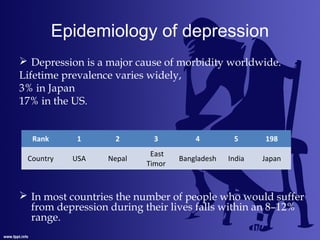
 Depression is a major cause of morbidity worldwide.
Lifetime prevalence varies widely,
3% in Japan
17% in the US.
 In most countries the number of people who would suffer
from depression during their lives falls within an 8–12%
range.
Rank 1 2 3 4 5 198
Country USA Nepal
East
Timor
Bangladesh India Japan
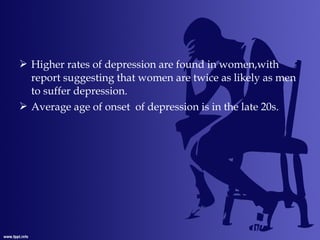
 Higher rates of depression are found in women,with
report suggesting that women are twice as likely as men
to suffer depression.
 Average age of onset of depression is in the late 20s.
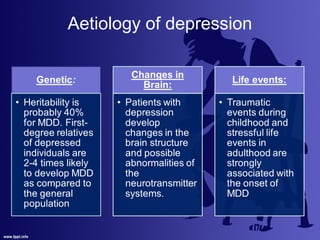
Aetiology of depression
Depression Hypothesis
1. Neurotransmitters & Catecholamine Hypothesis
2.Receptor Sensitivity Hypothesis
3.Permissive Hypothesis
4.Electrolyte Membrane Hypothesis
5.Neuroendocrine Hypothesis
1 Neurotransmitters & Catecholamine Hypothesis
 Smaller amount of neurotransmitters causes depression
 Depression is caused by a functional deficiency of
catecholamines, particularly norepinephrine (NE)
i. MAO HYPOTHESIS
ii. SERETONIN HYPOTHESIS
iii.DOPAMINE HYPOTHESIS
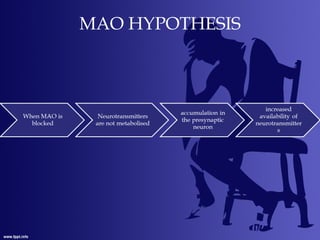
MAO HYPOTHESIS
 Blocking the action of MAO leads to an increased
availability of neurotransmitters.
MAO-A oxidizes epinephrine, norepinephrine, serotonin
-MAO-B oxidizes phenylethylamine
-Both oxidize dopamine nonpreferentially
MAO inhibitors are Dopamine-Epinephrine-
Norephinephrine-Seratonin agonists.
This theory is based on the ability of the monoamine
oxidase-A inhibiting drugs to facilitate NE/5-HT
neurotransmission and to act as effective antidepressant
drugs.
SERETONIN HYPOTHESIS
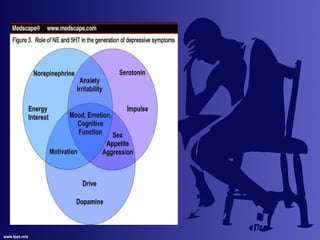
 Depression is caused by a functional deficit of NE
and /or 5-HT, at certain sites in brain.
 which inhibit the storage of 5-HT and NE,
 which increase 5-HT synthesis elevates mood.
 Therefore, it was reasoned that depression must be
associated with a decreased NE/5-HT
neurotransmission.
But the serotonin-only theory has shortcomings:
 it does not explain the role of noradrenaline in
depression
DOPAMINE HYPOTHESIS
 DA receptor agonists have some antidepressant effects
in at least subgroups of patients. A number of
antidepressant drugs also have DA agonist activities.
 Neuroleptic medications that are known to block DA
receptors and used to treat psychosis are not generally
associated with the induction of depression. It is more
likely that other, primary pathophysiological processes
impact on dopaminergic systems, especially in more
severe, psychotic forms of affective illness.
2.Receptor Sensitivity Hypothesis
 Supersensitivity(An extreme and high degree of
sensitivity to a drug or chemical) and up-regulation(An
increase in the number of receptors on the surface of
target cells, making the cells more sensitive to a hormone
or another agent) of post-synaptic receptors leads to
depression
 Suicidal and depressed patients have increased 5HT-α2
receptors
3.Permissive Hypothesis
 The control of emotional behavior results from a balance
between noradrenaline and serotonin.
 According to this theory, the depressive phase is
characterized by low central serotonin function.
 The Permissive Hypothesis postulates that low levels of
serotonin permit abnormal levels of noradrenaline to
cause depression.
 If serotonin cannot control noradrenaline, and
noradrenaline falls to abnormally low levels, the patient
becomes depressed
 According to this hypothesis, antidepressant
drugs(serotonin-noradrenaline reuptake inhibitors
(SNRIs) are effective to the degree that they reinstate the
ability of serotonin to control noradrenaline, thus
restoring the critical balance that controls emotional
behavior.
4.The Electrolyte Membrane
Hypothesis
 Lithium-sodium counterflow mechanism in red cells has
been described and protein structural differences
between patients with bipolar-polar disorder and
controls have been revealed. The mechanism of action of
lithium in bipolar disorder is still not understood.
5.The Neuroendocrine Hypothesis.
 According to this hypothesis, pathological mood states
are explained by altered endocrine function.
 This theory historically grew out of observations that
altered mood states were associated with thyroid or
Cushings disease.
 Current explorations of pathophysiology using
neuroendocrine theories have tended to result in
research tools such as the dexamethasone suppression
test becoming diagnostic tools.
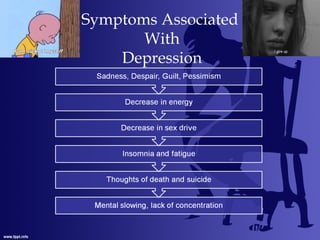
Symptoms Associated
With
Depression
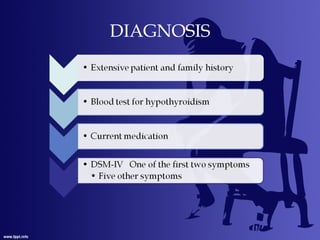
DIAGNOSIS
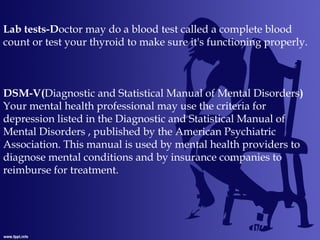
Lab tests-Doctor may do a blood test called a complete blood
count or test your thyroid to make sure it's functioning properly.
DSM-V(Diagnostic and Statistical Manual of Mental Disorders)
Your mental health professional may use the criteria for
depression listed in the Diagnostic and Statistical Manual of
Mental Disorders , published by the American Psychiatric
Association. This manual is used by mental health providers to
diagnose mental conditions and by insurance companies to
reimburse for treatment.
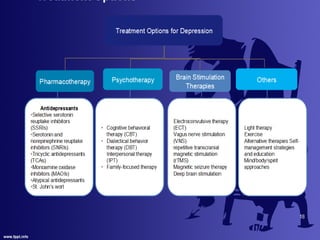
Electroconvulsive therapy (ECT) is a procedure, done
under general anesthesia, in which small electric currents
are passed through the brain, intentionally triggering a
brief seizure. ECT seems to cause changes in brain
chemistry that can quickly reverse symptoms of certain
mental illnesses
vagal nerve stimulation (VNS) is a medical treatment
that involves delivering electrical impulses to thevagus
nerve. It is used as an adjunctive treatment for certain
types of intractable epilepsy and treatment-resistant
depression.
ANTIDEPRESSANTS
CLASSIFICATION
 1ST
generation
 Tricyclic
Antidepressants-
Imipramine,
amitriptyline,
clomipramine, doxepin
 MAO inhibitors-
• Reversible-
moclobomide,
clorgyline.
• Irreversible-phenelzine,
tranylcypromine,
isocarboxazid.
 2nd
generation(Atypical)
 Selective Serrotonin
Reuptake Inhibitors
(SSRIs)- fluoxetine,
fluvoxamine, sertraline,
paroxetine, citalopram,
escitalopram
 Serotonin
Norepinephrine
Reuptake Inhibitors
(SNRIs)- venlafaxine,
desvenlafaxine,
Tricyclic Antidepressants (TCAs)
 Chemical structure contains three rings.
 Most of the TCAs block SERT & NET, increasing the
monoamine levels & contributing to the antidepressant
Effect.
 Pharmacological properties
i. Block presynaptic NE reuptake transporter
ii. Block presynaptic 5-HT reuptake transporter
iii.Block postsynaptic histamine receptors
iv.Block postsynaptic ACh receptors
TCA’S SIDE EFFECTS
 Muscarinic M1 receptor antagonism - anticholinergic
effects including dry mouth, blurred vision,
constipation, urinary retention and impotence
 Histamine H1 receptor antagonism - sedation and
weight gain
 Adrenergic α receptor antagonism - postural
hypotension
 Direct membrane effects - reduced seizure threshold,
arrhythmia
 Serotonin 5-HT2 receptor antagonism - weight gain (and
reduced anxiety)
Pharmacokinetics
 Well absorbed upon oral administration
 Relatively long half-lives
 Metabolized in the liver
 Converted into intermediates that are later detoxified
 Readily cross the placenta
Clinical Limitations of TCA’s
 Slow onset of action
 Wide variety of effects on CNS (adverse side effects):
Can directly impair attention, motor speed, dexterity,
and memory
 Cardiotoxic and potentially fatal in overdoses
Clinical uses of TCA
 for moderate to severe endogenous depression,
especially with psychomotor features such as insomnia
(a sedating drug such as amitriptyline is used) or poor
appetite
 for panic and related disorders (e.g. clomipramine )
 for neuropathic pain (e.g. postherpetic and other forms
of neuralgia )
MONOAMINE OXIDASE
INHIBITORS
 Most antidepressant MAOIs act on both forms of MAO, but
antidepressant activity, as well as the main side effects of
MAOIs, is associated with MAO-A inhibition.
 MAO is located intracellularly, mostly associated with
mitochondria, and has two main functions.
 Within nerve terminals, MAO regulates the free intraneuronal
concentration of noradrenaline or 5-HT, and. It is not involved
in the inactivation of released transmitter.
 MAO is important in the inactivation of endogenous and
ingested amines that would otherwise produce unwanted
effects.
31
32
Side effects:-
 Hypotension
 Excessive central stimulation may cause tremors, excitement,
insomnia and, in overdose, convulsions.
 Increased appetite, leading to weight gain, can be so extreme as
to require the drug to be discontinued.
 Atropine-like side effects (dry mouth, blurred vision, urinary
retention, etc.)
Selective Serrotonin Reuptake
Inhibitors (SSRIs)
 2nd generation antidepressant drug
 SSRIs are now considered to be the first line of drugs in
the treatment of depression
 All SSRIs inhibit the serotonin transporter and block the
reuptake of serotonin into the neuron, hence increasing
the levels of serotonin at the synapse.
 Ser-438 residue in the human serotonin transporter
(hSERT) appears to be a determining factor in SSRI
potency
 Antidepressants interact directly with hSERT
Advantages of SSRIs over TCAs
To overcome the shortcomings of TCAs newer drugs
such as SSRIs were developed
Major advantages of SSRI were
 Negligible anticholinergic side effects
 They produce little or no sedation at all
 Postural hypotension do not occur
 Low CVS side effects, no arrhythmias
 No effect on cognition/ psychomotor functions
 Do not lower seizure threshold
 Safer in overdose
 Faster acting than TCAs
 No complaints of weight gain
 Better compliance
Pharmacokinetic
 well absorbed
 plasma half-lives of 15-24 hours (fluoxetine is longer
acting: 24-96 hours).
 Paroxetine and fluoxetine are not used in combination
with TCAs, whose they inhibit hepatic metabolism of
TCA, so increasing TCA toxicity.
Side effects
 Nausea, anorexia, insomnia, loss of libido
 In combination with MAOIs, SSRIs can cause a
'serotonin syndrome' characterized by tremor,
hyperthermia and cardiovascular collapse, from which
deaths have occurred.
 Not recommended for treating depression in children
under 18, in whom efficacy is doubtful and adverse
effects, including excitement, insomnia and aggression
in the first few weeks of treatment, may occur. The
possibility of increased suicidal ideation is a concern in
this age group.
Serotonin syndrome
 At high doses or combined with other drugs an
exaggerated response can occur
 This is due to increased amounts of serotonin
 Alters cognitive function, autonomic function and
neuromuscular function
 Potentially fatal
Serotonin withdrawal syndrome
 With discontinuation of any SSRI onset of withdrawal
symptoms occur within a few days and can persist 3-4
weeks
 Symptoms: disequilibrium, gastrointestinal problems,
flu-like symptoms, sensory disturbances, sleep
disturbances
Serotonin-Norepinephrine Reuptake
Inhibitors (SNRIS)
• Slightly greater efficacy than SSRIs
• Slightly fewer adverse effects than SSRIs
• Current drugs
– Venlafaxine (Effexor)
– Duloxetine (Cymbalta)
• Mechanism of Action
– Very similar to SSRIs
– Works on both neurotransmitters
• Side effects
– Similar to SSRIs
– Suicide
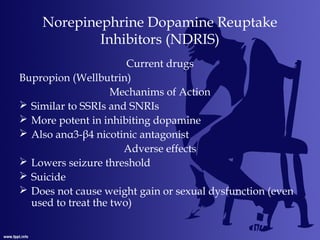
Norepinephrine Dopamine Reuptake
Inhibitors (NDRIS)
Current drugs
Bupropion (Wellbutrin)
Mechanims of Action
 Similar to SSRIs and SNRIs
 More potent in inhibiting dopamine
 Also anα3-β4 nicotinic antagonist
Adverse effects
 Lowers seizure threshold
 Suicide
 Does not cause weight gain or sexual dysfunction (even
used to treat the two)
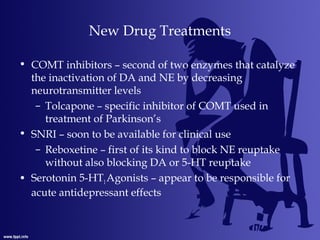
New Drug Treatments
• COMT inhibitors – second of two enzymes that catalyze
the inactivation of DA and NE by decreasing
neurotransmitter levels
– Tolcapone – specific inhibitor of COMT used in
treatment of Parkinson’s
• SNRI – soon to be available for clinical use
– Reboxetine – first of its kind to block NE reuptake
without also blocking DA or 5-HT reuptake
• Serotonin 5-HT1Agonists – appear to be responsible for
acute antidepressant effects
• DHEA – a major glucorticoid hormone secreted by the
adrenal glands, function unclear
– Precursor to estrogen and testosterone
– Increases feelings of physical and psychological well-
being
• SAM, SAMe – plays key intermediary role in many
metabolic reactions that involve the transfer of the methyl
groups between molecules
– Not generally recommended for treatment of depression
References
Pharmacology by Rang H.P, Dale M.M, 6th edition,2007
Tripathi K.D, Essentials of Medical Pharmacology, 6th
Edition, Jaypee brother publisher, New Delhi,
http://www.webmd.com/depression/
http://pn.psychiatryonline.org/content/41/24/21.full
http://www.mayoclinic.com/health/maois/MH00072
http://www.Medscape.org
Myth:
Hard Work Beats Depression
It's Not a Real Illness
Depression Is Just Self-Pity
Help Means Drugs for Life
Depressed People Cry a Lot
Depression Is Part of Aging
Talking Makes Things Worse
Teens Are Unhappy by Nature
Depression Is Tough to Treat
Fact:
Anyone Can Get Depressed
It Can Sneak Up Slowly
Family History Is Not Destiny
Positive Thinking May Help
Exercise Is Good Medicine
Hope for Better Days Is Real
Anti depression

Anti depression

  • 1.
    Anti Depression PRESENTED BY: PARTHKHANDHERIA M.PHARM SEM-2 DEPARTMENT OF PHARMACOLOGY L.M. COLLEGE OF PHARMACY AHMEDABAD.
  • 2.
  • 3.
    Depression WHO Definition  “Depressionis a common mental disorder characterized by sadness, loss of interest or pleasure, feelings of guilt or low self-worth, disturbed sleep or appetite, feelings of tiredness, and poor concentration”
  • 4.
    Epidemiology of depression Depression is a major cause of morbidity worldwide. Lifetime prevalence varies widely, 3% in Japan 17% in the US.  In most countries the number of people who would suffer from depression during their lives falls within an 8–12% range. Rank 1 2 3 4 5 198 Country USA Nepal East Timor Bangladesh India Japan
  • 5.
     Higher ratesof depression are found in women,with report suggesting that women are twice as likely as men to suffer depression.  Average age of onset of depression is in the late 20s.
  • 6.
  • 8.
    Depression Hypothesis 1. Neurotransmitters& Catecholamine Hypothesis 2.Receptor Sensitivity Hypothesis 3.Permissive Hypothesis 4.Electrolyte Membrane Hypothesis 5.Neuroendocrine Hypothesis
  • 9.
    1 Neurotransmitters &Catecholamine Hypothesis  Smaller amount of neurotransmitters causes depression  Depression is caused by a functional deficiency of catecholamines, particularly norepinephrine (NE) i. MAO HYPOTHESIS ii. SERETONIN HYPOTHESIS iii.DOPAMINE HYPOTHESIS
  • 10.
  • 11.
     Blocking theaction of MAO leads to an increased availability of neurotransmitters. MAO-A oxidizes epinephrine, norepinephrine, serotonin -MAO-B oxidizes phenylethylamine -Both oxidize dopamine nonpreferentially MAO inhibitors are Dopamine-Epinephrine- Norephinephrine-Seratonin agonists. This theory is based on the ability of the monoamine oxidase-A inhibiting drugs to facilitate NE/5-HT neurotransmission and to act as effective antidepressant drugs.
  • 12.
    SERETONIN HYPOTHESIS  Depressionis caused by a functional deficit of NE and /or 5-HT, at certain sites in brain.  which inhibit the storage of 5-HT and NE,  which increase 5-HT synthesis elevates mood.  Therefore, it was reasoned that depression must be associated with a decreased NE/5-HT neurotransmission. But the serotonin-only theory has shortcomings:  it does not explain the role of noradrenaline in depression
  • 13.
    DOPAMINE HYPOTHESIS  DAreceptor agonists have some antidepressant effects in at least subgroups of patients. A number of antidepressant drugs also have DA agonist activities.  Neuroleptic medications that are known to block DA receptors and used to treat psychosis are not generally associated with the induction of depression. It is more likely that other, primary pathophysiological processes impact on dopaminergic systems, especially in more severe, psychotic forms of affective illness.
  • 14.
    2.Receptor Sensitivity Hypothesis Supersensitivity(An extreme and high degree of sensitivity to a drug or chemical) and up-regulation(An increase in the number of receptors on the surface of target cells, making the cells more sensitive to a hormone or another agent) of post-synaptic receptors leads to depression  Suicidal and depressed patients have increased 5HT-α2 receptors
  • 15.
    3.Permissive Hypothesis  Thecontrol of emotional behavior results from a balance between noradrenaline and serotonin.  According to this theory, the depressive phase is characterized by low central serotonin function.  The Permissive Hypothesis postulates that low levels of serotonin permit abnormal levels of noradrenaline to cause depression.
  • 16.
     If serotonincannot control noradrenaline, and noradrenaline falls to abnormally low levels, the patient becomes depressed  According to this hypothesis, antidepressant drugs(serotonin-noradrenaline reuptake inhibitors (SNRIs) are effective to the degree that they reinstate the ability of serotonin to control noradrenaline, thus restoring the critical balance that controls emotional behavior.
  • 18.
    4.The Electrolyte Membrane Hypothesis Lithium-sodium counterflow mechanism in red cells has been described and protein structural differences between patients with bipolar-polar disorder and controls have been revealed. The mechanism of action of lithium in bipolar disorder is still not understood.
  • 19.
    5.The Neuroendocrine Hypothesis. According to this hypothesis, pathological mood states are explained by altered endocrine function.  This theory historically grew out of observations that altered mood states were associated with thyroid or Cushings disease.  Current explorations of pathophysiology using neuroendocrine theories have tended to result in research tools such as the dexamethasone suppression test becoming diagnostic tools.
  • 20.
  • 21.
  • 22.
    Lab tests-Doctor maydo a blood test called a complete blood count or test your thyroid to make sure it's functioning properly. DSM-V(Diagnostic and Statistical Manual of Mental Disorders) Your mental health professional may use the criteria for depression listed in the Diagnostic and Statistical Manual of Mental Disorders , published by the American Psychiatric Association. This manual is used by mental health providers to diagnose mental conditions and by insurance companies to reimburse for treatment.
  • 24.
    Electroconvulsive therapy (ECT) isa procedure, done under general anesthesia, in which small electric currents are passed through the brain, intentionally triggering a brief seizure. ECT seems to cause changes in brain chemistry that can quickly reverse symptoms of certain mental illnesses vagal nerve stimulation (VNS) is a medical treatment that involves delivering electrical impulses to thevagus nerve. It is used as an adjunctive treatment for certain types of intractable epilepsy and treatment-resistant depression.
  • 25.
    ANTIDEPRESSANTS CLASSIFICATION  1ST generation  Tricyclic Antidepressants- Imipramine, amitriptyline, clomipramine,doxepin  MAO inhibitors- • Reversible- moclobomide, clorgyline. • Irreversible-phenelzine, tranylcypromine, isocarboxazid.  2nd generation(Atypical)  Selective Serrotonin Reuptake Inhibitors (SSRIs)- fluoxetine, fluvoxamine, sertraline, paroxetine, citalopram, escitalopram  Serotonin Norepinephrine Reuptake Inhibitors (SNRIs)- venlafaxine, desvenlafaxine,
  • 26.
    Tricyclic Antidepressants (TCAs) Chemical structure contains three rings.  Most of the TCAs block SERT & NET, increasing the monoamine levels & contributing to the antidepressant Effect.  Pharmacological properties i. Block presynaptic NE reuptake transporter ii. Block presynaptic 5-HT reuptake transporter iii.Block postsynaptic histamine receptors iv.Block postsynaptic ACh receptors
  • 27.
    TCA’S SIDE EFFECTS Muscarinic M1 receptor antagonism - anticholinergic effects including dry mouth, blurred vision, constipation, urinary retention and impotence  Histamine H1 receptor antagonism - sedation and weight gain  Adrenergic α receptor antagonism - postural hypotension  Direct membrane effects - reduced seizure threshold, arrhythmia  Serotonin 5-HT2 receptor antagonism - weight gain (and reduced anxiety)
  • 28.
    Pharmacokinetics  Well absorbedupon oral administration  Relatively long half-lives  Metabolized in the liver  Converted into intermediates that are later detoxified  Readily cross the placenta
  • 29.
    Clinical Limitations ofTCA’s  Slow onset of action  Wide variety of effects on CNS (adverse side effects): Can directly impair attention, motor speed, dexterity, and memory  Cardiotoxic and potentially fatal in overdoses
  • 30.
    Clinical uses ofTCA  for moderate to severe endogenous depression, especially with psychomotor features such as insomnia (a sedating drug such as amitriptyline is used) or poor appetite  for panic and related disorders (e.g. clomipramine )  for neuropathic pain (e.g. postherpetic and other forms of neuralgia )
  • 31.
    MONOAMINE OXIDASE INHIBITORS  Mostantidepressant MAOIs act on both forms of MAO, but antidepressant activity, as well as the main side effects of MAOIs, is associated with MAO-A inhibition.  MAO is located intracellularly, mostly associated with mitochondria, and has two main functions.  Within nerve terminals, MAO regulates the free intraneuronal concentration of noradrenaline or 5-HT, and. It is not involved in the inactivation of released transmitter.  MAO is important in the inactivation of endogenous and ingested amines that would otherwise produce unwanted effects. 31
  • 32.
    32 Side effects:-  Hypotension Excessive central stimulation may cause tremors, excitement, insomnia and, in overdose, convulsions.  Increased appetite, leading to weight gain, can be so extreme as to require the drug to be discontinued.  Atropine-like side effects (dry mouth, blurred vision, urinary retention, etc.)
  • 33.
    Selective Serrotonin Reuptake Inhibitors(SSRIs)  2nd generation antidepressant drug  SSRIs are now considered to be the first line of drugs in the treatment of depression  All SSRIs inhibit the serotonin transporter and block the reuptake of serotonin into the neuron, hence increasing the levels of serotonin at the synapse.  Ser-438 residue in the human serotonin transporter (hSERT) appears to be a determining factor in SSRI potency  Antidepressants interact directly with hSERT
  • 34.
    Advantages of SSRIsover TCAs To overcome the shortcomings of TCAs newer drugs such as SSRIs were developed Major advantages of SSRI were  Negligible anticholinergic side effects  They produce little or no sedation at all  Postural hypotension do not occur  Low CVS side effects, no arrhythmias  No effect on cognition/ psychomotor functions  Do not lower seizure threshold  Safer in overdose  Faster acting than TCAs  No complaints of weight gain  Better compliance
  • 35.
    Pharmacokinetic  well absorbed plasma half-lives of 15-24 hours (fluoxetine is longer acting: 24-96 hours).  Paroxetine and fluoxetine are not used in combination with TCAs, whose they inhibit hepatic metabolism of TCA, so increasing TCA toxicity.
  • 36.
    Side effects  Nausea,anorexia, insomnia, loss of libido  In combination with MAOIs, SSRIs can cause a 'serotonin syndrome' characterized by tremor, hyperthermia and cardiovascular collapse, from which deaths have occurred.  Not recommended for treating depression in children under 18, in whom efficacy is doubtful and adverse effects, including excitement, insomnia and aggression in the first few weeks of treatment, may occur. The possibility of increased suicidal ideation is a concern in this age group.
  • 37.
    Serotonin syndrome  Athigh doses or combined with other drugs an exaggerated response can occur  This is due to increased amounts of serotonin  Alters cognitive function, autonomic function and neuromuscular function  Potentially fatal Serotonin withdrawal syndrome  With discontinuation of any SSRI onset of withdrawal symptoms occur within a few days and can persist 3-4 weeks  Symptoms: disequilibrium, gastrointestinal problems, flu-like symptoms, sensory disturbances, sleep disturbances
  • 38.
    Serotonin-Norepinephrine Reuptake Inhibitors (SNRIS) •Slightly greater efficacy than SSRIs • Slightly fewer adverse effects than SSRIs • Current drugs – Venlafaxine (Effexor) – Duloxetine (Cymbalta) • Mechanism of Action – Very similar to SSRIs – Works on both neurotransmitters • Side effects – Similar to SSRIs – Suicide
  • 39.
    Norepinephrine Dopamine Reuptake Inhibitors(NDRIS) Current drugs Bupropion (Wellbutrin) Mechanims of Action  Similar to SSRIs and SNRIs  More potent in inhibiting dopamine  Also anα3-β4 nicotinic antagonist Adverse effects  Lowers seizure threshold  Suicide  Does not cause weight gain or sexual dysfunction (even used to treat the two)
  • 40.
    New Drug Treatments •COMT inhibitors – second of two enzymes that catalyze the inactivation of DA and NE by decreasing neurotransmitter levels – Tolcapone – specific inhibitor of COMT used in treatment of Parkinson’s • SNRI – soon to be available for clinical use – Reboxetine – first of its kind to block NE reuptake without also blocking DA or 5-HT reuptake • Serotonin 5-HT1Agonists – appear to be responsible for acute antidepressant effects
  • 41.
    • DHEA –a major glucorticoid hormone secreted by the adrenal glands, function unclear – Precursor to estrogen and testosterone – Increases feelings of physical and psychological well- being • SAM, SAMe – plays key intermediary role in many metabolic reactions that involve the transfer of the methyl groups between molecules – Not generally recommended for treatment of depression
  • 43.
    References Pharmacology by RangH.P, Dale M.M, 6th edition,2007 Tripathi K.D, Essentials of Medical Pharmacology, 6th Edition, Jaypee brother publisher, New Delhi, http://www.webmd.com/depression/ http://pn.psychiatryonline.org/content/41/24/21.full http://www.mayoclinic.com/health/maois/MH00072 http://www.Medscape.org
  • 44.
    Myth: Hard Work BeatsDepression It's Not a Real Illness Depression Is Just Self-Pity Help Means Drugs for Life Depressed People Cry a Lot Depression Is Part of Aging Talking Makes Things Worse Teens Are Unhappy by Nature Depression Is Tough to Treat
  • 45.
    Fact: Anyone Can GetDepressed It Can Sneak Up Slowly Family History Is Not Destiny Positive Thinking May Help Exercise Is Good Medicine Hope for Better Days Is Real

Editor's Notes

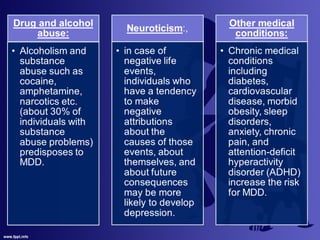
  • #8 Neuroticism is a fundamental personality trait in the study of psychology characterized by anxiety, fear, moodiness, worry, envy, frustration, jealousy, and loneliness
  • #10 It states that This hypothesis was based on a correlation of the psychological and cellular actions of a variety of psychotropic agents. Other biogenic amines in the brain have also been linked to depression and mania with the development of monoamine or biogenic amine hypotheses. These amines have included the indolamine serotonin (5-hydroxytryptamine [5-HT]) , dopamine (DA) and epinephrine.
  • #15 SS-An extreme and high degree of sensitivity to a drug or chemical
  • #24 a type of psychotherapy in which negative patterns of thought about the self and the world are challenged in order to alter