Downloaded 78 times


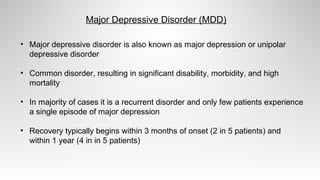


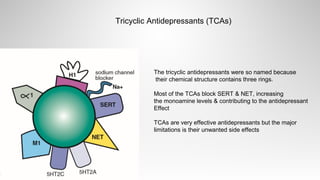


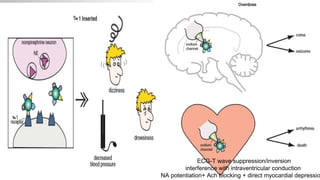

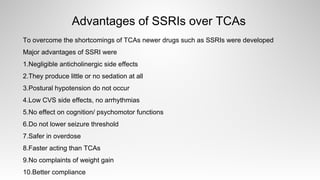
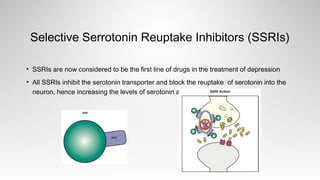
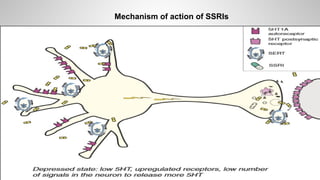


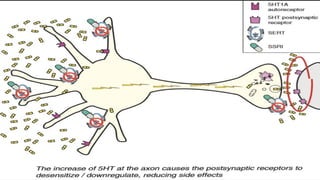



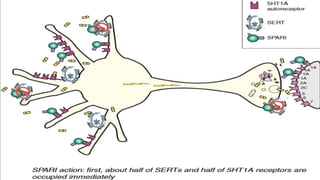
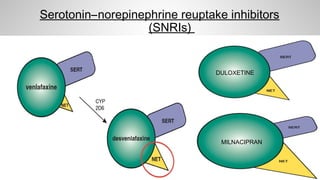


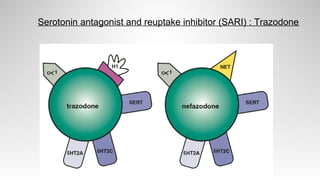
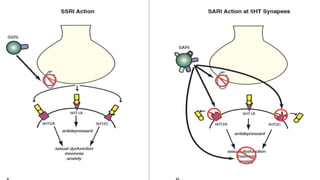


Major depressive disorder is a common and often recurrent mental disorder characterized by low mood, loss of interest, and feelings of guilt or low self-worth. It results in significant disability and increased mortality risk. Depression is caused by genetic, environmental, and medical factors that impact neurotransmitter levels and brain structure. Antidepressants work to correct neurotransmitter imbalances and include TCAs, SSRIs, SNRIs, atypicals, and MAOIs. TCAs were the first generation but cause more side effects, while SSRIs are now first-line due to fewer side effects. All antidepressants aim to increase serotonin, norepinephrine, and/or dopamine levels to alleviate symptoms of depression.


