Anterior thoracic wall 
& 
Intercostal Spaces 
View slides @ www.slideshare.net 
1 
Maj Dr Rishi Pokhrel 
NAIHS
2
Learning objectives 
• Typical intercostal space 
– Boundaries and contents 
– muscles 
• Atypical intercostal space 
3
4
5 
Skin 
Nerve supply 
Blood supply 
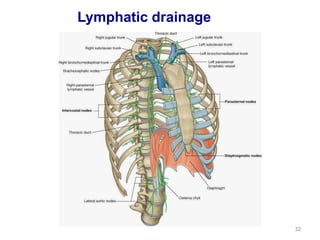
Lymphatic drainage
6 
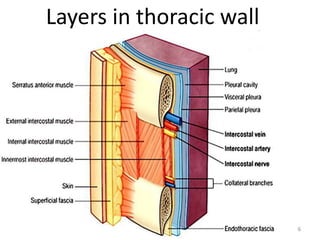
Layers in thoracic wall
7
8 
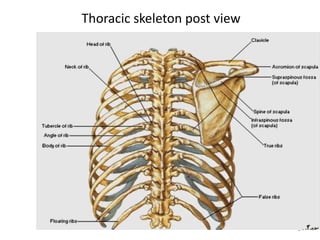
Thoracic skeleton post view
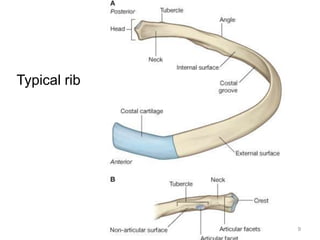
Typical rib 
9
10 
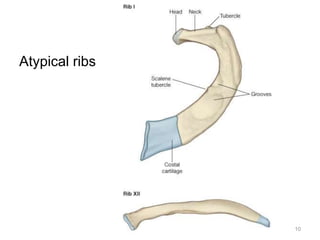
Atypical ribs
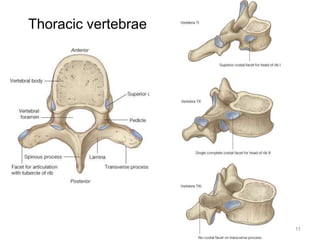
Thoracic vertebrae 
11
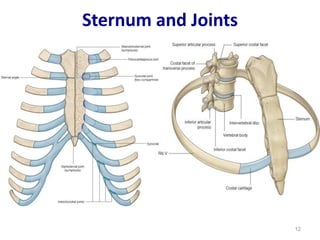
Sternum and Joints 
12
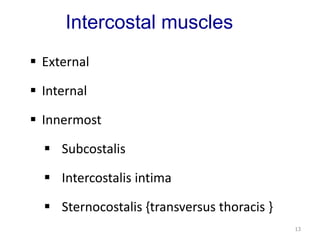
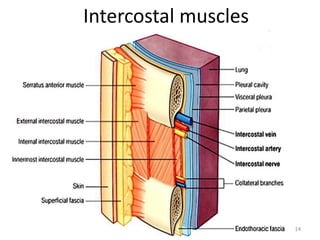
Intercostal muscles 
 External 
 Internal 
 Innermost 
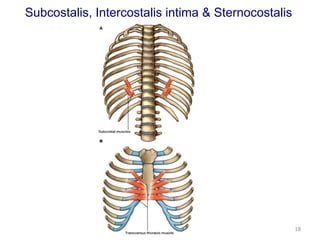
 Subcostalis 
 Intercostalis intima 
 Sternocostalis {transversus thoracis } 
13
14 
Intercostal muscles
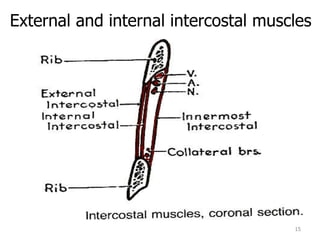
External and internal intercostal muscles 
15
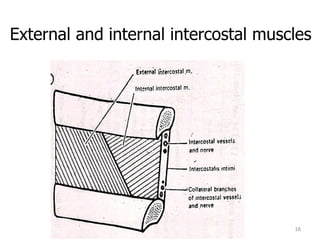
External and internal intercostal muscles 
16
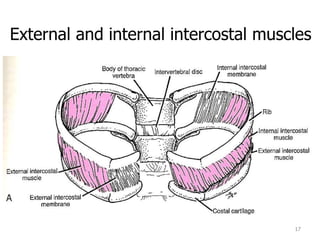
External and internal intercostal muscles 
17
Subcostalis, Intercostalis intima & Sternocostalis 
18
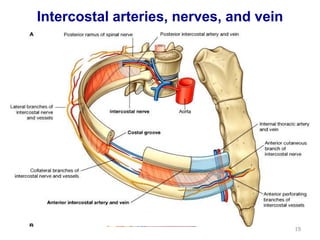
Intercostal arteries, nerves, and vein 
19
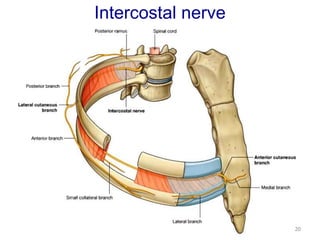
Intercostal nerve 
20
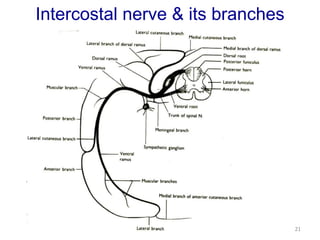
Intercostal nerve & its branches 
21
TYPICAL INTERCOSTAL NERVE 
1. Lateral cutaneous with anterior and posterior 
branches. 
2. Anterior cutaneous nerve with medial and 
lateral cutaneous branch. 
3. Lie within the intercostal space. 
4. Supply structure within its space. 
22
• T1 and T2 give branch to brachial plexus 
• T1 has no lat or ant cutaneous branch 
• T2 has lateral cutaneous (intercostobrachial) 
nerve but no branches 
• T7 to T11 cross their corresponding spaces to 
supply the anterior abdominal wall. 
• Typical : T3 to T6 
23 
TYPICAL INTERCOSTAL NERVE
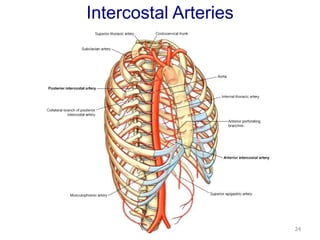
Intercostal Arteries 
24
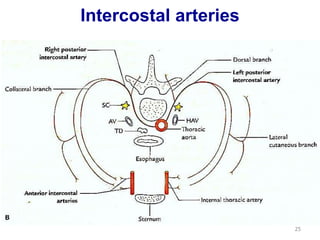
Intercostal arteries 
25
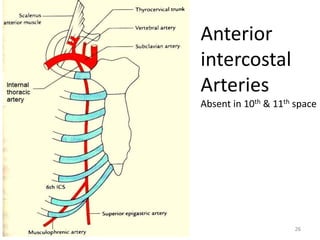
Anterior 
intercostal 
Arteries 
Absent in 10th & 11th space 
26
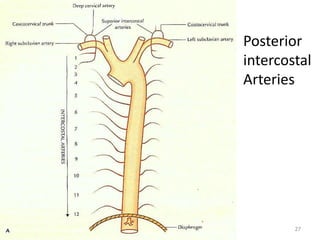
Posterior 
intercostal 
Arteries 
27
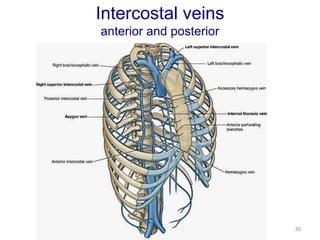
Intercostal veins 
anterior and posterior 
30
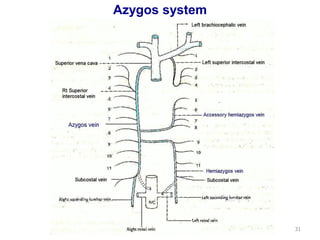
Azygos system 
31
Lymphatic drainage 
32
Atypical intercostal space 
• Typical space: typical nerve, rib and vertebra. 
• Nerve: T3 - T6 
• Ribs: 3 - 9 
• Vertebrae: 2 - 8 
33
Typical intercostal space 
• 3rd - 6th space 
34
Applied anatomy 
35
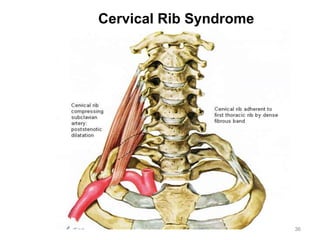
Cervical Rib Syndrome 
36
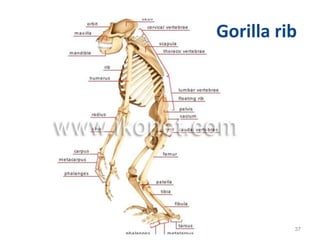
Gorilla rib 
37
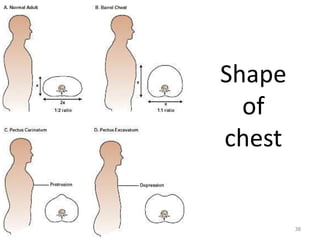
Shape 
of 
chest 
38
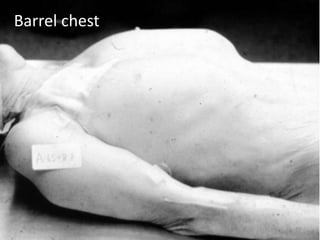
Barrel chest 
• Large ribcage, round torso 
• Increase in the A-P diameter of the chest wall 
• Causes 
– Normal 
– Acromegaly 
– Emphysema 
– Osteoarthritis of joints of thorax 
39
40 
Barrel chest
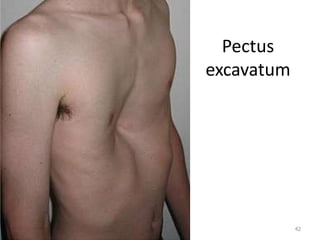
Pectus excavatum 
• Commonest congenital deformity of anterior 
chest wall 
• Several ribs and the sternum grow abnormally. 
• Caved-in or sunken appearance of the chest 
• Aka cobbler's chest, sunken chest, or funnel 
chest 
• Asymptomatic to severe cardiac / pulmonary 
symptoms 
41
42 
Pectus 
excavatum
Rachitic rosary 
• Aka beading of the ribs 
• Prominent knobs of bone at the costochondral 
joints 
• Knobs - beads under the skin of the rib cage, 
• Beads of a rosary 
• Cause - Rickets 
43
Rachitic rosary 
44
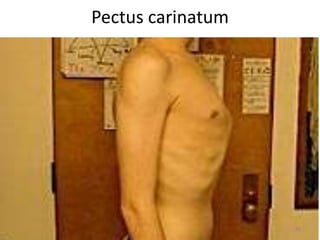
Pectus carinatum 
• Opposite of pectus excavatum protrusion of 
the sternum and ribs 
• Aka pigeon chest 
• Overgrowth of cartilage causing the sternum 
to protrude forward 
• Causes 
• During pubertal growth in males 
• Congenital ? hereditary 
• Post- surgical i.e. median sternal thoracotomy 
• Turner syndrome, Marfan syndrome, Ehlers Danlos Syndrome, Morquio syndrome, Noonan syndrome, 
Trisomy 18, Trisomy 21, homocystinuria, osteogenesis imperfecta, multiple lentigines syndrome, Sly 
syndrome and Scoliosis. 
45
Pectus carinatum 
46
Applied anatomy 
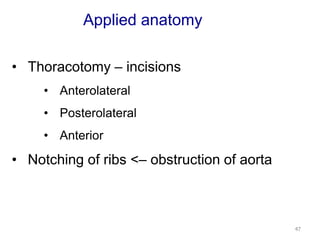
• Thoracotomy – incisions 
• Anterolateral 
• Posterolateral 
• Anterior 
• Notching of ribs <– obstruction of aorta 
47
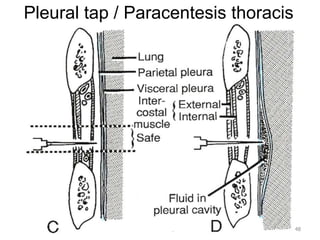
Pleural tap / Paracentesis thoracis 
48
49

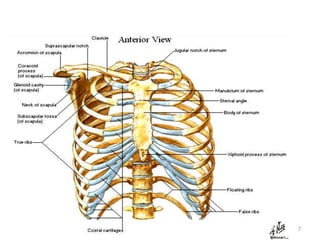
Ant thoracic wall and intercostal space