 Lower-limb orthotics
 A lower-limb orthotic is an external device applied (or
attached) to a lower-body segment to improve
function by controlling motion, providing support
through stabilizing gait, reducing pain through
transferring load to another area, correcting flexible
deformities, and preventing progression of fixed
deformities.
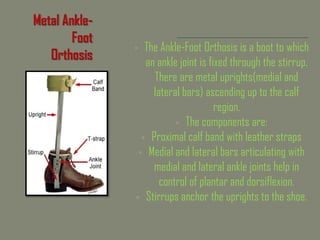
 The Ankle-Foot Orthosis is a boot to which
an ankle joint is fixed through the stirrup.
There are metal uprights(medial and
lateral bars) ascending up to the calf
region.
 The components are:
 Proximal calf band with leather straps
 Medial and lateral bars articulating with
medial and lateral ankle joints help in
control of plantar and dorsiflexion.
 Stirrups anchor the uprights to the shoe.
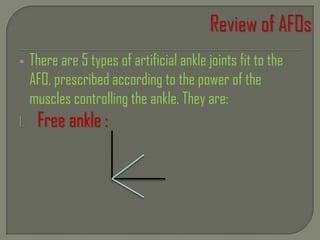
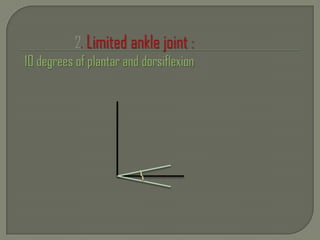
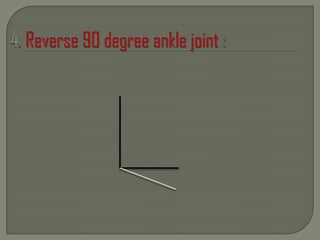
 There are 5 types of artificial ankle joints fit to the
AFO, prescribed according to the power of the
muscles controlling the ankle. They are:
1. Free ankle :
 Ankle-Foot orthosis is prescribed for,
1. Muscle weakness affecting the ankle and sub talar joint.
2. Prevention or correction of deformities of foot and ankle.
3. Reduction in appropriate weight bearing forces.
 Dorsiflexor muscle paralysis
 Ankle foot paralysis
 Spasticity
 Limited weight bearing
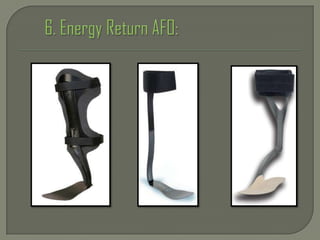
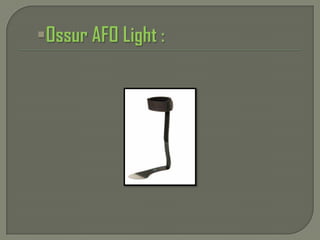
 We use several different types of AFOs to treat drop
foot in patients. Some of them are custom and
require a mold of the foot, ankle and leg. Others are
prefabricated. The goal is to provide patients with a
comfortable AFO that will give them the most normal
gait possible.
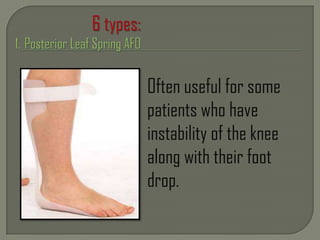
Often useful for some
patients who have
instability of the knee
along with their foot
drop.
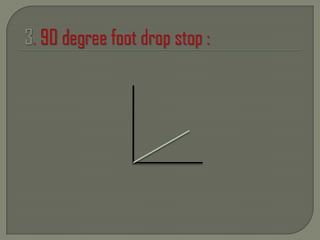
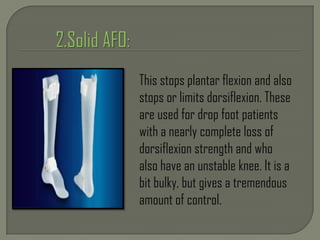
This stops plantar flexion and also
stops or limits dorsiflexion. These
are used for drop foot patients
with a nearly complete loss of
dorsiflexion strength and who
also have an unstable knee. It is a
bit bulky, but gives a tremendous
amount of control.
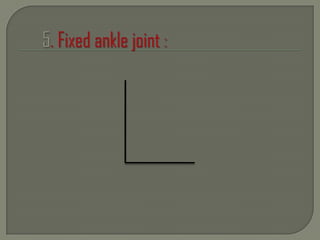
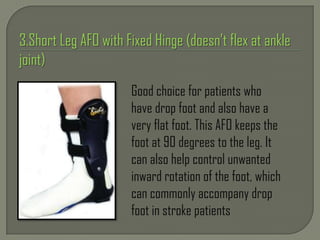
3.Short Leg AFO with Fixed Hinge (doesn’t flex at ankle
joint)
Good choice for patients who
have drop foot and also have a
very flat foot. This AFO keeps the
foot at 90 degrees to the leg. It
can also help control unwanted
inward rotation of the foot, which
can commonly accompany drop
foot in stroke patients
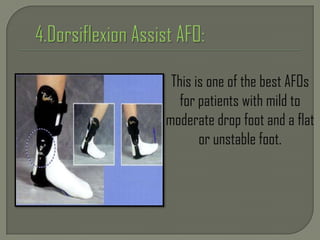
This is one of the best AFOs
for patients with mild to
moderate drop foot and a flat
or unstable foot.
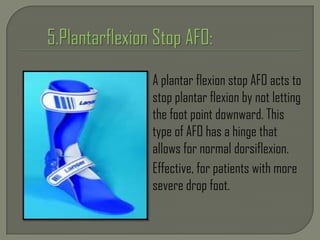
A plantar flexion stop AFO acts to
stop plantar flexion by not letting
the foot point downward. This
type of AFO has a hinge that
allows for normal dorsiflexion.
Effective, for patients with more
severe drop foot.
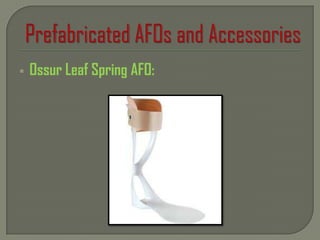
 Ossur Leaf Spring AFO:
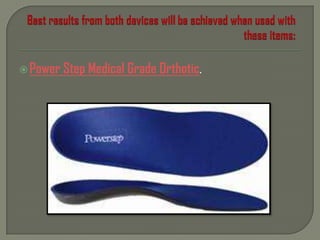
Power Step Medical Grade Orthotic.
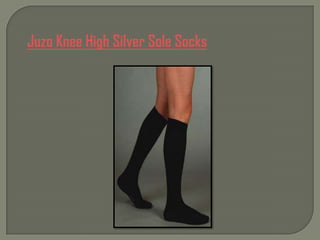
Juzo Knee High Silver Sole Socks
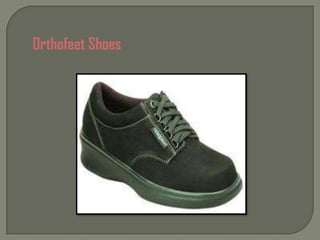
Orthofeet Shoes
Ankle Foot Orthosis
Ankle Foot Orthosis

Ankle Foot Orthosis

  • 2.
     Lower-limb orthotics A lower-limb orthotic is an external device applied (or attached) to a lower-body segment to improve function by controlling motion, providing support through stabilizing gait, reducing pain through transferring load to another area, correcting flexible deformities, and preventing progression of fixed deformities.
  • 3.
     The Ankle-FootOrthosis is a boot to which an ankle joint is fixed through the stirrup. There are metal uprights(medial and lateral bars) ascending up to the calf region.  The components are:  Proximal calf band with leather straps  Medial and lateral bars articulating with medial and lateral ankle joints help in control of plantar and dorsiflexion.  Stirrups anchor the uprights to the shoe.
  • 4.
     There are5 types of artificial ankle joints fit to the AFO, prescribed according to the power of the muscles controlling the ankle. They are: 1. Free ankle :
  • 9.
     Ankle-Foot orthosisis prescribed for, 1. Muscle weakness affecting the ankle and sub talar joint. 2. Prevention or correction of deformities of foot and ankle. 3. Reduction in appropriate weight bearing forces.  Dorsiflexor muscle paralysis  Ankle foot paralysis  Spasticity  Limited weight bearing
  • 11.
     We useseveral different types of AFOs to treat drop foot in patients. Some of them are custom and require a mold of the foot, ankle and leg. Others are prefabricated. The goal is to provide patients with a comfortable AFO that will give them the most normal gait possible.
  • 12.
    Often useful forsome patients who have instability of the knee along with their foot drop.
  • 13.
    This stops plantarflexion and also stops or limits dorsiflexion. These are used for drop foot patients with a nearly complete loss of dorsiflexion strength and who also have an unstable knee. It is a bit bulky, but gives a tremendous amount of control.
  • 14.
    3.Short Leg AFOwith Fixed Hinge (doesn’t flex at ankle joint) Good choice for patients who have drop foot and also have a very flat foot. This AFO keeps the foot at 90 degrees to the leg. It can also help control unwanted inward rotation of the foot, which can commonly accompany drop foot in stroke patients
  • 15.
    This is oneof the best AFOs for patients with mild to moderate drop foot and a flat or unstable foot.
  • 16.
    A plantar flexionstop AFO acts to stop plantar flexion by not letting the foot point downward. This type of AFO has a hinge that allows for normal dorsiflexion. Effective, for patients with more severe drop foot.
  • 18.
     Ossur LeafSpring AFO:
  • 20.
    Power Step MedicalGrade Orthotic.
  • 21.
    Juzo Knee HighSilver Sole Socks
  • 22.