ANGINA PECTORIS
BY KAMOLIKA
DOCTOR OF PHARMACY ( 2YR)
TEERTHANKER MAHAVIR UNIVERSITY
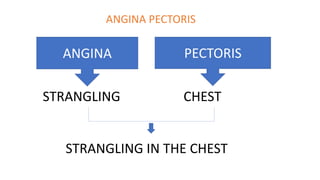
STRANGLING CHEST
STRANGLING IN THE CHEST
PECTORIS
ANGINA
ANGINA PECTORIS
ANGINA PECTORIS
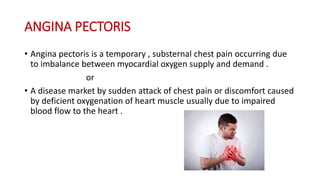
• Angina pectoris is a temporary , substernal chest pain occurring due
to imbalance between myocardial oxygen supply and demand .
or
• A disease market by sudden attack of chest pain or discomfort caused
by deficient oxygenation of heart muscle usually due to impaired
blood flow to the heart .
TYPES OF ANGINA
• STABLE ANGINA
• UNSTABLE ANGINA
• PRINZMETAL’S ANGINA
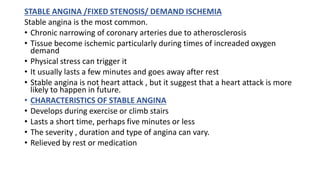
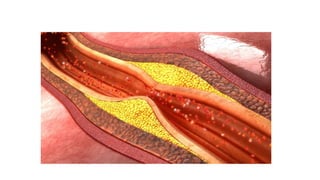
STABLE ANGINA /FIXED STENOSIS/ DEMAND ISCHEMIA
Stable angina is the most common.
• Chronic narrowing of coronary arteries due to atherosclerosis
• Tissue become ischemic particularly during times of increaded oxygen
demand
• Physical stress can trigger it
• It usually lasts a few minutes and goes away after rest
• Stable angina is not heart attack , but it suggest that a heart attack is more
likely to happen in future.
• CHARACTERISTICS OF STABLE ANGINA
• Develops during exercise or climb stairs
• Lasts a short time, perhaps five minutes or less
• The severity , duration and type of angina can vary.
• Relieved by rest or medication
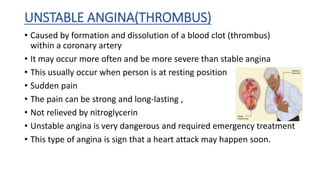
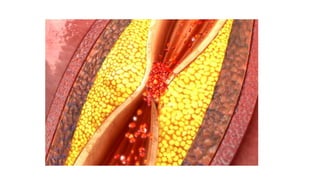
UNSTABLE ANGINA(THROMBUS)
• Caused by formation and dissolution of a blood clot (thrombus)
within a coronary artery
• It may occur more often and be more severe than stable angina
• This usually occur when person is at resting position
• Sudden pain
• The pain can be strong and long-lasting ,
• Not relieved by nitroglycerin
• Unstable angina is very dangerous and required emergency treatment
• This type of angina is sign that a heart attack may happen soon.
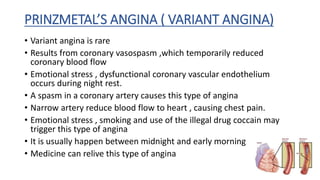
PRINZMETAL’S ANGINA ( VARIANT ANGINA)
• Variant angina is rare
• Results from coronary vasospasm ,which temporarily reduced
coronary blood flow
• Emotional stress , dysfunctional coronary vascular endothelium
occurs during night rest.
• A spasm in a coronary artery causes this type of angina
• Narrow artery reduce blood flow to heart , causing chest pain.
• Emotional stress , smoking and use of the illegal drug coccain may
trigger this type of angina
• It is usually happen between midnight and early morning
• Medicine can relive this type of angina
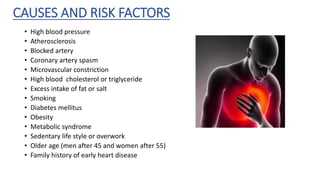
CAUSES AND RISK FACTORS
• High blood pressure
• Atherosclerosis
• Blocked artery
• Coronary artery spasm
• Microvascular constriction
• High blood cholesterol or triglyceride
• Excess intake of fat or salt
• Smoking
• Diabetes mellitus
• Obesity
• Metabolic syndrome
• Sedentary life style or overwork
• Older age (men after 45 and women after 55)
• Family history of early heart disease
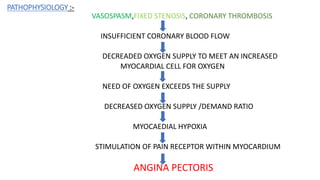
PATHOPHYSIOLOGY :-
VASOSPASM,FIXED STENOSIS, CORONARY THROMBOSIS
INSUFFICIENT CORONARY BLOOD FLOW
DECREADED OXYGEN SUPPLY TO MEET AN INCREASED
MYOCARDIAL CELL FOR OXYGEN
NEED OF OXYGEN EXCEEDS THE SUPPLY
DECREASED OXYGEN SUPPLY /DEMAND RATIO
MYOCAEDIAL HYPOXIA
STIMULATION OF PAIN RECEPTOR WITHIN MYOCARDIUM
ANGINA PECTORIS
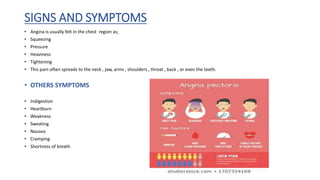
SIGNS AND SYMPTOMS
• Angina is usually felt in the chest region as;
• Squeezing
• Pressure
• Heaviness
• Tightening
• This pain often spreads to the neck , jaw, arms , shoulders , throat , back , or even the teeth.
• OTHERS SYMPTOMS
• Indigestion
• Heartburn
• Weakness
• Sweating
• Nausea
• Cramping
• Shortness of breath
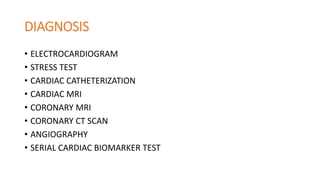
DIAGNOSIS
• ELECTROCARDIOGRAM
• STRESS TEST
• CARDIAC CATHETERIZATION
• CARDIAC MRI
• CORONARY MRI
• CORONARY CT SCAN
• ANGIOGRAPHY
• SERIAL CARDIAC BIOMARKER TEST
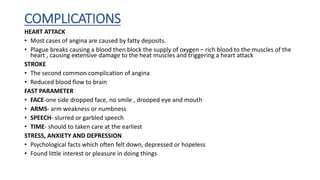
COMPLICATIONS
HEART ATTACK
• Most cases of angina are caused by fatty deposits.
• Plague breaks causing a blood then block the supply of oxygen – rich blood to the muscles of the
heart , causing extensive damage to the heat muscles and triggering a heart attack
STROKE
• The second common complication of angina
• Reduced blood flow to brain
FAST PARAMETER
• FACE-one side dropped face, no smile , drooped eye and mouth
• ARMS- arm weakness or numbness
• SPEECH- slurred or garbled speech
• TIME- should to taken care at the earliest
STRESS, ANXIETY AND DEPRESSION
• Psychological facts which often felt down, depressed or hopeless
• Found little interest or pleasure in doing things
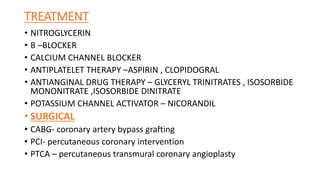
TREATMENT
• NITROGLYCERIN
• B –BLOCKER
• CALCIUM CHANNEL BLOCKER
• ANTIPLATELET THERAPY –ASPIRIN , CLOPIDOGRAL
• ANTIANGINAL DRUG THERAPY – GLYCERYL TRINITRATES , ISOSORBIDE
MONONITRATE ,ISOSORBIDE DINITRATE
• POTASSIUM CHANNEL ACTIVATOR – NICORANDIL
• SURGICAL
• CABG- coronary artery bypass grafting
• PCI- percutaneous coronary intervention
• PTCA – percutaneous transmural coronary angioplasty

Angina pectoris

  • 1.
    ANGINA PECTORIS BY KAMOLIKA DOCTOROF PHARMACY ( 2YR) TEERTHANKER MAHAVIR UNIVERSITY
  • 2.
    STRANGLING CHEST STRANGLING INTHE CHEST PECTORIS ANGINA ANGINA PECTORIS
  • 3.
    ANGINA PECTORIS • Anginapectoris is a temporary , substernal chest pain occurring due to imbalance between myocardial oxygen supply and demand . or • A disease market by sudden attack of chest pain or discomfort caused by deficient oxygenation of heart muscle usually due to impaired blood flow to the heart .
  • 4.
    TYPES OF ANGINA •STABLE ANGINA • UNSTABLE ANGINA • PRINZMETAL’S ANGINA
  • 5.
    STABLE ANGINA /FIXEDSTENOSIS/ DEMAND ISCHEMIA Stable angina is the most common. • Chronic narrowing of coronary arteries due to atherosclerosis • Tissue become ischemic particularly during times of increaded oxygen demand • Physical stress can trigger it • It usually lasts a few minutes and goes away after rest • Stable angina is not heart attack , but it suggest that a heart attack is more likely to happen in future. • CHARACTERISTICS OF STABLE ANGINA • Develops during exercise or climb stairs • Lasts a short time, perhaps five minutes or less • The severity , duration and type of angina can vary. • Relieved by rest or medication
  • 7.
    UNSTABLE ANGINA(THROMBUS) • Causedby formation and dissolution of a blood clot (thrombus) within a coronary artery • It may occur more often and be more severe than stable angina • This usually occur when person is at resting position • Sudden pain • The pain can be strong and long-lasting , • Not relieved by nitroglycerin • Unstable angina is very dangerous and required emergency treatment • This type of angina is sign that a heart attack may happen soon.
  • 9.
    PRINZMETAL’S ANGINA (VARIANT ANGINA) • Variant angina is rare • Results from coronary vasospasm ,which temporarily reduced coronary blood flow • Emotional stress , dysfunctional coronary vascular endothelium occurs during night rest. • A spasm in a coronary artery causes this type of angina • Narrow artery reduce blood flow to heart , causing chest pain. • Emotional stress , smoking and use of the illegal drug coccain may trigger this type of angina • It is usually happen between midnight and early morning • Medicine can relive this type of angina
  • 10.
    CAUSES AND RISKFACTORS • High blood pressure • Atherosclerosis • Blocked artery • Coronary artery spasm • Microvascular constriction • High blood cholesterol or triglyceride • Excess intake of fat or salt • Smoking • Diabetes mellitus • Obesity • Metabolic syndrome • Sedentary life style or overwork • Older age (men after 45 and women after 55) • Family history of early heart disease
  • 11.
    PATHOPHYSIOLOGY :- VASOSPASM,FIXED STENOSIS,CORONARY THROMBOSIS INSUFFICIENT CORONARY BLOOD FLOW DECREADED OXYGEN SUPPLY TO MEET AN INCREASED MYOCARDIAL CELL FOR OXYGEN NEED OF OXYGEN EXCEEDS THE SUPPLY DECREASED OXYGEN SUPPLY /DEMAND RATIO MYOCAEDIAL HYPOXIA STIMULATION OF PAIN RECEPTOR WITHIN MYOCARDIUM ANGINA PECTORIS
  • 12.
    SIGNS AND SYMPTOMS •Angina is usually felt in the chest region as; • Squeezing • Pressure • Heaviness • Tightening • This pain often spreads to the neck , jaw, arms , shoulders , throat , back , or even the teeth. • OTHERS SYMPTOMS • Indigestion • Heartburn • Weakness • Sweating • Nausea • Cramping • Shortness of breath
  • 13.
    DIAGNOSIS • ELECTROCARDIOGRAM • STRESSTEST • CARDIAC CATHETERIZATION • CARDIAC MRI • CORONARY MRI • CORONARY CT SCAN • ANGIOGRAPHY • SERIAL CARDIAC BIOMARKER TEST
  • 14.
    COMPLICATIONS HEART ATTACK • Mostcases of angina are caused by fatty deposits. • Plague breaks causing a blood then block the supply of oxygen – rich blood to the muscles of the heart , causing extensive damage to the heat muscles and triggering a heart attack STROKE • The second common complication of angina • Reduced blood flow to brain FAST PARAMETER • FACE-one side dropped face, no smile , drooped eye and mouth • ARMS- arm weakness or numbness • SPEECH- slurred or garbled speech • TIME- should to taken care at the earliest STRESS, ANXIETY AND DEPRESSION • Psychological facts which often felt down, depressed or hopeless • Found little interest or pleasure in doing things
  • 15.
    TREATMENT • NITROGLYCERIN • B–BLOCKER • CALCIUM CHANNEL BLOCKER • ANTIPLATELET THERAPY –ASPIRIN , CLOPIDOGRAL • ANTIANGINAL DRUG THERAPY – GLYCERYL TRINITRATES , ISOSORBIDE MONONITRATE ,ISOSORBIDE DINITRATE • POTASSIUM CHANNEL ACTIVATOR – NICORANDIL • SURGICAL • CABG- coronary artery bypass grafting • PCI- percutaneous coronary intervention • PTCA – percutaneous transmural coronary angioplasty