ANESTHETICS
DRUGS
By the completion of this section the learners will be able to:
• Define the term anesthesia and anesthetic agents
• Differentiate between different types of anesthesia
• Identify the stages of general anesthesia
• Describe Characteristics of general and local anesthetic agents.
• Identify most commonly used anesthetic agents
• Discuss factors considered when choosing anesthetic agents.
• Compare general and local anesthesia in terms of administration, client’s safety and nursing
care.
• Discuss the rationale for using adjunctive drugs before and during surgical procedures.
• Describe the nursing role in related to anesthetics and adjunctive drugs.
• Discuss the action, indication and side effects of neuro-muscular blocking agent
• Calculate the drug dosage of injectable anesthetic agent
• The word anesthesia is coined from two Greek words: "an" meaning
"without" and "aesthesis“ meaning "sensation".
• Anesthesia refers to the practice of administering medications either
by injection or by inhalation (breathing in) that block the feeling of
pain and other sensations, or that produce a deep state of
unconsciousness that eliminates all sensations, which allows medical
and surgical procedures to be undertaken without causing undue
distress or discomfort.
• It is a pharmacologically induced and reversible state of amnesia,
analgesia, loss of responsiveness, loss of skeletal muscle reflexes or
decreased stress response, or all simultaneously.
• The pre-existing word anesthesia was suggested by Oliver Wendell
Holmes, Sr. in 1846 as a word to use to describe this state.
• Anesthesiology is a special branch of medicine.
 Clinically – What an Anaesthetist wants ???
• Triad of GA
• Anesthetic drugs are the agents that produces
anesthesia or bring about reversible loss of sensation.
• Two types
a) General Anesthetics
b) Local or Regional Anesthesia
• General anesthesia refers to inhibition of sensory, motor and
sympathetic nerve transmission at the level of the brain, resulting in
unconsciousness and lack of sensation.
• General anesthesia – for surgical procedure to make the patient
unaware / unresponsive to the painful stimuli
• Drugs producing General Anesthesia – are called General Anesthetics
• Local anesthesia - reversible inhibition of impulse generation and
propagation in nerves. In sensory nerves, such an effect is desired
when painful procedures must be performed, e.g., surgical or dental
operations
• Drugs producing Local Anesthesia – are called Local Anesthetics e.g.
Procaine, Lidocaine and Bupivacaine etc.
• Local anesthesia inhibits sensory perception within a specific location
on the body, such as a tooth or the urinary bladder
• Regional Anesthesia : Regional anesthesia renders a larger area of
the body insensate by blocking transmission of nerve impulses
between a part of the body and the spinal cord.
• Two frequently used types of regional anesthesia are spinal
anesthesia and epidural anesthesia.
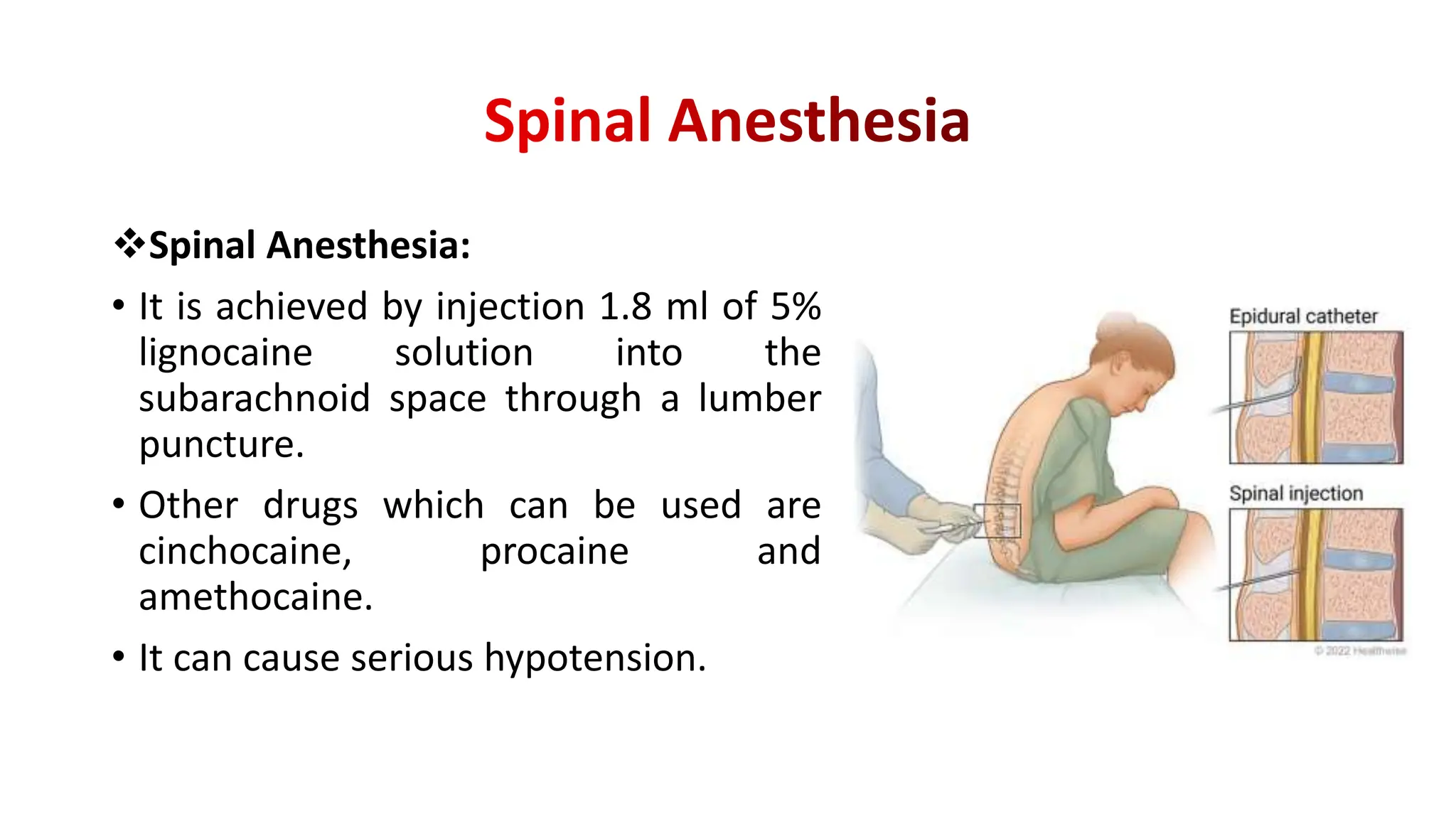
Spinal Anesthesia:
• It is achieved by injection 1.8 ml of 5%
lignocaine solution into the
subarachnoid space through a lumber
puncture.
• Other drugs which can be used are
cinchocaine, procaine and
amethocaine.
• It can cause serious hypotension.
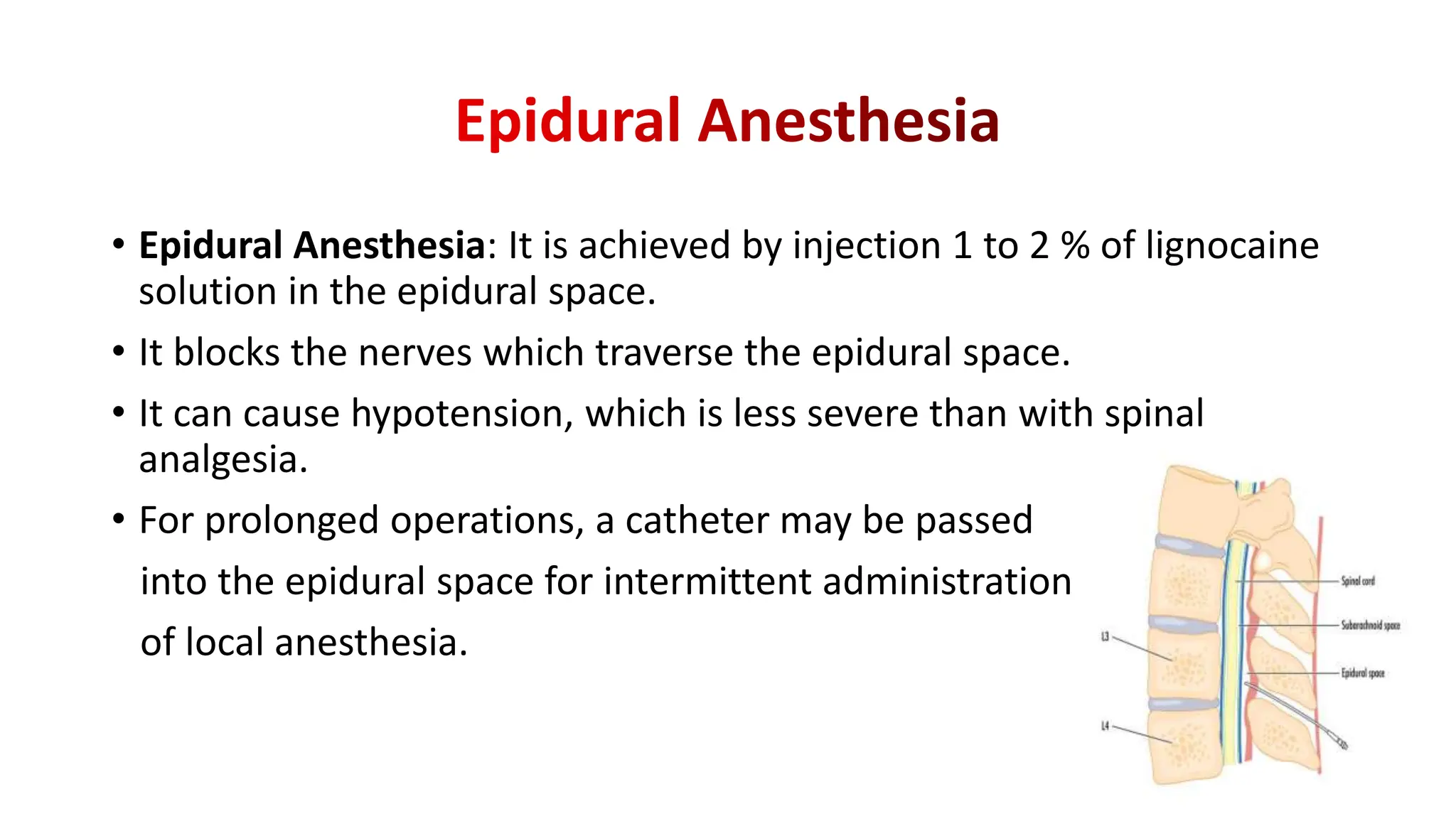
• Epidural Anesthesia: It is achieved by injection 1 to 2 % of lignocaine
solution in the epidural space.
• It blocks the nerves which traverse the epidural space.
• It can cause hypotension, which is less severe than with spinal
analgesia.
• For prolonged operations, a catheter may be passed
into the epidural space for intermittent administration
of local anesthesia.
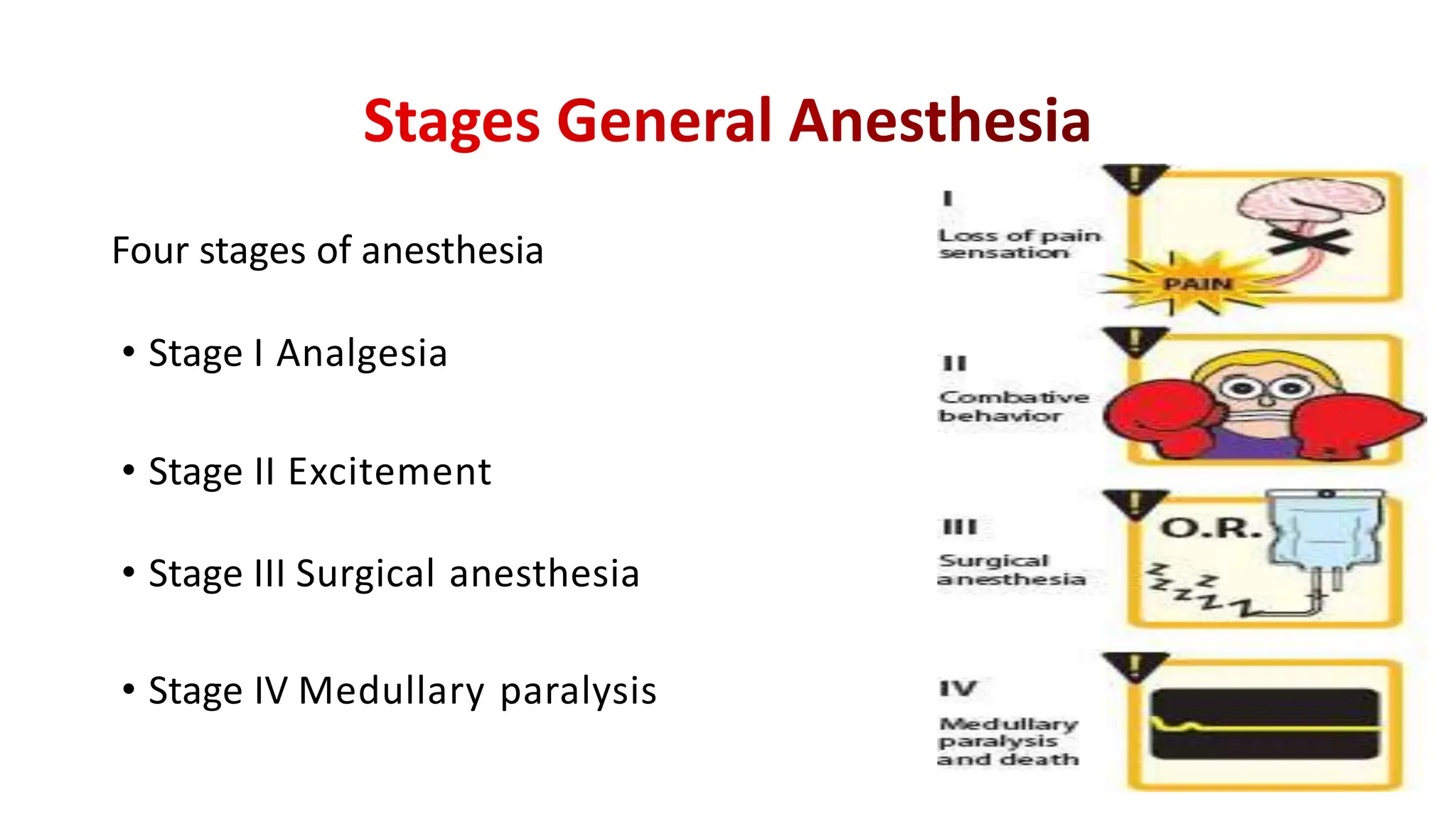
Four stages of anesthesia
• Stage I Analgesia
• Stage II Excitement
• Stage III Surgical anesthesia
• Stage IV Medullary paralysis
Stage I Analgesia
• Loss of pain sensation
• Drowsiness
• Amnesia and reduced awareness of pain
Stage II Excitement
• Delirium
• Rise and irregularity in blood pressure and respiration
• Risk of laryngospasm
• To shorten this period a rapid acting anesthetic like propofol is
administered IV before inhaled anesthetic
Stage III: Surgical anesthesia
• Loss of muscle tone and reflexes
• Ideal stage for surgery
• Requires careful monitoring
Stage IV: Medullary paralysis
• Severe depression of the respiratory and vasomotor centers
• Death can occur unless respiration and circulation are maintained
• Inhalation:
1. Gas : Nitrous Oxide
2. Volatile Liquid :
• Ether
• Halothane
• Enflurane
• Isoflurane
• Desflurane
• Sevoflurane
• Intravenous:
1. Inducing agents:
• Thiopentone, Methohexitone
sodium, propofol and etomidate
2. Benzodiazepines (slower acting):
• Diazepam, Lorazepam, Midazolam
3. Other drugs
• Ketamine
• Fentanyl
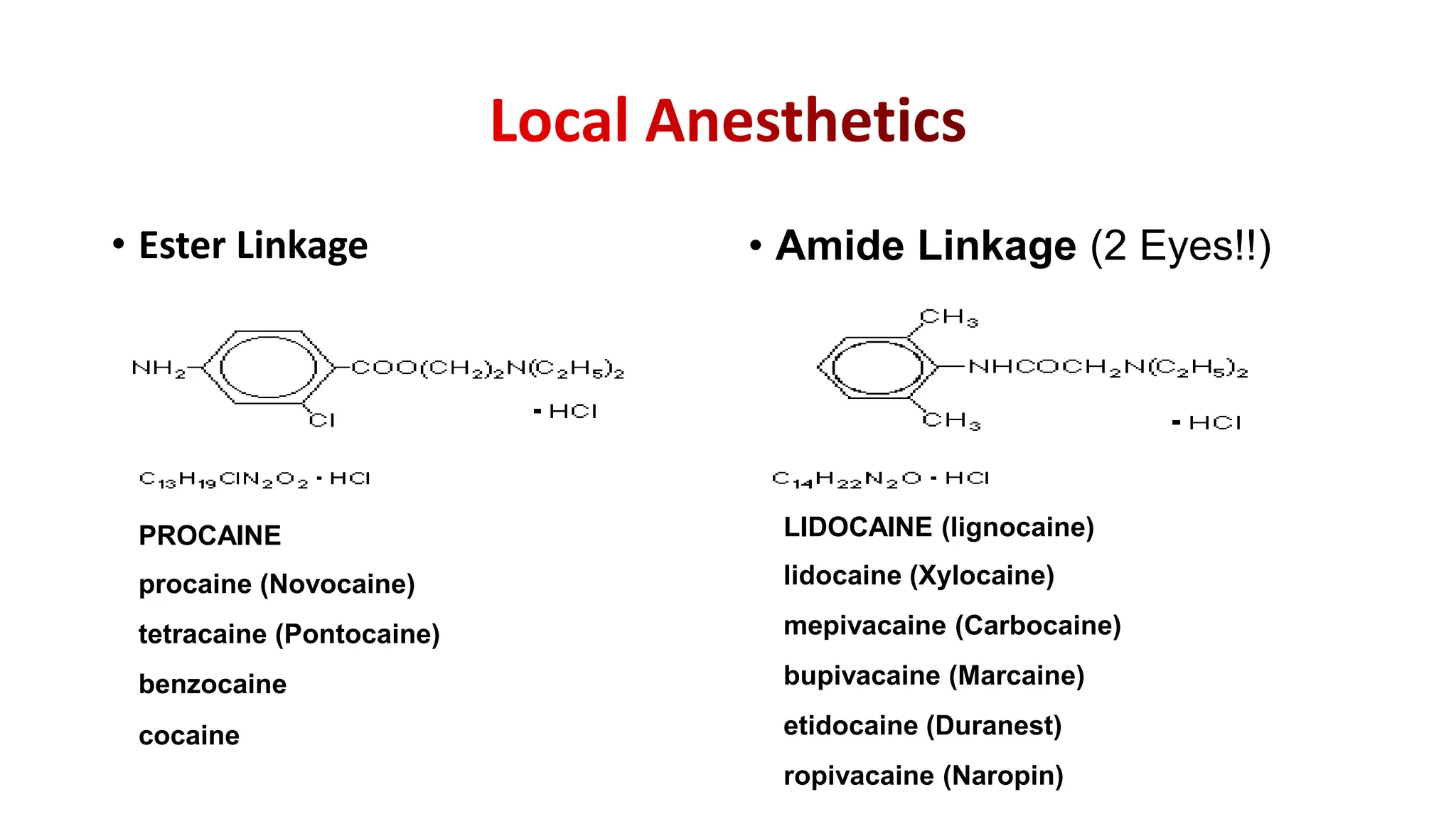
• Ester Linkage • Amide Linkage (2 Eyes!!)
PROCAINE
procaine (Novocaine)
tetracaine (Pontocaine)
benzocaine
cocaine
LIDOCAINE (lignocaine)
lidocaine (Xylocaine)
mepivacaine (Carbocaine)
bupivacaine (Marcaine)
etidocaine (Duranest)
ropivacaine (Naropin)
• Choice of anesthetic drugs are
made to provide safe and
efficient anesthesia based on the
nature of the surgical or
diagnostic procedures and
patient’s physiologic, pathologic
and pharmacologic state
• 2 factors are important
• Status of organ system
• Cardiovascular system
• Respiratory system
• Liver and kidney
• Nervous system
• Pregnancy
• Concomitant use of drugs
• Multiple adjunct agents
• Non-anesthetic drugs
Cardiovascular system:
• Anesthetic agents suppress cardiovascular functions.
• Ischemic injury to tissues may follow reduced perfusion pressure if
a hypotensive episode occurs during anesthesia, treatment with
vasoactive substances may be necessary
• Some anesthetics like halothane sensitize the heart to
arrhythmogenic effects of sympathomimetics
Respiratory system
• Asthma may complicate control of inhalation anesthetic
• Inhaled anesthetics depress the respiratory system
• IV anesthetics and opioids suppress respiration
• These effects may influence the ability to provide adequate
ventilation and oxygenation
Liver and kidneys
• Affect distribution and clearance of anesthetics, and might be affected by
anesthetic toxic effects
• Their physiology must be considered
Nervous system
• Presence of neurologic disorders like epilepsy, myasthenia gravis, problems in
cerebral circulation
Pregnancy
• Effects of anesthetic agents on the fetus
• Nitric oxide causes aplastic anemia in the unborn child
• Benzodiazepines might cause oral clefts in the fetus
Multiple adjunct agents
• Multiple agents are administered before anesthesia, these agents
facilitate induction of anesthesia and lower the needed dose of
anesthetics
• They may enhance adverse effects of anesthesia like hypoventilation
Serve to calm the patient, relieve the pain and protect against undesirable effects
of anesthetics or the surgical procedure
• Antacids (neutralize stomach acidity)
• H2 blockers like famotidine (Reduce gastric acidity)
• Anticholinergics like atropine and glycopyrrolate (Prevent bradycardia and
secretion of fluids)
• Antiemetics like ondansetron (Prevent aspiration of stomach contents and
postsurgical nausea and vomiting and)
• Antihistamine (Prevent allergic reactions)
• Benzodiazepines like diazepam (Relieve anxiety)
• Opioids like fentanyl (Provide analgesia)
• Neuromuscular blockers (Facilitate intubation and relaxation)
• For patients undergoing surgical and other medical procedures
anesthesia provides these benefits:
• Sedation and reduction of anxiety
• Lack of awareness and amnesia
• Skeletal muscle relaxation
• Suppression of undesirable reflexes
• Analgesia
• Because no single agent can provide all those benefits, several drugs
are used in combination to produce optimal anesthesia
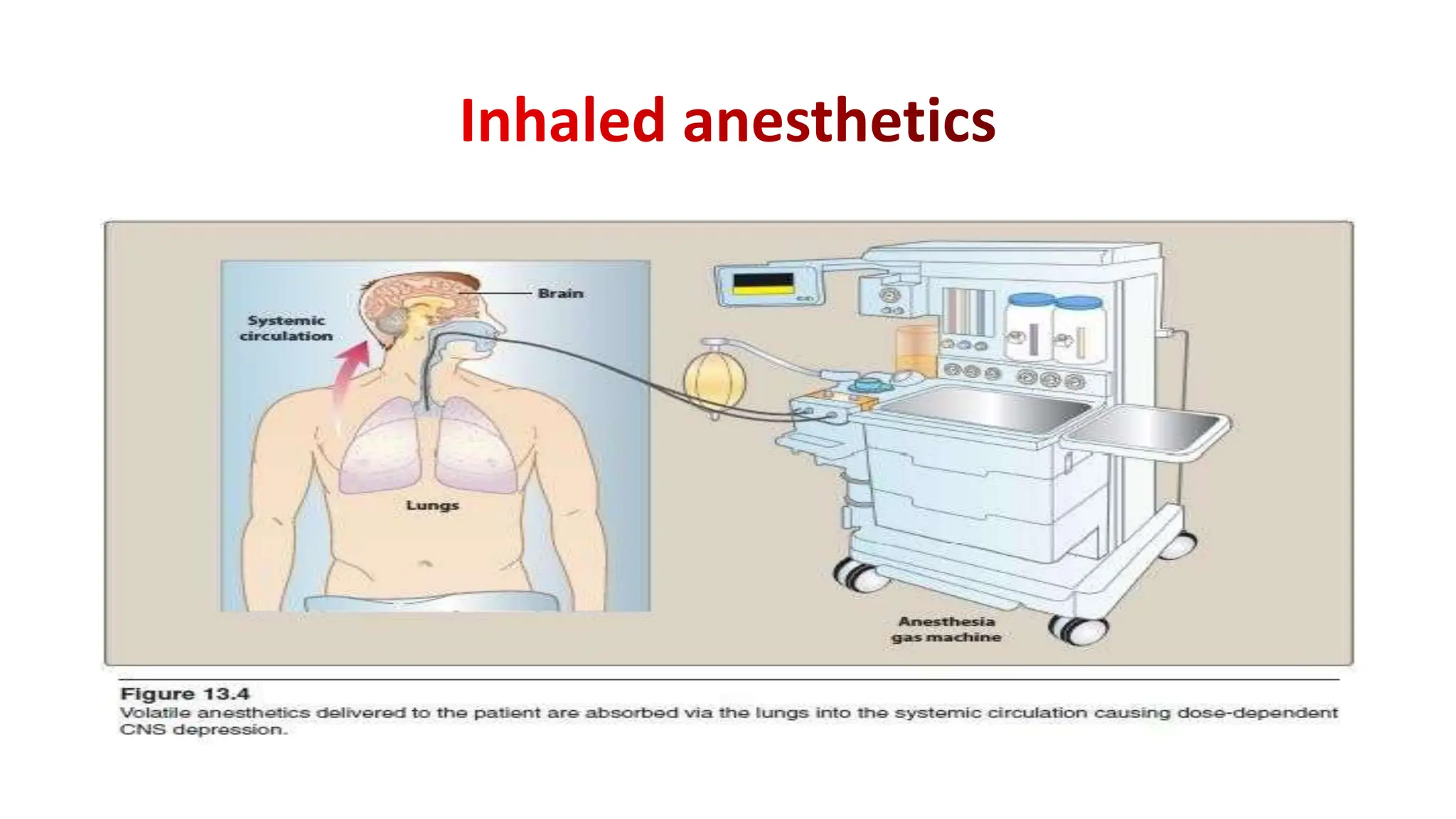
Potent general anesthetics are delivered via inhalation or
IV injection
◦ Inhaled general anesthetics
◦ Intravenous general anesthetics
◦ Local anesthetics
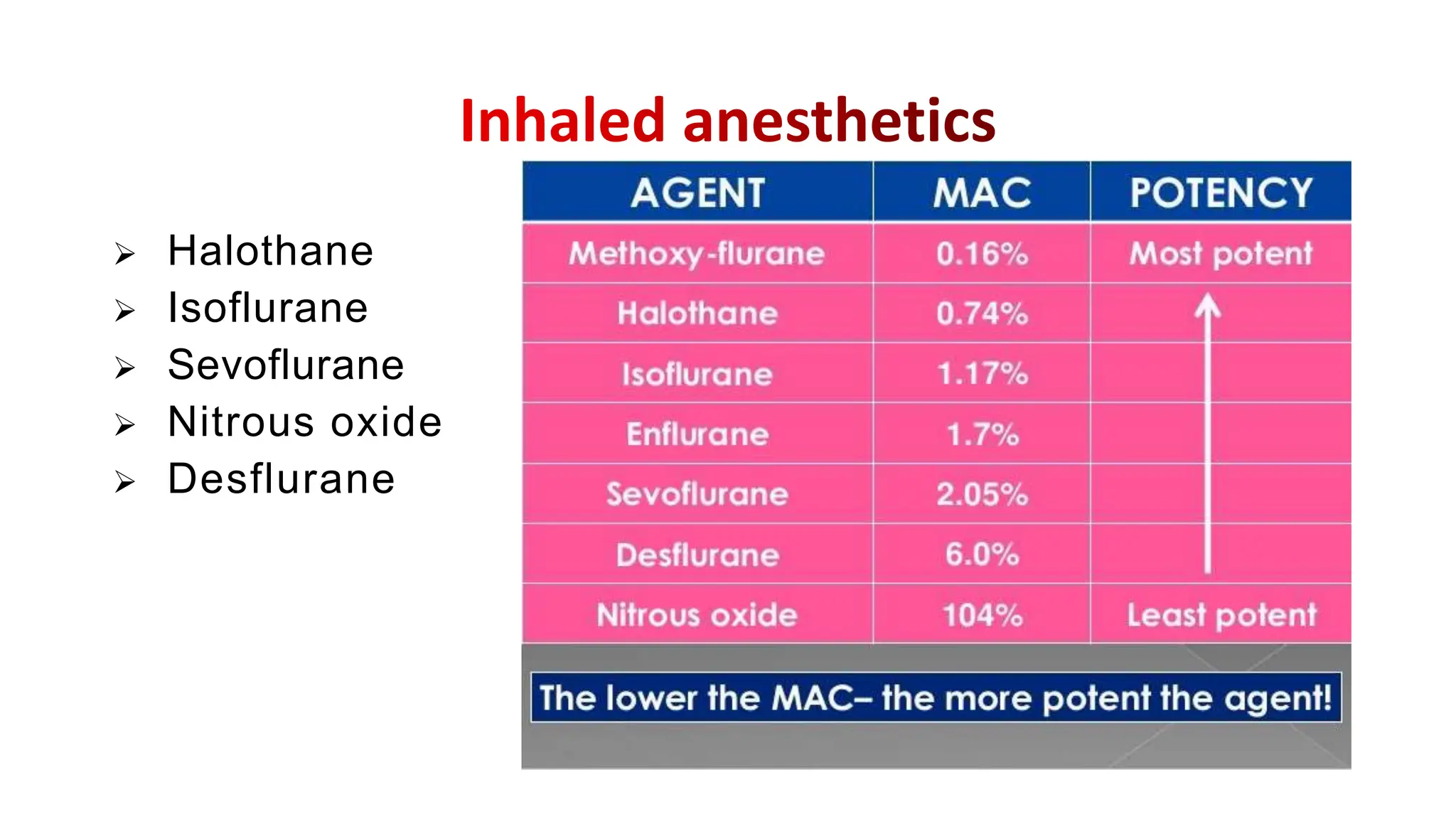
 Halothane
 Isoflurane
 Sevoflurane
 Nitrous oxide
 Desflurane
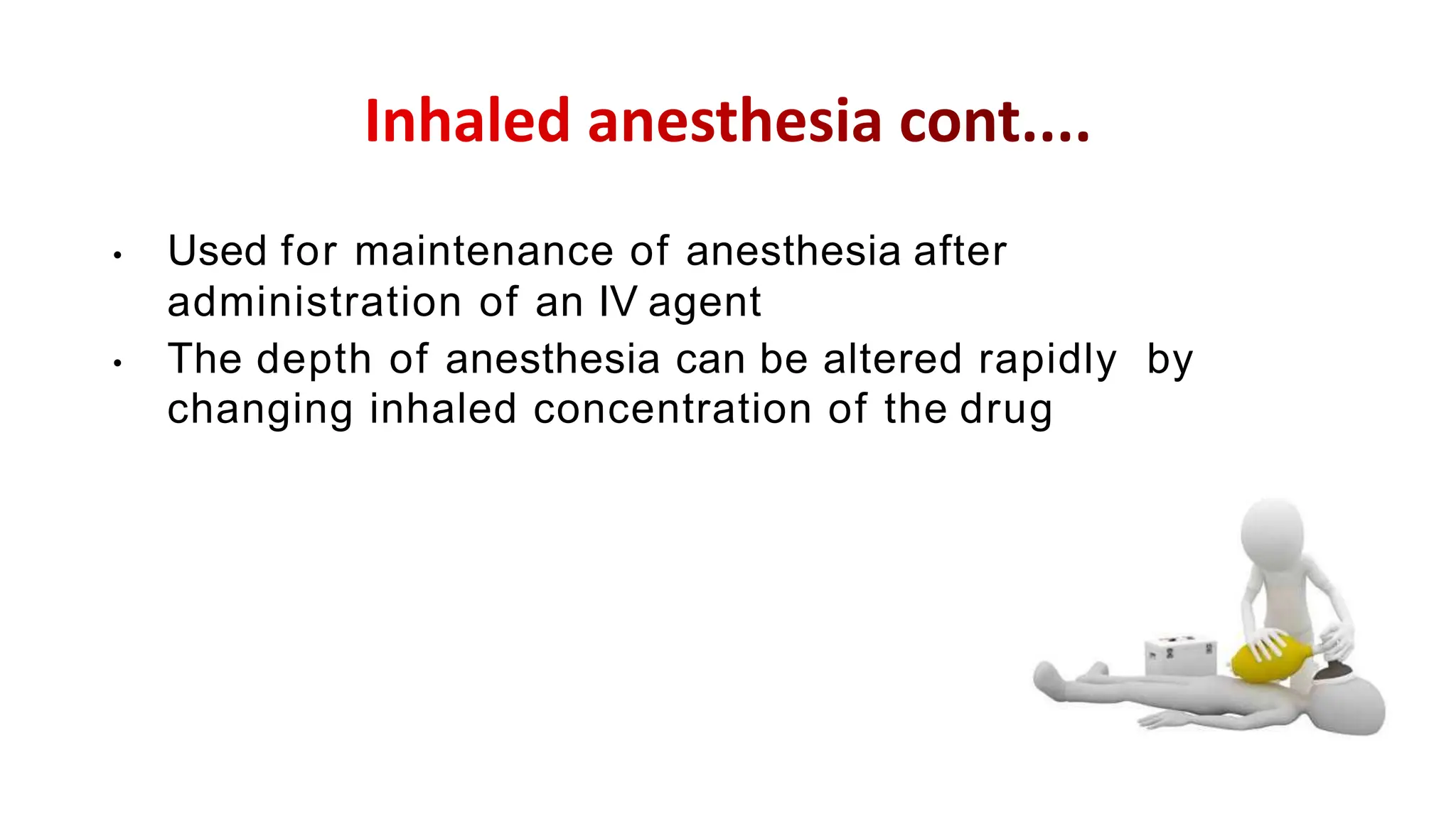
• Used for maintenance of anesthesia after
administration of an IV agent
• The depth of anesthesia can be altered rapidly by
changing inhaled concentration of the drug
• No specific receptor has been identified as the locus of
general anesthetic action
• Anesthetics increase the sensitivity of GABA receptors to the
neurotransmitter GABA prolonging the inhibitory chloride ion
current after GABA release, reducing the postsynaptic neurons
excitability
• Anesthetics increase the activity of the inhibitory glycine
receptors in the spinal motor neuron
• Anesthetics block excitatory postsynaptic nicotinic currents
• The mechanism by which the anesthetics perform these
modulatory roles is not understood
Mechanism of action
• Potent anesthetic, weak analgesic.
• Administered with nitrous oxide, opioids or local
anesthetics
• Being replaced by other agents due to its adverse effects
like Malignant Hyperthermia
• Cardiac effects: Vagomimetic effects, bradycardia, can
cause cardiac arrhythmias
 Malignant hyperthermia:
• Rare and life threatening condition
• Uncontrolled increase in skeletal muscle oxidative
metabolism, which overwhelms the body’s capacity to supply
oxygen, remove carbon dioxide, and regulate body
temperature
• If untreated would cause circulatory collapse and
death
• Treatment: Dantrolene administration
 Adverse effect
• Non irritating and potent analgesic but a weak general anesthetic
• Nitrous oxide is frequently employed at concentration of 30-50% in
combination with oxygen for analgesia
• Nitrous oxide at 80% (without adjunct agents) cannaot produce
surgical anesthesia
• Combine with other , more potent agents to attain pain-free
anesthesia
• Mechanism of action is unresolved, might involve activity of GABA
and NMDA receptors
• Least hepatotoxic of all inhaled anesthetic
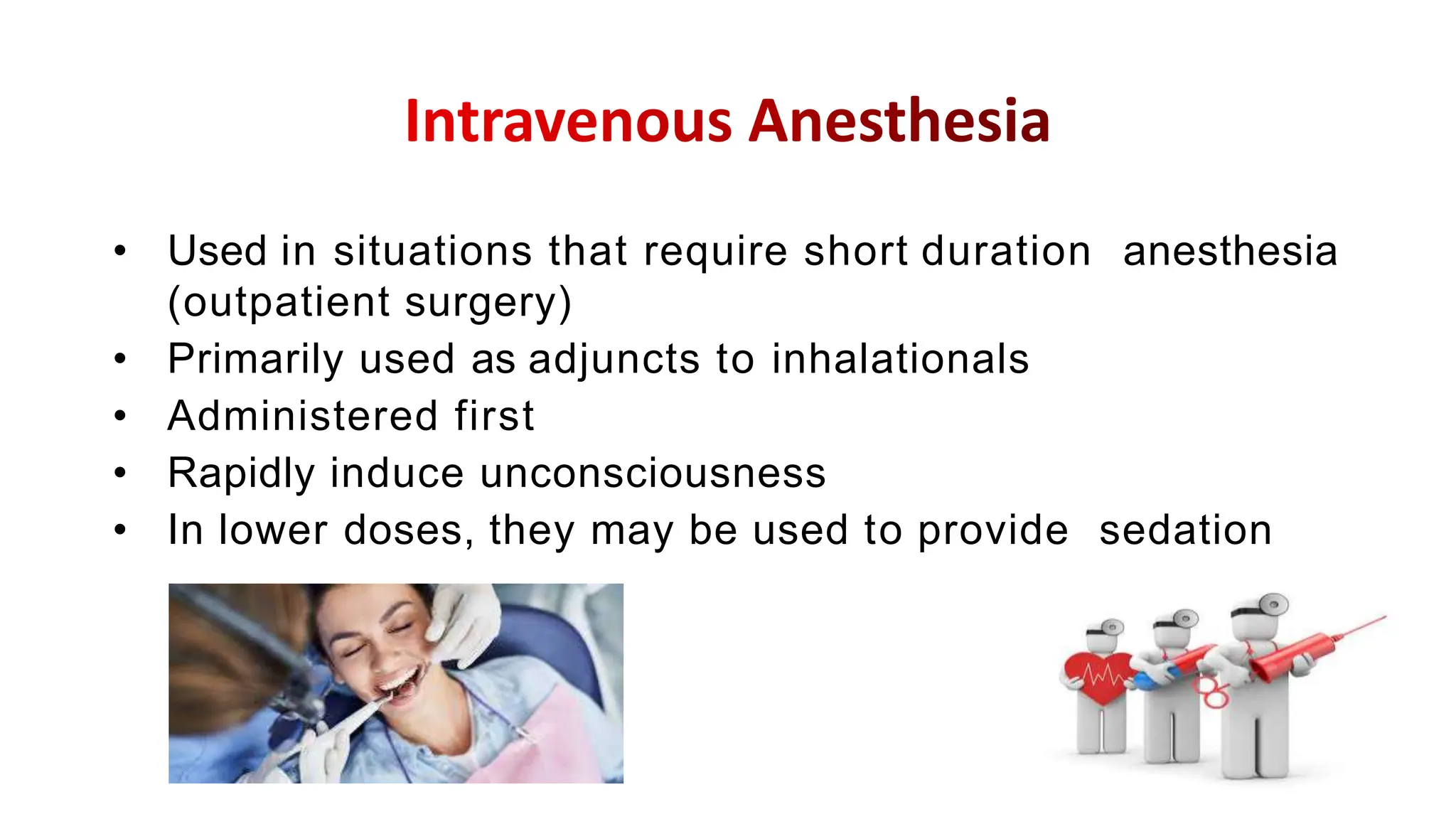
• Used in situations that require short duration anesthesia
(outpatient surgery)
• Primarily used as adjuncts to inhalationals
• Administered first
• Rapidly induce unconsciousness
• In lower doses, they may be used to provide sedation
• Induction
• After entering the blood stream, a percentage of the drug
binds to the plasma proteins, and the rest remains unbound
(free)
• The drug is carried by venous blood to the heart
• The majority of the CO (70%) flows to the brain, liver, and
• kidney
• Once the drug has penetrated the CNS tissue, it exerts its
effects
• The exact mechanism of action of IV anesthetics is unknown
• Recovery
• Recovery from IV anesthetics is due to redistribution from sites in
the CNS
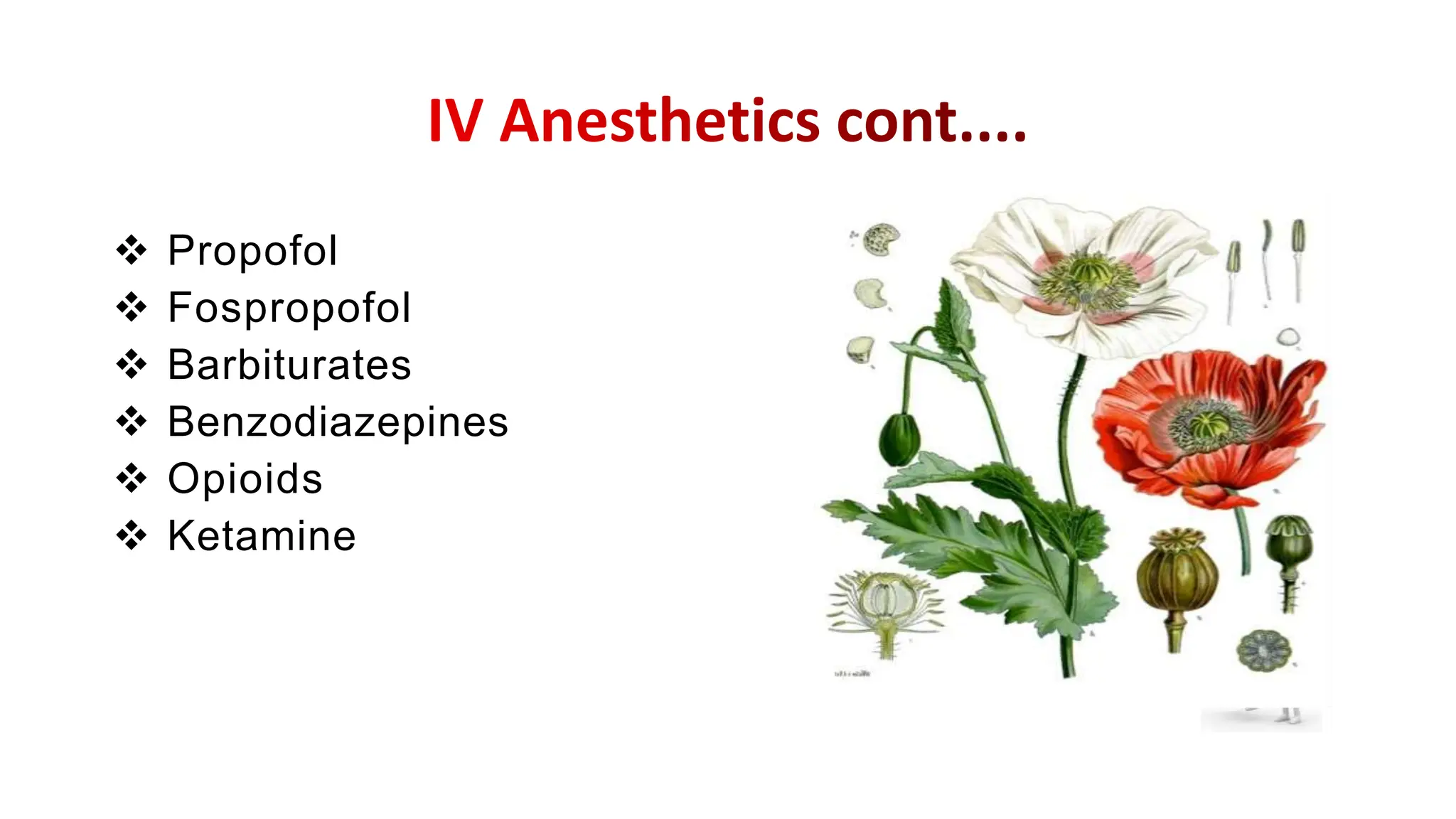
 Propofol
 Fospropofol
 Barbiturates
 Benzodiazepines
 Opioids
 Ketamine
• IV sedative/hypnotic used in the induction or
maintenance of anesthesia
• Widely used and has replaced thiopental as first
choice for anesthesia induction and sedation,
because it does not cause postanesthetic
nausea and vomiting
• The induction of anesthesia occurs within 30–40
seconds of administration
• Supplementation with narcotics for analgesia is
required
• Propofol decreases blood pressure without depressing
the myocardium
• It also reduces intracranial pressure due to systemic
vasodilation
• Commonly used with anesthetics due to their analgesic
property
• The choice of opioid used perioperatively is based
primarily on the duration of action needed
 Fentanyl, Remifentanil
 Induce analgesia more rapidly than morphine
 Administered intravenously, epidurally, intrathecally
• Can cause hypotension, respiratory depression, muscle
rigidity and postanesthetic nausea and vomiting
• Opioid effects can be antagonized by naloxone
• Amides (lidocaine) and esters (procaine)
• Cause loss of sensation (in higher concentrations), and
motor activity (in a limited area of the body)
• Applied or injected to block nerve conduction of
sensory impulses from the periphery to the CNS
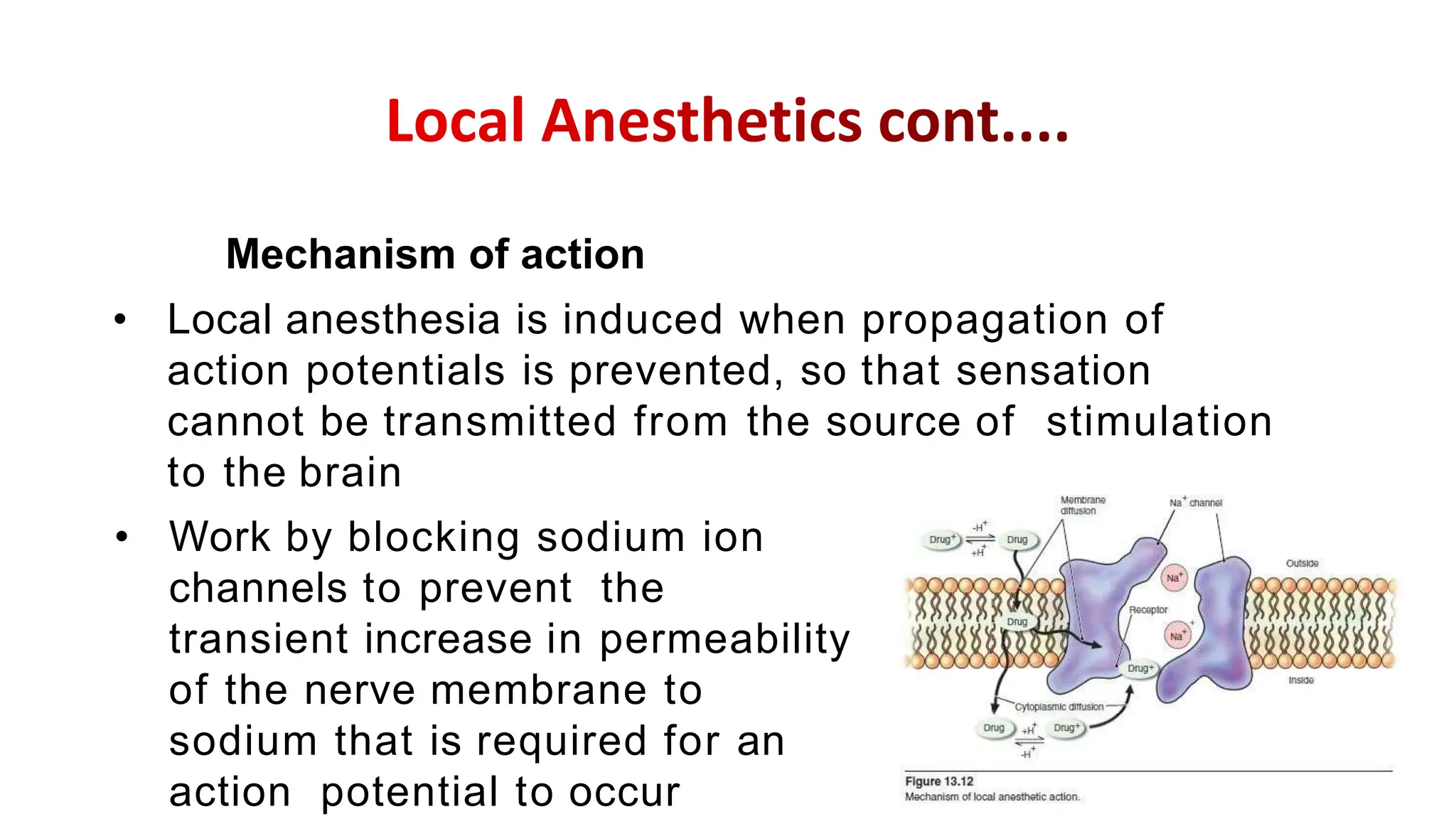
• Local anesthesia is induced when propagation of
action potentials is prevented, so that sensation
cannot be transmitted from the source of stimulation
to the brain
Mechanism of action
• Work by blocking sodium ion
channels to prevent the
transient increase in permeability
of the nerve membrane to
sodium that is required for an
action potential to occur
• Lidocaine
• Bupivacaine
• Procaine
• Ropivacaine
• Tetracaine
• Mepivacaine
 Not used in obstetric anesthesia due to its increased
toxicity to the neonate
 Local anesthetics cause vasodilation, which leads to
rapid diffusion away from the site of action and results
in a short duration of action
 Adding the vasoconstrictor epinephrine to the local
anesthetic, the rate of local anesthetic diffusion and
absorption is decreased
 This both minimizes systemic toxicity and increases
the duration of action
 They are applied directly to the skin or mucous
membranes
 Benzocaine is the major drug in this group
 Lidocaine and tetracaine can be used topically
 They are used to relieve or prevent pain from minor
burns, irritation, itching
 They are also used to numb an area before an
injection is given.
 Expected adverse effects involve skin irritation and
hypersensitivity reactions
• Reduces intra-operative patient awareness and recall.
• Allows proper muscle relaxation for prolonged periods of time.
• Facilitates complete control of the airway, breathing, and circulation.
• Can be used in cases of sensitivity to local anesthetic agent.
• Can be administered rapidly and is reversible.
• Requires increased complexity of care and associated costs.
• Requires some degree of preoperative patient preparation.
• Can induce physiologic fluctuations that require active intervention.
• Associated with malignant hyperthermia
• Assessment:
– Prescription, non-prescription or any other Drug History
– Allergies
– Other risk factors – smoking, obesity, alcoholism,
CVS/renal/respiratory diseases
– Vital signs and laboratory data
• Interventions:
– Explain preoperative and post operative recovery
– Postoperative requirements – early ambulation, deep breathing,
coughing, leg exercises, fluid balance and urine output
– Monitor vital signs
– Response to pain medication
• During local anesthesia the patient remains conscious.
• Patient maintains own airway.
• Aspiration of gastric contents unlikely.
• Recovery is smooth as it requires less skilled nursing care as
compared to other anesthesia like general anesthesia.
• Postoperative analgesia.
• There is reduction surgical stress.
• Earlier discharge for outpatients.
• Expenses are less.
• Very rare allergies
• Bruises
• Temporary tingling sensation or burning in the area
• Assess for the mentioned cautions and contraindications (e.g. drug
allergies, hepatic and renal impairment, etc.) to prevent any untoward
complications.
• Inspect site for local anesthetic application to ensure integrity of the
skin and to prevent inadvertent systemic absorption of the drug.
• Ensure that patients receiving spinal anesthesia or epidural
anesthesia are well hydrated and remain lying down for up to 12
hours after the anesthesia to minimize headache.
• Provide skin care to site of administration to reduce risk of skin
breakdown.
• Provide safety measures (e.g. adequate lighting, raised side rails, etc.)
to prevent injuries.
• Karch, A. M., & Karch. (2011). Focus on nursing pharmacology.
Wolters Kluwer Health/Lippincott Williams & Wilkins. [Link]
• Katzung, B. G. (2017). Basic and clinical pharmacology. McGraw-Hill
Education.
• Lehne, R. A., Moore, L. A., Crosby, L. J., & Hamilton, D. B. (2004).
Pharmacology for nursing care.
• Smeltzer, S. C., & Bare, B. G. (1992). Brunner & Suddarth’s textbook of
medical-surgical nursing. Philadelphia: JB Lippincott.
Anesthetics and its side affect Mechanism of action

Anesthetics and its side affect Mechanism of action

  • 1.
  • 2.
    By the completionof this section the learners will be able to: • Define the term anesthesia and anesthetic agents • Differentiate between different types of anesthesia • Identify the stages of general anesthesia • Describe Characteristics of general and local anesthetic agents. • Identify most commonly used anesthetic agents • Discuss factors considered when choosing anesthetic agents. • Compare general and local anesthesia in terms of administration, client’s safety and nursing care. • Discuss the rationale for using adjunctive drugs before and during surgical procedures. • Describe the nursing role in related to anesthetics and adjunctive drugs. • Discuss the action, indication and side effects of neuro-muscular blocking agent • Calculate the drug dosage of injectable anesthetic agent
  • 3.
    • The wordanesthesia is coined from two Greek words: "an" meaning "without" and "aesthesis“ meaning "sensation". • Anesthesia refers to the practice of administering medications either by injection or by inhalation (breathing in) that block the feeling of pain and other sensations, or that produce a deep state of unconsciousness that eliminates all sensations, which allows medical and surgical procedures to be undertaken without causing undue distress or discomfort.
  • 4.
    • It isa pharmacologically induced and reversible state of amnesia, analgesia, loss of responsiveness, loss of skeletal muscle reflexes or decreased stress response, or all simultaneously. • The pre-existing word anesthesia was suggested by Oliver Wendell Holmes, Sr. in 1846 as a word to use to describe this state. • Anesthesiology is a special branch of medicine.  Clinically – What an Anaesthetist wants ??? • Triad of GA
  • 5.
    • Anesthetic drugsare the agents that produces anesthesia or bring about reversible loss of sensation. • Two types a) General Anesthetics b) Local or Regional Anesthesia
  • 6.
    • General anesthesiarefers to inhibition of sensory, motor and sympathetic nerve transmission at the level of the brain, resulting in unconsciousness and lack of sensation. • General anesthesia – for surgical procedure to make the patient unaware / unresponsive to the painful stimuli • Drugs producing General Anesthesia – are called General Anesthetics
  • 7.
    • Local anesthesia- reversible inhibition of impulse generation and propagation in nerves. In sensory nerves, such an effect is desired when painful procedures must be performed, e.g., surgical or dental operations • Drugs producing Local Anesthesia – are called Local Anesthetics e.g. Procaine, Lidocaine and Bupivacaine etc. • Local anesthesia inhibits sensory perception within a specific location on the body, such as a tooth or the urinary bladder
  • 8.
    • Regional Anesthesia: Regional anesthesia renders a larger area of the body insensate by blocking transmission of nerve impulses between a part of the body and the spinal cord. • Two frequently used types of regional anesthesia are spinal anesthesia and epidural anesthesia.
  • 9.
    Spinal Anesthesia: • Itis achieved by injection 1.8 ml of 5% lignocaine solution into the subarachnoid space through a lumber puncture. • Other drugs which can be used are cinchocaine, procaine and amethocaine. • It can cause serious hypotension.
  • 10.
    • Epidural Anesthesia:It is achieved by injection 1 to 2 % of lignocaine solution in the epidural space. • It blocks the nerves which traverse the epidural space. • It can cause hypotension, which is less severe than with spinal analgesia. • For prolonged operations, a catheter may be passed into the epidural space for intermittent administration of local anesthesia.
  • 11.
    Four stages ofanesthesia • Stage I Analgesia • Stage II Excitement • Stage III Surgical anesthesia • Stage IV Medullary paralysis
  • 12.
    Stage I Analgesia •Loss of pain sensation • Drowsiness • Amnesia and reduced awareness of pain Stage II Excitement • Delirium • Rise and irregularity in blood pressure and respiration • Risk of laryngospasm • To shorten this period a rapid acting anesthetic like propofol is administered IV before inhaled anesthetic
  • 13.
    Stage III: Surgicalanesthesia • Loss of muscle tone and reflexes • Ideal stage for surgery • Requires careful monitoring Stage IV: Medullary paralysis • Severe depression of the respiratory and vasomotor centers • Death can occur unless respiration and circulation are maintained
  • 14.
    • Inhalation: 1. Gas: Nitrous Oxide 2. Volatile Liquid : • Ether • Halothane • Enflurane • Isoflurane • Desflurane • Sevoflurane • Intravenous: 1. Inducing agents: • Thiopentone, Methohexitone sodium, propofol and etomidate 2. Benzodiazepines (slower acting): • Diazepam, Lorazepam, Midazolam 3. Other drugs • Ketamine • Fentanyl
  • 15.
    • Ester Linkage• Amide Linkage (2 Eyes!!) PROCAINE procaine (Novocaine) tetracaine (Pontocaine) benzocaine cocaine LIDOCAINE (lignocaine) lidocaine (Xylocaine) mepivacaine (Carbocaine) bupivacaine (Marcaine) etidocaine (Duranest) ropivacaine (Naropin)
  • 16.
    • Choice ofanesthetic drugs are made to provide safe and efficient anesthesia based on the nature of the surgical or diagnostic procedures and patient’s physiologic, pathologic and pharmacologic state
  • 17.
    • 2 factorsare important • Status of organ system • Cardiovascular system • Respiratory system • Liver and kidney • Nervous system • Pregnancy • Concomitant use of drugs • Multiple adjunct agents • Non-anesthetic drugs
  • 18.
    Cardiovascular system: • Anestheticagents suppress cardiovascular functions. • Ischemic injury to tissues may follow reduced perfusion pressure if a hypotensive episode occurs during anesthesia, treatment with vasoactive substances may be necessary • Some anesthetics like halothane sensitize the heart to arrhythmogenic effects of sympathomimetics
  • 19.
    Respiratory system • Asthmamay complicate control of inhalation anesthetic • Inhaled anesthetics depress the respiratory system • IV anesthetics and opioids suppress respiration • These effects may influence the ability to provide adequate ventilation and oxygenation
  • 20.
    Liver and kidneys •Affect distribution and clearance of anesthetics, and might be affected by anesthetic toxic effects • Their physiology must be considered Nervous system • Presence of neurologic disorders like epilepsy, myasthenia gravis, problems in cerebral circulation Pregnancy • Effects of anesthetic agents on the fetus • Nitric oxide causes aplastic anemia in the unborn child • Benzodiazepines might cause oral clefts in the fetus
  • 21.
    Multiple adjunct agents •Multiple agents are administered before anesthesia, these agents facilitate induction of anesthesia and lower the needed dose of anesthetics • They may enhance adverse effects of anesthesia like hypoventilation
  • 22.
    Serve to calmthe patient, relieve the pain and protect against undesirable effects of anesthetics or the surgical procedure • Antacids (neutralize stomach acidity) • H2 blockers like famotidine (Reduce gastric acidity) • Anticholinergics like atropine and glycopyrrolate (Prevent bradycardia and secretion of fluids) • Antiemetics like ondansetron (Prevent aspiration of stomach contents and postsurgical nausea and vomiting and) • Antihistamine (Prevent allergic reactions) • Benzodiazepines like diazepam (Relieve anxiety) • Opioids like fentanyl (Provide analgesia) • Neuromuscular blockers (Facilitate intubation and relaxation)
  • 23.
    • For patientsundergoing surgical and other medical procedures anesthesia provides these benefits: • Sedation and reduction of anxiety • Lack of awareness and amnesia • Skeletal muscle relaxation • Suppression of undesirable reflexes • Analgesia • Because no single agent can provide all those benefits, several drugs are used in combination to produce optimal anesthesia
  • 25.
    Potent general anestheticsare delivered via inhalation or IV injection ◦ Inhaled general anesthetics ◦ Intravenous general anesthetics ◦ Local anesthetics
  • 26.
     Halothane  Isoflurane Sevoflurane  Nitrous oxide  Desflurane
  • 28.
    • Used formaintenance of anesthesia after administration of an IV agent • The depth of anesthesia can be altered rapidly by changing inhaled concentration of the drug
  • 29.
    • No specificreceptor has been identified as the locus of general anesthetic action • Anesthetics increase the sensitivity of GABA receptors to the neurotransmitter GABA prolonging the inhibitory chloride ion current after GABA release, reducing the postsynaptic neurons excitability • Anesthetics increase the activity of the inhibitory glycine receptors in the spinal motor neuron • Anesthetics block excitatory postsynaptic nicotinic currents • The mechanism by which the anesthetics perform these modulatory roles is not understood Mechanism of action
  • 30.
    • Potent anesthetic,weak analgesic. • Administered with nitrous oxide, opioids or local anesthetics • Being replaced by other agents due to its adverse effects like Malignant Hyperthermia
  • 31.
    • Cardiac effects:Vagomimetic effects, bradycardia, can cause cardiac arrhythmias  Malignant hyperthermia: • Rare and life threatening condition • Uncontrolled increase in skeletal muscle oxidative metabolism, which overwhelms the body’s capacity to supply oxygen, remove carbon dioxide, and regulate body temperature • If untreated would cause circulatory collapse and death • Treatment: Dantrolene administration  Adverse effect
  • 32.
    • Non irritatingand potent analgesic but a weak general anesthetic • Nitrous oxide is frequently employed at concentration of 30-50% in combination with oxygen for analgesia • Nitrous oxide at 80% (without adjunct agents) cannaot produce surgical anesthesia • Combine with other , more potent agents to attain pain-free anesthesia • Mechanism of action is unresolved, might involve activity of GABA and NMDA receptors • Least hepatotoxic of all inhaled anesthetic
  • 33.
    • Used insituations that require short duration anesthesia (outpatient surgery) • Primarily used as adjuncts to inhalationals • Administered first • Rapidly induce unconsciousness • In lower doses, they may be used to provide sedation
  • 34.
    • Induction • Afterentering the blood stream, a percentage of the drug binds to the plasma proteins, and the rest remains unbound (free) • The drug is carried by venous blood to the heart • The majority of the CO (70%) flows to the brain, liver, and • kidney • Once the drug has penetrated the CNS tissue, it exerts its effects • The exact mechanism of action of IV anesthetics is unknown • Recovery • Recovery from IV anesthetics is due to redistribution from sites in the CNS
  • 35.
     Propofol  Fospropofol Barbiturates  Benzodiazepines  Opioids  Ketamine
  • 36.
    • IV sedative/hypnoticused in the induction or maintenance of anesthesia • Widely used and has replaced thiopental as first choice for anesthesia induction and sedation, because it does not cause postanesthetic nausea and vomiting • The induction of anesthesia occurs within 30–40 seconds of administration • Supplementation with narcotics for analgesia is required • Propofol decreases blood pressure without depressing the myocardium • It also reduces intracranial pressure due to systemic vasodilation
  • 37.
    • Commonly usedwith anesthetics due to their analgesic property • The choice of opioid used perioperatively is based primarily on the duration of action needed  Fentanyl, Remifentanil  Induce analgesia more rapidly than morphine  Administered intravenously, epidurally, intrathecally • Can cause hypotension, respiratory depression, muscle rigidity and postanesthetic nausea and vomiting • Opioid effects can be antagonized by naloxone
  • 38.
    • Amides (lidocaine)and esters (procaine) • Cause loss of sensation (in higher concentrations), and motor activity (in a limited area of the body) • Applied or injected to block nerve conduction of sensory impulses from the periphery to the CNS
  • 39.
    • Local anesthesiais induced when propagation of action potentials is prevented, so that sensation cannot be transmitted from the source of stimulation to the brain Mechanism of action • Work by blocking sodium ion channels to prevent the transient increase in permeability of the nerve membrane to sodium that is required for an action potential to occur
  • 40.
    • Lidocaine • Bupivacaine •Procaine • Ropivacaine • Tetracaine • Mepivacaine  Not used in obstetric anesthesia due to its increased toxicity to the neonate
  • 41.
     Local anestheticscause vasodilation, which leads to rapid diffusion away from the site of action and results in a short duration of action  Adding the vasoconstrictor epinephrine to the local anesthetic, the rate of local anesthetic diffusion and absorption is decreased  This both minimizes systemic toxicity and increases the duration of action
  • 42.
     They areapplied directly to the skin or mucous membranes  Benzocaine is the major drug in this group  Lidocaine and tetracaine can be used topically  They are used to relieve or prevent pain from minor burns, irritation, itching  They are also used to numb an area before an injection is given.  Expected adverse effects involve skin irritation and hypersensitivity reactions
  • 44.
    • Reduces intra-operativepatient awareness and recall. • Allows proper muscle relaxation for prolonged periods of time. • Facilitates complete control of the airway, breathing, and circulation. • Can be used in cases of sensitivity to local anesthetic agent. • Can be administered rapidly and is reversible.
  • 45.
    • Requires increasedcomplexity of care and associated costs. • Requires some degree of preoperative patient preparation. • Can induce physiologic fluctuations that require active intervention. • Associated with malignant hyperthermia
  • 46.
    • Assessment: – Prescription,non-prescription or any other Drug History – Allergies – Other risk factors – smoking, obesity, alcoholism, CVS/renal/respiratory diseases – Vital signs and laboratory data • Interventions: – Explain preoperative and post operative recovery – Postoperative requirements – early ambulation, deep breathing, coughing, leg exercises, fluid balance and urine output – Monitor vital signs – Response to pain medication
  • 47.
    • During localanesthesia the patient remains conscious. • Patient maintains own airway. • Aspiration of gastric contents unlikely. • Recovery is smooth as it requires less skilled nursing care as compared to other anesthesia like general anesthesia. • Postoperative analgesia. • There is reduction surgical stress. • Earlier discharge for outpatients. • Expenses are less.
  • 48.
    • Very rareallergies • Bruises • Temporary tingling sensation or burning in the area
  • 49.
    • Assess forthe mentioned cautions and contraindications (e.g. drug allergies, hepatic and renal impairment, etc.) to prevent any untoward complications. • Inspect site for local anesthetic application to ensure integrity of the skin and to prevent inadvertent systemic absorption of the drug. • Ensure that patients receiving spinal anesthesia or epidural anesthesia are well hydrated and remain lying down for up to 12 hours after the anesthesia to minimize headache. • Provide skin care to site of administration to reduce risk of skin breakdown. • Provide safety measures (e.g. adequate lighting, raised side rails, etc.) to prevent injuries.
  • 50.
    • Karch, A.M., & Karch. (2011). Focus on nursing pharmacology. Wolters Kluwer Health/Lippincott Williams & Wilkins. [Link] • Katzung, B. G. (2017). Basic and clinical pharmacology. McGraw-Hill Education. • Lehne, R. A., Moore, L. A., Crosby, L. J., & Hamilton, D. B. (2004). Pharmacology for nursing care. • Smeltzer, S. C., & Bare, B. G. (1992). Brunner & Suddarth’s textbook of medical-surgical nursing. Philadelphia: JB Lippincott.