
Anesthetics
Prepared by
Chayan Dhar Clinton
B.Pharm (Hon’s)
Department of pharmacy, IIUC
General Anesthetics
 A drug that brings about a reversible loss of
consciousness
 Causes one or more of the following
 Pain relief
 Muscle relaxation
 Relaxation of reflexes
 Deep sleep
 Commonly used during surgery
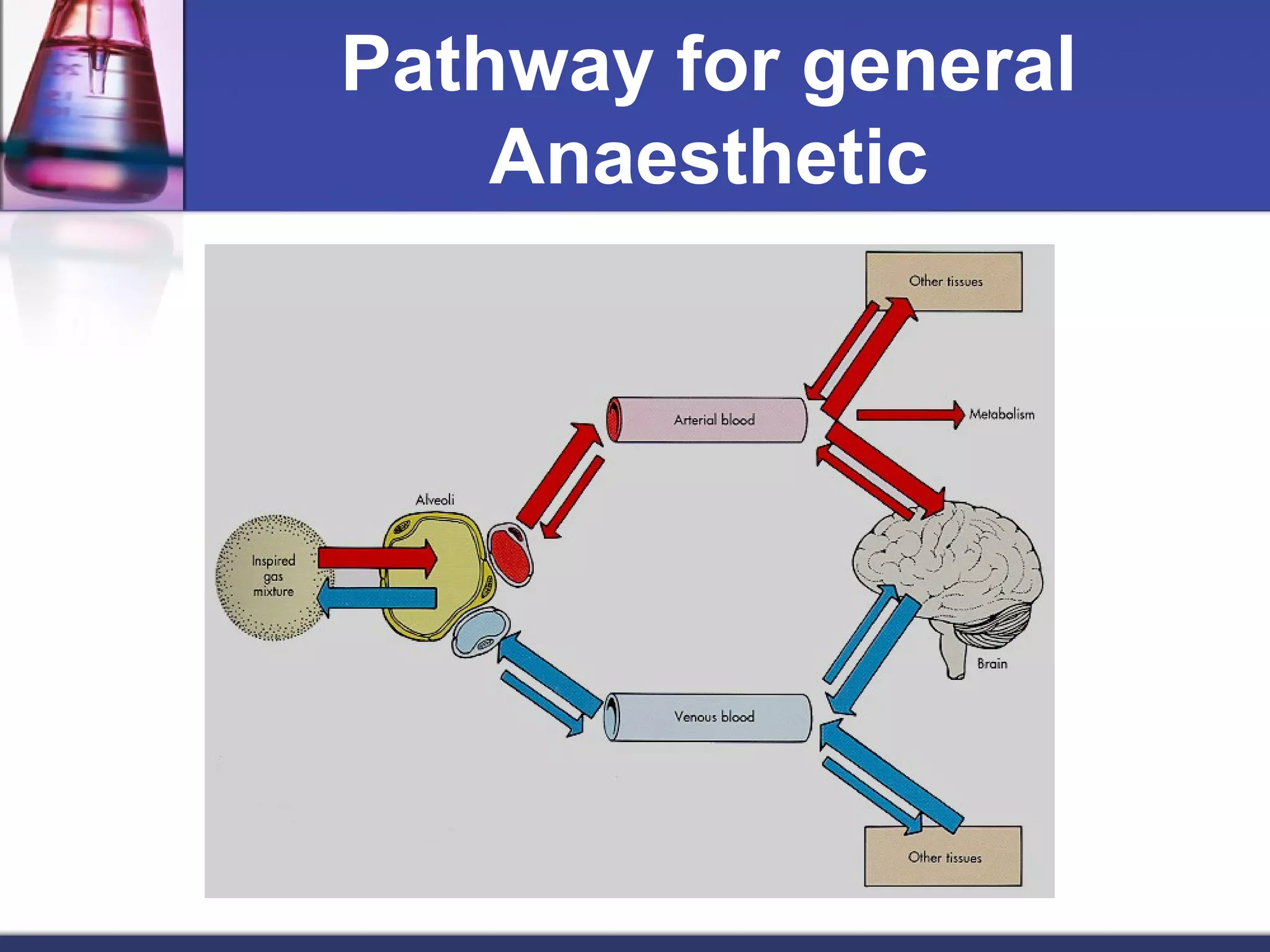
Pathway for general
Anaesthetic
Stages of General
Anesthesia
 Stage I - Analgesia
 Stage II - Disinhibition
 Stage III - Surgical anesthesia
 Stage IV - Medullary depression
Main Categories
 Inhalation Anesthetics
 Gasses or Vapors
 Usually Halogenated
 Intravenous Anesthetics
 Injections
 Anesthetics or induction agents
Inhalation Anesthetics
 Inhaled – may be liquid or gas
 Nitrous oxide – gas
 Halothane – liquid
 Several others that end with –ane
 Inhaled drugs are used together with IV
drugs to provide the best level of sedation
for the patient & procedure = Balanced
Anesthesia
Mechanisms of Action
o Activate K+
channels
o Block Na+
channels
o Disrupt membrane lipids
o In general, all general anesthetics increase
the cellular threshold for firing, thus
decreasing neuronal activity.
General Actions of Inhaled
Anesthetics
 Respiration
 Depressed respiration and response to CO2
 Kidney
 Depression of renal blood flow and urine output
 Muscle
 High enough concentrations will relax skeletal muscle
 Cardiovascular System
 Generalized reduction in arterial pressure and peripheral vascular
resistance. Isoflurane maintains CO and coronary function better than other
agents
 Central Nervous System
 Increased cerebral blood flow and decreased cerebral metabolism
Intravenous Anaesthetics
 Commonly used IV induction agents
– Propofol
– Thiopental sodium
– Ketamine
 Most exert their actions by potentiating GABAA receptor
 GABAergic actions may be similar to those of volatile
anesthetics, but act at different sites on receptor
Organ effects
 Most decrease cerebral metabolism and
intracranial pressure
 Most cause respiratory depression
 May cause apnea after induction of anesthesia
 Barbiturates, benzodiazepines and propofol cause
cardiovascular depression.
Thiopental sodium
 rapid onset (20 sec)
 short-acting
 Effect terminated not by metabolism but by
redistribution
 repeated administration or prolonged infusion
approached equilibrium at redistribution sites
 Build-up in adipose tissue = very long emergence
from anesthesia
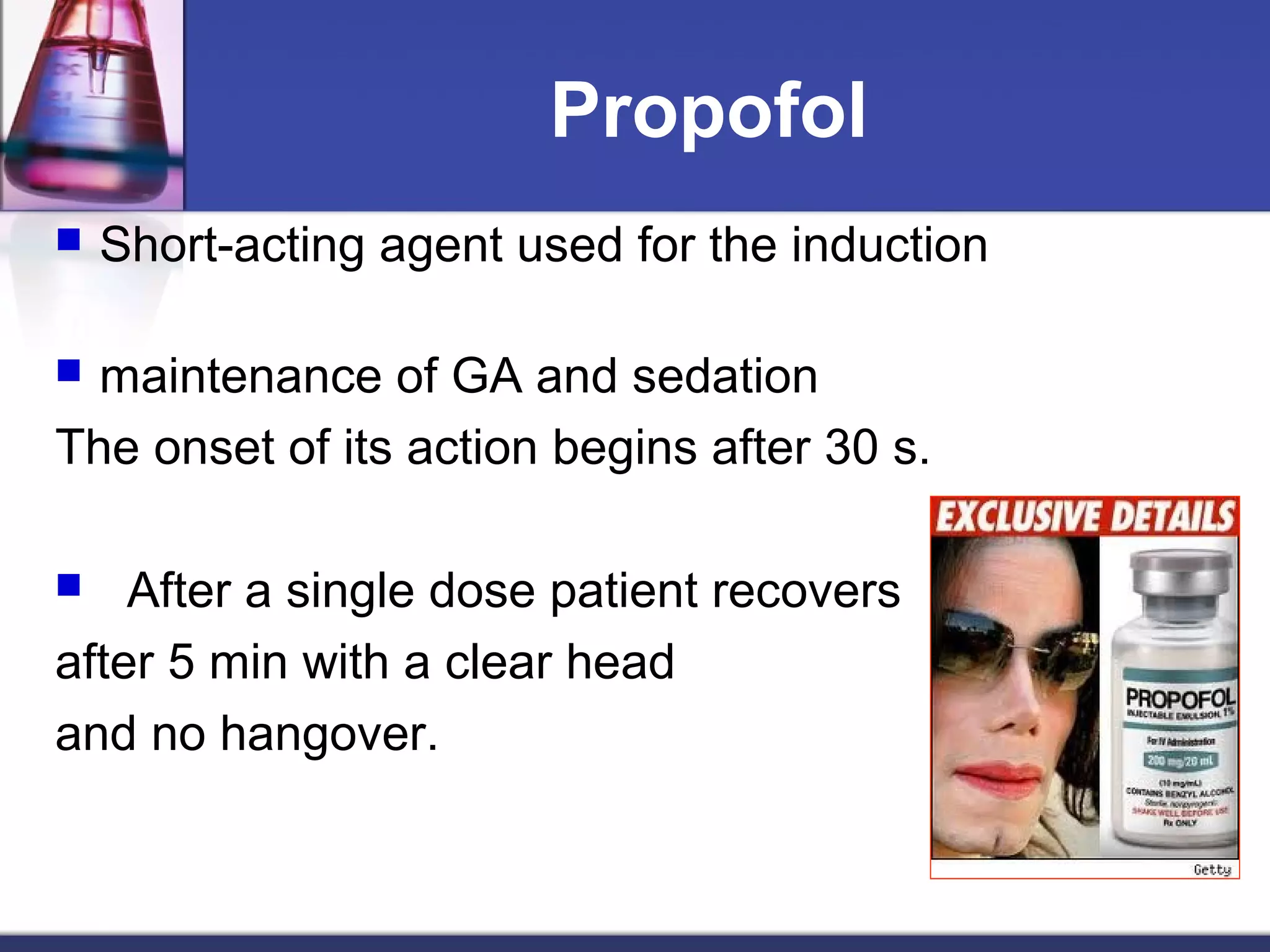
Propofol
 Short-acting agent used for the induction
 maintenance of GA and sedation
The onset of its action begins after 30 s.
 After a single dose patient recovers
after 5 min with a clear head
and no hangover.
Purpose
 Overall purposes of intravenous general
anaesthetic
 Opioid analgesic – pain relief
 Benzodiazepine – amnesia
 Anticholinergic – decreases secretions
 Opioid analgesics – lighter pain relief
 Sedative/hypnotic – lighter amnesia/sedation
Toxicity and side effects
 Depression of respiratory drive
 Decreased CO2 drive (medullary chemoreceptor's),
Takes MORE CO2 to stimulate respiration
 Depressed cardiovascular drive
 Gaseous space enlargement by NO
 Fluoride-ion toxicity from methoxyflurane
 Metabolized in liver = release of Fluoride ions
 Decreased renal function allows fluoride to accumulate =
nephrotoxicity
 Malignant hyperthermia
 Rapidly cool the individual and administer Dantrolene to
block S.R. release of Calcium.
Local Anaesthetic
• Local Anaesthetics are drugs which
reversibly prevent the transmission of pain
stimuli locally at their site of administration.
• The clinical uses and responses of LA s
depend both on the drug selected and the
site of administration.
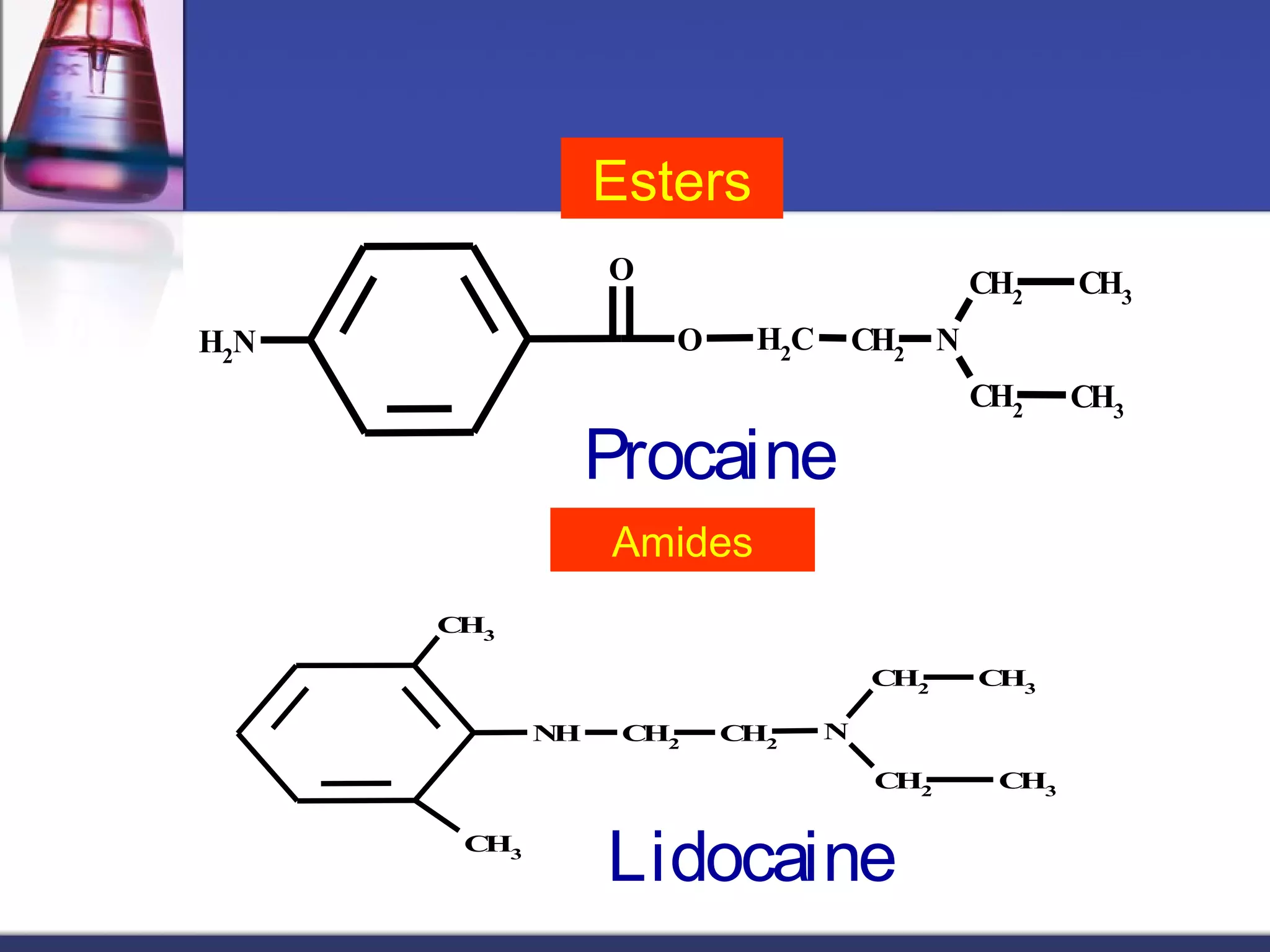
Esters
NH2
O
O CH2 CH2
N
CH2
CH2
CH3
CH3
Amides
CH3
CH3
NH CH2
CH2
N
CH2
CH3
CH2 CH3
Procaine
Lidocaine
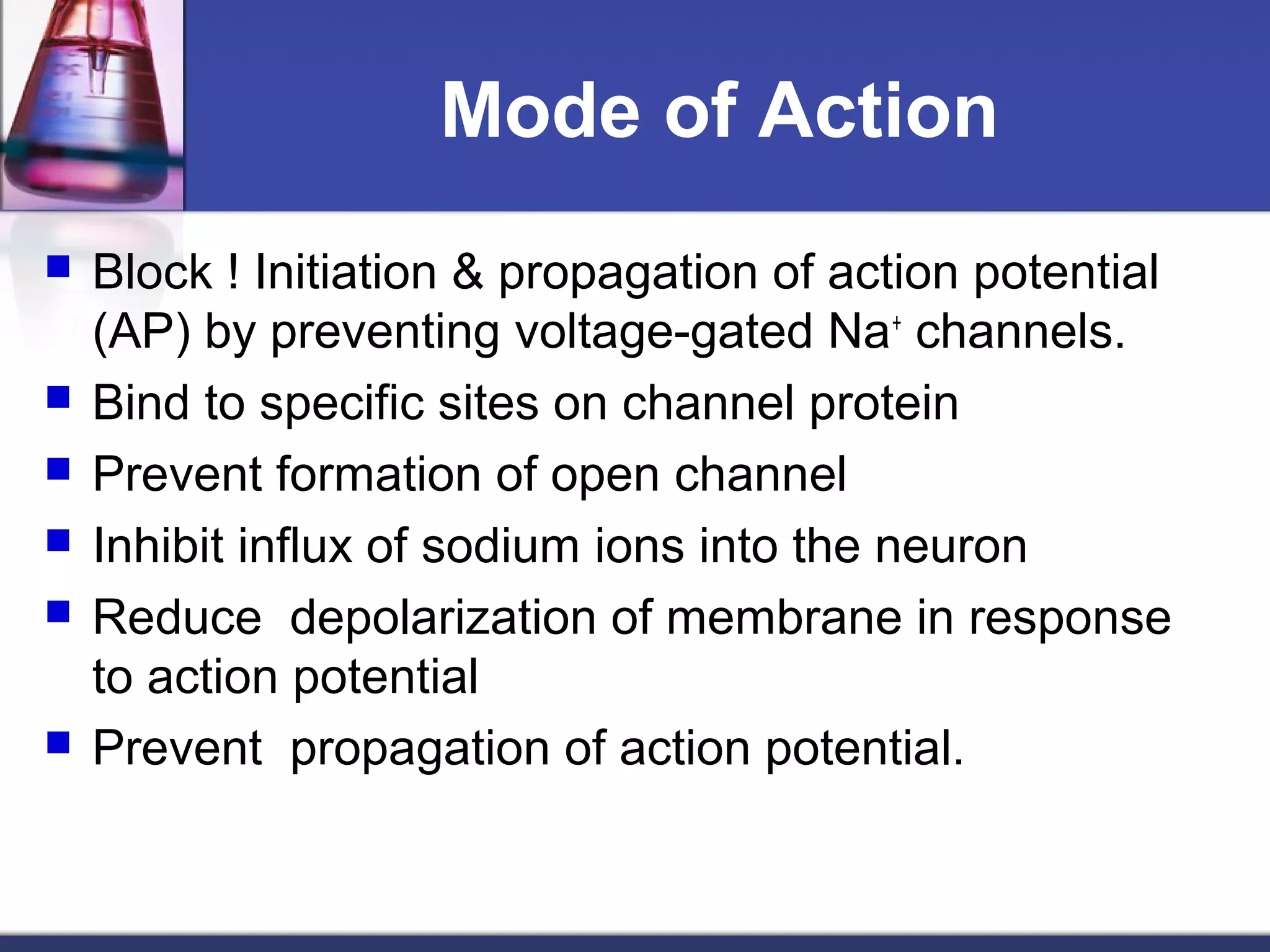
Mode of Action
 Block ! Initiation & propagation of action potential
(AP) by preventing voltage-gated Na+
channels.
 Bind to specific sites on channel protein
 Prevent formation of open channel
 Inhibit influx of sodium ions into the neuron
 Reduce depolarization of membrane in response
to action potential
 Prevent propagation of action potential.
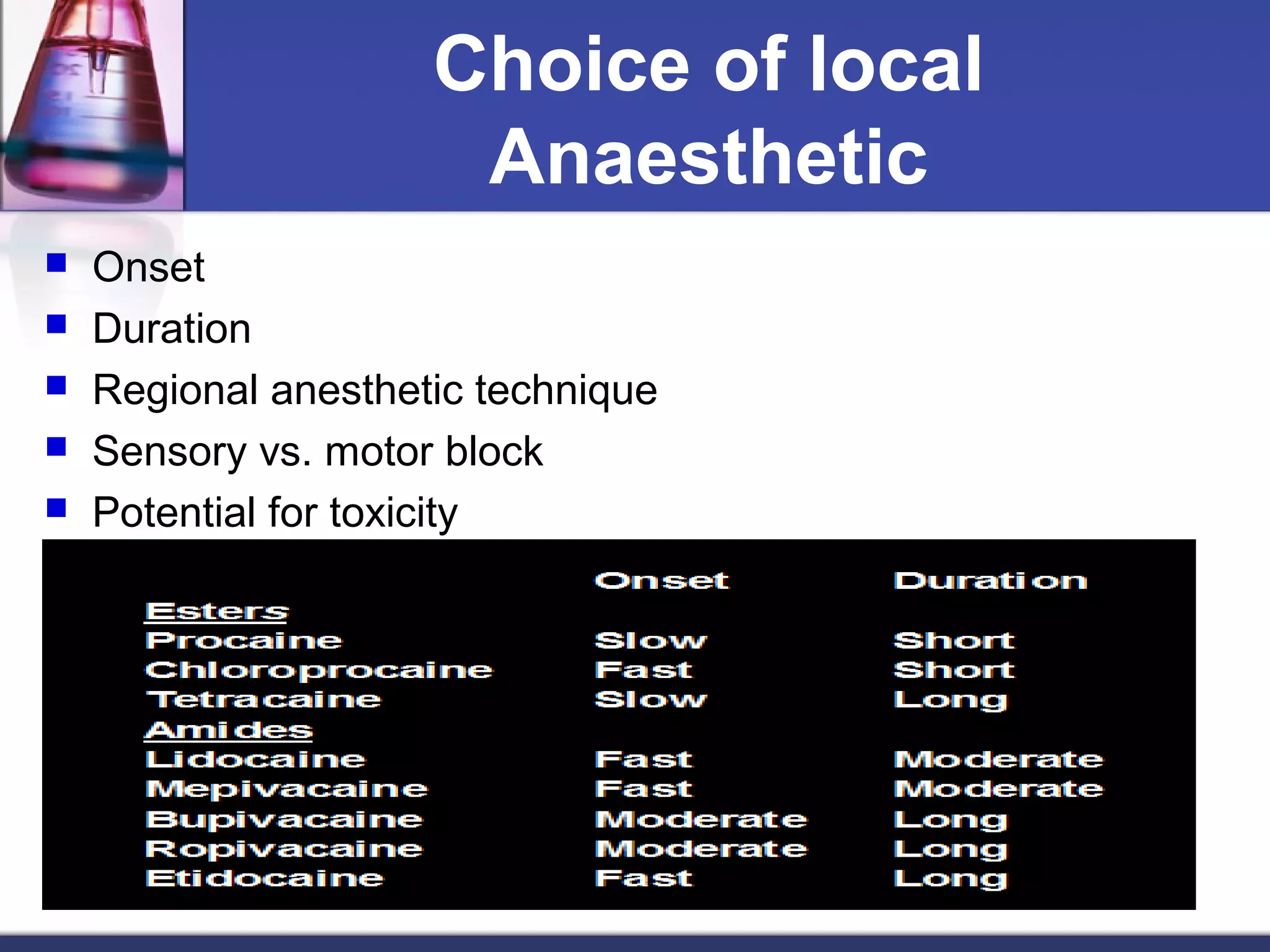
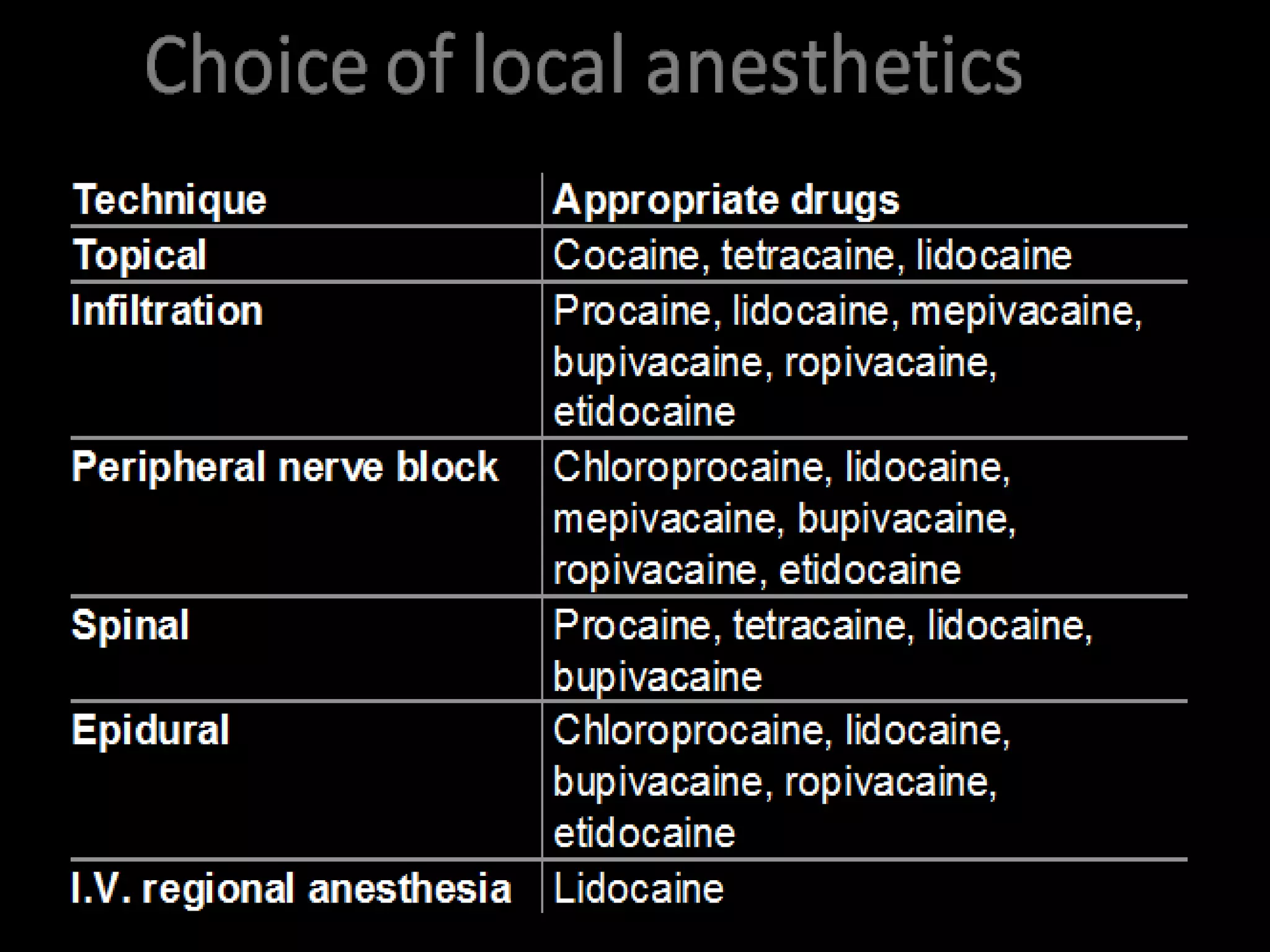
Choice of local
Anaesthetic
 Onset
 Duration
 Regional anesthetic technique
 Sensory vs. motor block
 Potential for toxicity
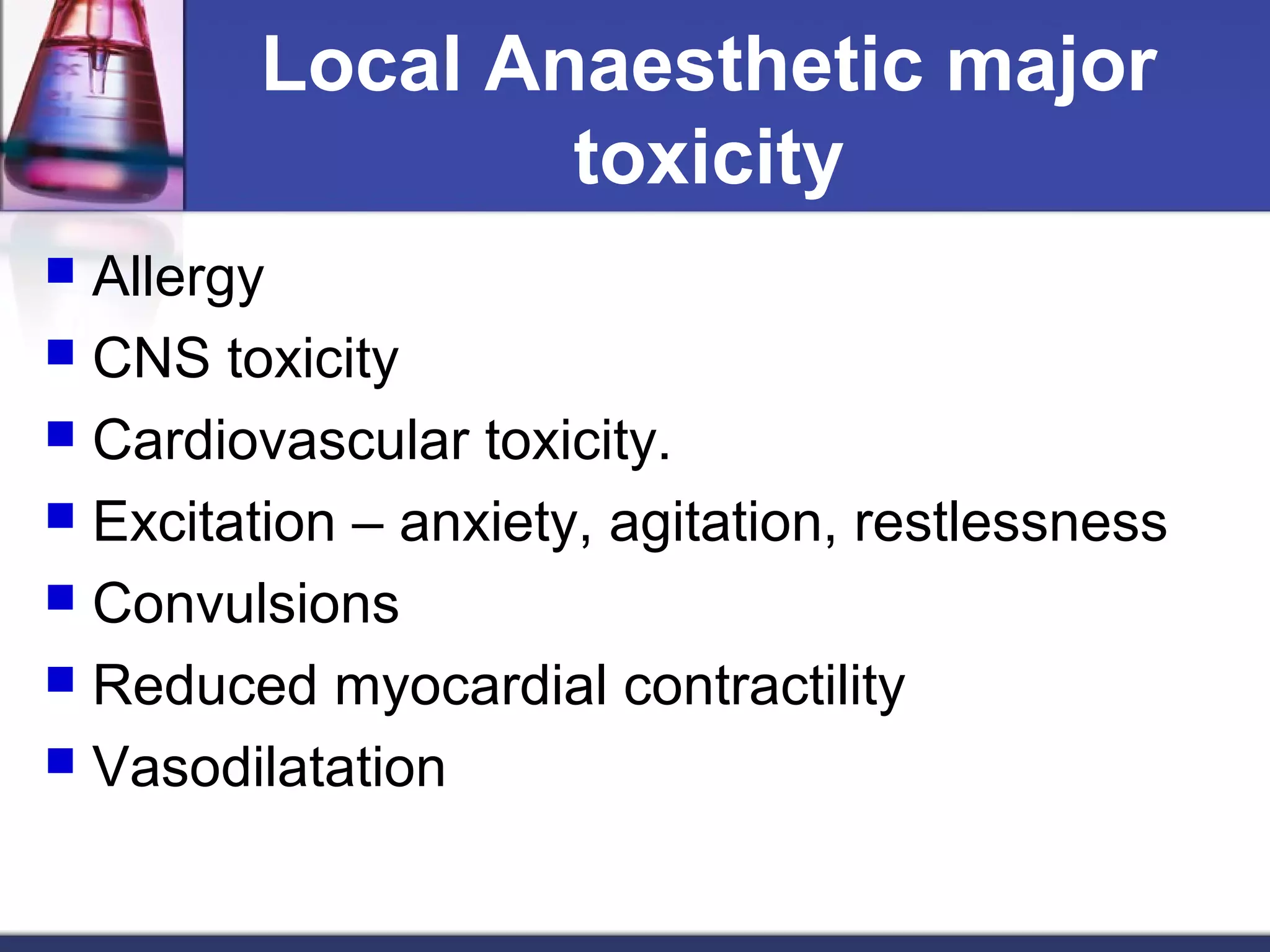
Local Anaesthetic major
toxicity
 Allergy
 CNS toxicity
 Cardiovascular toxicity.
 Excitation – anxiety, agitation, restlessness
 Convulsions
 Reduced myocardial contractility
 Vasodilatation
Thank You

chayan Anesthetics

  • 1.
    Anesthetics Prepared by Chayan DharClinton B.Pharm (Hon’s) Department of pharmacy, IIUC
  • 2.
    General Anesthetics  Adrug that brings about a reversible loss of consciousness  Causes one or more of the following  Pain relief  Muscle relaxation  Relaxation of reflexes  Deep sleep  Commonly used during surgery
  • 3.
  • 4.
    Stages of General Anesthesia Stage I - Analgesia  Stage II - Disinhibition  Stage III - Surgical anesthesia  Stage IV - Medullary depression
  • 5.
    Main Categories  InhalationAnesthetics  Gasses or Vapors  Usually Halogenated  Intravenous Anesthetics  Injections  Anesthetics or induction agents
  • 6.
    Inhalation Anesthetics  Inhaled– may be liquid or gas  Nitrous oxide – gas  Halothane – liquid  Several others that end with –ane  Inhaled drugs are used together with IV drugs to provide the best level of sedation for the patient & procedure = Balanced Anesthesia
  • 7.
    Mechanisms of Action oActivate K+ channels o Block Na+ channels o Disrupt membrane lipids o In general, all general anesthetics increase the cellular threshold for firing, thus decreasing neuronal activity.
  • 8.
    General Actions ofInhaled Anesthetics  Respiration  Depressed respiration and response to CO2  Kidney  Depression of renal blood flow and urine output  Muscle  High enough concentrations will relax skeletal muscle  Cardiovascular System  Generalized reduction in arterial pressure and peripheral vascular resistance. Isoflurane maintains CO and coronary function better than other agents  Central Nervous System  Increased cerebral blood flow and decreased cerebral metabolism
  • 9.
    Intravenous Anaesthetics  Commonlyused IV induction agents – Propofol – Thiopental sodium – Ketamine  Most exert their actions by potentiating GABAA receptor  GABAergic actions may be similar to those of volatile anesthetics, but act at different sites on receptor
  • 10.
    Organ effects  Mostdecrease cerebral metabolism and intracranial pressure  Most cause respiratory depression  May cause apnea after induction of anesthesia  Barbiturates, benzodiazepines and propofol cause cardiovascular depression.
  • 11.
    Thiopental sodium  rapidonset (20 sec)  short-acting  Effect terminated not by metabolism but by redistribution  repeated administration or prolonged infusion approached equilibrium at redistribution sites  Build-up in adipose tissue = very long emergence from anesthesia
  • 12.
    Propofol  Short-acting agentused for the induction  maintenance of GA and sedation The onset of its action begins after 30 s.  After a single dose patient recovers after 5 min with a clear head and no hangover.
  • 13.
    Purpose  Overall purposesof intravenous general anaesthetic  Opioid analgesic – pain relief  Benzodiazepine – amnesia  Anticholinergic – decreases secretions  Opioid analgesics – lighter pain relief  Sedative/hypnotic – lighter amnesia/sedation
  • 14.
    Toxicity and sideeffects  Depression of respiratory drive  Decreased CO2 drive (medullary chemoreceptor's), Takes MORE CO2 to stimulate respiration  Depressed cardiovascular drive  Gaseous space enlargement by NO  Fluoride-ion toxicity from methoxyflurane  Metabolized in liver = release of Fluoride ions  Decreased renal function allows fluoride to accumulate = nephrotoxicity  Malignant hyperthermia  Rapidly cool the individual and administer Dantrolene to block S.R. release of Calcium.
  • 15.
    Local Anaesthetic • LocalAnaesthetics are drugs which reversibly prevent the transmission of pain stimuli locally at their site of administration. • The clinical uses and responses of LA s depend both on the drug selected and the site of administration.
  • 16.
    Esters NH2 O O CH2 CH2 N CH2 CH2 CH3 CH3 Amides CH3 CH3 NHCH2 CH2 N CH2 CH3 CH2 CH3 Procaine Lidocaine
  • 17.
    Mode of Action Block ! Initiation & propagation of action potential (AP) by preventing voltage-gated Na+ channels.  Bind to specific sites on channel protein  Prevent formation of open channel  Inhibit influx of sodium ions into the neuron  Reduce depolarization of membrane in response to action potential  Prevent propagation of action potential.
  • 18.
    Choice of local Anaesthetic Onset  Duration  Regional anesthetic technique  Sensory vs. motor block  Potential for toxicity
  • 20.
    Local Anaesthetic major toxicity Allergy  CNS toxicity  Cardiovascular toxicity.  Excitation – anxiety, agitation, restlessness  Convulsions  Reduced myocardial contractility  Vasodilatation
  • 21.

Editor's Notes

  • #5 Stage I: Disorientation, altered consciousness Stage II: Excitatory stage, delirium, uncontrolled movement, irregular breathing. Goal is to move through this stage as rapidly as possible. Stage III: Surgical anesthesia; return of regular respiration. Plane 1: “light” anesthesia Plane 2: Loss of blink reflex, regular respiration . Surgical procedures can be performed at this stage. Plane 3: Deep anesthesia. Shallow breathing, assisted ventilation needed. Level of anesthesia for painful surgeries Plane 4: Diaphragmatic respiration only, assisted ventilation is required. Cardiovascular impairment. Stage IV: Too deep; essentially an overdose and represents anesthetic crisis. This is the stage between respiratory arrest and death due to circulatory collapse.