Introduction of Family Planning
Objectives
At the end of the class students will be able to:
1. Introduction of family planning
2. Constrains of family planning in Pakistan
3. Consequences of population growth in Pakistan
4. Methods of family planning
5. Action & side effects of different methods
6. Role of Nurse in motivating and counseling the client for
Family Planning in community setting
Introduction
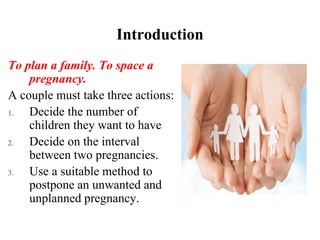
To plan a family. To space a
pregnancy.
A couple must take three actions:
1. Decide the number of
children they want to have
2. Decide on the interval
between two pregnancies.
3. Use a suitable method to
postpone an unwanted and
unplanned pregnancy.
Teens & Pregnancy
• 5 millions teens became pregnant in every year in
Pakistan.
• 512,000 of these teens gave birth
• Most teens do not plan to have sex the first time
forget to use a birth control method
Estimated Annual Cases of STD’s
(WHO)
• 333 million worldwide
• 15.3 million in U.S.
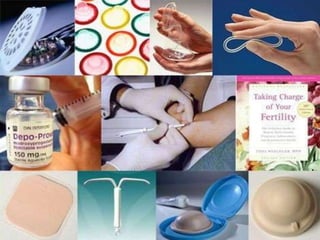
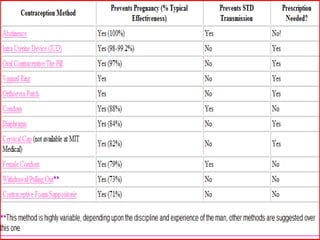
Types of Birth Control
• Hormonal
• Barrier
• IUD
• Methods
based on
information
• Permanent
sterilization
R
Hormonal Methods
• Oral Contraceptives (Birth Control Pill)
• Injections (Depo-Provera)
• Implants (Norplant I & II)
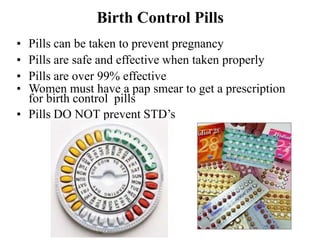
Birth Control Pills
• Pills can be taken to prevent pregnancy
• Pills are safe and effective when taken properly
• Pills are over 99% effective
• Women must have a pap smear to get a prescription
for birth control pills
• Pills DO NOT prevent STD’s
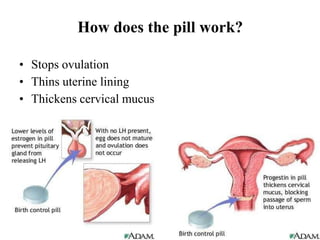
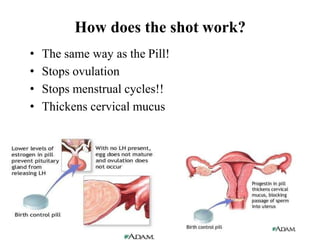
How does the pill work?
• Stops ovulation
• Thins uterine lining
• Thickens cervical mucus
Positive Benefits of Birth Control
Pills
 Prevents pregnancy
 Eases menstrual
cramps
 Shortens period
 Regulates period
 Decreases
incidence of
ovarian cysts
 Prevents ovarian and
uterine cancer
 Decreases acne
• Breast tenderness
• Nausea
• Increase in
headaches
• Moodiness
• Weight change
• Spotting
Side-effects
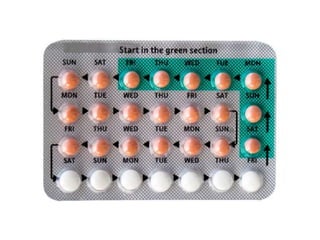
Taking the Pill
• Once a day at the same time everyday
• Use condoms for first month
• Use condoms when on antibiotics
• Use condoms for 1 week if you miss a pill or
take one late
• The pill offers no protection from STD’s
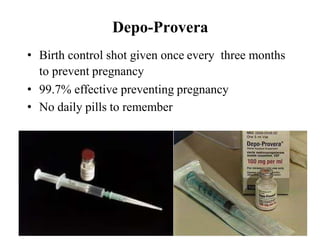
Depo-Provera
• Birth control shot given once every three months
to prevent pregnancy
• 99.7% effective preventing pregnancy
• No daily pills to remember
How does the shot work?
• The same way as the Pill!
• Stops ovulation
• Stops menstrual cycles!!
• Thickens cervical mucus
Side Effects
• Extremely irregular menstrual bleeding and spotting
for 3-6 months!
• NO PERIOD (after 3-6 months)
• Weight change
• Breast tenderness
• Mood change
*NOT EVERY WOMAN HAS SIDE-EFFECTS!
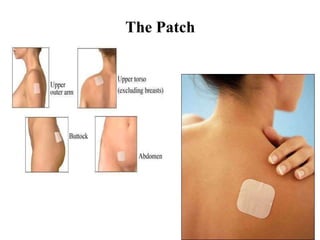
The Patch
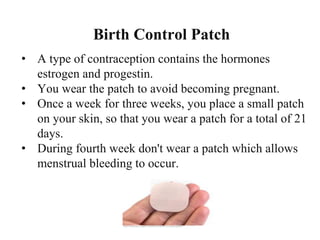
Birth Control Patch
• A type of contraception contains the hormones
estrogen and progestin.
• You wear the patch to avoid becoming pregnant.
• Once a week for three weeks, you place a small patch
on your skin, so that you wear a patch for a total of 21
days.
• During fourth week don't wear a patch which allows
menstrual bleeding to occur.
Side effects may occur…..
• Bleeding or spotting
• Skin irritation
• Breast tenderness or pain
• Menstrual pain
• Headaches
• Nausea or vomiting
• Abdominal pain
• Mood swings
• Weight gain
• Dizziness
• Acne
• Diarrhea
• Muscle spasms
• Vaginal infections and
discharge
• Fatigue
Implants
• Implants are placed in the body filled with
hormone that prevents pregnancy
• Physically inserted in simple 15 minute
outpatient procedure
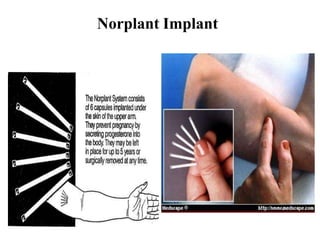
• Plastic capsules the size of paper matchsticks
inserted under the skin in the arm
• 99.95% effectiveness rate
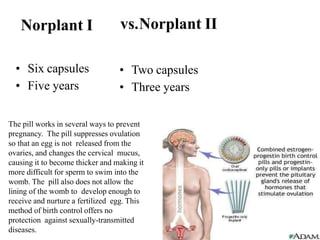
Norplant I vs.Norplant II
• Two capsules
• Three years
• Six capsules
• Five years
The pill works in several ways to prevent
pregnancy. The pill suppresses ovulation
so that an egg is not released from the
ovaries, and changes the cervical mucus,
causing it to become thicker and making it
more difficult for sperm to swim into the
womb. The pill also does not allow the
lining of the womb to develop enough to
receive and nurture a fertilized egg. This
method of birth control offers no
protection against sexually-transmitted
diseases.
Norplant Implant
Norplant Considerations
• Should be considered long term birth control
• Requires no upkeep
• Extremely effective in pregnancy prevention
> 99%
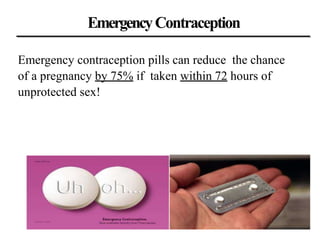
Emergency contraception pills can reduce the chance
of a pregnancy by 75% if taken within 72 hours of
unprotected sex!
EmergencyContraception
Emergency Contraception (ECP)
• Must be taken within 72 hours of the act of
unprotected intercourse or failure of contraception
method
• Must receive ECP from a physician
• 75 – 84% effective in reducing pregnancy
ECP
• Floods the ovaries with high amount of
hormoneand prevents ovulation
• Alters the environment of the uterus, making it
disruptive to the egg and sperm
• Two sets of pills taken exactly 12 hours apart
Barrier Methods
• Spermicides
• Male Condom
• Female Condom
• Diaphragm
• Cervical Cap
Barrier Method
• Prevents pregnancy blocks the egg and sperm
from meeting
• Barrier methods have higher failure rates than
hormonal methods due to design and human error
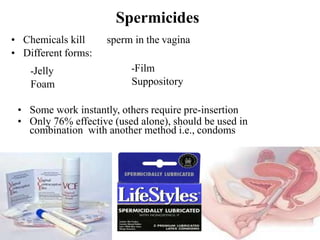
Spermicides
• Chemicals kill sperm in the vagina
• Different forms:
-Jelly
Foam
-Film
Suppository
• Some work instantly, others require pre-insertion
• Only 76% effective (used alone), should be used in
combination with another method i.e., condoms
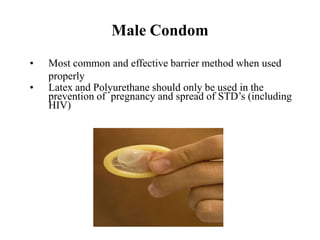
Male Condom
• Most common and effective barrier method when used
properly
• Latex and Polyurethane should only be used in the
prevention of pregnancy and spread of STD’s (including
HIV)
Male Condom
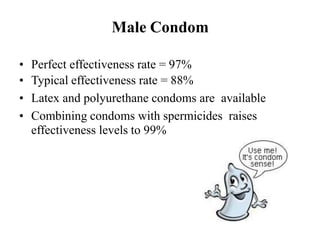
• Perfect effectiveness rate = 97%
• Typical effectiveness rate = 88%
• Latex and polyurethane condoms are available
• Combining condoms with spermicides raises
effectiveness levels to 99%
Female Condom
• Made as an alternative to male condoms
• Polyurethane
• Physically inserted in the vagina
• Perfect rate = 95%
• Typical rate = 79%
• Woman can use female condom if partner refuses
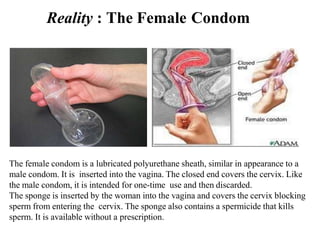
Reality : The Female Condom
The female condom is a lubricated polyurethane sheath, similar in appearance to a
male condom. It is inserted into the vagina. The closed end covers the cervix. Like
the male condom, it is intended for one-time use and then discarded.
The sponge is inserted by the woman into the vagina and covers the cervix blocking
sperm from entering the cervix. The sponge also contains a spermicide that kills
sperm. It is available without a prescription.
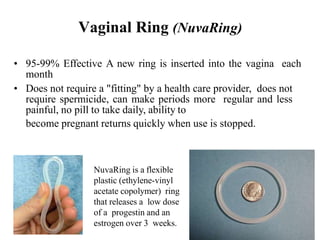
Vaginal Ring (NuvaRing)
• 95-99% Effective A new ring is inserted into the vagina each
month
• Does not require a "fitting" by a health care provider, does not
require spermicide, can make periods more regular and less
painful, no pill to take daily, ability to
become pregnant returns quickly when use is stopped.
NuvaRing is a flexible
plastic (ethylene-vinyl
acetate copolymer) ring
that releases a low dose
of a progestin and an
estrogen over 3 weeks.
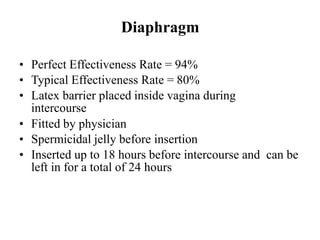
Diaphragm
• Perfect Effectiveness Rate = 94%
• Typical Effectiveness Rate = 80%
• Latex barrier placed inside vagina during
intercourse
• Fitted by physician
• Spermicidal jelly before insertion
• Inserted up to 18 hours before intercourse and can be
left in for a total of 24 hours
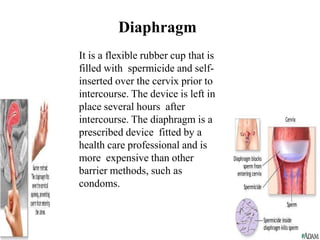
Diaphragm
It is a flexible rubber cup that is
filled with spermicide and self-
inserted over the cervix prior to
intercourse. The device is left in
place several hours after
intercourse. The diaphragm is a
prescribed device fitted by a
health care professional and is
more expensive than other
barrier methods, such as
condoms.
Cervical Cap
• Latex barrier inserted in vagina before
intercourse
• “Caps” around cervix with suction
• Fill with spermicidal jelly prior to use
• Can be left in body for up to a total of 48 hours
• Must be left in place six hours after sexual
intercourse
• Perfect effectiveness rate = 91%
• Typical effectiveness rate = 80%
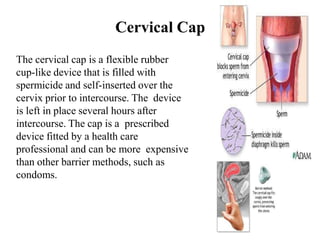
Cervical Cap
The cervical cap is a flexible rubber
cup-like device that is filled with
spermicide and self-inserted over the
cervix prior to intercourse. The device
is left in place several hours after
intercourse. The cap is a prescribed
device fitted by a health care
professional and can be more expensive
than other barrier methods, such as
condoms.
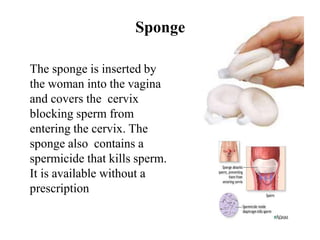
Sponge
The sponge is inserted by
the woman into the vagina
and covers the cervix
blocking sperm from
entering the cervix. The
sponge also contains a
spermicide that kills sperm.
It is available without a
prescription
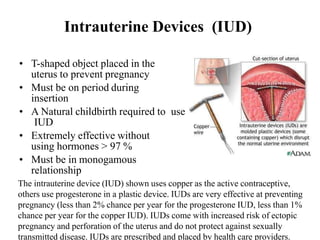
Intrauterine Devices (IUD)
• T-shaped object placed in the
uterus to prevent pregnancy
• Must be on period during
insertion
• A Natural childbirth required to use
IUD
• Extremely effective without
using hormones > 97 %
• Must be in monogamous
relationship
The intrauterine device (IUD) shown uses copper as the active contraceptive,
others use progesterone in a plastic device. IUDs are very effective at preventing
pregnancy (less than 2% chance per year for the progesterone IUD, less than 1%
chance per year for the copper IUD). IUDs come with increased risk of ectopic
pregnancy and perforation of the uterus and do not protect against sexually
transmitted disease. IUDs are prescribed and placed by health care providers.
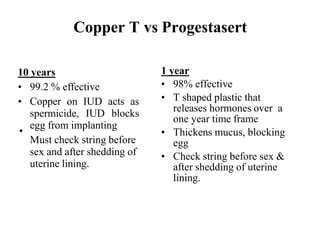
Copper T vs Progestasert
•
10 years
• 99.2 % effective
• Copper on IUD acts as
spermicide, IUD blocks
egg from implanting
Must check string before
sex and after shedding of
uterine lining.
1 year
• 98% effective
• T shaped plastic that
releases hormones over a
one year time frame
• Thickens mucus, blocking
egg
• Check string before sex &
after shedding of uterine
lining.
Sterilization
• Procedure performed on a man or a woman
permanently sterilizes
• Female = Tubal Ligation
• Male = Vasectomy
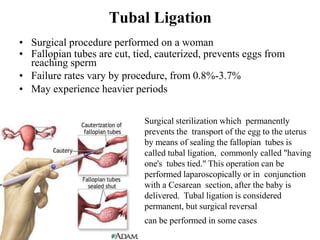
Tubal Ligation
• Surgical procedure performed on a woman
• Fallopian tubes are cut, tied, cauterized, prevents eggs from
reaching sperm
• Failure rates vary by procedure, from 0.8%-3.7%
• May experience heavier periods
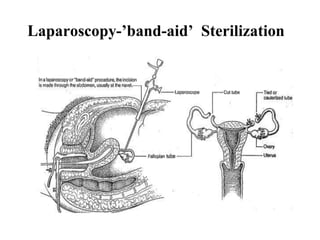
Surgical sterilization which permanently
prevents the transport of the egg to the uterus
by means of sealing the fallopian tubes is
called tubal ligation, commonly called "having
one's tubes tied." This operation can be
performed laparoscopically or in conjunction
with a Cesarean section, after the baby is
delivered. Tubal ligation is considered
permanent, but surgical reversal
can be performed in some cases
Laparoscopy-’band-aid’ Sterilization
Vasectomy
• Male sterilization procedure
• Ligation of Vas Deferens tube
• No-scalpel technique available
• Faster and easier recovery than a tubal ligation
• Failure rate = 0.1%, more effective than female
sterilization
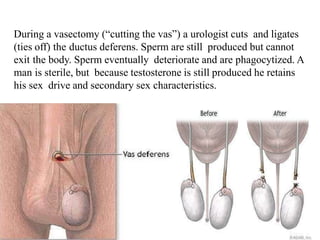
During a vasectomy (“cutting the vas”) a urologist cuts and ligates
(ties off) the ductus deferens. Sperm are still produced but cannot
exit the body. Sperm eventually deteriorate and are phagocytized. A
man is sterile, but because testosterone is still produced he retains
his sex drive and secondary sex characteristics.
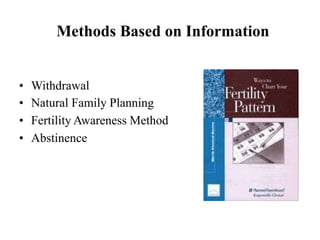
Methods Based on Information
• Withdrawal
• Natural Family Planning
• Fertility Awareness Method
• Abstinence
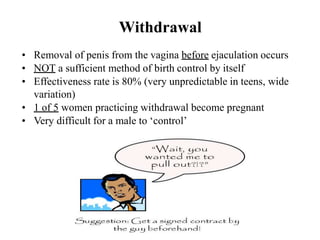
Withdrawal
• Removal of penis from the vagina before ejaculation occurs
• NOT a sufficient method of birth control by itself
• Effectiveness rate is 80% (very unpredictable in teens, wide
variation)
• 1 of 5 women practicing withdrawal become pregnant
• Very difficult for a male to ‘control’
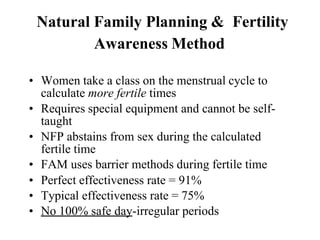
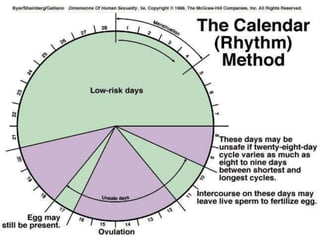
Natural Family Planning & Fertility
Awareness Method
• Women take a class on the menstrual cycle to
calculate more fertile times
• Requires special equipment and cannot be self-
taught
• NFP abstains from sex during the calculated
fertile time
• FAM uses barrier methods during fertile time
• Perfect effectiveness rate = 91%
• Typical effectiveness rate = 75%
• No 100% safe day-irregular periods
Something to Think About…
Couples who use no birth control have a 85% chance
of a pregnancy within the first year.
Will you be one of the 512,000 of the teens that gave
birth in 2000?
Adverse Effects of Over Population:
Social effects
1. Increased number of children.
2. Sub-division of agricultural land.
3. Shortage of food.
4. Shortage of health facilities.
5. Shortage of housing facilities.
6. Shortage of educational facilities.
7. Un-employment.
Environmental Effects
1. Migration to urban areas.
2. Over crowding in the cities.
3. Transport problems.
4. Climate changes.
Health of Mother and Child
1. Complication of grand multipara.
2. Complication according to birth order, as fetal
mortality rate, low level of intelligence quotient,
height & wt. of children decrease.
Factors affecting Family Planning
The main factors are:
1. Culture & society.
2. Our religious & personal beliefs.
3. Level of education & knowledge.
4. Available resources.
5. F.P services.
6. Fear of side effects of contraceptives, & false
rumors.
Advantages of Family Planning
Socio-Economic Justice:
1. Parents can enjoy with each child fully.
2. Sexual life is happy as fear of pregnancy is
eliminated.
3. Fewer worries and lower tension.
4. Beneficial to the families with low-income.
5. Less literacy and more medical care.
6. Fruitful to the country as a whole, by raising
economic level and improving general health of
overall population.
Religion & Family Planning:
 Does Islam forbid F.P?
 There is an Aya in the Quran, which states
“ Do not kill your children in fear of want”. Does this
apply to F.P?
Contraception & contraceptives:
“ Contraception” to practice a method to prevent an
unwanted pregnancy. Also called regulation of
fertility.
“ Contraceptive “ the method used to prevent pregnancy.
Service Delivery Units
 Family Welfare Centre (FWC)
 Reproductive Health Services Centers
 BHUs
 THQs
 Tertiary Healthcare
 Mobile Service Units (MSUs)
 NGOs
 Private Clinics
 These provide a package of quality Family
Planning/Reproductive Health (FP/RH) services to
married couple.
Role of Nurse
The following factors should be considered while giving
advise on FP
1. Health of the mother
2. Health of children
3. Health of the father
4. Socioeconomic conditions
www.plannedparenthood.org/bc Hatcher,
Robert, MD Contraceptive Technology ,17ed. (2001)
References

Family Planning and it's methods and side affects

  • 1.
  • 2.
    Objectives At the endof the class students will be able to: 1. Introduction of family planning 2. Constrains of family planning in Pakistan 3. Consequences of population growth in Pakistan 4. Methods of family planning 5. Action & side effects of different methods 6. Role of Nurse in motivating and counseling the client for Family Planning in community setting
  • 3.
    Introduction To plan afamily. To space a pregnancy. A couple must take three actions: 1. Decide the number of children they want to have 2. Decide on the interval between two pregnancies. 3. Use a suitable method to postpone an unwanted and unplanned pregnancy.
  • 4.
    Teens & Pregnancy •5 millions teens became pregnant in every year in Pakistan. • 512,000 of these teens gave birth • Most teens do not plan to have sex the first time forget to use a birth control method
  • 5.
    Estimated Annual Casesof STD’s (WHO) • 333 million worldwide • 15.3 million in U.S.
  • 6.
    Types of BirthControl • Hormonal • Barrier • IUD • Methods based on information • Permanent sterilization R
  • 8.
    Hormonal Methods • OralContraceptives (Birth Control Pill) • Injections (Depo-Provera) • Implants (Norplant I & II)
  • 9.
    Birth Control Pills •Pills can be taken to prevent pregnancy • Pills are safe and effective when taken properly • Pills are over 99% effective • Women must have a pap smear to get a prescription for birth control pills • Pills DO NOT prevent STD’s
  • 10.
    How does thepill work? • Stops ovulation • Thins uterine lining • Thickens cervical mucus
  • 11.
    Positive Benefits ofBirth Control Pills  Prevents pregnancy  Eases menstrual cramps  Shortens period  Regulates period  Decreases incidence of ovarian cysts  Prevents ovarian and uterine cancer  Decreases acne • Breast tenderness • Nausea • Increase in headaches • Moodiness • Weight change • Spotting Side-effects
  • 12.
    Taking the Pill •Once a day at the same time everyday • Use condoms for first month • Use condoms when on antibiotics • Use condoms for 1 week if you miss a pill or take one late • The pill offers no protection from STD’s
  • 14.
    Depo-Provera • Birth controlshot given once every three months to prevent pregnancy • 99.7% effective preventing pregnancy • No daily pills to remember
  • 15.
    How does theshot work? • The same way as the Pill! • Stops ovulation • Stops menstrual cycles!! • Thickens cervical mucus
  • 16.
    Side Effects • Extremelyirregular menstrual bleeding and spotting for 3-6 months! • NO PERIOD (after 3-6 months) • Weight change • Breast tenderness • Mood change *NOT EVERY WOMAN HAS SIDE-EFFECTS!
  • 17.
  • 18.
    Birth Control Patch •A type of contraception contains the hormones estrogen and progestin. • You wear the patch to avoid becoming pregnant. • Once a week for three weeks, you place a small patch on your skin, so that you wear a patch for a total of 21 days. • During fourth week don't wear a patch which allows menstrual bleeding to occur.
  • 19.
    Side effects mayoccur….. • Bleeding or spotting • Skin irritation • Breast tenderness or pain • Menstrual pain • Headaches • Nausea or vomiting • Abdominal pain • Mood swings • Weight gain • Dizziness • Acne • Diarrhea • Muscle spasms • Vaginal infections and discharge • Fatigue
  • 20.
    Implants • Implants areplaced in the body filled with hormone that prevents pregnancy • Physically inserted in simple 15 minute outpatient procedure • Plastic capsules the size of paper matchsticks inserted under the skin in the arm • 99.95% effectiveness rate
  • 21.
    Norplant I vs.NorplantII • Two capsules • Three years • Six capsules • Five years The pill works in several ways to prevent pregnancy. The pill suppresses ovulation so that an egg is not released from the ovaries, and changes the cervical mucus, causing it to become thicker and making it more difficult for sperm to swim into the womb. The pill also does not allow the lining of the womb to develop enough to receive and nurture a fertilized egg. This method of birth control offers no protection against sexually-transmitted diseases.
  • 22.
  • 23.
    Norplant Considerations • Shouldbe considered long term birth control • Requires no upkeep • Extremely effective in pregnancy prevention > 99%
  • 24.
    Emergency contraception pillscan reduce the chance of a pregnancy by 75% if taken within 72 hours of unprotected sex! EmergencyContraception
  • 25.
    Emergency Contraception (ECP) •Must be taken within 72 hours of the act of unprotected intercourse or failure of contraception method • Must receive ECP from a physician • 75 – 84% effective in reducing pregnancy
  • 26.
    ECP • Floods theovaries with high amount of hormoneand prevents ovulation • Alters the environment of the uterus, making it disruptive to the egg and sperm • Two sets of pills taken exactly 12 hours apart
  • 27.
    Barrier Methods • Spermicides •Male Condom • Female Condom • Diaphragm • Cervical Cap
  • 28.
    Barrier Method • Preventspregnancy blocks the egg and sperm from meeting • Barrier methods have higher failure rates than hormonal methods due to design and human error
  • 29.
    Spermicides • Chemicals killsperm in the vagina • Different forms: -Jelly Foam -Film Suppository • Some work instantly, others require pre-insertion • Only 76% effective (used alone), should be used in combination with another method i.e., condoms
  • 30.
    Male Condom • Mostcommon and effective barrier method when used properly • Latex and Polyurethane should only be used in the prevention of pregnancy and spread of STD’s (including HIV)
  • 31.
    Male Condom • Perfecteffectiveness rate = 97% • Typical effectiveness rate = 88% • Latex and polyurethane condoms are available • Combining condoms with spermicides raises effectiveness levels to 99%
  • 32.
    Female Condom • Madeas an alternative to male condoms • Polyurethane • Physically inserted in the vagina • Perfect rate = 95% • Typical rate = 79% • Woman can use female condom if partner refuses
  • 33.
    Reality : TheFemale Condom The female condom is a lubricated polyurethane sheath, similar in appearance to a male condom. It is inserted into the vagina. The closed end covers the cervix. Like the male condom, it is intended for one-time use and then discarded. The sponge is inserted by the woman into the vagina and covers the cervix blocking sperm from entering the cervix. The sponge also contains a spermicide that kills sperm. It is available without a prescription.
  • 34.
    Vaginal Ring (NuvaRing) •95-99% Effective A new ring is inserted into the vagina each month • Does not require a "fitting" by a health care provider, does not require spermicide, can make periods more regular and less painful, no pill to take daily, ability to become pregnant returns quickly when use is stopped. NuvaRing is a flexible plastic (ethylene-vinyl acetate copolymer) ring that releases a low dose of a progestin and an estrogen over 3 weeks.
  • 35.
    Diaphragm • Perfect EffectivenessRate = 94% • Typical Effectiveness Rate = 80% • Latex barrier placed inside vagina during intercourse • Fitted by physician • Spermicidal jelly before insertion • Inserted up to 18 hours before intercourse and can be left in for a total of 24 hours
  • 36.
    Diaphragm It is aflexible rubber cup that is filled with spermicide and self- inserted over the cervix prior to intercourse. The device is left in place several hours after intercourse. The diaphragm is a prescribed device fitted by a health care professional and is more expensive than other barrier methods, such as condoms.
  • 37.
    Cervical Cap • Latexbarrier inserted in vagina before intercourse • “Caps” around cervix with suction • Fill with spermicidal jelly prior to use • Can be left in body for up to a total of 48 hours • Must be left in place six hours after sexual intercourse • Perfect effectiveness rate = 91% • Typical effectiveness rate = 80%
  • 38.
    Cervical Cap The cervicalcap is a flexible rubber cup-like device that is filled with spermicide and self-inserted over the cervix prior to intercourse. The device is left in place several hours after intercourse. The cap is a prescribed device fitted by a health care professional and can be more expensive than other barrier methods, such as condoms.
  • 39.
    Sponge The sponge isinserted by the woman into the vagina and covers the cervix blocking sperm from entering the cervix. The sponge also contains a spermicide that kills sperm. It is available without a prescription
  • 40.
    Intrauterine Devices (IUD) •T-shaped object placed in the uterus to prevent pregnancy • Must be on period during insertion • A Natural childbirth required to use IUD • Extremely effective without using hormones > 97 % • Must be in monogamous relationship The intrauterine device (IUD) shown uses copper as the active contraceptive, others use progesterone in a plastic device. IUDs are very effective at preventing pregnancy (less than 2% chance per year for the progesterone IUD, less than 1% chance per year for the copper IUD). IUDs come with increased risk of ectopic pregnancy and perforation of the uterus and do not protect against sexually transmitted disease. IUDs are prescribed and placed by health care providers.
  • 41.
    Copper T vsProgestasert • 10 years • 99.2 % effective • Copper on IUD acts as spermicide, IUD blocks egg from implanting Must check string before sex and after shedding of uterine lining. 1 year • 98% effective • T shaped plastic that releases hormones over a one year time frame • Thickens mucus, blocking egg • Check string before sex & after shedding of uterine lining.
  • 42.
    Sterilization • Procedure performedon a man or a woman permanently sterilizes • Female = Tubal Ligation • Male = Vasectomy
  • 43.
    Tubal Ligation • Surgicalprocedure performed on a woman • Fallopian tubes are cut, tied, cauterized, prevents eggs from reaching sperm • Failure rates vary by procedure, from 0.8%-3.7% • May experience heavier periods Surgical sterilization which permanently prevents the transport of the egg to the uterus by means of sealing the fallopian tubes is called tubal ligation, commonly called "having one's tubes tied." This operation can be performed laparoscopically or in conjunction with a Cesarean section, after the baby is delivered. Tubal ligation is considered permanent, but surgical reversal can be performed in some cases
  • 44.
  • 45.
    Vasectomy • Male sterilizationprocedure • Ligation of Vas Deferens tube • No-scalpel technique available • Faster and easier recovery than a tubal ligation • Failure rate = 0.1%, more effective than female sterilization
  • 46.
    During a vasectomy(“cutting the vas”) a urologist cuts and ligates (ties off) the ductus deferens. Sperm are still produced but cannot exit the body. Sperm eventually deteriorate and are phagocytized. A man is sterile, but because testosterone is still produced he retains his sex drive and secondary sex characteristics.
  • 47.
    Methods Based onInformation • Withdrawal • Natural Family Planning • Fertility Awareness Method • Abstinence
  • 48.
    Withdrawal • Removal ofpenis from the vagina before ejaculation occurs • NOT a sufficient method of birth control by itself • Effectiveness rate is 80% (very unpredictable in teens, wide variation) • 1 of 5 women practicing withdrawal become pregnant • Very difficult for a male to ‘control’
  • 49.
    Natural Family Planning& Fertility Awareness Method • Women take a class on the menstrual cycle to calculate more fertile times • Requires special equipment and cannot be self- taught • NFP abstains from sex during the calculated fertile time • FAM uses barrier methods during fertile time • Perfect effectiveness rate = 91% • Typical effectiveness rate = 75% • No 100% safe day-irregular periods
  • 51.
    Something to ThinkAbout… Couples who use no birth control have a 85% chance of a pregnancy within the first year. Will you be one of the 512,000 of the teens that gave birth in 2000?
  • 54.
    Adverse Effects ofOver Population: Social effects 1. Increased number of children. 2. Sub-division of agricultural land. 3. Shortage of food. 4. Shortage of health facilities. 5. Shortage of housing facilities. 6. Shortage of educational facilities. 7. Un-employment.
  • 55.
    Environmental Effects 1. Migrationto urban areas. 2. Over crowding in the cities. 3. Transport problems. 4. Climate changes. Health of Mother and Child 1. Complication of grand multipara. 2. Complication according to birth order, as fetal mortality rate, low level of intelligence quotient, height & wt. of children decrease.
  • 56.
    Factors affecting FamilyPlanning The main factors are: 1. Culture & society. 2. Our religious & personal beliefs. 3. Level of education & knowledge. 4. Available resources. 5. F.P services. 6. Fear of side effects of contraceptives, & false rumors.
  • 57.
    Advantages of FamilyPlanning Socio-Economic Justice: 1. Parents can enjoy with each child fully. 2. Sexual life is happy as fear of pregnancy is eliminated. 3. Fewer worries and lower tension. 4. Beneficial to the families with low-income. 5. Less literacy and more medical care. 6. Fruitful to the country as a whole, by raising economic level and improving general health of overall population.
  • 58.
    Religion & FamilyPlanning:  Does Islam forbid F.P?  There is an Aya in the Quran, which states “ Do not kill your children in fear of want”. Does this apply to F.P? Contraception & contraceptives: “ Contraception” to practice a method to prevent an unwanted pregnancy. Also called regulation of fertility. “ Contraceptive “ the method used to prevent pregnancy.
  • 59.
    Service Delivery Units Family Welfare Centre (FWC)  Reproductive Health Services Centers  BHUs  THQs  Tertiary Healthcare  Mobile Service Units (MSUs)  NGOs  Private Clinics  These provide a package of quality Family Planning/Reproductive Health (FP/RH) services to married couple.
  • 60.
    Role of Nurse Thefollowing factors should be considered while giving advise on FP 1. Health of the mother 2. Health of children 3. Health of the father 4. Socioeconomic conditions
  • 61.
    www.plannedparenthood.org/bc Hatcher, Robert, MDContraceptive Technology ,17ed. (2001) References