Anatomy   Lecture 5  Trunk & Spine Physician Assistant  Program Miami Dade College
Nothing great was ever achieved without enthusiasm .   Ralph Waldo Emerson
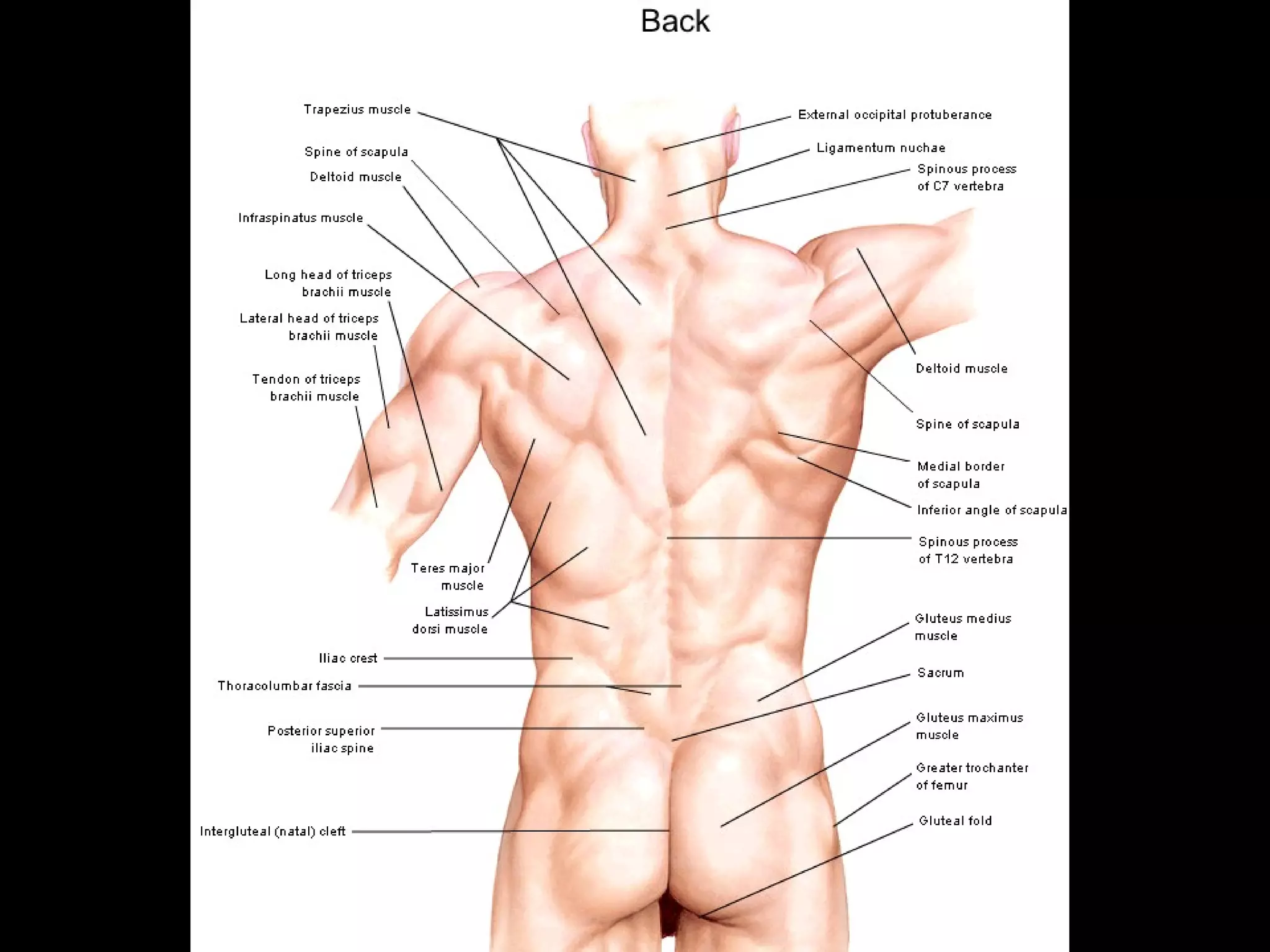
Spinal Anatomy The spine has three major components:  the spinal column (i.e., bones and discs)  neural elements (i.e., the spinal cord and nerve roots)  supporting structures (i.e., muscles and ligaments)
 
Vertebrae C=7 T=12 L=5 S=5 C=3-4 (1) 31 pairs of spinal nerves
 
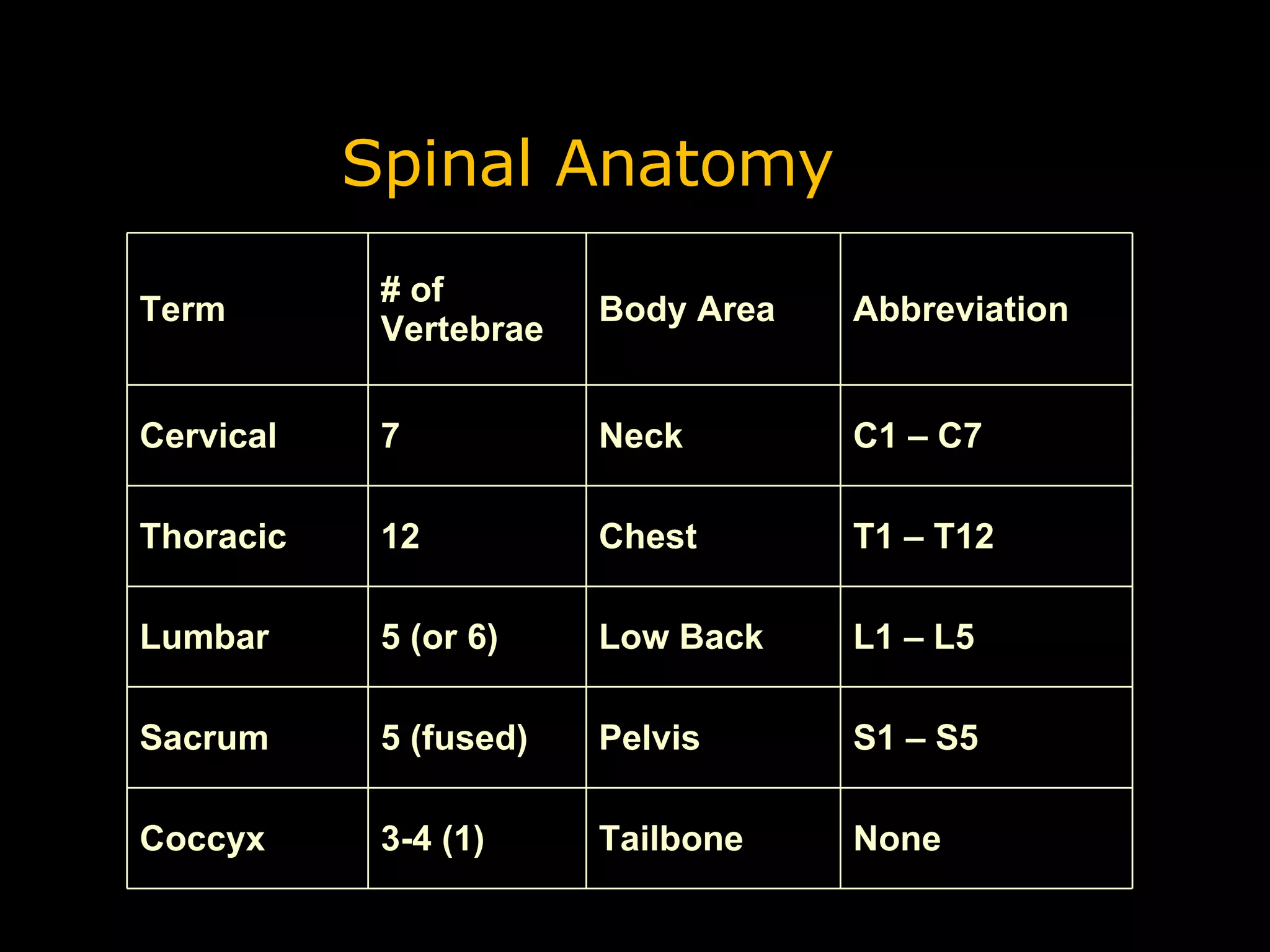
Spinal Anatomy Term # of  Vertebrae Body Area Abbreviation Cervical 7 Neck  C1 – C7 Thoracic 12 Chest  T1 – T12  Lumbar 5 (or 6) Low Back L1 – L5 Sacrum 5 (fused) Pelvis  S1 – S5 Coccyx 3-4 (1) Tailbone None
The spine has four natural curves.  The cervical and lumbar curves are  lordotic .  The thoracic and sacral curves are  kyphotic .  The curves help to distribute mechanical stress as the body moves.  Pathologic Lateral Curvature  Scoliosis
Spinal Anatomy & Physiology Protection Spinal Cord and Nerve Roots  Many internal organs  Base for Attachment Ligaments  Tendons  Muscles  Structural Support Head, shoulders, chest  Connects upper and lower body  Balance and weight distribution  Flexibility and Mobility  Flexion (forward bending)  Extension (backward bending)  Side bending (left and right)  Rotation (left and right)  Combination of above  Other   Bones produce red blood cells  Mineral storage
Back Pain 10% of population/year seen  80% c/o back pain in lifetime 30-70 yr/old Competitive sports, accidents
Spinal  Anatomy The  Central Nervous System  is composed of the  brain and spinal cord.  The brain has 12 Cranial Nerves.  The spinal cord, which originates immediately  below the brainstem , extends to the first lumbar vertebra  (L1).  Beyond L1 the spinal cord becomes the  Cauda Equina
Spinal Anatomy Nerve impulses travel to and from the brain through the spinal cord to a specific location by way of the  Peripheral Nervous System (PNS).   The PNS is the complex system of nerves that  branch off from the spinal nerve roots .
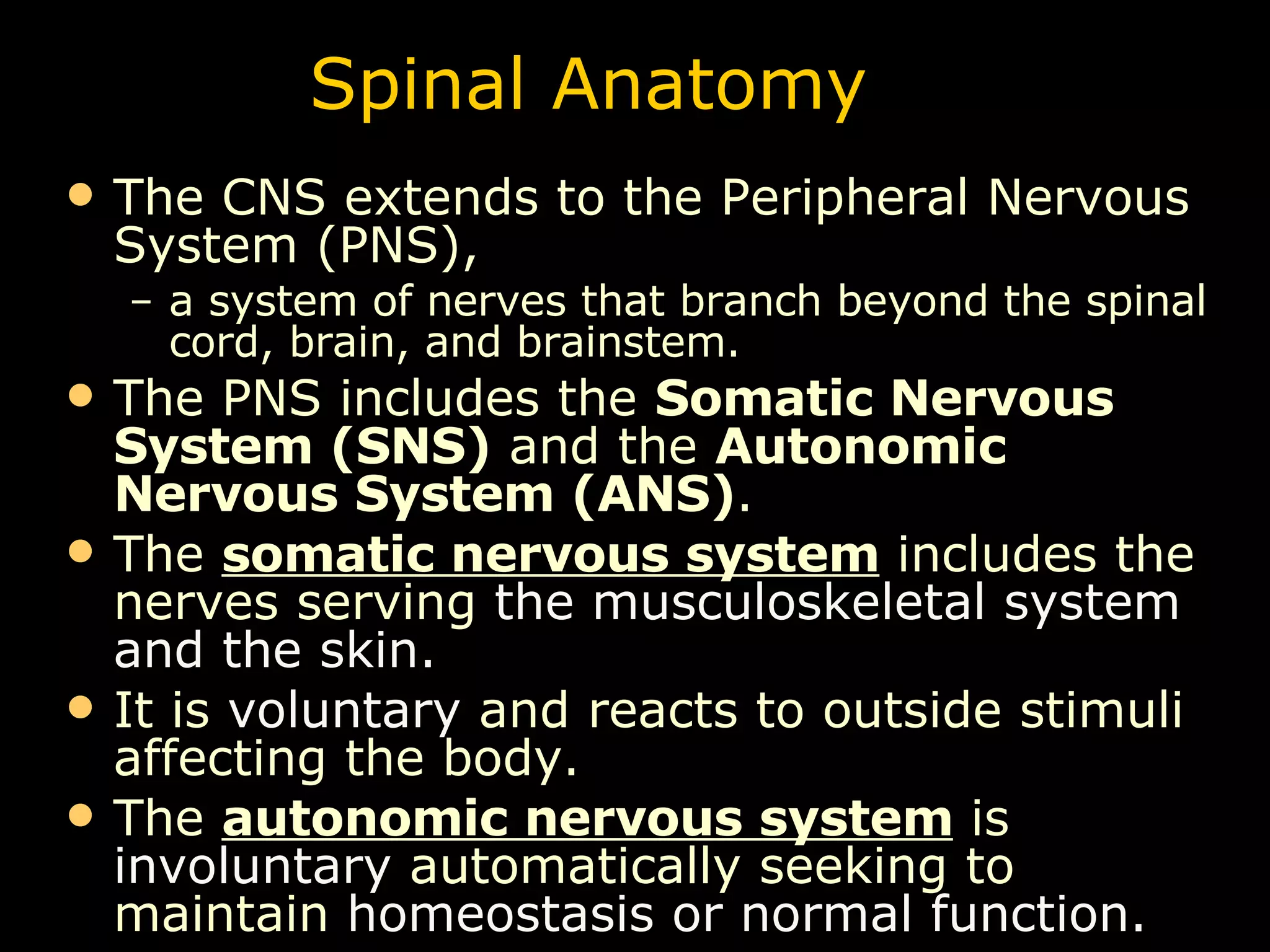
Spinal Anatomy The CNS extends to the Peripheral Nervous System (PNS),  a system of nerves that branch beyond the spinal cord, brain, and brainstem.  The PNS includes the  Somatic Nervous System (SNS)  and the  Autonomic Nervous System (ANS) .  The  somatic nervous system  includes the nerves serving  the musculoskeletal system and the skin.  It is  voluntary   and reacts to outside stimuli affecting the body.  The  autonomic nervous system  is  involuntary  automatically seeking to maintain  homeostasis or normal function.
Spinal Anatomy The ANS is further divided into the  Sympathetic Nervous System  and the  Parasympathetic Nervous System.   The  sympathetic nervous system  is an involuntary system often associated with the  flight or fight   response.  The  parasympathetic nervous system  is responsible for promoting internal harmony such as regular heartbeat during normal activity. Associated with the  rest or digest  response.
Cerebrospinal Fluid (CSF) Cerebrospinal fluid is a clear fluid found in the brain chambers (Ventricles), spinal canal, and spinal cord.  This fluid is secreted from the  Choroids Plexus , a vascular part in the ventricles of the brain.  CSF bathes and circulates among these tissues and acts as a  shock absorber  to protect against injury.  The fluid contains different  electrolytes, proteins, and glucose.  In an average adult the total volume of CSF is  about 150 milliliters.
Meninges Meninges are membranes that cover and protect the brain and spinal cord.  There are three primary types:  (1) The  dura mater, or dura , is the gray outer layer of the spinal cord and nerve roots.  It is made of strong connective tissue.  (2) The  arachnoid mater   resembles a loosely woven fabric of arteries and veins.  This layer is thinner than the dura mater.  The Subarachnoid space is filled with  cerebrospinal fluid. (3) The  pia mater   is the innermost layer and is a delicate and highly vascular membrane providing blood to the neural structures.
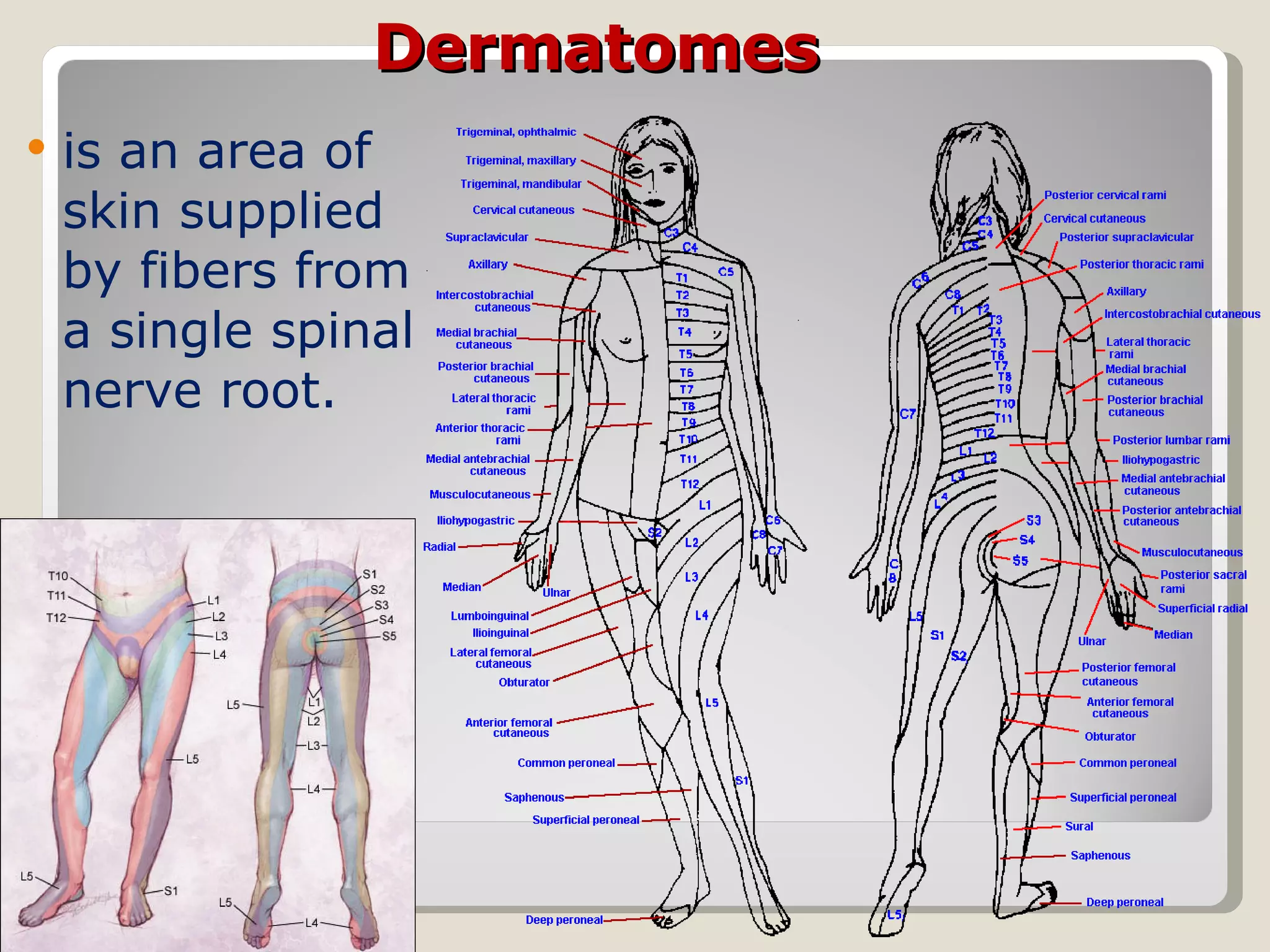
Dermatomes is an area of skin supplied by fibers from a single spinal nerve root.
Intervertebral discs The cartilaginous discs between vertebrae  absorb and distribute shock  and keep the vertebrae from  grinding together  during movement The intervertebral discs make up  one   fourth   of the spinal column's length .  There are  no discs  between the Atlas (C1), Axis (C2), sacrum and Coccyx .  Discs are  not vascular   and therefore depend on  the end plates  to diffuse needed nutrients.  The cartilaginous layers of  the end plates anchor the discs in place .
Intervertebral discs The intervertebral discs are  fibrocartilaginous cushions  serving as the spine's shock absorbing system, which protect the vertebrae, brain, and other structures (i.e. nerves).  The discs allow some vertebral motion:  extension and flexion .  Individual disc movement is very limited – however considerable motion is possible when several discs combine forces.
Intervertebral discs Intervertebral discs are composed of an  annulus fibrosus  and a  nucleus pulposus. The annulus fibrosus is a strong radial tire–like structure made up of lamellae; concentric sheets of collagen fibers connected to the vertebral end plates. The sheets are orientated at various angles.  The annulus fibrosus encloses the nucleus pulposus.
 
Intervertebral discs Although both the annulus fibrosus and nucleus pulposus are composed of  water, collagen, and proteoglycans (PGs) , the amount of fluid (water and PGs) is greatest in the nucleus pulposus .  PG molecules are important because  they attract and retain water .  The nucleus pulposus contains a  hydrated gel–like matter  that  resists compression .  The amount of water in the nucleus varies throughout the day depending on activity.
 
Facet joints Each vertebra has two sets of facet joints.  One pair faces upward (superior articular facet) and one downward (inferior articular facet).  There is one joint on each side (right and left).  Facet joints are hinge–like and link vertebrae together.  They are located at the back of the spine (posterior).
 
Facet joints Facet joints are synovial joints.  This means each joint is surrounded by a capsule of connective tissue and produces a fluid to nourish and lubricate the joint.  The joint surfaces are coated with cartilage allowing joints to move or glide smoothly (articulate) against each other.  These joints allow flexion (bend forward), extension (bend backward), and twisting motion.  The spine is made more stable due to the interlocking nature to adjacent vertebrae
 
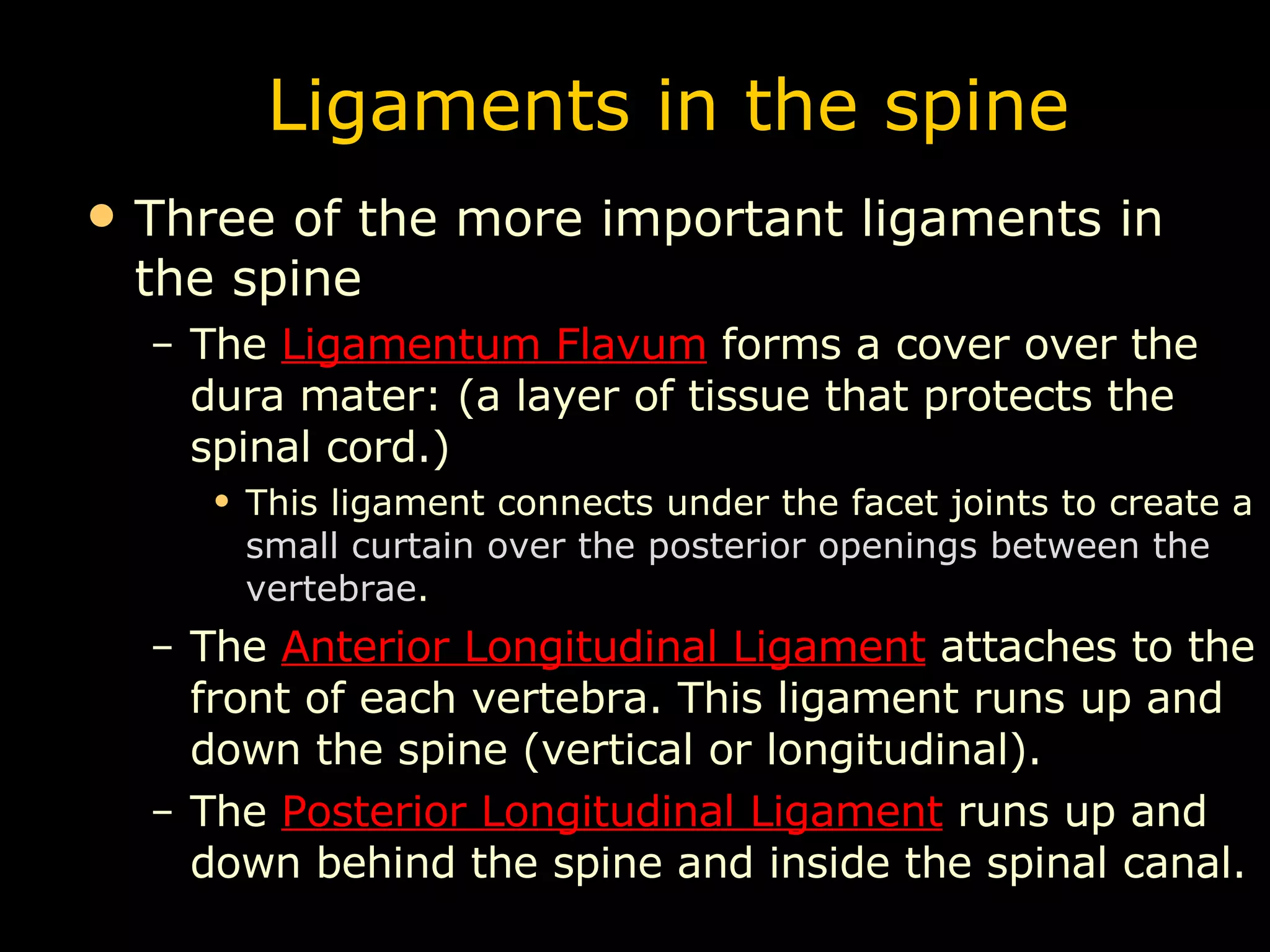
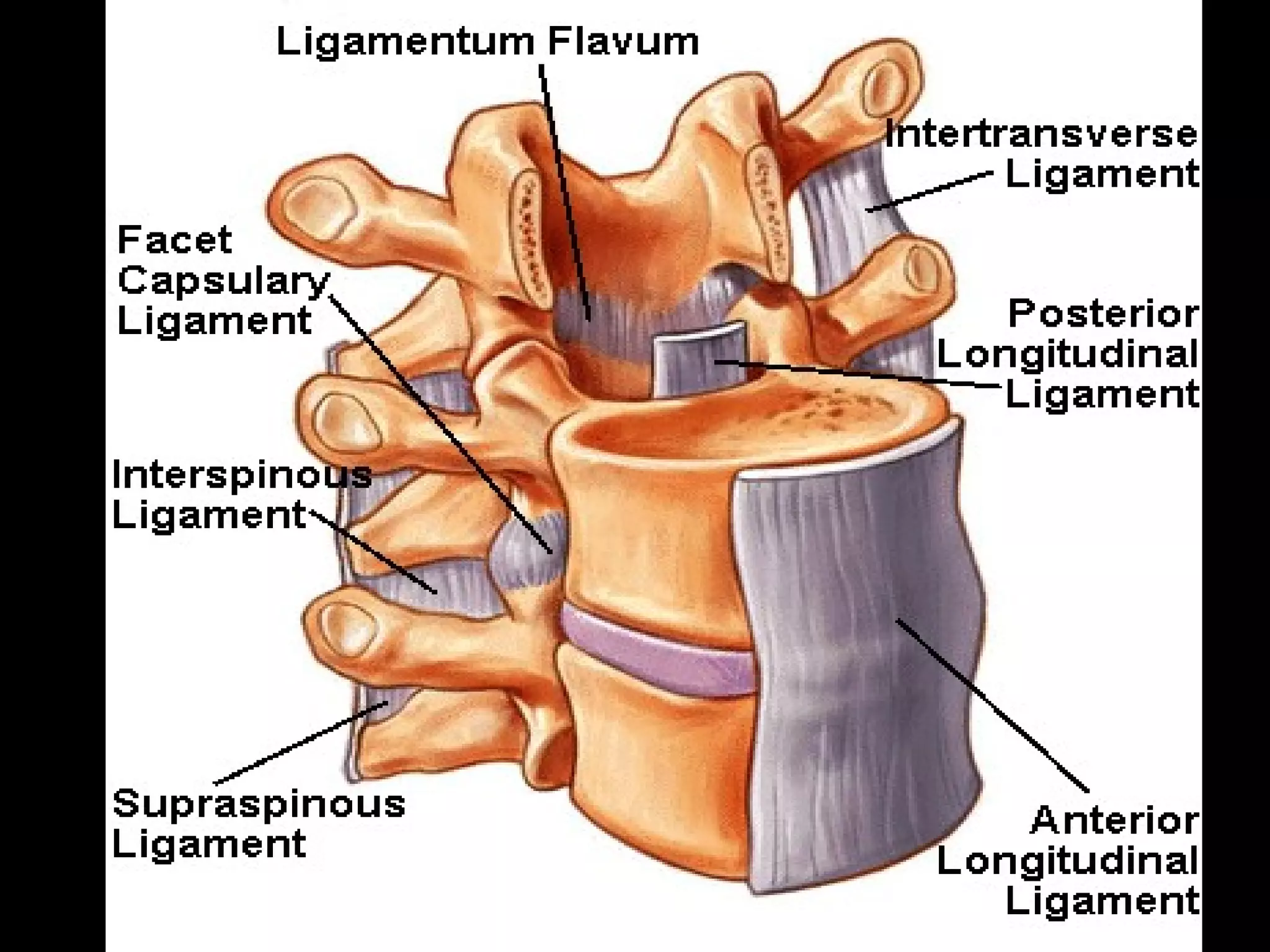
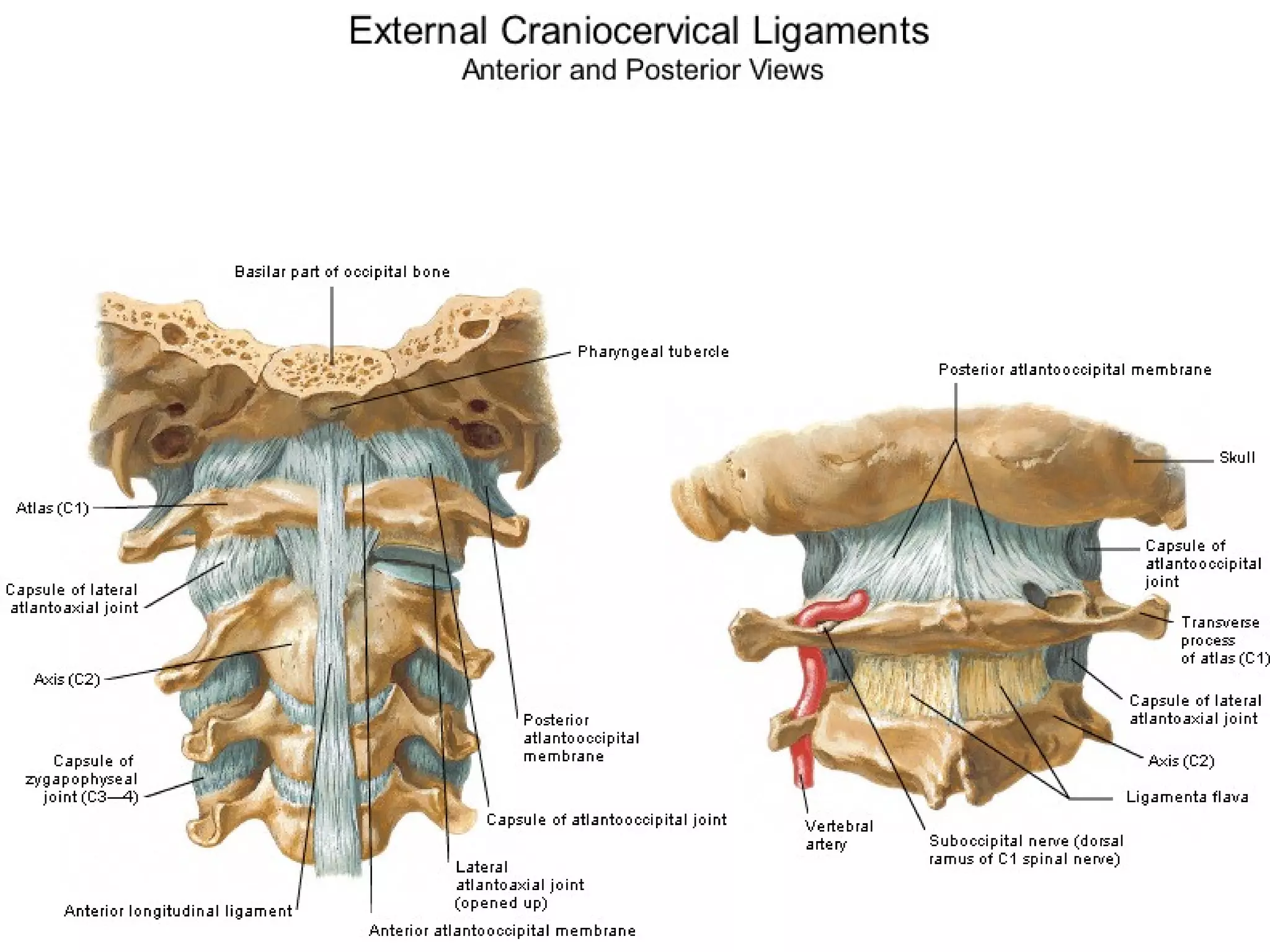
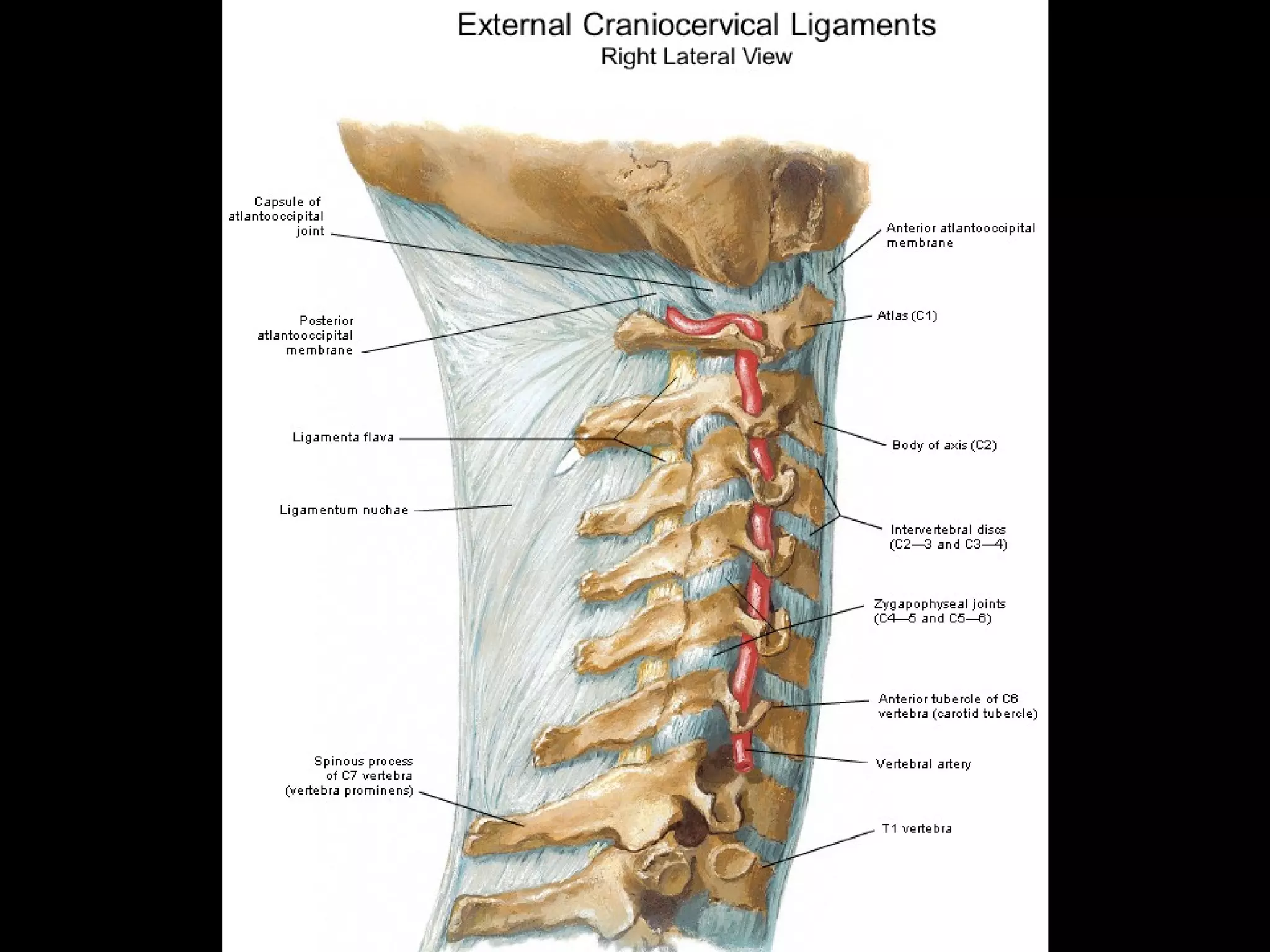
Ligaments in the spine Three of the more important ligaments in the spine The  Ligamentum Flavum   forms a cover over the dura mater: (a layer of tissue that protects the spinal cord.)  This ligament connects under the facet joints to create a  small curtain over the posterior openings between the vertebrae .  The  Anterior Longitudinal Ligament   attaches to the front of each vertebra. This ligament runs up and down the spine (vertical or longitudinal).  The  Posterior Longitudinal Ligament   runs up and down behind the spine and inside the spinal canal.
 
Spinal Anatomy Injury or mild trauma to the cervical spine can cause a serious or life-threatening medical emergency [e.g. spinal cord injury (SCI) or fracture].  Pain, numbness, weakness, and tingling  are symptoms that may develop when one or more spinal nerves are injured, irritated, or stretched.  The cervical nerves control many bodily functions and sensory activities.
Spinal Anatomy C1: Head and neck C2: Head and neck  C3: Diaphragm  C4: Diaphragm. Upper body muscles (e.g.  Deltoids, Biceps)  C5: Diaphragm. Wrist flexors C6: Wrist extensors C7: Triceps. Hands  C8: Hands
Spinal Anatomy
 
 
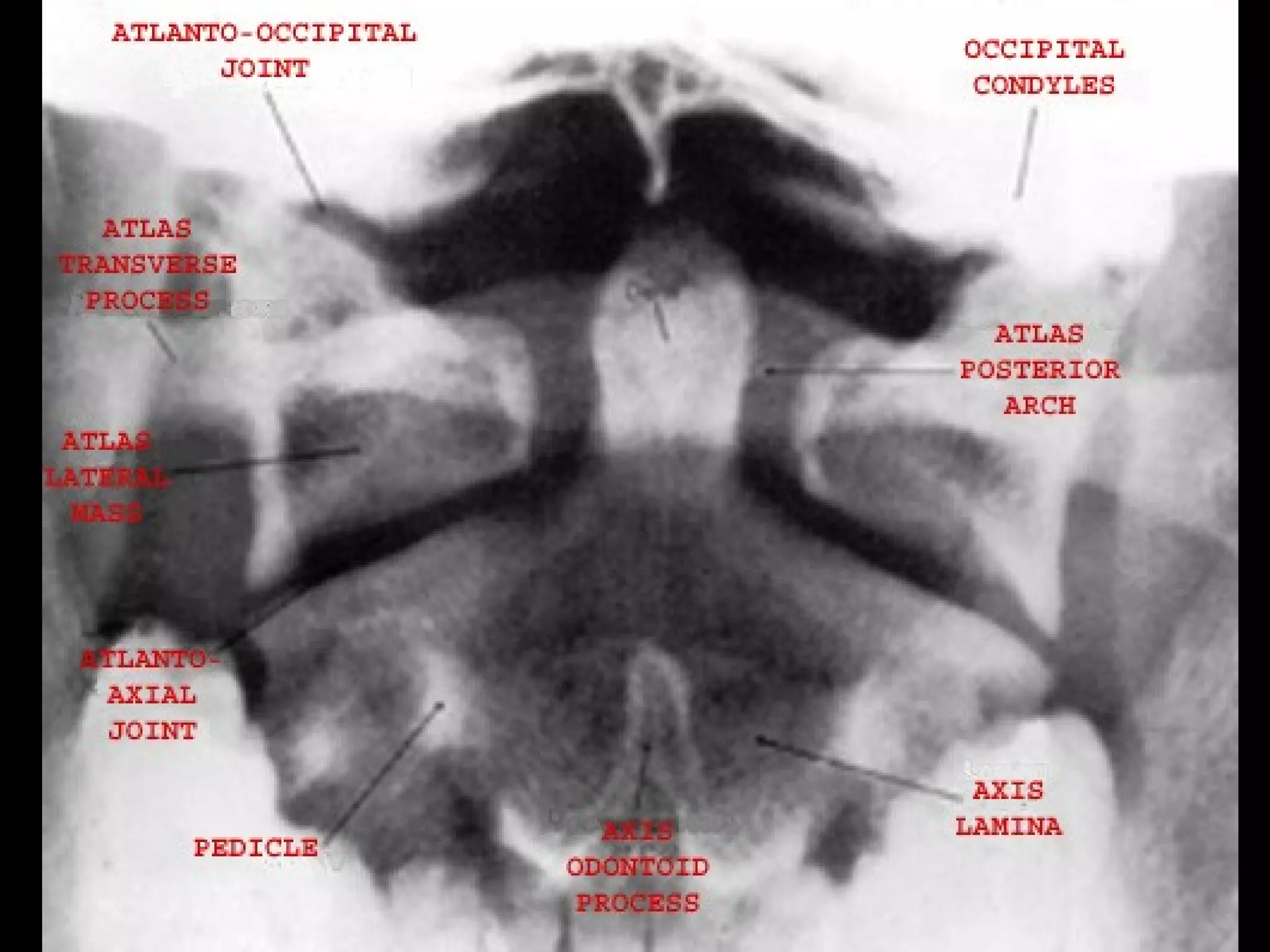
(Odontoid  Process)


Normal Cervical Spine


Spine injuries Cervical spine injury: Most often, a spine injury results from a collision, and there may be associated head injury. The head and neck must be immobilized immediately, and ease of breathing and level of consciousness (LOC) must be ascertained. If spine injury is suspected, it is wise to be extremely cautious until a proper diagnosis (dx) is made. This is the best way to prevent conversion of a repairable injury to a catastrophic one.
Whiplash Whiplash" is a nonmedical term to describe hyperextension injury to the neck resulting from an indirect force, usually a rear-end automobile collision.  The diagnosis of whiplash is often one of exclusion.  Most injuries are to soft tissues such as the disks, muscles and ligaments, and cannot be seen on standard X-rays
 
 
Neck sprain/strain People who are involved in motor vehicle crashes or who take hard falls in a contact sport or around the house may get a real "pain in the neck."  This pain can result from a  ligament sprain  or  muscle strain . stretch or tear resulting from a sudden movement that causes the neck to extend to an extreme position Tx: NSAIDS, Muscle relaxers, Narcotics Soft collar or not??
SPINAL INJURIES The  incidence  of traumatic spinal cord injuries (SCI) in the United States has been estimated at  30 cases per million population at risk. Ninety percent  of SCI are related to  motor vehicle crashes.
Spinal Cord Injury Pre-hospital   management C-spine precautions In hospital management If rapid sequence intubation is performed, then careful in-line cervical stabilization (not traction) should be applied.
Consider neck injury in all patients with head injury !!! Immobilization of neck   first step Maintain  BP and oxygenation   to prevent further injury Bladder catheterization  as awareness of bladder filling impaired/absent
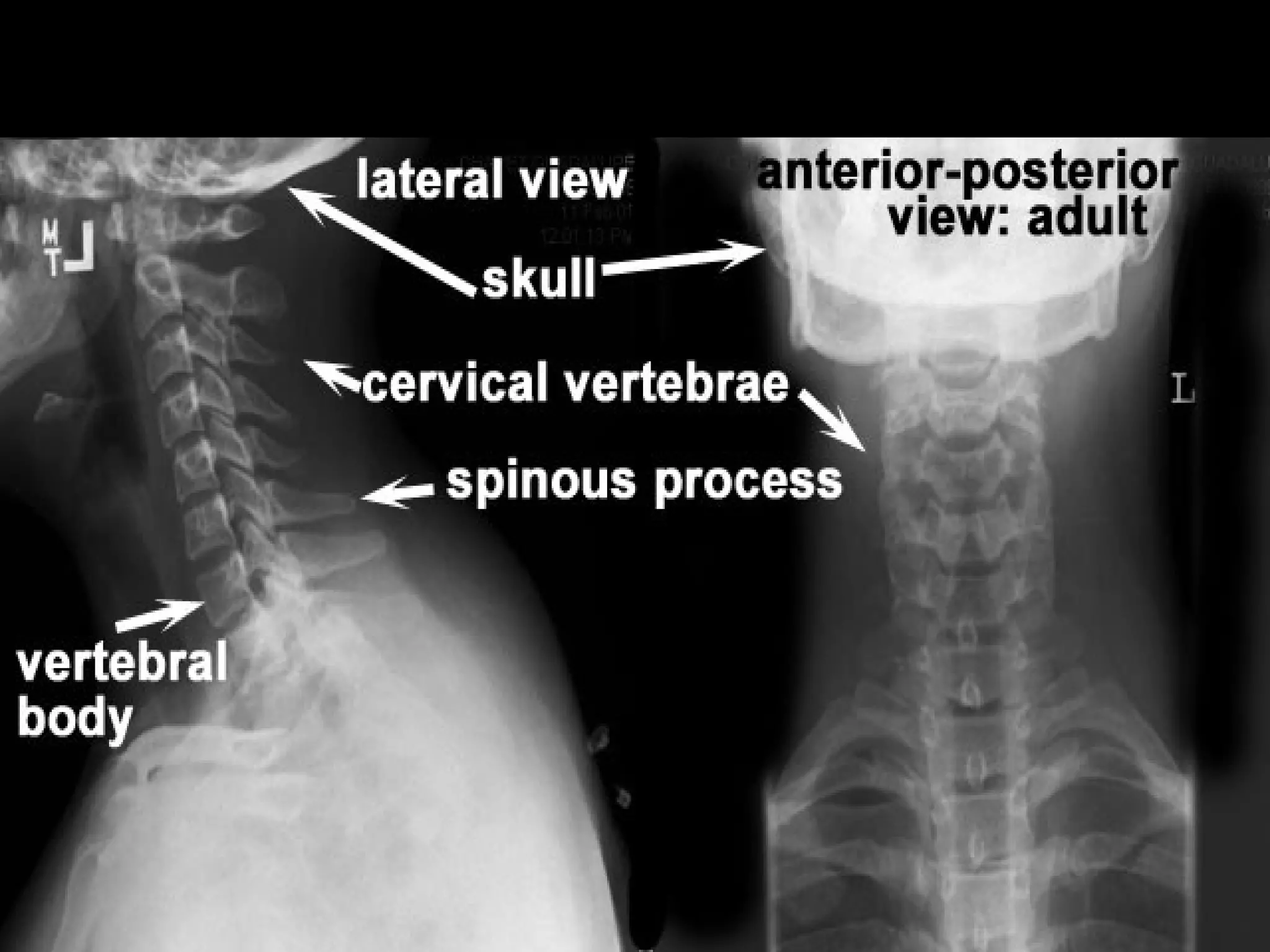
Rectal tone, perianal sensation and wink, should be assessed. Cervical spine radiographs require an anteroposterior view, a lateral view, and an odontoid view. Plain film radiography of the traumatized portion of the spine is required when the following are present:
To X-ray or Not to X-ray Canadian C-Spine Rules NEXUS study midline pain or bony tenderness, crepitus, or step-off;  neurologic deficit;  presence of distracting injuries;  altered mental status (including intoxication);  complaint of paresthesia or numbness
Closed spinal cord injured (SCIs) should be treated with high-dose methylprednisolone.  Removal of the patient from the long spine board within 2 hrs , with full spine precautions, is recommended to prevent skin breakdown and pressure sores. Stable patients may be further imaged with specific spinal radiographs, CT scans, or MRI.
Neurosurgical or orthopedic consultation is required for clinically significant spinal fractures or SCI. Any patient with an unstable spine, nerve root compression, uncontrollable pain, or intestinal ileus should be admitted to the hospital. Patients with significant vertebral or spinal cord trauma should be managed at a regional trauma or spinal cord injury center.
Various fractures, dislocations, blunt and penetrating injury patterns, and disk herniations may lead to SCI or nerve root impingement syndromes. Unstable bony injury may exist without actual SCI or nerve root trauma. Vertebral fractures may have localized pain on palpation of the injured spine, muscle spasms, splinting, and resistance to movement.  Palpable crepitus, deformity, and step-off may also be present on examination of the midline.
Examination   Severe spinal cord injury Deep Tendon reflex (DTR’s) usually absent  below level of lesion Sensory level to pinprick may be found on chest High cervical  lesions (C3-C5) affect all arm muscles and ventilation Midcervical  lesions affect extension but not flexion at elbow Low cervical  lesions affect hand muscle function but may preserve elbow flexion and extension Thoracic  lesions result in paraplegia
Partial spinal cord injury May be seen with  acute neck extension  (hyperextension) Typically get  central spinal cord syndrome  or  anterior spinal artery syndrome  with bilateral arm weakness and normal leg strength
Anterior cord syndromes   involve the loss of motor function and pain and temperature sensation distal to the level of injury with preservation of light touch, vibration, and proprioception. A central cord syndrome , associated with hyperextension injuries, presents with motor weakness more prominent in the arms than in the legs and with variable sensory loss.
The  Brown-Sequard syndrome   most often results from penetrating trauma and is caused by a hemisection of the spinal cord. There is loss of ipsilateral motor function, proprioception, light touch sensation, and loss of contralateral pain and temperature sensation. The  cauda equina syndrome   is less of a spinal cord lesion than it is a peripheral nerve injury, and it presents with variable motor and sensory loss in the lower extremities, sciatica, bowel or bladder dysfunction, and “saddle anesthesia.”
 
Paresthesias, sensory disturbances, motor deficits, reflex abnormalities, and spinal shock may be present with bony fractures and SCI. Injury to the  corticospinal tract   produces an ipsilateral  upper motor neuron lesion  that results in  increased deep tendon reflexes, spasticity, weakness, and a +Babinski sign. Injury to the  dorsal column , located in the posterior aspect of the spinal cord, results in  loss of ipsilateral light touch sensation and proprioception.
Injury to the  spinothalamic tracts   results in  contralateral pain and temperature sensory losses.  These fibers decussate in the anterior aspect of the spinal cord at the vertebral level. Injury to the  nerve roots   produces an ipsilateral  lower motor neuron lesion  and a radiculopathy that may result in  decreased deep tendon reflexes, weakness, and sensory loss in that nerve distribution.
Spinal shock: is characterized by warm, pink, dry skin;  adequate urine output;  and relative bradycardia.  Other signs of autonomic dysfunction may accompany spinal shock, such as  ileus,  urinary retention,  fecal incontinence,  and priapism.
DIAGNOSIS AND DIFFERENTIAL The history is useful in defining the mechanism of SCI, thus allowing the clinician to anticipate specific potential injury patterns. The physical examination should focus on complete palpation of the spine, testing the symmetry of reflexes, motor strength, pain sensation, and light touch and proprioception in each extremity.
 
Imaging   Portable X-ray of C-spine Lateral must include  all 7 vertebra and odontoid Extension and flexion radiographs  if plain X-rays normal Check for  cervical spine stability  in patient with neck pain CAT scan   Subluxations or fractures Neuro abnormality  present  MRI  Readily demonstrates  spinal cord hemorrhage or contusion Images bone poorly
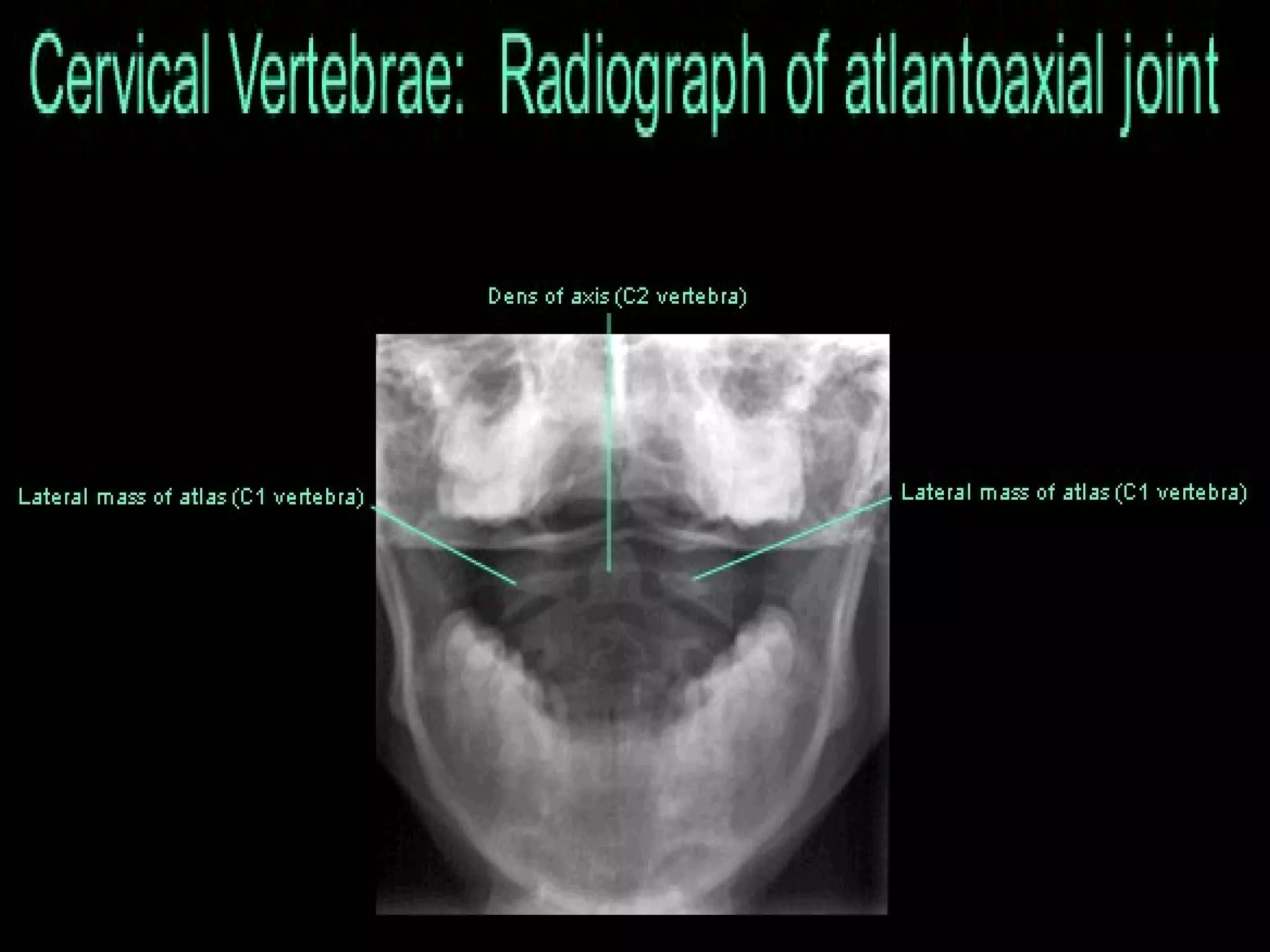
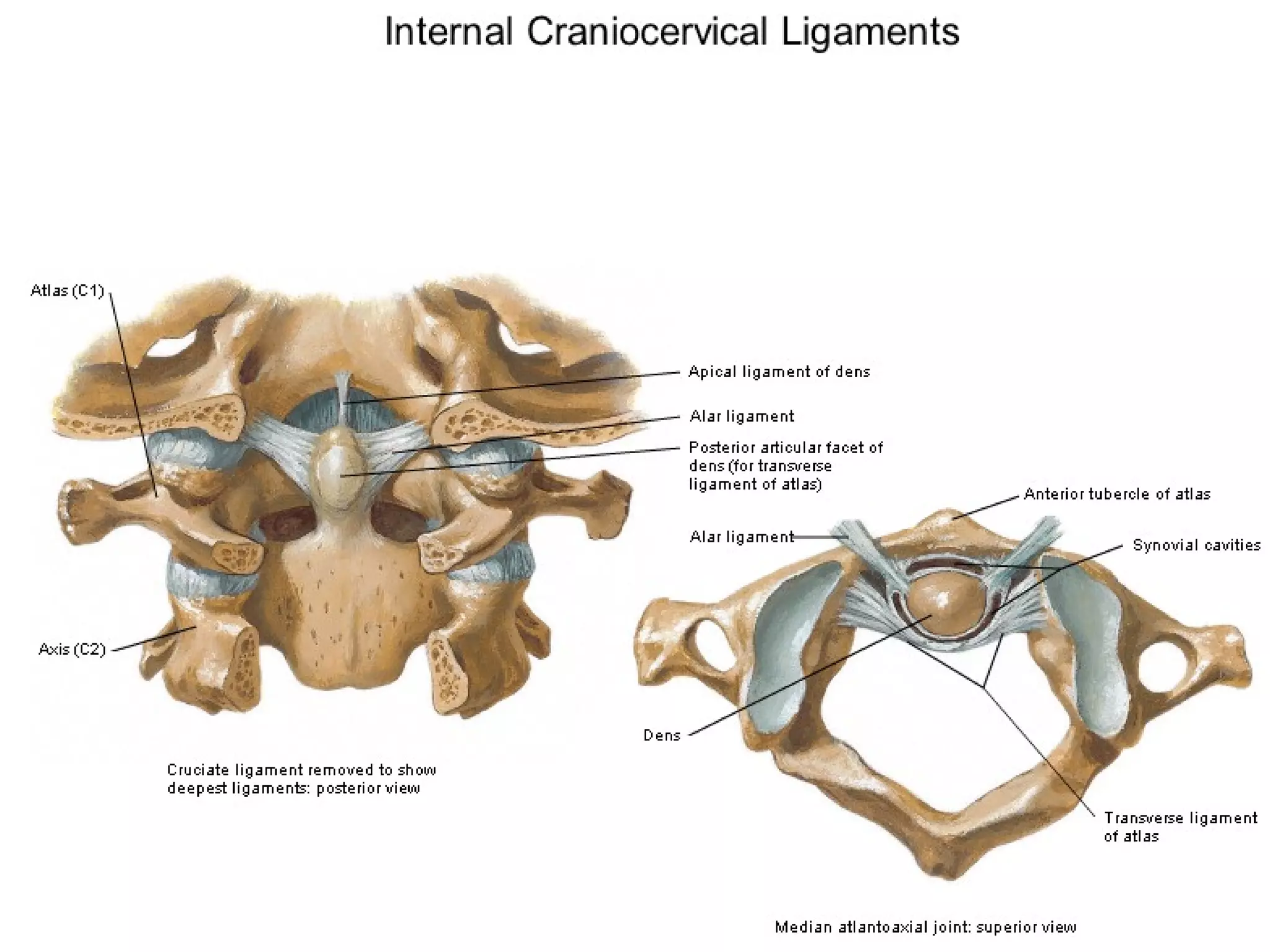
A computed tomography (CT) scan with or without myelography or a magnetic resonance imaging (MRI) scan may be required to further evaluate the extent of the spinal injury. Once a bony abnormality is identified, a key component of the differential is the degree of stability associated with that particular type of injury. Fractures of the odontoid with rupture of the transverse atlantal ligament are extremely unstable.
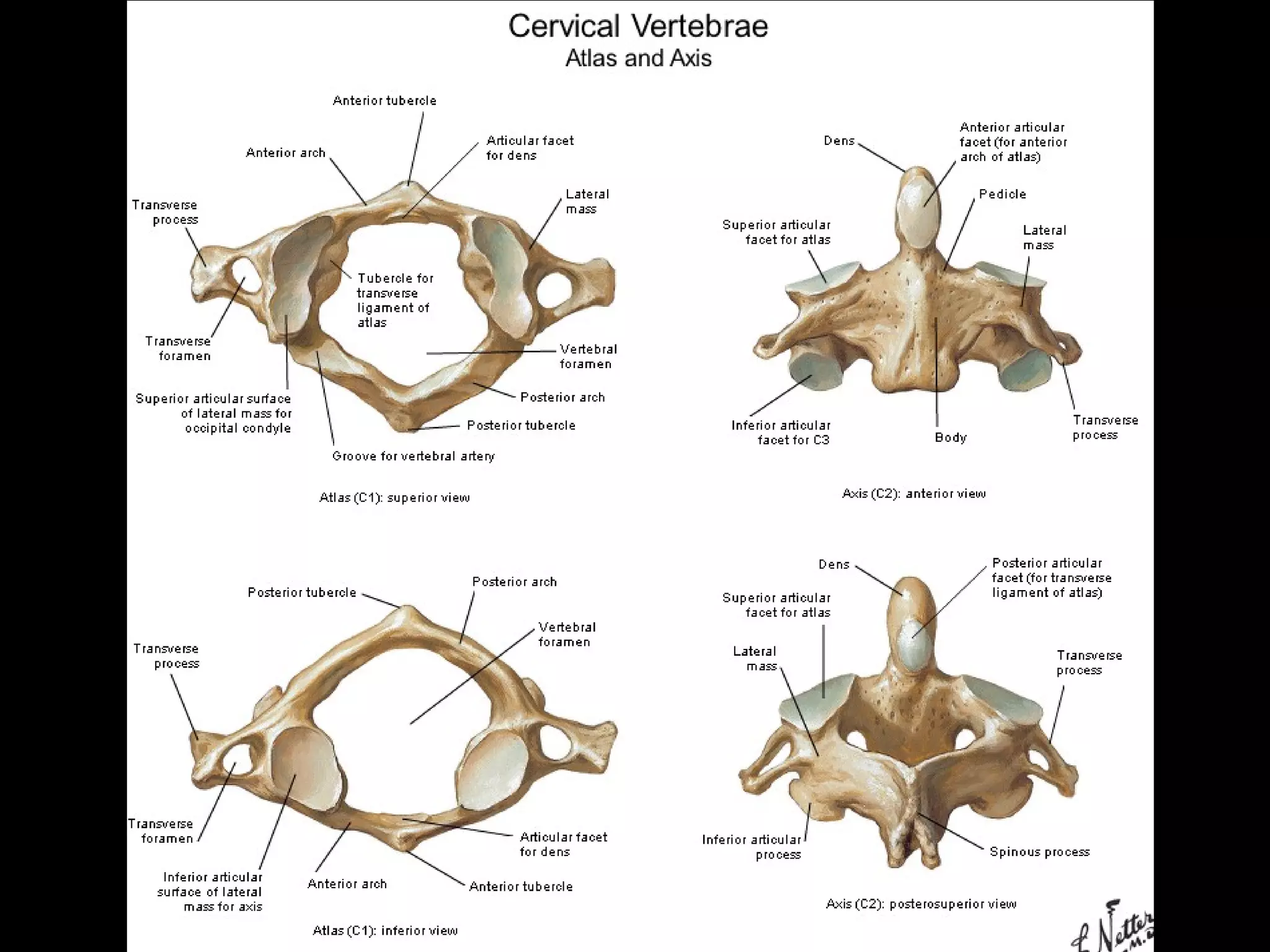
A  Hangman’s fracture   is an unstable fracture of the pedicles of the posterior arch of C2 caused by extension and distraction injury. A  Jefferson fracture   is an axial load compression fracture of the anterior and posterior arches of C1 and is an unstable fracture. Extension  “teardrop” fractures   are unstable fractures where the anterior longitudinal ligament avulses the anterior-inferior corner of the vertebral body.
Hangman’s   fx Lateral radiograph reveals markedly increased prevertebral swelling  (two short arrows)  associated with the fracture at the posterior aspect of C2 pedicles  (medium arrow) . Displacement is obvious by following the posterior spinal line  (long arrow) .
Jefferson Fx Anteroposterior tomogram at the craniocervical junction demonstrates lateral mass of C1 (arrows) lying lateral to the lateral masses of C2  (arrowheads ) on both the left and right sides as a result of spread of the ring of C1.
Teardrop fracture
Classification of Odontoid Fx’s
Brachial plexus  Acute brachial plexus neuritis  is an uncommon disorder of unknown etiology that is easily confused with other neck and upper extremity abnormalities, such as  cervical spondylosis  and  cervical radiculopathy.
Brachial Plexus 1-3 Patients with acute brachial plexus neuritis present with a characteristic pattern of acute or subacute onset of pain followed by profound weakness of the upper arm and amyotrophic changes affecting the shoulder girdle and upper extremity
 
Brachial Plexus  In traumatic setting, it is caused by distraction of the arm and head. Ninety percent of brachial plexus injuries in children are caused by a traumatic stretching of the plexus during birth.
Torticollis Torticollis (from the Latin  torti,  meaning twisted and  collis,  meaning neck)  refers to presentation of the neck in a twisted or bent position.  Torticollis manifests in involuntary contractions of the neck muscles, leading to abnormal postures and movements of the head.
Spinal Anatomy Thoracic Vertebrae The thoracic vertebrae increase in size from T1 through T12.  They are characterized by small pedicles, long spinous processes, and relatively large intervertebral foramen (neural passageways), which result in less incidence of nerve compression.
 
1  Vertebral Body  2  Spinous Process  3  Transverse Process 4  Pedicle  5  Foramen  6  Articular Process
 
 
Spinal Anatomy
 
Spinal Anatomy The rib cage is joined to the thoracic vertebrae.  At T11 and T12, the ribs do not attach and are so are called "floating ribs."  The thoracic spine's range of motion is limited due to the many rib/vertebrae connections and the long spinous processes.
 
Spinal Anatomy Lumbar Vertebrae


Spinal Anatomy The lumbar vertebrae graduate in size from L1 through L5.  Most people have five lumbar vertebrae although it is not unusual to have six  These vertebrae bear much of the body's weight and related biomechanical stress.  The pedicles are longer and wider than those in the thoracic spine.  The spinous processes are horizontal and more squared in shape.  The intervertebral foramen (neural passageways) are relatively large but nerve root compression is more common than in the thoracic spine.
Spinal Anatomy Just below the last Thoracic (T12) and first Lumbar (L1) vertebra the spinal cord ends at the  Conus   Medullaris .  From this point the spinal nerves, resembling a horse’s tail become known as the  Cauda   Equina  extending to the coccyx.  These nerves are suspended in spinal fluid.


Sciatica: Sciatic Nerve Compression The sciatic nerve is the longest and largest nerve in the body measuring three-quarters of an inch in diameter.  The sciatic nerve originates in the sacral plexus; a network of nerves in the lumbosacral spine.  The lumbosacral spine refers to the lumbar spine and the sacrum combined.  The nerve and its nerve branches enable movement and feeling (motor and sensory functions) in the thigh, knee, calf, ankle, foot and toes.
1  Sciatic Nerve 2  Sacrum  3  Hip Bone Yellow  Structures = Nerves Red Structures = Arteries Blue Structures = Veins  (Lumbosacr Spine-Post View)
Sciatica: Sciatic Nerve Compression If the sciatic nerve is injured or becomes inflamed, it causes symptoms called sciatica.  Sciatica can cause intense pain along any part of the sciatica nerve pathway - from the buttocks to the toes.  If the nerve is compressed, caused by conditions such as a bulging or herniated disc, DJD, spinal stenosis, Isthmic Spondylolisthesis or tumor (rare), symptoms may include a loss of reflexes, weakness and numbness besides severe pain.  Sciatic nerve pain can make everyday activities such as walking, sitting and standing difficult.
 
Sciatica: Sciatic Nerve Compression Sciatic nerve fibers begin at the 4th and 5th lumbar vertebra (L4, L5) and the first few segments of the sacrum.  The nerve passes through the sciatic foramen just below the Piriformis muscle (rotates the thigh laterally), to the back of the extension of the hip and to the lower part of the Gluteus Maximus (muscle in the buttock, thigh extension).
Sciatica The sciatic nerve then runs vertically downward into the back of the thigh, behind the knee branching into the hamstring muscles, calf, and further downward to the feet.  Rarely is sciatic nerve damage permanent and paralysis is seldom a danger as the spinal cord ends before the first lumbar vertebra.
Sciatica However, increasing trunk or leg weakness, or bladder and/or bowel incontinence is an indication of  Cauda Equina Syndrome , a serious disorder requiring emergency treatment.
Sciatica Piriformis Syndrome  is caused by an entrapment (pinching) of the  sciatic nerve  as it exits the Greater Sciatic notch in the gluteal region  The second common site of entrapment is when the  sciatic nerve  actually pierces the piriformis muscle itself.  This can occur in about 1% to 10% of all humans.  In this case myospasm and or contraction of the piriformis muscle itself can lead to pain along the back of the thigh to the knee, loss of sensation or numbness and tingling in the sole of the foot.  This particular syndrome can often mimic its more notorious counterpart known as  sciatica . Sciatica is directly due to a lumbar disc pressing on the  sciatic nerve  as it exits the intervertebral foramen in the lumbar spine.
 
Spinal Stenosis Spinal stenosis is a narrowing of the spinal canal, which places pressure on the spinal cord  As people age, the ligaments of the spine can thicken and harden (calcification).  Bones and joints may also enlarge, and bone spurs (osteophytes) may form.  Bulging or herniated discs are also common.
Spinal Stenosis The narrowing of the spinal canal itself does not usually cause any symptoms.  It is when inflammation of the nerves occurs at the level of increased pressure that patients begin to experience problems. When these conditions occur in the spinal area, they can cause the spinal canal to narrow, creating pressure on the spinal nerve
Spinal Stenosis Patients with lumbar spinal stenosis may feel pain, weakness, or numbness in the legs, calves or buttocks.  In the lumbar spine, symptoms often increase when walking short distances and decrease when the patient sits, bends forward or lies down.
Spinal Stenosis Cervical spinal stenosis may cause similar symptoms in the shoulders, arms, and legs; hand clumsiness and gait and balance disturbances can also occur.  In some patients the pain starts in the legs and moves upward to the buttocks; in other patients the pain begins higher in the body and moves downward.  This is referred to as a “ sensory march”.
Spinal Stenosis The pain may radiate like sciatica, may be a cramping pain, or the pain can be constant.  Severe cases of stenosis can also cause bladder and bowel problems, but this rarely occurs.  Also paraplegia or significant loss of function also rarely, if ever, occurs.
 
Spinal Stenosis Tx: NSAIDs Corticosteroid injections (epidural steroids) can help reduce swelling and treat acute pain that radiates to the hips or down the leg.  This pain relief may only be temporary and patients are usually not advised to get more than 3 injections per 6-month period. Rest or restricted activity (this may vary depending on extent of nerve involvement). Physical therapy and/or prescribed exercises to help stabilize the spine, build endurance and increase flexibility.  Surgical
Spondylolysis In spondylolysis, there is a defect in the  pars interarticularis  (which literally means the "piece between the articulations").  So spondylolysis means a defect in the thin isthmus of bone connecting the superior and inferior facets, and could be unilateral or bilateral  Although the defect can be found at any level, the commonest vertebra involved is the L5.
Spondylolysis In cases of bilateral spondylolysis, the posterior articulations can no longer provide the posterior stability, and anterior slipping of the L5 vertebra over the sacrum could result.  This slip is called  Spondylolisthesis. Spondylolysis is the MCC of spondylolisthesis
Spondylolisthesis Spondylolisthesis occurs when one vertebra slips forward in relation to an adjacent vertebra, usually in the lumbar spine.  The symptoms that accompany a spondylolisthesis include pain in the low back, thighs, and/or legs, muscle spasms, weakness, and/or tight hamstring muscles.  Some people are symptom free and find the disorder exists when revealed on an x-ray.  In advanced cases, the patient may appear swayback with a protruding abdomen, exhibit a shortened torso, and present with a waddling gait.
Spondylolisthesis can be congenital (present at birth) or develop during childhood or later in life.  The disorder may result from the physical stresses to the spine from carrying heavy things, weightlifting, football, gymnastics, trauma, and general wear and tear.  As the vertebral components degenerate the spine's integrity is compromised.
Spondylolisthesis
Foot Drop Foot Drop is an abnormal neuromuscular (nerve and muscle) disorder that affects the patient's ability to raise their foot at the ankle.  Drop foot is further characterized by an inability to point the toes toward the body (dorsiflexion) or move the foot at the ankle inward or outward.  Pain, weakness, and numbness may accompany loss of function.
Foot Drop Walking becomes a challenge due to the patient's inability to control the foot at the ankle.  The foot may appear floppy and the patient may drag the foot and toes while walking.  Patients with foot drop usually exhibit an exaggerated or high-stepping walk called  Steppage Gait  or Footdrop Gait.
Foot Drop: Causes of Injury The peroneal nerve is susceptible to different types of injury.  Some of these include nerve compression from  lumbar disc  herniation (e.g. L4, L5, S1), trauma to the  sciatic nerve ,  spondylolisthesis ,  spinal stenosis , spinal cord injury, bone fractures (leg, vertebrae), stroke, tumor, diabetes, lacerations, gunshot wounds, or crush-type injuries.  Drop foot is found in some patients with Amyotrophic Lateral Sclerosis (ALS), Multiple Sclerosis (MS), and Parkinson's Disease.  Sometimes the peroneal nerve becomes injured when stretched during hip or knee replacement surgery.
Herniated Disc Herniation of the nucleus pulposus (HNP) occurs when the nucleus pulposus (gel-like substance) breaks through the anulus fibrosus (tire-like structure) of an intervertebral disc.


Herniated Disc A  herniated disc  occurs most often in the lumbar region of the spine especially at the L4-L5 and L5-S1 levels This is because the lumbar spine carries most of the body's weight.
Herniated Di sc People between the ages of 30-50 appear to be vulnerable because the elasticity and water content of the nucleus decreases with age. The progression to an actual HNP varies from slow to sudden onset of symptoms
Herniated Disc There are four stages: (1) disc protrusion (2) prolapsed disc (3) disc extrusion (4) sequestered disc.  Stages 1 and 2 are referred to as incomplete, where 3 and 4 are complete herniations.
Disc Herniation Pain resulting from herniation may be combined with a radiculopathy.  The deficit may include sensory changes (i.e. tingling, numbness) and/or motor changes (i.e. weakness, reflex loss).  caused by nerve compression
 
Herniated Disc Dx The spine is examined with the patient laying down and standing.  Due to muscle spasm, a loss of normal spinal curvature may be noted.  Radicular pain may increase when pressure is applied to the affected spinal level.  A Lasegue test, also known as  Straight-leg Raise  Test, is performed.  The patient lies down, the knee is extended, and the hip is flexed.  If pain is aggravated or produced, it is an indication the lower lumbosacral nerve roots are inflamed.
Herniated Disc Other neurological tests are performed to determine loss of sensation and/or motor function.  Abnormal reflexes are noted; changes may indicate the location of the herniation.  Radiographs are helpful, but the MRI is the best method
 
Cauda Equina Syndrome occurs from a central disc herniation and is serious requiring immediate surgical intervention.  The symptoms include bilateral leg pain, loss of perianal sensation (anus), paralysis of the bladder, and weakness of the anal sphincter.
 
Scoliosis Scoliosis is an abnormal curvature of the spine. MC spinal deformity evaluated In scoliosis, the spine curves to the side when viewed from the front, and each vertebra also twists on the next one in a corkscrew fashion.  Girls:boys = 2:1 Usually > 10 y/o
Scoliosis
In most cases (85%), the cause of scoliosis is idiopathic.  The other 15% of cases fall into 2 groups:  Nonstructural (functional): a temporary condition when the spine is otherwise normal.  The curvature occurs as the result of another problem.  Examples include 1 leg being shorter than another from muscle spasms or from appendicitis.  Structural: the spine is not normal The curvature is caused by another disease process such as a birth defect, muscular dystrophy, metabolic diseases, connective tissue disorders, or Marfan syndrome.
Scoliosis Tx: 10-15* curve = f/u in 6 mo re-eval Forward bending, and scoliometer test 15-20* curve = serial XR’s Q 3-4 mo Or 6-8 mo for smaller curves or older pt’s >20* curve = ortho referral for possible bracing Depending on degree and age of pt
Kyphosis Increased convex curvature of thoracic spine (Round back) TB of spine causes progressive scoliosis (Pott’s disease)  Idiopathic (Scheuermann’s) defined as: anterior wedging of 5° or more in at least 3 adjacent vertebral bodies Associated c respiratory distress   Tx: 45-60* curve = observed 3-4 mo c PT >60* curve or persistent pain = brace possible surgery
 
Ankylosing Spondylitis Inflammation c progressive fusion of vertebrae It is a  chronic, multisystem inflammatory disorder of the sacroiliac (SI) joints and the axial skeleton .  AS is characterized as a seronegative spondyloarthropathy.  The disorder often is found in association with other seronegative spondyloarthropathies including reactive arthritis, psoriasis, juvenile chronic arthritis, ulcerative colitis, and Crohn’s disease.
Ankylosing Spondylitis The etiology is not understood completely; however, a strong genetic predisposition exists.  A direct relationship between AS and the major histocompatibility human leukocyte antigen  (HLA)-B27  has been determined  Involvement of the SI joints is required to establish the diagnosis
Ankylosing Spondylitis Limited ROM Extra-articular manifestations : Eyes, cardiac, kidneys, & interstitial lung ds Labs: ESR,  HLA-B27 XR: “ Bamboo spine” Osteopenia Tx: NSAIDS, PT Tx underlying conditions Surgery
 
Spine Fractures A compression fracture is a condition in which a vertebra is crushed only in the front part of the spine, causing a  wedge  shape.  If a vertebra is crushed in all directions, the condition is called a  burst  fracture.  Burst fractures are much more severe than compression fractures.  The bones spread out in all directions and may damage the spinal cord.  This damage can cause paralysis or injury to the nerves, which control the body's ability to move or feel sensations.  15-20% of thoracolumbar fractures present with a neurologic deficit
Wedge Fracture Burst Fracture
 
Chance Fracture With flexion-distraction mechanisms such as those observed in passengers restrained with  lap seatbelts , a progression of injury from the posterior column of the thoracolumbar spine is observed anteriorly.  The diagnosis is best made on good quality radiographs obtained in 2 planes (anteroposterior [AP] and lateral).
Chance Fracture Prompt recognition followed by appropriate reduction and immobilization usually results in a good clinical outcome.  Always exclude associated injuries (eg, intra-abdominal trauma) at the time of presentation, as these are observed in up to 50% of cases
Chance Fracture Chance fracture represents a pure bony injury extending from posterior to anterior through the spinous process, pedicles, and vertebral body, respectively.  This fracture most commonly is found in the upper lumbar spine, but it may be observed in the midlumbar region in children.
Chance fracture
PEARL Non-Traumatic back pain in >~55 y/o consider AAA 'Red Flags' in the Medical History: Potentially Serious Conditions That May Present as Low Back Pain  Possible condition  Findings from the medical history   'Red Flags' in the Medical History: Potentially Serious Conditions That May Present as Low Back Pain  Possible condition  Findings from the medical history   Fracture •  Major trauma (motor vehicle accident, fall from height) • Minor trauma or strenuous lifting in an older or osteoporotic patient  Tumor or infection  •  Age >50 years or <20 years  • History of cancer  • Constitutional symptoms (fever, chills, unexplained weight loss)  • Recent bacterial infection  • Intravenous drug use  • Immunosuppression (corticosteroid use, transplant recipient, HIV infection)  • Pain worse at night or in the supine position  Cauda equina syndrome •  Saddle anesthesia  • Recent onset of bladder dysfunction  • Severe or progressive neurologic deficit in lower extremity  Fracture •  Major trauma (motor vehicle accident, fall from height) • Minor trauma or strenuous lifting in an older or osteoporotic patient  Tumor or infection  •  Age >50 years or <20 years  • History of cancer  • Constitutional symptoms (fever, chills, unexplained weight loss)  • Recent bacterial infection  • Intravenous drug use  • Immunosuppression (corticosteroid use, transplant recipient, HIV infection)  • Pain worse at night or in the supine position  Cauda equina syndrome •  Saddle anesthesia  • Recent onset of bladder dysfunction  • Severe or progressive neurologic deficit in lower extremity
'Red Flags'  in the Medical History: Potentially Serious Conditions That May Present as Low Back Pain Fracture •  Major trauma (motor vehicle accident, fall from height) • Minor trauma or strenuous lifting in an older or osteoporotic patient  Tumor or infection  •  Age >50 years or <20 years  • History of cancer  • Constitutional symptoms (fever, chills, unexplained weight loss)  • Recent bacterial infection  • Intravenous drug use  • Immunosuppression (corticosteroid use, transplant recipient, HIV infection)  • Pain worse at night or in the supine position  Cauda equina syndrome •  Saddle anesthesia  • Recent onset of bladder dysfunction  • Severe or progressive neurologic deficit in lower extremity  'Red Flags' in the Medical History: Potentially Serious Conditions That May Present as Low Back Pain  Possible condition  Findings from the medical history


Meningitis  is an inflammation of the leptomeninges and underlying subarachnoid cerebrospinal fluid (CSF)  Encephalitis  literally means an inflammation of the brain, but it usually refers to brain inflammation caused by a virus.
Meningitis myriad of infectious and noninfectious etiologies Streptococcus pneumoniae  (1.1) in all except neonates  Neisseria meningitidis  (0.6), usually local outbreaks among young adults, epidemics internationally, and increased incidence in late winter or early spring  Group B streptococci (0.3), in newborns  Listeria monocytogenes  (0.2) in newborns, elderly, and immunocompromised  Haemophilus influenzae,  type b (0.2) in unvaccinated children and adults  Meningitis is caused by the following pathogens in each age group:  Neonates - Group B or D streptococci, nongroup B streptococci,  Escherichia coli,  and  L monocytogenes Infants and children -  H influenzae  (48%),  S pneumoniae  (13%), and  N meningitidis Adults -  S pneumoniae,  (30-50%),  H influenzae  (1-3%),  N meningitidis  (10-35%), gram-negative bacilli (1-10%), staphylococci (5-15%), streptococci (5%), and  Listeria  species (5%)
Meningitis Classic symptoms (not evident in infants or seen often in the elderly) include the following: Headache Nuchal rigidity (generally not present in children <1 y or in patients with altered mental status) Kernig sign : Passive knee extension in supine patient elicits neck pain and hamstring resistance. Brudzinski sign : Passive neck or single hip flexion is accompanied by involuntary flexion of both hips. Fever and chills Photophobia Vomiting Prodromal upper respiratory infection (URI) symptoms (viral and bacterial) Seizures (30-40% in children, 20-30% in adults) Focal neurologic symptoms (including focal seizures) Altered sensorium (confusion may be sole presenting complaint, especially in elderly)
Meningitis Head CT CXR LP administer first dose(s) of antibiotics +/- steroids within 30 minutes of presentation to ED.
Lumbar Puncture
Epidural anesthesia
Metastatic Carcinoma
Osteoporosis Lack of matrix formation atrophy or weightlessness.  Osteoblasts perform under pressure Decreased sex hormones: estrogen (esp. postmenopausal) and androgen.  Cushings:  Cortisol inhibits osteoblast activity Compression fractures of vertebra - loss of height Osteomalacia:   Matrix present, not calcified Bending of long bones
 
'Excellence is an art won by training and habituation. We do not act rightly because   we have virtue or excellence, but rather we have those because we have acted rightly.  We are what we repeatedly do. Excellence, then, is not an act but a habit.'   Aristotle A journey of a thousand miles begins with a single step.    Lao Tsu   “ I find that the harder I work, the more luck I seem to have”.   Thomas Jefferson Self conquest is the greatest of victories. Plato   “ Imagination is everything. It is the preview of life’s coming attractions.” Albert Einstein
 

Anatomy Lect 5 Trunk & Spine

  • 1.
    Anatomy Lecture 5 Trunk & Spine Physician Assistant Program Miami Dade College
  • 2.
    Nothing great wasever achieved without enthusiasm . Ralph Waldo Emerson
  • 3.
    Spinal Anatomy Thespine has three major components: the spinal column (i.e., bones and discs) neural elements (i.e., the spinal cord and nerve roots) supporting structures (i.e., muscles and ligaments)
  • 4.
  • 5.
    Vertebrae C=7 T=12L=5 S=5 C=3-4 (1) 31 pairs of spinal nerves
  • 6.
  • 7.
    Spinal Anatomy Term# of Vertebrae Body Area Abbreviation Cervical 7 Neck C1 – C7 Thoracic 12 Chest T1 – T12 Lumbar 5 (or 6) Low Back L1 – L5 Sacrum 5 (fused) Pelvis S1 – S5 Coccyx 3-4 (1) Tailbone None
  • 8.
    The spine hasfour natural curves. The cervical and lumbar curves are lordotic . The thoracic and sacral curves are kyphotic . The curves help to distribute mechanical stress as the body moves. Pathologic Lateral Curvature Scoliosis
  • 9.
    Spinal Anatomy &Physiology Protection Spinal Cord and Nerve Roots Many internal organs Base for Attachment Ligaments Tendons Muscles Structural Support Head, shoulders, chest Connects upper and lower body Balance and weight distribution Flexibility and Mobility Flexion (forward bending) Extension (backward bending) Side bending (left and right) Rotation (left and right) Combination of above Other Bones produce red blood cells Mineral storage
  • 10.
    Back Pain 10%of population/year seen 80% c/o back pain in lifetime 30-70 yr/old Competitive sports, accidents
  • 11.
    Spinal AnatomyThe Central Nervous System is composed of the brain and spinal cord. The brain has 12 Cranial Nerves. The spinal cord, which originates immediately below the brainstem , extends to the first lumbar vertebra (L1). Beyond L1 the spinal cord becomes the Cauda Equina
  • 12.
    Spinal Anatomy Nerveimpulses travel to and from the brain through the spinal cord to a specific location by way of the Peripheral Nervous System (PNS). The PNS is the complex system of nerves that branch off from the spinal nerve roots .
  • 13.
    Spinal Anatomy TheCNS extends to the Peripheral Nervous System (PNS), a system of nerves that branch beyond the spinal cord, brain, and brainstem. The PNS includes the Somatic Nervous System (SNS) and the Autonomic Nervous System (ANS) . The somatic nervous system includes the nerves serving the musculoskeletal system and the skin. It is voluntary and reacts to outside stimuli affecting the body. The autonomic nervous system is involuntary automatically seeking to maintain homeostasis or normal function.
  • 14.
    Spinal Anatomy TheANS is further divided into the Sympathetic Nervous System and the Parasympathetic Nervous System. The sympathetic nervous system is an involuntary system often associated with the flight or fight response. The parasympathetic nervous system is responsible for promoting internal harmony such as regular heartbeat during normal activity. Associated with the rest or digest response.
  • 15.
    Cerebrospinal Fluid (CSF)Cerebrospinal fluid is a clear fluid found in the brain chambers (Ventricles), spinal canal, and spinal cord. This fluid is secreted from the Choroids Plexus , a vascular part in the ventricles of the brain. CSF bathes and circulates among these tissues and acts as a shock absorber to protect against injury. The fluid contains different electrolytes, proteins, and glucose. In an average adult the total volume of CSF is about 150 milliliters.
  • 16.
    Meninges Meninges aremembranes that cover and protect the brain and spinal cord. There are three primary types: (1) The dura mater, or dura , is the gray outer layer of the spinal cord and nerve roots. It is made of strong connective tissue. (2) The arachnoid mater resembles a loosely woven fabric of arteries and veins. This layer is thinner than the dura mater. The Subarachnoid space is filled with cerebrospinal fluid. (3) The pia mater is the innermost layer and is a delicate and highly vascular membrane providing blood to the neural structures.
  • 17.
    Dermatomes is anarea of skin supplied by fibers from a single spinal nerve root.
  • 18.
    Intervertebral discs Thecartilaginous discs between vertebrae absorb and distribute shock and keep the vertebrae from grinding together during movement The intervertebral discs make up one fourth of the spinal column's length . There are no discs between the Atlas (C1), Axis (C2), sacrum and Coccyx . Discs are not vascular and therefore depend on the end plates to diffuse needed nutrients. The cartilaginous layers of the end plates anchor the discs in place .
  • 19.
    Intervertebral discs Theintervertebral discs are fibrocartilaginous cushions serving as the spine's shock absorbing system, which protect the vertebrae, brain, and other structures (i.e. nerves). The discs allow some vertebral motion: extension and flexion . Individual disc movement is very limited – however considerable motion is possible when several discs combine forces.
  • 20.
    Intervertebral discs Intervertebraldiscs are composed of an annulus fibrosus and a nucleus pulposus. The annulus fibrosus is a strong radial tire–like structure made up of lamellae; concentric sheets of collagen fibers connected to the vertebral end plates. The sheets are orientated at various angles. The annulus fibrosus encloses the nucleus pulposus.
  • 21.
  • 22.
    Intervertebral discs Althoughboth the annulus fibrosus and nucleus pulposus are composed of water, collagen, and proteoglycans (PGs) , the amount of fluid (water and PGs) is greatest in the nucleus pulposus . PG molecules are important because they attract and retain water . The nucleus pulposus contains a hydrated gel–like matter that resists compression . The amount of water in the nucleus varies throughout the day depending on activity.
  • 23.
  • 24.
    Facet joints Eachvertebra has two sets of facet joints. One pair faces upward (superior articular facet) and one downward (inferior articular facet). There is one joint on each side (right and left). Facet joints are hinge–like and link vertebrae together. They are located at the back of the spine (posterior).
  • 25.
  • 26.
    Facet joints Facetjoints are synovial joints. This means each joint is surrounded by a capsule of connective tissue and produces a fluid to nourish and lubricate the joint. The joint surfaces are coated with cartilage allowing joints to move or glide smoothly (articulate) against each other. These joints allow flexion (bend forward), extension (bend backward), and twisting motion. The spine is made more stable due to the interlocking nature to adjacent vertebrae
  • 27.
  • 28.
    Ligaments in thespine Three of the more important ligaments in the spine The Ligamentum Flavum forms a cover over the dura mater: (a layer of tissue that protects the spinal cord.) This ligament connects under the facet joints to create a small curtain over the posterior openings between the vertebrae . The Anterior Longitudinal Ligament attaches to the front of each vertebra. This ligament runs up and down the spine (vertical or longitudinal). The Posterior Longitudinal Ligament runs up and down behind the spine and inside the spinal canal.
  • 29.
  • 30.
    Spinal Anatomy Injuryor mild trauma to the cervical spine can cause a serious or life-threatening medical emergency [e.g. spinal cord injury (SCI) or fracture]. Pain, numbness, weakness, and tingling are symptoms that may develop when one or more spinal nerves are injured, irritated, or stretched. The cervical nerves control many bodily functions and sensory activities.
  • 31.
    Spinal Anatomy C1:Head and neck C2: Head and neck C3: Diaphragm C4: Diaphragm. Upper body muscles (e.g. Deltoids, Biceps) C5: Diaphragm. Wrist flexors C6: Wrist extensors C7: Triceps. Hands C8: Hands
  • 32.
  • 33.
  • 34.
  • 35.
  • 36.
  • 37.
  • 38.
  • 39.
  • 40.
  • 41.
  • 42.
  • 43.
  • 44.
  • 45.
  • 46.
  • 47.
  • 48.
    Spine injuries Cervicalspine injury: Most often, a spine injury results from a collision, and there may be associated head injury. The head and neck must be immobilized immediately, and ease of breathing and level of consciousness (LOC) must be ascertained. If spine injury is suspected, it is wise to be extremely cautious until a proper diagnosis (dx) is made. This is the best way to prevent conversion of a repairable injury to a catastrophic one.
  • 49.
    Whiplash Whiplash&quot; isa nonmedical term to describe hyperextension injury to the neck resulting from an indirect force, usually a rear-end automobile collision. The diagnosis of whiplash is often one of exclusion. Most injuries are to soft tissues such as the disks, muscles and ligaments, and cannot be seen on standard X-rays
  • 50.
  • 51.
  • 52.
    Neck sprain/strain Peoplewho are involved in motor vehicle crashes or who take hard falls in a contact sport or around the house may get a real &quot;pain in the neck.&quot; This pain can result from a ligament sprain or muscle strain . stretch or tear resulting from a sudden movement that causes the neck to extend to an extreme position Tx: NSAIDS, Muscle relaxers, Narcotics Soft collar or not??
  • 53.
    SPINAL INJURIES The incidence of traumatic spinal cord injuries (SCI) in the United States has been estimated at 30 cases per million population at risk. Ninety percent of SCI are related to motor vehicle crashes.
  • 54.
    Spinal Cord InjuryPre-hospital management C-spine precautions In hospital management If rapid sequence intubation is performed, then careful in-line cervical stabilization (not traction) should be applied.
  • 55.
    Consider neck injuryin all patients with head injury !!! Immobilization of neck first step Maintain BP and oxygenation to prevent further injury Bladder catheterization as awareness of bladder filling impaired/absent
  • 56.
    Rectal tone, perianalsensation and wink, should be assessed. Cervical spine radiographs require an anteroposterior view, a lateral view, and an odontoid view. Plain film radiography of the traumatized portion of the spine is required when the following are present:
  • 57.
    To X-ray orNot to X-ray Canadian C-Spine Rules NEXUS study midline pain or bony tenderness, crepitus, or step-off; neurologic deficit; presence of distracting injuries; altered mental status (including intoxication); complaint of paresthesia or numbness
  • 58.
    Closed spinal cordinjured (SCIs) should be treated with high-dose methylprednisolone. Removal of the patient from the long spine board within 2 hrs , with full spine precautions, is recommended to prevent skin breakdown and pressure sores. Stable patients may be further imaged with specific spinal radiographs, CT scans, or MRI.
  • 59.
    Neurosurgical or orthopedicconsultation is required for clinically significant spinal fractures or SCI. Any patient with an unstable spine, nerve root compression, uncontrollable pain, or intestinal ileus should be admitted to the hospital. Patients with significant vertebral or spinal cord trauma should be managed at a regional trauma or spinal cord injury center.
  • 60.
    Various fractures, dislocations,blunt and penetrating injury patterns, and disk herniations may lead to SCI or nerve root impingement syndromes. Unstable bony injury may exist without actual SCI or nerve root trauma. Vertebral fractures may have localized pain on palpation of the injured spine, muscle spasms, splinting, and resistance to movement. Palpable crepitus, deformity, and step-off may also be present on examination of the midline.
  • 61.
    Examination Severe spinal cord injury Deep Tendon reflex (DTR’s) usually absent below level of lesion Sensory level to pinprick may be found on chest High cervical lesions (C3-C5) affect all arm muscles and ventilation Midcervical lesions affect extension but not flexion at elbow Low cervical lesions affect hand muscle function but may preserve elbow flexion and extension Thoracic lesions result in paraplegia
  • 62.
    Partial spinal cordinjury May be seen with acute neck extension (hyperextension) Typically get central spinal cord syndrome or anterior spinal artery syndrome with bilateral arm weakness and normal leg strength
  • 63.
    Anterior cord syndromes involve the loss of motor function and pain and temperature sensation distal to the level of injury with preservation of light touch, vibration, and proprioception. A central cord syndrome , associated with hyperextension injuries, presents with motor weakness more prominent in the arms than in the legs and with variable sensory loss.
  • 64.
    The Brown-Sequardsyndrome most often results from penetrating trauma and is caused by a hemisection of the spinal cord. There is loss of ipsilateral motor function, proprioception, light touch sensation, and loss of contralateral pain and temperature sensation. The cauda equina syndrome is less of a spinal cord lesion than it is a peripheral nerve injury, and it presents with variable motor and sensory loss in the lower extremities, sciatica, bowel or bladder dysfunction, and “saddle anesthesia.”
  • 65.
  • 66.
    Paresthesias, sensory disturbances,motor deficits, reflex abnormalities, and spinal shock may be present with bony fractures and SCI. Injury to the corticospinal tract produces an ipsilateral upper motor neuron lesion that results in increased deep tendon reflexes, spasticity, weakness, and a +Babinski sign. Injury to the dorsal column , located in the posterior aspect of the spinal cord, results in loss of ipsilateral light touch sensation and proprioception.
  • 67.
    Injury to the spinothalamic tracts results in contralateral pain and temperature sensory losses. These fibers decussate in the anterior aspect of the spinal cord at the vertebral level. Injury to the nerve roots produces an ipsilateral lower motor neuron lesion and a radiculopathy that may result in decreased deep tendon reflexes, weakness, and sensory loss in that nerve distribution.
  • 68.
    Spinal shock: ischaracterized by warm, pink, dry skin; adequate urine output; and relative bradycardia. Other signs of autonomic dysfunction may accompany spinal shock, such as ileus, urinary retention, fecal incontinence, and priapism.
  • 69.
    DIAGNOSIS AND DIFFERENTIALThe history is useful in defining the mechanism of SCI, thus allowing the clinician to anticipate specific potential injury patterns. The physical examination should focus on complete palpation of the spine, testing the symmetry of reflexes, motor strength, pain sensation, and light touch and proprioception in each extremity.
  • 70.
  • 71.
    Imaging Portable X-ray of C-spine Lateral must include all 7 vertebra and odontoid Extension and flexion radiographs if plain X-rays normal Check for cervical spine stability in patient with neck pain CAT scan Subluxations or fractures Neuro abnormality present MRI Readily demonstrates spinal cord hemorrhage or contusion Images bone poorly
  • 72.
    A computed tomography(CT) scan with or without myelography or a magnetic resonance imaging (MRI) scan may be required to further evaluate the extent of the spinal injury. Once a bony abnormality is identified, a key component of the differential is the degree of stability associated with that particular type of injury. Fractures of the odontoid with rupture of the transverse atlantal ligament are extremely unstable.
  • 73.
    A Hangman’sfracture is an unstable fracture of the pedicles of the posterior arch of C2 caused by extension and distraction injury. A Jefferson fracture is an axial load compression fracture of the anterior and posterior arches of C1 and is an unstable fracture. Extension “teardrop” fractures are unstable fractures where the anterior longitudinal ligament avulses the anterior-inferior corner of the vertebral body.
  • 74.
    Hangman’s fx Lateral radiograph reveals markedly increased prevertebral swelling (two short arrows) associated with the fracture at the posterior aspect of C2 pedicles (medium arrow) . Displacement is obvious by following the posterior spinal line (long arrow) .
  • 75.
    Jefferson Fx Anteroposteriortomogram at the craniocervical junction demonstrates lateral mass of C1 (arrows) lying lateral to the lateral masses of C2 (arrowheads ) on both the left and right sides as a result of spread of the ring of C1.
  • 76.
  • 77.
  • 78.
    Brachial plexus Acute brachial plexus neuritis is an uncommon disorder of unknown etiology that is easily confused with other neck and upper extremity abnormalities, such as cervical spondylosis and cervical radiculopathy.
  • 79.
    Brachial Plexus 1-3Patients with acute brachial plexus neuritis present with a characteristic pattern of acute or subacute onset of pain followed by profound weakness of the upper arm and amyotrophic changes affecting the shoulder girdle and upper extremity
  • 80.
  • 81.
    Brachial Plexus In traumatic setting, it is caused by distraction of the arm and head. Ninety percent of brachial plexus injuries in children are caused by a traumatic stretching of the plexus during birth.
  • 82.
    Torticollis Torticollis (fromthe Latin torti, meaning twisted and collis, meaning neck) refers to presentation of the neck in a twisted or bent position. Torticollis manifests in involuntary contractions of the neck muscles, leading to abnormal postures and movements of the head.
  • 83.
    Spinal Anatomy ThoracicVertebrae The thoracic vertebrae increase in size from T1 through T12. They are characterized by small pedicles, long spinous processes, and relatively large intervertebral foramen (neural passageways), which result in less incidence of nerve compression.
  • 84.
  • 85.
    1 VertebralBody 2 Spinous Process 3 Transverse Process 4 Pedicle 5 Foramen 6 Articular Process
  • 86.
  • 87.
  • 88.
  • 89.
  • 90.
    Spinal Anatomy Therib cage is joined to the thoracic vertebrae. At T11 and T12, the ribs do not attach and are so are called &quot;floating ribs.&quot; The thoracic spine's range of motion is limited due to the many rib/vertebrae connections and the long spinous processes.
  • 91.
  • 92.
  • 93.
  • 94.
  • 95.
  • 96.
  • 97.
    Spinal Anatomy Thelumbar vertebrae graduate in size from L1 through L5. Most people have five lumbar vertebrae although it is not unusual to have six These vertebrae bear much of the body's weight and related biomechanical stress. The pedicles are longer and wider than those in the thoracic spine. The spinous processes are horizontal and more squared in shape. The intervertebral foramen (neural passageways) are relatively large but nerve root compression is more common than in the thoracic spine.
  • 98.
    Spinal Anatomy Justbelow the last Thoracic (T12) and first Lumbar (L1) vertebra the spinal cord ends at the Conus Medullaris . From this point the spinal nerves, resembling a horse’s tail become known as the Cauda Equina extending to the coccyx. These nerves are suspended in spinal fluid.
  • 99.
  • 100.
  • 101.
  • 102.
  • 103.
  • 104.
  • 105.
  • 106.
  • 107.
  • 108.
  • 109.
  • 110.
  • 111.
  • 112.
    Sciatica: Sciatic NerveCompression The sciatic nerve is the longest and largest nerve in the body measuring three-quarters of an inch in diameter. The sciatic nerve originates in the sacral plexus; a network of nerves in the lumbosacral spine. The lumbosacral spine refers to the lumbar spine and the sacrum combined. The nerve and its nerve branches enable movement and feeling (motor and sensory functions) in the thigh, knee, calf, ankle, foot and toes.
  • 113.
    1 SciaticNerve 2 Sacrum 3 Hip Bone Yellow Structures = Nerves Red Structures = Arteries Blue Structures = Veins (Lumbosacr Spine-Post View)
  • 114.
    Sciatica: Sciatic NerveCompression If the sciatic nerve is injured or becomes inflamed, it causes symptoms called sciatica. Sciatica can cause intense pain along any part of the sciatica nerve pathway - from the buttocks to the toes. If the nerve is compressed, caused by conditions such as a bulging or herniated disc, DJD, spinal stenosis, Isthmic Spondylolisthesis or tumor (rare), symptoms may include a loss of reflexes, weakness and numbness besides severe pain. Sciatic nerve pain can make everyday activities such as walking, sitting and standing difficult.
  • 115.
  • 116.
    Sciatica: Sciatic NerveCompression Sciatic nerve fibers begin at the 4th and 5th lumbar vertebra (L4, L5) and the first few segments of the sacrum. The nerve passes through the sciatic foramen just below the Piriformis muscle (rotates the thigh laterally), to the back of the extension of the hip and to the lower part of the Gluteus Maximus (muscle in the buttock, thigh extension).
  • 117.
    Sciatica The sciaticnerve then runs vertically downward into the back of the thigh, behind the knee branching into the hamstring muscles, calf, and further downward to the feet. Rarely is sciatic nerve damage permanent and paralysis is seldom a danger as the spinal cord ends before the first lumbar vertebra.
  • 118.
    Sciatica However, increasingtrunk or leg weakness, or bladder and/or bowel incontinence is an indication of Cauda Equina Syndrome , a serious disorder requiring emergency treatment.
  • 119.
    Sciatica Piriformis Syndrome is caused by an entrapment (pinching) of the sciatic nerve as it exits the Greater Sciatic notch in the gluteal region The second common site of entrapment is when the sciatic nerve actually pierces the piriformis muscle itself. This can occur in about 1% to 10% of all humans. In this case myospasm and or contraction of the piriformis muscle itself can lead to pain along the back of the thigh to the knee, loss of sensation or numbness and tingling in the sole of the foot. This particular syndrome can often mimic its more notorious counterpart known as sciatica . Sciatica is directly due to a lumbar disc pressing on the sciatic nerve as it exits the intervertebral foramen in the lumbar spine.
  • 120.
  • 121.
    Spinal Stenosis Spinalstenosis is a narrowing of the spinal canal, which places pressure on the spinal cord As people age, the ligaments of the spine can thicken and harden (calcification). Bones and joints may also enlarge, and bone spurs (osteophytes) may form. Bulging or herniated discs are also common.
  • 122.
    Spinal Stenosis Thenarrowing of the spinal canal itself does not usually cause any symptoms. It is when inflammation of the nerves occurs at the level of increased pressure that patients begin to experience problems. When these conditions occur in the spinal area, they can cause the spinal canal to narrow, creating pressure on the spinal nerve
  • 123.
    Spinal Stenosis Patientswith lumbar spinal stenosis may feel pain, weakness, or numbness in the legs, calves or buttocks. In the lumbar spine, symptoms often increase when walking short distances and decrease when the patient sits, bends forward or lies down.
  • 124.
    Spinal Stenosis Cervicalspinal stenosis may cause similar symptoms in the shoulders, arms, and legs; hand clumsiness and gait and balance disturbances can also occur. In some patients the pain starts in the legs and moves upward to the buttocks; in other patients the pain begins higher in the body and moves downward. This is referred to as a “ sensory march”.
  • 125.
    Spinal Stenosis Thepain may radiate like sciatica, may be a cramping pain, or the pain can be constant. Severe cases of stenosis can also cause bladder and bowel problems, but this rarely occurs. Also paraplegia or significant loss of function also rarely, if ever, occurs.
  • 126.
  • 127.
    Spinal Stenosis Tx:NSAIDs Corticosteroid injections (epidural steroids) can help reduce swelling and treat acute pain that radiates to the hips or down the leg. This pain relief may only be temporary and patients are usually not advised to get more than 3 injections per 6-month period. Rest or restricted activity (this may vary depending on extent of nerve involvement). Physical therapy and/or prescribed exercises to help stabilize the spine, build endurance and increase flexibility. Surgical
  • 128.
    Spondylolysis In spondylolysis,there is a defect in the pars interarticularis (which literally means the &quot;piece between the articulations&quot;). So spondylolysis means a defect in the thin isthmus of bone connecting the superior and inferior facets, and could be unilateral or bilateral Although the defect can be found at any level, the commonest vertebra involved is the L5.
  • 129.
    Spondylolysis In casesof bilateral spondylolysis, the posterior articulations can no longer provide the posterior stability, and anterior slipping of the L5 vertebra over the sacrum could result. This slip is called Spondylolisthesis. Spondylolysis is the MCC of spondylolisthesis
  • 130.
    Spondylolisthesis Spondylolisthesis occurswhen one vertebra slips forward in relation to an adjacent vertebra, usually in the lumbar spine. The symptoms that accompany a spondylolisthesis include pain in the low back, thighs, and/or legs, muscle spasms, weakness, and/or tight hamstring muscles. Some people are symptom free and find the disorder exists when revealed on an x-ray. In advanced cases, the patient may appear swayback with a protruding abdomen, exhibit a shortened torso, and present with a waddling gait.
  • 131.
    Spondylolisthesis can becongenital (present at birth) or develop during childhood or later in life. The disorder may result from the physical stresses to the spine from carrying heavy things, weightlifting, football, gymnastics, trauma, and general wear and tear. As the vertebral components degenerate the spine's integrity is compromised.
  • 132.
  • 133.
    Foot Drop FootDrop is an abnormal neuromuscular (nerve and muscle) disorder that affects the patient's ability to raise their foot at the ankle. Drop foot is further characterized by an inability to point the toes toward the body (dorsiflexion) or move the foot at the ankle inward or outward. Pain, weakness, and numbness may accompany loss of function.
  • 134.
    Foot Drop Walkingbecomes a challenge due to the patient's inability to control the foot at the ankle. The foot may appear floppy and the patient may drag the foot and toes while walking. Patients with foot drop usually exhibit an exaggerated or high-stepping walk called Steppage Gait or Footdrop Gait.
  • 135.
    Foot Drop: Causesof Injury The peroneal nerve is susceptible to different types of injury. Some of these include nerve compression from lumbar disc herniation (e.g. L4, L5, S1), trauma to the sciatic nerve , spondylolisthesis , spinal stenosis , spinal cord injury, bone fractures (leg, vertebrae), stroke, tumor, diabetes, lacerations, gunshot wounds, or crush-type injuries. Drop foot is found in some patients with Amyotrophic Lateral Sclerosis (ALS), Multiple Sclerosis (MS), and Parkinson's Disease. Sometimes the peroneal nerve becomes injured when stretched during hip or knee replacement surgery.
  • 136.
    Herniated Disc Herniationof the nucleus pulposus (HNP) occurs when the nucleus pulposus (gel-like substance) breaks through the anulus fibrosus (tire-like structure) of an intervertebral disc.
  • 137.
  • 138.
  • 139.
  • 140.
    Herniated Disc A herniated disc occurs most often in the lumbar region of the spine especially at the L4-L5 and L5-S1 levels This is because the lumbar spine carries most of the body's weight.
  • 141.
    Herniated Di scPeople between the ages of 30-50 appear to be vulnerable because the elasticity and water content of the nucleus decreases with age. The progression to an actual HNP varies from slow to sudden onset of symptoms
  • 142.
    Herniated Disc Thereare four stages: (1) disc protrusion (2) prolapsed disc (3) disc extrusion (4) sequestered disc. Stages 1 and 2 are referred to as incomplete, where 3 and 4 are complete herniations.
  • 143.
    Disc Herniation Painresulting from herniation may be combined with a radiculopathy. The deficit may include sensory changes (i.e. tingling, numbness) and/or motor changes (i.e. weakness, reflex loss). caused by nerve compression
  • 144.
  • 145.
    Herniated Disc DxThe spine is examined with the patient laying down and standing. Due to muscle spasm, a loss of normal spinal curvature may be noted. Radicular pain may increase when pressure is applied to the affected spinal level. A Lasegue test, also known as Straight-leg Raise Test, is performed. The patient lies down, the knee is extended, and the hip is flexed. If pain is aggravated or produced, it is an indication the lower lumbosacral nerve roots are inflamed.
  • 146.
    Herniated Disc Otherneurological tests are performed to determine loss of sensation and/or motor function. Abnormal reflexes are noted; changes may indicate the location of the herniation. Radiographs are helpful, but the MRI is the best method
  • 147.
  • 148.
    Cauda Equina Syndromeoccurs from a central disc herniation and is serious requiring immediate surgical intervention. The symptoms include bilateral leg pain, loss of perianal sensation (anus), paralysis of the bladder, and weakness of the anal sphincter.
  • 149.
  • 150.
    Scoliosis Scoliosis isan abnormal curvature of the spine. MC spinal deformity evaluated In scoliosis, the spine curves to the side when viewed from the front, and each vertebra also twists on the next one in a corkscrew fashion. Girls:boys = 2:1 Usually > 10 y/o
  • 151.
  • 152.
    In most cases(85%), the cause of scoliosis is idiopathic. The other 15% of cases fall into 2 groups: Nonstructural (functional): a temporary condition when the spine is otherwise normal. The curvature occurs as the result of another problem. Examples include 1 leg being shorter than another from muscle spasms or from appendicitis. Structural: the spine is not normal The curvature is caused by another disease process such as a birth defect, muscular dystrophy, metabolic diseases, connective tissue disorders, or Marfan syndrome.
  • 153.
    Scoliosis Tx: 10-15*curve = f/u in 6 mo re-eval Forward bending, and scoliometer test 15-20* curve = serial XR’s Q 3-4 mo Or 6-8 mo for smaller curves or older pt’s >20* curve = ortho referral for possible bracing Depending on degree and age of pt
  • 154.
    Kyphosis Increased convexcurvature of thoracic spine (Round back) TB of spine causes progressive scoliosis (Pott’s disease) Idiopathic (Scheuermann’s) defined as: anterior wedging of 5° or more in at least 3 adjacent vertebral bodies Associated c respiratory distress Tx: 45-60* curve = observed 3-4 mo c PT >60* curve or persistent pain = brace possible surgery
  • 155.
  • 156.
    Ankylosing Spondylitis Inflammationc progressive fusion of vertebrae It is a chronic, multisystem inflammatory disorder of the sacroiliac (SI) joints and the axial skeleton . AS is characterized as a seronegative spondyloarthropathy. The disorder often is found in association with other seronegative spondyloarthropathies including reactive arthritis, psoriasis, juvenile chronic arthritis, ulcerative colitis, and Crohn’s disease.
  • 157.
    Ankylosing Spondylitis Theetiology is not understood completely; however, a strong genetic predisposition exists. A direct relationship between AS and the major histocompatibility human leukocyte antigen (HLA)-B27 has been determined Involvement of the SI joints is required to establish the diagnosis
  • 158.
    Ankylosing Spondylitis LimitedROM Extra-articular manifestations : Eyes, cardiac, kidneys, & interstitial lung ds Labs: ESR, HLA-B27 XR: “ Bamboo spine” Osteopenia Tx: NSAIDS, PT Tx underlying conditions Surgery
  • 159.
  • 160.
    Spine Fractures Acompression fracture is a condition in which a vertebra is crushed only in the front part of the spine, causing a wedge shape. If a vertebra is crushed in all directions, the condition is called a burst fracture. Burst fractures are much more severe than compression fractures. The bones spread out in all directions and may damage the spinal cord. This damage can cause paralysis or injury to the nerves, which control the body's ability to move or feel sensations. 15-20% of thoracolumbar fractures present with a neurologic deficit
  • 161.
  • 162.
  • 163.
    Chance Fracture Withflexion-distraction mechanisms such as those observed in passengers restrained with lap seatbelts , a progression of injury from the posterior column of the thoracolumbar spine is observed anteriorly. The diagnosis is best made on good quality radiographs obtained in 2 planes (anteroposterior [AP] and lateral).
  • 164.
    Chance Fracture Promptrecognition followed by appropriate reduction and immobilization usually results in a good clinical outcome. Always exclude associated injuries (eg, intra-abdominal trauma) at the time of presentation, as these are observed in up to 50% of cases
  • 165.
    Chance Fracture Chancefracture represents a pure bony injury extending from posterior to anterior through the spinous process, pedicles, and vertebral body, respectively. This fracture most commonly is found in the upper lumbar spine, but it may be observed in the midlumbar region in children.
  • 166.
  • 167.
    PEARL Non-Traumatic backpain in >~55 y/o consider AAA 'Red Flags' in the Medical History: Potentially Serious Conditions That May Present as Low Back Pain Possible condition Findings from the medical history 'Red Flags' in the Medical History: Potentially Serious Conditions That May Present as Low Back Pain Possible condition Findings from the medical history Fracture • Major trauma (motor vehicle accident, fall from height) • Minor trauma or strenuous lifting in an older or osteoporotic patient Tumor or infection • Age >50 years or <20 years • History of cancer • Constitutional symptoms (fever, chills, unexplained weight loss) • Recent bacterial infection • Intravenous drug use • Immunosuppression (corticosteroid use, transplant recipient, HIV infection) • Pain worse at night or in the supine position Cauda equina syndrome • Saddle anesthesia • Recent onset of bladder dysfunction • Severe or progressive neurologic deficit in lower extremity Fracture • Major trauma (motor vehicle accident, fall from height) • Minor trauma or strenuous lifting in an older or osteoporotic patient Tumor or infection • Age >50 years or <20 years • History of cancer • Constitutional symptoms (fever, chills, unexplained weight loss) • Recent bacterial infection • Intravenous drug use • Immunosuppression (corticosteroid use, transplant recipient, HIV infection) • Pain worse at night or in the supine position Cauda equina syndrome • Saddle anesthesia • Recent onset of bladder dysfunction • Severe or progressive neurologic deficit in lower extremity
  • 168.
    'Red Flags' in the Medical History: Potentially Serious Conditions That May Present as Low Back Pain Fracture • Major trauma (motor vehicle accident, fall from height) • Minor trauma or strenuous lifting in an older or osteoporotic patient Tumor or infection • Age >50 years or <20 years • History of cancer • Constitutional symptoms (fever, chills, unexplained weight loss) • Recent bacterial infection • Intravenous drug use • Immunosuppression (corticosteroid use, transplant recipient, HIV infection) • Pain worse at night or in the supine position Cauda equina syndrome • Saddle anesthesia • Recent onset of bladder dysfunction • Severe or progressive neurologic deficit in lower extremity 'Red Flags' in the Medical History: Potentially Serious Conditions That May Present as Low Back Pain Possible condition Findings from the medical history
  • 169.
  • 170.
  • 171.
  • 172.
    Meningitis isan inflammation of the leptomeninges and underlying subarachnoid cerebrospinal fluid (CSF) Encephalitis literally means an inflammation of the brain, but it usually refers to brain inflammation caused by a virus.
  • 173.
    Meningitis myriad ofinfectious and noninfectious etiologies Streptococcus pneumoniae (1.1) in all except neonates Neisseria meningitidis (0.6), usually local outbreaks among young adults, epidemics internationally, and increased incidence in late winter or early spring Group B streptococci (0.3), in newborns Listeria monocytogenes (0.2) in newborns, elderly, and immunocompromised Haemophilus influenzae, type b (0.2) in unvaccinated children and adults Meningitis is caused by the following pathogens in each age group: Neonates - Group B or D streptococci, nongroup B streptococci, Escherichia coli, and L monocytogenes Infants and children - H influenzae (48%), S pneumoniae (13%), and N meningitidis Adults - S pneumoniae, (30-50%), H influenzae (1-3%), N meningitidis (10-35%), gram-negative bacilli (1-10%), staphylococci (5-15%), streptococci (5%), and Listeria species (5%)
  • 174.
    Meningitis Classic symptoms(not evident in infants or seen often in the elderly) include the following: Headache Nuchal rigidity (generally not present in children <1 y or in patients with altered mental status) Kernig sign : Passive knee extension in supine patient elicits neck pain and hamstring resistance. Brudzinski sign : Passive neck or single hip flexion is accompanied by involuntary flexion of both hips. Fever and chills Photophobia Vomiting Prodromal upper respiratory infection (URI) symptoms (viral and bacterial) Seizures (30-40% in children, 20-30% in adults) Focal neurologic symptoms (including focal seizures) Altered sensorium (confusion may be sole presenting complaint, especially in elderly)
  • 175.
    Meningitis Head CTCXR LP administer first dose(s) of antibiotics +/- steroids within 30 minutes of presentation to ED.
  • 176.
  • 177.
  • 178.
  • 179.
    Osteoporosis Lack ofmatrix formation atrophy or weightlessness. Osteoblasts perform under pressure Decreased sex hormones: estrogen (esp. postmenopausal) and androgen. Cushings: Cortisol inhibits osteoblast activity Compression fractures of vertebra - loss of height Osteomalacia: Matrix present, not calcified Bending of long bones
  • 180.
  • 181.
    'Excellence is anart won by training and habituation. We do not act rightly because we have virtue or excellence, but rather we have those because we have acted rightly. We are what we repeatedly do. Excellence, then, is not an act but a habit.' Aristotle A journey of a thousand miles begins with a single step.   Lao Tsu   “ I find that the harder I work, the more luck I seem to have”.   Thomas Jefferson Self conquest is the greatest of victories. Plato “ Imagination is everything. It is the preview of life’s coming attractions.” Albert Einstein
  • 182.