B.C.S. GOVT. PG. COLLEGE
DHAMTARI
:: SUBMITTED TO ::
DEPARTMENT OF CHEMISTRY B.C.S GOVT. PG COLLEGE
DHAMTARI
TOPIC – SAMPLE AND SAMPLING TECHNIQUE
GUIDED BY PRESENTED BY
MISS. AAKANKSHA MARKAM TOKESHWAR SAHU, MSC (III)RD SEM
CONTENT
 Introduction
 Definition
of Sample
 Sampling technique
 Types of sampling
 Previous Year Questions
 Reference
Introduction
• Sampling and sample preparation have a unique meaning and special
importance when applied to the field of analytical chemistry. In
analytical chemistry, analysis of any substance we are not use bulky
state of matter, we take just small part of material then we carried out
quantitative and qualitative analysis of matter.
• Analyte – constituent of the sample
• Matrix – matrix refers to the components of the sample other than analyte
• Sample = Analyte + Matrix
Sample
• Sample is carried out of the larger bulk
• Sample is part of anything taken or presence for inspection.
• Sample is a group of people, object or item that are taken from a larger
population for measurement.
• A sample refers to a smaller, manageable version of a larger group.
• The sample should be representative of the population.
Sampling
Frame
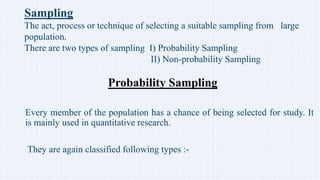
Probability Sampling
Every member of the population has a chance of being selected for study. It
is mainly used in quantitative research.
They are again classified following types :-
Sampling
The act, process or technique of selecting a suitable sampling from large
population.
There are two types of sampling I) Probability Sampling
II) Non-probability Sampling
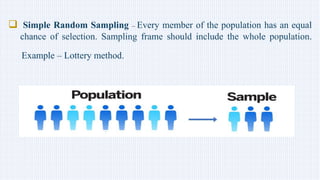
 Simple Random Sampling – Every member of the population has an equal
chance of selection. Sampling frame should include the whole population.
Example – Lottery method.
 Stratified Random Sampling – The population is divided mutually
exclusive groups (such as group) and random sample are drawn from
each group.
divide the population subgroups called strata based on the
relevant characteristic eg. Gender, job role, age etc.
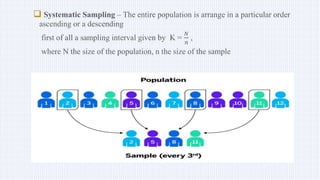
 Systematic Sampling – The entire population is arrange in a particular order
ascending or a descending
first of all a sampling interval given by K =
𝑁
𝑛
,
where N the size of the population, n the size of the sample
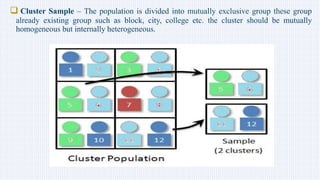
 Cluster Sample – The population is divided into mutually exclusive group these group
already existing group such as block, city, college etc. the cluster should be mutually
homogeneous but internally heterogeneous.
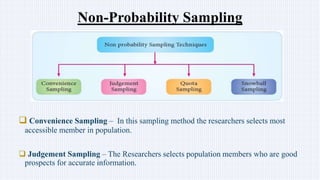
Non-Probability Sampling
 Convenience Sampling – In this sampling method the researchers selects most
accessible member in population.
 Judgement Sampling – The Researchers selects population members who are good
prospects for accurate information.
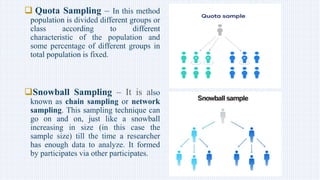
 Quota Sampling – In this method
population is divided different groups or
class according to different
characteristic of the population and
some percentage of different groups in
total population is fixed.
Snowball Sampling – It is also
known as chain sampling or network
sampling. This sampling technique can
go on and on, just like a snowball
increasing in size (in this case the
sample size) till the time a researcher
has enough data to analyze. It formed
by participates via other participates.
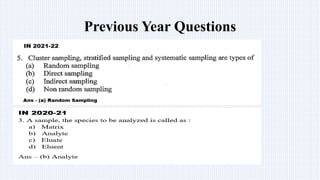
Previous Year Questions
REFERENCE -
SAMPLE AND SAMPLING TECHNIQUE
• Quantitative Analysis – Vogel A.I. , Saunders, College Publications
analytical chemistry - sampling and its techniques

analytical chemistry - sampling and its techniques

  • 1.
    B.C.S. GOVT. PG.COLLEGE DHAMTARI :: SUBMITTED TO :: DEPARTMENT OF CHEMISTRY B.C.S GOVT. PG COLLEGE DHAMTARI TOPIC – SAMPLE AND SAMPLING TECHNIQUE GUIDED BY PRESENTED BY MISS. AAKANKSHA MARKAM TOKESHWAR SAHU, MSC (III)RD SEM
  • 2.
    CONTENT  Introduction  Definition ofSample  Sampling technique  Types of sampling  Previous Year Questions  Reference
  • 3.
    Introduction • Sampling andsample preparation have a unique meaning and special importance when applied to the field of analytical chemistry. In analytical chemistry, analysis of any substance we are not use bulky state of matter, we take just small part of material then we carried out quantitative and qualitative analysis of matter. • Analyte – constituent of the sample • Matrix – matrix refers to the components of the sample other than analyte • Sample = Analyte + Matrix
  • 4.
    Sample • Sample iscarried out of the larger bulk • Sample is part of anything taken or presence for inspection. • Sample is a group of people, object or item that are taken from a larger population for measurement. • A sample refers to a smaller, manageable version of a larger group. • The sample should be representative of the population. Sampling Frame
  • 5.
    Probability Sampling Every memberof the population has a chance of being selected for study. It is mainly used in quantitative research. They are again classified following types :- Sampling The act, process or technique of selecting a suitable sampling from large population. There are two types of sampling I) Probability Sampling II) Non-probability Sampling
  • 6.
     Simple RandomSampling – Every member of the population has an equal chance of selection. Sampling frame should include the whole population. Example – Lottery method.
  • 7.
     Stratified RandomSampling – The population is divided mutually exclusive groups (such as group) and random sample are drawn from each group. divide the population subgroups called strata based on the relevant characteristic eg. Gender, job role, age etc.
  • 8.
     Systematic Sampling– The entire population is arrange in a particular order ascending or a descending first of all a sampling interval given by K = 𝑁 𝑛 , where N the size of the population, n the size of the sample
  • 9.
     Cluster Sample– The population is divided into mutually exclusive group these group already existing group such as block, city, college etc. the cluster should be mutually homogeneous but internally heterogeneous.
  • 10.
    Non-Probability Sampling  ConvenienceSampling – In this sampling method the researchers selects most accessible member in population.  Judgement Sampling – The Researchers selects population members who are good prospects for accurate information.
  • 11.
     Quota Sampling– In this method population is divided different groups or class according to different characteristic of the population and some percentage of different groups in total population is fixed. Snowball Sampling – It is also known as chain sampling or network sampling. This sampling technique can go on and on, just like a snowball increasing in size (in this case the sample size) till the time a researcher has enough data to analyze. It formed by participates via other participates.
  • 12.
  • 13.
    REFERENCE - SAMPLE ANDSAMPLING TECHNIQUE • Quantitative Analysis – Vogel A.I. , Saunders, College Publications