بسماللهالرحمنالرحيم صدق   الله   العظيم ( قَالُواْ سُبْحَانَكَ لاَ عِلْمَ لَنَا إِلاَّ مَا عَلَّمْتَنَا  إِنَّكَ أَنتَ الْعَلِيمُ الْحَكِيمُ )
Mansoura University Faculty of Medicine
Analgesic Drugs
Drugs which relieve pain be central action .  Certain drugs can relieve specific types of pain (not proper analgesic drugs) e.g., atropine in colics.  Peripheral analgesic include :  physical protectives, local and surface anaesthetics , obtundants , astringents and counterirritants
Central Analgesics include:    No drug dependence     No euphoria or drowsiness.     Subcortical on thalamus     Relieve low intensity pain, e.g., headache , neuralgia, myalgia  Analgesic antipyretics     Addictive     Produce euphoria and stupor     Act cortical and subcortical .     Can relieve any type (except itching ).  Opioid (narcotic ) analgesic
Opioid analgesics
Opioid actions CNS: analgesia  Respiratory and cough centre: depression Vomiting centre: Nausea  Higher centres: Euphoria & dysphoria  Bowel: relax.  Uses: relief of pain ( ischemic-post operative- palliative  Dirrhea  (codeine)
Contraindications :
Very old, very young . liver disease and myxedema.  Acute abdominal pain (interfere with diagnosis).  Head injury , increased CSF pressure .  Respiratory disease.  Delivery and lactation.  Biliary colic.  Acute alcoholism.  Epilepsy
Preparations  : Morphine HCI or ulphate 10-15 mg S.C., I.M. or I.V.  Adverse effects:  Respiratory depression, nausea , dizziness, mental clouding, dysphoria , pruritus, constipation , increased biliary pressure, urine retention and hypotension.
Non steroidal anti-inflammatory drugs (NSAIDs)
Analgesic and anti-inflammatory drugs especially  In chronic inflammation  Rheumatoid arthritis  Sever osteoarthritis  Chronic back pain  In acute injury with inflammation  Dysmenorrhoea  Pain from lytic bone metastases .   Usese of NSAIDS
Pyrazolone derivatives  : rarely used due to bone marrow depression  Adverse effects : GIT upset, salt and water retention, oedema, h7ypertension , bone marrow depression, liver and renal toxicity, skin rash, and bronchospasm.  Indole derivatives  : is potent  Adverse effects:   GIT disturbances , frontal headache , vertigo, confusion, psychosis , blood dyscrasias , liver and kidney toxicity, kin rash and asthma.  Classification Of NSAIDS
Sulindac : it is prodrug which is converted into active metabolite and ahs kess gastric irritation.  Anthranilic acid derivatives : fenamates  Central analgesic action (which is specific with mefenamic acid .  Propionic acid derivatives (IBUPROFEN  : Most safe  Oxicams  : Piroxicam (Feldene). It has enterohepatic cycle, so has long plasma half life
Side Effects  of Salicylate :
Gastric irritation , increased occult blood in stools.  Hypersensitivity reaction: asthma, rash, ……  Idiosyncracy: In patient: with G-6-PD deficiency  ->haemolytic  anaemia  Prolonged use may lead to hypoprothrombinaemia.
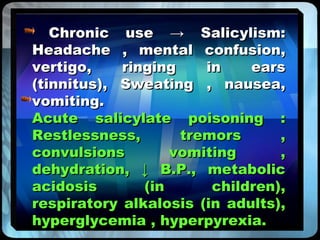
Chronic use -> Salicylism: Headache , mental confusion, vertigo, ringing in ears (tinnitus), Sweating , nausea, vomiting.  Acute salicylate poisoning : Restlessness, tremors , convulsions vomiting , dehydration, ↓ B.P., metabolic acidosis (in children), respiratory alkalosis (in adults), hyperglycemia , hyperpyrexia.
1-  Epigastric distress, naused and v0omiting ( # PGS in GIT)  2-  CVS & M.I.: with Cox-2 inhibitors (rofecoxib ) 3-  Coagulation disorders (reversible ) 4-  Renal toxicity (# Pgs).  5-  Hypersensitivity  N.B.  Newer NSAIDS have lower incidence of gastric distribution but higher incidence of renal damage   adverse effects of NSAIDs
Kinetics  Major    Minor  Conjugate with Toxic metabolite glucuronic and  (N-acetyle Benzo quinone  acid sulphate  which is detoxificated  by glutathione  acetaminophen (paracetamol )
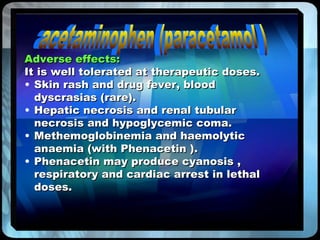
Adverse effects:  It is well tolerated at therapeutic doses.  Skin rash and drug fever, blood dyscrasias (rare).  Hepatic necrosis and renal tubular necrosis and hypoglycemic coma.  Methemoglobinemia and haemolytic anaemia (with Phenacetin ).  Phenacetin may produce cyanosis , respiratory and cardiac arrest in lethal doses.   acetaminophen (paracetamol )
THANK YOU
بحمد  تم

Analgesics

  • 1.
  • 2.
    بسماللهالرحمنالرحيم صدق الله العظيم ( قَالُواْ سُبْحَانَكَ لاَ عِلْمَ لَنَا إِلاَّ مَا عَلَّمْتَنَا إِنَّكَ أَنتَ الْعَلِيمُ الْحَكِيمُ )
  • 3.
  • 4.
  • 5.
    Drugs which relievepain be central action . Certain drugs can relieve specific types of pain (not proper analgesic drugs) e.g., atropine in colics. Peripheral analgesic include : physical protectives, local and surface anaesthetics , obtundants , astringents and counterirritants
  • 6.
    Central Analgesics include: No drug dependence  No euphoria or drowsiness.  Subcortical on thalamus  Relieve low intensity pain, e.g., headache , neuralgia, myalgia Analgesic antipyretics  Addictive  Produce euphoria and stupor  Act cortical and subcortical .  Can relieve any type (except itching ). Opioid (narcotic ) analgesic
  • 7.
  • 8.
    Opioid actions CNS:analgesia Respiratory and cough centre: depression Vomiting centre: Nausea Higher centres: Euphoria & dysphoria Bowel: relax. Uses: relief of pain ( ischemic-post operative- palliative Dirrhea (codeine)
  • 9.
  • 10.
    Very old, veryyoung . liver disease and myxedema. Acute abdominal pain (interfere with diagnosis). Head injury , increased CSF pressure . Respiratory disease. Delivery and lactation. Biliary colic. Acute alcoholism. Epilepsy
  • 11.
    Preparations :Morphine HCI or ulphate 10-15 mg S.C., I.M. or I.V. Adverse effects: Respiratory depression, nausea , dizziness, mental clouding, dysphoria , pruritus, constipation , increased biliary pressure, urine retention and hypotension.
  • 12.
  • 13.
  • 14.
    Analgesic and anti-inflammatorydrugs especially In chronic inflammation Rheumatoid arthritis Sever osteoarthritis Chronic back pain In acute injury with inflammation Dysmenorrhoea Pain from lytic bone metastases . Usese of NSAIDS
  • 15.
    Pyrazolone derivatives : rarely used due to bone marrow depression Adverse effects : GIT upset, salt and water retention, oedema, h7ypertension , bone marrow depression, liver and renal toxicity, skin rash, and bronchospasm. Indole derivatives : is potent Adverse effects: GIT disturbances , frontal headache , vertigo, confusion, psychosis , blood dyscrasias , liver and kidney toxicity, kin rash and asthma. Classification Of NSAIDS
  • 16.
    Sulindac : itis prodrug which is converted into active metabolite and ahs kess gastric irritation. Anthranilic acid derivatives : fenamates Central analgesic action (which is specific with mefenamic acid . Propionic acid derivatives (IBUPROFEN : Most safe Oxicams : Piroxicam (Feldene). It has enterohepatic cycle, so has long plasma half life
  • 17.
    Side Effects of Salicylate :
  • 18.
    Gastric irritation ,increased occult blood in stools. Hypersensitivity reaction: asthma, rash, …… Idiosyncracy: In patient: with G-6-PD deficiency ->haemolytic anaemia Prolonged use may lead to hypoprothrombinaemia.
  • 19.
    Chronic use ->Salicylism: Headache , mental confusion, vertigo, ringing in ears (tinnitus), Sweating , nausea, vomiting. Acute salicylate poisoning : Restlessness, tremors , convulsions vomiting , dehydration, ↓ B.P., metabolic acidosis (in children), respiratory alkalosis (in adults), hyperglycemia , hyperpyrexia.
  • 20.
    1- Epigastricdistress, naused and v0omiting ( # PGS in GIT) 2- CVS & M.I.: with Cox-2 inhibitors (rofecoxib ) 3- Coagulation disorders (reversible ) 4- Renal toxicity (# Pgs). 5- Hypersensitivity N.B. Newer NSAIDS have lower incidence of gastric distribution but higher incidence of renal damage adverse effects of NSAIDs
  • 21.
    Kinetics Major Minor Conjugate with Toxic metabolite glucuronic and (N-acetyle Benzo quinone acid sulphate which is detoxificated by glutathione acetaminophen (paracetamol )
  • 22.
    Adverse effects: It is well tolerated at therapeutic doses. Skin rash and drug fever, blood dyscrasias (rare). Hepatic necrosis and renal tubular necrosis and hypoglycemic coma. Methemoglobinemia and haemolytic anaemia (with Phenacetin ). Phenacetin may produce cyanosis , respiratory and cardiac arrest in lethal doses. acetaminophen (paracetamol )
  • 23.
  • 24.