NSAID’s
Nonsteroidal anti-inflammatory
drugs
CONTENTS:
 Non steroidal anti-inflammatory
drugs(NSAID’s)
Introduction
Classification
Mechanism of action
Adverse effects of drugs
 Analgesics and NSAID’s in dentistry
 Conclusion
 References
Introduction:
 NSAID’s are commonly used for dental pain for
tissue injury and inflammation due to tooth
abscess, caries, tooth extraction,etc.
 NSAID’s have analgesic, antipyretic and anti
inflammatory actions in different measures.
 In contrast to morphine, they do not depressCNS,
do not produce physical dependence, have no
abuse liability and are particularly effective in
inflammatory pain.
 They act primarily on peripheral pain mechanisms
but also on the CNS to raise pain threshold.
RANKING OF ANALGESICS FOR CLINICAL USE
 MILD PAIN – Conventional NSAIDS. Eg: Aspirin,
Paracetamol, Ibuprofen, etc
 MODERATE PAIN – Low efficacy opiods &/or NSAIDS.
Eg: Codeine, Pentazocine, etc
 SEVERE PAIN – High efficacy opiods. Eg: Morphine,
&/or NSAIDS
 ACUTE PAIN - High efficacy opiods. Eg: Morphine +
Sedatives/Anxiolytics/Tranquilisers.
 Analgesics are divided into two groups:
1) Non-narcotic / Non-opioid Analgesics / Non Steroidal Anti
Inflammatory Drugs-
(Act Peripherally)
2) Narcotic / Opioid/ Morphine like Analgesics-
(Act On CNS)
0
CLASSIFICATION OF NONSTEROIDAL ANTI-
INFLAMMATORY DRUGS
 Chemical Structure - Acc Goodman & Gilman
 Clinical Application -Laurence & Bennett
 COX Selectivity
CHEMICAL CLASSIFICATION
 ACCORDINGTO GOODMAN & GILMAN
 Nonselective COX inhibitors
 Preferential COX-2 inhibitors
 Selective COX-2 inhibitors
 Analgesics-antipyretics with poor
antiinflammatory action
CHEMICALCLASSIFICATION
ACCORDINGTO GOODMAN & GILMAN
Nonselective Cox Inhibitors (traditional
NSAID’s):-
1. Salicylic acid derivatives
• Aspirin
2. Propionic acid derivatives
• Ibuprofen, naproxen, ketoprofen, flurbiprofen.
3. Anthranilic acids
 mephenamic acid
4. Heteroaryl acetic acids
 Diclofenac, aceclofenac
5. Oxicam derivatives
 Piroxicam, tenoxicam
6. pyrrolo- pyrrole derivative
 ketorolac
7. Indole and indene acetic acids
 Indomethacin
8. Pyrazolone derivative
 Phenylbutazone, oxyphenbutazone
 Preferential COX-2 inhibitors- nimesulide, meloxicam
 Selective COX-2 Inhibitors- celecoxib, etoricoxib, parecoxib
 Analgesic- antipyretics with poor anti inflammatory action-
i) Paraaminophenol derivative- paracetamol
ii) Pyrazolone derivative- metamizol, propiphenazone.
iii) Benzoxazocine derivative- nefopam
CLINICAL CLASSIFICATION – ACC LAURENCE &
BENNETT
 Weak Anti Inflammatory Drugs:
Acetaminophen
 Mild to Moderate Anti Inflammatory Drugs:
Arylpropionic acids, Fenamates, Nabumetone
 Strong Anti Inflammatory Drugs:
Salicylic Acid Derivatives, Heteroaryl Acetic Acids, Enolic
Acids
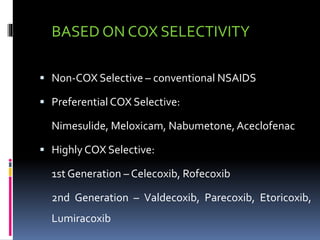
BASED ON COX SELECTIVITY
 Non-COX Selective – conventional NSAIDS
 Preferential COX Selective:
Nimesulide, Meloxicam, Nabumetone, Aceclofenac
 Highly COX Selective:
1st Generation – Celecoxib, Rofecoxib
2nd Generation – Valdecoxib, Parecoxib, Etoricoxib,
Lumiracoxib
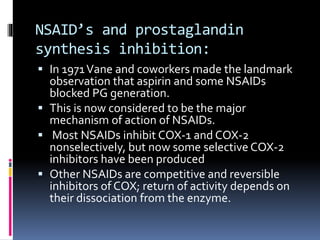
NSAID’s and prostaglandin
synthesis inhibition:
 In 1971Vane and coworkers made the landmark
observation that aspirin and some NSAIDs
blocked PG generation.
 This is now considered to be the major
mechanism of action of NSAIDs.
 Most NSAIDs inhibit COX-1 and COX-2
nonselectively, but now some selective COX-2
inhibitors have been produced
 Other NSAIDs are competitive and reversible
inhibitors of COX; return of activity depends on
their dissociation from the enzyme.
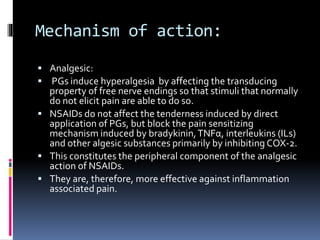
Mechanism of action:
 Analgesic:
 PGs induce hyperalgesia by affecting the transducing
property of free nerve endings so that stimuli that normally
do not elicit pain are able to do so.
 NSAIDs do not affect the tenderness induced by direct
application of PGs, but block the pain sensitizing
mechanism induced by bradykinin,TNFα, interleukins (ILs)
and other algesic substances primarily by inhibiting COX-2.
 This constitutes the peripheral component of the analgesic
action of NSAIDs.
 They are, therefore, more effective against inflammation
associated pain.
 Antipyresis:
 NSAIDs reduce body temperature in fever, but do not
cause hypothermia in normothermic individuals.
 Fever during infection and tissue injury is produced
through the generation of pyrogens including ILs,TNFα,
interferons which induce PGE2 production in
hypothalamus.
 NSAIDs block the action of pyrogens but not that of
PGE2 injected into the hypothalamus.
 The isoform present at this site appears to be COX-2
(possibly COX-3also).
 However, fever can occur through non-PG mediated
mechanisms as well.
 Antiinflammatory
 The most important mechanism of antiinflammatory
action of NSAIDs is considered to be inhibition of PG
synthesis at the site of injury.
 However, there is some evidence that inhibition of
the constitutive COX-1 also contributes to
suppression of inflammation, especially in the initial
stages.
 The antiinflammatory potency of different
compounds roughly corresponds with their potency
to inhibit COX.
 Certain NSAIDs may act by additional
mechanisms including inhibition of expression/
activity of some of these molecules and
generation of superoxide/other free radicals.
 Growth factors like GM-CSF, IL-6 as well as
lymphocyte transformation factors andTNFα
may also be affected.
 Stabilization of leucocyte lysosomal membrane
and antagonism of certain actions of kinins may
be contributing to NSAID action.
Adverse effects of NSAID’s:
 Gastrointestinal- gastric irritation, erosions, peptic
ulcerations, gastric bleeding/ perforation,
esophagitis.
 Renal- Na+ and water retention,chronic renal failure,
intestinal nephritis, papillary necrosis.
 Hepatic- raised transaminases, hepatic failure
 CNS- headache, mental confusion, behavioural
disturbances, seizure precipitation.
 Haematological- bleeding, thrombocytopenia,
hemolytic anaemia, agranulocytosis
 Others- asthama exacerbation, nasal polyposis, skin
rashes, pruritis, angioedema
Drug categories:
1.salicylates:
 Aspirin :
 Aspirin is acetylsalicylic acid.
 It is rapidly converted in the body to salicylic
acid which is responsible for most of the
actions.
 Other actions are the result of acetylation of
certain macromolecules including COX.
 It is one of the oldest analgesic-
antiinflammatory drugs and is still frequently
used.
 Dosage- ASPIRIN- 350 mg tab,
 - COLSPRIN 100,325, 65 mg tab,
 - ECOSPRIN 75,150, 325 mg tab,
 - DISPRIN 350 mg tab,
 - LOPRIN 75,162.5 mg tab
 An injectable preparation has been made
available recently: BIOSPIRIN:lysine
acetylsalicylate 900 mg+ glycine 100 mg/ vial
for dissolving in 5 ml water.
 PHARMACOLOGICALACTIONS :
 1.Analgesic, antipyretic, antiinflammatory
actions.
 Aspirin is a weaker analgesic (has lower
maximal efficacy) than morphine type
 However, it effectively relieves inflammatory,
tissue injury related, connective tissue and
integumental pain, but is relatively ineffective
in severe visceral and ischaemic pain.
 The analgesic action is mainly due to
obtunding of peripheral pain receptors and
prevention of PG-mediated sensitization of
nerve endings.
 No sedation, subjective effects, tolerance or
physical dependence is produced.
 Aspirin resets the hypothalamic thermostat
and rapidly reduces fever by promoting heat
loss (sweating, cutaneous vasodilatation), but
does not decrease heat production
 Antiinflammatory action is exerted at high
doses (3–6 g/day or 100 mg/kg/ day).
 Signs of inflammation like pain, tenderness,
swelling, vasodilatation and leucocyte
infiltration are suppressed.
 In addition to COX inhibition, quenching of
free radicals may contribute to its
antiinflammatory action.
 2. Metabolic effects:
 These are significant only at
antiinflammatory doses.
 Cellular metabolism is increased, especially
in skeletal muscles, due to uncoupling of
oxidative phosphorylation → increased
heat production.
 There is increased utilization of glucose →
blood sugar may decrease (especially in
diabetics) and liver glycogen is depleted.
 Plasma free fatty acid and cholesterol levels
are reduced.
 3. Respiration
 The effects are dose dependent.
 At antiinflammatory doses, respiration is
stimulated by peripheral (increased CO2
production) as well as central (increased
sensitivity of respiratory centre to CO2) actions.
 Hyperventilation is prominent in salicylate
poisoning.
 Further rise in salicylate level causes respiratory
depression; death is due to respiratory failure.
 4. Acid-base and electrolyte balance:
 Usual analgesic doses (0.3–1.0 g) have
practically no effect.
 Antiinflammatory doses produce significant
changes in the acid-base and electrolyte
composition of body fluids.
 Most adults treated with 4–5 g/day of aspirin
stay in a state of compensated respiratory
alkalosis.
 Still higher doses cause respiratory depression
with CO2 retention, while excess CO2 production
continues → respiratory acidosis.
 6. GIT
 Aspirin and released salicylic acid irritate
gastric mucosa → cause epigastric distress,
nausea and vomiting.
 It also stimulates CTZ: vomiting that occurs
at higher doses has a central component as
well.
 7. Urate excretion:
 Dose-related effect is seen:
 < 2 g/day—urate retention and antagonism
of all other uricosuric drugs.
 2–5 g/day—variable effects, often no change.
 > 5 g/day—increased urate excretion.
 Aspirin is not suitable for use in chronic gout.
 ADVERSE EFFECTS:
 (a) Side effects that occur at analgesic dose
(0.3–1.5 g/day) are nausea, vomiting,
epigastric distress, increased occult blood
loss in stools.The most important adverse
effect of aspirin is gastric mucosal damage
and peptic ulceration.
 (b) Hypersensitivity and idiosyncrasy
 (c) Antiinflammatory doses (3–5 g/day)
produce the syndrome called salicylism—
dizziness, tinnitus, vertigo, reversible
impairment of hearing and vision, excitement
and mental confusion, hyperventilation and
electrolyte imbalance.
 Aspirin therapy in children with rheumatoid
arthritis has been found to raise serum
transaminases, indicating liver damage.
 An association has been noted between
salicylate therapy and ‘Reye’s syndrome’, a
rare form of hepatic encephalopathy seen in
children having viral (varicella, influenza)
infection. In adults also, long-term therapy
with high dose aspirin can cause insidious
onset hepatic injury.
 (d) Acute salicylate poisoning:
 It is more common in children.
 Fatal dose in adults is estimated to be 15–30 g, but is
considerably lower in children.
 Serious toxicity is seen at serum salicylate levels > 50 mg/dl.
 Manifestations are:Vomiting, dehydration, electrolyte
imbalance, acidotic breathing, hyper/hypoglycaemia, petechial
haemorrhages, restlessness, delirium, hallucinations,
hyperpyrexia, convulsions, coma and death due to respiratory
failure + cardiovascular collapse.
 Treatment is symptomatic and supportive:
 Most important is external cooling and i.v. fluid with Na+, K+,
HCO3¯ and glucose
 Blood transfusion and vit K should be given if bleeding occurs.
 USES:
 1. As analgesic: For headache (including mild
migraine), backache, myalgia, joint pain, pulled
muscle, toothache, neuralgias and
dysmenorrhoea; it is effective in low doses (0.3–
0.6 g 6–8 hourly).
 :Analgesic effect is maximal at ~ 1000
mg (single dose).
 2. Acute rheumatic fever: Aspirin is the first drug to
be used in all cases; other drugs are added or
substituted only when it fails or in severe cases
(corticosteroids act faster). In a dose of 4–5 g or
75–100 mg/kg/day it brings about marked
symptomatic relief in 1–3 days.
 4. Rheumatoid arthritis: Aspirin in a dose of 3–5
g/day is effective in most cases; produces relief of
pain, swelling and morning stiffness, but progress of
the disease process is not affected.
 5. Osteoarthritis: It affords symptomatic relief only;
may be used on ‘as and when required’ basis, but
paracetamol is the first choice analgesic for most
cases.
 6. Postmyocardial infarction and poststroke patients
:By inhibiting platelet aggregation aspirin lowers the
incidence of reinfarction.TXA2 synthesis in platelets
is inhibited at low doses.
 . Large studies have demonstrated that aspirin 60–100
mg/day reduces the incidence of myocardial infarction (MI):
it is now routinely prescribed to post-infarct patients.
 Some authorities recommend it for primary prophylaxis as
well, but the risk of bleeding has to be weighed against the
possible benefit.
 ‘New onset’ or ‘sudden worsening’ angina is associated with
high infarction rate.
 This can be reduced to half by 100–150 mg aspirin per day
for 12 weeks.
 Aspirin reduces ‘transient ischaemic attacks’ and lowers
incidence of stroke in such patients. But the risk of stroke in
post-MI patients is not reduced.
2.Propionic Acid Derivatives
 Ibuprofen was the first member of this class to be
introduced in 1969 as a better tolerated alternative
to aspirin.
 Mechanism of action:
 The analgesic, antipyretic and antiinflammatory
efficacy is rated somewhat lower than high dose of
aspirin.
 All members inhibit PG synthesis, naproxen being
the most potent; but their in vitro potency to inhibit
COX does not closely parallel to in vivo
antiinflammatory potency.
 Inhibition of platelet aggregation is short-lasting
with ibuprofen, but longer lasting with naproxen.
 Adverse effects:
 Ibuprofen and all its congeners are better tolerated than
aspirin. Side effects are milder and their incidence is lower.
 Gastric discomfort, nausea and vomiting, though less than
aspirin or indomethacin, are still the most common side
effects. Gastric erosion and occult blood loss are rare.
 CNS side effects include headache, dizziness, blurring of
vision, tinnitus and depression.
 Rashes, itching and other hypersensitivity phenomena are
infrequent.
 They are not to be prescribed to pregnant women and
should be avoided in peptic ulcer patient.
 Uses:
 1. Ibuprofen is used as a simple analgesic and antipyretic in
the same way as low dose of aspirin.
 It is particularly effective in dysmenorrhoea in which the
action is clearly due to PG synthesis inhibition. It is available
as an ‘over-the-counter’ drug.
 2. Ibuprofen and its congeners are widely used in
rheumatoid arthritis, osteoarthritis and other
musculoskeletal disorders, especially where pain is more
prominent than inflammation.
 3.They are indicated in soft tissue injuries, fractures,
vasectomy, tooth extraction, postpartum and
postoperatively: suppress swelling and inflammation.
 Ibuprofen:
 It has been rated as the safest traditional
NSAID by the spontaneous adverse drug
reaction reporting system in U.K.
 Ibuprofen (400 mg) has been found equally or
more efficacious than a combination of
aspirin (650 mg) + codeine (60 mg) in
relieving dental surgery pain, but is a weaker
antiinflammatory; not suitable for acute gout
and other similar conditions.
 Naproxen :
 The antiinflammatory activity is stronger and it
is particularly potent in inhibiting leucocyte
migration—may be more valuable in acute
gout: dose 750 mg followed by 250 mg 8 hourly
till attack subsides.
 It is also recommended for rheumatoid
arthritis and ankylosing spondylitis.
 Because of longer t½ regular use can
effectively suppress platelet function.
 Naproxen carries lower thrombotic risk than
diclofenac, etoricoxib, etc.
 Dose should be reduced in the elderly.
 Ketoprofen :
 An additional action to stabilize lysosomes and
inhibit COX has been demonstrated with
ketoprofen; though antiinflammatory efficacy is
similar to ibuprofen, and side effects are more.
 Flurbiprofen :
 more effective than ibuprofen, but gastric side
effects are also more.
 It is used as an ocular antiinflammatory drug.
 OCUFLUR, FLUR, FLURBIN, 0.03% eyedrops, 1
drop 6 hourly.
 Choice among different propionic acid
derivatives is difficult; naproxen is probably
more efficacious and better tolerated in
antiinflammatory doses.
 It is longer acting and has the advantage of
twice daily dosing.
 However, individuals vary in their preference
for different members.
3. Anthranilic acid derivative
(fenamate):
 Mephenamic acid:
 An analgesic, antipyretic and weaker
antiinflammatory drug, which inhibits synthesis
of PGs as well as antagonises some of their
actions.
 Mephenamic acid exerts peripheral as well as
central analgesic action.
 Adverse effects: Diarrhoea is the most important
dose-related side effect. Epigastric distress is
complained, but gut bleeding is not significant.
Skin rashes, dizzines and other.Haemolytic
anaemia is a rare but serious complication.
 Pharmacokinetics:
 Oral absorption is slow but almost complete.
 Plasma t½ is 2–4 hours.
 Uses: Mephenamic acid is indicated primarily as
analgesic in muscle, joint and soft tissue pain
where strong antiinflammatory action is not
needed.
 It is quite effective in dysmenorrhoea.
 It may be useful in some cases of rheumatoid
and osteoarthritis but has no distinct advantage.
 Dose: 250–500 mgTDS; MEDOL 250, 500 mg
cap; MEFTAL 250, 500 mg tab, 100 mg/5 ml
susp. PONSTAN 125, 250, 500 mg tab, 50
mg/ml syrup.
4. Enolic acid
derivatives(oxicams):
 Piroxicam:
 It is a long-acting potent NSAID with
antiinflammatory potency similar to
indomethacin and good analgesic-antipyretic
action.
 It is a nonselective, reversible inhibitor of COX;
lowers PG concentration in synovial fluid and
inhibits platelet aggregation—prolonging
bleeding time.
 In addition, it decreases the production of IgM,
rheumatoid factor and leucocyte chemotaxis.
 Thus, it can inhibit inflammation in diverse ways.
 Pharmacokinetics :
It is rapidly and completely absorbed: 99%
plasma protein bound; largely metabolized in
liver by hydroxylation and glucuronide
conjugation;
 excreted in urine and bile;
 enterohepatic cycling occurs.
 Plasma t½ is long— nearly 2 days.
 Steady-state concentrations are achieved in a
week.
 Single daily administration is sufficient.
 Adverse effects:
 Rashes and pruritus are seen in < 1% patients,
but serious skin reactions are possible.
 Edema and reversible azotaemia have been
observed
 . Uses:
 Due to slow onset of action piroxicam is
suitable for use as long-term
antiinflammatory drug in rheumatoid and
osteo-arthritis, ankylosing spondylitis, etc.,
but is not a first choice drug for any condition
because of relatively higher toxicity.
 It has also been used for acute gout,
musculoskeletal injuries and in dentistry
 . Dose:
 20 mg BD for two days followed by 20 mg OD:
DOLONEX, PIROX 10, 20 mg cap, 20 mg
dispersible tab, 20 mg/ml inj in 1 and 2 ml amps;
 PIRICAM 10, 20 mg cap.
 Tenoxicam:
 A congener of piroxicam with similar properties
and uses.
 TOBITIL 20 mg tab; dose 20 mg OD.
5. Acetic acid derivative:
 Ketorolac :
 This arylacetic acid NSAID has potent analgesic but
modest antiinflammatory activity.
 Like other NSAIDs, it inhibits PG synthesis and
relieves pain primarily by a peripheral mechanism. In
short-lasting pain, it has compared favourably with
aspirin.
 Ketorolac is rapidly absorbed after oral and i.m.
administration.
 It is highly plasma protein bound and 60% excreted
unchanged in urine.
 plasma t½ is 5–7 hours.
 Adverse effects:
 Nausea, abdominal pain, dyspepsia, ulceration, loose stools,
drowsiness, headache, dizziness, nervousness, pruritus, pain at injection
site, rise in serum transaminase and fluid retention have been noted.
 Ketorolac has been used concurrently with morphine to keep its dose
low.
 Contrainidcations-However, it should not be given to patients on
anticoagulants.
 Uses: Ketorolac is frequently used in postoperative, dental and acute
musculoskeletal pain: 15– 30 mg i.m. or i.v. every 4–6 hours (max. 90
mg/ day).
 It may also be used for renal colic, migraine and pain due to bony
metastasis.
 Orally it is used in a dose of 10–20 mg 6 hourly for short-term
management of moderate pain.
 Ketorolac has been rated superior to aspirin
(650 mg), paracetamol (600 mg) and
equivalent to ibuprofen (400 mg).
 Continuous use for more than 5 days is not
recommended.
 KETOROL, ZOROVON, KETANOV,TOROLAC
10 mg tab, 30 mg in 1 ml amp. KETLUR,
ACULAR 0.5% eye drops;
6.Indole acetic acid
derivative:
 Indomethacin :
 This indole acetic acid derivative is a potent
antiinflammatory drug with prompt
antipyretic action.
 Indomethacin relieves only inflammatory or
tissue injury related pain.
 Plasma t½ is 2–5 hours
 Uses: Because of prominent adverse effects,
indomethacin is used as a reserve drug in
conditions requiring potent antiinflammatory
action like ankylosing spondylitis, acute
exacerbations of destructive arthropathies.
 Dose: 25–50 mg BD
 IDICIN, INDOCAP 25 mg cap, 75 mg SR cap,
ARTICID 25, 50 mg cap, INDOFLAM 25, 75 mg
caps, 1% eye drop. RECTICIN 50 mg
suppository.
7. Pyrazolones:
 Antipyrine (phenazone) and amidopyrine (aminopyrine)
were introduced in 1884 as antipyretic and analgesic.
 Their use was associated with high incidence of
agranulocytosis: are banned globally.
 Phenylbutazone was introduced in 1949 and soon its active
metabolite oxyphenbutazone was also marketed.
 These two are potent antiinflammatory drugs, inhibit COX,
but have slow onset, weak analgesic and antipyretic action.
 Their gastric toxicity is high; edema due to Na+ and water
retention is frequent and CNS side effects, hypersensitivity
reactions, hypothyroidism are reported.
 They have gone out of use due to residual risk of bone
marrow depression and other toxicity.
 Two other pyrazolones available in India—
metamizol and propiphenazone are primarily
used as analgesic and antipyretic.
 Metamizol:
Dose: 0.5–1.5 g oral/i.m./i.v.; ANALGIN 0.5 g
tab; NOVALGIN, BARALGAN 0.5 g tab, 0.5
g/ml in 2 ml and 5 ml amps; ULTRAGIN 0.5
g/ml inj in 2 ml amp and 30 ml vial
 Propiphenazone :
 Another pyrazolone, similar in properties to
metamizol; claimed to be better tolerated.
Agranulocytosis has not been reported.
 Dose: 300–600 mgTDS; marketed only in
combination in several ‘over-the-counter’,
preparations—in SARIDON,ANAFEBRIN:
propiphenazone 150 mg + paracetamol 250
mg tab.
8. Preferencial COX-2
inhibitors:
 Nimesulide:
 This NSAID is a relatively weak inhibitor of PG
synthesis and moderatelyCOX2 selective.
 Mechanism of action-
 Antiinflammatory action may be exerted by other
mechanisms as well, e.g. reduced generation of
superoxide by neutrophils, inhibition of PAF
synthesis andTNFa release, free radical scavanging,
inhibition of metalloproteinase activity in cartilage.
 The analgesic, antipyretic and antiinflammatory
activity of nimesulide has been rated comparable to
other NSAIDs.
 Use- It has been used primarily for short-lasting
painful inflammatory conditions like sports
injuries, sinusitis and other ear-nose-throat
disorders, dental surgery, bursitis, low backache,
dysmenorrhoea, postoperative pain,
osteoarthritis and for fever.
 Nimesulide is almost completely absorbed orally,
99% plasma protein bound, extensively
metabolized and excreted mainly in urine.
 t½ of 2–5 hours.
 Adverse effects of nimesulide are
gastrointestinal (epigastralgia, heart burn,
nausea, loose motions), dermatological (rash,
pruritus) central (somnolence, dizziness).
 Gastric tolerability of nimesulide is better,
though ulcer complications are as prevalent
as with other NSAIDs.
 Dose: 100 mg BD; NIMULID, NIMEGESIC,
NIMODOL 100 mg tab, 50 mg/5 ml susp.
 Diclofenac sodium:
 An analgesic-antipyretic, antiinflammatory
drug, similar in efficacy to naproxen.
 It inhibits PG synthesis and is somewhat
COX-2 selective.
 It is well absorbed orally, 99% protein bound,
metabolized and excreted both in urine and
bile.
 The plasma t½ is ~2 hours.
 Adverse effects of diclofenac are generally mild:
epigastric pain, nausea, headache, dizziness, rashes.
 Gastric ulceration and bleeding are less common.
 Some comparative trials have found its gastric
toxicity to be similar to celecoxib and etoricoxib.
 Like many NSAIDs, diclofenac can increase the risk
of heart attack and stroke.
 Reversible elevation of serum amino-transferases
has been reported more commonly; kidney damage
is rare.
 Uses-
 Diclofenac is among the most extensively used NSAID;
employed in rheumatoid and osteoarthritis, bursitis,
ankylosing spondylitis, toothache, dysmenorrhoea, renal
colic, posttraumatic and postoperative inflammatory
conditions—affords quick relief of pain and wound edema.
 Dose: 50 mgTDS, then BD oral, 75 mg deep i.m.VOVERAN,
DICLONAC, MOVONAC 50 mg enteric coated tab, 100 mg
S.R. tab, 25 mg/ml in 3 ml amp. for i.m. inj. DICLOMAX 25,
50 mg tab, 75 mg/3 ml inj.
 Diclofenac potassium:VOLTAFLAM 25, 50 mg tab, ULTRAK
50 mg tab;VOVERAN 1% topical gel. DICLONAC,
VOVERANOPHTHA 0.1% eye drops.
 Aceclofenac:
 A moderately COX-2 selective congener of
diclofenac having similar properties.
 Dose: 100 mg BD; ACECLO, DOLOKIND 100
mg tab
9. Para amino phenol
derivatives:
 Phenacetin introduced in 1887 was extensively used
as analgesic-antipyretic, but is now banned because
it was implicated in analgesic abuse nephropathy.
 Paracetamol (acetaminophen) the active metabolite
of phenacetin, was also introduced in the last
century but has come into common use only since
1950.
 Actions :The central analgesic action of paracetamol
is like aspirin, i.e. it raises pain threshold, but has
weak peripheral antiinflammatory component.
Analgesic action of aspirin and paracetamol is
additive.
 Paracetamol is a good and promptly acting
antipyretic.
 It is a poor inhibitor of PG synthesis in
peripheral tissues, but more active on COX in
the brain.
 In contrast to aspirin, paracetamol does not
stimulate respiration or affect acid-base
balance; does not increase cellular
metabolism. It has no effect on CVS.
 Gastric irritation is insignificant— mucosal
erosion and bleeding occur rarely only in
 Pharmacokinetics:
 Paracetamol is well absorbed orally, only
about 1/4th is protein bound in plasma and it
is uniformly distributed in the body.
 Plasma t½ is 2–3 hours.
 Effects after an oral dose last for 3–5 hours.
 Adverse effects :
 In isolated antipyretic doses paracetamol is safe and well tolerated.
 Nausea and rashes occur occasionally.
 leukopenia is rare.
 Uses:
 ‘over-the-counter’ analgesic for headache, mild migraine,
musculoskeletal pain, dysmenorrhoea, etc. but is relatively
ineffective when inflammation is prominent as in rheumatoid
arthritis.
 first choice analgesic for osteoarthritis by many professional bodies
 as antipyretic, especially in children (no risk of Reye’s syndrome).
 can be used in all age groups (infants to elderly), pregnant/lactating
women, in presence of other disease states and in patients in whom
aspirin is contraindicated.
 . Dose: 325–650 mg (children 10–15 mg/kg) 3–
5 times a day. CROCIN 0.5, 1.0 g tabs;
METACIN, PARACIN 500 mg tab, 125 mg/5 ml
syrup,
 CROCIN PAIN RELIEF: 650 mg + Caffeine 50
mg tab. JUNIMOL-RDS 80, 170, 250 mg
suppository (for children),
 PARACETAMOL RECTAL SUPPOSITORY 80,
170 mg.
10. Benzoxazocine
derivative:
 Nefopam:
 It is a nonopioid analgesic which does not
inhibit PG synthesis but relieves traumatic,
postoperative and shortlasting
musculoskeletal pain.
 It may be used if pain is persistent and is not
adequately relieved by other analgesics.
 Nefopam produces anticholinergic (dry
mouth, urinary retention, blurred vision) and
sympathomimetic (tachycardia, nervousness)
side effects, and nausea is often dose
limiting.
 It is contraindicated in epileptics.
 Dose: 30–60 mgTDS oral, 20 mg i.m. 6
hourly. NEFOMAX 30 mg tab, 20 mg in 1 ml
amp.
Analgesics/ NSAID’s in
dentistry:
 . Some guidelines are:
 1. Mild-to-moderate pain with little
inflammation: paracetamol or low-dose
ibuprofen.
 2. Postoperative or similar acute but shortlasting
pain: ketorolac, a propionic acid derivative,
diclofenac or nimesulide.
 3. Acute musculoskeletal, osteoarthritic, injury
associated pain: paracetamol, a propionic acid
derivative or diclofenac.
 4. Exacerbation of rheumatoid arthritis,
ankylosing spondylitis, acute gout, acute
 5. Gastric intolerance to traditional NSAIDs or
predisposed patients: a selective COX-2 inhibitor or
paracetamol.
 6. Patients with history of asthma or anaphylactoid
reaction to aspirin/other NSAIDs: nimesulide, COX-2
inhibitor.
 7. Patients with hypertension or other risk factor for
heart attack/stroke: avoid selective COX-2 inhibitor; a
propionic acid derivative or aspirin may be used at the
lowest dose for the shortest period.
 8. Paediatric patients: only paracetamol, aspirin,
ibuprofen and naproxen have been adequately
evaluated in children — should be preferred in them.
 . 9. Elderly patients: use lower dose of the
chosen NSAID.
 10. Fast acting drug formulation is suitable for
fever, headache and other short lasting pain,
while longer acting drugs/sustained release
formulations are appropriate for chronic arthritic
pain.
 11. Pregnancy: paracetamol is the safest;
lowdose aspirin is probably the second best.
 12. Hypertensive, diabetic, ischaemic heart
disease, epileptic and other patients receiving
CONCLUSION:
 Based on the knowledge of the pharmacology of the drugs it is necessary
to choose the right kind of analgesic suitable to a patient that delivers the
desired effect with minimal side effects and provide the best achievable
comfort to the patient.
 Medical emergencies can, and do happen in the practice of dentistry.
 The essential emergency drug kit and emergency equipment should be
kept always in the dental office.
QUESTIONS:
How will you manage a case of hot
tooth with NSAID’s?
 Several drugs of the NSAID class have been
recommended as a premedication to enhance
success of local anaesthesia in teeth with hot
pulp.
 It brings about the success of local anesthetics.
 Drugs: ibuprofen
 acetaminophen
 lornoxicam
 ketorolac
 endomethacin
 diclofenac
Why ketorol should not be
prescribed for more than 5
days? Ketorolac can increase your risk of fatal heart attack or
stroke, especially if you use it long term or take high
doses, or if you have heart disease. Do not use this
medicine just before or after heart bypass surgery
(coronary artery bypass graft).
 Ketorolac may also cause stomach or intestinal
bleeding, which can be fatal.These conditions can occur
without warning while you are using ketorolac, especially
in older adults.You should not take this medicine if you
already have bleeding in your stomach or intestines.
 Ketorolac should not be used for longer than 5 days,
including both injection plus tablets. Long-term use of this
medicine can damage your kidneys or cause bleeding.
Alternatives for ketorol for
pain relief:
 naproxen works well for treating mild to
moderate pain or inflammation, and lasts
longer than other NSAIDs.
 Relafen (nabumetone) works well for
relieving pain and inflammation.
 Nabumetone
 Etodolac
 celecoxib
REFERENCES:
 Essentials of pharmacology :K.D .Tripathi
 Medical emergencies: Malamed
 Wikipedia

Nsaids

  • 1.
  • 2.
    CONTENTS:  Non steroidalanti-inflammatory drugs(NSAID’s) Introduction Classification Mechanism of action Adverse effects of drugs  Analgesics and NSAID’s in dentistry  Conclusion  References
  • 3.
    Introduction:  NSAID’s arecommonly used for dental pain for tissue injury and inflammation due to tooth abscess, caries, tooth extraction,etc.  NSAID’s have analgesic, antipyretic and anti inflammatory actions in different measures.  In contrast to morphine, they do not depressCNS, do not produce physical dependence, have no abuse liability and are particularly effective in inflammatory pain.  They act primarily on peripheral pain mechanisms but also on the CNS to raise pain threshold.
  • 4.
    RANKING OF ANALGESICSFOR CLINICAL USE  MILD PAIN – Conventional NSAIDS. Eg: Aspirin, Paracetamol, Ibuprofen, etc  MODERATE PAIN – Low efficacy opiods &/or NSAIDS. Eg: Codeine, Pentazocine, etc  SEVERE PAIN – High efficacy opiods. Eg: Morphine, &/or NSAIDS  ACUTE PAIN - High efficacy opiods. Eg: Morphine + Sedatives/Anxiolytics/Tranquilisers.
  • 5.
     Analgesics aredivided into two groups: 1) Non-narcotic / Non-opioid Analgesics / Non Steroidal Anti Inflammatory Drugs- (Act Peripherally) 2) Narcotic / Opioid/ Morphine like Analgesics- (Act On CNS) 0
  • 6.
    CLASSIFICATION OF NONSTEROIDALANTI- INFLAMMATORY DRUGS  Chemical Structure - Acc Goodman & Gilman  Clinical Application -Laurence & Bennett  COX Selectivity
  • 7.
    CHEMICAL CLASSIFICATION  ACCORDINGTOGOODMAN & GILMAN  Nonselective COX inhibitors  Preferential COX-2 inhibitors  Selective COX-2 inhibitors  Analgesics-antipyretics with poor antiinflammatory action
  • 8.
    CHEMICALCLASSIFICATION ACCORDINGTO GOODMAN &GILMAN Nonselective Cox Inhibitors (traditional NSAID’s):- 1. Salicylic acid derivatives • Aspirin 2. Propionic acid derivatives • Ibuprofen, naproxen, ketoprofen, flurbiprofen.
  • 9.
    3. Anthranilic acids mephenamic acid 4. Heteroaryl acetic acids  Diclofenac, aceclofenac 5. Oxicam derivatives  Piroxicam, tenoxicam 6. pyrrolo- pyrrole derivative  ketorolac 7. Indole and indene acetic acids  Indomethacin 8. Pyrazolone derivative  Phenylbutazone, oxyphenbutazone
  • 10.
     Preferential COX-2inhibitors- nimesulide, meloxicam  Selective COX-2 Inhibitors- celecoxib, etoricoxib, parecoxib  Analgesic- antipyretics with poor anti inflammatory action- i) Paraaminophenol derivative- paracetamol ii) Pyrazolone derivative- metamizol, propiphenazone. iii) Benzoxazocine derivative- nefopam
  • 11.
    CLINICAL CLASSIFICATION –ACC LAURENCE & BENNETT  Weak Anti Inflammatory Drugs: Acetaminophen  Mild to Moderate Anti Inflammatory Drugs: Arylpropionic acids, Fenamates, Nabumetone  Strong Anti Inflammatory Drugs: Salicylic Acid Derivatives, Heteroaryl Acetic Acids, Enolic Acids
  • 12.
    BASED ON COXSELECTIVITY  Non-COX Selective – conventional NSAIDS  Preferential COX Selective: Nimesulide, Meloxicam, Nabumetone, Aceclofenac  Highly COX Selective: 1st Generation – Celecoxib, Rofecoxib 2nd Generation – Valdecoxib, Parecoxib, Etoricoxib, Lumiracoxib
  • 13.
    NSAID’s and prostaglandin synthesisinhibition:  In 1971Vane and coworkers made the landmark observation that aspirin and some NSAIDs blocked PG generation.  This is now considered to be the major mechanism of action of NSAIDs.  Most NSAIDs inhibit COX-1 and COX-2 nonselectively, but now some selective COX-2 inhibitors have been produced  Other NSAIDs are competitive and reversible inhibitors of COX; return of activity depends on their dissociation from the enzyme.
  • 14.
    Mechanism of action: Analgesic:  PGs induce hyperalgesia by affecting the transducing property of free nerve endings so that stimuli that normally do not elicit pain are able to do so.  NSAIDs do not affect the tenderness induced by direct application of PGs, but block the pain sensitizing mechanism induced by bradykinin,TNFα, interleukins (ILs) and other algesic substances primarily by inhibiting COX-2.  This constitutes the peripheral component of the analgesic action of NSAIDs.  They are, therefore, more effective against inflammation associated pain.
  • 15.
     Antipyresis:  NSAIDsreduce body temperature in fever, but do not cause hypothermia in normothermic individuals.  Fever during infection and tissue injury is produced through the generation of pyrogens including ILs,TNFα, interferons which induce PGE2 production in hypothalamus.  NSAIDs block the action of pyrogens but not that of PGE2 injected into the hypothalamus.  The isoform present at this site appears to be COX-2 (possibly COX-3also).  However, fever can occur through non-PG mediated mechanisms as well.
  • 16.
     Antiinflammatory  Themost important mechanism of antiinflammatory action of NSAIDs is considered to be inhibition of PG synthesis at the site of injury.  However, there is some evidence that inhibition of the constitutive COX-1 also contributes to suppression of inflammation, especially in the initial stages.  The antiinflammatory potency of different compounds roughly corresponds with their potency to inhibit COX.
  • 17.
     Certain NSAIDsmay act by additional mechanisms including inhibition of expression/ activity of some of these molecules and generation of superoxide/other free radicals.  Growth factors like GM-CSF, IL-6 as well as lymphocyte transformation factors andTNFα may also be affected.  Stabilization of leucocyte lysosomal membrane and antagonism of certain actions of kinins may be contributing to NSAID action.
  • 18.
    Adverse effects ofNSAID’s:  Gastrointestinal- gastric irritation, erosions, peptic ulcerations, gastric bleeding/ perforation, esophagitis.  Renal- Na+ and water retention,chronic renal failure, intestinal nephritis, papillary necrosis.  Hepatic- raised transaminases, hepatic failure  CNS- headache, mental confusion, behavioural disturbances, seizure precipitation.  Haematological- bleeding, thrombocytopenia, hemolytic anaemia, agranulocytosis  Others- asthama exacerbation, nasal polyposis, skin rashes, pruritis, angioedema
  • 19.
    Drug categories: 1.salicylates:  Aspirin:  Aspirin is acetylsalicylic acid.  It is rapidly converted in the body to salicylic acid which is responsible for most of the actions.  Other actions are the result of acetylation of certain macromolecules including COX.  It is one of the oldest analgesic- antiinflammatory drugs and is still frequently used.
  • 20.
     Dosage- ASPIRIN-350 mg tab,  - COLSPRIN 100,325, 65 mg tab,  - ECOSPRIN 75,150, 325 mg tab,  - DISPRIN 350 mg tab,  - LOPRIN 75,162.5 mg tab  An injectable preparation has been made available recently: BIOSPIRIN:lysine acetylsalicylate 900 mg+ glycine 100 mg/ vial for dissolving in 5 ml water.
  • 21.
     PHARMACOLOGICALACTIONS : 1.Analgesic, antipyretic, antiinflammatory actions.  Aspirin is a weaker analgesic (has lower maximal efficacy) than morphine type  However, it effectively relieves inflammatory, tissue injury related, connective tissue and integumental pain, but is relatively ineffective in severe visceral and ischaemic pain.
  • 22.
     The analgesicaction is mainly due to obtunding of peripheral pain receptors and prevention of PG-mediated sensitization of nerve endings.  No sedation, subjective effects, tolerance or physical dependence is produced.  Aspirin resets the hypothalamic thermostat and rapidly reduces fever by promoting heat loss (sweating, cutaneous vasodilatation), but does not decrease heat production
  • 23.
     Antiinflammatory actionis exerted at high doses (3–6 g/day or 100 mg/kg/ day).  Signs of inflammation like pain, tenderness, swelling, vasodilatation and leucocyte infiltration are suppressed.  In addition to COX inhibition, quenching of free radicals may contribute to its antiinflammatory action.
  • 24.
     2. Metaboliceffects:  These are significant only at antiinflammatory doses.  Cellular metabolism is increased, especially in skeletal muscles, due to uncoupling of oxidative phosphorylation → increased heat production.  There is increased utilization of glucose → blood sugar may decrease (especially in diabetics) and liver glycogen is depleted.  Plasma free fatty acid and cholesterol levels are reduced.
  • 25.
     3. Respiration The effects are dose dependent.  At antiinflammatory doses, respiration is stimulated by peripheral (increased CO2 production) as well as central (increased sensitivity of respiratory centre to CO2) actions.  Hyperventilation is prominent in salicylate poisoning.  Further rise in salicylate level causes respiratory depression; death is due to respiratory failure.
  • 26.
     4. Acid-baseand electrolyte balance:  Usual analgesic doses (0.3–1.0 g) have practically no effect.  Antiinflammatory doses produce significant changes in the acid-base and electrolyte composition of body fluids.  Most adults treated with 4–5 g/day of aspirin stay in a state of compensated respiratory alkalosis.  Still higher doses cause respiratory depression with CO2 retention, while excess CO2 production continues → respiratory acidosis.
  • 27.
     6. GIT Aspirin and released salicylic acid irritate gastric mucosa → cause epigastric distress, nausea and vomiting.  It also stimulates CTZ: vomiting that occurs at higher doses has a central component as well.
  • 28.
     7. Urateexcretion:  Dose-related effect is seen:  < 2 g/day—urate retention and antagonism of all other uricosuric drugs.  2–5 g/day—variable effects, often no change.  > 5 g/day—increased urate excretion.  Aspirin is not suitable for use in chronic gout.
  • 29.
     ADVERSE EFFECTS: (a) Side effects that occur at analgesic dose (0.3–1.5 g/day) are nausea, vomiting, epigastric distress, increased occult blood loss in stools.The most important adverse effect of aspirin is gastric mucosal damage and peptic ulceration.  (b) Hypersensitivity and idiosyncrasy
  • 30.
     (c) Antiinflammatorydoses (3–5 g/day) produce the syndrome called salicylism— dizziness, tinnitus, vertigo, reversible impairment of hearing and vision, excitement and mental confusion, hyperventilation and electrolyte imbalance.  Aspirin therapy in children with rheumatoid arthritis has been found to raise serum transaminases, indicating liver damage.
  • 31.
     An associationhas been noted between salicylate therapy and ‘Reye’s syndrome’, a rare form of hepatic encephalopathy seen in children having viral (varicella, influenza) infection. In adults also, long-term therapy with high dose aspirin can cause insidious onset hepatic injury.
  • 32.
     (d) Acutesalicylate poisoning:  It is more common in children.  Fatal dose in adults is estimated to be 15–30 g, but is considerably lower in children.  Serious toxicity is seen at serum salicylate levels > 50 mg/dl.  Manifestations are:Vomiting, dehydration, electrolyte imbalance, acidotic breathing, hyper/hypoglycaemia, petechial haemorrhages, restlessness, delirium, hallucinations, hyperpyrexia, convulsions, coma and death due to respiratory failure + cardiovascular collapse.  Treatment is symptomatic and supportive:  Most important is external cooling and i.v. fluid with Na+, K+, HCO3¯ and glucose  Blood transfusion and vit K should be given if bleeding occurs.
  • 33.
     USES:  1.As analgesic: For headache (including mild migraine), backache, myalgia, joint pain, pulled muscle, toothache, neuralgias and dysmenorrhoea; it is effective in low doses (0.3– 0.6 g 6–8 hourly).  :Analgesic effect is maximal at ~ 1000 mg (single dose).  2. Acute rheumatic fever: Aspirin is the first drug to be used in all cases; other drugs are added or substituted only when it fails or in severe cases (corticosteroids act faster). In a dose of 4–5 g or 75–100 mg/kg/day it brings about marked symptomatic relief in 1–3 days.
  • 34.
     4. Rheumatoidarthritis: Aspirin in a dose of 3–5 g/day is effective in most cases; produces relief of pain, swelling and morning stiffness, but progress of the disease process is not affected.  5. Osteoarthritis: It affords symptomatic relief only; may be used on ‘as and when required’ basis, but paracetamol is the first choice analgesic for most cases.  6. Postmyocardial infarction and poststroke patients :By inhibiting platelet aggregation aspirin lowers the incidence of reinfarction.TXA2 synthesis in platelets is inhibited at low doses.
  • 35.
     . Largestudies have demonstrated that aspirin 60–100 mg/day reduces the incidence of myocardial infarction (MI): it is now routinely prescribed to post-infarct patients.  Some authorities recommend it for primary prophylaxis as well, but the risk of bleeding has to be weighed against the possible benefit.  ‘New onset’ or ‘sudden worsening’ angina is associated with high infarction rate.  This can be reduced to half by 100–150 mg aspirin per day for 12 weeks.  Aspirin reduces ‘transient ischaemic attacks’ and lowers incidence of stroke in such patients. But the risk of stroke in post-MI patients is not reduced.
  • 36.
    2.Propionic Acid Derivatives Ibuprofen was the first member of this class to be introduced in 1969 as a better tolerated alternative to aspirin.  Mechanism of action:  The analgesic, antipyretic and antiinflammatory efficacy is rated somewhat lower than high dose of aspirin.  All members inhibit PG synthesis, naproxen being the most potent; but their in vitro potency to inhibit COX does not closely parallel to in vivo antiinflammatory potency.  Inhibition of platelet aggregation is short-lasting with ibuprofen, but longer lasting with naproxen.
  • 37.
     Adverse effects: Ibuprofen and all its congeners are better tolerated than aspirin. Side effects are milder and their incidence is lower.  Gastric discomfort, nausea and vomiting, though less than aspirin or indomethacin, are still the most common side effects. Gastric erosion and occult blood loss are rare.  CNS side effects include headache, dizziness, blurring of vision, tinnitus and depression.  Rashes, itching and other hypersensitivity phenomena are infrequent.  They are not to be prescribed to pregnant women and should be avoided in peptic ulcer patient.
  • 38.
     Uses:  1.Ibuprofen is used as a simple analgesic and antipyretic in the same way as low dose of aspirin.  It is particularly effective in dysmenorrhoea in which the action is clearly due to PG synthesis inhibition. It is available as an ‘over-the-counter’ drug.  2. Ibuprofen and its congeners are widely used in rheumatoid arthritis, osteoarthritis and other musculoskeletal disorders, especially where pain is more prominent than inflammation.  3.They are indicated in soft tissue injuries, fractures, vasectomy, tooth extraction, postpartum and postoperatively: suppress swelling and inflammation.
  • 39.
     Ibuprofen:  Ithas been rated as the safest traditional NSAID by the spontaneous adverse drug reaction reporting system in U.K.  Ibuprofen (400 mg) has been found equally or more efficacious than a combination of aspirin (650 mg) + codeine (60 mg) in relieving dental surgery pain, but is a weaker antiinflammatory; not suitable for acute gout and other similar conditions.
  • 40.
     Naproxen : The antiinflammatory activity is stronger and it is particularly potent in inhibiting leucocyte migration—may be more valuable in acute gout: dose 750 mg followed by 250 mg 8 hourly till attack subsides.  It is also recommended for rheumatoid arthritis and ankylosing spondylitis.  Because of longer t½ regular use can effectively suppress platelet function.  Naproxen carries lower thrombotic risk than diclofenac, etoricoxib, etc.  Dose should be reduced in the elderly.
  • 41.
     Ketoprofen : An additional action to stabilize lysosomes and inhibit COX has been demonstrated with ketoprofen; though antiinflammatory efficacy is similar to ibuprofen, and side effects are more.  Flurbiprofen :  more effective than ibuprofen, but gastric side effects are also more.  It is used as an ocular antiinflammatory drug.  OCUFLUR, FLUR, FLURBIN, 0.03% eyedrops, 1 drop 6 hourly.
  • 42.
     Choice amongdifferent propionic acid derivatives is difficult; naproxen is probably more efficacious and better tolerated in antiinflammatory doses.  It is longer acting and has the advantage of twice daily dosing.  However, individuals vary in their preference for different members.
  • 43.
    3. Anthranilic acidderivative (fenamate):  Mephenamic acid:  An analgesic, antipyretic and weaker antiinflammatory drug, which inhibits synthesis of PGs as well as antagonises some of their actions.  Mephenamic acid exerts peripheral as well as central analgesic action.  Adverse effects: Diarrhoea is the most important dose-related side effect. Epigastric distress is complained, but gut bleeding is not significant. Skin rashes, dizzines and other.Haemolytic anaemia is a rare but serious complication.
  • 44.
     Pharmacokinetics:  Oralabsorption is slow but almost complete.  Plasma t½ is 2–4 hours.  Uses: Mephenamic acid is indicated primarily as analgesic in muscle, joint and soft tissue pain where strong antiinflammatory action is not needed.  It is quite effective in dysmenorrhoea.  It may be useful in some cases of rheumatoid and osteoarthritis but has no distinct advantage.
  • 45.
     Dose: 250–500mgTDS; MEDOL 250, 500 mg cap; MEFTAL 250, 500 mg tab, 100 mg/5 ml susp. PONSTAN 125, 250, 500 mg tab, 50 mg/ml syrup.
  • 46.
    4. Enolic acid derivatives(oxicams): Piroxicam:  It is a long-acting potent NSAID with antiinflammatory potency similar to indomethacin and good analgesic-antipyretic action.  It is a nonselective, reversible inhibitor of COX; lowers PG concentration in synovial fluid and inhibits platelet aggregation—prolonging bleeding time.  In addition, it decreases the production of IgM, rheumatoid factor and leucocyte chemotaxis.  Thus, it can inhibit inflammation in diverse ways.
  • 47.
     Pharmacokinetics : Itis rapidly and completely absorbed: 99% plasma protein bound; largely metabolized in liver by hydroxylation and glucuronide conjugation;  excreted in urine and bile;  enterohepatic cycling occurs.  Plasma t½ is long— nearly 2 days.  Steady-state concentrations are achieved in a week.  Single daily administration is sufficient.
  • 48.
     Adverse effects: Rashes and pruritus are seen in < 1% patients, but serious skin reactions are possible.  Edema and reversible azotaemia have been observed
  • 49.
     . Uses: Due to slow onset of action piroxicam is suitable for use as long-term antiinflammatory drug in rheumatoid and osteo-arthritis, ankylosing spondylitis, etc., but is not a first choice drug for any condition because of relatively higher toxicity.  It has also been used for acute gout, musculoskeletal injuries and in dentistry
  • 50.
     . Dose: 20 mg BD for two days followed by 20 mg OD: DOLONEX, PIROX 10, 20 mg cap, 20 mg dispersible tab, 20 mg/ml inj in 1 and 2 ml amps;  PIRICAM 10, 20 mg cap.  Tenoxicam:  A congener of piroxicam with similar properties and uses.  TOBITIL 20 mg tab; dose 20 mg OD.
  • 51.
    5. Acetic acidderivative:  Ketorolac :  This arylacetic acid NSAID has potent analgesic but modest antiinflammatory activity.  Like other NSAIDs, it inhibits PG synthesis and relieves pain primarily by a peripheral mechanism. In short-lasting pain, it has compared favourably with aspirin.  Ketorolac is rapidly absorbed after oral and i.m. administration.  It is highly plasma protein bound and 60% excreted unchanged in urine.  plasma t½ is 5–7 hours.
  • 52.
     Adverse effects: Nausea, abdominal pain, dyspepsia, ulceration, loose stools, drowsiness, headache, dizziness, nervousness, pruritus, pain at injection site, rise in serum transaminase and fluid retention have been noted.  Ketorolac has been used concurrently with morphine to keep its dose low.  Contrainidcations-However, it should not be given to patients on anticoagulants.  Uses: Ketorolac is frequently used in postoperative, dental and acute musculoskeletal pain: 15– 30 mg i.m. or i.v. every 4–6 hours (max. 90 mg/ day).  It may also be used for renal colic, migraine and pain due to bony metastasis.  Orally it is used in a dose of 10–20 mg 6 hourly for short-term management of moderate pain.
  • 53.
     Ketorolac hasbeen rated superior to aspirin (650 mg), paracetamol (600 mg) and equivalent to ibuprofen (400 mg).  Continuous use for more than 5 days is not recommended.  KETOROL, ZOROVON, KETANOV,TOROLAC 10 mg tab, 30 mg in 1 ml amp. KETLUR, ACULAR 0.5% eye drops;
  • 54.
    6.Indole acetic acid derivative: Indomethacin :  This indole acetic acid derivative is a potent antiinflammatory drug with prompt antipyretic action.  Indomethacin relieves only inflammatory or tissue injury related pain.  Plasma t½ is 2–5 hours
  • 55.
     Uses: Becauseof prominent adverse effects, indomethacin is used as a reserve drug in conditions requiring potent antiinflammatory action like ankylosing spondylitis, acute exacerbations of destructive arthropathies.
  • 56.
     Dose: 25–50mg BD  IDICIN, INDOCAP 25 mg cap, 75 mg SR cap, ARTICID 25, 50 mg cap, INDOFLAM 25, 75 mg caps, 1% eye drop. RECTICIN 50 mg suppository.
  • 57.
    7. Pyrazolones:  Antipyrine(phenazone) and amidopyrine (aminopyrine) were introduced in 1884 as antipyretic and analgesic.  Their use was associated with high incidence of agranulocytosis: are banned globally.  Phenylbutazone was introduced in 1949 and soon its active metabolite oxyphenbutazone was also marketed.  These two are potent antiinflammatory drugs, inhibit COX, but have slow onset, weak analgesic and antipyretic action.  Their gastric toxicity is high; edema due to Na+ and water retention is frequent and CNS side effects, hypersensitivity reactions, hypothyroidism are reported.  They have gone out of use due to residual risk of bone marrow depression and other toxicity.
  • 58.
     Two otherpyrazolones available in India— metamizol and propiphenazone are primarily used as analgesic and antipyretic.  Metamizol: Dose: 0.5–1.5 g oral/i.m./i.v.; ANALGIN 0.5 g tab; NOVALGIN, BARALGAN 0.5 g tab, 0.5 g/ml in 2 ml and 5 ml amps; ULTRAGIN 0.5 g/ml inj in 2 ml amp and 30 ml vial
  • 59.
     Propiphenazone : Another pyrazolone, similar in properties to metamizol; claimed to be better tolerated. Agranulocytosis has not been reported.  Dose: 300–600 mgTDS; marketed only in combination in several ‘over-the-counter’, preparations—in SARIDON,ANAFEBRIN: propiphenazone 150 mg + paracetamol 250 mg tab.
  • 60.
    8. Preferencial COX-2 inhibitors: Nimesulide:  This NSAID is a relatively weak inhibitor of PG synthesis and moderatelyCOX2 selective.  Mechanism of action-  Antiinflammatory action may be exerted by other mechanisms as well, e.g. reduced generation of superoxide by neutrophils, inhibition of PAF synthesis andTNFa release, free radical scavanging, inhibition of metalloproteinase activity in cartilage.  The analgesic, antipyretic and antiinflammatory activity of nimesulide has been rated comparable to other NSAIDs.
  • 61.
     Use- Ithas been used primarily for short-lasting painful inflammatory conditions like sports injuries, sinusitis and other ear-nose-throat disorders, dental surgery, bursitis, low backache, dysmenorrhoea, postoperative pain, osteoarthritis and for fever.  Nimesulide is almost completely absorbed orally, 99% plasma protein bound, extensively metabolized and excreted mainly in urine.  t½ of 2–5 hours.
  • 62.
     Adverse effectsof nimesulide are gastrointestinal (epigastralgia, heart burn, nausea, loose motions), dermatological (rash, pruritus) central (somnolence, dizziness).  Gastric tolerability of nimesulide is better, though ulcer complications are as prevalent as with other NSAIDs.  Dose: 100 mg BD; NIMULID, NIMEGESIC, NIMODOL 100 mg tab, 50 mg/5 ml susp.
  • 63.
     Diclofenac sodium: An analgesic-antipyretic, antiinflammatory drug, similar in efficacy to naproxen.  It inhibits PG synthesis and is somewhat COX-2 selective.  It is well absorbed orally, 99% protein bound, metabolized and excreted both in urine and bile.  The plasma t½ is ~2 hours.
  • 64.
     Adverse effectsof diclofenac are generally mild: epigastric pain, nausea, headache, dizziness, rashes.  Gastric ulceration and bleeding are less common.  Some comparative trials have found its gastric toxicity to be similar to celecoxib and etoricoxib.  Like many NSAIDs, diclofenac can increase the risk of heart attack and stroke.  Reversible elevation of serum amino-transferases has been reported more commonly; kidney damage is rare.
  • 65.
     Uses-  Diclofenacis among the most extensively used NSAID; employed in rheumatoid and osteoarthritis, bursitis, ankylosing spondylitis, toothache, dysmenorrhoea, renal colic, posttraumatic and postoperative inflammatory conditions—affords quick relief of pain and wound edema.  Dose: 50 mgTDS, then BD oral, 75 mg deep i.m.VOVERAN, DICLONAC, MOVONAC 50 mg enteric coated tab, 100 mg S.R. tab, 25 mg/ml in 3 ml amp. for i.m. inj. DICLOMAX 25, 50 mg tab, 75 mg/3 ml inj.  Diclofenac potassium:VOLTAFLAM 25, 50 mg tab, ULTRAK 50 mg tab;VOVERAN 1% topical gel. DICLONAC, VOVERANOPHTHA 0.1% eye drops.
  • 66.
     Aceclofenac:  Amoderately COX-2 selective congener of diclofenac having similar properties.  Dose: 100 mg BD; ACECLO, DOLOKIND 100 mg tab
  • 67.
    9. Para aminophenol derivatives:  Phenacetin introduced in 1887 was extensively used as analgesic-antipyretic, but is now banned because it was implicated in analgesic abuse nephropathy.  Paracetamol (acetaminophen) the active metabolite of phenacetin, was also introduced in the last century but has come into common use only since 1950.  Actions :The central analgesic action of paracetamol is like aspirin, i.e. it raises pain threshold, but has weak peripheral antiinflammatory component. Analgesic action of aspirin and paracetamol is additive.
  • 68.
     Paracetamol isa good and promptly acting antipyretic.  It is a poor inhibitor of PG synthesis in peripheral tissues, but more active on COX in the brain.  In contrast to aspirin, paracetamol does not stimulate respiration or affect acid-base balance; does not increase cellular metabolism. It has no effect on CVS.  Gastric irritation is insignificant— mucosal erosion and bleeding occur rarely only in
  • 69.
     Pharmacokinetics:  Paracetamolis well absorbed orally, only about 1/4th is protein bound in plasma and it is uniformly distributed in the body.  Plasma t½ is 2–3 hours.  Effects after an oral dose last for 3–5 hours.
  • 70.
     Adverse effects:  In isolated antipyretic doses paracetamol is safe and well tolerated.  Nausea and rashes occur occasionally.  leukopenia is rare.  Uses:  ‘over-the-counter’ analgesic for headache, mild migraine, musculoskeletal pain, dysmenorrhoea, etc. but is relatively ineffective when inflammation is prominent as in rheumatoid arthritis.  first choice analgesic for osteoarthritis by many professional bodies  as antipyretic, especially in children (no risk of Reye’s syndrome).  can be used in all age groups (infants to elderly), pregnant/lactating women, in presence of other disease states and in patients in whom aspirin is contraindicated.
  • 71.
     . Dose:325–650 mg (children 10–15 mg/kg) 3– 5 times a day. CROCIN 0.5, 1.0 g tabs; METACIN, PARACIN 500 mg tab, 125 mg/5 ml syrup,  CROCIN PAIN RELIEF: 650 mg + Caffeine 50 mg tab. JUNIMOL-RDS 80, 170, 250 mg suppository (for children),  PARACETAMOL RECTAL SUPPOSITORY 80, 170 mg.
  • 72.
    10. Benzoxazocine derivative:  Nefopam: It is a nonopioid analgesic which does not inhibit PG synthesis but relieves traumatic, postoperative and shortlasting musculoskeletal pain.  It may be used if pain is persistent and is not adequately relieved by other analgesics.
  • 73.
     Nefopam producesanticholinergic (dry mouth, urinary retention, blurred vision) and sympathomimetic (tachycardia, nervousness) side effects, and nausea is often dose limiting.  It is contraindicated in epileptics.  Dose: 30–60 mgTDS oral, 20 mg i.m. 6 hourly. NEFOMAX 30 mg tab, 20 mg in 1 ml amp.
  • 74.
    Analgesics/ NSAID’s in dentistry: . Some guidelines are:  1. Mild-to-moderate pain with little inflammation: paracetamol or low-dose ibuprofen.  2. Postoperative or similar acute but shortlasting pain: ketorolac, a propionic acid derivative, diclofenac or nimesulide.  3. Acute musculoskeletal, osteoarthritic, injury associated pain: paracetamol, a propionic acid derivative or diclofenac.  4. Exacerbation of rheumatoid arthritis, ankylosing spondylitis, acute gout, acute
  • 75.
     5. Gastricintolerance to traditional NSAIDs or predisposed patients: a selective COX-2 inhibitor or paracetamol.  6. Patients with history of asthma or anaphylactoid reaction to aspirin/other NSAIDs: nimesulide, COX-2 inhibitor.  7. Patients with hypertension or other risk factor for heart attack/stroke: avoid selective COX-2 inhibitor; a propionic acid derivative or aspirin may be used at the lowest dose for the shortest period.  8. Paediatric patients: only paracetamol, aspirin, ibuprofen and naproxen have been adequately evaluated in children — should be preferred in them.
  • 76.
     . 9.Elderly patients: use lower dose of the chosen NSAID.  10. Fast acting drug formulation is suitable for fever, headache and other short lasting pain, while longer acting drugs/sustained release formulations are appropriate for chronic arthritic pain.  11. Pregnancy: paracetamol is the safest; lowdose aspirin is probably the second best.  12. Hypertensive, diabetic, ischaemic heart disease, epileptic and other patients receiving
  • 77.
    CONCLUSION:  Based onthe knowledge of the pharmacology of the drugs it is necessary to choose the right kind of analgesic suitable to a patient that delivers the desired effect with minimal side effects and provide the best achievable comfort to the patient.  Medical emergencies can, and do happen in the practice of dentistry.  The essential emergency drug kit and emergency equipment should be kept always in the dental office.
  • 78.
    QUESTIONS: How will youmanage a case of hot tooth with NSAID’s?  Several drugs of the NSAID class have been recommended as a premedication to enhance success of local anaesthesia in teeth with hot pulp.  It brings about the success of local anesthetics.  Drugs: ibuprofen  acetaminophen  lornoxicam  ketorolac  endomethacin  diclofenac
  • 79.
    Why ketorol shouldnot be prescribed for more than 5 days? Ketorolac can increase your risk of fatal heart attack or stroke, especially if you use it long term or take high doses, or if you have heart disease. Do not use this medicine just before or after heart bypass surgery (coronary artery bypass graft).  Ketorolac may also cause stomach or intestinal bleeding, which can be fatal.These conditions can occur without warning while you are using ketorolac, especially in older adults.You should not take this medicine if you already have bleeding in your stomach or intestines.  Ketorolac should not be used for longer than 5 days, including both injection plus tablets. Long-term use of this medicine can damage your kidneys or cause bleeding.
  • 80.
    Alternatives for ketorolfor pain relief:  naproxen works well for treating mild to moderate pain or inflammation, and lasts longer than other NSAIDs.  Relafen (nabumetone) works well for relieving pain and inflammation.  Nabumetone  Etodolac  celecoxib
  • 81.
    REFERENCES:  Essentials ofpharmacology :K.D .Tripathi  Medical emergencies: Malamed  Wikipedia