Presented by-
Dr Nazam Tafadar
PGT 1st year
Guided by-
Dr. Ravishankar TL
Dr. Amit Tirth
Dr. Vaibhav Tandon
Dr. Smita Chandra
 Introduction
 Analgesia
 Analgesics
 Classification of analgesics
 NSAID’s
 Classification of NSAID’s
 Mechanism of action
 Adverse effects
 Individual drugs
 Opioids
 Classification of opioids
 Individual drugs
- Opioids in dental pain
 Analgesics and Medical conditions
 Adjuvant drugs
The word analgesia is derived from Greek word analgetos (an
– without ; algesia – pain )
‘Analgesia simply means the absence of pain without losing
consciousness’
DEFINITION
 “Analgesics are drugs that selectively relieve pain by acting in the CNS
or on the peripheral pain mechanisms, without altering consciousness”
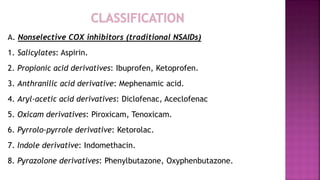
A. Nonselective COX inhibitors (traditional NSAIDs)
1. Salicylates: Aspirin.
2. Propionic acid derivatives: Ibuprofen, Ketoprofen.
3. Anthranilic acid derivative: Mephenamic acid.
4. Aryl-acetic acid derivatives: Diclofenac, Aceclofenac
5. Oxicam derivatives: Piroxicam, Tenoxicam.
6. Pyrrolo-pyrrole derivative: Ketorolac.
7. Indole derivative: Indomethacin.
8. Pyrazolone derivatives: Phenylbutazone, Oxyphenbutazone.
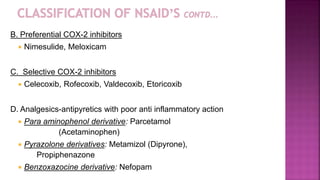
B. Preferential COX-2 inhibitors
 Nimesulide, Meloxicam
C. Selective COX-2 inhibitors
 Celecoxib, Rofecoxib, Valdecoxib, Etoricoxib
D. Analgesics-antipyretics with poor anti inflammatory action
 Para aminophenol derivative: Parcetamol
(Acetaminophen)
 Pyrazolone derivatives: Metamizol (Dipyrone),
Propiphenazone
 Benzoxazocine derivative: Nefopam
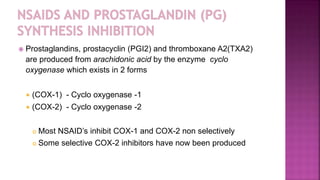
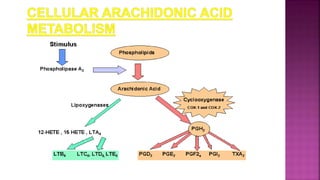
 Prostaglandins, prostacyclin (PGI2) and thromboxane A2(TXA2)
are produced from arachidonic acid by the enzyme cyclo
oxygenase which exists in 2 forms
 (COX-1) - Cyclo oxygenase -1
 (COX-2) - Cyclo oxygenase -2
 Most NSAID’s inhibit COX-1 and COX-2 non selectively
 Some selective COX-2 inhibitors have now been produced
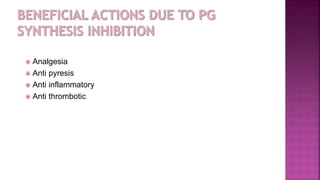
 Analgesia
 Anti pyresis
 Anti inflammatory
 Anti thrombotic
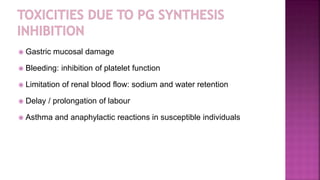
 Gastric mucosal damage
 Bleeding: inhibition of platelet function
 Limitation of renal blood flow: sodium and water retention
 Delay / prolongation of labour
 Asthma and anaphylactic reactions in susceptible individuals
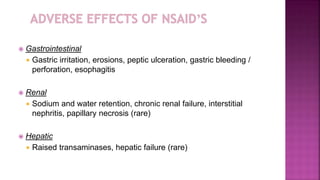
 Gastrointestinal
 Gastric irritation, erosions, peptic ulceration, gastric bleeding /
perforation, esophagitis
 Renal
 Sodium and water retention, chronic renal failure, interstitial
nephritis, papillary necrosis (rare)
 Hepatic
 Raised transaminases, hepatic failure (rare)
 CNS
 Headache, mental confusion, behavioural disturbances, seizure
precipitation
 Haematological
 Bleeding, thrombocytopenia, hemolytic anaemia, agranulocytosis
 Others
 Asthma exacerbation, nasal polyposis, skin rashes, pruritis,
angioedema
 Oral
 Intramuscular Injection
 Intravenous Injection
 Other routes
 Transdermal
 Fentanyl patch
 Sublingual
 Morphine
Aspirin
Is acetylsalicylic acid
 Pharmacological actions
 Analgesic, antipyretic, anti inflammatory actions
Analgesic action is due to prevention of PG mediated sensitization of nerve
endings
Resets the hypothalamic thermoregulatory centre & rapidly reduces fever by
promoting heat loss( sweating,cutaneous vasodilation) but does not decrease
heat production.
Anti inflammatory at high doses (3-6g/ day or 100 mg/ kg/ day). Signs of
immflamation like pain, tenderness, vasodilation and leucocyte infiltration are
suppressed.
 Pharmacokinetics
 Absorbed from stomach and small intestine
 Precautions and contraindications
 Contraindicated in patients sensitive to it and in peptic ulcer, bleeding
tendencies, & in children suffering from chicken pox or influenza. (due
to risk of Reye’s syndrome)
 In chronic liver disease
 Asprin should be stopped 5 days before elective surgery, dental
extraction
 Pregnancy and lactating mothers
 Adverse effects
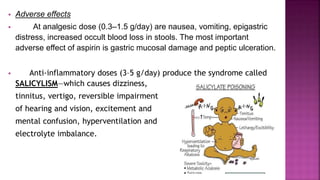
 At analgesic dose (0.3–1.5 g/day) are nausea, vomiting, epigastric
distress, increased occult blood loss in stools. The most important
adverse effect of aspirin is gastric mucosal damage and peptic ulceration.
 Anti-inflammatory doses (3–5 g/day) produce the syndrome called
SALICYLISM—which causes dizziness,
tinnitus, vertigo, reversible impairment
of hearing and vision, excitement and
mental confusion, hyperventilation and
electrolyte imbalance.
Acute salicylate poisoning is more common in
children. Fatal dose in adults is estimated to be 15–30 g,
but is considerably lower in children.
 Uses
 As analgesic
 As antipyretic
 Acute rheumatic fever
 Rheumatoid arthritis
 Osteoarthritis
Ibuprofen –
 first introduced member of this class
 Anti inflammatory efficacy is lower than asprin
 Inhibit Prostaglandin synthesis
 Adverse effects
 Milder and better tolerated than asprin
 GI disturbances are present
 Precipitate asprin-induced asthma
 Ibouprfen may reduce the effectiveness of aspirin
 Simple analgesic and antipyretic
 Particularly effective in dysmenorrhoea.
 Widely used in rheumatoid arthritis, osteoarthritis, especially
when the pain is more prominent than the inflammation.
 Ibuprofen (400 mg) has been found equally or more
efficacious than the combination of aspirin (650 mg) +
codeine (60 mg) in relieving dental pain.
 It is better tolerated than aspirin therefore it’s side effects are
milder and their incidence is lower.
 They are not to be prescribed to pregnant women and should
be avoided in peptic ulcer patient.
 Well absorbed orally
 Highly bound to plasma-protein(90-99%).
 Since they inhibit platelet functions, use with anti-
coagulant should nevertheless be avoided.
 t½ is 2 hours.
Dosage :- 5-10 mg/kg , TDS
 Anthranilic acid derivative.
 Peripheral as well as central analgesic action
ADVERSE EFFECTS:- diarrhoea; epigastric distress.
PHARMACOKINETICS:- oral absorption slow but complete.
Plasma t ½ is 2-4 hours
USES:- During muscles, joints, soft tissue pain where strong anti-
inflammatory action is not required.
DOSAGE:- 250-500 mg , TDS
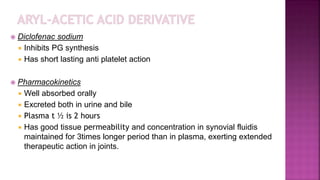
 Diclofenac sodium
 Inhibits PG synthesis
 Has short lasting anti platelet action
 Pharmacokinetics
 Well absorbed orally
 Excreted both in urine and bile
 Plasma t ½ is 2 hours
 Has good tissue permeability and concentration in synovial fluidis
maintained for 3times longer period than in plasma, exerting extended
therapeutic action in joints.
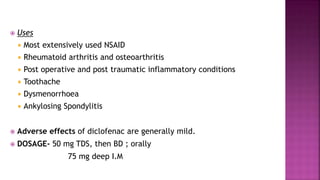
 Uses
 Most extensively used NSAID
 Rheumatoid arthritis and osteoarthritis
 Post operative and post traumatic inflammatory conditions
 Toothache
 Dysmenorrhoea
 Ankylosing Spondylitis
 Adverse effects of diclofenac are generally mild.
 DOSAGE- 50 mg TDS, then BD ; orally
75 mg deep I.M
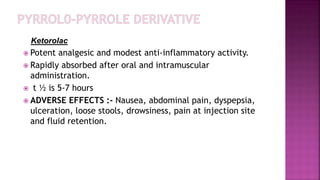
Ketorolac
 Potent analgesic and modest anti-inflammatory activity.
 Rapidly absorbed after oral and intramuscular
administration.
 t ½ is 5-7 hours
 ADVERSE EFFECTS :- Nausea, abdominal pain, dyspepsia,
ulceration, loose stools, drowsiness, pain at injection site
and fluid retention.
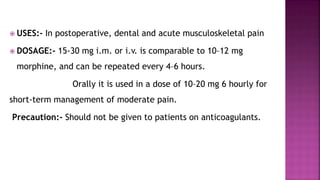
 USES:- In postoperative, dental and acute musculoskeletal pain
 DOSAGE:- 15-30 mg i.m. or i.v. is comparable to 10–12 mg
morphine, and can be repeated every 4–6 hours.
Orally it is used in a dose of 10–20 mg 6 hourly for
short-term management of moderate pain.
Precaution:- Should not be given to patients on anticoagulants.
 NIMESULIDE
Relatively weak inhibitor of prostaglandin synthesis
indicating relatively COX-2 selectivity.
Used primarily for short-lasting painful inflammatory conditions.
Completely absorbed orally.
t ½ is 2-5 hours.
Adverse effects include agranulocytosis, gastrointestinal, nausea
& vomiting, somnolence, dizziness, elevated liver enzymes.
Dosage:- 100mg BD
 Uses:- Primarily for short lasting inflammatory conditions like
sport injuries, sinusitis and other ear-nose-throat disorders, low
backache, dysmenorrhoea and for fever.
 Inhibits COX-2 without affecting COX-1 functions.
 Currently 3 selective COX-2 (aka coxibs) namely CELECOXIB,
ETORICOXIB and PARECOXIB are available in India.
 They cause little gastric mucosal damage; occurrence of
peptic ulcer and ulcer bleeds is clearly lower than with
traditional NSAIDs.
 Do not inhibit platelet aggregation or prolong bleeding time.
 Celecoxib
 The COX-2 selectivity of celecoxib is modest. Celecoxib is slowly
absorbed. It exerts anti-inflammatory, analgesic and antipyretic
actions with low ulcerogenic potential.
 Though tolerability of celecoxib is better than traditional NSAIDs,
still abdominal pain, dyspepsia and mild diarrhoea are the
common side effects. Rashes, edema and a small rise in BP have
also been noted.
 DOSAGE:- 100–200 mg BD.
Etoricoxib
 This newer COX-2 inhibitor has the highest COX-2 selectivity. It is
suitable for once-a day treatment of osteo/rheumatoid/acute gouty
arthritis, dysmenorrhoea, acute dental surgery pain and similar
conditions, without affecting platelet function or damaging gastric
mucosa.
 The t½ is ~ 24 hours.
 Side effects are dry mouth, aphthous ulcers, taste disturbance and
paresthesia.
 DOSAGE:- 60–120 mg OD
Parecoxib
 It is a prodrug of valdecoxib suitable for injection, and to be used
in postoperative or similar short-term pain, with efficacy similar
to ketorolac. Though valdecoxib was withdrawn from US market
in 2005.
 DOSAGE:-40 mg oral/i.m./i.v., repeated after 6–12 hours.
 PARACETAMOL
 Paracetamol or acetaminophen is a de-ethylated active
metabolite of phenacetin.
 Came into common use sine 1950.
 Well absorbed orally ; only 1/4th is protein bound.
 t ½ is 2-3 hours. Effects after an oral dose lasts for 3-5
hours.
 Safe and well tolerated.
ADVERSE EFFECTS
Acute paracetamol poisoning:-
 In small children with low hepatic glucuronide conjugating ability.
 In large dosage (> 150 mg/kg or >10 g in adults) serious toxicity can
occur.
 Fatality common with 250 mg/kg
USES
 Common “over-the-counter” analgesic.
 One of the best antipyretic
 Comparatively safer than aspirin.
 Safest drug for pregnant women.
Dosage :-0.5–1 g TDS in adults ; 50 mg in infants; 80-160mg in children
1–3 years old, 240-320 mg in 4–8 years, 300-600 mg in 9–12 years
 Natural opium alkaloids
 Morphine, codeine
 Semi synthetic opiates
 Diacetylmorphine (heroin), pholcodeine
 Synthetic opioids
 Pethidine (meperidine), fentanyl, methadone, tramadol
Morphine is the principal alkaloid in opium and still widely
used, therefore, described as prototype.
Morphine has site specific depressant and stimulant actions in
the CNS.
Oral absorption of morphine is unreliable because of high and
variable first pass metabolism.
Oral bioavailability is 1/6 to 1/4th of parenterally administered
drug. About 30% is bound to plasma proteins. Only a small fraction
enters brain rather slowly.
Morphine freely crosses placenta and can affect the foetus more
than the mother.
Plasma t½ of morphine averages 2–3 hours. Effect of a parenteral
dose lasts 4–6 hours.
 Adverse effects
 Mental clouding, sedation and lethargy
 constipation
 Acute morphine poisoning
 Human lethal dose is 250mg .
 Death is due to respiratory failure
 Treatment includes respiratory support and maintenance of BP.
 Tolerance and dependence
 Shows high degree of tolerance developed to morphine and
related opoids if used repeatedly.
 Treated by substitution with oral methadone
Precautions and contraindications
 Infants and elderly are more susceptible to respiratory
depressant
 Bronchial asthma
 Head injury
 People liable to become addicted
It is methyl-morphine, occurs naturally in opium, and is partly converted
in the body to morphine. It is less potent than morphine (1/10th as
analgesic), also less efficacious.
The degree of analgesia is comparable to aspirin (60 mg codeine ~ 600 mg
aspirin); can relieve mild-to-moderate pain only.
However, it is more selective cough suppressant (1/3rd as potent as
morphine); sub-analgesic doses (10–30 mg) suppress cough.
Codeine has good activity by oral route (oral: parenteral ratio 1:2). A
single oral dose acts for 4–6 hours. Constipation is a prominent side effect,
but other side effects are mild.
 Centrally acting analgesic
 It is believed to work through modulation of serotonin and norepinephrine
 100mg tramadol IV is equally analgesic to 10mg morphine IM
Uses
 Mild to moderate intensity short lasting pain due to surgery, dental
procedures, injury etc
Adverse effects
Dizziness, nausea, sleepiness, dry mouth, sweating & lowering of
seizure threshold
 Opioids are less effective and suitable than NSAID’s for dental pain
 Mostly used as additional drugs with NSAID’s to boost their analgesic
effect
 Among opioids oral codeine is most suitable
 Oral tramadol and pentazocine are alternatives
 Injectable opioids like morphine, pethidine are limited to intra-operative
use to supplement anaesthesia and to allay anxiety or fear
 NSAIDs should be given in 2nd triemister of pregnancy and opioids
should be avoided .
 Paracetamol is the safest drug to use in pregnancy
 Aspirin & Ibuprofen should not be given in asthmatic patients
 Aspirin & Paracetamol should not be given in nephropathy.
 Codein should not be used in renal dysfunction.
 To supplement the action of analgesics
 To limit the side effects of analgesics
Adjuvants
 Steroids
 Antacids
 Anti arrythmics
 Anti depressants
 Anti epileptics
Adjuvant medications are mostly used for chronic pain
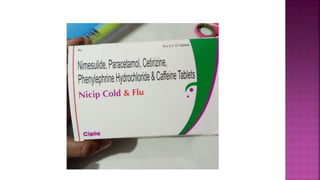
 Contain atleast one analgesic in combination with adjuvants
 An analgesic combinations may be taken to releive pain that arises
from a wide range of conditions such as appendicitis, gall bladder
disease, headaches, heart disease, menstruation, migrane,
osteoarthritis, rheumatoid arthritis, tuauma, toothache, wound
cleaning, debridement etc
 Some analgesics contain NSAIDS & other contain opoids . Other
ingridents are Caffeine(enhances pain releiving effect of
analgesic) & Diphenhydramine(sleep-inducing properties)
 Opoids containoing analgesics should only be used if other
analgesics combination proved to be ineffective as they are
potentially addictive.
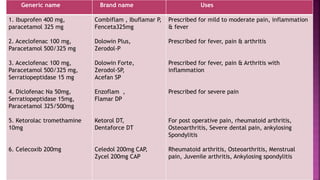
Generic name Brand name Uses
1. Ibuprofen 400 mg,
paracetamol 325 mg
2. Aceclofenac 100 mg,
Paracetamol 500/325 mg
3. Aceclofenac 100 mg,
Paracetamol 500/325 mg,
Serratiopeptidase 15 mg
4. Diclofenac Na 50mg,
Serratiopeptidase 15mg,
Paracetamol 325/500mg
5. Ketorolac tromethamine
10mg
6. Celecoxib 200mg
Combiflam , Ibuflamar P,
Fenceta325mg
Dolowin Plus,
Zerodol-P
Dolowin Forte,
Zerodol-SP,
Acefan SP
Enzoflam ,
Flamar DP
Ketorol DT,
Dentaforce DT
Celedol 200mg CAP,
Zycel 200mg CAP
Prescribed for mild to moderate pain, inflammation
& fever
Prescribed for fever, pain & arthritis
Prescribed for fever, pain & Arthritis with
inflammation
Prescribed for severe pain
For post operative pain, rheumatoid arthritis,
Osteoarthritis, Severe dental pain, ankylosing
Spondylitis
Rheumatoid arthritis, Osteoarthritis, Menstrual
pain, Juvenile arthritis, Ankylosing spondylitis
 Analgesics or painkillers are drugs used to achieve analgesia, relief
from pain. They act in various ways on
the peripheral and central nervous systems. They are distinct
from anesthetics, which temporarily affect, and in some instances
completely eliminate, sensation. Analgesic choice is also determined by
the type of pain. They are typically classified based on their mechanism
of action. Each different type of analgesic has its own associated side
effects. Therefore, skin tests or patch tests are required before
administering some specific analgesics. Hence, it is necessary to
prescribe the safest drug with a tolerable and beneficial amount.
 ESSENTIALS OF PHARMACOLOGY IN DENTISTRY, K.D TRIPATHI
 BASIC PHARMACOLOGY AND CLINICAL DRUG USE IN DENTISTRY
, R. A. CAWSON
 TEXTBOOK OF PHARMACOLOGY FOR DENTAL AND ALLIED
HEALTH SCIENCES, PADMAJA UDAY KUMAR
Analgesics

Analgesics

  • 1.
    Presented by- Dr NazamTafadar PGT 1st year Guided by- Dr. Ravishankar TL Dr. Amit Tirth Dr. Vaibhav Tandon Dr. Smita Chandra
  • 2.
     Introduction  Analgesia Analgesics  Classification of analgesics  NSAID’s  Classification of NSAID’s  Mechanism of action  Adverse effects  Individual drugs
  • 3.
     Opioids  Classificationof opioids  Individual drugs - Opioids in dental pain  Analgesics and Medical conditions  Adjuvant drugs
  • 4.
    The word analgesiais derived from Greek word analgetos (an – without ; algesia – pain ) ‘Analgesia simply means the absence of pain without losing consciousness’
  • 5.
    DEFINITION  “Analgesics aredrugs that selectively relieve pain by acting in the CNS or on the peripheral pain mechanisms, without altering consciousness”
  • 6.
    A. Nonselective COXinhibitors (traditional NSAIDs) 1. Salicylates: Aspirin. 2. Propionic acid derivatives: Ibuprofen, Ketoprofen. 3. Anthranilic acid derivative: Mephenamic acid. 4. Aryl-acetic acid derivatives: Diclofenac, Aceclofenac 5. Oxicam derivatives: Piroxicam, Tenoxicam. 6. Pyrrolo-pyrrole derivative: Ketorolac. 7. Indole derivative: Indomethacin. 8. Pyrazolone derivatives: Phenylbutazone, Oxyphenbutazone.
  • 7.
    B. Preferential COX-2inhibitors  Nimesulide, Meloxicam C. Selective COX-2 inhibitors  Celecoxib, Rofecoxib, Valdecoxib, Etoricoxib D. Analgesics-antipyretics with poor anti inflammatory action  Para aminophenol derivative: Parcetamol (Acetaminophen)  Pyrazolone derivatives: Metamizol (Dipyrone), Propiphenazone  Benzoxazocine derivative: Nefopam
  • 8.
     Prostaglandins, prostacyclin(PGI2) and thromboxane A2(TXA2) are produced from arachidonic acid by the enzyme cyclo oxygenase which exists in 2 forms  (COX-1) - Cyclo oxygenase -1  (COX-2) - Cyclo oxygenase -2  Most NSAID’s inhibit COX-1 and COX-2 non selectively  Some selective COX-2 inhibitors have now been produced
  • 10.
     Analgesia  Antipyresis  Anti inflammatory  Anti thrombotic
  • 11.
     Gastric mucosaldamage  Bleeding: inhibition of platelet function  Limitation of renal blood flow: sodium and water retention  Delay / prolongation of labour  Asthma and anaphylactic reactions in susceptible individuals
  • 12.
     Gastrointestinal  Gastricirritation, erosions, peptic ulceration, gastric bleeding / perforation, esophagitis  Renal  Sodium and water retention, chronic renal failure, interstitial nephritis, papillary necrosis (rare)  Hepatic  Raised transaminases, hepatic failure (rare)
  • 13.
     CNS  Headache,mental confusion, behavioural disturbances, seizure precipitation  Haematological  Bleeding, thrombocytopenia, hemolytic anaemia, agranulocytosis  Others  Asthma exacerbation, nasal polyposis, skin rashes, pruritis, angioedema
  • 14.
     Oral  IntramuscularInjection  Intravenous Injection  Other routes  Transdermal  Fentanyl patch  Sublingual  Morphine
  • 15.
    Aspirin Is acetylsalicylic acid Pharmacological actions  Analgesic, antipyretic, anti inflammatory actions Analgesic action is due to prevention of PG mediated sensitization of nerve endings Resets the hypothalamic thermoregulatory centre & rapidly reduces fever by promoting heat loss( sweating,cutaneous vasodilation) but does not decrease heat production. Anti inflammatory at high doses (3-6g/ day or 100 mg/ kg/ day). Signs of immflamation like pain, tenderness, vasodilation and leucocyte infiltration are suppressed.
  • 16.
     Pharmacokinetics  Absorbedfrom stomach and small intestine  Precautions and contraindications  Contraindicated in patients sensitive to it and in peptic ulcer, bleeding tendencies, & in children suffering from chicken pox or influenza. (due to risk of Reye’s syndrome)  In chronic liver disease  Asprin should be stopped 5 days before elective surgery, dental extraction  Pregnancy and lactating mothers
  • 17.
     Adverse effects At analgesic dose (0.3–1.5 g/day) are nausea, vomiting, epigastric distress, increased occult blood loss in stools. The most important adverse effect of aspirin is gastric mucosal damage and peptic ulceration.  Anti-inflammatory doses (3–5 g/day) produce the syndrome called SALICYLISM—which causes dizziness, tinnitus, vertigo, reversible impairment of hearing and vision, excitement and mental confusion, hyperventilation and electrolyte imbalance.
  • 18.
    Acute salicylate poisoningis more common in children. Fatal dose in adults is estimated to be 15–30 g, but is considerably lower in children.
  • 19.
     Uses  Asanalgesic  As antipyretic  Acute rheumatic fever  Rheumatoid arthritis  Osteoarthritis
  • 20.
    Ibuprofen –  firstintroduced member of this class  Anti inflammatory efficacy is lower than asprin  Inhibit Prostaglandin synthesis  Adverse effects  Milder and better tolerated than asprin  GI disturbances are present  Precipitate asprin-induced asthma  Ibouprfen may reduce the effectiveness of aspirin
  • 21.
     Simple analgesicand antipyretic  Particularly effective in dysmenorrhoea.  Widely used in rheumatoid arthritis, osteoarthritis, especially when the pain is more prominent than the inflammation.  Ibuprofen (400 mg) has been found equally or more efficacious than the combination of aspirin (650 mg) + codeine (60 mg) in relieving dental pain.
  • 22.
     It isbetter tolerated than aspirin therefore it’s side effects are milder and their incidence is lower.  They are not to be prescribed to pregnant women and should be avoided in peptic ulcer patient.
  • 23.
     Well absorbedorally  Highly bound to plasma-protein(90-99%).  Since they inhibit platelet functions, use with anti- coagulant should nevertheless be avoided.  t½ is 2 hours. Dosage :- 5-10 mg/kg , TDS
  • 24.
     Anthranilic acidderivative.  Peripheral as well as central analgesic action ADVERSE EFFECTS:- diarrhoea; epigastric distress. PHARMACOKINETICS:- oral absorption slow but complete. Plasma t ½ is 2-4 hours USES:- During muscles, joints, soft tissue pain where strong anti- inflammatory action is not required. DOSAGE:- 250-500 mg , TDS
  • 25.
     Diclofenac sodium Inhibits PG synthesis  Has short lasting anti platelet action  Pharmacokinetics  Well absorbed orally  Excreted both in urine and bile  Plasma t ½ is 2 hours  Has good tissue permeability and concentration in synovial fluidis maintained for 3times longer period than in plasma, exerting extended therapeutic action in joints.
  • 26.
     Uses  Mostextensively used NSAID  Rheumatoid arthritis and osteoarthritis  Post operative and post traumatic inflammatory conditions  Toothache  Dysmenorrhoea  Ankylosing Spondylitis  Adverse effects of diclofenac are generally mild.  DOSAGE- 50 mg TDS, then BD ; orally 75 mg deep I.M
  • 27.
    Ketorolac  Potent analgesicand modest anti-inflammatory activity.  Rapidly absorbed after oral and intramuscular administration.  t ½ is 5-7 hours  ADVERSE EFFECTS :- Nausea, abdominal pain, dyspepsia, ulceration, loose stools, drowsiness, pain at injection site and fluid retention.
  • 28.
     USES:- Inpostoperative, dental and acute musculoskeletal pain  DOSAGE:- 15-30 mg i.m. or i.v. is comparable to 10–12 mg morphine, and can be repeated every 4–6 hours. Orally it is used in a dose of 10–20 mg 6 hourly for short-term management of moderate pain. Precaution:- Should not be given to patients on anticoagulants.
  • 29.
     NIMESULIDE Relatively weakinhibitor of prostaglandin synthesis indicating relatively COX-2 selectivity. Used primarily for short-lasting painful inflammatory conditions. Completely absorbed orally. t ½ is 2-5 hours. Adverse effects include agranulocytosis, gastrointestinal, nausea & vomiting, somnolence, dizziness, elevated liver enzymes. Dosage:- 100mg BD  Uses:- Primarily for short lasting inflammatory conditions like sport injuries, sinusitis and other ear-nose-throat disorders, low backache, dysmenorrhoea and for fever.
  • 30.
     Inhibits COX-2without affecting COX-1 functions.  Currently 3 selective COX-2 (aka coxibs) namely CELECOXIB, ETORICOXIB and PARECOXIB are available in India.  They cause little gastric mucosal damage; occurrence of peptic ulcer and ulcer bleeds is clearly lower than with traditional NSAIDs.  Do not inhibit platelet aggregation or prolong bleeding time.
  • 31.
     Celecoxib  TheCOX-2 selectivity of celecoxib is modest. Celecoxib is slowly absorbed. It exerts anti-inflammatory, analgesic and antipyretic actions with low ulcerogenic potential.  Though tolerability of celecoxib is better than traditional NSAIDs, still abdominal pain, dyspepsia and mild diarrhoea are the common side effects. Rashes, edema and a small rise in BP have also been noted.  DOSAGE:- 100–200 mg BD.
  • 32.
    Etoricoxib  This newerCOX-2 inhibitor has the highest COX-2 selectivity. It is suitable for once-a day treatment of osteo/rheumatoid/acute gouty arthritis, dysmenorrhoea, acute dental surgery pain and similar conditions, without affecting platelet function or damaging gastric mucosa.  The t½ is ~ 24 hours.  Side effects are dry mouth, aphthous ulcers, taste disturbance and paresthesia.  DOSAGE:- 60–120 mg OD
  • 33.
    Parecoxib  It isa prodrug of valdecoxib suitable for injection, and to be used in postoperative or similar short-term pain, with efficacy similar to ketorolac. Though valdecoxib was withdrawn from US market in 2005.  DOSAGE:-40 mg oral/i.m./i.v., repeated after 6–12 hours.
  • 34.
     PARACETAMOL  Paracetamolor acetaminophen is a de-ethylated active metabolite of phenacetin.  Came into common use sine 1950.  Well absorbed orally ; only 1/4th is protein bound.  t ½ is 2-3 hours. Effects after an oral dose lasts for 3-5 hours.  Safe and well tolerated.
  • 35.
    ADVERSE EFFECTS Acute paracetamolpoisoning:-  In small children with low hepatic glucuronide conjugating ability.  In large dosage (> 150 mg/kg or >10 g in adults) serious toxicity can occur.  Fatality common with 250 mg/kg USES  Common “over-the-counter” analgesic.  One of the best antipyretic  Comparatively safer than aspirin.  Safest drug for pregnant women. Dosage :-0.5–1 g TDS in adults ; 50 mg in infants; 80-160mg in children 1–3 years old, 240-320 mg in 4–8 years, 300-600 mg in 9–12 years
  • 37.
     Natural opiumalkaloids  Morphine, codeine  Semi synthetic opiates  Diacetylmorphine (heroin), pholcodeine  Synthetic opioids  Pethidine (meperidine), fentanyl, methadone, tramadol
  • 38.
    Morphine is theprincipal alkaloid in opium and still widely used, therefore, described as prototype. Morphine has site specific depressant and stimulant actions in the CNS. Oral absorption of morphine is unreliable because of high and variable first pass metabolism.
  • 39.
    Oral bioavailability is1/6 to 1/4th of parenterally administered drug. About 30% is bound to plasma proteins. Only a small fraction enters brain rather slowly. Morphine freely crosses placenta and can affect the foetus more than the mother. Plasma t½ of morphine averages 2–3 hours. Effect of a parenteral dose lasts 4–6 hours.
  • 40.
     Adverse effects Mental clouding, sedation and lethargy  constipation  Acute morphine poisoning  Human lethal dose is 250mg .  Death is due to respiratory failure  Treatment includes respiratory support and maintenance of BP.
  • 41.
     Tolerance anddependence  Shows high degree of tolerance developed to morphine and related opoids if used repeatedly.  Treated by substitution with oral methadone Precautions and contraindications  Infants and elderly are more susceptible to respiratory depressant  Bronchial asthma  Head injury  People liable to become addicted
  • 42.
    It is methyl-morphine,occurs naturally in opium, and is partly converted in the body to morphine. It is less potent than morphine (1/10th as analgesic), also less efficacious. The degree of analgesia is comparable to aspirin (60 mg codeine ~ 600 mg aspirin); can relieve mild-to-moderate pain only. However, it is more selective cough suppressant (1/3rd as potent as morphine); sub-analgesic doses (10–30 mg) suppress cough. Codeine has good activity by oral route (oral: parenteral ratio 1:2). A single oral dose acts for 4–6 hours. Constipation is a prominent side effect, but other side effects are mild.
  • 43.
     Centrally actinganalgesic  It is believed to work through modulation of serotonin and norepinephrine  100mg tramadol IV is equally analgesic to 10mg morphine IM Uses  Mild to moderate intensity short lasting pain due to surgery, dental procedures, injury etc Adverse effects Dizziness, nausea, sleepiness, dry mouth, sweating & lowering of seizure threshold
  • 44.
     Opioids areless effective and suitable than NSAID’s for dental pain  Mostly used as additional drugs with NSAID’s to boost their analgesic effect  Among opioids oral codeine is most suitable  Oral tramadol and pentazocine are alternatives  Injectable opioids like morphine, pethidine are limited to intra-operative use to supplement anaesthesia and to allay anxiety or fear
  • 45.
     NSAIDs shouldbe given in 2nd triemister of pregnancy and opioids should be avoided .  Paracetamol is the safest drug to use in pregnancy  Aspirin & Ibuprofen should not be given in asthmatic patients  Aspirin & Paracetamol should not be given in nephropathy.  Codein should not be used in renal dysfunction.
  • 46.
     To supplementthe action of analgesics  To limit the side effects of analgesics Adjuvants  Steroids  Antacids  Anti arrythmics  Anti depressants  Anti epileptics Adjuvant medications are mostly used for chronic pain
  • 47.
     Contain atleastone analgesic in combination with adjuvants  An analgesic combinations may be taken to releive pain that arises from a wide range of conditions such as appendicitis, gall bladder disease, headaches, heart disease, menstruation, migrane, osteoarthritis, rheumatoid arthritis, tuauma, toothache, wound cleaning, debridement etc  Some analgesics contain NSAIDS & other contain opoids . Other ingridents are Caffeine(enhances pain releiving effect of analgesic) & Diphenhydramine(sleep-inducing properties)  Opoids containoing analgesics should only be used if other analgesics combination proved to be ineffective as they are potentially addictive.
  • 48.
    Generic name Brandname Uses 1. Ibuprofen 400 mg, paracetamol 325 mg 2. Aceclofenac 100 mg, Paracetamol 500/325 mg 3. Aceclofenac 100 mg, Paracetamol 500/325 mg, Serratiopeptidase 15 mg 4. Diclofenac Na 50mg, Serratiopeptidase 15mg, Paracetamol 325/500mg 5. Ketorolac tromethamine 10mg 6. Celecoxib 200mg Combiflam , Ibuflamar P, Fenceta325mg Dolowin Plus, Zerodol-P Dolowin Forte, Zerodol-SP, Acefan SP Enzoflam , Flamar DP Ketorol DT, Dentaforce DT Celedol 200mg CAP, Zycel 200mg CAP Prescribed for mild to moderate pain, inflammation & fever Prescribed for fever, pain & arthritis Prescribed for fever, pain & Arthritis with inflammation Prescribed for severe pain For post operative pain, rheumatoid arthritis, Osteoarthritis, Severe dental pain, ankylosing Spondylitis Rheumatoid arthritis, Osteoarthritis, Menstrual pain, Juvenile arthritis, Ankylosing spondylitis
  • 50.
     Analgesics orpainkillers are drugs used to achieve analgesia, relief from pain. They act in various ways on the peripheral and central nervous systems. They are distinct from anesthetics, which temporarily affect, and in some instances completely eliminate, sensation. Analgesic choice is also determined by the type of pain. They are typically classified based on their mechanism of action. Each different type of analgesic has its own associated side effects. Therefore, skin tests or patch tests are required before administering some specific analgesics. Hence, it is necessary to prescribe the safest drug with a tolerable and beneficial amount.
  • 51.
     ESSENTIALS OFPHARMACOLOGY IN DENTISTRY, K.D TRIPATHI  BASIC PHARMACOLOGY AND CLINICAL DRUG USE IN DENTISTRY , R. A. CAWSON  TEXTBOOK OF PHARMACOLOGY FOR DENTAL AND ALLIED HEALTH SCIENCES, PADMAJA UDAY KUMAR

Editor's Notes

  • #9 Cox 1 – kidney, stomach, blood vessels . Cox 2 – activated leucocytes and lymphocytes in the region of inflammation.
  • #10  Whenever there is inflammatory simulus like tooth ache, dental extraction , maxilla or mandible fracture … Phospholipase A2 is secreted from cells in the region of inflammation (mainly present in kidney and pancreas) and acts on phospholipid component of cell to release arachidonic acid. Arachidonic acid is a polyunsaturated fatty acid , and is abundant in the brain, muscles, liver. Cyclooxygenase is an enzyme present in different cells of the body . COX 1 & COX 2 are its isoforms. COX 1 is present in Kidney, stomach and blood vessels COX 2 is present in activated leucocytes , macrophages in the region of inflammation These 2 enzymes act on arachidonic acid to produce its active metabolites called as eicosanoids Eicosanoids include prostaglandins and leukotrienes which are inflammatory mediators which sensitize pain receptors to histamine , serotonin and bradykinin to cause pain & inflammation.. Pg disturbs fucnction of hypothalamic thermoregulatory centre in brain and causes elevated body temprature,..
  • #36 Paracetamol (Crocin, Paracin ) --500mg TDS ---Antipyretic/ analgesic Paracetamol (Crocin, Paracin ) --1000mg TDS---Antiinflammatory Infants – 50mg TDS . 125mg/ 5ml syrup Chlidren –(1-3 yrs) 80-160 mg TDS Chlidren –(4-8 yrs) 240-320 mg TDS Chlidren –(9-12 yrs) 300-600 mg TDS Tramadol 50-100 mg BD
  • #45 Opioids cause drug dependence , cns depression along with analgesic effect . Codein--- ORAL - 30-60mg tab Codein QID Combination with aspirin ORAL Codopyrin, Apidin  -- aspirin 325 mg + codein 30 mg Pentazocin --ORAL 30-60mg every 4 hrly Tramadol ---ORAL 100mg tab ( cotramol , domadol) IV 50mg / ml in 2 ml ampules IV morphine IM or SC 10-15 mg (Morphine sulphate) IV 2-6 mg pethidine IM 100mg/ 2ml injection every 4 hourly
  • #46 Miscarriage risk in first trimester Premature Ductus Arteriosus closure in third trimester Safe in preg Ibuprofen (Motrin) Indomethacin (Indocin) Ketoprofen (Orudis) Naproxen (Naprosyn) Piroxicam (Feldene) Sulindac (Clinoril) Aspirin is contraindicated coz there r chances of perinatal death , neonatal hemorg Asthma – nimesulide is preferential cox 2 and can be used
  • #47 Combiflam = ibuprofen 400 mg, paracetamol 325 mg Acetuff-SP Aceclofenac 100 mg,Paracetamol 500 mg,Serratiopeptidase 10 mg Enzoflam , flammar Dp Diclofenac Na 50mg,Serratiopeptidase 15mg,Paracetamol 500mg