
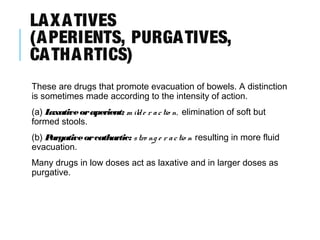
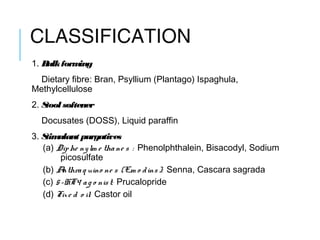
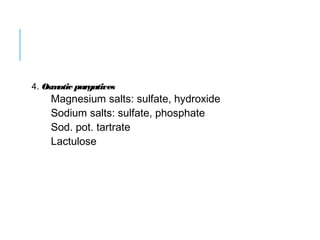

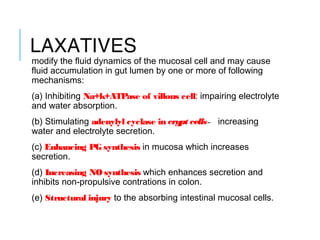



This document discusses laxatives, including their classification, mechanisms of action, and examples. Laxatives are classified as bulk forming, stool softeners, stimulant purgatives, and osmotic purgatives. They work by increasing water content in the intestines through osmotic effects, decreasing water absorption, or increasing propulsive movements. Common bulk formers include bran, psyllium, and methylcellulose. Docusate is an example of a stool softener, while stimulant purgatives include diphenylmethanes like bisacodyl and anthraquinones like senna. Osmotic purgatives include magnesium and sodium salts as well as lactulose.


