 Anaemia & it’s Classification.
 Blood Transfusion
 Blood Group
 Erythroblastosis Foetalis
--by MEENALI MISHRA
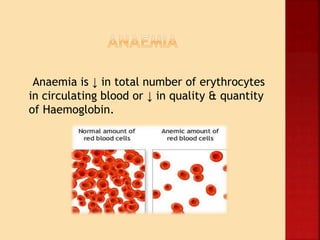
Anaemia is ↓ in total number of erythrocytes
in circulating blood or ↓ in quality & quantity
of Haemoglobin.
 ↓ Blood viscosity.
 Hypoxia.
 ↑ Cardiac Output.
 ↑ Workload of the heart.
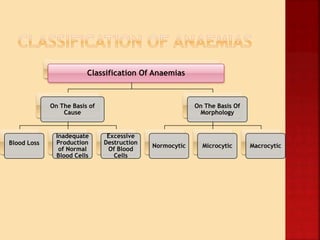
Classification Of Anaemias
On The Basis of
Cause
Blood Loss
Inadequate
Production
of Normal
Blood Cells
Excessive
Destruction
Of Blood
Cells
On The Basis Of
Morphology
Normocytic Microcytic Macrocytic
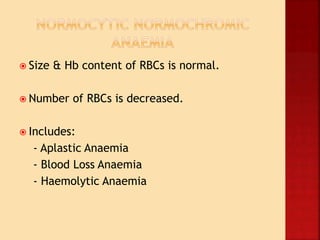
 Size & Hb content of RBCs is normal.
 Number of RBCs is decreased.
 Includes:
- Aplastic Anaemia
- Blood Loss Anaemia
- Haemolytic Anaemia
 Total destruction or suppression of function
of Bone Marrow
 Exposure to drugs,radiation,immune
diseases,etc
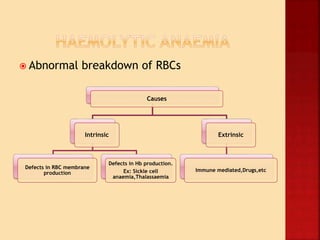
 Abnormal breakdown of RBCs
Causes
Intrinsic
Defects in RBC membrane
production
Defects in Hb production.
Ex: Sickle cell
anaemia,Thalassaemia
Extrinsic
Immune mediated,Drugs,etc
 Abnormally small erythrocytes
 Abnormally reduced Hb in erythrocytes
 Includes:
-Iron deficiency Anaemia
- Thalassaemia
- Anaemia of Chronic Disease
 Most common type.
 Iron deficient diet.
 GI fails to absorb Iron.
 Leads to impairment in Haem synthesis.
 Reduced RBC & Hb production.
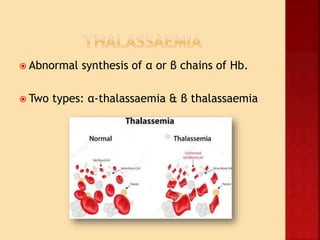
 Abnormal synthesis of α or β chains of Hb.
 Two types: α-thalassaemia & β thalassaemia
 Megaloblastic Anaemia: Erythrocytes are
larger than normal.
 Caused due to:
 Vitamin B12 deficiency
 Folate deficiency
 Vit B12 deficiency.
 Malabsorption of Vit B12.
 Absence of Intrinsic Factor (Gastric Intrinsic
Factor).
 GIF is secreted by parietal cells in ileum.
 GIF absorbs vit B12
 Blood from one idividual is given to another
individual.
 Reqired during:
 Loss of blood
 Surgery
 Less blood formation
 Excess destruction of blood
 Some Transfusions require only a single
componentof blood
 Blood converted to different blood
products,like plateles.
 Mismatched Blood Transfusion
 Immediate:
- Haemolysis Shock
- Renal Failure
 Delayed:
- Jaundice
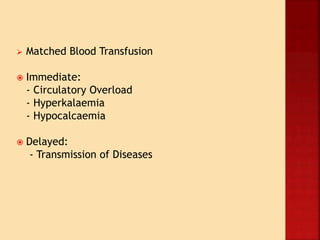
 Matched Blood Transfusion
 Immediate:
- Circulatory Overload
- Hyperkalaemia
- Hypocalcaemia
 Delayed:
- Transmission of Diseases
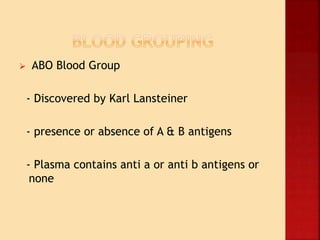
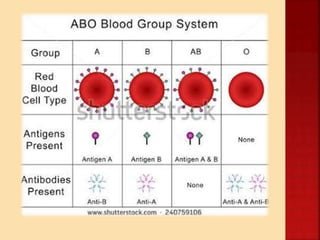
 ABO Blood Group
- Discovered by Karl Lansteiner
- presence or absence of A & B antigens
- Plasma contains anti a or anti b antigens or
none
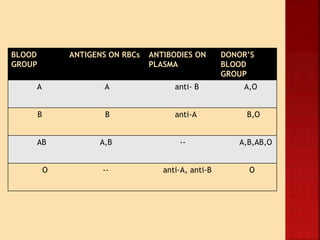
BLOOD
GROUP
ANTIGENS ON RBCs ANTIBODIES ON
PLASMA
DONOR’S
BLOOD
GROUP
A A anti- B A,O
B B anti-A B,O
AB A,B -- A,B,AB,O
O -- anti-A, anti-B O
 Rh Blood Group
- Type of antigen
- Present in some people (Rh +ve)
- Absent in some (Rh –ve)
- Rh matchimg is important before Blood
Transfusions
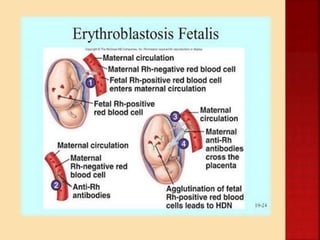
 Newborn Infant disease,characterized by
gradual agglutination & phagocytosis of
erythrocytes.
 Haemolytic Disease of the Newborn (HDN).
Anaemia- Classification, types, causes, pathophysiology, etiology

Anaemia- Classification, types, causes, pathophysiology, etiology

  • 1.
     Anaemia &it’s Classification.  Blood Transfusion  Blood Group  Erythroblastosis Foetalis --by MEENALI MISHRA
  • 2.
    Anaemia is ↓in total number of erythrocytes in circulating blood or ↓ in quality & quantity of Haemoglobin.
  • 3.
     ↓ Bloodviscosity.  Hypoxia.  ↑ Cardiac Output.  ↑ Workload of the heart.
  • 5.
    Classification Of Anaemias OnThe Basis of Cause Blood Loss Inadequate Production of Normal Blood Cells Excessive Destruction Of Blood Cells On The Basis Of Morphology Normocytic Microcytic Macrocytic
  • 6.
     Size &Hb content of RBCs is normal.  Number of RBCs is decreased.  Includes: - Aplastic Anaemia - Blood Loss Anaemia - Haemolytic Anaemia
  • 7.
     Total destructionor suppression of function of Bone Marrow  Exposure to drugs,radiation,immune diseases,etc
  • 8.
     Abnormal breakdownof RBCs Causes Intrinsic Defects in RBC membrane production Defects in Hb production. Ex: Sickle cell anaemia,Thalassaemia Extrinsic Immune mediated,Drugs,etc
  • 9.
     Abnormally smallerythrocytes  Abnormally reduced Hb in erythrocytes  Includes: -Iron deficiency Anaemia - Thalassaemia - Anaemia of Chronic Disease
  • 10.
     Most commontype.  Iron deficient diet.  GI fails to absorb Iron.  Leads to impairment in Haem synthesis.  Reduced RBC & Hb production.
  • 11.
     Abnormal synthesisof α or β chains of Hb.  Two types: α-thalassaemia & β thalassaemia
  • 12.
     Megaloblastic Anaemia:Erythrocytes are larger than normal.  Caused due to:  Vitamin B12 deficiency  Folate deficiency
  • 13.
     Vit B12deficiency.  Malabsorption of Vit B12.  Absence of Intrinsic Factor (Gastric Intrinsic Factor).  GIF is secreted by parietal cells in ileum.  GIF absorbs vit B12
  • 14.
     Blood fromone idividual is given to another individual.  Reqired during:  Loss of blood  Surgery  Less blood formation  Excess destruction of blood
  • 15.
     Some Transfusionsrequire only a single componentof blood  Blood converted to different blood products,like plateles.
  • 16.
     Mismatched BloodTransfusion  Immediate: - Haemolysis Shock - Renal Failure  Delayed: - Jaundice
  • 17.
     Matched BloodTransfusion  Immediate: - Circulatory Overload - Hyperkalaemia - Hypocalcaemia  Delayed: - Transmission of Diseases
  • 18.
     ABO BloodGroup - Discovered by Karl Lansteiner - presence or absence of A & B antigens - Plasma contains anti a or anti b antigens or none
  • 19.
    BLOOD GROUP ANTIGENS ON RBCsANTIBODIES ON PLASMA DONOR’S BLOOD GROUP A A anti- B A,O B B anti-A B,O AB A,B -- A,B,AB,O O -- anti-A, anti-B O
  • 21.
     Rh BloodGroup - Type of antigen - Present in some people (Rh +ve) - Absent in some (Rh –ve) - Rh matchimg is important before Blood Transfusions
  • 22.
     Newborn Infantdisease,characterized by gradual agglutination & phagocytosis of erythrocytes.  Haemolytic Disease of the Newborn (HDN).