PCOD
POLYCYSTIC OVARIAN
DISEASE
PRESENTED BY: SONALI RAJPUT
COURSE: MSC MEDICAL PHYSIOLOGY 1st year
ENROLLMENT NUMBER: A13156216004
WHAT IS PCOD?
 Also called PCOD are polycystic ovarian
syndrome (PCOS) or Stein Leventhal Syndrome
 Patients suffering from polycystic ovarian
disease(PCOD) have multiple small cysts in
their ovaries.
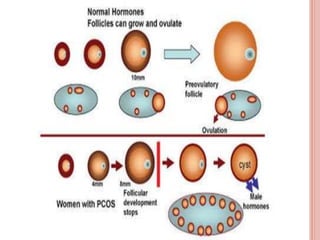
 These cysts occur when the regular changes of
a normal menstrual cycle are disrupted.
 The ovary is enlarged and produces excessive
amounts of androgen and estrogenic hormones.
PCOD
CAUSES OF PCOD?
 Don’t really understand what causes PCOD,though
we do know that it has a significant hereditary
component
 Often transmitted from mothers to daughters
 Characteristic polycystic ovary emerges when a state
of anovulation persists for a length of time
 Patients with PCOD have persistently elevated levels
of androgen and estrogen which set up a vicious
cycle.
 Obesity can aggravate PCOD because fatty tissue are
hormonally active
 They produce estrogen which disrupts ovulation.
CAUSES OF PCOD?
 Overactive adrenal gland can also produce excess
androgens and these may also contribute to PCOD
 These women also have insulin resistance (high levels
of insulin in their blood because their cells do not
respond normally to insulin
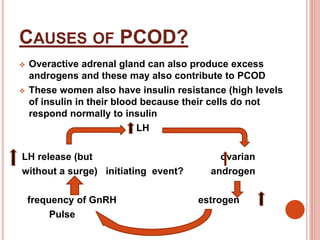
LH
LH release (but ovarian
without a surge) initiating event? androgen
frequency of GnRH estrogen
Pulse
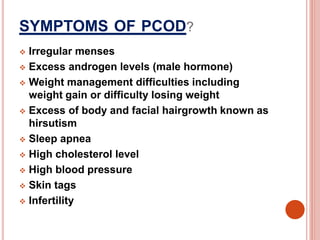
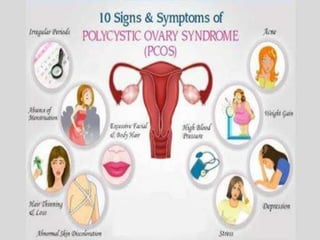
SYMPTOMS OF PCOD?
 Irregular menses
 Excess androgen levels (male hormone)
 Weight management difficulties including
weight gain or difficulty losing weight
 Excess of body and facial hairgrowth known as
hirsutism
 Sleep apnea
 High cholesterol level
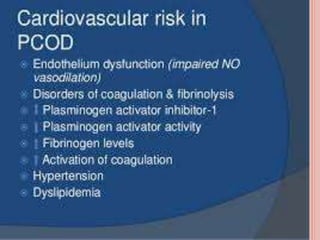
 High blood pressure
 Skin tags
 Infertility
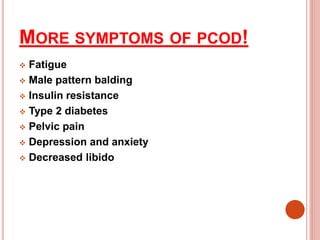
MORE SYMPTOMS OF PCOD!
 Fatigue
 Male pattern balding
 Insulin resistance
 Type 2 diabetes
 Pelvic pain
 Depression and anxiety
 Decreased libido
DIAGNOSIS
 Can be easily diagnosed in some patients
 Typical medical history is that of irregular
menstrual cycle,which are unpridictable and
can be very heavy and the need to take
hormonal tablets (progestins) to induce a
periods
 Not all patients with PCOD will have all or any of
these symptoms
 Diagnosis can be confirmed by
Vaginal utlrasound
Blood test
Elevated level of androgen
OCCULT PCOD?
 Thin irregular periods no hirsuitism & normal
looking ovaries on ultrasound but still have
PCOD
 This problems is detected only by when these
patients are superovulated,at which producing a
large number of follicles
 Interestingly many of these patients present
with recurrent pregnancy loss |(recurrent
miscarriage)
 Often their doctors does not make the correct
diagnosis for them
TREATMENT OF PCOD’S?
 Weightloss
 Ovulation induction
 Surgery
 IVF
PCOD

PCOD

  • 1.
    PCOD POLYCYSTIC OVARIAN DISEASE PRESENTED BY:SONALI RAJPUT COURSE: MSC MEDICAL PHYSIOLOGY 1st year ENROLLMENT NUMBER: A13156216004
  • 2.
    WHAT IS PCOD? Also called PCOD are polycystic ovarian syndrome (PCOS) or Stein Leventhal Syndrome  Patients suffering from polycystic ovarian disease(PCOD) have multiple small cysts in their ovaries.  These cysts occur when the regular changes of a normal menstrual cycle are disrupted.  The ovary is enlarged and produces excessive amounts of androgen and estrogenic hormones.
  • 3.
  • 4.
    CAUSES OF PCOD? Don’t really understand what causes PCOD,though we do know that it has a significant hereditary component  Often transmitted from mothers to daughters  Characteristic polycystic ovary emerges when a state of anovulation persists for a length of time  Patients with PCOD have persistently elevated levels of androgen and estrogen which set up a vicious cycle.  Obesity can aggravate PCOD because fatty tissue are hormonally active  They produce estrogen which disrupts ovulation.
  • 5.
    CAUSES OF PCOD? Overactive adrenal gland can also produce excess androgens and these may also contribute to PCOD  These women also have insulin resistance (high levels of insulin in their blood because their cells do not respond normally to insulin LH LH release (but ovarian without a surge) initiating event? androgen frequency of GnRH estrogen Pulse
  • 7.
    SYMPTOMS OF PCOD? Irregular menses  Excess androgen levels (male hormone)  Weight management difficulties including weight gain or difficulty losing weight  Excess of body and facial hairgrowth known as hirsutism  Sleep apnea  High cholesterol level  High blood pressure  Skin tags  Infertility
  • 10.
    MORE SYMPTOMS OFPCOD!  Fatigue  Male pattern balding  Insulin resistance  Type 2 diabetes  Pelvic pain  Depression and anxiety  Decreased libido
  • 11.
    DIAGNOSIS  Can beeasily diagnosed in some patients  Typical medical history is that of irregular menstrual cycle,which are unpridictable and can be very heavy and the need to take hormonal tablets (progestins) to induce a periods  Not all patients with PCOD will have all or any of these symptoms  Diagnosis can be confirmed by Vaginal utlrasound Blood test Elevated level of androgen
  • 12.
    OCCULT PCOD?  Thinirregular periods no hirsuitism & normal looking ovaries on ultrasound but still have PCOD  This problems is detected only by when these patients are superovulated,at which producing a large number of follicles  Interestingly many of these patients present with recurrent pregnancy loss |(recurrent miscarriage)  Often their doctors does not make the correct diagnosis for them
  • 14.
    TREATMENT OF PCOD’S? Weightloss  Ovulation induction  Surgery  IVF