MEENALI MISHRA
M.Sc.(MP)
A13156216006
Responsible for sense of smell.
This sense, also known as olfaction,
involves in the detection and
identification of molecules in the air.
Once these senses are detected by
sensory organs, nerve signals are sent
to the brain where the signals are
processed.
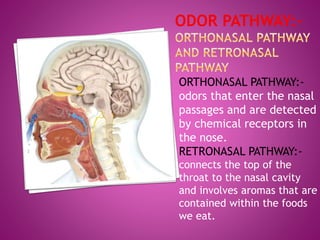
ORTHONASAL PATHWAY:-
odors that enter the nasal
passages and are detected
by chemical receptors in
the nose.
RETRONASAL PATHWAY:-
connects the top of the
throat to the nasal cavity
and involves aromas that are
contained within the foods
we eat.
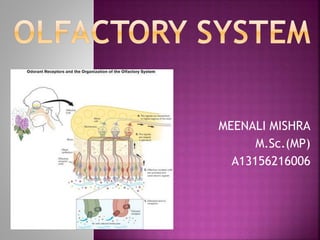
Consists of three cell types:-
 Basal cell
 Supporting cell
 Olfactory receptor cell
 BASAL CELL:- Stem cells that give rise to the
olfactory receptor cells.
 Continuous turnover unique to the olfactory system.
 SUPPORTING CELL:- Scattered among the receptor
cells and have numerous microvilli and secretory
granules, which empty their contents onto the
mucosal surface.
 OLFACTORY RECEPTOR CELL:- Bipolar neurons,
each possessing a thin dendritic rod that contains
specialized cilia. The cilia provide the transduction
surface for odorous stimuli.
Each neuron has thick dendrite with an
expanded end called an olfactory rod.
From rods, cilia project to surface of
mucus.
Each receptor neuron has 10-20 cilia.
Axon of the olfactory receptor neurons
pierce the cribriform plate of ethmoid
bone and enter the olfactory bulbs.
Live for 5-8 weeks and then die.
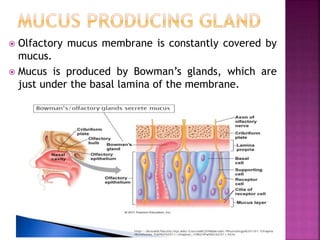
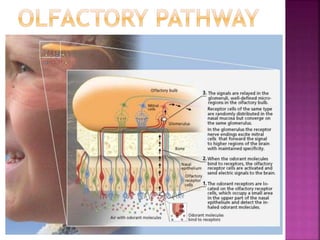
 Olfactory mucus membrane is constantly covered by
mucus.
 Mucus is produced by Bowman’s glands, which are
just under the basal lamina of the membrane.
 Axon of receptors contact the primary dendrites of
the mitral cells and tufted cells.
 Forming complex globular synapse called olfactory
glomeruli.
 Tufted cells are smaller then mitral cells and have
thinner axons, but both types send axons into the
olfactory cortex.
 Also contain Periglomerular cells,
which are inhibitory neurons
connecting one glomerulus to
another.
 Granule cells, which have no
axon and make reciprocal
synapse with the lateral
dendrites of mitral and tufted
cells.
 At these synapses, mitral and
tufted cell excites the granule
cells by releasing glutamine, and
granule cells in turn inhibits both
by releasing GABA.
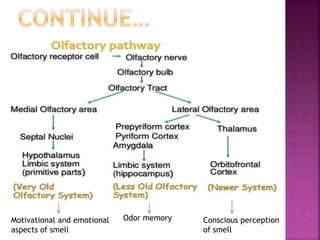
Odor memoryMotivational and emotional
aspects of smell
Conscious perception
of smell
 Loss of sense of smell.
 Temporarily or permanently.
 May be to specific odors or all odors.
Major Caused:- by infection to nasal cavity
or brain injury (frontal).
Common cold
Normal aging
Hay fever due to allergy
Influenza
Sinus infection
Loss of smell
TREATMENT:-
 Can not be treated if caused by brain damage.
 If caused by inflammation changes in mucosa,
it can be treated by glucocorticoid.
Olfactory system and functioning in human

Olfactory system and functioning in human

  • 1.
  • 2.
    Responsible for senseof smell. This sense, also known as olfaction, involves in the detection and identification of molecules in the air. Once these senses are detected by sensory organs, nerve signals are sent to the brain where the signals are processed.
  • 3.
    ORTHONASAL PATHWAY:- odors thatenter the nasal passages and are detected by chemical receptors in the nose. RETRONASAL PATHWAY:- connects the top of the throat to the nasal cavity and involves aromas that are contained within the foods we eat.
  • 4.
    Consists of threecell types:-  Basal cell  Supporting cell  Olfactory receptor cell
  • 5.
     BASAL CELL:-Stem cells that give rise to the olfactory receptor cells.  Continuous turnover unique to the olfactory system.  SUPPORTING CELL:- Scattered among the receptor cells and have numerous microvilli and secretory granules, which empty their contents onto the mucosal surface.  OLFACTORY RECEPTOR CELL:- Bipolar neurons, each possessing a thin dendritic rod that contains specialized cilia. The cilia provide the transduction surface for odorous stimuli.
  • 6.
    Each neuron hasthick dendrite with an expanded end called an olfactory rod. From rods, cilia project to surface of mucus. Each receptor neuron has 10-20 cilia. Axon of the olfactory receptor neurons pierce the cribriform plate of ethmoid bone and enter the olfactory bulbs. Live for 5-8 weeks and then die.
  • 7.
     Olfactory mucusmembrane is constantly covered by mucus.  Mucus is produced by Bowman’s glands, which are just under the basal lamina of the membrane.
  • 8.
     Axon ofreceptors contact the primary dendrites of the mitral cells and tufted cells.  Forming complex globular synapse called olfactory glomeruli.  Tufted cells are smaller then mitral cells and have thinner axons, but both types send axons into the olfactory cortex.
  • 9.
     Also containPeriglomerular cells, which are inhibitory neurons connecting one glomerulus to another.  Granule cells, which have no axon and make reciprocal synapse with the lateral dendrites of mitral and tufted cells.  At these synapses, mitral and tufted cell excites the granule cells by releasing glutamine, and granule cells in turn inhibits both by releasing GABA.
  • 11.
    Odor memoryMotivational andemotional aspects of smell Conscious perception of smell
  • 12.
     Loss ofsense of smell.  Temporarily or permanently.  May be to specific odors or all odors. Major Caused:- by infection to nasal cavity or brain injury (frontal).
  • 13.
    Common cold Normal aging Hayfever due to allergy Influenza Sinus infection
  • 14.
    Loss of smell TREATMENT:- Can not be treated if caused by brain damage.  If caused by inflammation changes in mucosa, it can be treated by glucocorticoid.