




Exercise
physiology
and
ergonomics
• Subtitle
SWEAT GLANDS
 SWEAT FORMATION
 SWEAT SECRETION
 SWEAT REGULATION
BY MEENALI MISHRA
A13156216005
M.Sc ( MEDICAL PHYSIOLOGY)
SWEAT GLANDS
 Also called sudoriferous glands
 Distributed over the entire skin except THE NIPPLES and THE
EXTERNAL PART OF GENETALIA
 Two kind of sweat glands
1. ECCRINE GLAND
2. APOCRINE GLAND
SECRETION
OF
SWEAT GLANDS
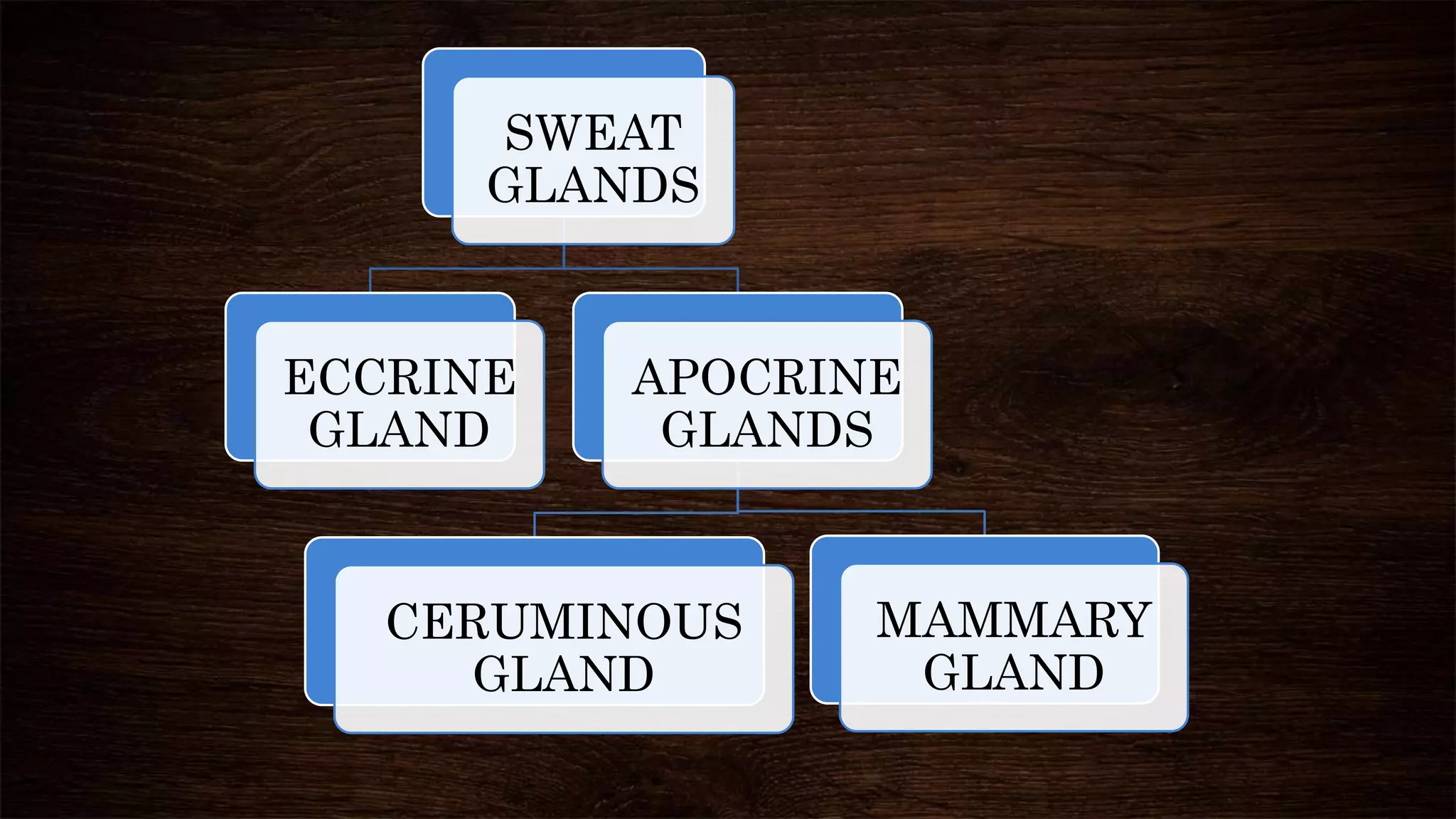
SWEAT
GLANDS
ECCRINE
GLAND
APOCRINE
GLANDS
CERUMINOUS
GLAND
MAMMARY
GLAND
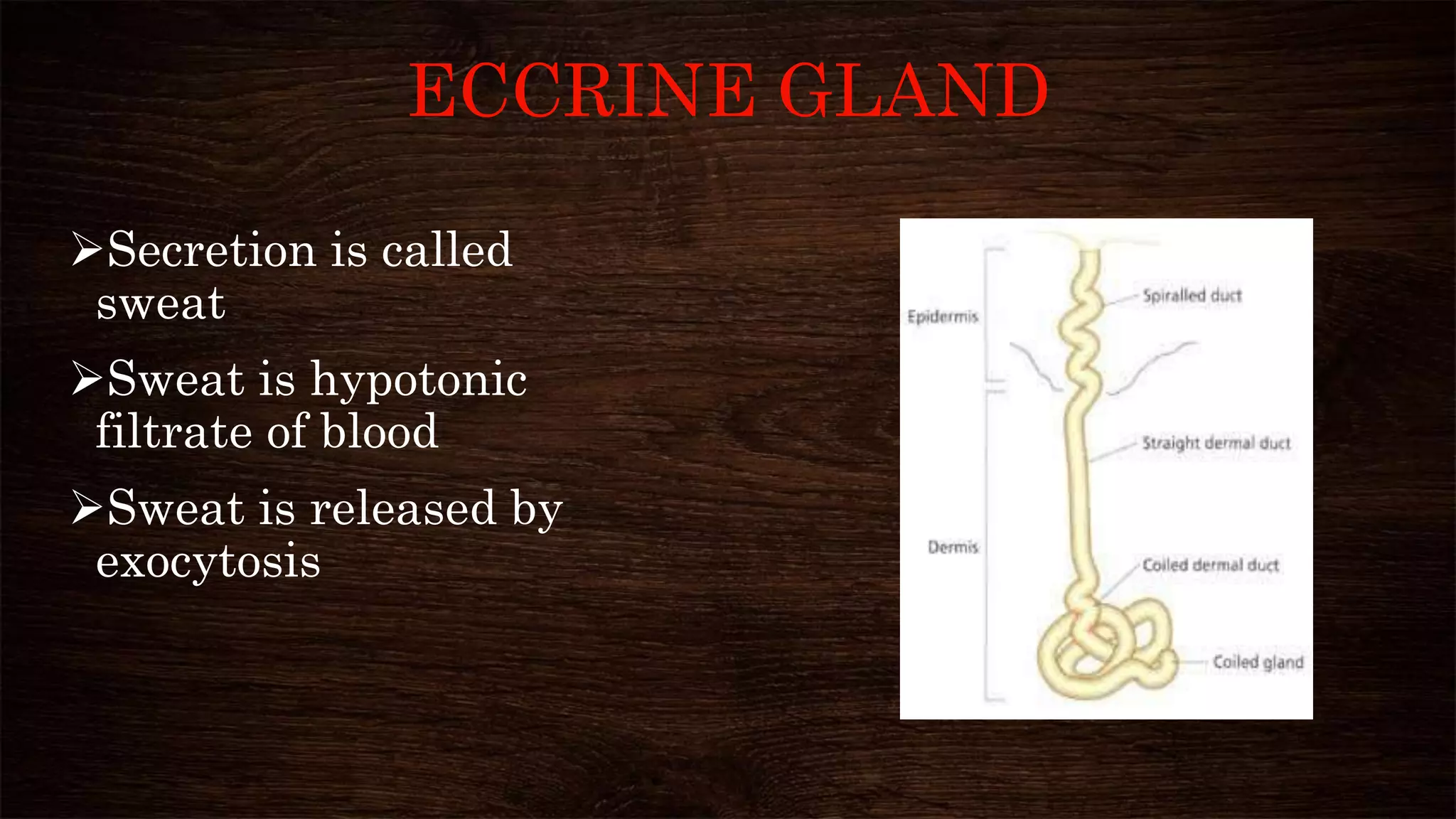
ECCRINE GLAND
Secretion is called
sweat
Sweat is hypotonic
filtrate of blood
Sweat is released by
exocytosis
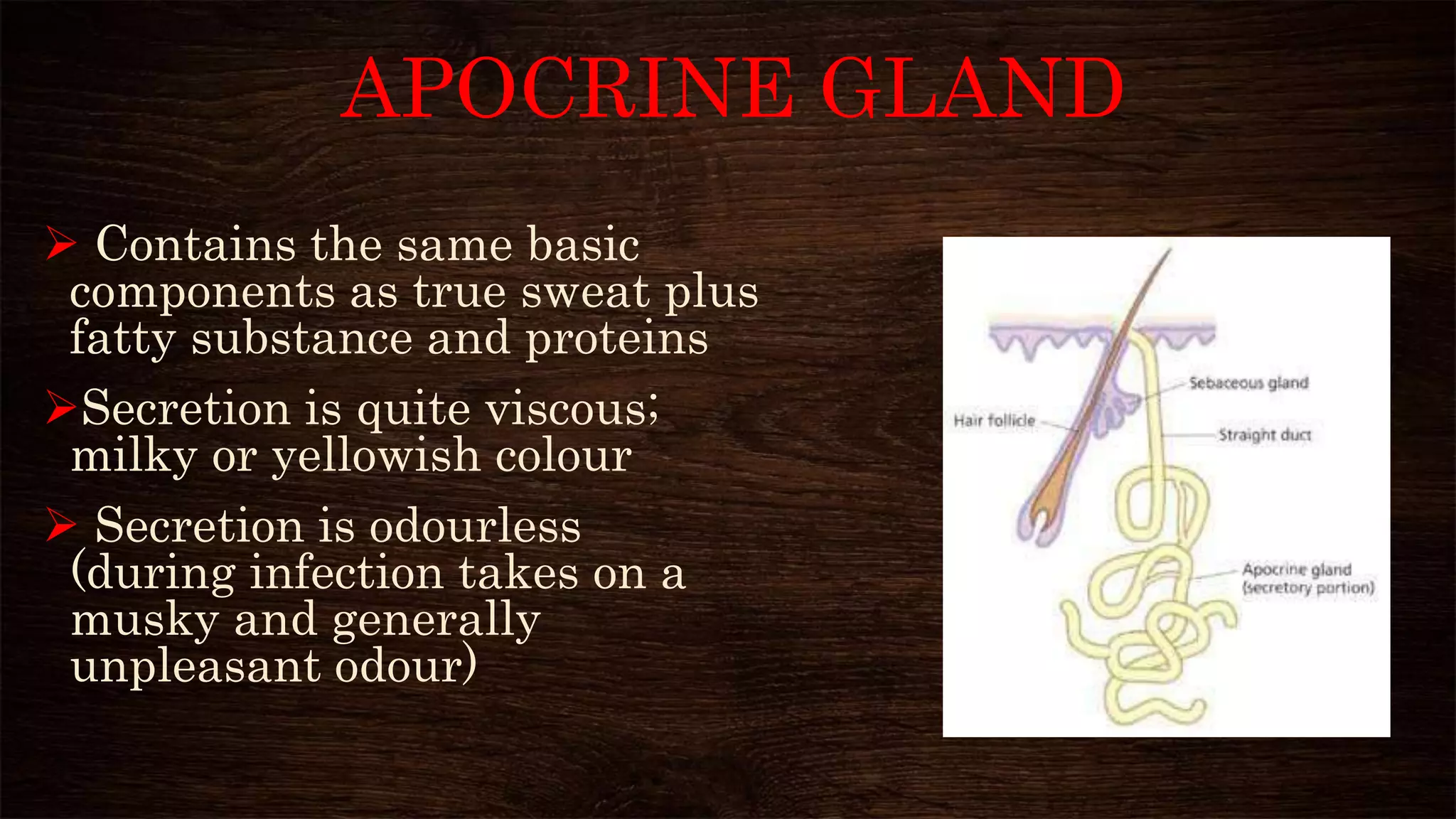
APOCRINE GLAND
 Contains the same basic
components as true sweat plus
fatty substance and proteins
Secretion is quite viscous;
milky or yellowish colour
 Secretion is odourless
(during infection takes on a
musky and generally
unpleasant odour)
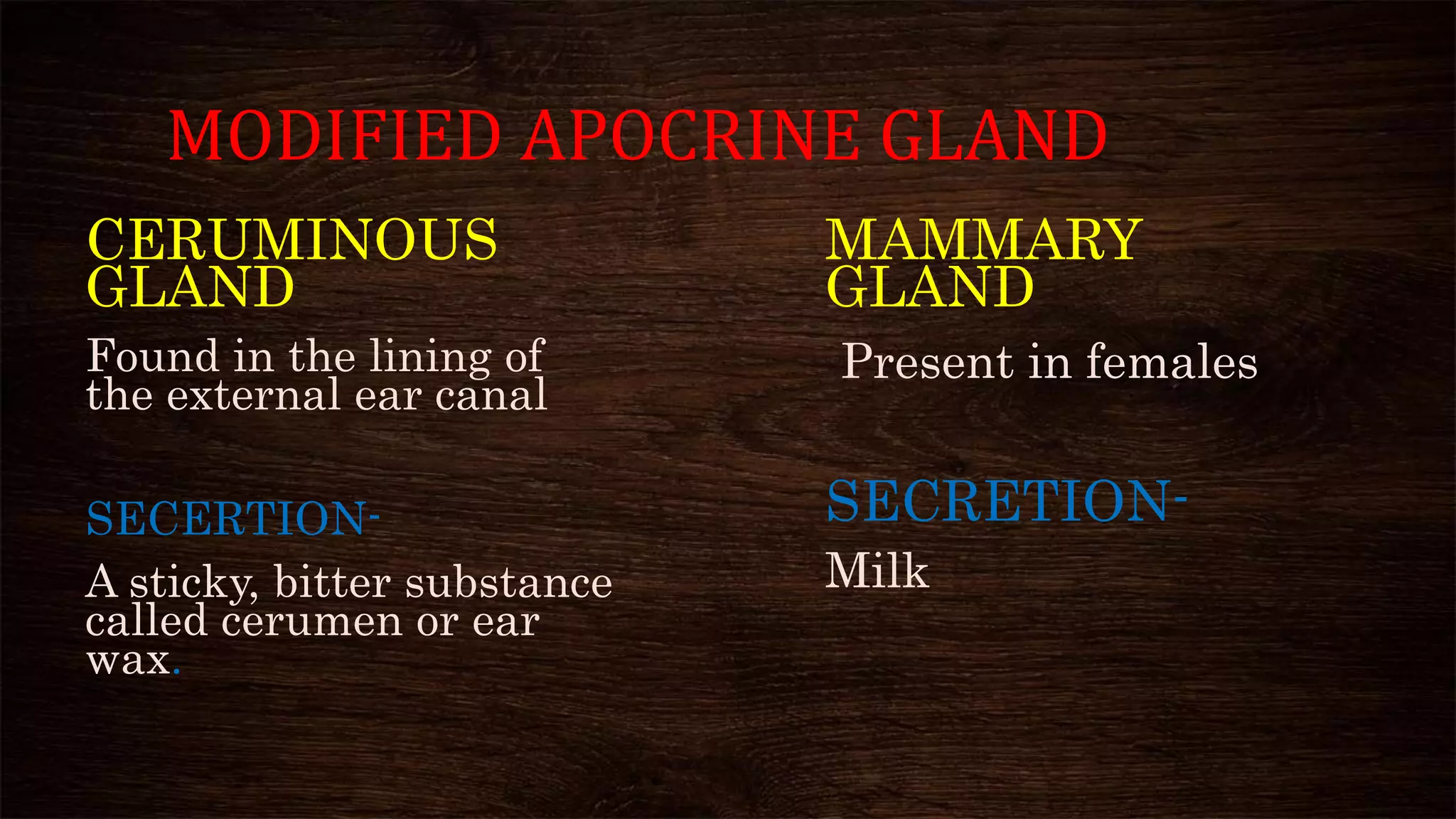
MODIFIED APOCRINE GLAND
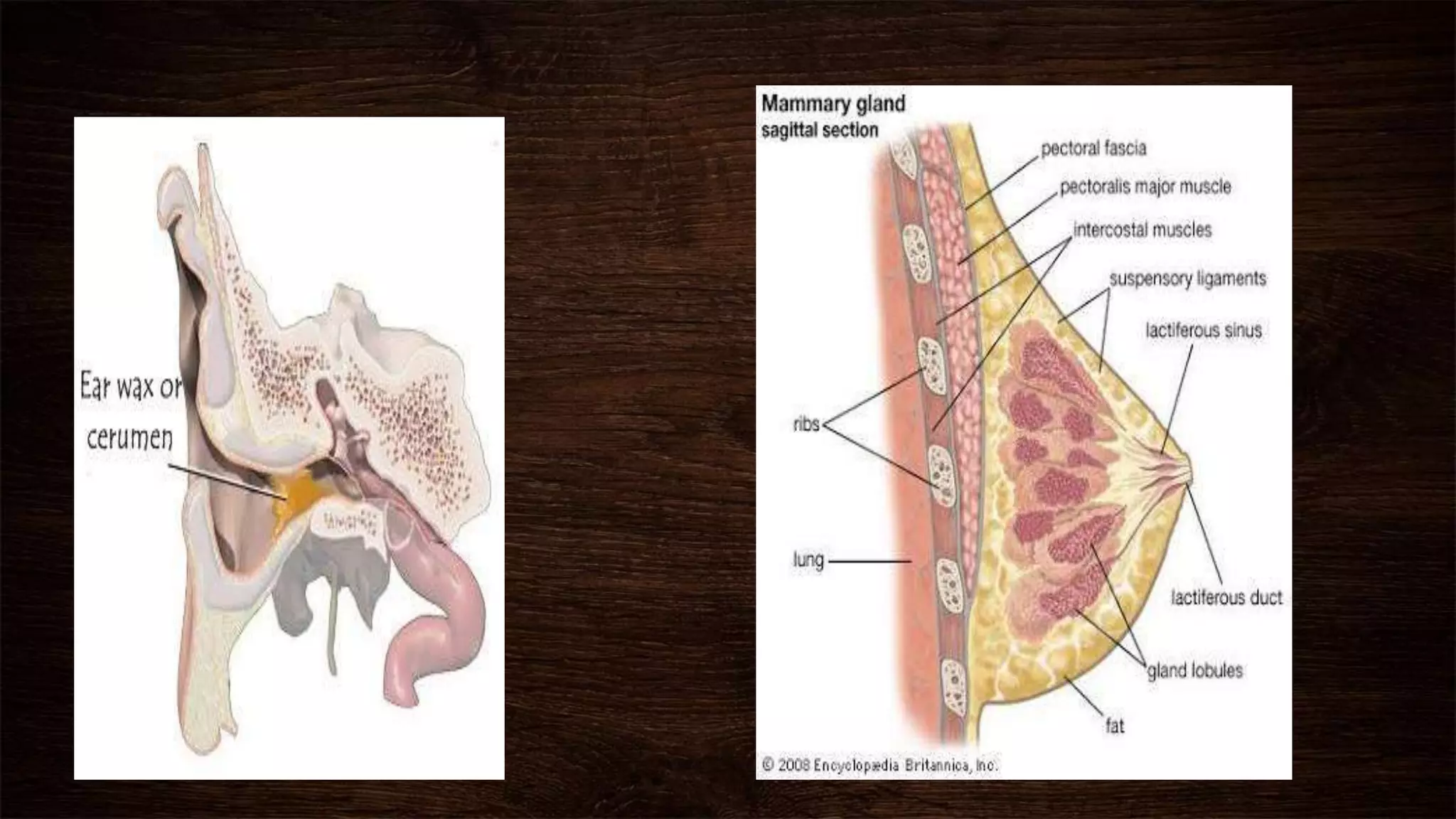
CERUMINOUS
GLAND
Found in the lining of
the external ear canal
SECERTION-
A sticky, bitter substance
called cerumen or ear
wax.
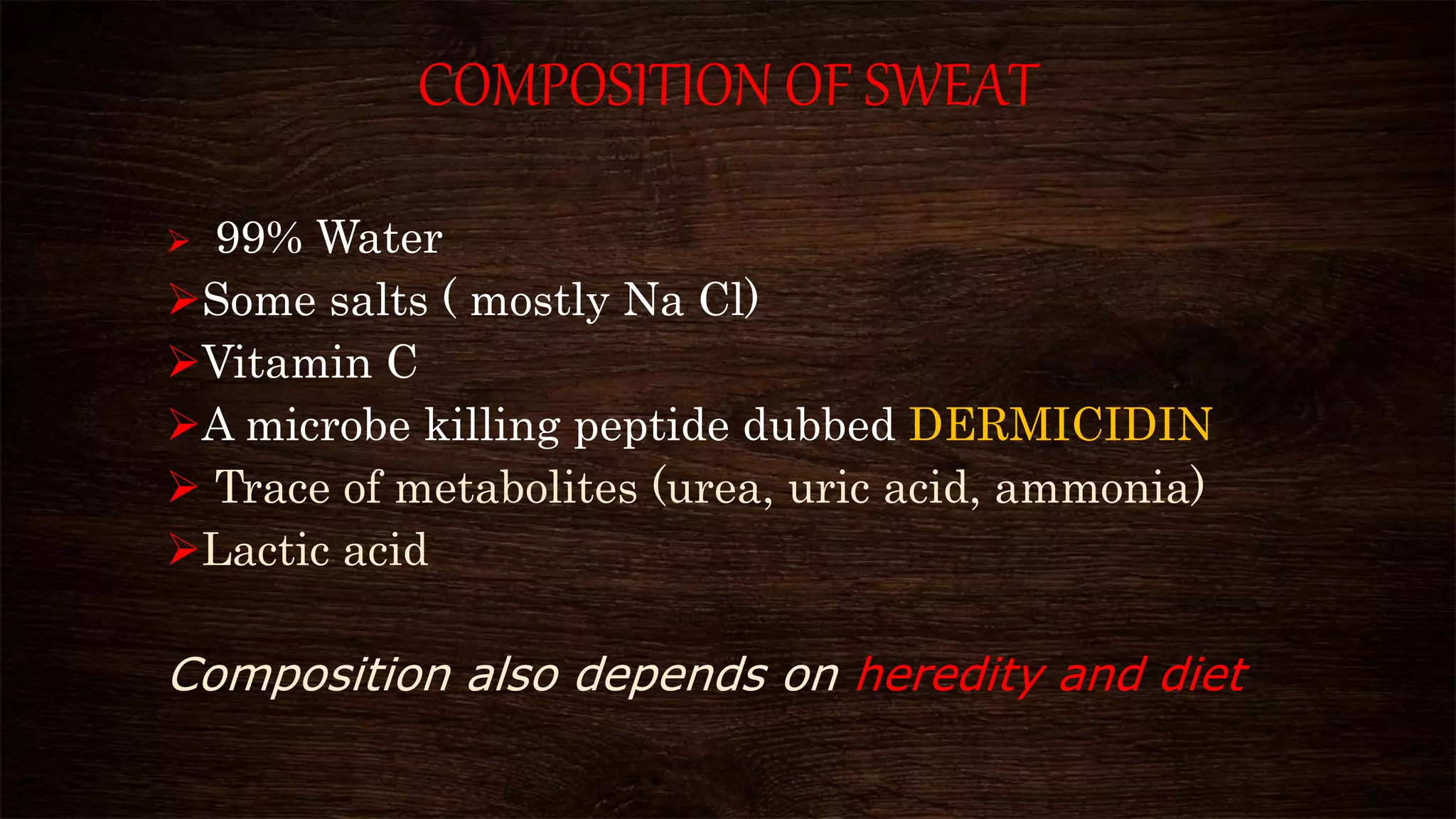
MAMMARY
GLAND
Present in females
SECRETION-
Milk
COMPOSITION OF SWEAT
 99% Water
Some salts ( mostly Na Cl)
Vitamin C
A microbe killing peptide dubbed DERMICIDIN
 Trace of metabolites (urea, uric acid, ammonia)
Lactic acid
Composition also depends on heredity and diet
SWEAT FORMATION
When the sweat gland is stimulated ; the cells secrete
a fluid ( Primary secretion) . It is mostly water and it
has high concentrations of Sodium and Chloride and
low concentration of Potassium; but without the
proteins and the fatty acids.
The source of fluid is the space between the cells
(interstitial spaces) ; which get the fluid from the
blood vessels in the dermis. This fluid travels from
the coiled portion up through the straight duct.
SWEAT GLAND REGULATION
Primarily controlled by a central thermoregulatory
centre in brain and modulated by mean skin
temperature
Primary controller of sweating is the integration
between internal and skin temperature ; a number of
non thermal factors modulate the sweating response
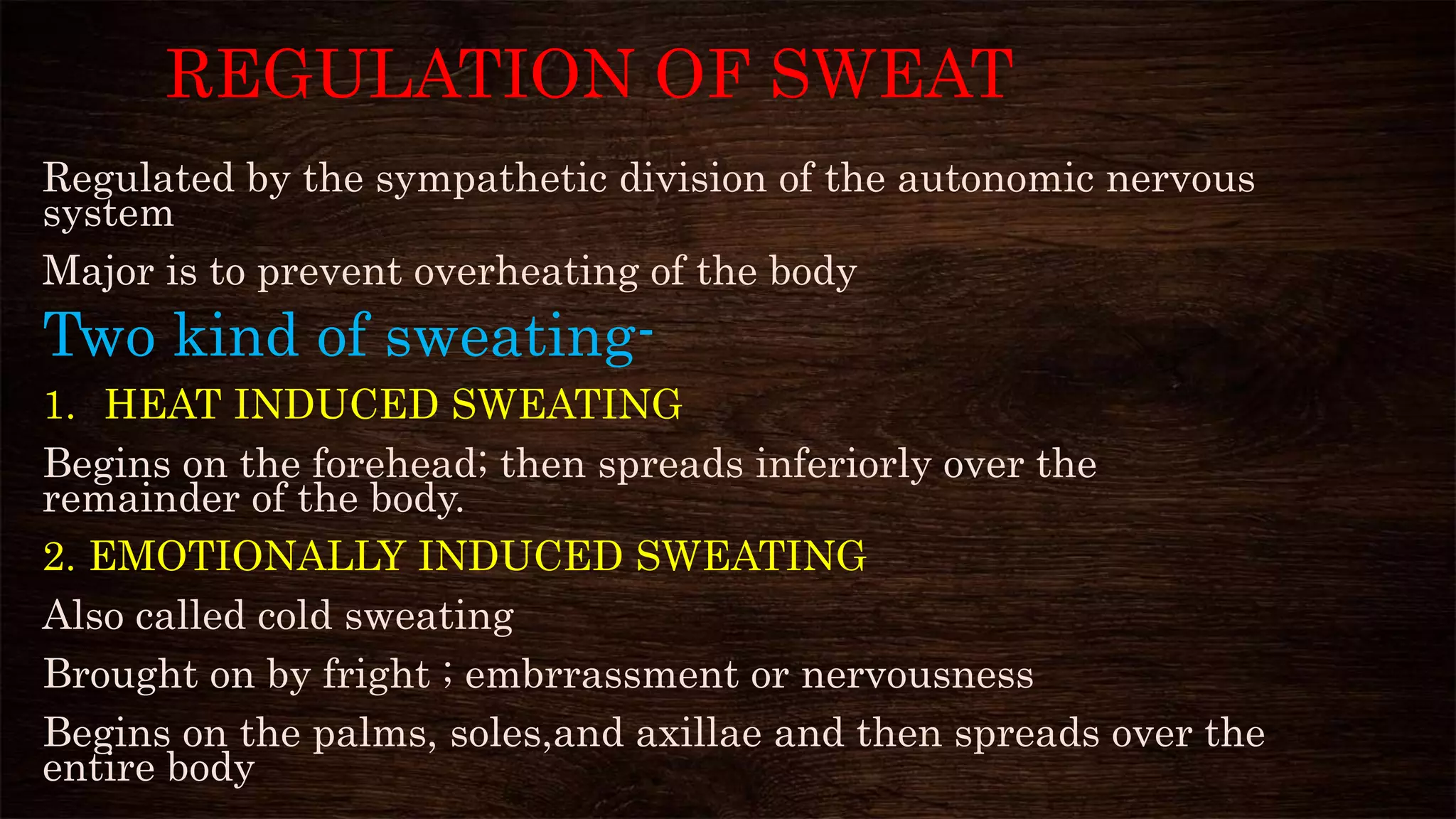
REGULATION OF SWEAT
Regulated by the sympathetic division of the autonomic nervous
system
Major is to prevent overheating of the body
Two kind of sweating-
1. HEAT INDUCED SWEATING
Begins on the forehead; then spreads inferiorly over the
remainder of the body.
2. EMOTIONALLY INDUCED SWEATING
Also called cold sweating
Brought on by fright ; embrrassment or nervousness
Begins on the palms, soles,and axillae and then spreads over the
entire body
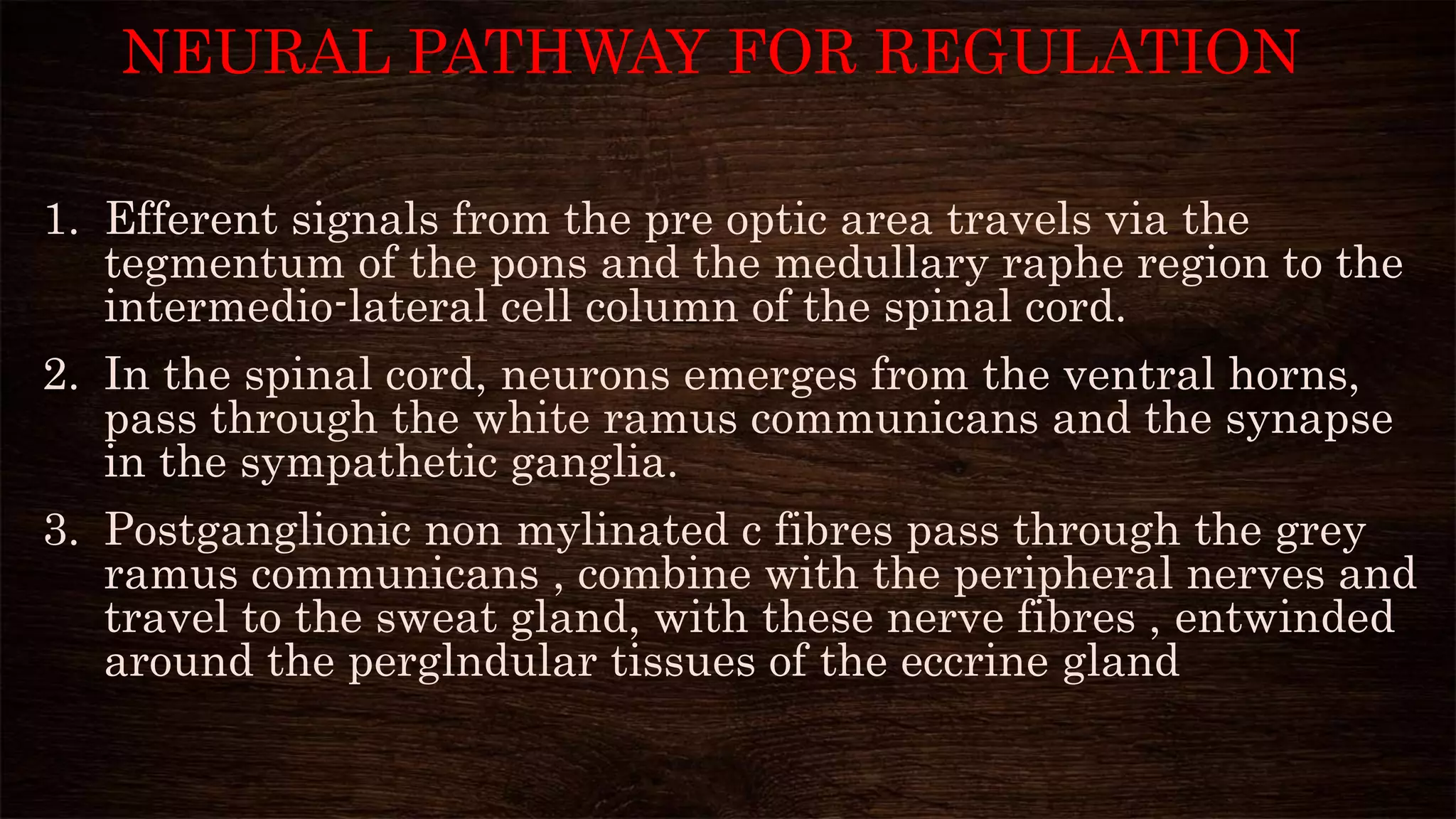
NEURAL PATHWAY FOR REGULATION
1. Efferent signals from the pre optic area travels via the
tegmentum of the pons and the medullary raphe region to the
intermedio-lateral cell column of the spinal cord.
2. In the spinal cord, neurons emerges from the ventral horns,
pass through the white ramus communicans and the synapse
in the sympathetic ganglia.
3. Postganglionic non mylinated c fibres pass through the grey
ramus communicans , combine with the peripheral nerves and
travel to the sweat gland, with these nerve fibres , entwinded
around the perglndular tissues of the eccrine gland
THANK
YOU
Title and Content Layout with List
• Add your first bullet point here
• Add your second bullet point here
• Add your third bullet point here
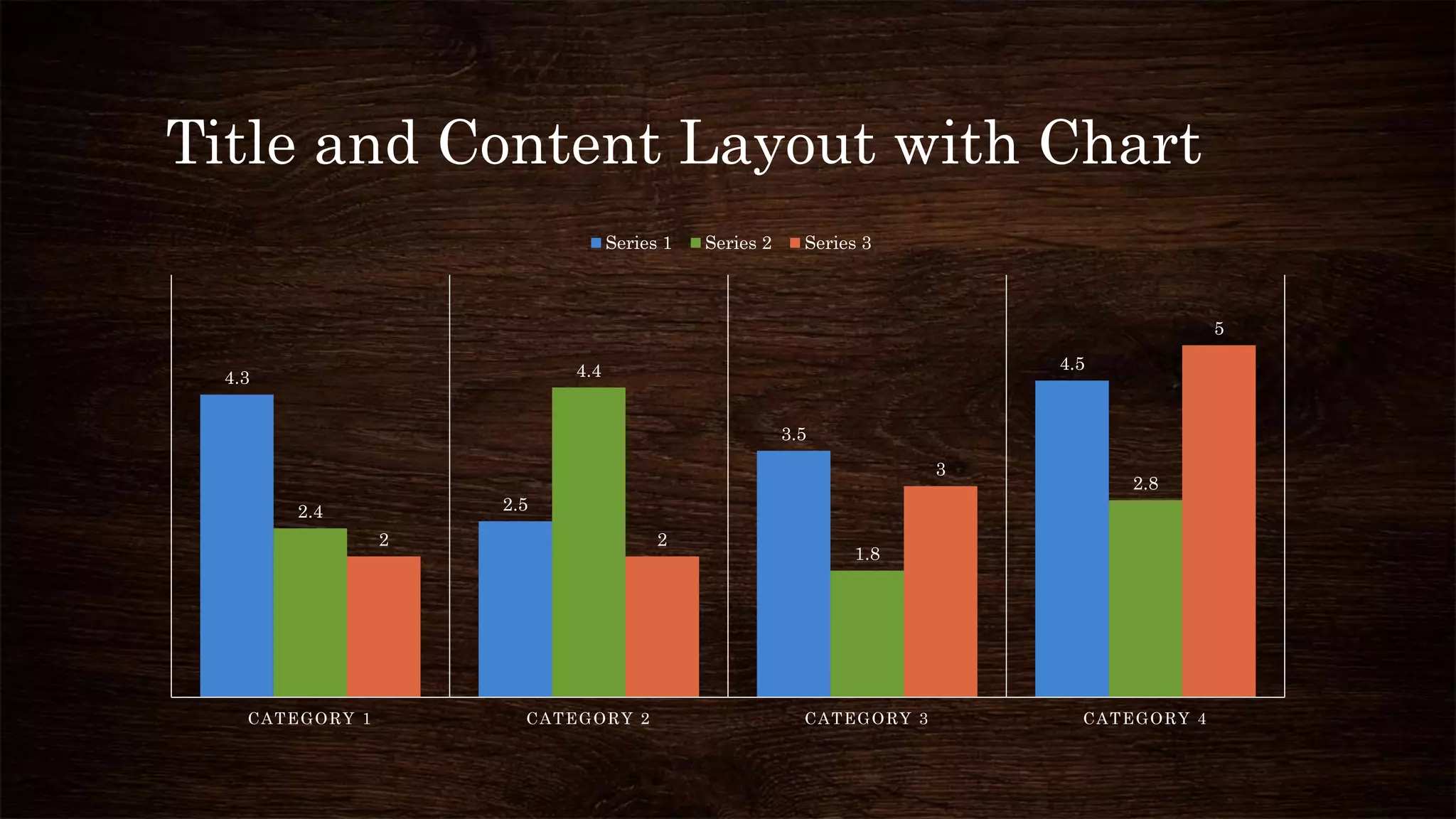
Title and Content Layout with Chart
4.3
2.5
3.5
4.5
2.4
4.4
1.8
2.8
2 2
3
5
CATEGORY 1 CATEGORY 2 CATEGORY 3 CATEGORY 4
Series 1 Series 2 Series 3
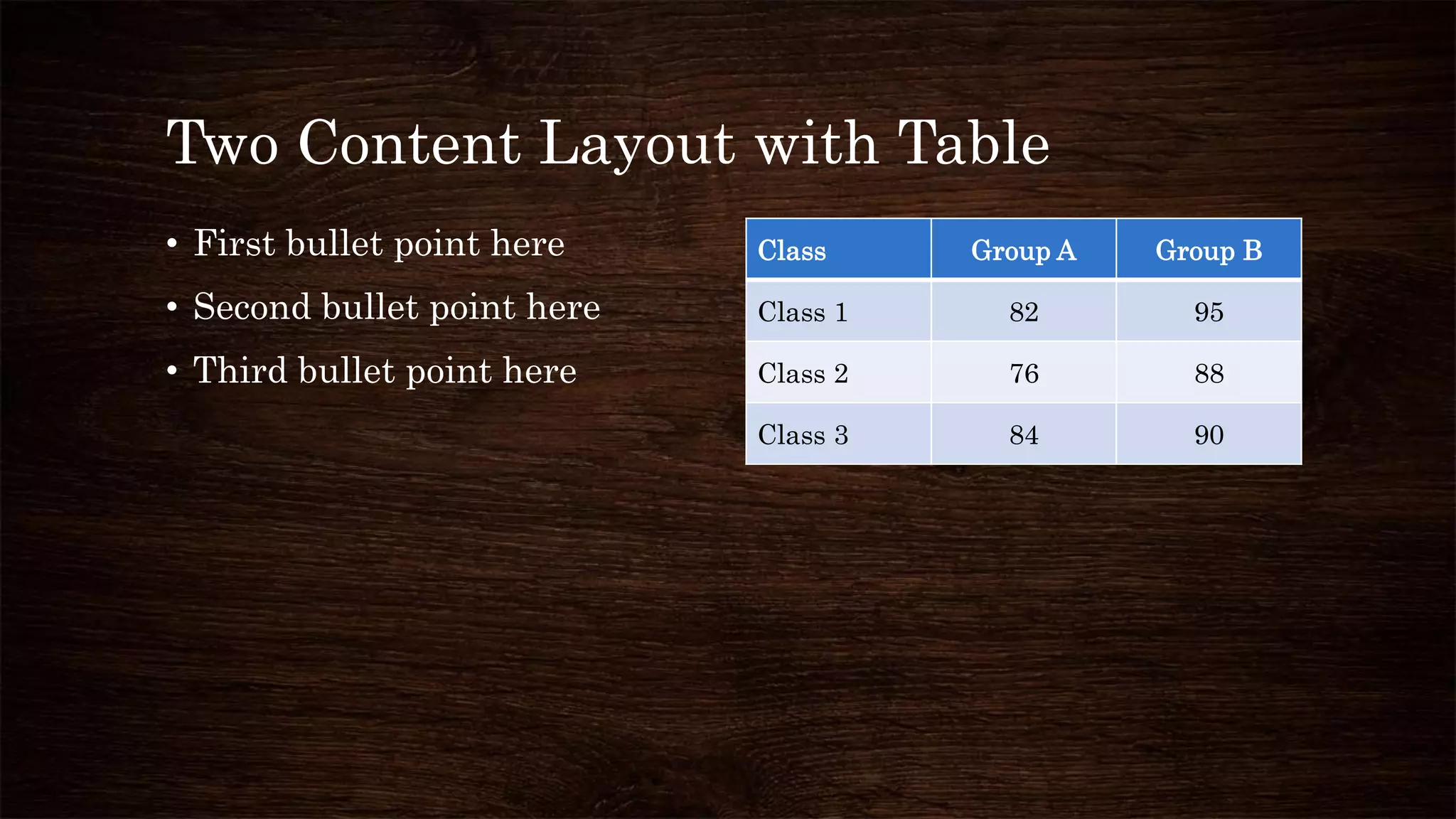
Two Content Layout with Table
• First bullet point here
• Second bullet point here
• Third bullet point here
Class Group A Group B
Class 1 82 95
Class 2 76 88
Class 3 84 90
Two Content Layout with SmartArt
Group
A
Group
B
Group
C
• First bullet point here
• Second bullet point here
• Third bullet point here
Add a Slide Title - 1
Add a Slide Title - 2
Add a Slide Title - 3
Add a Slide
Title - 4
Add a Slide
Title - 5
Add a Slide Title
- 6

sweat formtion in human body and different types of sweat glands and their functions

  • 1.
  • 2.
    SWEAT GLANDS  SWEATFORMATION  SWEAT SECRETION  SWEAT REGULATION BY MEENALI MISHRA A13156216005 M.Sc ( MEDICAL PHYSIOLOGY)
  • 3.
    SWEAT GLANDS  Alsocalled sudoriferous glands  Distributed over the entire skin except THE NIPPLES and THE EXTERNAL PART OF GENETALIA  Two kind of sweat glands 1. ECCRINE GLAND 2. APOCRINE GLAND
  • 4.
  • 5.
  • 6.
    ECCRINE GLAND Secretion iscalled sweat Sweat is hypotonic filtrate of blood Sweat is released by exocytosis
  • 7.
    APOCRINE GLAND  Containsthe same basic components as true sweat plus fatty substance and proteins Secretion is quite viscous; milky or yellowish colour  Secretion is odourless (during infection takes on a musky and generally unpleasant odour)
  • 8.
    MODIFIED APOCRINE GLAND CERUMINOUS GLAND Foundin the lining of the external ear canal SECERTION- A sticky, bitter substance called cerumen or ear wax. MAMMARY GLAND Present in females SECRETION- Milk
  • 10.
    COMPOSITION OF SWEAT 99% Water Some salts ( mostly Na Cl) Vitamin C A microbe killing peptide dubbed DERMICIDIN  Trace of metabolites (urea, uric acid, ammonia) Lactic acid Composition also depends on heredity and diet
  • 11.
    SWEAT FORMATION When thesweat gland is stimulated ; the cells secrete a fluid ( Primary secretion) . It is mostly water and it has high concentrations of Sodium and Chloride and low concentration of Potassium; but without the proteins and the fatty acids. The source of fluid is the space between the cells (interstitial spaces) ; which get the fluid from the blood vessels in the dermis. This fluid travels from the coiled portion up through the straight duct.
  • 12.
    SWEAT GLAND REGULATION Primarilycontrolled by a central thermoregulatory centre in brain and modulated by mean skin temperature Primary controller of sweating is the integration between internal and skin temperature ; a number of non thermal factors modulate the sweating response
  • 13.
    REGULATION OF SWEAT Regulatedby the sympathetic division of the autonomic nervous system Major is to prevent overheating of the body Two kind of sweating- 1. HEAT INDUCED SWEATING Begins on the forehead; then spreads inferiorly over the remainder of the body. 2. EMOTIONALLY INDUCED SWEATING Also called cold sweating Brought on by fright ; embrrassment or nervousness Begins on the palms, soles,and axillae and then spreads over the entire body
  • 14.
    NEURAL PATHWAY FORREGULATION 1. Efferent signals from the pre optic area travels via the tegmentum of the pons and the medullary raphe region to the intermedio-lateral cell column of the spinal cord. 2. In the spinal cord, neurons emerges from the ventral horns, pass through the white ramus communicans and the synapse in the sympathetic ganglia. 3. Postganglionic non mylinated c fibres pass through the grey ramus communicans , combine with the peripheral nerves and travel to the sweat gland, with these nerve fibres , entwinded around the perglndular tissues of the eccrine gland
  • 15.
  • 16.
    Title and ContentLayout with List • Add your first bullet point here • Add your second bullet point here • Add your third bullet point here
  • 17.
    Title and ContentLayout with Chart 4.3 2.5 3.5 4.5 2.4 4.4 1.8 2.8 2 2 3 5 CATEGORY 1 CATEGORY 2 CATEGORY 3 CATEGORY 4 Series 1 Series 2 Series 3
  • 18.
    Two Content Layoutwith Table • First bullet point here • Second bullet point here • Third bullet point here Class Group A Group B Class 1 82 95 Class 2 76 88 Class 3 84 90
  • 19.
    Two Content Layoutwith SmartArt Group A Group B Group C • First bullet point here • Second bullet point here • Third bullet point here
  • 20.
    Add a SlideTitle - 1
  • 21.
    Add a SlideTitle - 2
  • 22.
    Add a SlideTitle - 3
  • 24.
  • 25.
  • 26.
    Add a SlideTitle - 6