BLOOD
PATHOPHYSIOLOGY
Blood System Overview
• Blood transports oxygen and nutrients to
body cells
• Blood removes carbon dioxide and other
waste products from body cells for
elimination
CHANGE IN BLOOD VOLUME
• Blood volume is
the volume of blood (both r
ed blood cells and plasma)
in the circulatory system of
any individual.
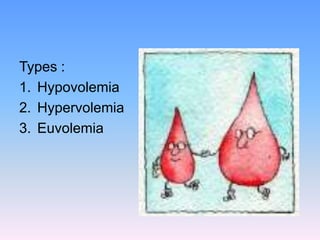
Types :
1. Hypovolemia
2. Hypervolemia
3. Euvolemia
Change in blood volume
Normovolemia
HypovolemiaHypervolemia
HYPOVOLEMIA
• Hypovolemia is a state of
decreased blood volume
1.Cell number decreasing hypovolemia –
due to number of erythrocytes decrease
2. Cell number increasing hypovolemia- due
to volume of blood plasma decrease
3.Normal hypovolemia – eryhtrocytes and
blood plasma both decrease
hypovo
lemia
1.Cell number decreasing
hypovolemia
2. Cell number
increasing hypovolemia
3.Normal hypovolemia
Causes
• Loss of blood ( bleeding or blood donation)
• Loss of plasma (severe burns and lesions )
• Loss of body sodium and consequent
intravascular water; e.g. diarrhea or vomiting
• Vasodilation (involving widening of blood
vessels)
Hypervolemia
• It is a state of blood volume decrease
Types:
1. Cell number decreasing hypervolemia - due
to blood plasma decrease
2. Cell number increasing hypervolemia - blood
cell number increase
3.Normal hypervolemia- both of blood cell and
plasma are increased, ratio of hematocrit
unchanged
1.Cell number
decreasing
hypervolemia-
• Renal disease
2.Cell number
increasing
hypervolemia
• Lives in high
altitude
• Heart disease
3.Normal
hypervolemia-
• High temperature
• exercising
Normovolemia
• Total blood volume is not changed but
ratio between blood cell and plasma is
changed
• 1.Cell number decreasing normovolemia
• 2.Cell number increasing normovolemia
• Erythrolysis
• Anemia
• Loss blood
1.Cell number
decreasing
normovolemia
• Take blood2.Cell number
increasing
normovolemia
LOSS OF OXYGENATION
Loss of oxygenation depends on
number of RBC & quality of RBC.
What is loss of RBC?
It is non balancing of Erythropoiesis
& Eritrodierez
• Erythrocytosis
•
• Erytropenia
Quality of RBC
• Anisocytosis
• Poikilocytosis
• Hb depends
• Regeneration of RBC
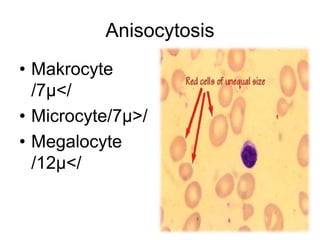
Anisocytosis
• Makrocyte
/7µ</
• Microcyte/7µ>/
• Megalocyte
/12µ</
Poikilocytosis
• Changing shape of RBC
 Target
 Sickle
 Oval
 Round… etc
Hb depends
 Hyperchromt
 Hypochromt
 Normochromt
Anemia
• Anemia is a condition that develops when
your blood lacks enough healthy RBC or Hb.
• If you have too few or abnormal red blood
cells, or your hemoglobin is abnormal or low,
the cells in your body will not get enough
oxygen.
Symptoms of anemia
• When anemia comes on slowly the symptoms
are often: feeling tired, weakness, shortness
of breath or a poor ability to exercise.
• Anemia that comes on quickly it may include:
confusion, feeling like one is going to pass out,
and an increased desire to drink fluids
Anemia
• There are 2 main types of
anemia
Due to blood loss
Hemolytic anemia
Due to blood loss anemia
• Blood loss is the
most common
cause of anemia,
especially iron-
deficiency anemia.
Blood loss can be
short term or
persist over time.
• Causes of
blood loss
include trauma
and
gastrointestin
al bleeding
among others
Hemolytic anemia
• Causes of decreased production include
iron deficiency, a lack of vitamin B12
and a number of neoplasm of the bone
marrow among others.
• There are 2 main types of hemolytic
anemia
Genetic anemia
Acquired anemia
Genetic anemia
 Membranopathy
 Hemoglobinopathy
 Fermentopathy
Membranopathy
• Spherocyte
• Elliptocyte
• Spherocyte is a common anemia. It’s
heritable by autosomic dominant gene.
Hemoglobinopathy
• Hemoglobinopathy is a
kind of genetic defect
that results in abnormal
structure of one of the
globin chains of the
hemoglobin molecule.
• Common
hemoglobinopathy
include sickle-cell
disease & thalassemia
Anemias of Deficient
Red Cell Production
Iron
• ~2.5 g of iron, with 2.0 - 2.5 g circulating
as part of heme in hemoglobin
• ~0.3 g found in myoglobin, in heme in
cytochromes, and in Fe-S complexes
• Iron stored in body primarily as protein
complexes (ferritin and hemosiderin)
Nutritional Iron Balance
• Intake
– Dietary iron intake
– Medicinal iron
– Red cell transfusions
– Injection of iron
complexes
• Excretion
– Gastrointestinal bleeding
– Menses
• Losses can be as much
as 4 - 37mg/menstrual
cycle
– Other forms of bleeding
– Loss of epidermal cells
from the skin and gut
Erythrocyte
– Known as red blood cells (RBC)
• Tiny biconcave-shaped disks
• Thinner in center than around edges
• No nucleus in mature red blood cell
– Average life span = approximately 120
days
– Main component = hemoglobin
– Primary function = transport oxygen to
cells of body
Mechanism
Iron-Deficiency Anemia
• Iron deficiency anemia is a condition where a
lack of iron in the body leads to a reduction in
the number of red blood cells.
Causes of Iron Deficiency
• Increased demand for iron
and/or hematopoiesis
– Rapid growth in infancy or
adolescence
– Pregnancy
• Increased iron loss
– Chronic blood loss
– Menses
– Acute blood loss
– Blood donation
• Decreased iron intake or
absorption
– Inadequate diet
– Malabsorption from disease
(sprue, Crohn's disease)
– Malabsorption from surgery
(post-gastrectomy)
– Acute or chronic
inflammation
Megaloblastic Anemias
• Megaloblastic anemias are caused by
impaired DNA synthesis, usually because of a
deficiency in vitamin B12 or folic acid.
Folic Acid–Deficiency Anemia.
• Folic acid deficiency anemia is caused by
having too little vitamin B9 (folate) in your
blood.
• Unlike in vitamin B12 deficiency, neurologic
abnormalities do not occur.
Vitamin B12–Deficiency Anemia
• Pernicious anemia
• Cause:
– Low intake
– Malabsorption
– Pregnant
Aplastic Anemia
• Aplastic anemia describes a disorder of
pluripotential bone marrow stem cells that
results in a reduction of all three
hematopoietic cell lines—red blood cells,
white blood cells, and platelets.
• There are two main mechanisms of stem cell
injury.
– Predictable, dose-dependent, toxic injury, typified by exposure
to certain chemotherapeutic drugs, chemicals and ionizing
radiation.
– Idiosyncratic, dose-independent, immunologic injury, as seen
in idiopathic cases or after certain drug exposures or viral
infections.
Myelophthisic Anemia
• Myelophthisic anemia is caused by extensive
infiltration of the marrow by tumors or other
lesions.
Polycythemia
• Polycythemia, or erythrocytosis, denotes an
increase in red cells per unit volume of
peripheral blood, usually in association with
an increase in hemoglobin concentration.
• Polycythemia may be
– absolute (defined as an increase in total red cell
mass)
– relative
• Relative
• Reduced plasma volume (hemoconcentration)
• Absolute
• Primary
– Abnormal proliferation of myeloid stem cells, normal or low
– erythropoietin levels ; inherited activating mutations in the
erythropoietin receptor (rare)
• Secondary
– Increased erythropoietin levels
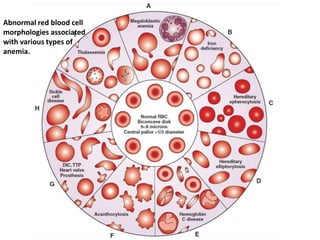
Abnormal red blood cell
morphologies associated
with various types of
anemia.
ERYTHROCYTOSIS
Physiological Causes
• Hypoxia or severe pulmonary or
heart disease:
Increased erythropoietin 
Increased erythropoiesis 
Increased RBC
Pathological Causes
• Kidney diseases (hydronephrosis,
tumor)
• Myeloproliferative disease (EPO level is
low)
–Polycythemia vera (common in older
men)
Symptoms
• Hypertension
• Headache
• Ishemia
• Infarction
• Enlarged spleen or liver
Leukopenia
• Neutropenia
• Lymphocytopenia More
common
• Monocytopenia
• Eosinopenia
Neutropenia
• Causes:
- Decreased production in bone marrow
- Increased destruction (drug, immune)
• Symptoms:
Fever, mouth ulcer, sore throat, pain or
swelling around a wound
• Less than 1000 cells per mm3 - worrisome
• Less than 500 per mm3 - serious
• treated with granulocyte colony-stimulating
factor (G-CSF), a growth factor that
stimulates the production of granulocytes
from marrow
Lymphocytopenia
• Causes
- Common cold, infection, malnutrition, stress,
exercise, chemotherapy
• Symptoms
– Chronic fever
– Lymphodenopathy (enlarged lymph nodes)
Leukocytosis
Causes of Leukocytosis
Neutrophilic
leukocytosis
Acute bacterial infections,
inflammation (myocardial infarction,
burns)
Eosinophilic
leukocytosis
(eosinophilia)
Allergic disorders such as asthma,
allergic skin diseases; parasitic
infestations; drug reactions; Hodgkin’s
disease; collagen vascular disorders
Basophilic
leukocytosis
(basophilia)
Rare, often indicative of a
myeloproliferative disease
Monocytosis Chronic infections (e.g., tuberculosis),
malaria and inflammatory bowel
diseases
Lymphocytosis Associated with chronic immunologic
stimulation (e.g., tuberculosis); viral
infections (e.g., hepatitis)
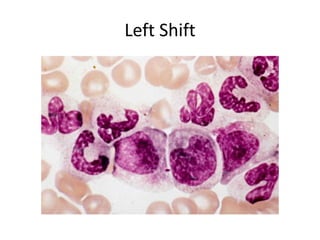
Neutrophil Shift
• Determines affinity of leukopoiesis by
studying neutrophil’s nucleus
– Left shift – high number of immature cells
(infection, necrosis, inflammation)
– Right shift – low number of immature cells
(hypersegmentation)
Right Shift
Left Shift
Leukemia
• Bone marrow malfunction
• High numbers of WBC
• Not fully developed blasts
• Becomes cancerous cells
• Caused by smoking, ionized radiation,
chemicals, Down syndrome
Classification
Leukemia
Acute
Lymphoblastic Myelogenous
Chronic
Lymphoblastic Myelogenous
Acute lymphoblastic leukemia
• Increase in lymphoblast
• Common in children
Acute Myelogenous Leukemia
• Increase in myeloblast
• Low number of mature neutrophils
• Common in adults and men
Chronic Myelogenous Leukemia
• Low number of myeloblast
• Enlarged spleen and liver
Chronic Lymphoblastic Leukemia
• High number of lymphocytes
• Lymph nodes, spleen and liver expand
Lymphoma
• Tumor of lymphoid tissue
• Factors: virus, infection, pesticide
• Symptoms: weight loss, fever, sweating
• Types
– Hodgkins Lymphoma (Reed-Sternberg cells)
– Non-Hodgkins Lymphoma (No RS cells)
THANK YOU

Blood pathophysiology

  • 1.
  • 2.
    Blood System Overview •Blood transports oxygen and nutrients to body cells • Blood removes carbon dioxide and other waste products from body cells for elimination
  • 3.
    CHANGE IN BLOODVOLUME • Blood volume is the volume of blood (both r ed blood cells and plasma) in the circulatory system of any individual.
  • 5.
    Types : 1. Hypovolemia 2.Hypervolemia 3. Euvolemia
  • 6.
    Change in bloodvolume Normovolemia HypovolemiaHypervolemia
  • 7.
    HYPOVOLEMIA • Hypovolemia isa state of decreased blood volume 1.Cell number decreasing hypovolemia – due to number of erythrocytes decrease 2. Cell number increasing hypovolemia- due to volume of blood plasma decrease 3.Normal hypovolemia – eryhtrocytes and blood plasma both decrease
  • 8.
    hypovo lemia 1.Cell number decreasing hypovolemia 2.Cell number increasing hypovolemia 3.Normal hypovolemia
  • 9.
    Causes • Loss ofblood ( bleeding or blood donation) • Loss of plasma (severe burns and lesions ) • Loss of body sodium and consequent intravascular water; e.g. diarrhea or vomiting • Vasodilation (involving widening of blood vessels)
  • 11.
    Hypervolemia • It isa state of blood volume decrease Types: 1. Cell number decreasing hypervolemia - due to blood plasma decrease 2. Cell number increasing hypervolemia - blood cell number increase 3.Normal hypervolemia- both of blood cell and plasma are increased, ratio of hematocrit unchanged
  • 12.
    1.Cell number decreasing hypervolemia- • Renaldisease 2.Cell number increasing hypervolemia • Lives in high altitude • Heart disease 3.Normal hypervolemia- • High temperature • exercising
  • 13.
    Normovolemia • Total bloodvolume is not changed but ratio between blood cell and plasma is changed • 1.Cell number decreasing normovolemia • 2.Cell number increasing normovolemia
  • 14.
    • Erythrolysis • Anemia •Loss blood 1.Cell number decreasing normovolemia • Take blood2.Cell number increasing normovolemia
  • 15.
    LOSS OF OXYGENATION Lossof oxygenation depends on number of RBC & quality of RBC.
  • 16.
    What is lossof RBC? It is non balancing of Erythropoiesis & Eritrodierez • Erythrocytosis • • Erytropenia
  • 17.
    Quality of RBC •Anisocytosis • Poikilocytosis • Hb depends • Regeneration of RBC
  • 18.
  • 19.
    Poikilocytosis • Changing shapeof RBC  Target  Sickle  Oval  Round… etc
  • 20.
    Hb depends  Hyperchromt Hypochromt  Normochromt
  • 21.
    Anemia • Anemia isa condition that develops when your blood lacks enough healthy RBC or Hb. • If you have too few or abnormal red blood cells, or your hemoglobin is abnormal or low, the cells in your body will not get enough oxygen.
  • 22.
    Symptoms of anemia •When anemia comes on slowly the symptoms are often: feeling tired, weakness, shortness of breath or a poor ability to exercise. • Anemia that comes on quickly it may include: confusion, feeling like one is going to pass out, and an increased desire to drink fluids
  • 24.
    Anemia • There are2 main types of anemia Due to blood loss Hemolytic anemia
  • 25.
    Due to bloodloss anemia • Blood loss is the most common cause of anemia, especially iron- deficiency anemia. Blood loss can be short term or persist over time.
  • 26.
    • Causes of bloodloss include trauma and gastrointestin al bleeding among others
  • 27.
    Hemolytic anemia • Causesof decreased production include iron deficiency, a lack of vitamin B12 and a number of neoplasm of the bone marrow among others. • There are 2 main types of hemolytic anemia Genetic anemia Acquired anemia
  • 28.
    Genetic anemia  Membranopathy Hemoglobinopathy  Fermentopathy
  • 29.
    Membranopathy • Spherocyte • Elliptocyte •Spherocyte is a common anemia. It’s heritable by autosomic dominant gene.
  • 30.
    Hemoglobinopathy • Hemoglobinopathy isa kind of genetic defect that results in abnormal structure of one of the globin chains of the hemoglobin molecule. • Common hemoglobinopathy include sickle-cell disease & thalassemia
  • 31.
    Anemias of Deficient RedCell Production
  • 32.
    Iron • ~2.5 gof iron, with 2.0 - 2.5 g circulating as part of heme in hemoglobin • ~0.3 g found in myoglobin, in heme in cytochromes, and in Fe-S complexes • Iron stored in body primarily as protein complexes (ferritin and hemosiderin)
  • 33.
    Nutritional Iron Balance •Intake – Dietary iron intake – Medicinal iron – Red cell transfusions – Injection of iron complexes • Excretion – Gastrointestinal bleeding – Menses • Losses can be as much as 4 - 37mg/menstrual cycle – Other forms of bleeding – Loss of epidermal cells from the skin and gut
  • 34.
    Erythrocyte – Known asred blood cells (RBC) • Tiny biconcave-shaped disks • Thinner in center than around edges • No nucleus in mature red blood cell – Average life span = approximately 120 days – Main component = hemoglobin – Primary function = transport oxygen to cells of body
  • 36.
  • 37.
    Iron-Deficiency Anemia • Irondeficiency anemia is a condition where a lack of iron in the body leads to a reduction in the number of red blood cells.
  • 38.
    Causes of IronDeficiency • Increased demand for iron and/or hematopoiesis – Rapid growth in infancy or adolescence – Pregnancy • Increased iron loss – Chronic blood loss – Menses – Acute blood loss – Blood donation • Decreased iron intake or absorption – Inadequate diet – Malabsorption from disease (sprue, Crohn's disease) – Malabsorption from surgery (post-gastrectomy) – Acute or chronic inflammation
  • 39.
    Megaloblastic Anemias • Megaloblasticanemias are caused by impaired DNA synthesis, usually because of a deficiency in vitamin B12 or folic acid.
  • 40.
    Folic Acid–Deficiency Anemia. •Folic acid deficiency anemia is caused by having too little vitamin B9 (folate) in your blood. • Unlike in vitamin B12 deficiency, neurologic abnormalities do not occur.
  • 41.
    Vitamin B12–Deficiency Anemia •Pernicious anemia • Cause: – Low intake – Malabsorption – Pregnant
  • 42.
    Aplastic Anemia • Aplasticanemia describes a disorder of pluripotential bone marrow stem cells that results in a reduction of all three hematopoietic cell lines—red blood cells, white blood cells, and platelets.
  • 43.
    • There aretwo main mechanisms of stem cell injury. – Predictable, dose-dependent, toxic injury, typified by exposure to certain chemotherapeutic drugs, chemicals and ionizing radiation. – Idiosyncratic, dose-independent, immunologic injury, as seen in idiopathic cases or after certain drug exposures or viral infections.
  • 44.
    Myelophthisic Anemia • Myelophthisicanemia is caused by extensive infiltration of the marrow by tumors or other lesions.
  • 45.
    Polycythemia • Polycythemia, orerythrocytosis, denotes an increase in red cells per unit volume of peripheral blood, usually in association with an increase in hemoglobin concentration. • Polycythemia may be – absolute (defined as an increase in total red cell mass) – relative
  • 46.
    • Relative • Reducedplasma volume (hemoconcentration) • Absolute • Primary – Abnormal proliferation of myeloid stem cells, normal or low – erythropoietin levels ; inherited activating mutations in the erythropoietin receptor (rare) • Secondary – Increased erythropoietin levels
  • 47.
    Abnormal red bloodcell morphologies associated with various types of anemia.
  • 48.
  • 49.
    Physiological Causes • Hypoxiaor severe pulmonary or heart disease: Increased erythropoietin  Increased erythropoiesis  Increased RBC
  • 50.
    Pathological Causes • Kidneydiseases (hydronephrosis, tumor) • Myeloproliferative disease (EPO level is low) –Polycythemia vera (common in older men)
  • 51.
    Symptoms • Hypertension • Headache •Ishemia • Infarction • Enlarged spleen or liver
  • 53.
    Leukopenia • Neutropenia • LymphocytopeniaMore common • Monocytopenia • Eosinopenia
  • 54.
    Neutropenia • Causes: - Decreasedproduction in bone marrow - Increased destruction (drug, immune) • Symptoms: Fever, mouth ulcer, sore throat, pain or swelling around a wound
  • 55.
    • Less than1000 cells per mm3 - worrisome • Less than 500 per mm3 - serious • treated with granulocyte colony-stimulating factor (G-CSF), a growth factor that stimulates the production of granulocytes from marrow
  • 56.
    Lymphocytopenia • Causes - Commoncold, infection, malnutrition, stress, exercise, chemotherapy • Symptoms – Chronic fever – Lymphodenopathy (enlarged lymph nodes)
  • 57.
  • 58.
    Causes of Leukocytosis Neutrophilic leukocytosis Acutebacterial infections, inflammation (myocardial infarction, burns) Eosinophilic leukocytosis (eosinophilia) Allergic disorders such as asthma, allergic skin diseases; parasitic infestations; drug reactions; Hodgkin’s disease; collagen vascular disorders
  • 59.
    Basophilic leukocytosis (basophilia) Rare, often indicativeof a myeloproliferative disease Monocytosis Chronic infections (e.g., tuberculosis), malaria and inflammatory bowel diseases Lymphocytosis Associated with chronic immunologic stimulation (e.g., tuberculosis); viral infections (e.g., hepatitis)
  • 60.
    Neutrophil Shift • Determinesaffinity of leukopoiesis by studying neutrophil’s nucleus – Left shift – high number of immature cells (infection, necrosis, inflammation) – Right shift – low number of immature cells (hypersegmentation)
  • 61.
  • 62.
  • 63.
    Leukemia • Bone marrowmalfunction • High numbers of WBC • Not fully developed blasts • Becomes cancerous cells • Caused by smoking, ionized radiation, chemicals, Down syndrome
  • 64.
  • 65.
    Acute lymphoblastic leukemia •Increase in lymphoblast • Common in children
  • 66.
    Acute Myelogenous Leukemia •Increase in myeloblast • Low number of mature neutrophils • Common in adults and men
  • 67.
    Chronic Myelogenous Leukemia •Low number of myeloblast • Enlarged spleen and liver
  • 68.
    Chronic Lymphoblastic Leukemia •High number of lymphocytes • Lymph nodes, spleen and liver expand
  • 70.
    Lymphoma • Tumor oflymphoid tissue • Factors: virus, infection, pesticide • Symptoms: weight loss, fever, sweating • Types – Hodgkins Lymphoma (Reed-Sternberg cells) – Non-Hodgkins Lymphoma (No RS cells)
  • 71.

Editor's Notes

  • #33 Humans contain ~2.5 g of iron, with 2.0 - 2.5 g circulating as part of heme in hemoglobin Another ~0.3 g found in myoglobin, in heme in cytochromes, and in Fe-S complexes Iron stored in body primarily as protein complexes (ferritin and hemosiderin)
  • #37 Iron is absorbed in the duodenum (Fig. 11–9). Nonheme iron is carried across the apical and basolateral membranes of enterocytes by distinct transporters. After reduction by ferric reductase, ferrous iron (Fe2+) is transported across the apical membrane by divalent metal transporter-1 (DMT1). A second transporter, ferroportin, then moves iron from the cytoplasm to the plasma across the basolateral membrane. The newly absorbed iron is next oxidized by hephaestin and ceruloplasmin to ferric iron (Fe3+), the form of iron that binds to transferrin. Both DMT1 and ferroportin are widely distributed in the body and are involved in iron transport in other tissues as well. As depicted in Figure 11–9, only a fraction of the iron that enters enterocytes is delivered to transferrin by ferroportin. The remainder is incorporated into cytoplasmic ferritin and lost through the exfoliation of mucosal cells. When the body is replete with iron, most iron entering duodenal cells is “handed off” to ferritin, whereas transfer to plasma transferrin is enhanced when iron is deficient or erythropoiesis is inefficient. This balance is regulated by hepcidin, a small hepatic peptide that is synthesized and secreted in an iron-dependent fashion. Plasma hepcidin binds ferroportin and induces its internalization and degradation; thus, when hepcidin concentrations are high, ferroportin levels fall and less iron is absorbed. Conversely, when hepcidin levels are low (as occurs in hemochromatosis) (Chapter 15), basolateral transport of iron is increased, eventually leading to systemic iron overload. Regulation of iron absorption. Duodenal epithelial cell uptake of heme and nonheme iron discussed in the text is depicted. When the storage sites of the body are replete with iron and erythropoietic activity is normal, plasma hepcidin levels are high. This situation leads to downregulation of ferroportin and trapping of most of the absorbed iron, which is lost when duodenal epithelial cells are shed into the gut. Conversely, when body iron stores decrease or erythropoiesis is stimulated, hepcidin levels fall and ferroportin activity increases, allowing a greater fraction of the absorbed iron to be transferred into plasma transferrin. DMT1, divalent metal transporter-1.
  • #38 Iron deficiency anemia (IDA) is the most common type of anemia worldwide, occurring in both developing and developed countries and affecting as many as one fifth of the world population. Iron deficiency interferes with normal hemoglobin synthesis and leads to impaired erythropoiesis . The normal total body iron mass is about 2.5 g for women and 3.5 g for men. Approximately 80% of functional body iron is present in hemoglobin, with the remainder being found in myoglobin and iron-containing enzymes (e.g., catalase, cytochromes) Blood loss. Blood contains iron within red blood cells. So if you lose blood, you lose some iron. Women with heavy periods are at risk of iron deficiency anemia because they lose blood during menstruation. Slow, chronic blood loss within the body — such as from a peptic ulcer, a hiatal hernia, a colon polyp or colorectal cancer — can cause iron deficiency anemia. Gastrointestinal bleeding can result from regular use of some over-the-counter pain relievers, especially aspirin. A lack of iron in your diet. Your body regularly gets iron from the foods you eat. If you consume too little iron, over time your body can become iron deficient. Examples of iron-rich foods include meat, eggs, leafy green vegetables and iron-fortified foods. For proper growth and development, infants and children need iron from their diet, too. An inability to absorb iron. Iron from food is absorbed into your bloodstream in your small intestine. An intestinal disorder, such as celiac disease, which affects your intestine's ability to absorb nutrients from digested food, can lead to iron deficiency anemia. If part of your small intestine has been bypassed or removed surgically, that may affect your ability to absorb iron and other nutrients. Pregnancy. Without iron supplementation, iron deficiency anemia occurs in many pregnant women because their iron stores need to serve their own increased blood volume as well as be a source of hemoglobin for the growing fetus.
  • #40 The diagnosis of a megaloblastic anemia is readily made from examination of smears of peripheral blood and bone marrow. The anemia of folate deficiency is best distinguished from that of vitamin B12 deficiency by measuring serum and red cell folate and vitamin B12 levels.
  • #43 Typically, the red cells are normochromic and normocytic or slightly macrocytic. Reticulocytes are reduced in number (reticulocytopenia).
  • #44 Most cases are idiopathic, and no specific initiating etiology can be identified. The prognosis is unpredictable. Depending on its cause, stem cell injury may or may not be reversible. Bone marrow transplantation often is curative, particularly in non transfused patients younger than 40 years of age.
  • #46 Relative polycythemia results from dehydration, such as occurs with water deprivation, prolonged vomiting, diarrhea, or the excessive use of diuretics. Absolute polycythemia is described as primary when the increased red cell mass results from an autonomous proliferation of erythroid progenitors, and secondary when the excessive proliferation stems from elevated levels of erythropoietin. Primary polycythemia (polycythemia vera) is a clonal, neoplastic myeloproliferative disorder considered later in this chapter. The increases in erythropoietin that cause secondary forms of absolute polycythemia have a variety of causes .
  • #48 -Hemoglobin C disease results from homozygous inheritance of a structurally abnormal hemoglobin, which leads to increased erythrocyte rigidity and mild chronic hemolysis. -Hereditary spherocytosis is a heterogeneous group of inherited disorders of the RBC cytoskeletons, characterized by a deficiency of spectrin or other cytoskeletal components (ankyrin, protein 4.2, band 3). -Hereditary elliptocytosis is a heterogeneous group of inherited disorders involving the erythrocyte cytoskeleton. -In sickle cell disease, an abnormal hemoglobin, namely hemoglobin S, transforms the erythrocyte into a sickle shape upon deoxygenation. -Acanthocytosis results from a defect within the lipid bilayer of the red cell membrane and features spiny projections of the surface, which may be associated with hemolysis. -Thalassemias are congenital anemias caused by deficient synthesis of the globin chain subunits of hemoglobin. -