ANAND KUMAR SINGH
ROLL N0-9
MBBS-2017-18
CONTENTS :-
 DEFINITION
 CLASSIFICATION
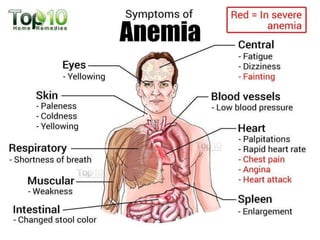
 SYMPTOMS OF ANEMIA
 SUMMARY
 BIBLIOGRAPHY
ANEMIA
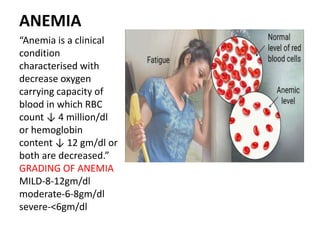
“Anemia is a clinical
condition
characterised with
decrease oxygen
carrying capacity of
blood in which RBC
count ↓ 4 million/dl
or hemoglobin
content ↓ 12 gm/dl or
both are decreased.”
GRADING OF ANEMIA
MILD-8-12gm/dl
moderate-6-8gm/dl
severe-<6gm/dl
CLASSIFICATION
ETIOLOGICAL CLASSIFICATION
1. Dietary deficiencies
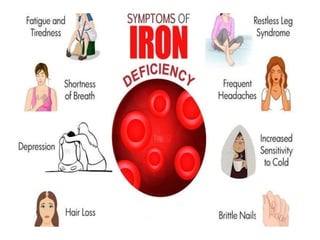
a) IRON DEFICIENCY ANEMIA
• Any anemia which responds inadequate
dosage of iron is called iron deficiency anemia
• Causes-
• Deceased intake of iron
• Increased demand in
pregnancy,lactation,menstruation
• Low absoption from diet
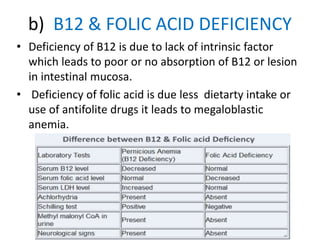
b) B12 & FOLIC ACID DEFICIENCY
• Deficiency of B12 is due to lack of intrinsic factor
which leads to poor or no absorption of B12 or lesion
in intestinal mucosa.
• Deficiency of folic acid is due less dietarty intake or
use of antifolite drugs it leads to megaloblastic
anemia.
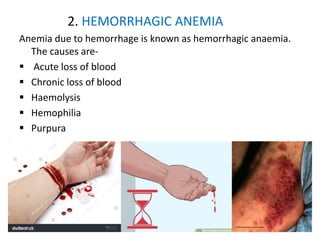
2. HEMORRHAGIC ANEMIA
Anemia due to hemorrhage is known as hemorrhagic anaemia.
The causes are-
 Acute loss of blood
 Chronic loss of blood
 Haemolysis
 Hemophilia
 Purpura
3. APLASTIC ANEMIA
• It is a disorder of red bone marrow .
• The red bone marrow is reduced/replaced by
the fatty tissue
• It occur in the condition like exposure to x-ray
gamma ray and exposure to bacterial toxin
etc.
• It is common in tuberculosis hepatitis and hiv
infection
• The cell are normocystic and normocromic
4. HEMOLYTIC ANEMIA
• Hemolysis means destruction of rbc.This
occurs due to excess destruction of rbc.
Causes –
 Liver failure
 Renal disorder
 Burns
 Poisioning of pd,coal and tar
 Congenital defect in shape and size of rbc for example
thelassemia and sickle cell anemia
Sickle cell anemia
• It is congenital disease mostly found in nigro.
• It is due to abnormal hemoglobin called
hemoglobin S.
• When this hemoglobin exposed to low oxygen
concentration, it precipitates into long crystal
inside the RBC.
• These crystal elongate the cell and give it
appearance sickle rather than biconcave.
Thalessemia
• Also called as medeterrian or cooley’s anemia.
• In the thalessemia the production of either
alfa or beta chain become imbalanced due to
defective synthesis of globin genes.
• Imbalanced chain cause the precipitation of
polypeptide chain leading to disturbance in
erythropoeisis.
Morphological classification
 Normocytic normochromic anemia
• The size and hemoglobin content of RBC are
normal. But the number of RBC is less seen in
acute blood loss.
Macrocytic normochromic anemia
• The RBC are larger in size with normal
hemoglobin content. Seen in B12 deficiency.
Macrocytic hypochromic anemia
• The RBC are larger in size and MCH is less so cells
appear pale. Seen in protien deficiency.
Microcytic hypochromic anemia
• The RBC are smaller in size and HB content is less.
It is seen in iron deficiency.
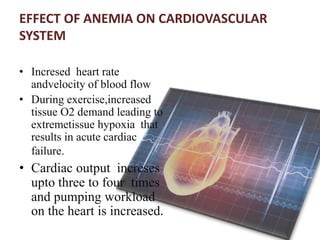
EFFECT OF ANEMIA ON CARDIOVASCULAR
SYSTEM
• Incresed heart rate
andvelocity of blood flow
• During exercise,increased
tissue O2 demand leading to
extremetissue hypoxia that
results in acute cardiac
failure.
• Cardiac output increses
upto three to four times
and pumping workload
on the heart is increased.
BIBLIOGRAPHY
1. Guyton and Hall Textbook of Medical Physiology E-Book
(Guyton Physiology)
2. Essentials of Medical Physiology by k.sembulingum
3. Google
4. TEXTBOOK OF PHYSIOLOGY BY AK JAIN
5. Ganongs Review Of Medical Physiology 25th Edition
Anemia

Anemia

  • 1.
    ANAND KUMAR SINGH ROLLN0-9 MBBS-2017-18
  • 2.
    CONTENTS :-  DEFINITION CLASSIFICATION  SYMPTOMS OF ANEMIA  SUMMARY  BIBLIOGRAPHY
  • 3.
    ANEMIA “Anemia is aclinical condition characterised with decrease oxygen carrying capacity of blood in which RBC count ↓ 4 million/dl or hemoglobin content ↓ 12 gm/dl or both are decreased.” GRADING OF ANEMIA MILD-8-12gm/dl moderate-6-8gm/dl severe-<6gm/dl
  • 4.
  • 5.
    ETIOLOGICAL CLASSIFICATION 1. Dietarydeficiencies a) IRON DEFICIENCY ANEMIA • Any anemia which responds inadequate dosage of iron is called iron deficiency anemia • Causes- • Deceased intake of iron • Increased demand in pregnancy,lactation,menstruation • Low absoption from diet
  • 7.
    b) B12 &FOLIC ACID DEFICIENCY • Deficiency of B12 is due to lack of intrinsic factor which leads to poor or no absorption of B12 or lesion in intestinal mucosa. • Deficiency of folic acid is due less dietarty intake or use of antifolite drugs it leads to megaloblastic anemia.
  • 8.
    2. HEMORRHAGIC ANEMIA Anemiadue to hemorrhage is known as hemorrhagic anaemia. The causes are-  Acute loss of blood  Chronic loss of blood  Haemolysis  Hemophilia  Purpura
  • 9.
    3. APLASTIC ANEMIA •It is a disorder of red bone marrow . • The red bone marrow is reduced/replaced by the fatty tissue • It occur in the condition like exposure to x-ray gamma ray and exposure to bacterial toxin etc. • It is common in tuberculosis hepatitis and hiv infection • The cell are normocystic and normocromic
  • 10.
    4. HEMOLYTIC ANEMIA •Hemolysis means destruction of rbc.This occurs due to excess destruction of rbc. Causes –  Liver failure  Renal disorder  Burns  Poisioning of pd,coal and tar  Congenital defect in shape and size of rbc for example thelassemia and sickle cell anemia
  • 11.
    Sickle cell anemia •It is congenital disease mostly found in nigro. • It is due to abnormal hemoglobin called hemoglobin S. • When this hemoglobin exposed to low oxygen concentration, it precipitates into long crystal inside the RBC. • These crystal elongate the cell and give it appearance sickle rather than biconcave.
  • 12.
    Thalessemia • Also calledas medeterrian or cooley’s anemia. • In the thalessemia the production of either alfa or beta chain become imbalanced due to defective synthesis of globin genes. • Imbalanced chain cause the precipitation of polypeptide chain leading to disturbance in erythropoeisis.
  • 13.
    Morphological classification  Normocyticnormochromic anemia • The size and hemoglobin content of RBC are normal. But the number of RBC is less seen in acute blood loss. Macrocytic normochromic anemia • The RBC are larger in size with normal hemoglobin content. Seen in B12 deficiency. Macrocytic hypochromic anemia • The RBC are larger in size and MCH is less so cells appear pale. Seen in protien deficiency. Microcytic hypochromic anemia • The RBC are smaller in size and HB content is less. It is seen in iron deficiency.
  • 14.
    EFFECT OF ANEMIAON CARDIOVASCULAR SYSTEM • Incresed heart rate andvelocity of blood flow • During exercise,increased tissue O2 demand leading to extremetissue hypoxia that results in acute cardiac failure. • Cardiac output increses upto three to four times and pumping workload on the heart is increased.
  • 16.
    BIBLIOGRAPHY 1. Guyton andHall Textbook of Medical Physiology E-Book (Guyton Physiology) 2. Essentials of Medical Physiology by k.sembulingum 3. Google 4. TEXTBOOK OF PHYSIOLOGY BY AK JAIN 5. Ganongs Review Of Medical Physiology 25th Edition