ANAEMIAS
DHANYA K CHANDRAN
MSC NURSING
DEFINITION
A condition in which the haemoglobin content of blood is
lower than normal as result of a deficiency of one or
more essential nutrients, regardless of the cause of such
deficiency
WHO
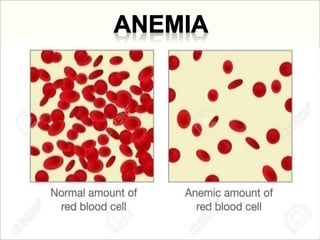
AeA
WHO GRADING OF ANAEMIA
• Grade 1 (Mild Anemia): 10 g/dl
• Grade 2 (Moderate Anemia): 7-10 g/dl
• Grade 3 (Severe Anemia): below 7 g/dl
CLASSIFICATION
Anaemia
On the
basis of
cause
Decreased
RBC
production
Blood loss
Increased
RBC
destruction
On the
basis of
morphology
Normocytic Microcytic Macrocytic
ON THE BASIS OF CAUSE
Decreaesd RBC Production
• Decreased Hemoglobin Synthesis
• Iron deficiency
• Thalassemias (decreased globin synthesis)
• Sideroblastic anemia (decreased porphyrin)
• Defective DNA Synthesis
• Cobalamin (vitamin B12) deficiency
• Folic acid deficiency
• Decreased Number of RBC Precursors
• Aplastic anemia and inherited disorders (e.g.,
Fanconi syndrome)
• Anemia of myeloproliferative diseases (e.g.,
leukemia) and myelodysplasia
• Chronic diseases or disorders
• Medications and chemicals (e.g.,
chemotherapy, lead)
• Radiation
Blood Loss
• Acute
• Trauma
• Blood vessel rupture
• Splenic sequestration crisis
Chronic
• Gastritis
• Menstrual flow
• Hemorrhoids
3. Increased BBC Destruction (Hemolytic
Anemia)
• Hereditary (Intrinsic)
• Abnormal hemoglobin(sickle cell disease )
• Enzyme deficiency (G6PD)
• Membrane abnormalities (paroxysmal nocturnal
hemoglobinuria, hereditary spherocytosis)
• Acquired (Extrinsic)
Contd…
• Macroangiopathic: physicaltrauma( prosthetic
heart valves, extracorporeal circulation)
• Microangiopathic: disseminated intravascular
coagulopathy(DIC), thrombotic
thrombocytopenic purpura (TTP)
• Antibodies (isoimmune and autoimmune)
• Infectious agents (e.g.: malaria) and toxins
CHEILITIS
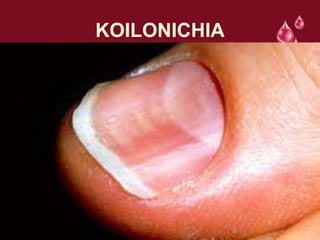
KOILONICHIA
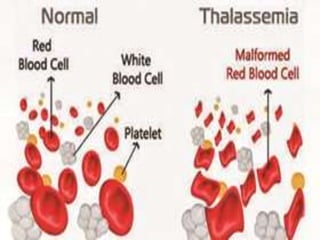
THALASSEMIA
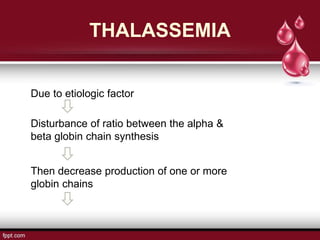
THALASSEMIA
Due to etiologic factor
Disturbance of ratio between the alpha &
beta globin chain synthesis
Then decrease production of one or more
globin chains
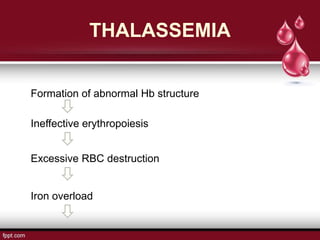
THALASSEMIA
Formation of abnormal Hb structure
Ineffective erythropoiesis
Excessive RBC destruction
Iron overload
THALASSEMIA
Extramedullary hematopoiesis
Thalassemia
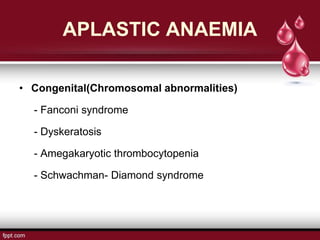
APLASTIC ANAEMIA
• Congenital(Chromosomal abnormalities)
- Fanconi syndrome
- Dyskeratosis
- Amegakaryotic thrombocytopenia
- Schwachman- Diamond syndrome
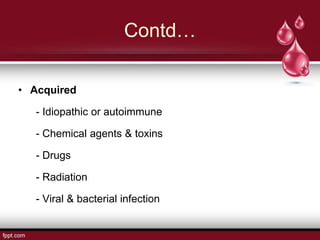
Contd…
• Acquired
- Idiopathic or autoimmune
- Chemical agents & toxins
- Drugs
- Radiation
- Viral & bacterial infection
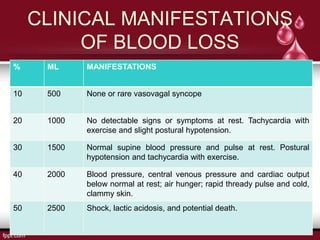
CLINICAL MANIFESTATIONS
OF BLOOD LOSS
% ML MANIFESTATIONS
10 500 None or rare vasovagal syncope
20 1000 No detectable signs or symptoms at rest. Tachycardia with
exercise and slight postural hypotension.
30 1500 Normal supine blood pressure and pulse at rest. Postural
hypotension and tachycardia with exercise.
40 2000 Blood pressure, central venous pressure and cardiac output
below normal at rest; air hunger; rapid thready pulse and cold,
clammy skin.
50 2500 Shock, lactic acidosis, and potential death.
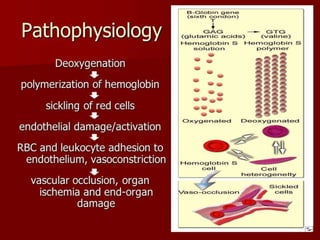
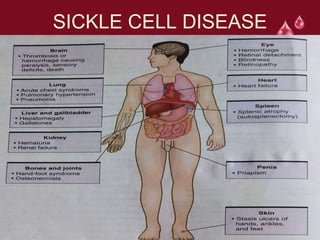
SICKLE CELL DISEASE
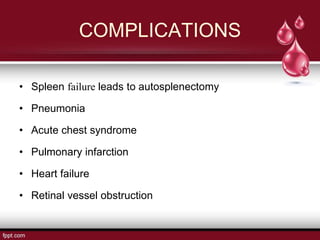
COMPLICATIONS
• Spleen failure leads to autosplenectomy
• Pneumonia
• Acute chest syndrome
• Pulmonary infarction
• Heart failure
• Retinal vessel obstruction
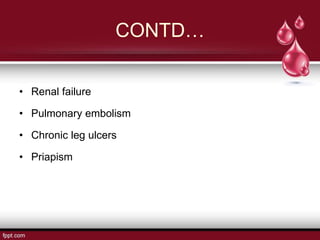
CONTD…
• Renal failure
• Pulmonary embolism
• Chronic leg ulcers
• Priapism
Anemia
Anemia
Anemia

Anemia

  • 1.
  • 2.
    DEFINITION A condition inwhich the haemoglobin content of blood is lower than normal as result of a deficiency of one or more essential nutrients, regardless of the cause of such deficiency WHO
  • 3.
  • 4.
    WHO GRADING OFANAEMIA • Grade 1 (Mild Anemia): 10 g/dl • Grade 2 (Moderate Anemia): 7-10 g/dl • Grade 3 (Severe Anemia): below 7 g/dl
  • 5.
    CLASSIFICATION Anaemia On the basis of cause Decreased RBC production Bloodloss Increased RBC destruction On the basis of morphology Normocytic Microcytic Macrocytic
  • 6.
    ON THE BASISOF CAUSE Decreaesd RBC Production • Decreased Hemoglobin Synthesis • Iron deficiency • Thalassemias (decreased globin synthesis) • Sideroblastic anemia (decreased porphyrin) • Defective DNA Synthesis • Cobalamin (vitamin B12) deficiency • Folic acid deficiency • Decreased Number of RBC Precursors • Aplastic anemia and inherited disorders (e.g., Fanconi syndrome)
  • 7.
    • Anemia ofmyeloproliferative diseases (e.g., leukemia) and myelodysplasia • Chronic diseases or disorders • Medications and chemicals (e.g., chemotherapy, lead) • Radiation Blood Loss • Acute • Trauma • Blood vessel rupture • Splenic sequestration crisis
  • 8.
    Chronic • Gastritis • Menstrualflow • Hemorrhoids 3. Increased BBC Destruction (Hemolytic Anemia) • Hereditary (Intrinsic) • Abnormal hemoglobin(sickle cell disease ) • Enzyme deficiency (G6PD) • Membrane abnormalities (paroxysmal nocturnal hemoglobinuria, hereditary spherocytosis) • Acquired (Extrinsic)
  • 9.
    Contd… • Macroangiopathic: physicaltrauma(prosthetic heart valves, extracorporeal circulation) • Microangiopathic: disseminated intravascular coagulopathy(DIC), thrombotic thrombocytopenic purpura (TTP) • Antibodies (isoimmune and autoimmune) • Infectious agents (e.g.: malaria) and toxins
  • 10.
  • 11.
  • 12.
  • 13.
    THALASSEMIA Due to etiologicfactor Disturbance of ratio between the alpha & beta globin chain synthesis Then decrease production of one or more globin chains
  • 14.
    THALASSEMIA Formation of abnormalHb structure Ineffective erythropoiesis Excessive RBC destruction Iron overload
  • 15.
  • 16.
    APLASTIC ANAEMIA • Congenital(Chromosomalabnormalities) - Fanconi syndrome - Dyskeratosis - Amegakaryotic thrombocytopenia - Schwachman- Diamond syndrome
  • 17.
    Contd… • Acquired - Idiopathicor autoimmune - Chemical agents & toxins - Drugs - Radiation - Viral & bacterial infection
  • 18.
    CLINICAL MANIFESTATIONS OF BLOODLOSS % ML MANIFESTATIONS 10 500 None or rare vasovagal syncope 20 1000 No detectable signs or symptoms at rest. Tachycardia with exercise and slight postural hypotension. 30 1500 Normal supine blood pressure and pulse at rest. Postural hypotension and tachycardia with exercise. 40 2000 Blood pressure, central venous pressure and cardiac output below normal at rest; air hunger; rapid thready pulse and cold, clammy skin. 50 2500 Shock, lactic acidosis, and potential death.
  • 20.
  • 21.
    COMPLICATIONS • Spleen failureleads to autosplenectomy • Pneumonia • Acute chest syndrome • Pulmonary infarction • Heart failure • Retinal vessel obstruction
  • 22.
    CONTD… • Renal failure •Pulmonary embolism • Chronic leg ulcers • Priapism