An Introduction to the 
Science of Botany 
Chapter 1
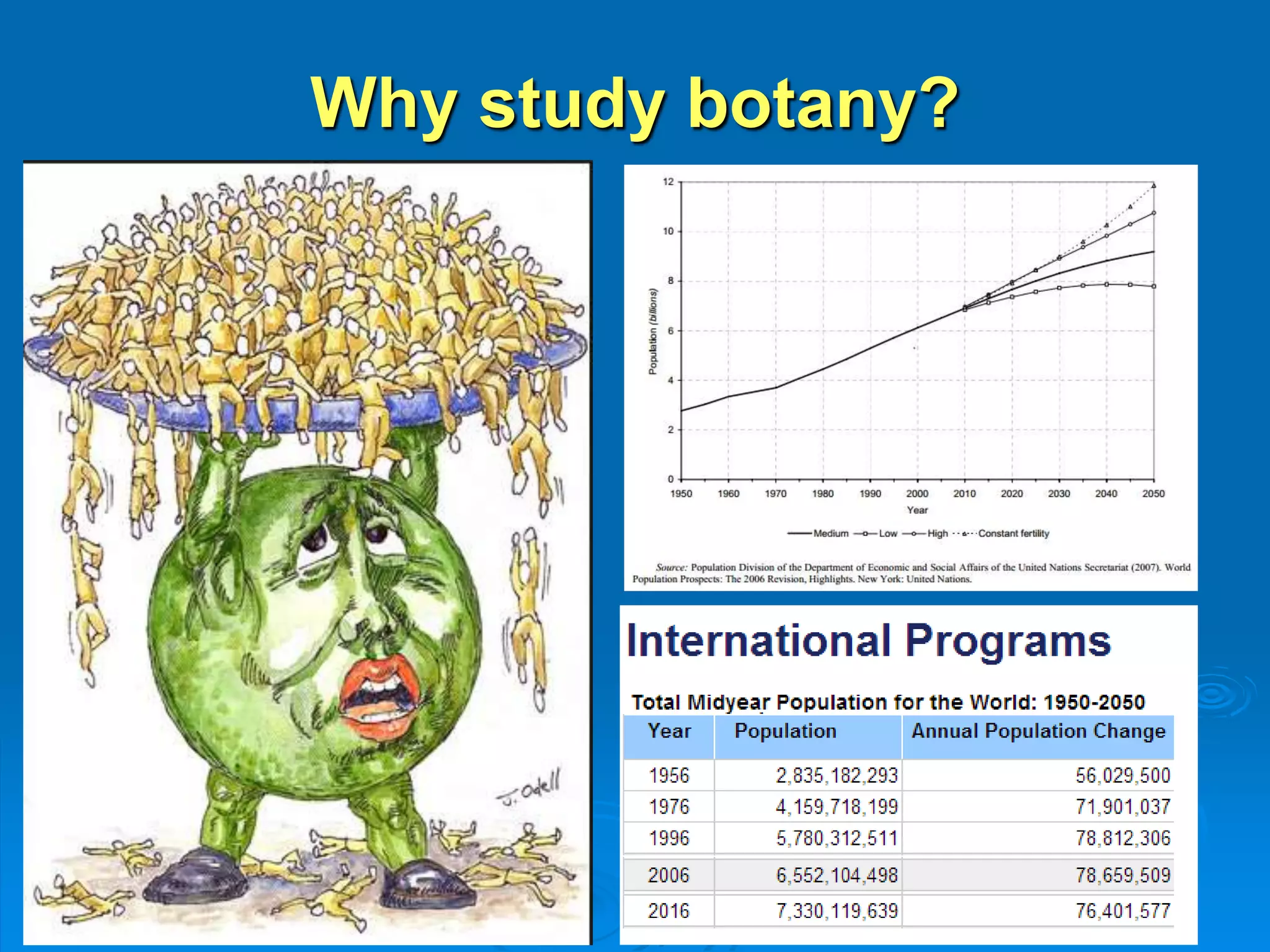
Why study botany?
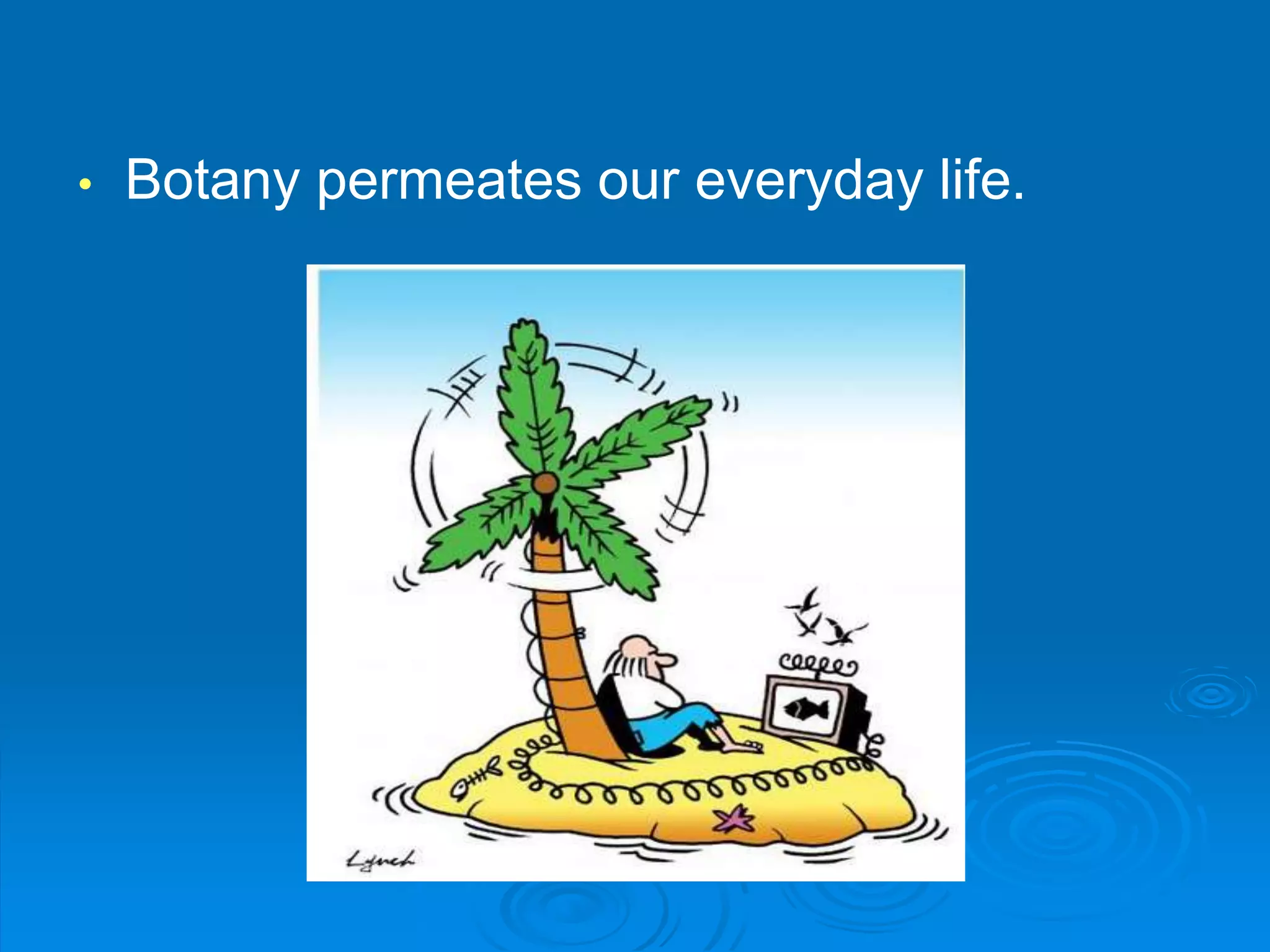
• Botany permeates our everyday life.
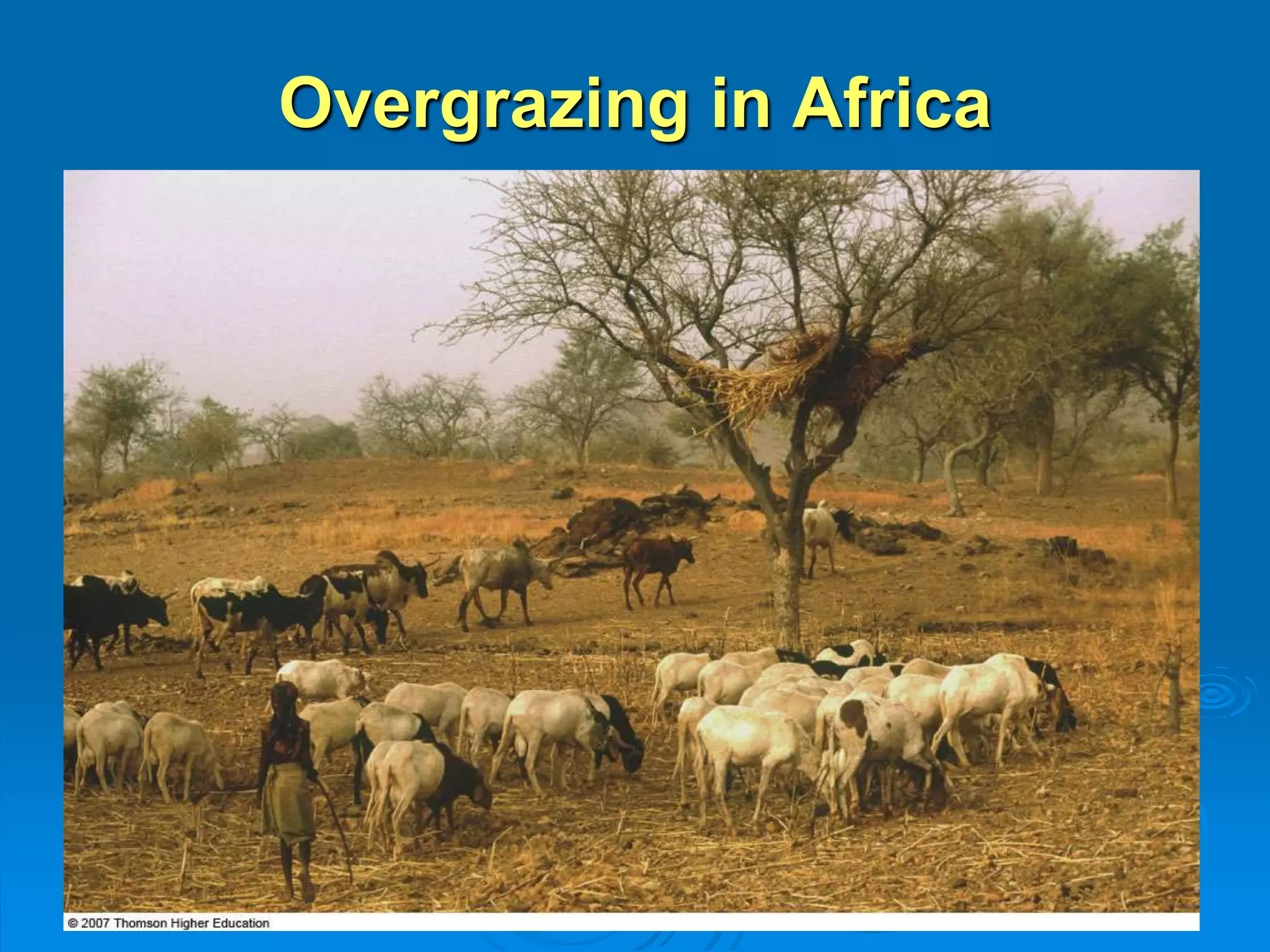
Overgrazing in Africa
LEARNING OBJECTIVE 1 
• Briefly describe the field of botany, and 
give short definitions of at least five 
subdisciplines of plant biology
KEY TERMS 
• BOTANY The scientific study of plants; 
also called plant biology
Subdisciplines 1 
• Plant molecular biology 
• Structures and functions of important 
biological molecules (proteins, nucleic acids) 
• Plant cell biology 
• Structures, functions, and life processes of 
plant cells
Subdisciplines 2 
• Plant physiology 
• How plants function (photosynthesis, mineral 
nutrition) 
• Plant genetics 
• Plant heredity and variation
Subdisciplines 3 
• Plant ecology 
• Interrelationships among plants, and between 
plants ands their environment
LEARNING OBJECTIVE 2 
• Summarize and discuss the features of 
plants and other organisms that 
distinguish them from nonliving things
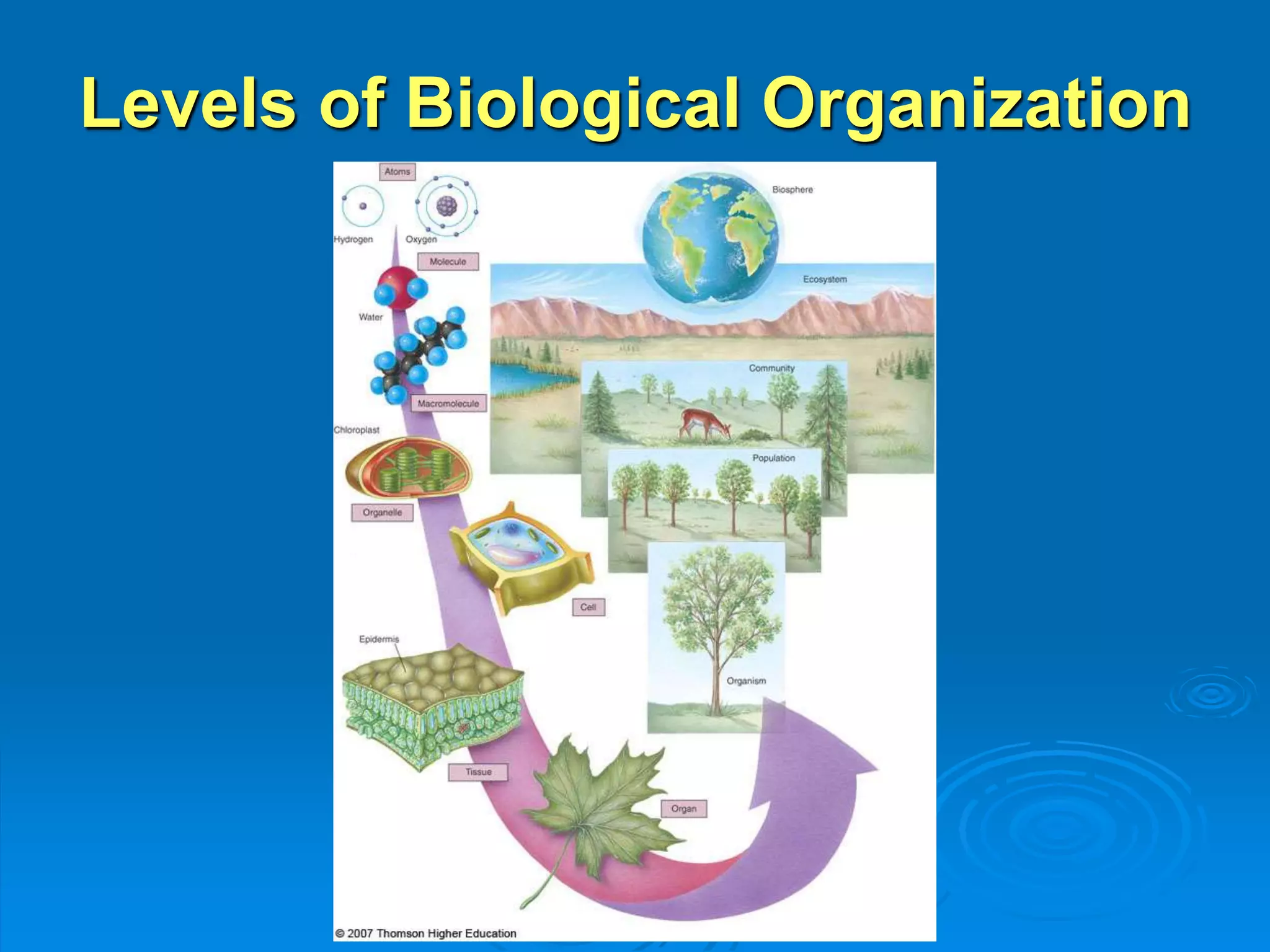
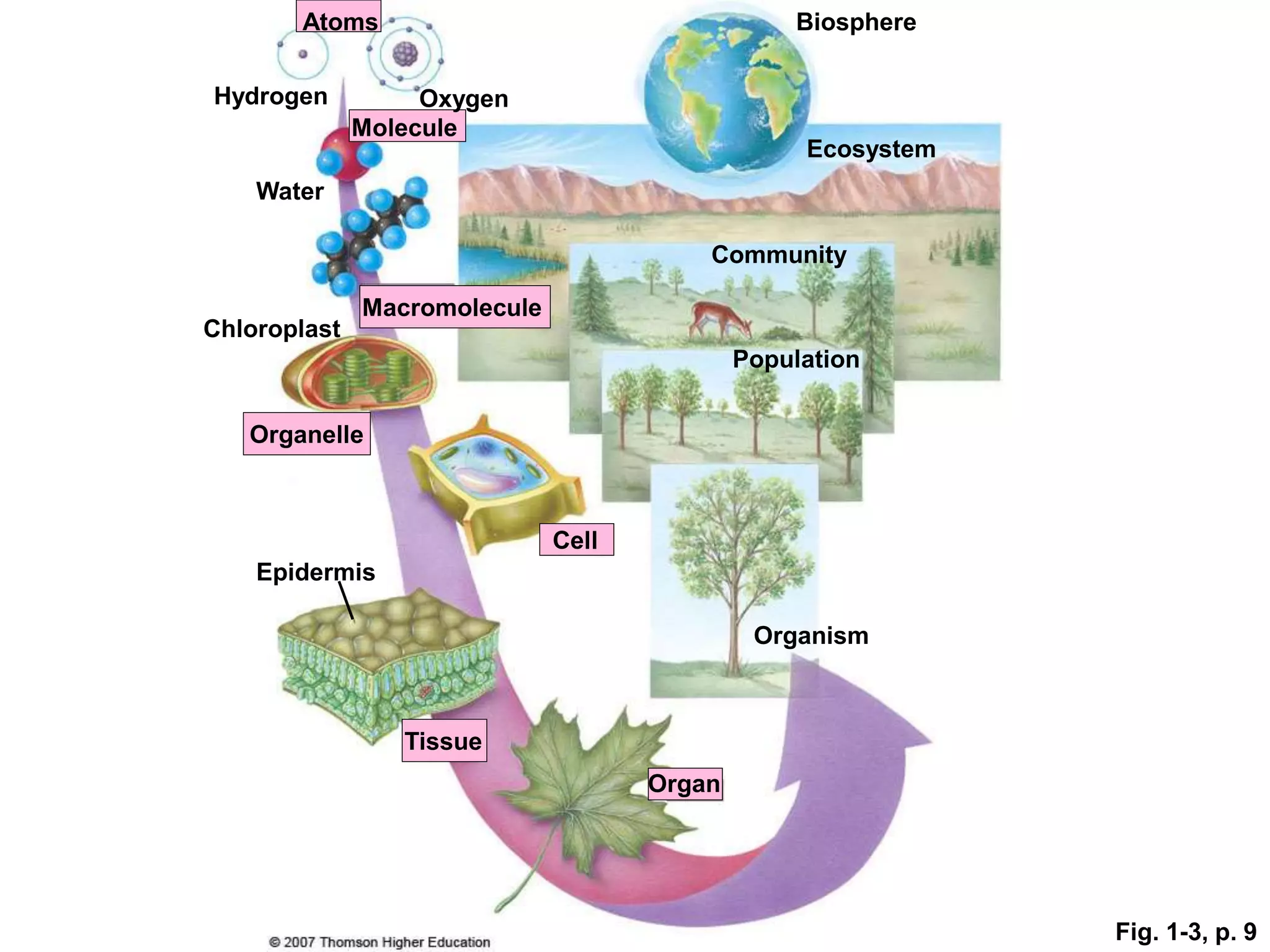
Levels of Biological Organization
Atoms Biosphere 
Hydrogen Oxygen 
Molecule 
Water 
Macromolecule 
Chloroplast 
Organelle 
Epidermis 
Tissue 
Cell 
Ecosystem 
Community 
Organ 
Population 
Organism 
Fig. 1-3, p. 9
Characteristics of Living Things 1 
• Organization 
• Plants and other organisms are highly 
organized with cells as their basic building 
blocks 
• Energy 
• Plants and other organisms take in and use 
energy
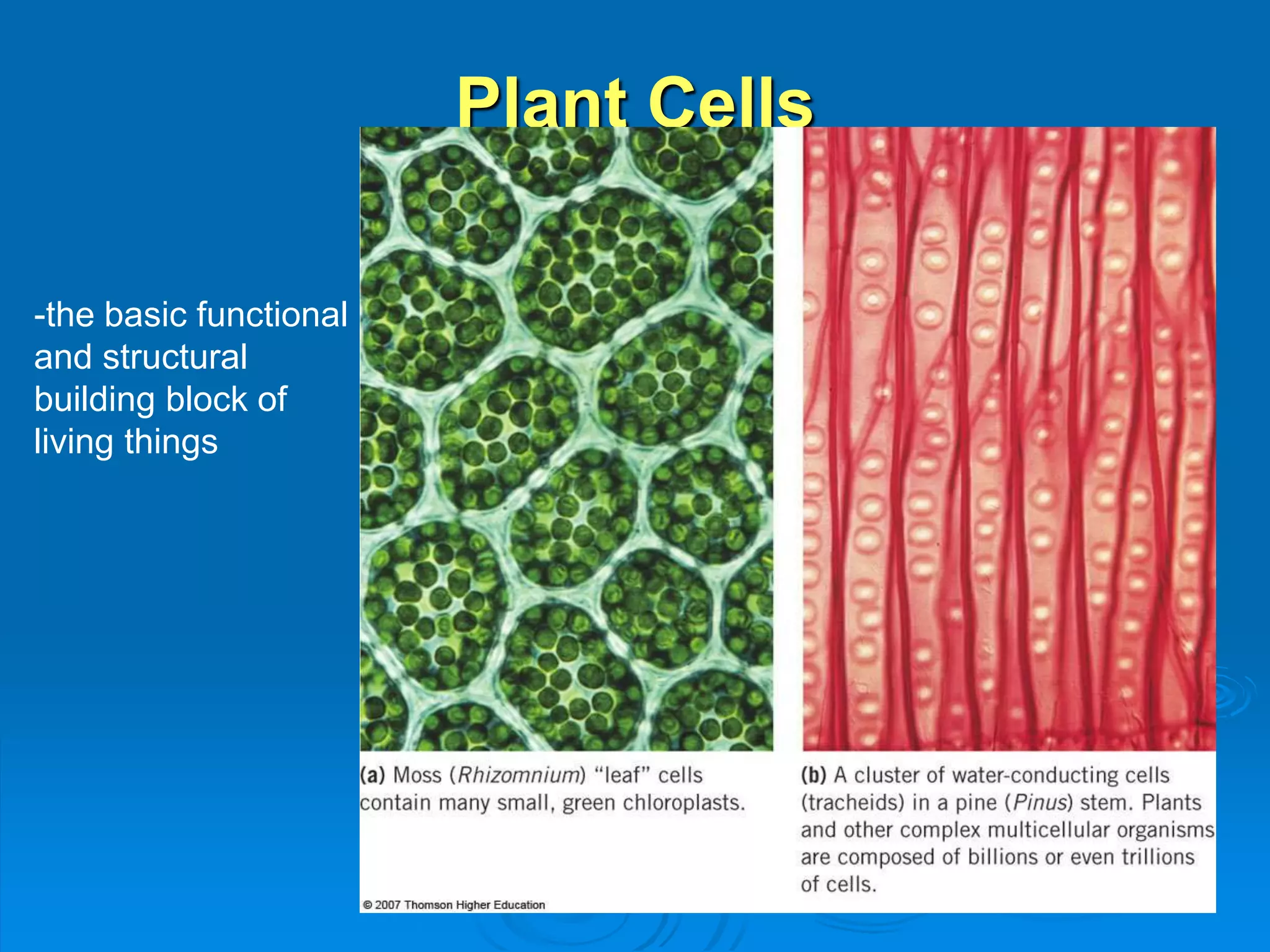
Plant Cells 
-the basic functional 
and structural 
building block of 
living things
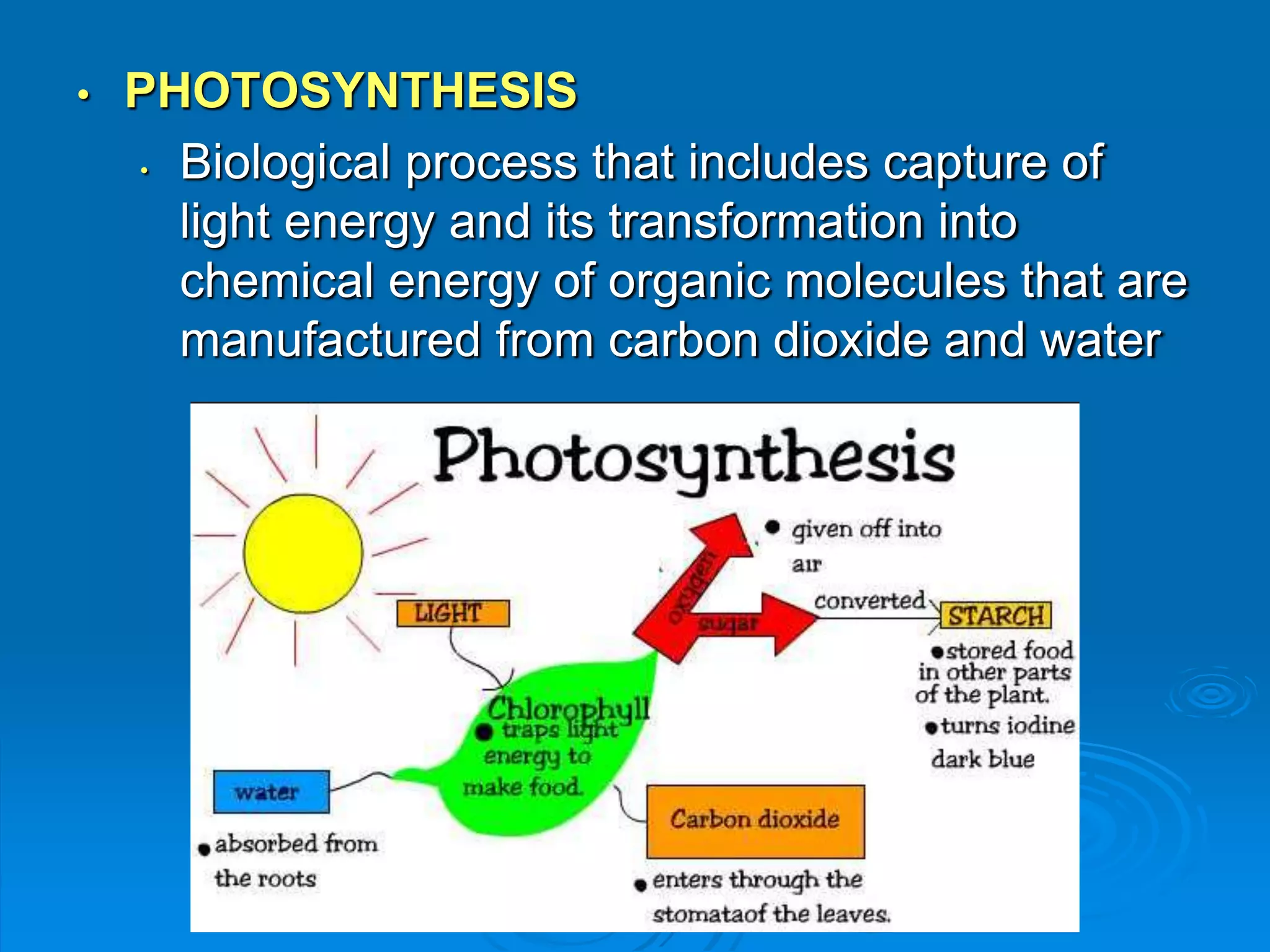
• PHOTOSYNTHESIS 
• Biological process that includes capture of 
light energy and its transformation into 
chemical energy of organic molecules that are 
manufactured from carbon dioxide and water
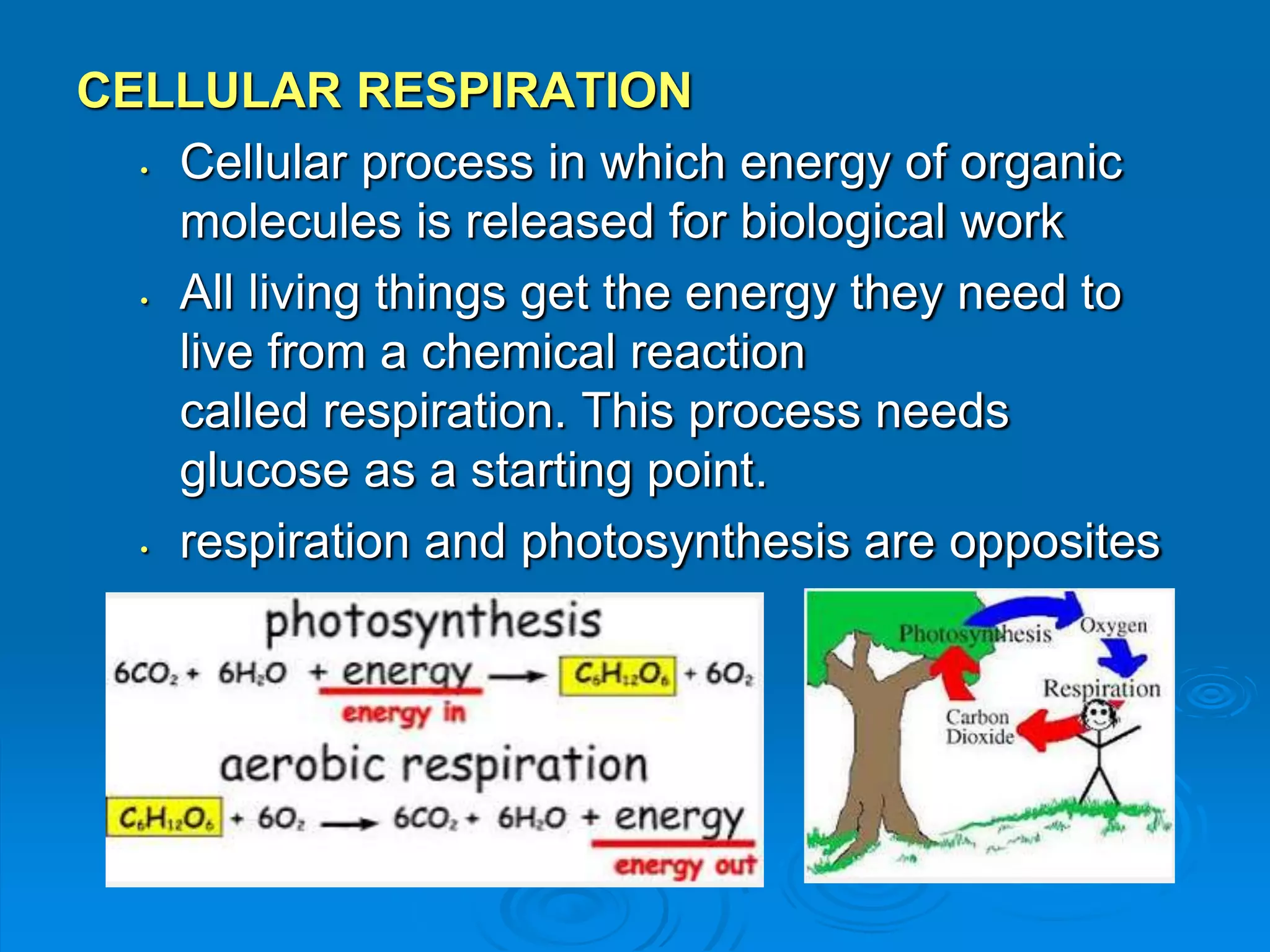
CELLULAR RESPIRATION 
• Cellular process in which energy of organic 
molecules is released for biological work 
• All living things get the energy they need to 
live from a chemical reaction 
called respiration. This process needs 
glucose as a starting point. 
• respiration and photosynthesis are opposites
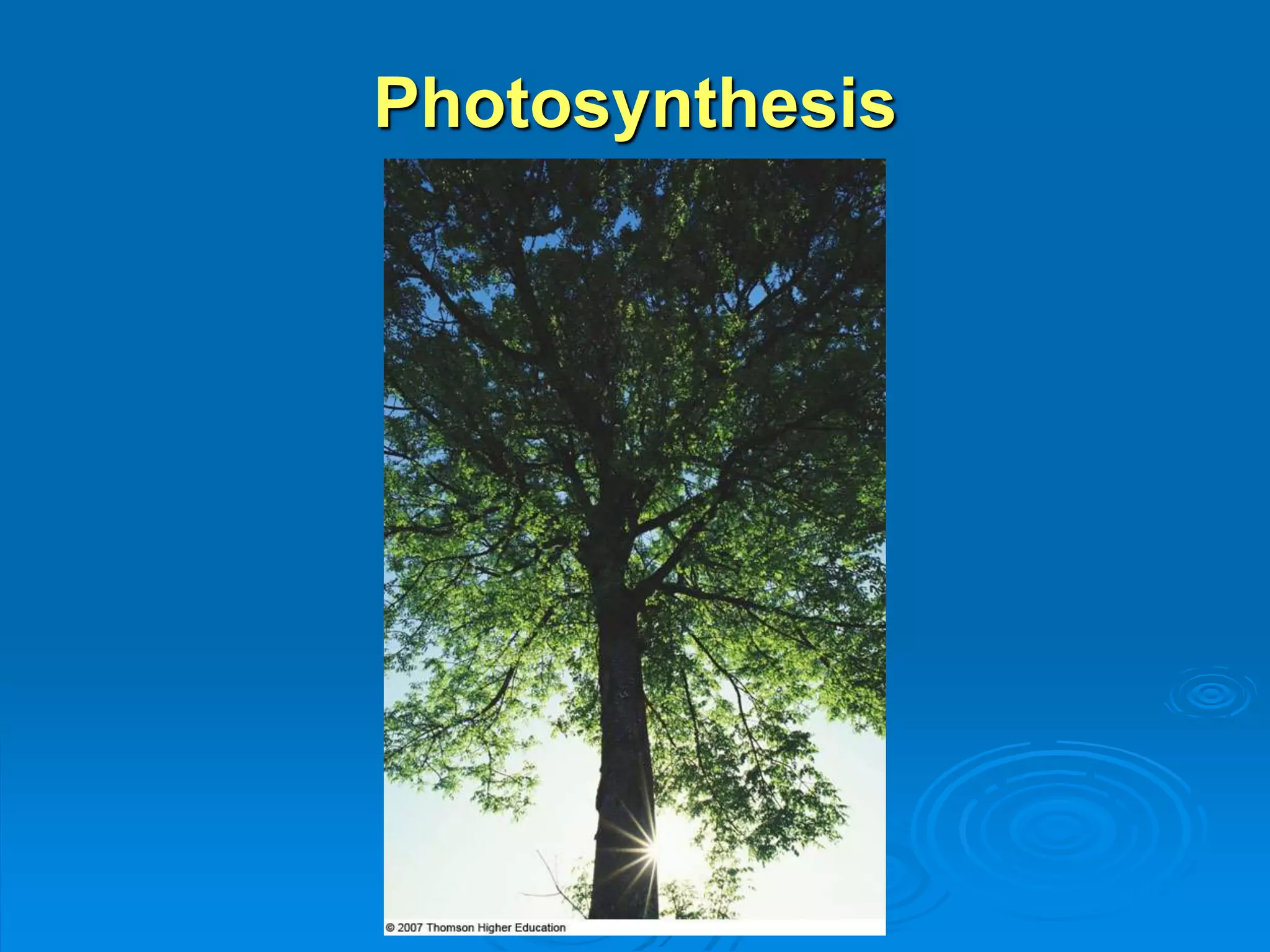
Photosynthesis
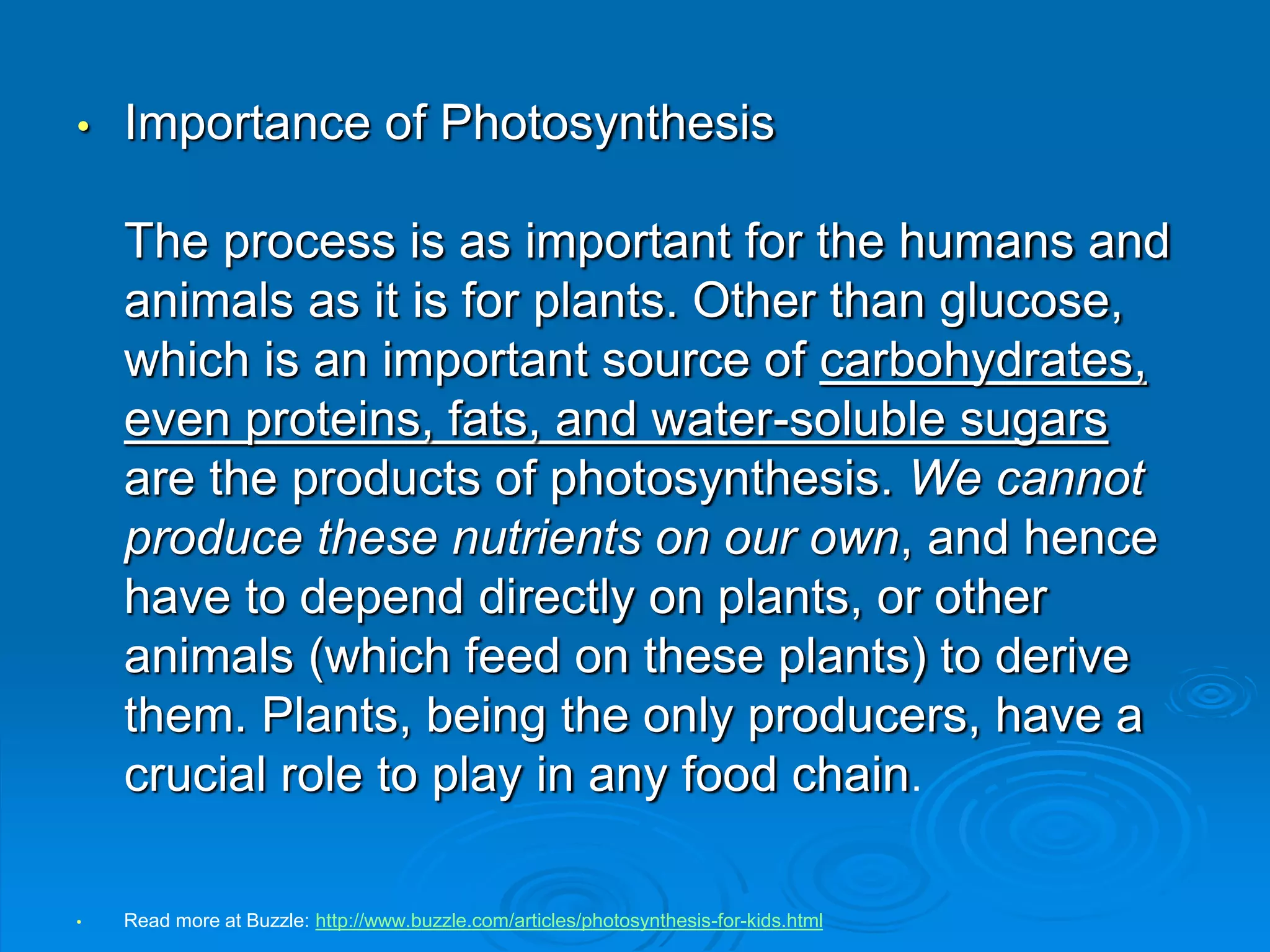
• Importance of Photosynthesis 
The process is as important for the humans and 
animals as it is for plants. Other than glucose, 
which is an important source of carbohydrates, 
even proteins, fats, and water-soluble sugars 
are the products of photosynthesis. We cannot 
produce these nutrients on our own, and hence 
have to depend directly on plants, or other 
animals (which feed on these plants) to derive 
them. Plants, being the only producers, have a 
crucial role to play in any food chain. 
• Read more at Buzzle: http://www.buzzle.com/articles/photosynthesis-for-kids.html
Characteristics of Living Things 2 
• Interaction with environment 
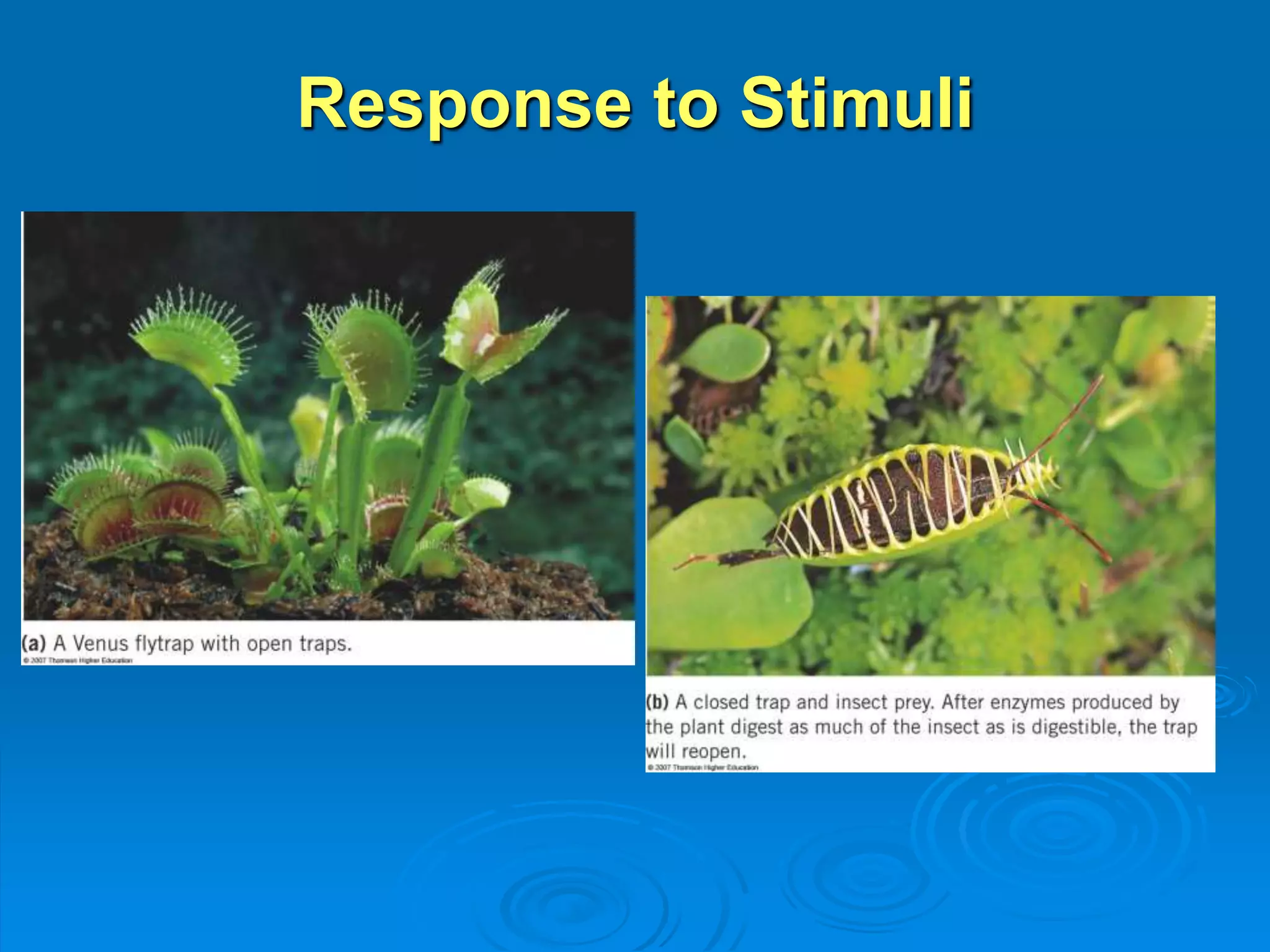
• Plants respond to stimuli in their environment 
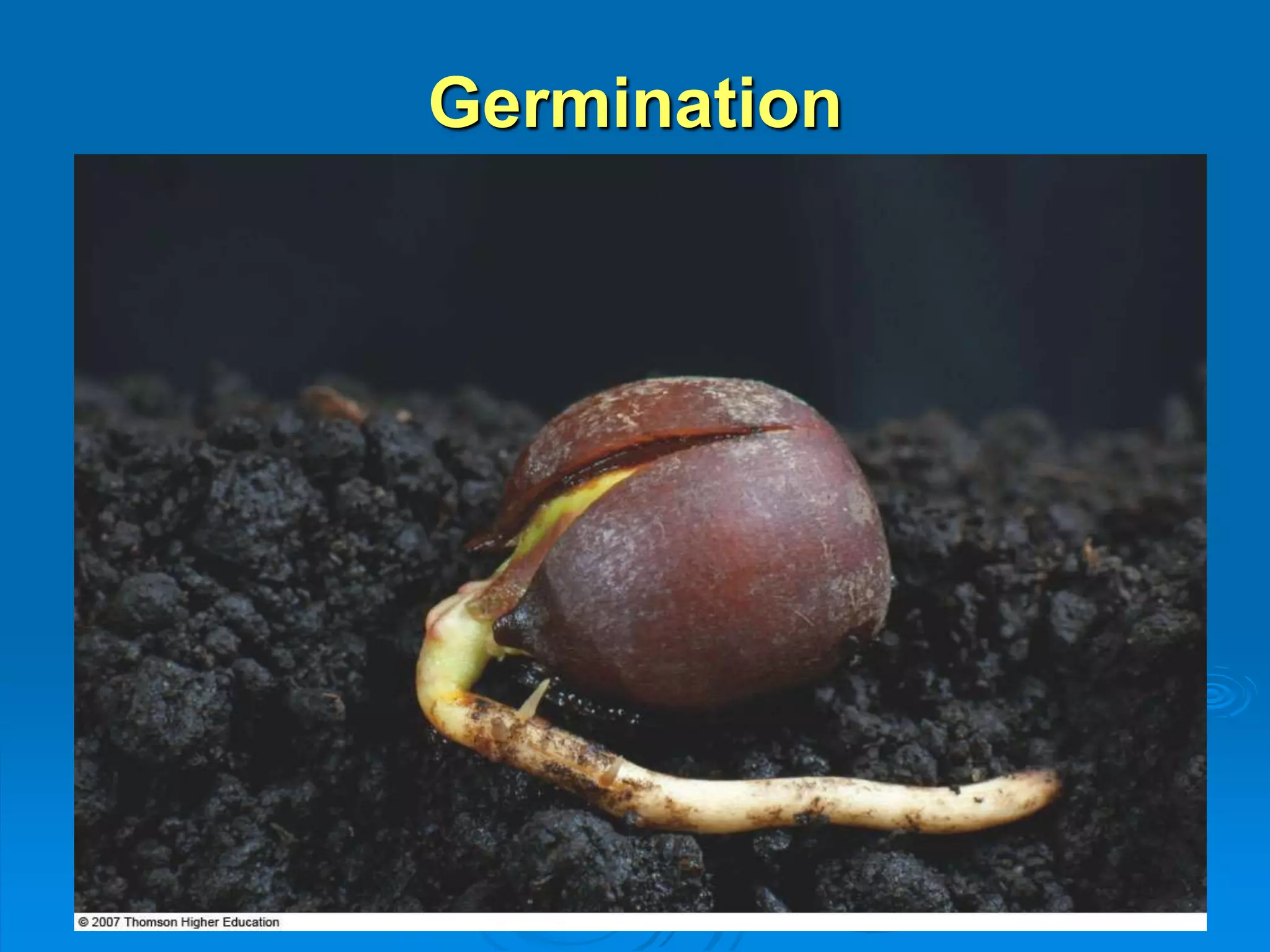
• Plants undergo growth and development 
• Reproduction 
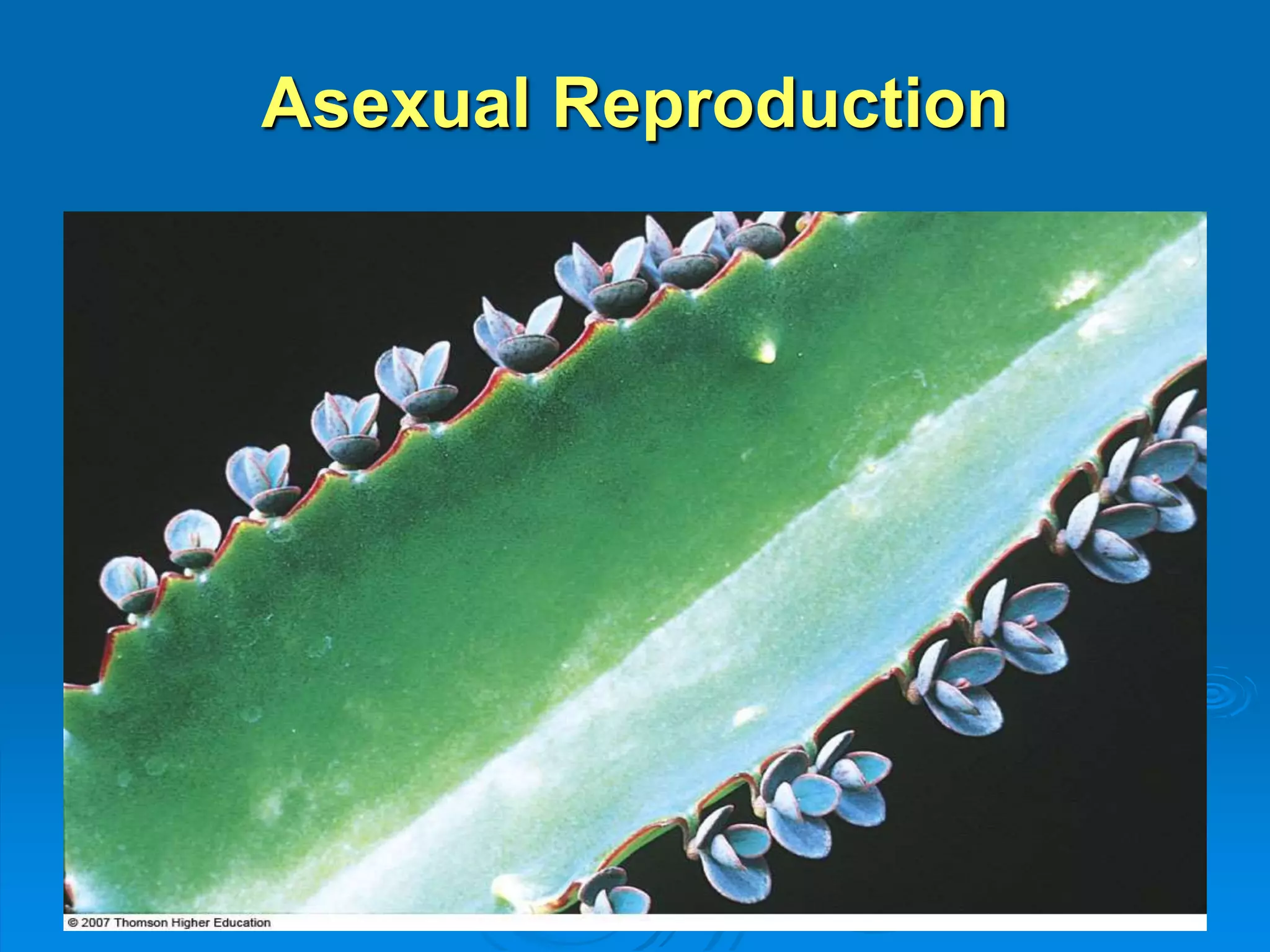
• Plants form new individuals by asexual or 
sexual reproduction
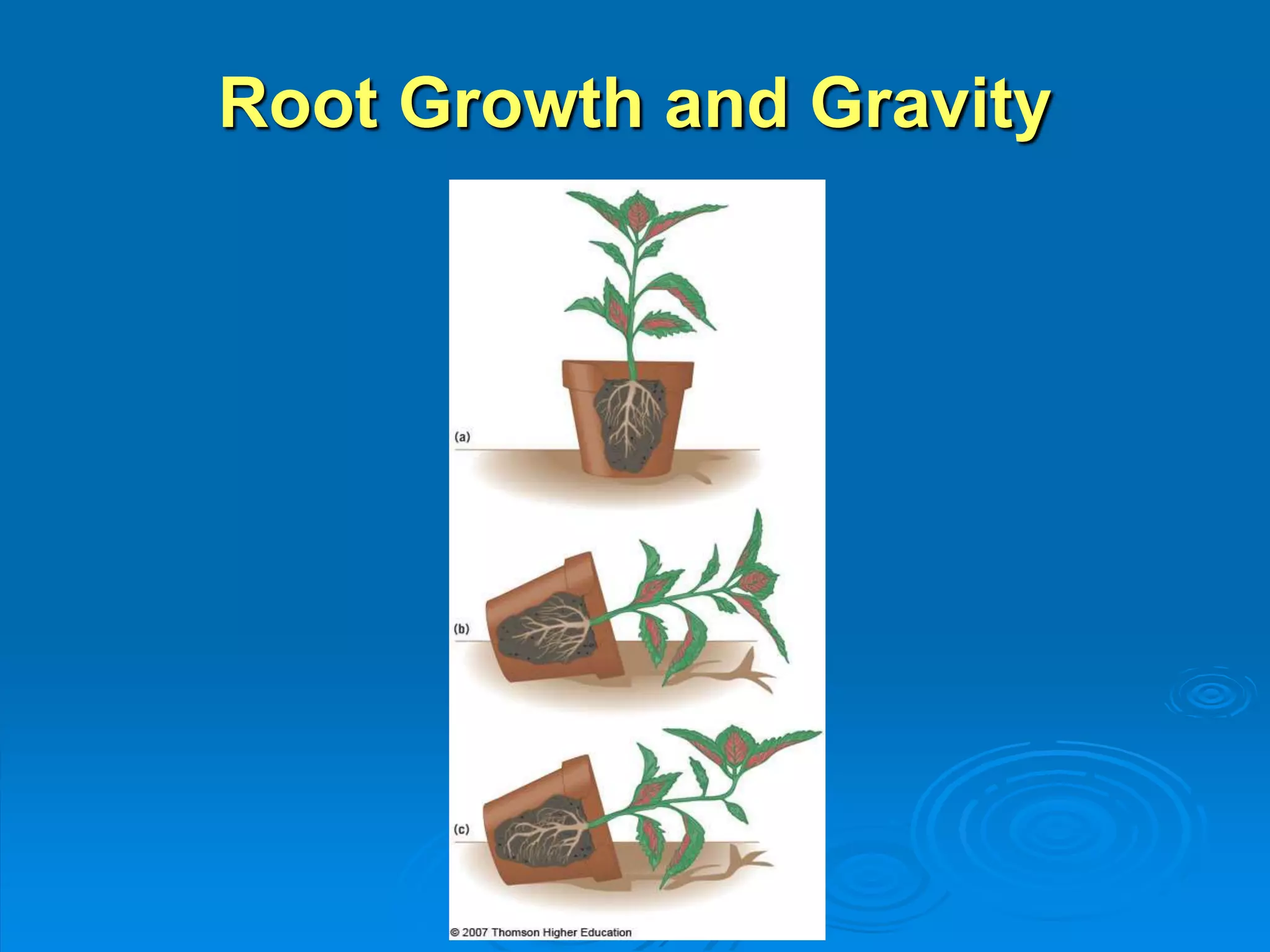
Root Growth and Gravity
Response to Stimuli
Germination
Asexual Reproduction
Characteristics of Living Things 3 
• Heredity 
• DNA molecules transmit genetic information 
from one generation to the next in plants and 
other organisms 
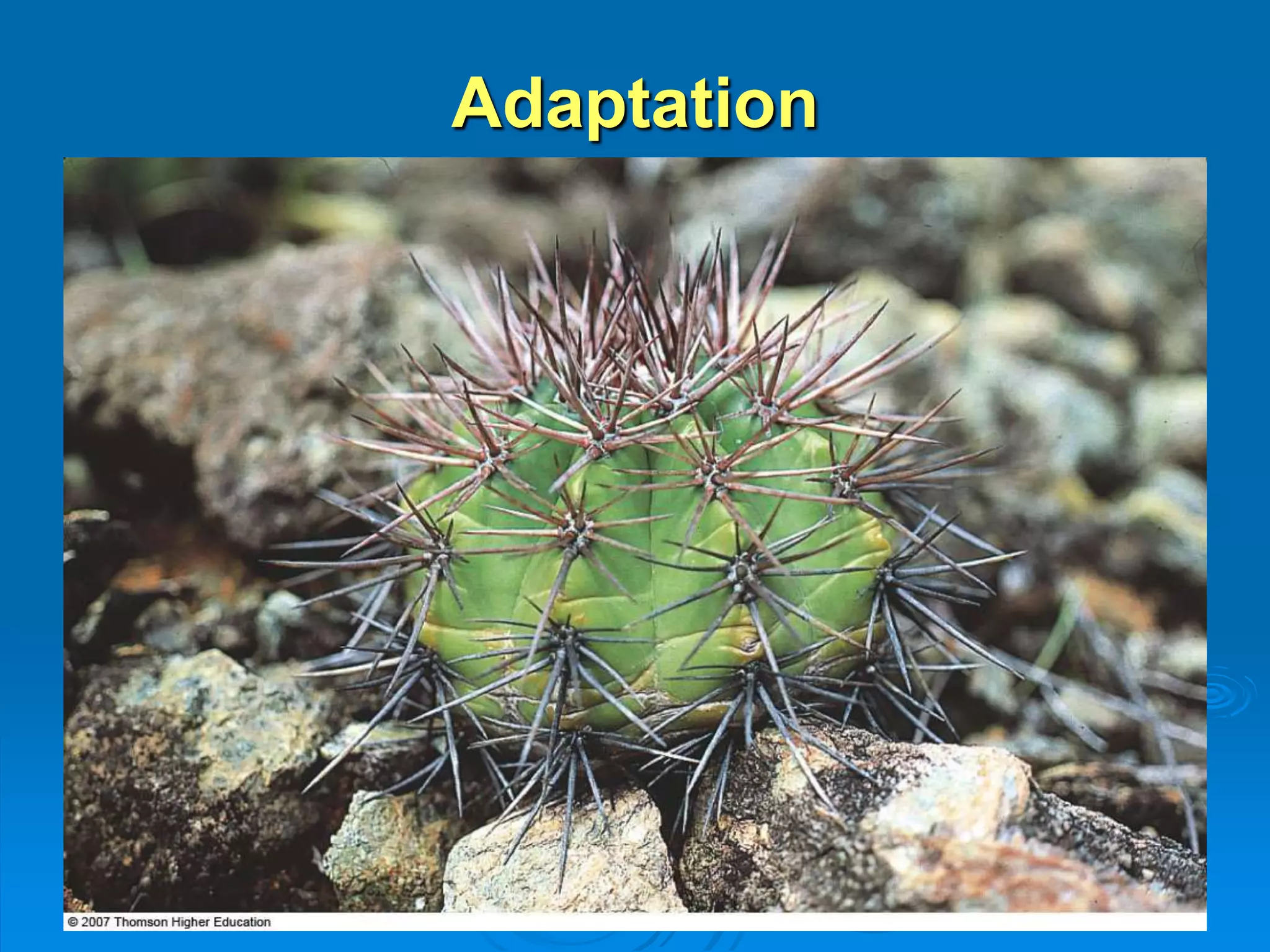
• Evolution 
• Plants and other organisms evolve 
• Populations change or adapt to survive in 
changing environments
Adaptation
KEY TERMS 
• DEOXYRIBONUCLEIC ACID (DNA) 
• A nucleic acid present in a cell’s 
chromosomes that contains genetic 
information
• EVOLUTION 
• Cumulative genetic changes in a population of 
organisms from generation to generation 
• NATURAL SELECTION 
• Mechanism of evolution (Charles Darwin) 
• Tendency of organisms that have favorable 
adaptations to their environment to survive 
and become parents of next generation
LEARNING OBJECTIVE 3 
• Distinguish among the six kingdoms and 
three domains, and give representative 
organisms for each
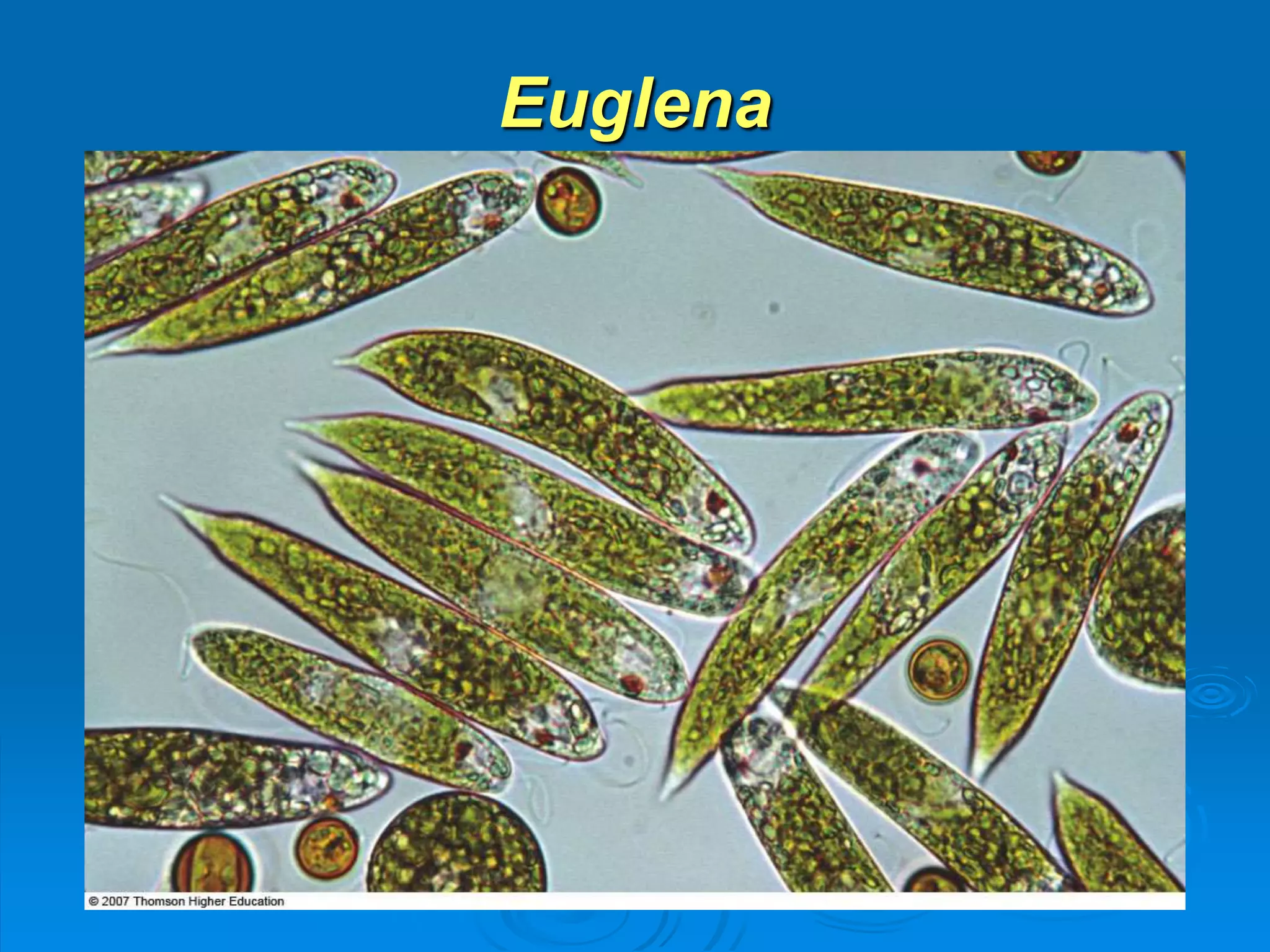
Euglena
Six-Kingdom Classification 1 
1. Archaea 
2. Bacteria 
3. Protista 
• protozoa, algae, water molds, slime molds
Six-Kingdom Classification 2 
4. Fungi 
• molds, yeasts 
5. Animalia 
6. Plantae
Three-Domain Classification 
• Archaea 
• Kingdom archaea 
• Bacteria 
• Kingdom bacteria 
• Eukarya 
• All other kingdoms
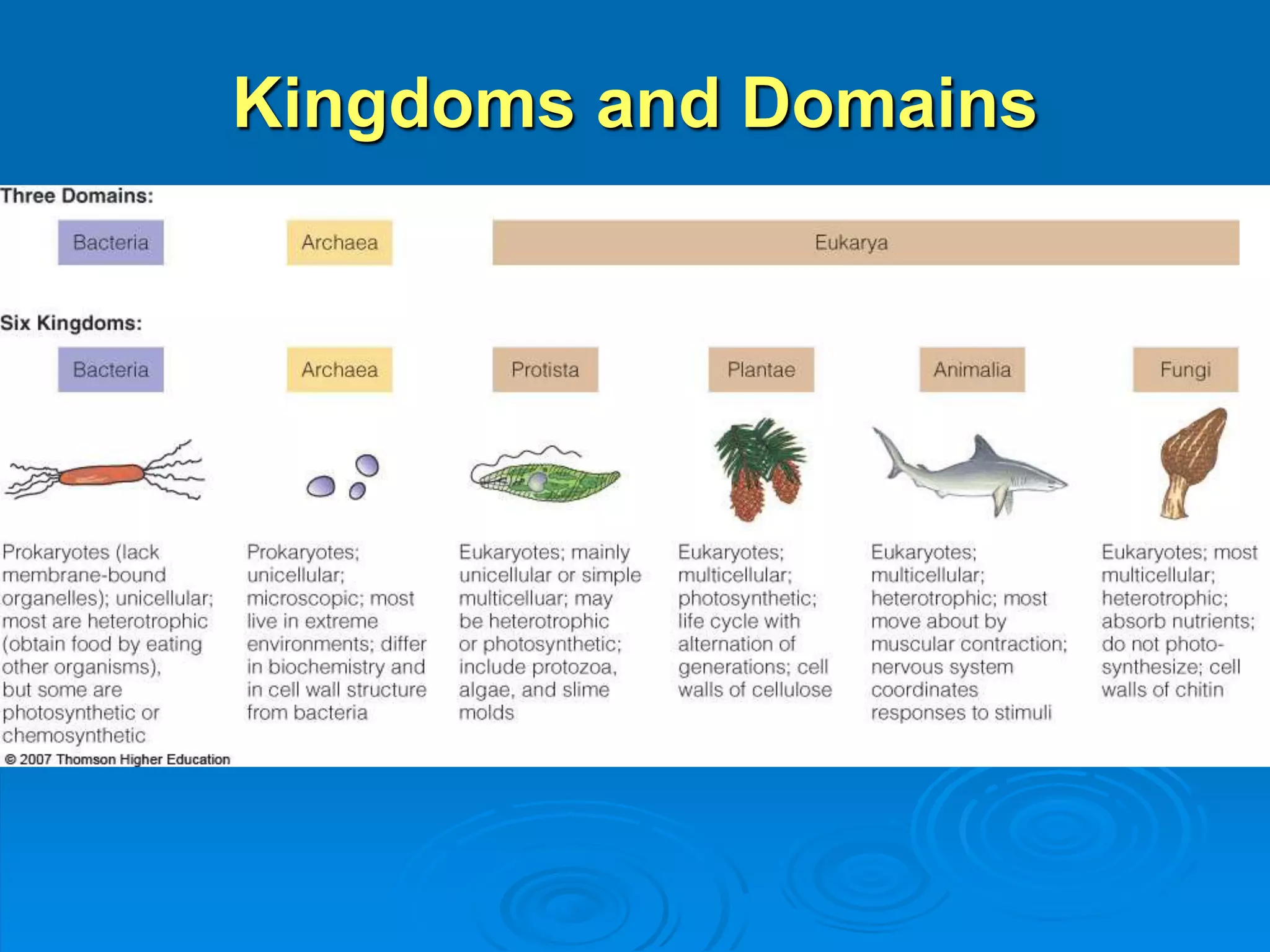
Kingdoms and Domains
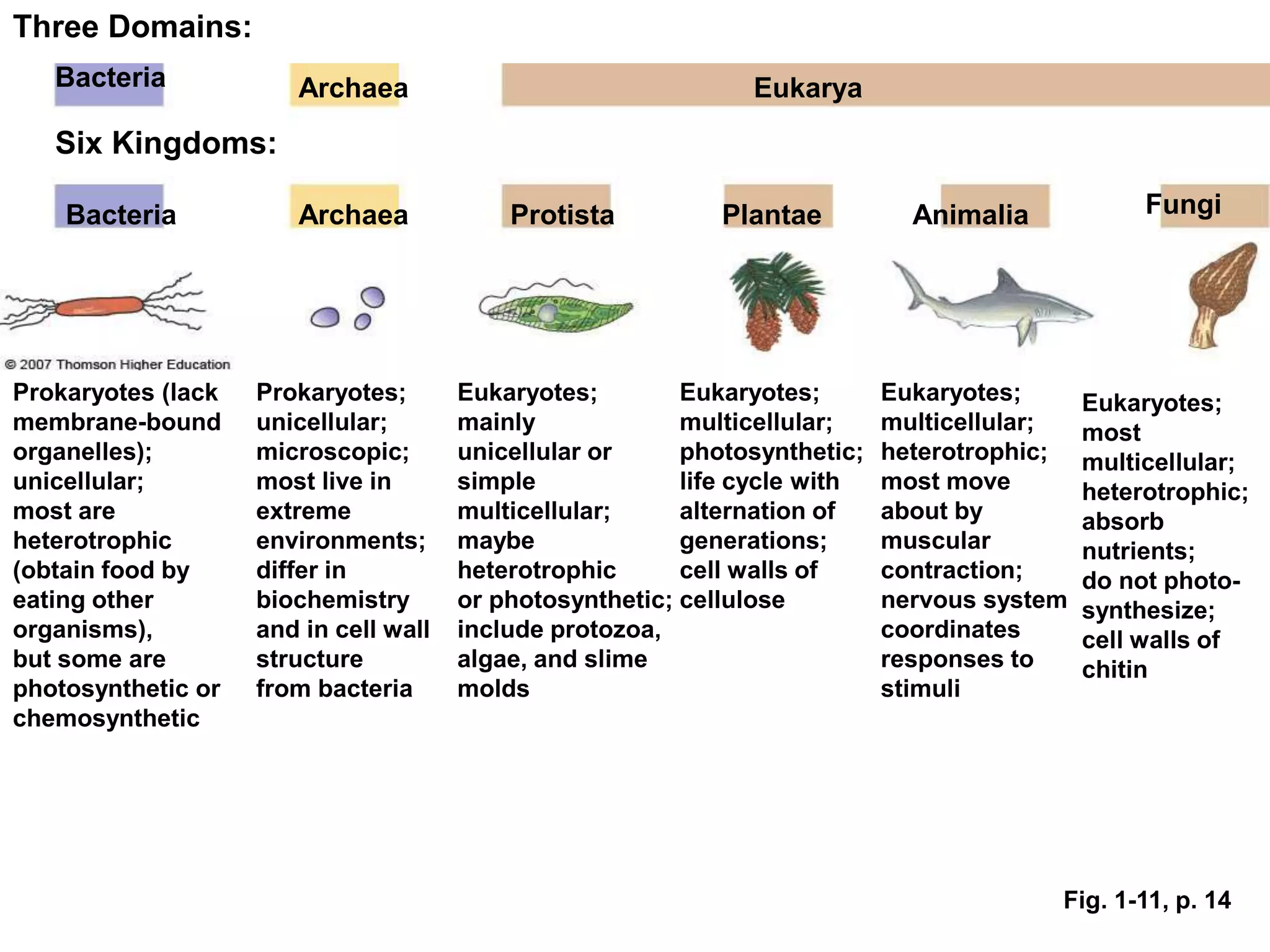
Three Domains: 
Bacteria Archaea Eukarya 
Six Kingdoms: 
Bacteria Archaea Protista Plantae Animalia Fungi 
Prokaryotes (lack 
membrane-bound 
organelles); 
unicellular; 
most are 
heterotrophic 
(obtain food by 
eating other 
organisms), 
but some are 
photosynthetic or 
chemosynthetic 
Prokaryotes; 
unicellular; 
microscopic; 
most live in 
extreme 
environments; 
differ in 
biochemistry 
and in cell wall 
structure 
from bacteria 
Eukaryotes; 
mainly 
unicellular or 
simple 
multicellular; 
maybe 
heterotrophic 
or photosynthetic; 
include protozoa, 
algae, and slime 
molds 
Eukaryotes; 
multicellular; 
photosynthetic; 
life cycle with 
alternation of 
generations; 
cell walls of 
cellulose 
Eukaryotes; 
multicellular; 
heterotrophic; 
most move 
about by 
muscular 
contraction; 
nervous system 
coordinates 
responses to 
stimuli 
Eukaryotes; 
most 
multicellular; 
heterotrophic; 
absorb 
nutrients; 
do not photo-synthesize; 
cell walls of 
chitin 
Fig. 1-11, p. 14
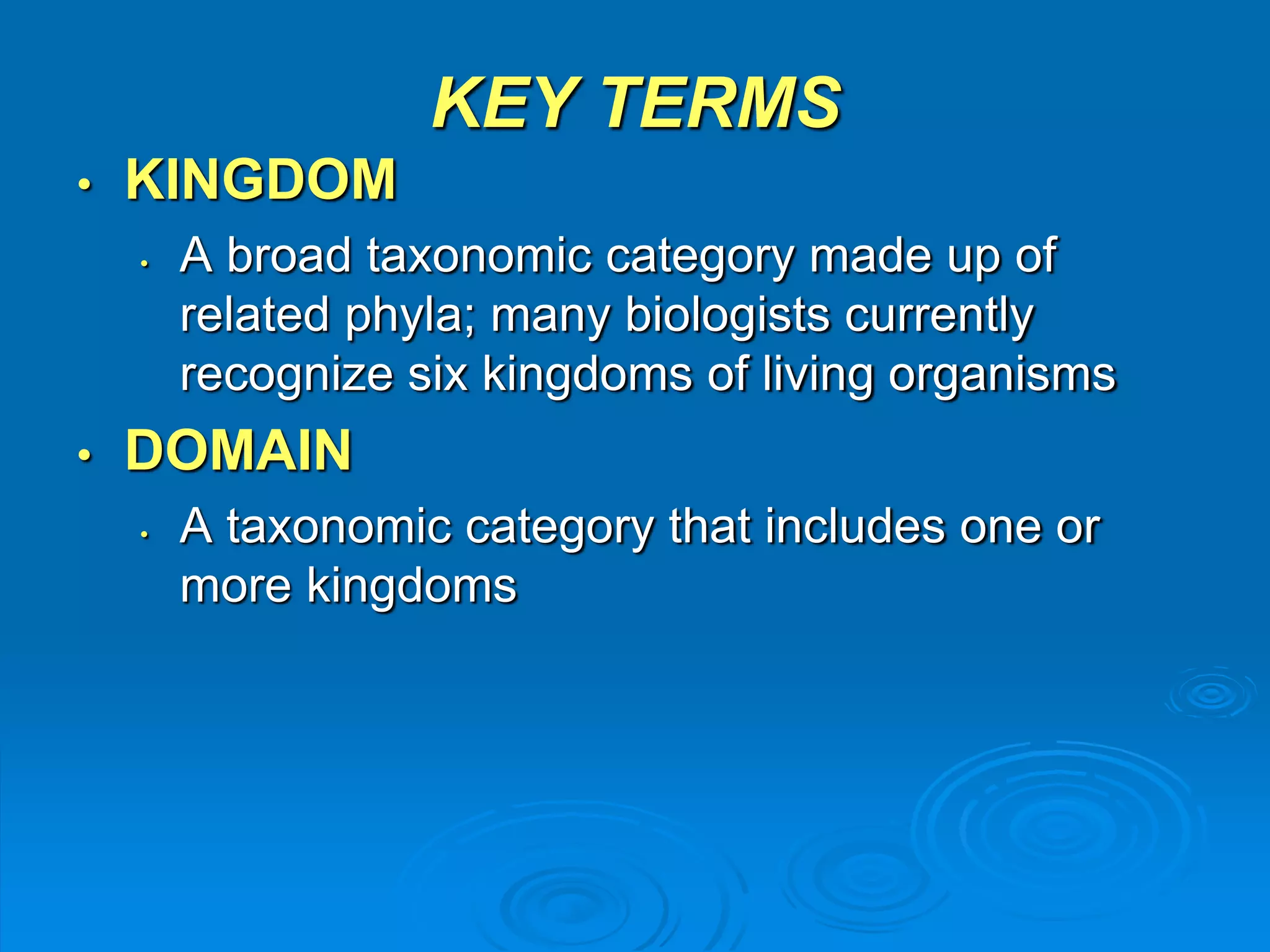
KEY TERMS 
• KINGDOM 
• A broad taxonomic category made up of 
related phyla; many biologists currently 
recognize six kingdoms of living organisms 
• DOMAIN 
• A taxonomic category that includes one or 
more kingdoms
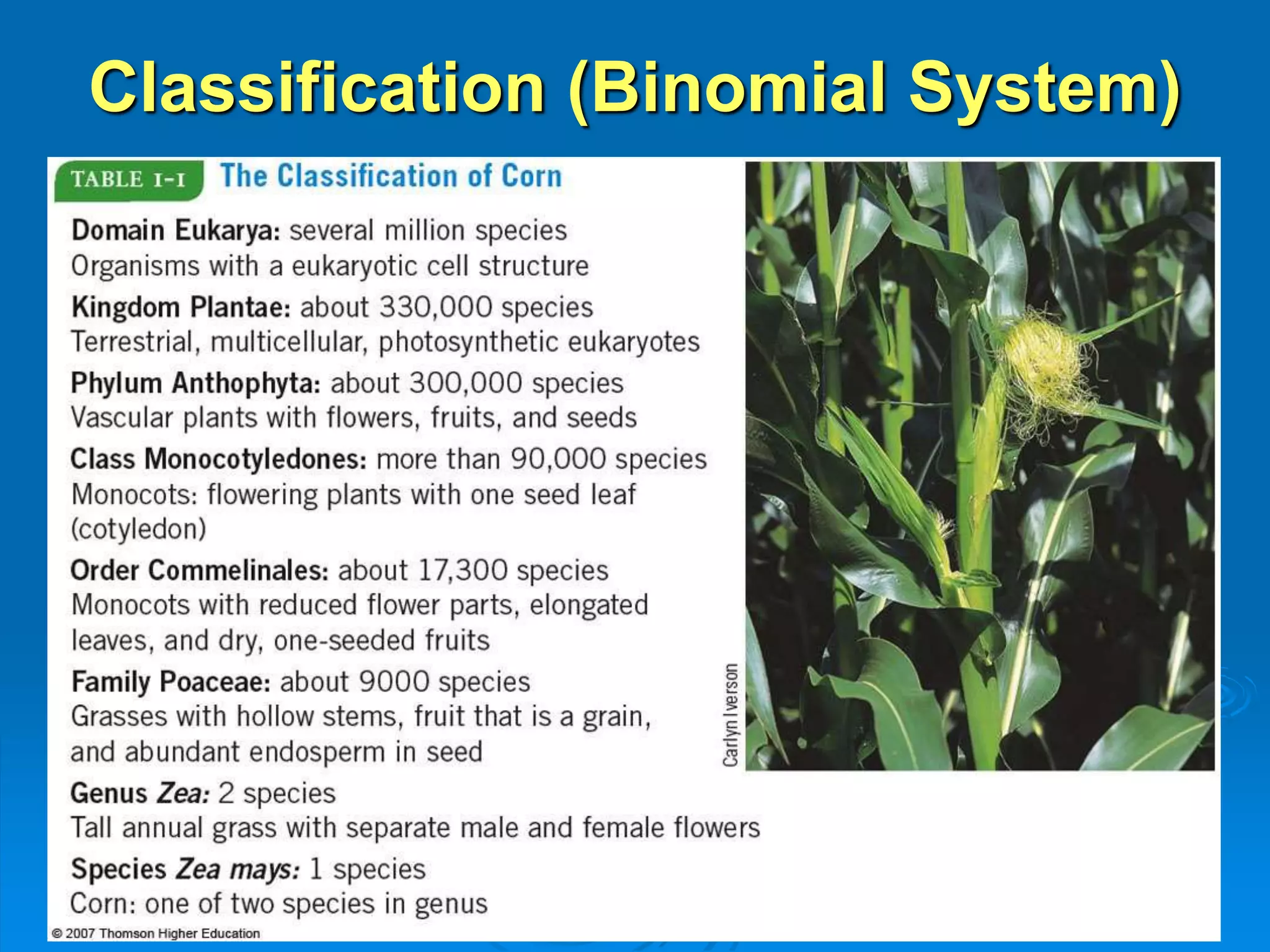
Classification (Binomial System)
KEY TERMS 
• SPECIES 
• A group of organisms with similar structural 
and functional characteristics 
• In nature, they breed only with one another 
and have a close common ancestry
LEARNING OBJECTIVE 4 
• Summarize the main steps in the scientific 
method, and explain how science differs 
from many other human endeavors
The Scientific Method 1 
1. Recognize a problem 
• or an unanswered question 
• Why plants shoots grow away from gravity 
or toward sunlight, while roots grow into the 
soil in the direction of gravity? 
2. Develop a hypothesis 
• to explain the problem 
3. Design and perform an experiment 
• to test the hypothesis
The Scientific Method 1 
2. Develop a hypothesis 
• to explain the problem 
gravitropism 
Amyloplasts 
Statolith 
3. Design and perform an experiment 
• to test the hypothesis
The Scientific Method 2 
4. Analyze and interpret the data 
• to reach a conclusion 
5. Share new knowledge 
• with the scientific community
KEY TERMS 
• HYPOTHESIS 
• An educated guess (based on previous 
observations) that may be true and is testable 
by observation and experimentation 
• THEORY 
• A widely accepted explanation supported by a 
large body of observations and experiments
Assignment 
1. What is prokaryotic and eukaryotic cells? 
2. Define the following: paleobotany, bryology, 
agronomy, horticulture, forestry & economic 
botany. 
3. What is gravitropism? 
4. What is Amyloplasts and what is its role? 
5. What is the function of Indole acetic acid in 
plant growth? 
Deadline: next meeting 
Use white intermediate paper.
An Introduction to the Science of Botany

An Introduction to the Science of Botany

  • 1.
    An Introduction tothe Science of Botany Chapter 1
  • 2.
  • 3.
    • Botany permeatesour everyday life.
  • 4.
  • 5.
    LEARNING OBJECTIVE 1 • Briefly describe the field of botany, and give short definitions of at least five subdisciplines of plant biology
  • 6.
    KEY TERMS •BOTANY The scientific study of plants; also called plant biology
  • 7.
    Subdisciplines 1 •Plant molecular biology • Structures and functions of important biological molecules (proteins, nucleic acids) • Plant cell biology • Structures, functions, and life processes of plant cells
  • 8.
    Subdisciplines 2 •Plant physiology • How plants function (photosynthesis, mineral nutrition) • Plant genetics • Plant heredity and variation
  • 9.
    Subdisciplines 3 •Plant ecology • Interrelationships among plants, and between plants ands their environment
  • 10.
    LEARNING OBJECTIVE 2 • Summarize and discuss the features of plants and other organisms that distinguish them from nonliving things
  • 11.
  • 12.
    Atoms Biosphere HydrogenOxygen Molecule Water Macromolecule Chloroplast Organelle Epidermis Tissue Cell Ecosystem Community Organ Population Organism Fig. 1-3, p. 9
  • 13.
    Characteristics of LivingThings 1 • Organization • Plants and other organisms are highly organized with cells as their basic building blocks • Energy • Plants and other organisms take in and use energy
  • 14.
    Plant Cells -thebasic functional and structural building block of living things
  • 15.
    • PHOTOSYNTHESIS •Biological process that includes capture of light energy and its transformation into chemical energy of organic molecules that are manufactured from carbon dioxide and water
  • 16.
    CELLULAR RESPIRATION •Cellular process in which energy of organic molecules is released for biological work • All living things get the energy they need to live from a chemical reaction called respiration. This process needs glucose as a starting point. • respiration and photosynthesis are opposites
  • 17.
  • 18.
    • Importance ofPhotosynthesis The process is as important for the humans and animals as it is for plants. Other than glucose, which is an important source of carbohydrates, even proteins, fats, and water-soluble sugars are the products of photosynthesis. We cannot produce these nutrients on our own, and hence have to depend directly on plants, or other animals (which feed on these plants) to derive them. Plants, being the only producers, have a crucial role to play in any food chain. • Read more at Buzzle: http://www.buzzle.com/articles/photosynthesis-for-kids.html
  • 19.
    Characteristics of LivingThings 2 • Interaction with environment • Plants respond to stimuli in their environment • Plants undergo growth and development • Reproduction • Plants form new individuals by asexual or sexual reproduction
  • 20.
  • 21.
  • 22.
  • 23.
  • 24.
    Characteristics of LivingThings 3 • Heredity • DNA molecules transmit genetic information from one generation to the next in plants and other organisms • Evolution • Plants and other organisms evolve • Populations change or adapt to survive in changing environments
  • 25.
  • 26.
    KEY TERMS •DEOXYRIBONUCLEIC ACID (DNA) • A nucleic acid present in a cell’s chromosomes that contains genetic information
  • 27.
    • EVOLUTION •Cumulative genetic changes in a population of organisms from generation to generation • NATURAL SELECTION • Mechanism of evolution (Charles Darwin) • Tendency of organisms that have favorable adaptations to their environment to survive and become parents of next generation
  • 28.
    LEARNING OBJECTIVE 3 • Distinguish among the six kingdoms and three domains, and give representative organisms for each
  • 29.
  • 30.
    Six-Kingdom Classification 1 1. Archaea 2. Bacteria 3. Protista • protozoa, algae, water molds, slime molds
  • 31.
    Six-Kingdom Classification 2 4. Fungi • molds, yeasts 5. Animalia 6. Plantae
  • 32.
    Three-Domain Classification •Archaea • Kingdom archaea • Bacteria • Kingdom bacteria • Eukarya • All other kingdoms
  • 33.
  • 34.
    Three Domains: BacteriaArchaea Eukarya Six Kingdoms: Bacteria Archaea Protista Plantae Animalia Fungi Prokaryotes (lack membrane-bound organelles); unicellular; most are heterotrophic (obtain food by eating other organisms), but some are photosynthetic or chemosynthetic Prokaryotes; unicellular; microscopic; most live in extreme environments; differ in biochemistry and in cell wall structure from bacteria Eukaryotes; mainly unicellular or simple multicellular; maybe heterotrophic or photosynthetic; include protozoa, algae, and slime molds Eukaryotes; multicellular; photosynthetic; life cycle with alternation of generations; cell walls of cellulose Eukaryotes; multicellular; heterotrophic; most move about by muscular contraction; nervous system coordinates responses to stimuli Eukaryotes; most multicellular; heterotrophic; absorb nutrients; do not photo-synthesize; cell walls of chitin Fig. 1-11, p. 14
  • 35.
    KEY TERMS •KINGDOM • A broad taxonomic category made up of related phyla; many biologists currently recognize six kingdoms of living organisms • DOMAIN • A taxonomic category that includes one or more kingdoms
  • 36.
  • 37.
    KEY TERMS •SPECIES • A group of organisms with similar structural and functional characteristics • In nature, they breed only with one another and have a close common ancestry
  • 38.
    LEARNING OBJECTIVE 4 • Summarize the main steps in the scientific method, and explain how science differs from many other human endeavors
  • 39.
    The Scientific Method1 1. Recognize a problem • or an unanswered question • Why plants shoots grow away from gravity or toward sunlight, while roots grow into the soil in the direction of gravity? 2. Develop a hypothesis • to explain the problem 3. Design and perform an experiment • to test the hypothesis
  • 40.
    The Scientific Method1 2. Develop a hypothesis • to explain the problem gravitropism Amyloplasts Statolith 3. Design and perform an experiment • to test the hypothesis
  • 41.
    The Scientific Method2 4. Analyze and interpret the data • to reach a conclusion 5. Share new knowledge • with the scientific community
  • 42.
    KEY TERMS •HYPOTHESIS • An educated guess (based on previous observations) that may be true and is testable by observation and experimentation • THEORY • A widely accepted explanation supported by a large body of observations and experiments
  • 43.
    Assignment 1. Whatis prokaryotic and eukaryotic cells? 2. Define the following: paleobotany, bryology, agronomy, horticulture, forestry & economic botany. 3. What is gravitropism? 4. What is Amyloplasts and what is its role? 5. What is the function of Indole acetic acid in plant growth? Deadline: next meeting Use white intermediate paper.