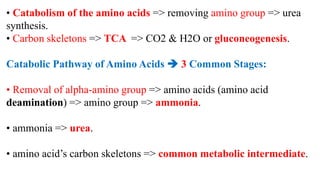
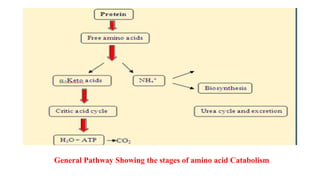
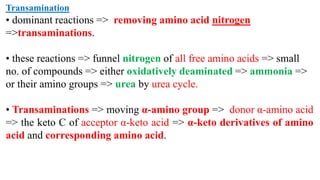
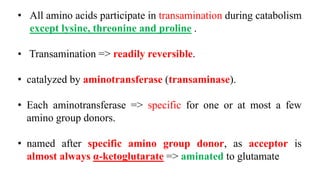
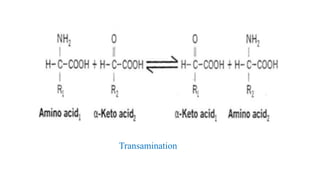
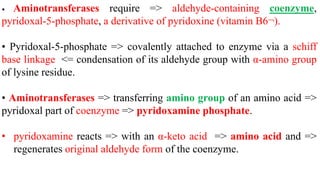
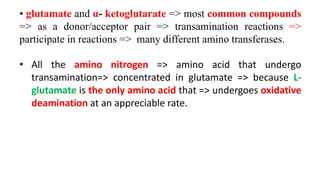
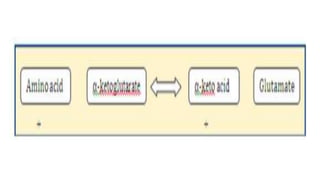
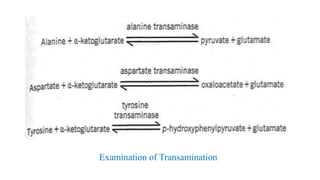
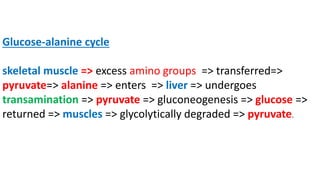
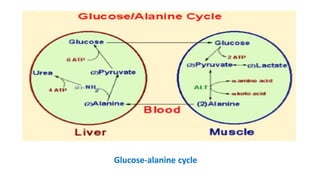
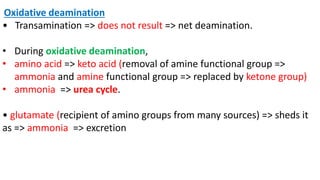
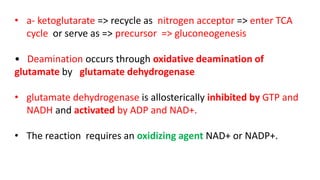
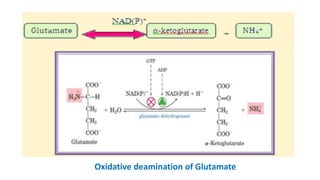
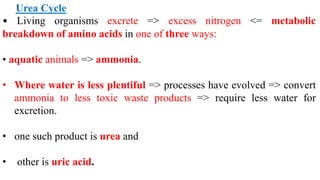
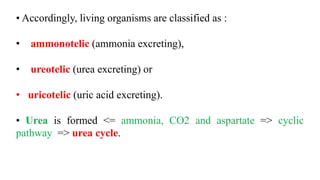
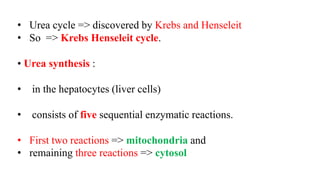
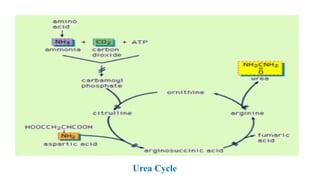
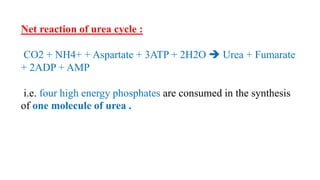
The document discusses amino acid catabolism and the pathways involved. It describes three common stages: 1) removal of the amino group to form ammonia, 2) conversion of ammonia to urea, and 3) use of the carbon skeletons to form common metabolic intermediates. Transamination and oxidative deamination are the two types of reactions that remove the amino group. Transamination transfers the amino group between amino acids while oxidative deamination forms ammonia directly. The urea cycle is also summarized, which involves five reactions to convert ammonia and carbon dioxide into less toxic urea using energy from ATP hydrolysis.


![CASE_PRESENTATION_ON_subdural_hematoma(SDH)[1 FINAL PPT]-1.pptx](https://cdn.slidesharecdn.com/ss_thumbnails/casepresentationonsubduralhematomasdh1finalppt-1-260129172522-d405d375-thumbnail.jpg?width=640&height=640&fit=bounds)


