FAD
 It derived from riboflavin, vitamin B2
 They have function in oxidation and reduction reactions
 FAD is act as coenzyme for various enzymes like
α-ketoglutarate dehydrogenase, succinate
dehydrogenase, xanthine dehydrogenase, acyl co
dehydrogenase .
 It exist in three different redox states, which are,
1. Quinone (FAD) - fully oxidized form
2. Semiquinone (FADH) -half reduced form
3. Hydroquinone (FADH2) - fully reduced form
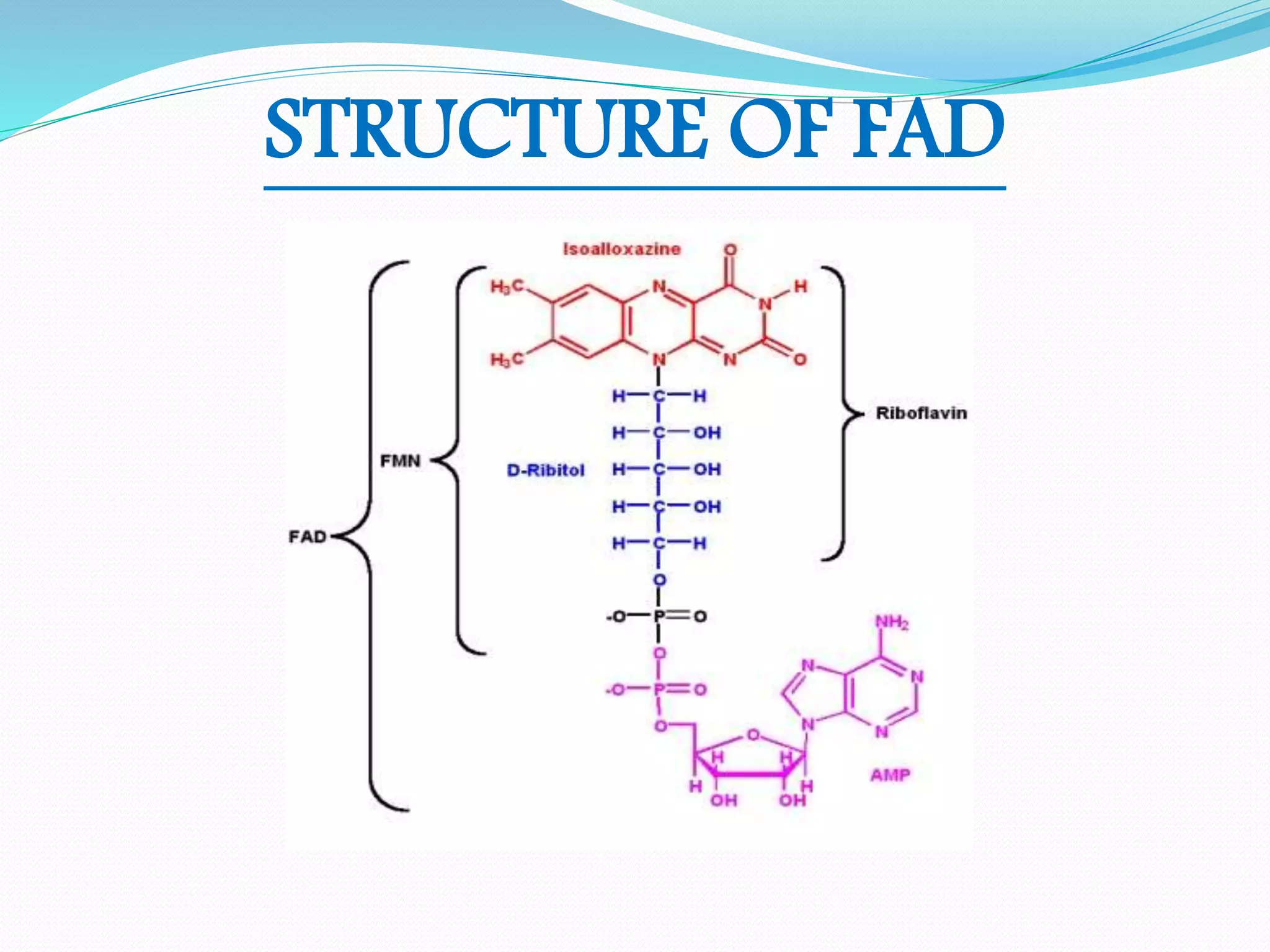
STRUCTURE OF FAD
Flavin adenine dinucleotide consists of two
main portions
 an adenine nucleotide (adenosine monophosphate)
 a flavin mononucleotide
It is bridged together through their phosphate groups.
Riboflavin is formed by a carbon-nitrogen (C-N)
bond between a isoalloxazine and a ribitol.
STRUCTURE OF FAD
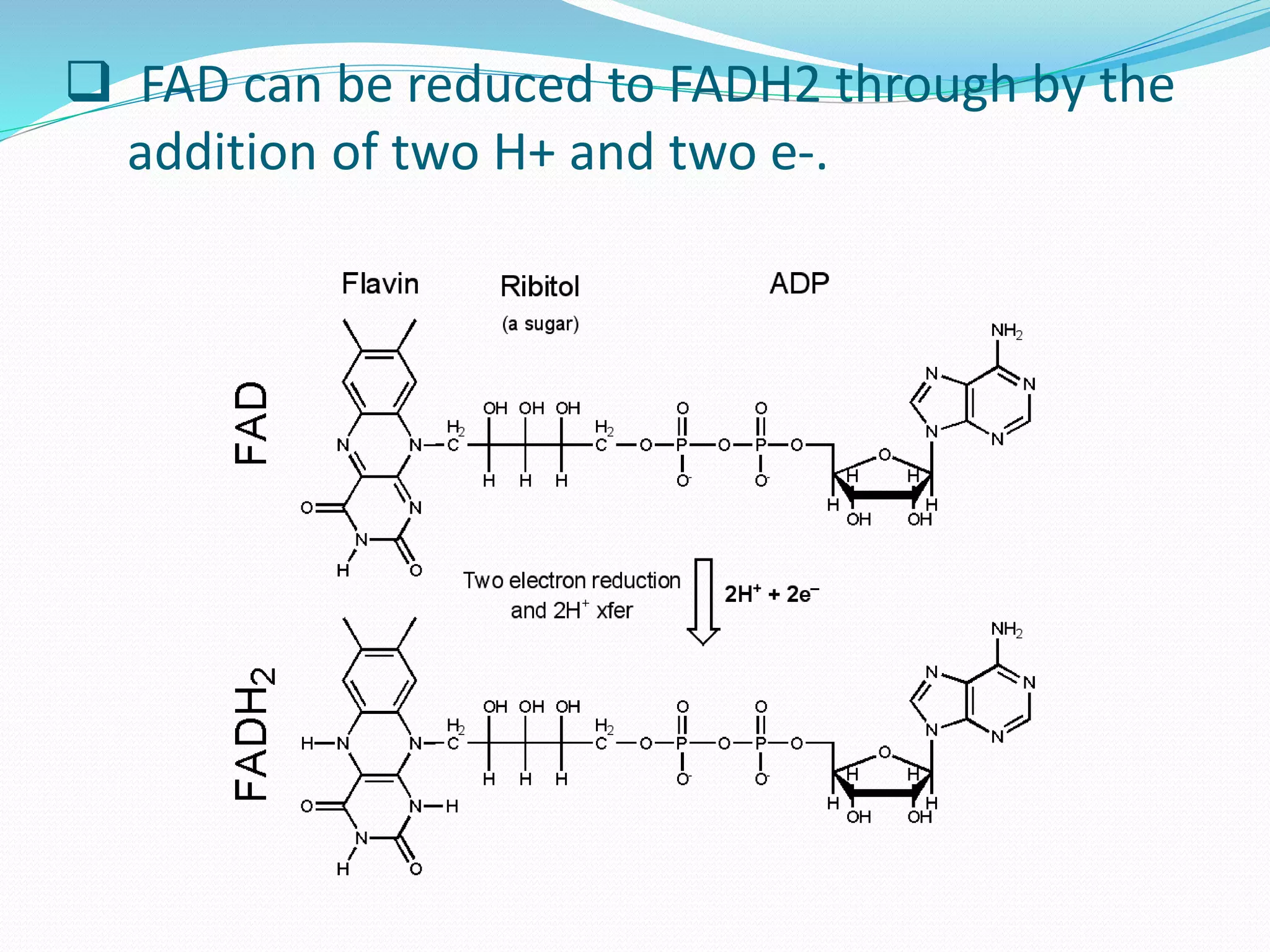
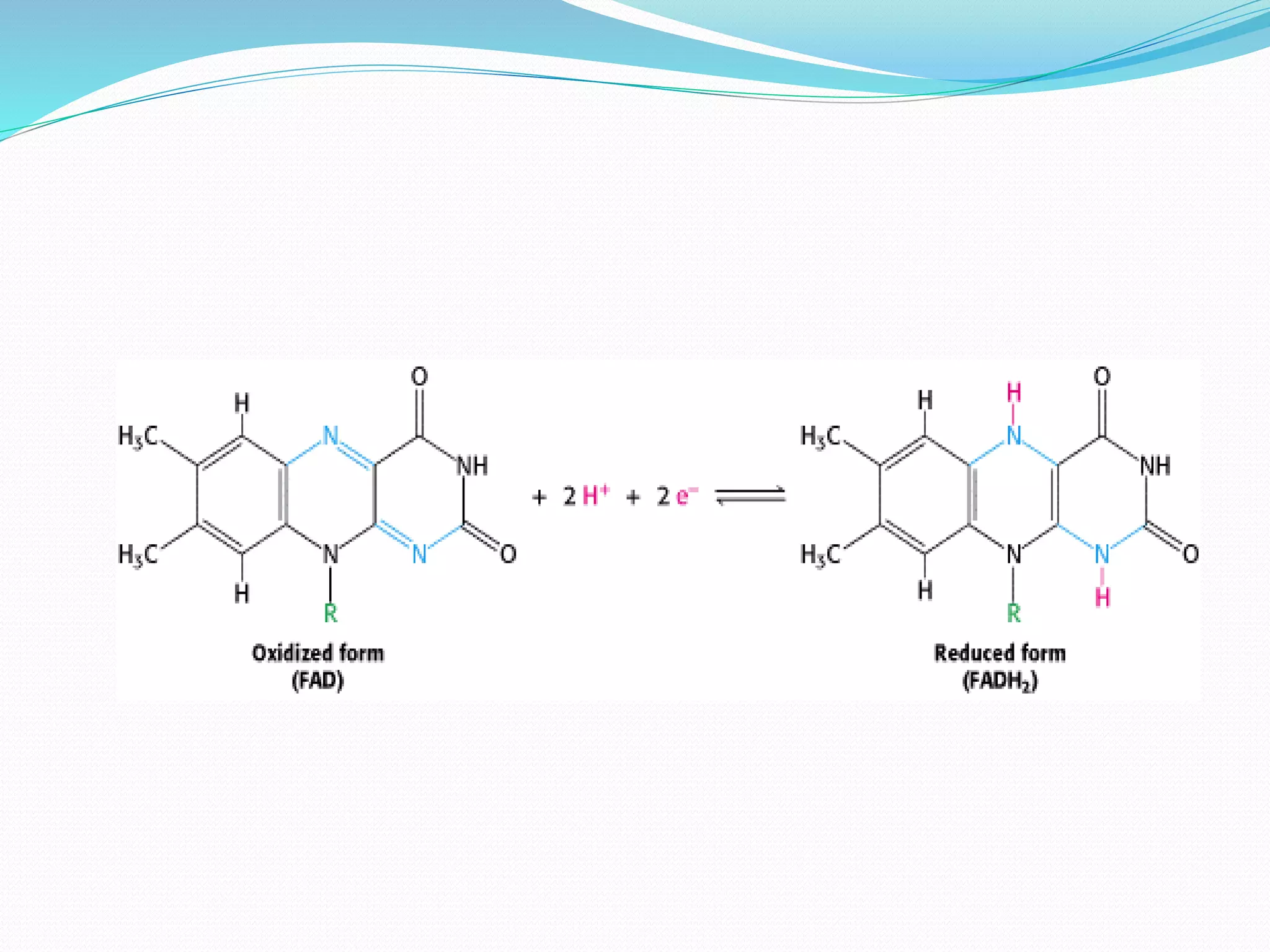
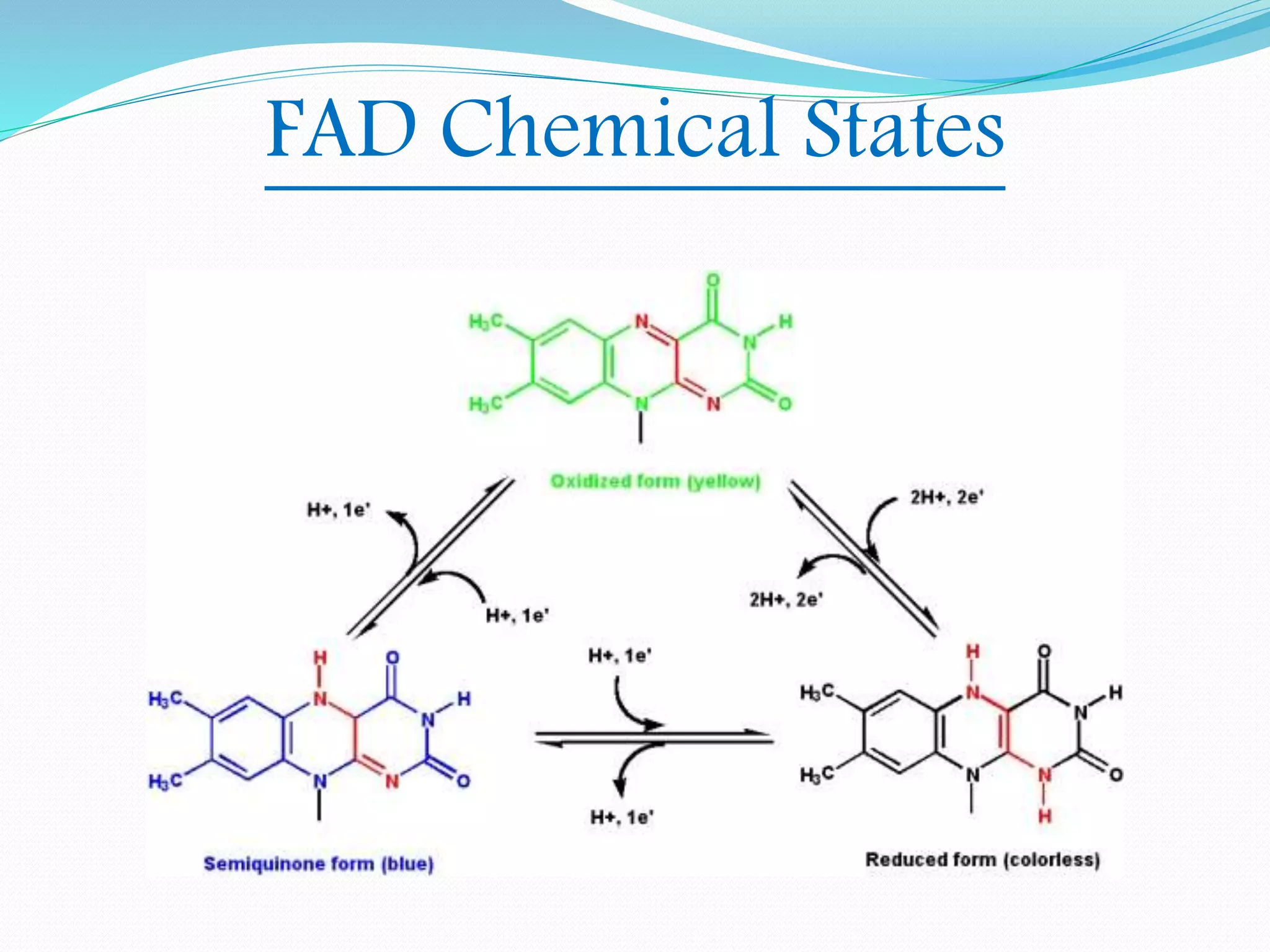
 FAD can be reduced to FADH2 through by the
addition of two H+ and two e-.
Basic Physical and Chemical
Properties
 Based on the oxidation state, flavins take specific
colors when in aqueous solution.
 FAD (fully oxidized) is yellow,
 FADH(half reduced) is either blue or red based on the
pH,
 FADH2the fully reduced form is colorless
FAD Chemical States
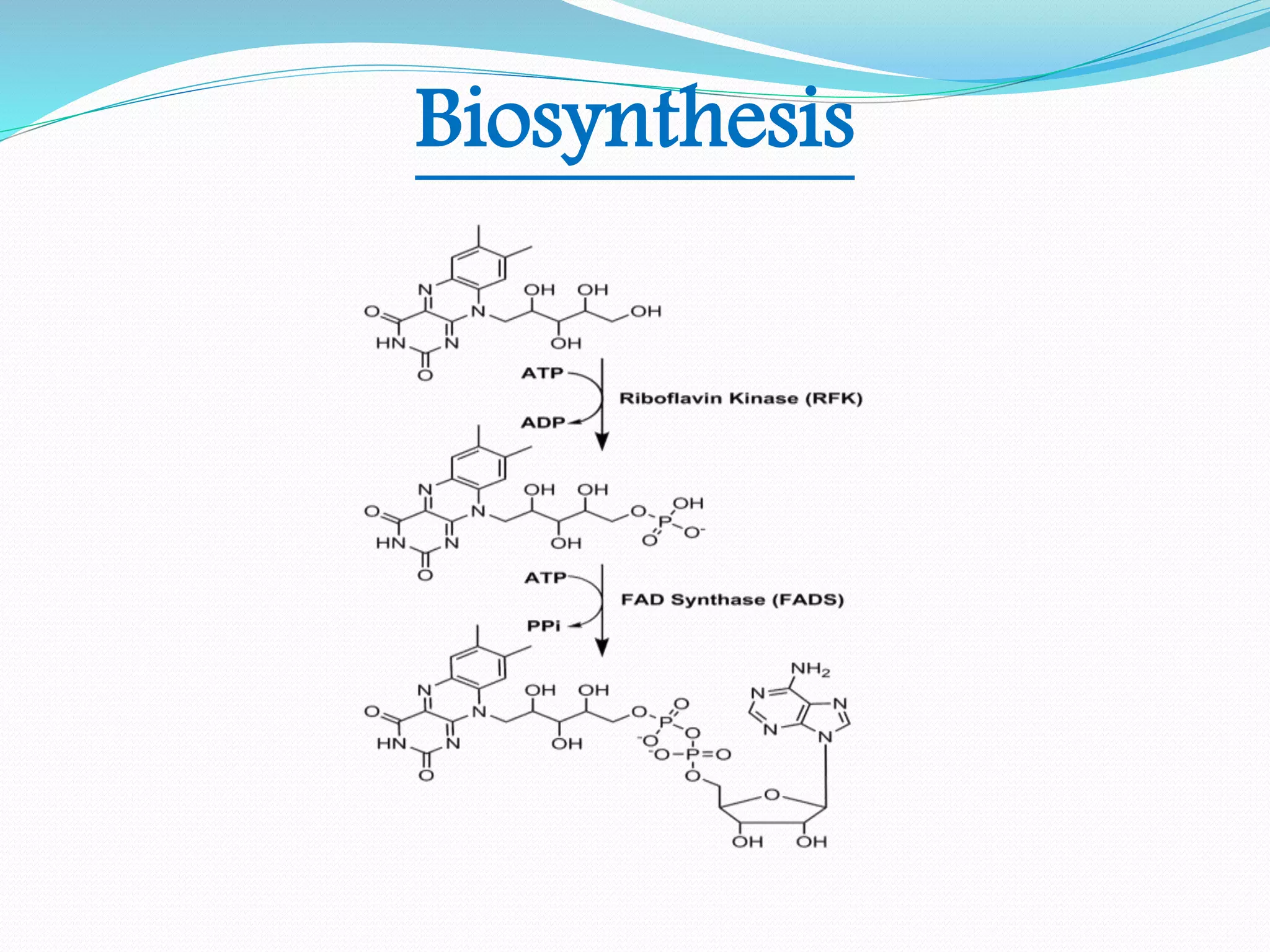
Biosynthesis of FAD
 FAD plays a major role as an enzyme cofactor
originating from riboflavin.
 Bacteria, fungi and plants can produce riboflavin,
but other eukaryotes, such as humans, have lost
the ability to make it.
 humans must obtain riboflavin, also known as
vitamin B2, from dietary sources.
 Riboflavin is generally absorbed in the small
intestine and then transported to cells via carrier
proteins.
 FAD is synthesized in the cytosol and
mitochondria and potentially transported where
needed.
Step 1
 Riboflavin kinase (EC 2.7.1.26) adds a phosphate
group to riboflavin to produce flavin
mononucleotide.
Step 2
 FAD synthetase attaches an adenine nucleotide;
both steps require ATP .
Biosynthesis
Biological Functions and
Importance
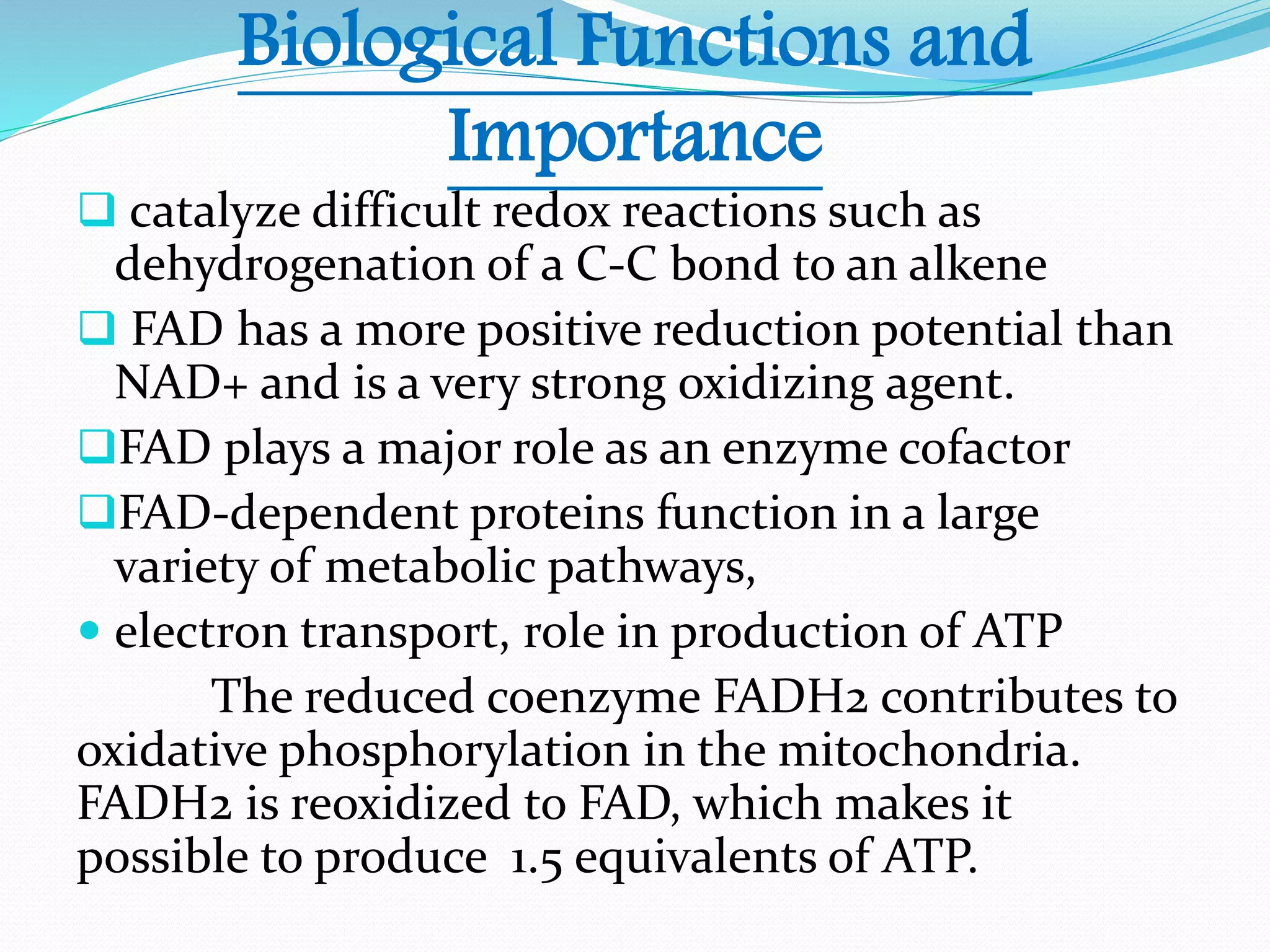
 catalyze difficult redox reactions such as
dehydrogenation of a C-C bond to an alkene
 FAD has a more positive reduction potential than
NAD+ and is a very strong oxidizing agent.
FAD plays a major role as an enzyme cofactor
FAD-dependent proteins function in a large
variety of metabolic pathways,
 electron transport, role in production of ATP
The reduced coenzyme FADH2 contributes to
oxidative phosphorylation in the mitochondria.
FADH2 is reoxidized to FAD, which makes it
possible to produce 1.5 equivalents of ATP.
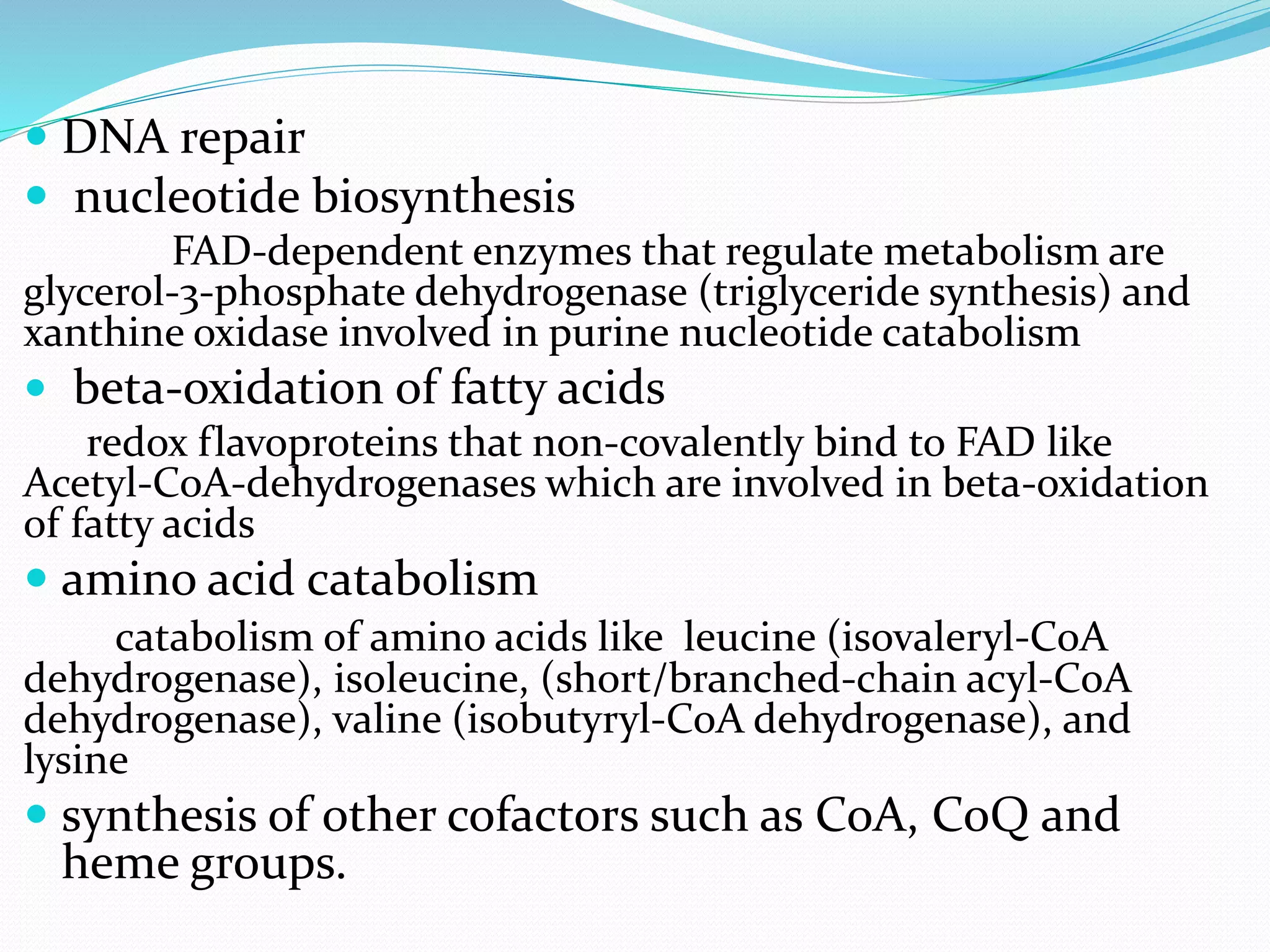
 DNA repair
 nucleotide biosynthesis
FAD-dependent enzymes that regulate metabolism are
glycerol-3-phosphate dehydrogenase (triglyceride synthesis) and
xanthine oxidase involved in purine nucleotide catabolism
 beta-oxidation of fatty acids
redox flavoproteins that non-covalently bind to FAD like
Acetyl-CoA-dehydrogenases which are involved in beta-oxidation
of fatty acids
 amino acid catabolism
catabolism of amino acids like leucine (isovaleryl-CoA
dehydrogenase), isoleucine, (short/branched-chain acyl-CoA
dehydrogenase), valine (isobutyryl-CoA dehydrogenase), and
lysine
 synthesis of other cofactors such as CoA, CoQ and
heme groups.
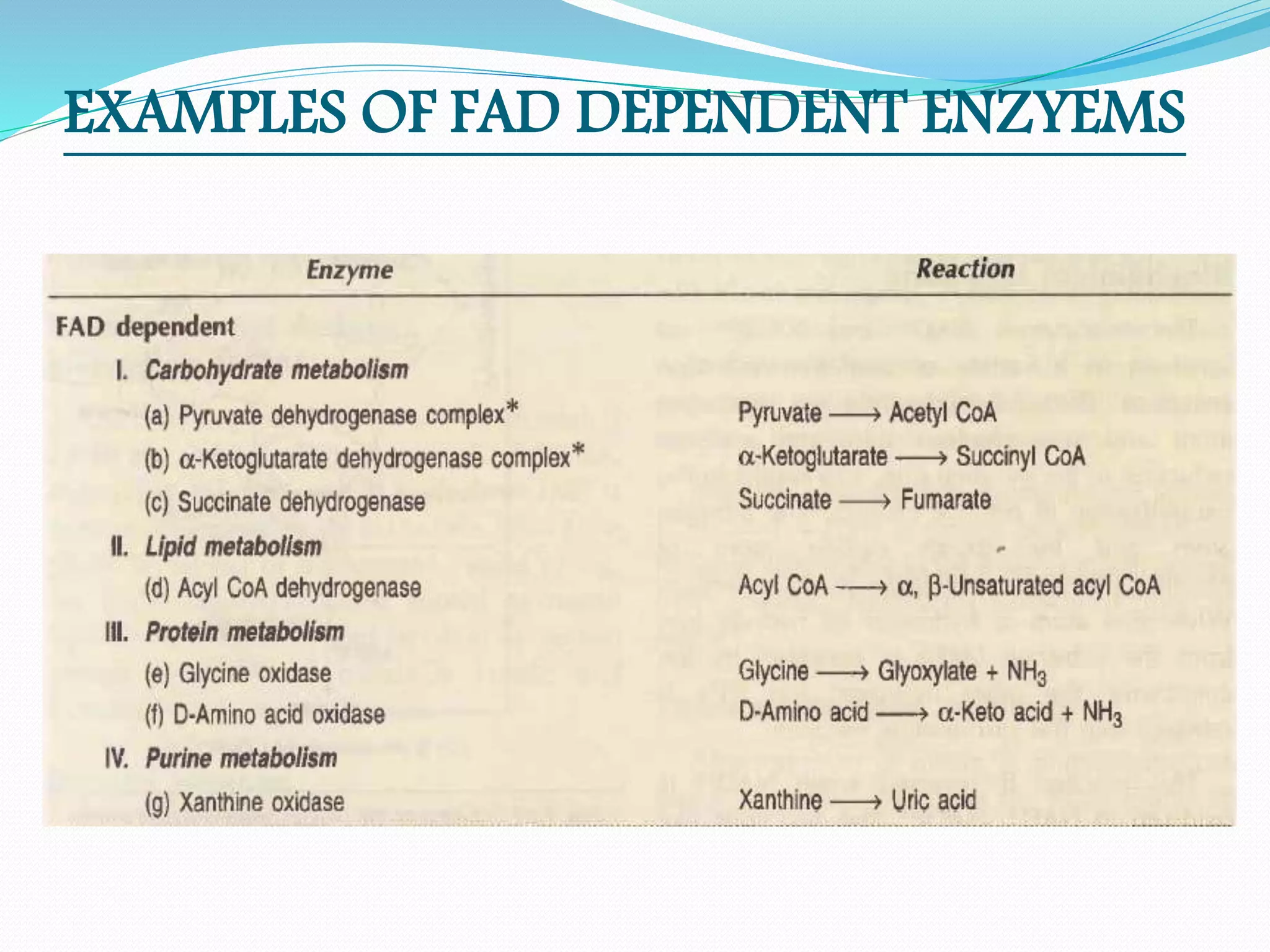
EXAMPLES OF FAD DEPENDENT ENZYEMS
THANK YOU

Fad – Flavin Adenine Dinucleotide

  • 2.
    FAD  It derivedfrom riboflavin, vitamin B2  They have function in oxidation and reduction reactions  FAD is act as coenzyme for various enzymes like α-ketoglutarate dehydrogenase, succinate dehydrogenase, xanthine dehydrogenase, acyl co dehydrogenase .  It exist in three different redox states, which are, 1. Quinone (FAD) - fully oxidized form 2. Semiquinone (FADH) -half reduced form 3. Hydroquinone (FADH2) - fully reduced form
  • 3.
    STRUCTURE OF FAD Flavinadenine dinucleotide consists of two main portions  an adenine nucleotide (adenosine monophosphate)  a flavin mononucleotide It is bridged together through their phosphate groups. Riboflavin is formed by a carbon-nitrogen (C-N) bond between a isoalloxazine and a ribitol.
  • 4.
  • 6.
     FAD canbe reduced to FADH2 through by the addition of two H+ and two e-.
  • 8.
    Basic Physical andChemical Properties  Based on the oxidation state, flavins take specific colors when in aqueous solution.  FAD (fully oxidized) is yellow,  FADH(half reduced) is either blue or red based on the pH,  FADH2the fully reduced form is colorless
  • 9.
  • 10.
    Biosynthesis of FAD FAD plays a major role as an enzyme cofactor originating from riboflavin.  Bacteria, fungi and plants can produce riboflavin, but other eukaryotes, such as humans, have lost the ability to make it.  humans must obtain riboflavin, also known as vitamin B2, from dietary sources.  Riboflavin is generally absorbed in the small intestine and then transported to cells via carrier proteins.
  • 11.
     FAD issynthesized in the cytosol and mitochondria and potentially transported where needed. Step 1  Riboflavin kinase (EC 2.7.1.26) adds a phosphate group to riboflavin to produce flavin mononucleotide. Step 2  FAD synthetase attaches an adenine nucleotide; both steps require ATP .
  • 12.
  • 13.
    Biological Functions and Importance catalyze difficult redox reactions such as dehydrogenation of a C-C bond to an alkene  FAD has a more positive reduction potential than NAD+ and is a very strong oxidizing agent. FAD plays a major role as an enzyme cofactor FAD-dependent proteins function in a large variety of metabolic pathways,  electron transport, role in production of ATP The reduced coenzyme FADH2 contributes to oxidative phosphorylation in the mitochondria. FADH2 is reoxidized to FAD, which makes it possible to produce 1.5 equivalents of ATP.
  • 14.
     DNA repair nucleotide biosynthesis FAD-dependent enzymes that regulate metabolism are glycerol-3-phosphate dehydrogenase (triglyceride synthesis) and xanthine oxidase involved in purine nucleotide catabolism  beta-oxidation of fatty acids redox flavoproteins that non-covalently bind to FAD like Acetyl-CoA-dehydrogenases which are involved in beta-oxidation of fatty acids  amino acid catabolism catabolism of amino acids like leucine (isovaleryl-CoA dehydrogenase), isoleucine, (short/branched-chain acyl-CoA dehydrogenase), valine (isobutyryl-CoA dehydrogenase), and lysine  synthesis of other cofactors such as CoA, CoQ and heme groups.
  • 15.
    EXAMPLES OF FADDEPENDENT ENZYEMS
  • 16.