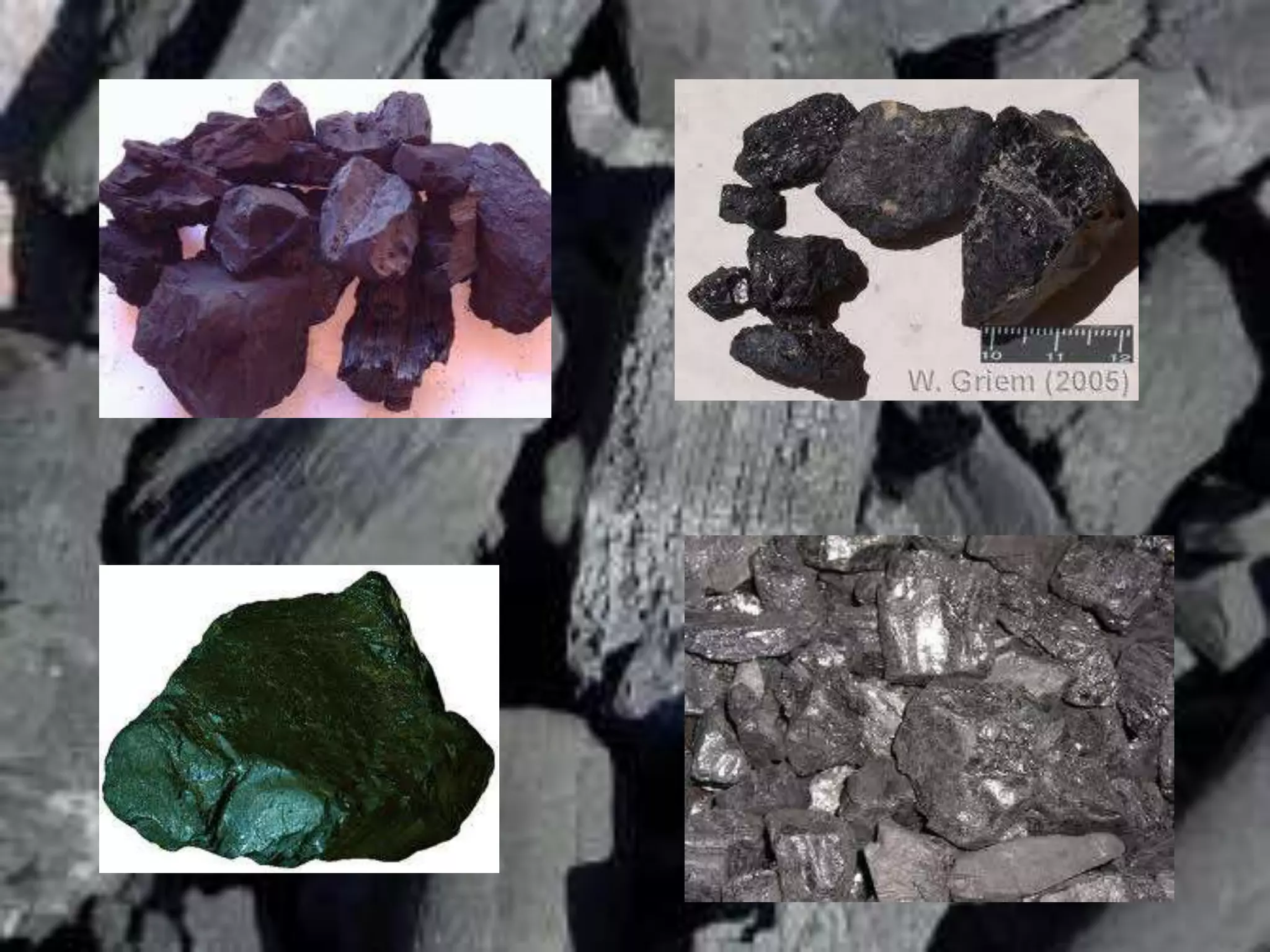
Coal
Hutuleac Ionut Andrei
Julián Ramos Ávila
Definition


     Coal is a sedimentary rock,
      it has a black colour which
      is primarily composed
    by carbon, hydrogen, oxygen
and nitrogen. It burns easily and is
    one of the domestic and
industrial fuels.
Types of coal
• Types of coal:
• Activated charcoal
• Coal oil
• Coal mineral origin
• Vegetable carbon
• Bituminous coal
 It is a rock whose origin comes from the accumulation and
          alteration of vegetable matter
How was it is formed?
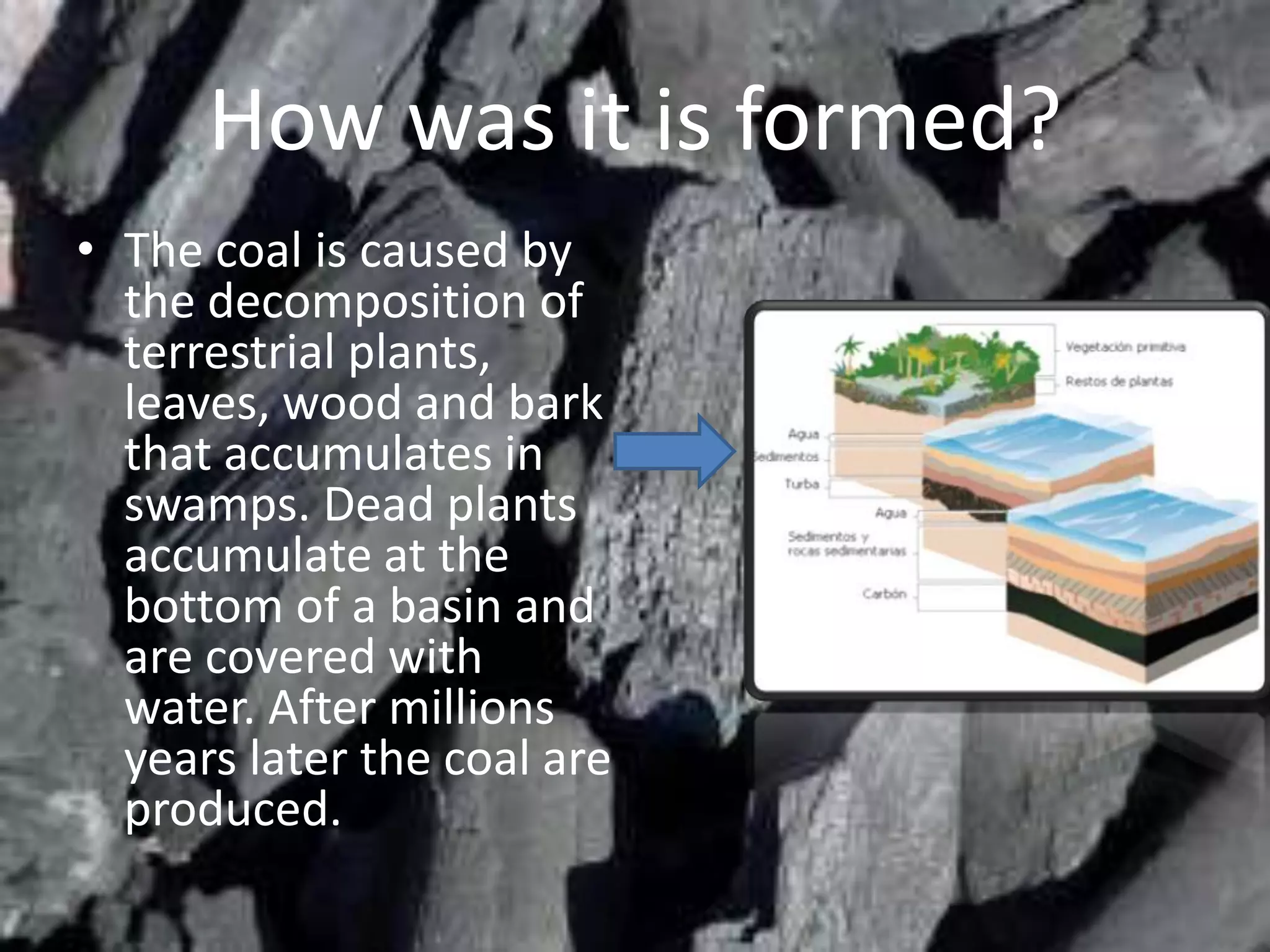
• The coal is caused by
  the decomposition of
  terrestrial plants,
  leaves, wood and bark
  that accumulates in
  swamps. Dead plants
  accumulate at the
  bottom of a basin and
  are covered with
  water. After millions
  years later the coal are
  produced.
PROPIERTIES OF COAL:

•
• Heat power: is the most important, potential heat is
  the merchandise subject to sale.
• Humidity: increases the dead weight of the coal,
  consumes the fuel side heat and weaken
• The properties of coal:
  Ash: Inorganic mineral matter is a combustion residue.
  Sulphur:Inorganic impurity of coal. It harmful as corrosive
 acids are formed in the combustion
 The ash fusion temperature of: poor coals produce molten
 ash that cause serious
Where is extracted?
• The coal can be obtained in two ways: by the
  terrestrial surface mines or underground
  mines. When a vein of coal is discovered, is
  required to know the volume and depth of
  field, since these factor determinate that the
  operation of the is economically profitable.
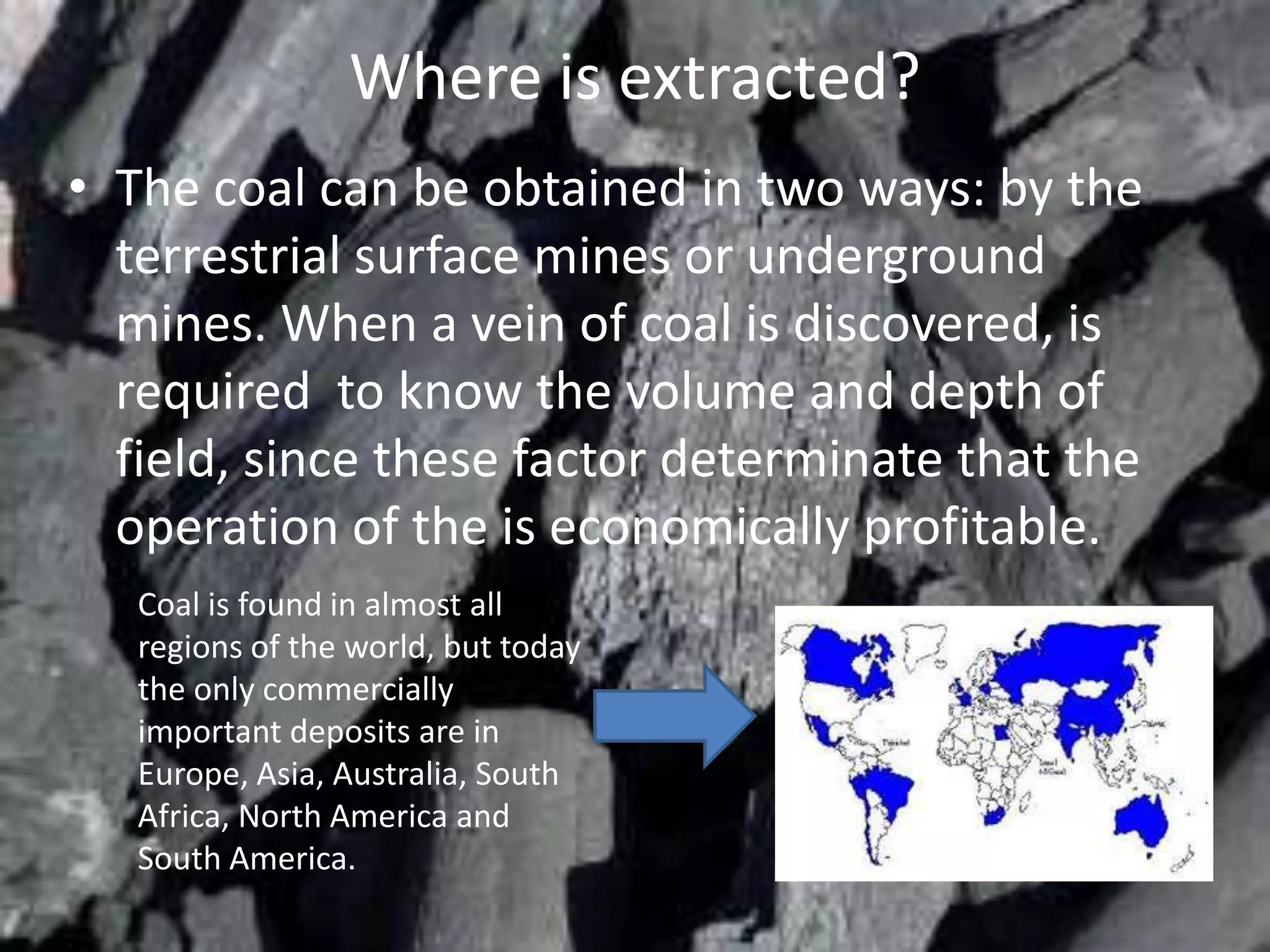
   Coal is found in almost all
   regions of the world, but today
   the only commercially
   important deposits are in
   Europe, Asia, Australia, South
   Africa, North America and
   South America.
The coal use for
• Electric power generation. The pulverized coal furnaces are the
  world's main source of electric power
• • Coke. Coke is the product of pyrolysis of coal in the absence of air.
  It is used as a fuel and reducing in different industries, mainly in the
  blast furnace
• • Steel. Mixing iron with coal minerals obtained an alloy in which
  iron is enriched in carbon, obtaining greater strength and elasticity.
• • Depending on the amount of carbon is obtained:
• sweet iron: less than 0.2% coal.
• • Steel: between 0.2% and 1.2% coal.
• • Casting: more than 1.2% coal.
• • Several industries. Used in factories requiring much energy in its
  processes, such as cement and bricks factories.
Advantages
•     Coal, as an energy has many features and beneficial
  properties for use in the world.
• Among them is its heat capacity pricipalmente, which
  varies between 2000 and 7000 kcal / kg.
• This gives you the quality of being usable in industry, and
  many other domestic activities such as mobilization
  through its heat and steam.
• Its main defect is to be a renewable fossil fuel, but long
  term what stops us from continuing use coal use in
  terrariums, while smaller the particles that we use so
  much the better.
Disadvantages
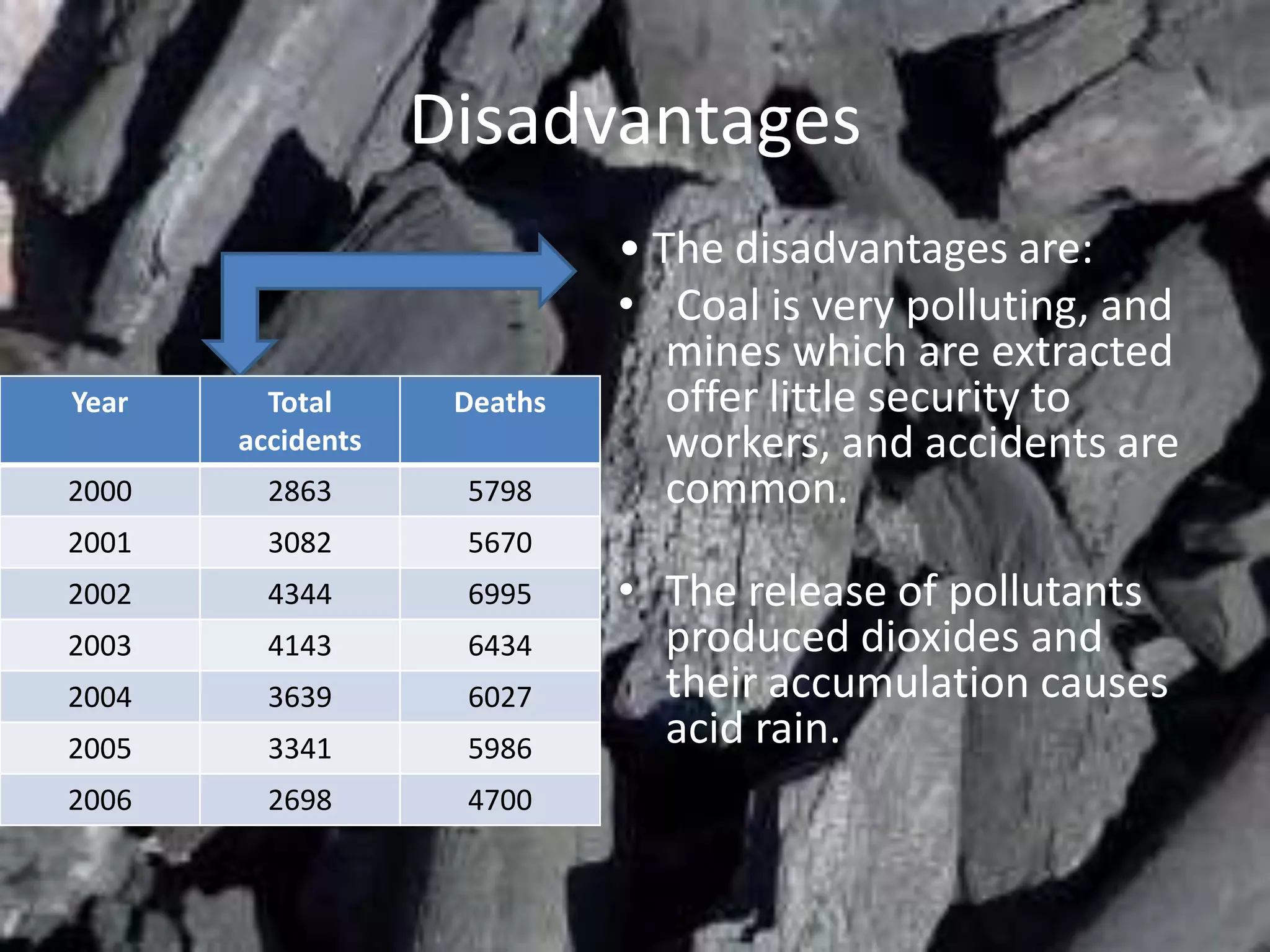
                             • The disadvantages are:
                             • Coal is very polluting, and
                                mines which are extracted
Year     Total      Deaths      offer little security to
       accidents                workers, and accidents are
2000     2863       5798        common.
2001     3082       5670
2002     4344       6995     • The release of pollutants
2003     4143       6434       produced dioxides and
2004     3639       6027       their accumulation causes
2005     3341       5986       acid rain.
2006     2698       4700
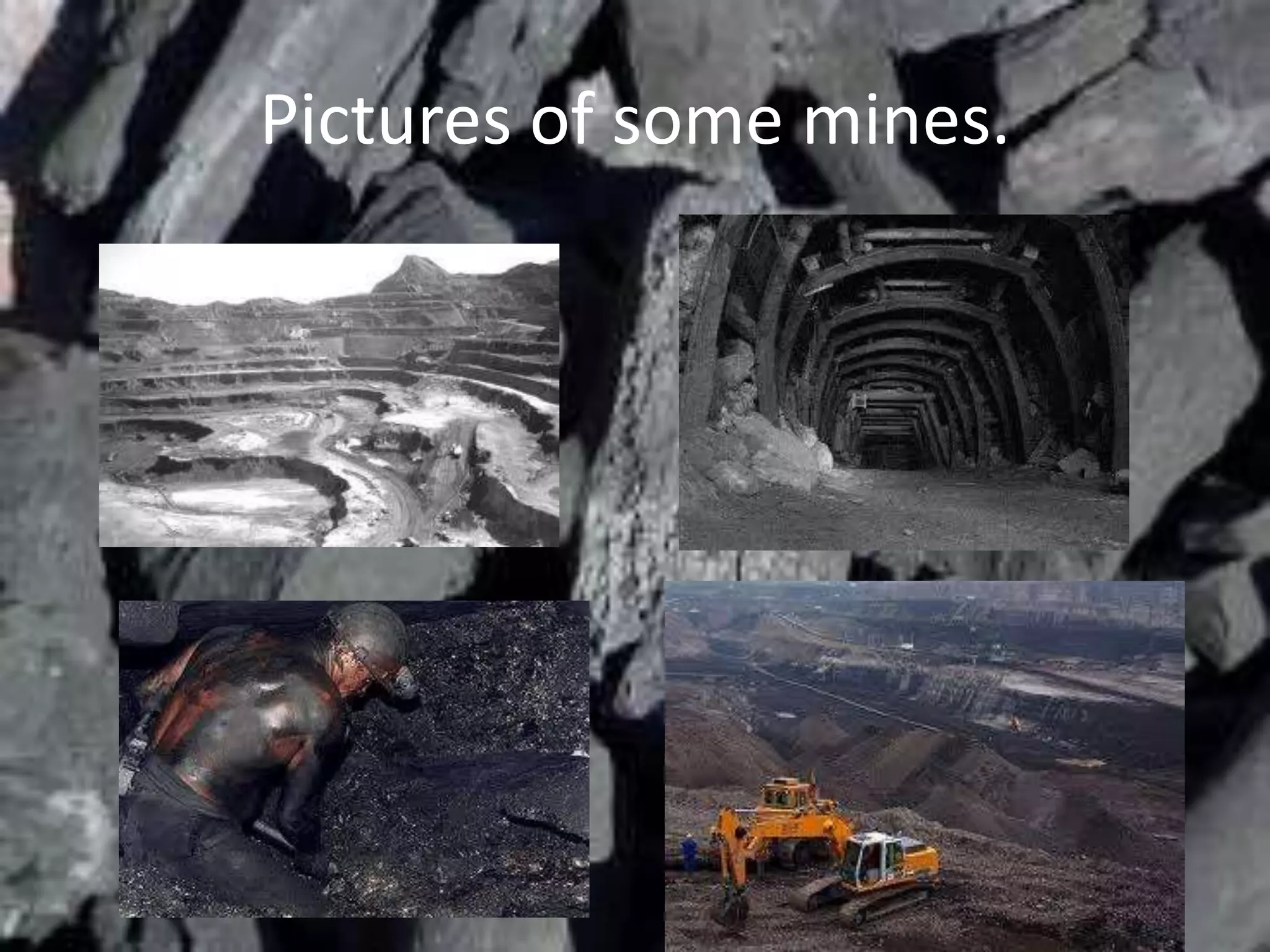
Mines in the world
Pictures of some mines.
The
End

Amdrei

  • 1.
  • 2.
    Definition  Coal is a sedimentary rock, it has a black colour which is primarily composed by carbon, hydrogen, oxygen and nitrogen. It burns easily and is one of the domestic and industrial fuels.
  • 3.
    Types of coal •Types of coal: • Activated charcoal • Coal oil • Coal mineral origin • Vegetable carbon • Bituminous coal It is a rock whose origin comes from the accumulation and alteration of vegetable matter
  • 5.
    How was itis formed? • The coal is caused by the decomposition of terrestrial plants, leaves, wood and bark that accumulates in swamps. Dead plants accumulate at the bottom of a basin and are covered with water. After millions years later the coal are produced.
  • 6.
    PROPIERTIES OF COAL: • •Heat power: is the most important, potential heat is the merchandise subject to sale. • Humidity: increases the dead weight of the coal, consumes the fuel side heat and weaken • The properties of coal:  Ash: Inorganic mineral matter is a combustion residue.  Sulphur:Inorganic impurity of coal. It harmful as corrosive acids are formed in the combustion  The ash fusion temperature of: poor coals produce molten ash that cause serious
  • 7.
    Where is extracted? •The coal can be obtained in two ways: by the terrestrial surface mines or underground mines. When a vein of coal is discovered, is required to know the volume and depth of field, since these factor determinate that the operation of the is economically profitable. Coal is found in almost all regions of the world, but today the only commercially important deposits are in Europe, Asia, Australia, South Africa, North America and South America.
  • 8.
    The coal usefor • Electric power generation. The pulverized coal furnaces are the world's main source of electric power • • Coke. Coke is the product of pyrolysis of coal in the absence of air. It is used as a fuel and reducing in different industries, mainly in the blast furnace • • Steel. Mixing iron with coal minerals obtained an alloy in which iron is enriched in carbon, obtaining greater strength and elasticity. • • Depending on the amount of carbon is obtained: • sweet iron: less than 0.2% coal. • • Steel: between 0.2% and 1.2% coal. • • Casting: more than 1.2% coal. • • Several industries. Used in factories requiring much energy in its processes, such as cement and bricks factories.
  • 9.
    Advantages • Coal, as an energy has many features and beneficial properties for use in the world. • Among them is its heat capacity pricipalmente, which varies between 2000 and 7000 kcal / kg. • This gives you the quality of being usable in industry, and many other domestic activities such as mobilization through its heat and steam. • Its main defect is to be a renewable fossil fuel, but long term what stops us from continuing use coal use in terrariums, while smaller the particles that we use so much the better.
  • 10.
    Disadvantages • The disadvantages are: • Coal is very polluting, and mines which are extracted Year Total Deaths offer little security to accidents workers, and accidents are 2000 2863 5798 common. 2001 3082 5670 2002 4344 6995 • The release of pollutants 2003 4143 6434 produced dioxides and 2004 3639 6027 their accumulation causes 2005 3341 5986 acid rain. 2006 2698 4700
  • 11.
  • 12.
  • 13.