Solid Fuels
1
2
Introduction
• Solar energy is converted to chemical energy
through photo-synthesis in plants
• Sun’s Energy stored in plants is released by
burning wood or fossil fuels
• Fossil fuels: coal, oil and natural gas
The Formation of Fuels
Introduction
• Solid fuels are combustibles, ranging from
wood, peat and lignite, through refuse and
other low calorific value substances, to coal
and other solid fuels derived from it.
• Coal represents by far the largest component
of the world’s fossil fuel reserves.
3
Introduction
• Coal was the fuel which fired the Industrial
Revolution, but it is no longer the cheapest
option among the fossil fuels.
• The cost of working the deposits and the
investment in technology needed to meet
increasingly stringent emissions standards
have increased the cost of burning coal.
4
Coal
 Coal is a readily combustible black or brownish-black
rock.
 Coal is a fossil fuel formed in swamp ecosystems
where plant remains were saved by water and mud
from oxidization and biodegradation.
 It is composed primarily of carbon along with
assorted other elements, including sulphur.
en.wikipedia.org/wiki/Coal
Coal
 It is a sedimentary rock, but the harder forms, such
as anthracite coal, can be regarded as metamorphic
rocks because of later exposure to elevated
temperature and pressure.
 It is the largest single source of fuel for the
generation of electricity world-wide, as well as the
largest world-wide source of carbon dioxide
emissions, slightly ahead of petroleum and about
double that of natural gas.
 Coal is extracted from the ground by coal mining,
either underground mining or open pit mining
(surface mining).
en.wikipedia.org/wiki/Coal
• Coal is a sedimentary rock of vegetable origin.
Vast deposits of plant material, formed
approximately 80 million years ago, were
consolidated by pressure, heat and earth
movement.
• The rank of a coal is related to its geological
age and, generally, its depth in the earth.
7
Coal
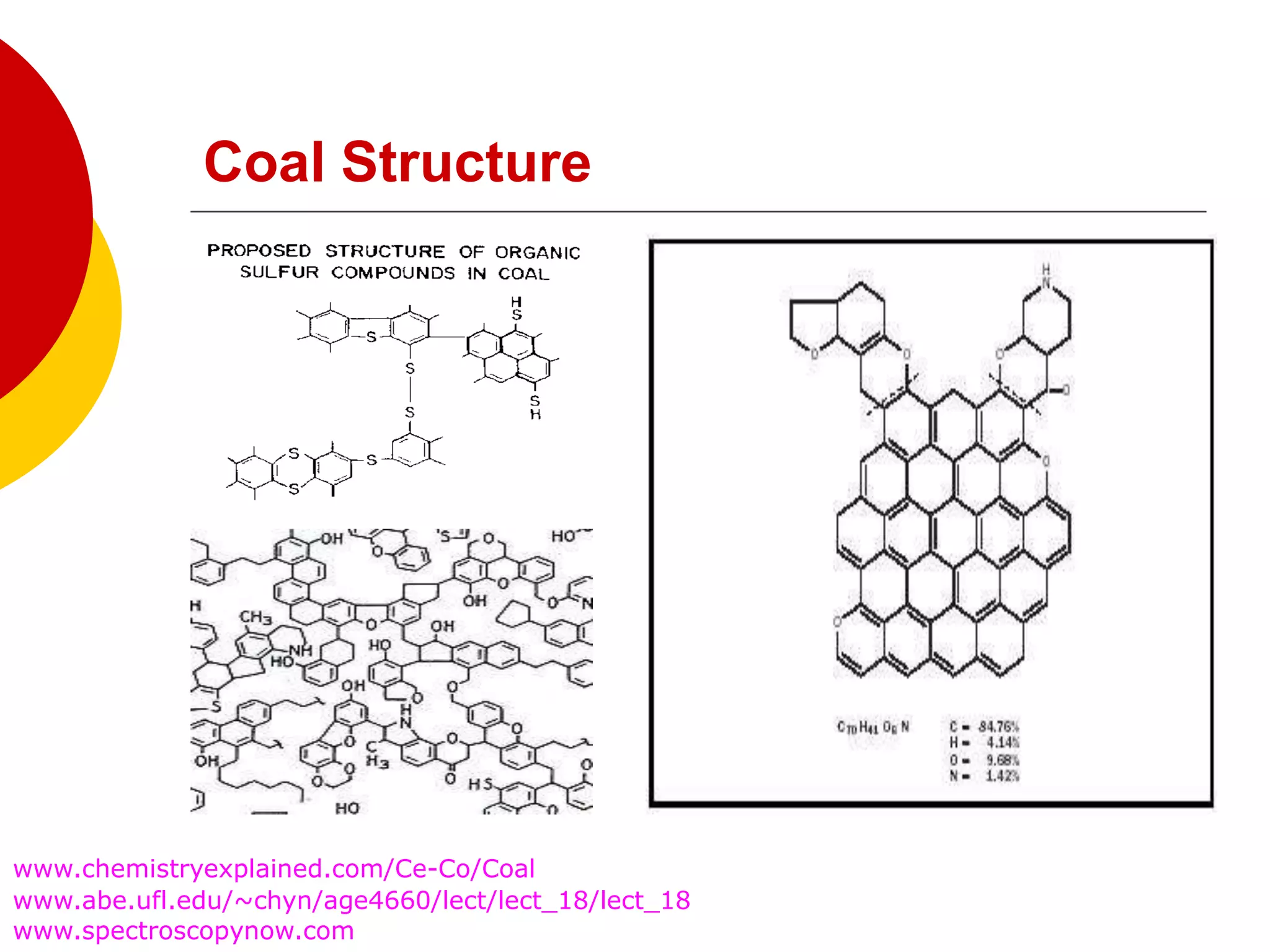
Coal Structure
www.chemistryexplained.com/Ce-Co/Coal
www.abe.ufl.edu/~chyn/age4660/lect/lect_18/lect_18
www.spectroscopynow.com
• In thermal terms 90% of the known
hydrocarbon fuel deposits are formed by coal.
• The carbon: hydrogen ratio of coal is the
highest of the fossil fuels, hence the calorific
values of coals are principally determined by
the carbon in the fuel.
9
Coal
• It is usual to consider coals in terms of their
rank: in general, a high ranking coal will have a
high carbon content.
• The other major coal constituent element,
hydrogen, is present in hydrocarbons which
are released as volatile matter when the coal
is heated.
10
Coal
Coal
• The ranking sequence is:
Wood
Peat
Lignite (brown coal)
Bituminous Coal
Anthracite
• In general, deposits close to the surface which
can be worked by strip mining produce a more
economical fuel than deep mined coal.
11
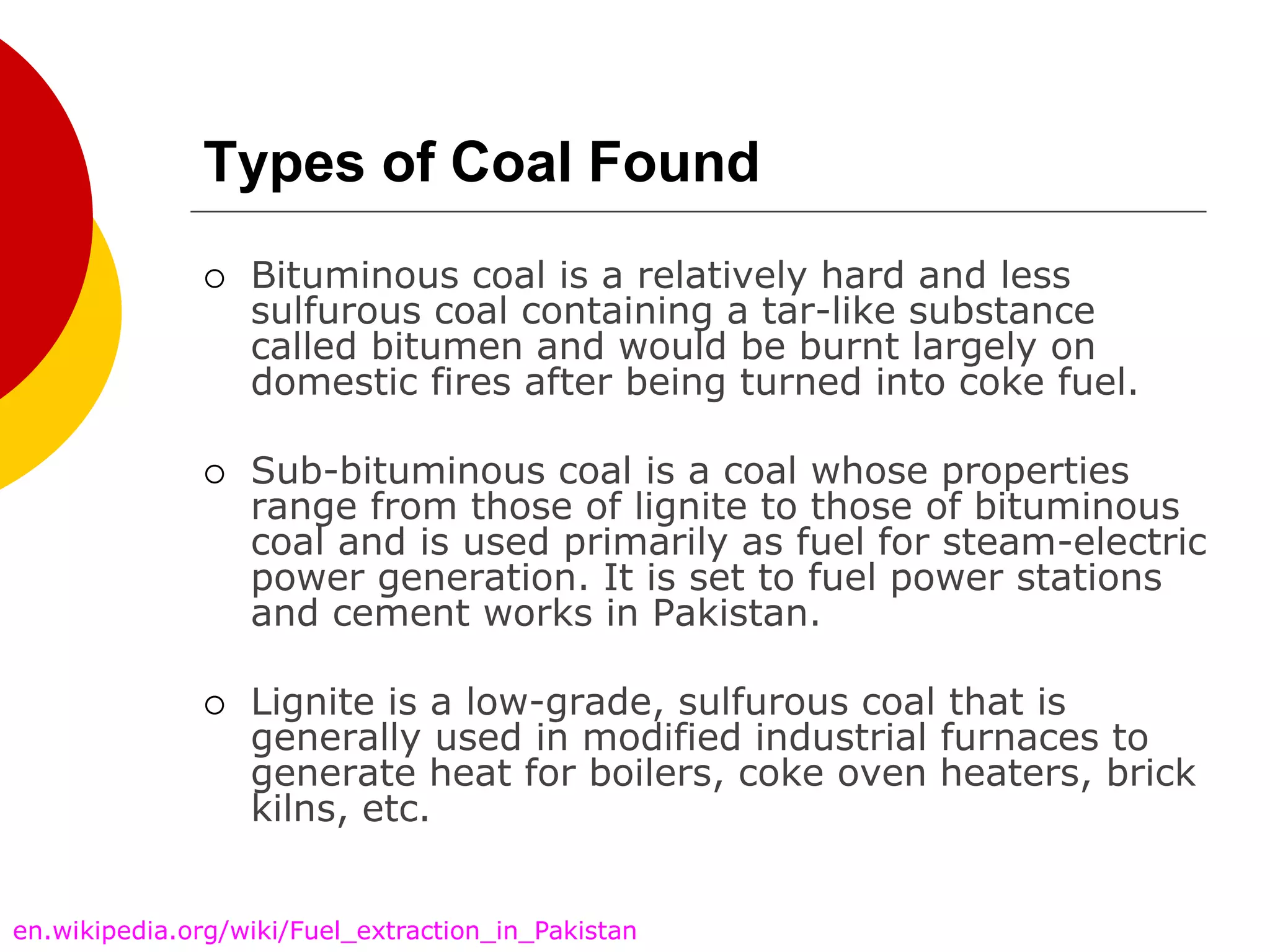
Types of Coal Found
 Bituminous coal is a relatively hard and less
sulfurous coal containing a tar-like substance
called bitumen and would be burnt largely on
domestic fires after being turned into coke fuel.
 Sub-bituminous coal is a coal whose properties
range from those of lignite to those of bituminous
coal and is used primarily as fuel for steam-electric
power generation. It is set to fuel power stations
and cement works in Pakistan.
 Lignite is a low-grade, sulfurous coal that is
generally used in modified industrial furnaces to
generate heat for boilers, coke oven heaters, brick
kilns, etc.
en.wikipedia.org/wiki/Fuel_extraction_in_Pakistan
Classification of Coal
13
Classification of Coal
14
Introduction
• Recent developments in gasification processes
have shown that it is possible to produce gas
from coal at a viable thermal efficiency and to
remove the sulfur from the fuel at the same
time.
15
2. Coal Classification
• As the rank of a coal increases, its carbon
content increases from 75% to about 93% (by
weight), the hydrogen content decreases from
6% to 3%, and the oxygen content decreases
from 20% to 3%.
• A useful method for analyzing a coal is the
proximate process.
16
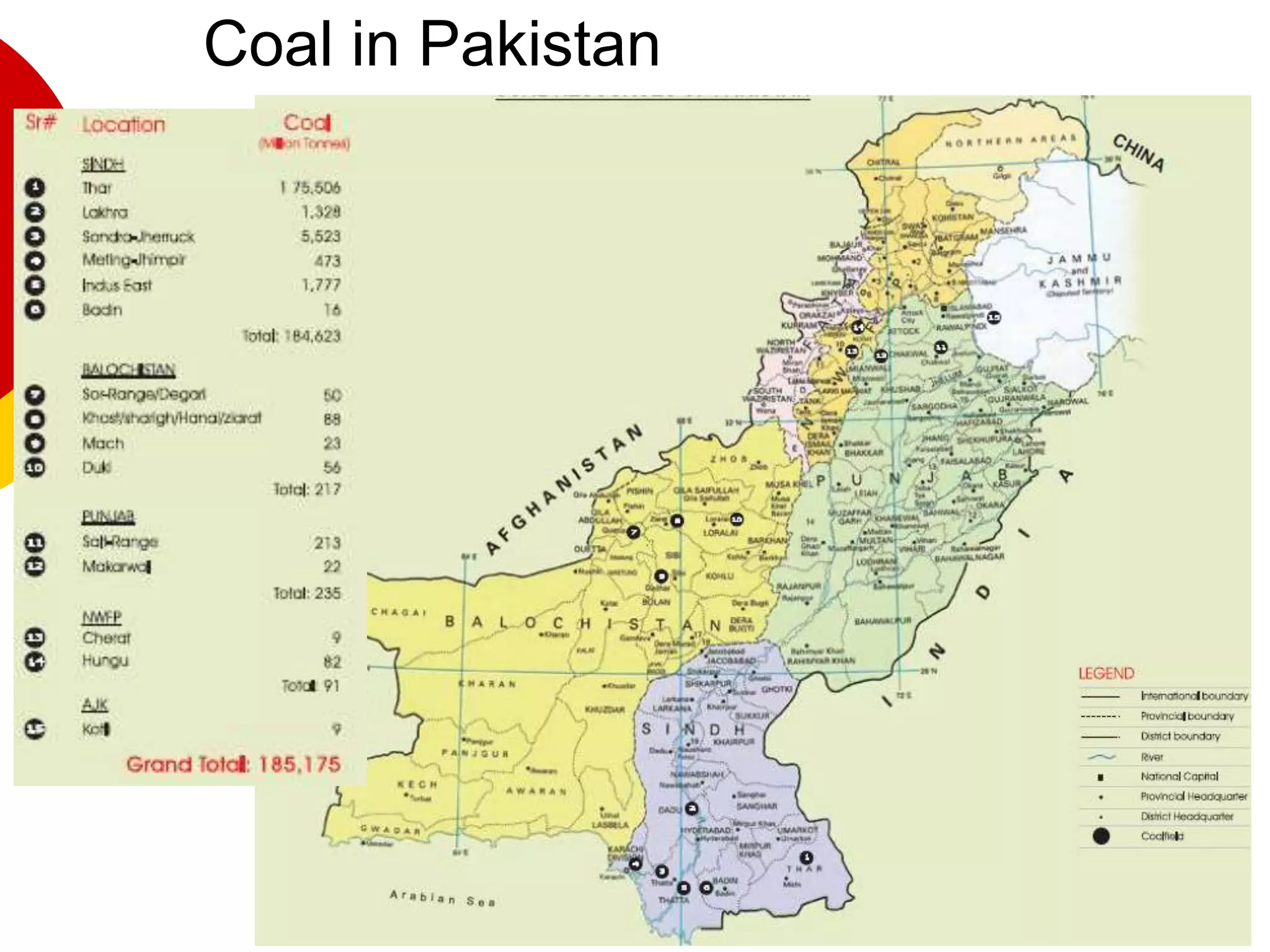
Coal Reserves in Pakistan
 Coal -the black gold, is found in all the four provinces
of Pakistan. Country has huge coal resources, about
185 billion tons, out of which 3.3 billion tons are in
proven/measured category and about 11 billions are
indicated reserves, the bulk of which is found in Sindh
province.
 The current total mine-able reserves of coal are
estimated at 2 billion tones (60 % of the measured
reserves).
www.gsp.gov.pk/
Coal Resources of Pakistan
18
Coal in Pakistan
20
Moisture in coal
• The moisture in coal is made up of two
components: surface moisture and inherent
moisture.
• The former is affected by the way in which the
coal is stored, and is thus variable.
21
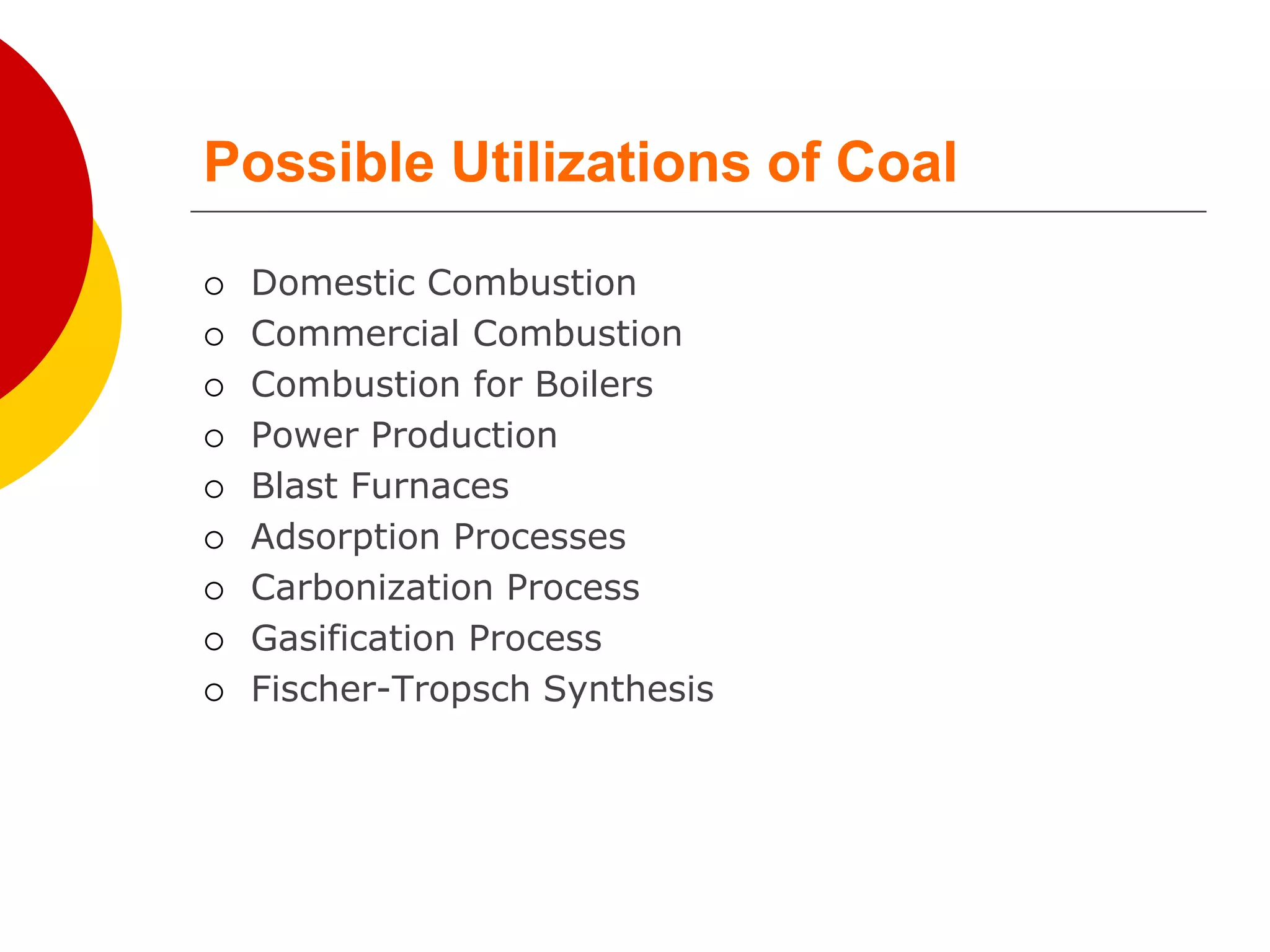
Possible Utilizations of Coal
 Domestic Combustion
 Commercial Combustion
 Combustion for Boilers
 Power Production
 Blast Furnaces
 Adsorption Processes
 Carbonization Process
 Gasification Process
 Fischer-Tropsch Synthesis

Solid Fuels 1A

  • 1.
  • 2.
    2 Introduction • Solar energyis converted to chemical energy through photo-synthesis in plants • Sun’s Energy stored in plants is released by burning wood or fossil fuels • Fossil fuels: coal, oil and natural gas The Formation of Fuels
  • 3.
    Introduction • Solid fuelsare combustibles, ranging from wood, peat and lignite, through refuse and other low calorific value substances, to coal and other solid fuels derived from it. • Coal represents by far the largest component of the world’s fossil fuel reserves. 3
  • 4.
    Introduction • Coal wasthe fuel which fired the Industrial Revolution, but it is no longer the cheapest option among the fossil fuels. • The cost of working the deposits and the investment in technology needed to meet increasingly stringent emissions standards have increased the cost of burning coal. 4
  • 5.
    Coal  Coal isa readily combustible black or brownish-black rock.  Coal is a fossil fuel formed in swamp ecosystems where plant remains were saved by water and mud from oxidization and biodegradation.  It is composed primarily of carbon along with assorted other elements, including sulphur. en.wikipedia.org/wiki/Coal
  • 6.
    Coal  It isa sedimentary rock, but the harder forms, such as anthracite coal, can be regarded as metamorphic rocks because of later exposure to elevated temperature and pressure.  It is the largest single source of fuel for the generation of electricity world-wide, as well as the largest world-wide source of carbon dioxide emissions, slightly ahead of petroleum and about double that of natural gas.  Coal is extracted from the ground by coal mining, either underground mining or open pit mining (surface mining). en.wikipedia.org/wiki/Coal
  • 7.
    • Coal isa sedimentary rock of vegetable origin. Vast deposits of plant material, formed approximately 80 million years ago, were consolidated by pressure, heat and earth movement. • The rank of a coal is related to its geological age and, generally, its depth in the earth. 7 Coal
  • 8.
  • 9.
    • In thermalterms 90% of the known hydrocarbon fuel deposits are formed by coal. • The carbon: hydrogen ratio of coal is the highest of the fossil fuels, hence the calorific values of coals are principally determined by the carbon in the fuel. 9 Coal
  • 10.
    • It isusual to consider coals in terms of their rank: in general, a high ranking coal will have a high carbon content. • The other major coal constituent element, hydrogen, is present in hydrocarbons which are released as volatile matter when the coal is heated. 10 Coal
  • 11.
    Coal • The rankingsequence is: Wood Peat Lignite (brown coal) Bituminous Coal Anthracite • In general, deposits close to the surface which can be worked by strip mining produce a more economical fuel than deep mined coal. 11
  • 12.
    Types of CoalFound  Bituminous coal is a relatively hard and less sulfurous coal containing a tar-like substance called bitumen and would be burnt largely on domestic fires after being turned into coke fuel.  Sub-bituminous coal is a coal whose properties range from those of lignite to those of bituminous coal and is used primarily as fuel for steam-electric power generation. It is set to fuel power stations and cement works in Pakistan.  Lignite is a low-grade, sulfurous coal that is generally used in modified industrial furnaces to generate heat for boilers, coke oven heaters, brick kilns, etc. en.wikipedia.org/wiki/Fuel_extraction_in_Pakistan
  • 13.
  • 14.
  • 15.
    Introduction • Recent developmentsin gasification processes have shown that it is possible to produce gas from coal at a viable thermal efficiency and to remove the sulfur from the fuel at the same time. 15
  • 16.
    2. Coal Classification •As the rank of a coal increases, its carbon content increases from 75% to about 93% (by weight), the hydrogen content decreases from 6% to 3%, and the oxygen content decreases from 20% to 3%. • A useful method for analyzing a coal is the proximate process. 16
  • 17.
    Coal Reserves inPakistan  Coal -the black gold, is found in all the four provinces of Pakistan. Country has huge coal resources, about 185 billion tons, out of which 3.3 billion tons are in proven/measured category and about 11 billions are indicated reserves, the bulk of which is found in Sindh province.  The current total mine-able reserves of coal are estimated at 2 billion tones (60 % of the measured reserves). www.gsp.gov.pk/
  • 18.
    Coal Resources ofPakistan 18
  • 19.
  • 20.
  • 21.
    Moisture in coal •The moisture in coal is made up of two components: surface moisture and inherent moisture. • The former is affected by the way in which the coal is stored, and is thus variable. 21
  • 22.
    Possible Utilizations ofCoal  Domestic Combustion  Commercial Combustion  Combustion for Boilers  Power Production  Blast Furnaces  Adsorption Processes  Carbonization Process  Gasification Process  Fischer-Tropsch Synthesis