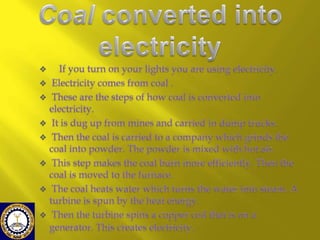
MALAVIYA NATIONAL INSTITUTE OF TECHNOLOGY
JAIPUR

CHEMICAL ENGINEERING DEPARTMENT
WHAT IS ENERGY
2.
WHAT IS COAL
3.
HISTORY
4.
CONSUMPTION
5.
ENERGY LOSS
6.
COAL FORMATION
7.
TYPES
8.
AVALIBILITY
9.
COAL MINES
10. DANGERS OF COAL MINES
11. PRESENT USE
12. FUTURE USE
13. ADVANTAGE
14. DISADVANTAGE
15. VARIOUS EFFECTS
1.


- COAL IS AN UNRENEWABLE SOURCE OF
FUEL

WHY?


- COAL IS FORMED FROM VEGETATION
THAT CAN BE AS OLD AS 400 MILLION
YEARS OLD. (THAT IS WHY IT’S CALLED A
FOSSIL FUEL)








The earliest use of coal in the Americas was the
Aztecs
In the 1300s in what is now the United States,
Native Americans used coal for cooking,
making clay pots, and heating.
Large-scale coal mining developed in the
Industrial Revolution when demands for
energy skyrocketed
The first documented mining of coal in the US
was 50 tons dug in 1748 in Virginia


In the past, coal had a variety of uses.
Gas for gas lights
 domestic heating, railroad fuel and for stationery
steam engines.
 Heating for the iron and steel industries
 Weapons for the civil war

Over time
different ways of
creating energy
have been
discovered.
These ways are a
lot more complex
it effects the
environment a
lot. Some of the
ways that have
been developed
over time are
Biomass, Wind,
Geothermal, and
Hydropower.
These ways are
not only a lot
better for the
environment but
more efficient.

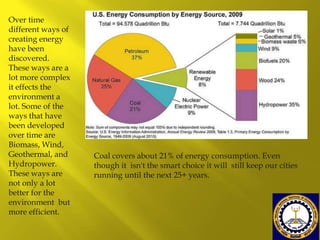
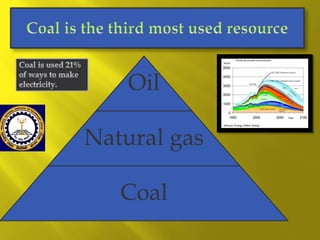
Coal covers about 21% of energy consumption. Even
though it isn't the smart choice it will still keep our cities
running until the next 25+ years.
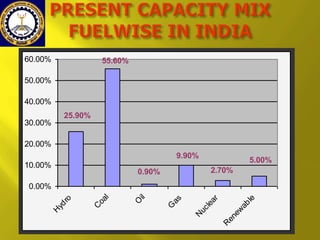
60.00%

55.60%

50.00%
40.00%
25.90%

30.00%
20.00%

9.90%
10.00%

5.00%
2.70%

0.90%

ab
le
en
ew
R

as
G

il
O

oa
l
C

uc
le
ar
N

H

yd
ro

0.00%
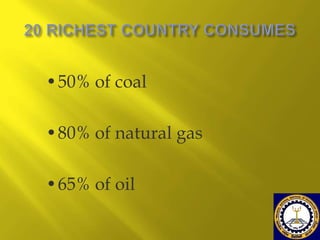
•50% of coal
•80% of natural gas
•65% of oil
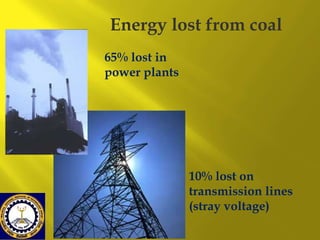
Energy lost from coal
65% lost in
power plants

10% lost on
transmission lines
(stray voltage)
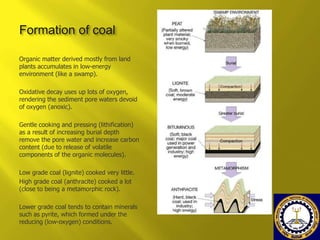
Formation of coal
Organic matter derived mostly from land
plants accumulates in low-energy
environment (like a swamp).
Oxidative decay uses up lots of oxygen,
rendering the sediment pore waters devoid
of oxygen (anoxic).
Gentle cooking and pressing (lithification)
as a result of increasing burial depth
remove the pore water and increase carbon
content (due to release of volatile
components of the organic molecules).
Low grade coal (lignite) cooked very little.
High grade coal (anthracite) cooked a lot
(close to being a metamorphic rock).
Lower grade coal tends to contain minerals
such as pyrite, which formed under the
reducing (low-oxygen) conditions.
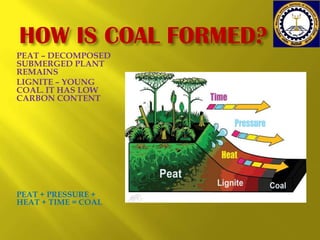
HOW IS COAL FORMED?
PEAT – DECOMPOSED
SUBMERGED PLANT
REMAINS
LIGNITE – YOUNG
COAL. IT HAS LOW
CARBON CONTENT

PEAT + PRESSURE +
HEAT + TIME = COAL
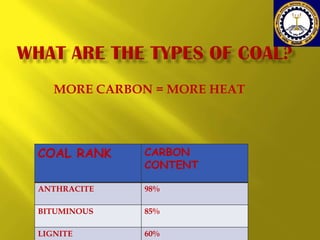
MORE CARBON = MORE HEAT

COAL RANK

CARBON
CONTENT

ANTHRACITE

98%

BITUMINOUS

85%

LIGNITE

60%
Oil
Natural gas
Coal
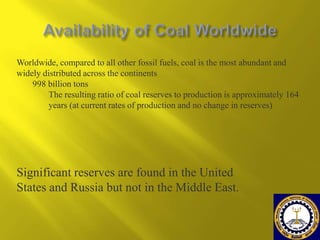
Worldwide, compared to all other fossil fuels, coal is the most abundant and
widely distributed across the continents
998 billion tons
The resulting ratio of coal reserves to production is approximately 164
years (at current rates of production and no change in reserves)

Significant reserves are found in the United
States and Russia but not in the Middle East.
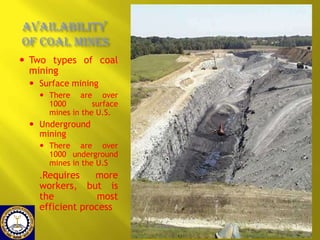
Availability
of Coal Mines
 Two types of coal
mining
 Surface mining
 There are over
1000
surface
mines in the U.S.

 Underground
mining
 There are over
1000 underground
mines in the U.S
.Requires

more
workers, but is
the
most
efficient process
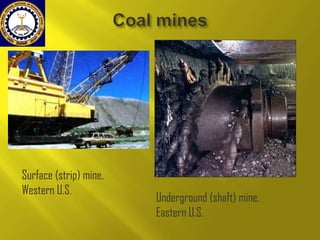
Surface (strip) mine,
Western U.S.

Underground (shaft) mine,
Eastern U.S.
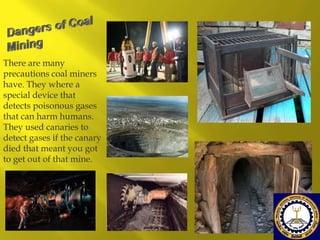
There are many
precautions coal miners
have. They where a
special device that
detects poisonous gases
that can harm humans.
They used canaries to
detect gases if the canary
died that meant you got
to get out of that mine.
Coal production has increased by more than 70% since
1970

9 out of every 10 tons of coal mined in the United States
today is used to generate electricity
56% of electricity in US is coal-generated

Use of coal is not limited to electricity generation:
Make chemicals, cement, paper, metal products
Methanol, ethylene
About 9 percent of U.S.-mined coal is exported to some 40
countries
The United States has a 300-year
supply of coal, if it continues to
use it at the same rate as today
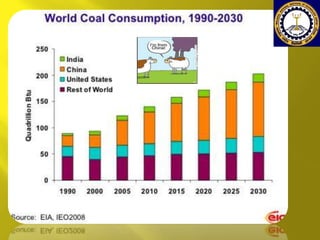
Worldwide coal consumption is
supposed to increase 2% per year
from 2005 to 2030
29 percent of total world energy
consumption in 2030
There will likely be a significant increase in
the use of coal for electricity generation in
countries such as China and India
New technologies will continue to enhance
our ability to identify the shape and
composition of untapped coal reserves
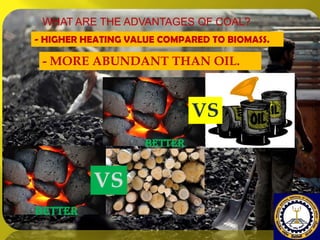
WHAT ARE THE ADVANTAGES OF COAL?
- HIGHER HEATING VALUE COMPARED TO BIOMASS.

- MORE ABUNDANT THAN OIL.

VS
BETTER

VS
BETTER
The combustion of coal produces carbon dioxide(CO2) and nitrogen
oxides with varying amounts of sulfur dioxide (SO2) and other
pollutants
Coal-fired power plants represent the largest source of carbon dioxide
emissions, which is a major cause of global warming
Coal-fired power plants represent the largest source of carbon dioxide
emissions, which is a major cause of global warming
Sulfur dioxide reacts with oxygen to form sulfur trioxide (SO3) gas,
which in turn reacts with moisture in the air to form sulfuric acid. This
acid in the atmosphere is returned to the Earth in the form of acid rain.
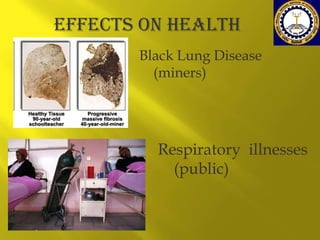
Effects on health
Black Lung Disease
(miners)

Respiratory illnesses
(public)
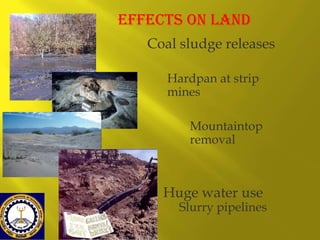
Effects on land
Coal sludge releases
Hardpan at strip
mines

Mountaintop
removal

Huge water use

Slurry pipelines
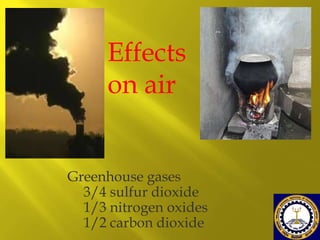
Effects
on air

Greenhouse gases
3/4 sulfur dioxide
1/3 nitrogen oxides
1/2 carbon dioxide
www.wikipedia.com/coal use

www.googleimage.com/air pollution
www.slideshare.com/coal
THANK YOU

coal

  • 1.
    MALAVIYA NATIONAL INSTITUTEOF TECHNOLOGY JAIPUR CHEMICAL ENGINEERING DEPARTMENT
  • 2.
    WHAT IS ENERGY 2. WHATIS COAL 3. HISTORY 4. CONSUMPTION 5. ENERGY LOSS 6. COAL FORMATION 7. TYPES 8. AVALIBILITY 9. COAL MINES 10. DANGERS OF COAL MINES 11. PRESENT USE 12. FUTURE USE 13. ADVANTAGE 14. DISADVANTAGE 15. VARIOUS EFFECTS 1.
  • 5.
     - COAL ISAN UNRENEWABLE SOURCE OF FUEL WHY?  - COAL IS FORMED FROM VEGETATION THAT CAN BE AS OLD AS 400 MILLION YEARS OLD. (THAT IS WHY IT’S CALLED A FOSSIL FUEL)
  • 6.
        The earliest useof coal in the Americas was the Aztecs In the 1300s in what is now the United States, Native Americans used coal for cooking, making clay pots, and heating. Large-scale coal mining developed in the Industrial Revolution when demands for energy skyrocketed The first documented mining of coal in the US was 50 tons dug in 1748 in Virginia
  • 7.
     In the past,coal had a variety of uses. Gas for gas lights  domestic heating, railroad fuel and for stationery steam engines.  Heating for the iron and steel industries  Weapons for the civil war 
  • 8.
    Over time different waysof creating energy have been discovered. These ways are a lot more complex it effects the environment a lot. Some of the ways that have been developed over time are Biomass, Wind, Geothermal, and Hydropower. These ways are not only a lot better for the environment but more efficient. Coal covers about 21% of energy consumption. Even though it isn't the smart choice it will still keep our cities running until the next 25+ years.
  • 10.
  • 11.
    •50% of coal •80%of natural gas •65% of oil
  • 12.
    Energy lost fromcoal 65% lost in power plants 10% lost on transmission lines (stray voltage)
  • 13.
    Formation of coal Organicmatter derived mostly from land plants accumulates in low-energy environment (like a swamp). Oxidative decay uses up lots of oxygen, rendering the sediment pore waters devoid of oxygen (anoxic). Gentle cooking and pressing (lithification) as a result of increasing burial depth remove the pore water and increase carbon content (due to release of volatile components of the organic molecules). Low grade coal (lignite) cooked very little. High grade coal (anthracite) cooked a lot (close to being a metamorphic rock). Lower grade coal tends to contain minerals such as pyrite, which formed under the reducing (low-oxygen) conditions.
  • 14.
    HOW IS COALFORMED? PEAT – DECOMPOSED SUBMERGED PLANT REMAINS LIGNITE – YOUNG COAL. IT HAS LOW CARBON CONTENT PEAT + PRESSURE + HEAT + TIME = COAL
  • 15.
    MORE CARBON =MORE HEAT COAL RANK CARBON CONTENT ANTHRACITE 98% BITUMINOUS 85% LIGNITE 60%
  • 17.
  • 18.
    Worldwide, compared toall other fossil fuels, coal is the most abundant and widely distributed across the continents 998 billion tons The resulting ratio of coal reserves to production is approximately 164 years (at current rates of production and no change in reserves) Significant reserves are found in the United States and Russia but not in the Middle East.
  • 20.
    Availability of Coal Mines Two types of coal mining  Surface mining  There are over 1000 surface mines in the U.S.  Underground mining  There are over 1000 underground mines in the U.S .Requires more workers, but is the most efficient process
  • 21.
    Surface (strip) mine, WesternU.S. Underground (shaft) mine, Eastern U.S.
  • 22.
    There are many precautionscoal miners have. They where a special device that detects poisonous gases that can harm humans. They used canaries to detect gases if the canary died that meant you got to get out of that mine.
  • 23.
    Coal production hasincreased by more than 70% since 1970 9 out of every 10 tons of coal mined in the United States today is used to generate electricity 56% of electricity in US is coal-generated Use of coal is not limited to electricity generation: Make chemicals, cement, paper, metal products Methanol, ethylene About 9 percent of U.S.-mined coal is exported to some 40 countries
  • 24.
    The United Stateshas a 300-year supply of coal, if it continues to use it at the same rate as today Worldwide coal consumption is supposed to increase 2% per year from 2005 to 2030 29 percent of total world energy consumption in 2030
  • 25.
    There will likelybe a significant increase in the use of coal for electricity generation in countries such as China and India New technologies will continue to enhance our ability to identify the shape and composition of untapped coal reserves
  • 26.
    WHAT ARE THEADVANTAGES OF COAL? - HIGHER HEATING VALUE COMPARED TO BIOMASS. - MORE ABUNDANT THAN OIL. VS BETTER VS BETTER
  • 27.
    The combustion ofcoal produces carbon dioxide(CO2) and nitrogen oxides with varying amounts of sulfur dioxide (SO2) and other pollutants Coal-fired power plants represent the largest source of carbon dioxide emissions, which is a major cause of global warming Coal-fired power plants represent the largest source of carbon dioxide emissions, which is a major cause of global warming Sulfur dioxide reacts with oxygen to form sulfur trioxide (SO3) gas, which in turn reacts with moisture in the air to form sulfuric acid. This acid in the atmosphere is returned to the Earth in the form of acid rain.
  • 28.
    Effects on health BlackLung Disease (miners) Respiratory illnesses (public)
  • 29.
    Effects on land Coalsludge releases Hardpan at strip mines Mountaintop removal Huge water use Slurry pipelines
  • 30.
    Effects on air Greenhouse gases 3/4sulfur dioxide 1/3 nitrogen oxides 1/2 carbon dioxide
  • 31.
  • 32.