   This series is another way to compare metals.
    Each metal is placed in a circuit and combined
    with a standard electrode called the hydrogen
    electrode.
   In the electrochemical series aluminium is the
    fifth (5th ) metal with a voltage of -1.66.
Bauxite Supply
               Crush and Grind

  Digesters
                          Flash Cooling

    Settlers

      Precipitation

         Calcinations
   Crush and Grind: The ore is then fed into large grinding mills and mixed
               with a caustic soda solution (sodium hydroxide) at high
               temperature and pressure.

   Digesters: The slurry is pumped to a digester where the chemical
               reaction to dissolve the alumina takes place.

   Flash Cooling: The slurry is pumped into a series of flash tanks to reduce
                the pressure and heat.

   Settlers:   Settling is achieved primarily by using gravity, although
                some chemicals are added to aid the process.

   Precipitation: The clear sodium aluminate from the settling and filtering
                 operation is pumped into precipitators.

   Calcination:Calcination is a heating process to remove the
                chemically combined water from the alumina hydrate.
Calcinations   Smelting
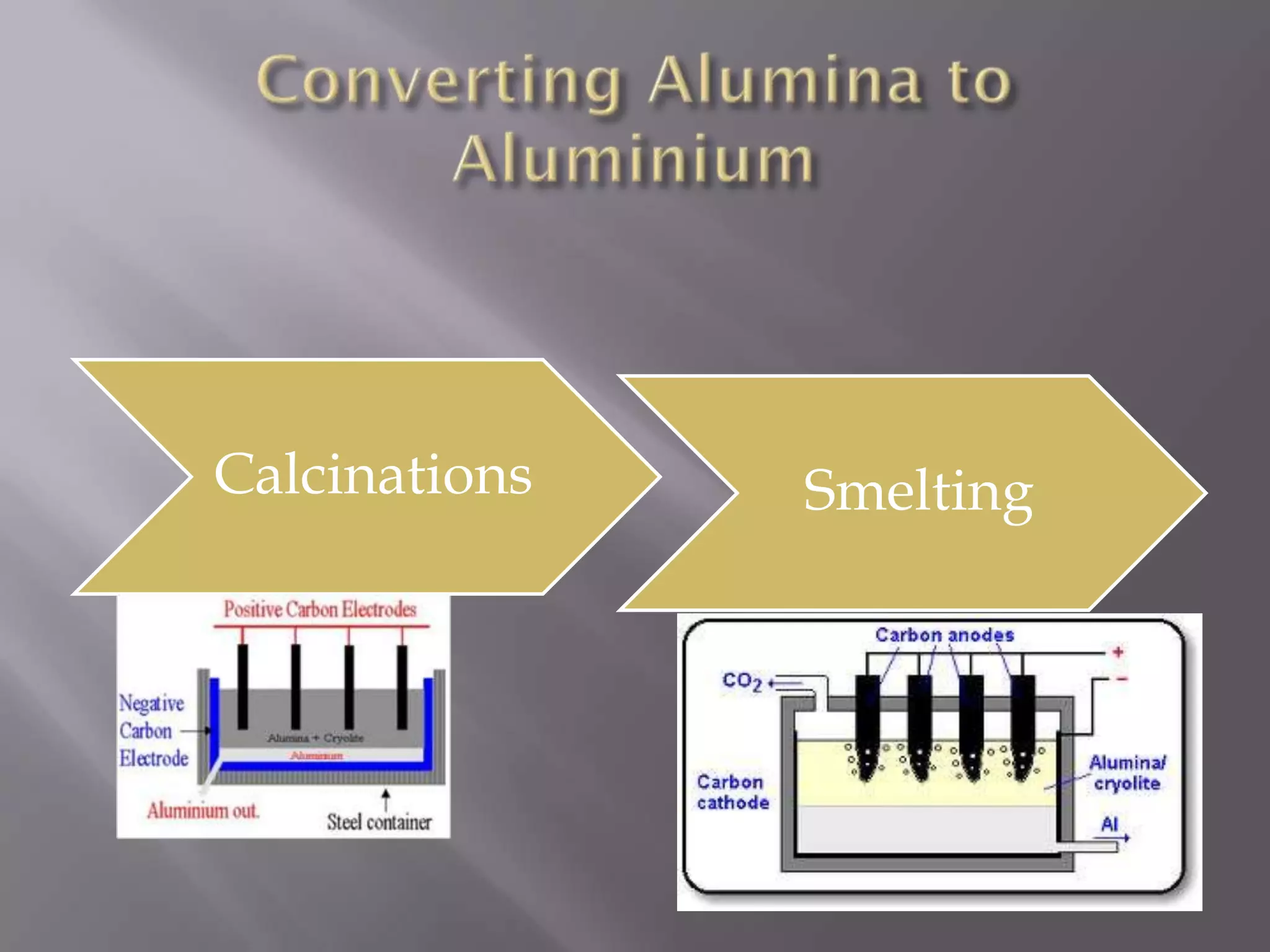
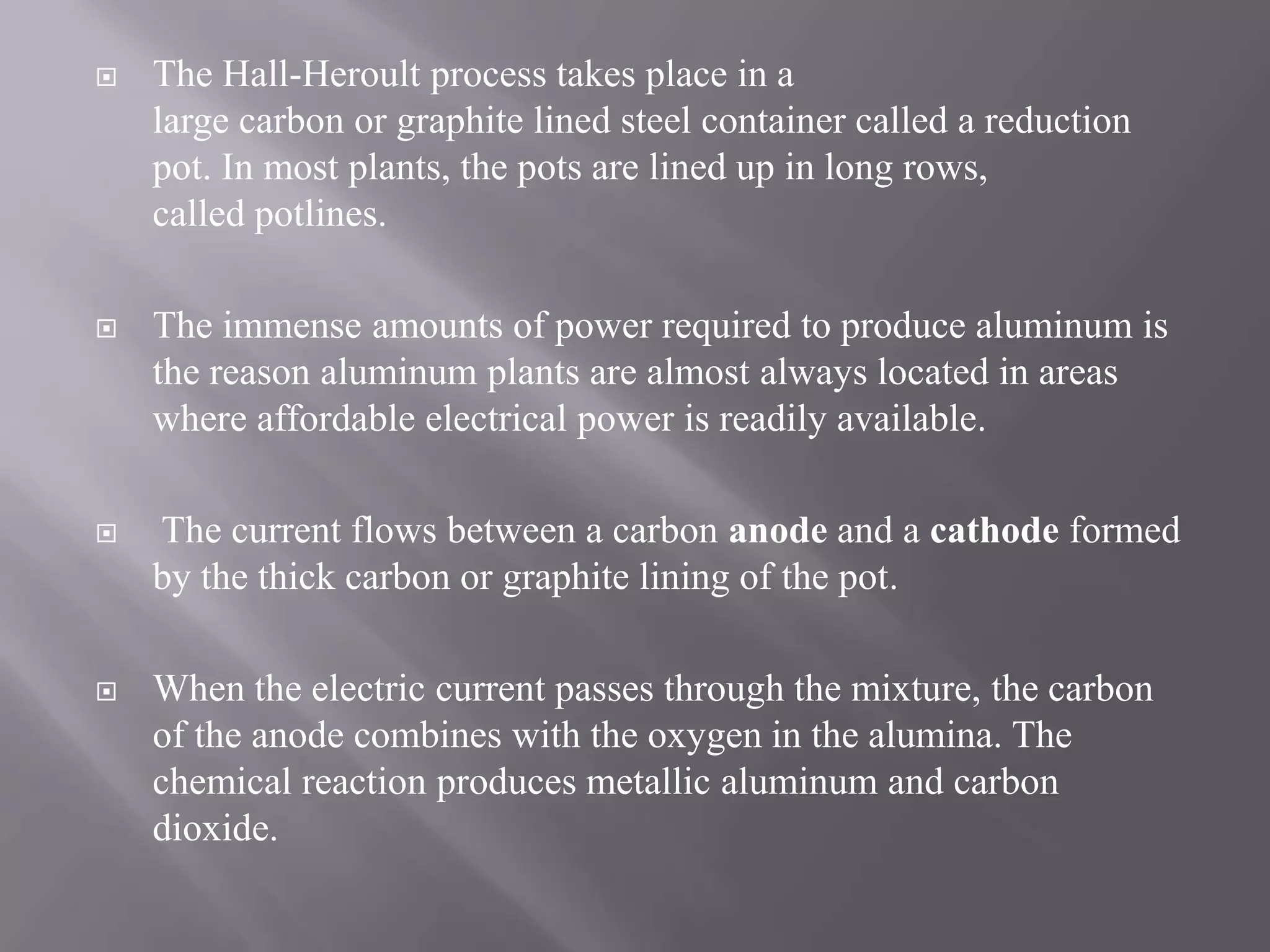
   The Hall-Heroult process takes place in a
    large carbon or graphite lined steel container called a reduction
    pot. In most plants, the pots are lined up in long rows,
    called potlines.

   The immense amounts of power required to produce aluminum is
    the reason aluminum plants are almost always located in areas
    where affordable electrical power is readily available.

   The current flows between a carbon anode and a cathode formed
    by the thick carbon or graphite lining of the pot.

   When the electric current passes through the mixture, the carbon
    of the anode combines with the oxygen in the alumina. The
    chemical reaction produces metallic aluminum and carbon
    dioxide.
   The electrolytic cell used is a steel tank with a
    carbon base which is made the cathode.
    Multiple carbon anodes dip into the cell:

 Aluminium is produced at the cathode (-):
Al3+ + 3e Al(l)

 Oxygen is produced at the anode (+)
2O2- O2(g) + 4e-
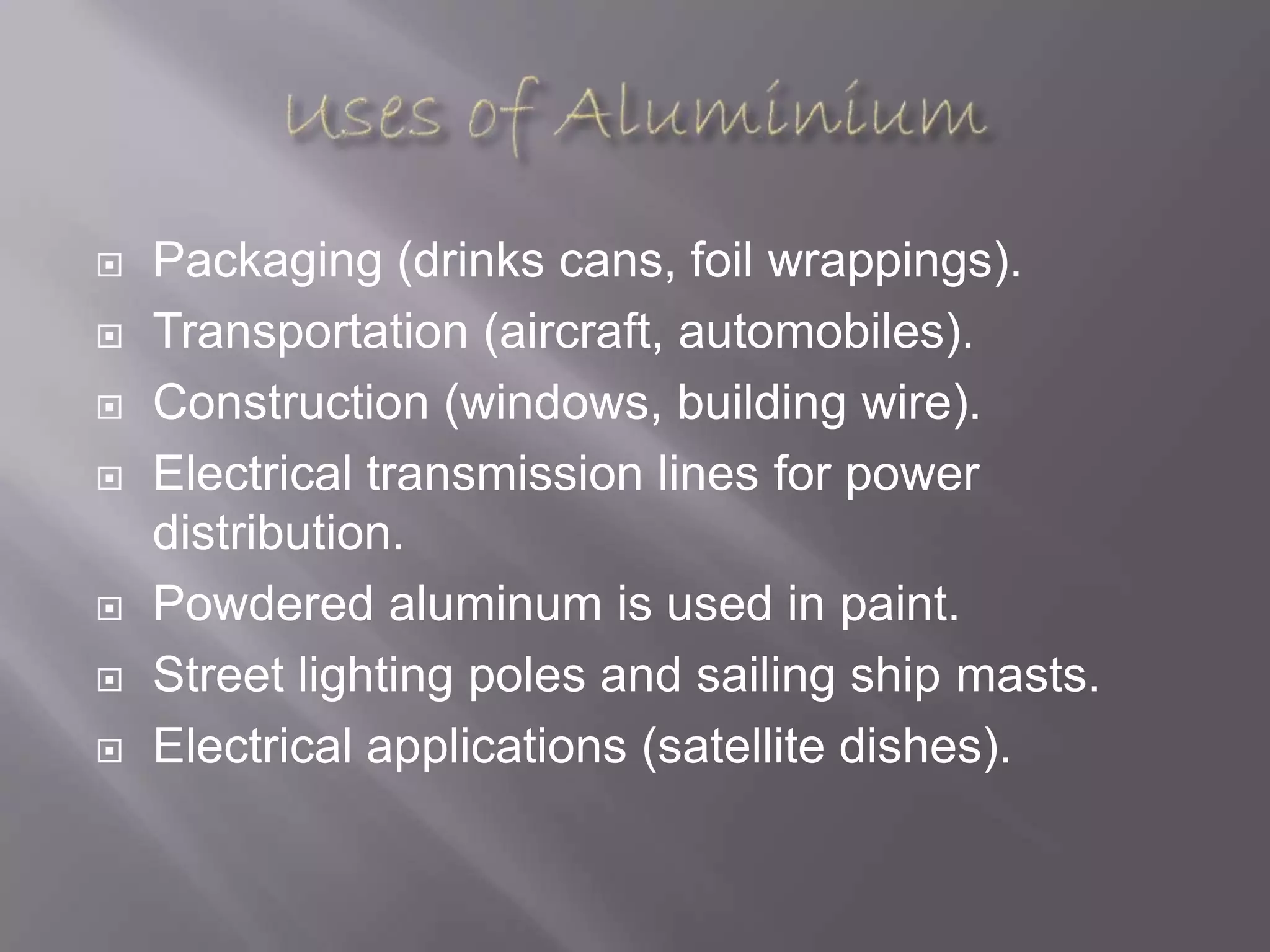
   Packaging (drinks cans, foil wrappings).
   Transportation (aircraft, automobiles).
   Construction (windows, building wire).
   Electrical transmission lines for power
    distribution.
   Powdered aluminum is used in paint.
   Street lighting poles and sailing ship masts.
   Electrical applications (satellite dishes).
   Shari-Gaye Changlong
   Rashana Lewis
   Alex Taylor
   Kassandia Windette

Aluminium ppt

  • 2.
    This series is another way to compare metals. Each metal is placed in a circuit and combined with a standard electrode called the hydrogen electrode.  In the electrochemical series aluminium is the fifth (5th ) metal with a voltage of -1.66.
  • 3.
    Bauxite Supply Crush and Grind Digesters Flash Cooling Settlers Precipitation Calcinations
  • 4.
    Crush and Grind: The ore is then fed into large grinding mills and mixed with a caustic soda solution (sodium hydroxide) at high temperature and pressure.  Digesters: The slurry is pumped to a digester where the chemical reaction to dissolve the alumina takes place.  Flash Cooling: The slurry is pumped into a series of flash tanks to reduce the pressure and heat.  Settlers: Settling is achieved primarily by using gravity, although some chemicals are added to aid the process.  Precipitation: The clear sodium aluminate from the settling and filtering operation is pumped into precipitators.  Calcination:Calcination is a heating process to remove the chemically combined water from the alumina hydrate.
  • 5.
    Calcinations Smelting
  • 6.
    The Hall-Heroult process takes place in a large carbon or graphite lined steel container called a reduction pot. In most plants, the pots are lined up in long rows, called potlines.  The immense amounts of power required to produce aluminum is the reason aluminum plants are almost always located in areas where affordable electrical power is readily available.  The current flows between a carbon anode and a cathode formed by the thick carbon or graphite lining of the pot.  When the electric current passes through the mixture, the carbon of the anode combines with the oxygen in the alumina. The chemical reaction produces metallic aluminum and carbon dioxide.
  • 7.
    The electrolytic cell used is a steel tank with a carbon base which is made the cathode. Multiple carbon anodes dip into the cell:  Aluminium is produced at the cathode (-): Al3+ + 3e Al(l)  Oxygen is produced at the anode (+) 2O2- O2(g) + 4e-
  • 8.
    Packaging (drinks cans, foil wrappings).  Transportation (aircraft, automobiles).  Construction (windows, building wire).  Electrical transmission lines for power distribution.  Powdered aluminum is used in paint.  Street lighting poles and sailing ship masts.  Electrical applications (satellite dishes).
  • 10.
    Shari-Gaye Changlong  Rashana Lewis  Alex Taylor  Kassandia Windette