What is an Ecosystem?
 An ecosystem is a community of living
things that interact with each other and
with the physical world.
What is an Ecosystem?
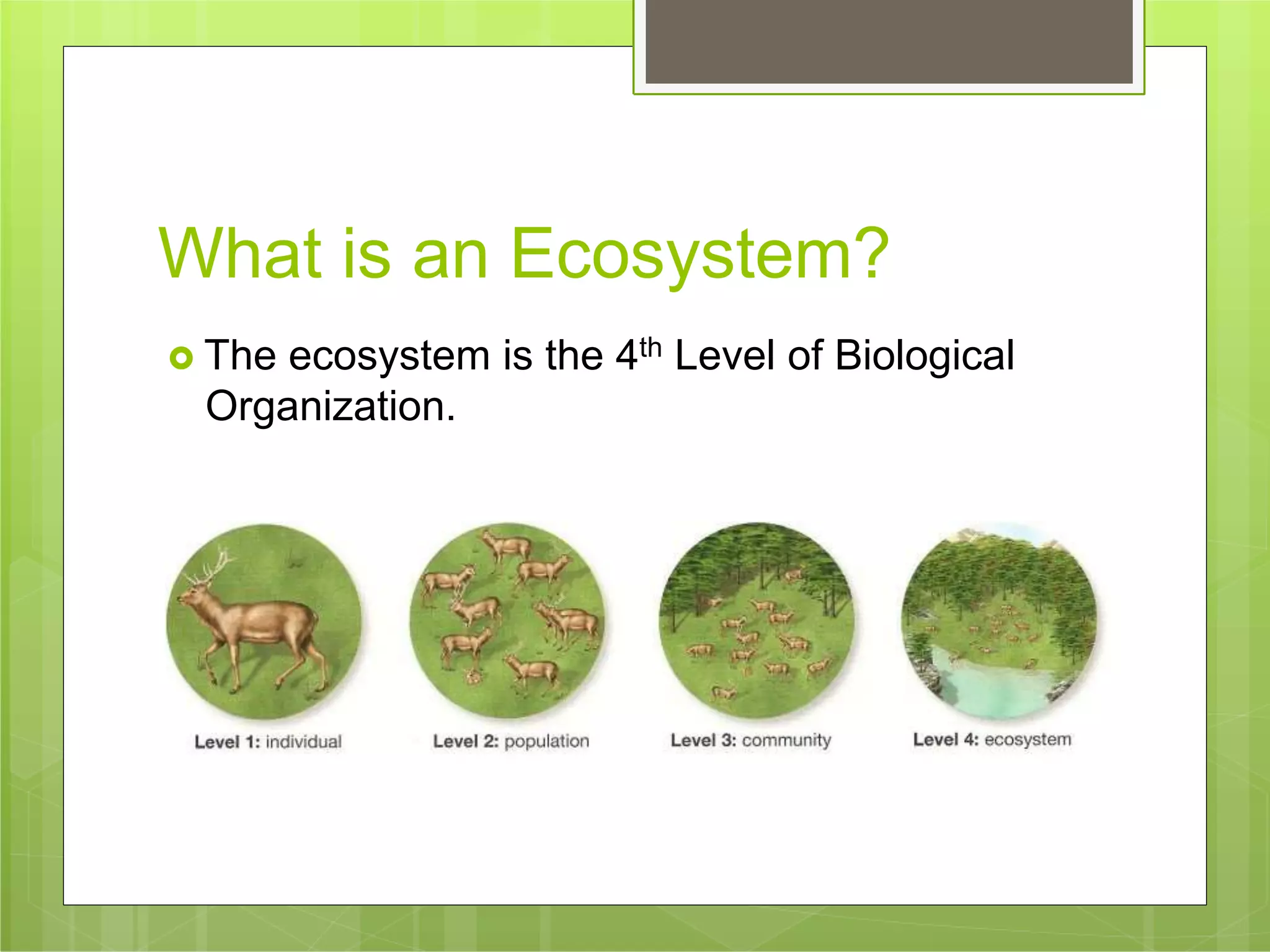
 The ecosystem is the 4th Level of Biological
Organization.
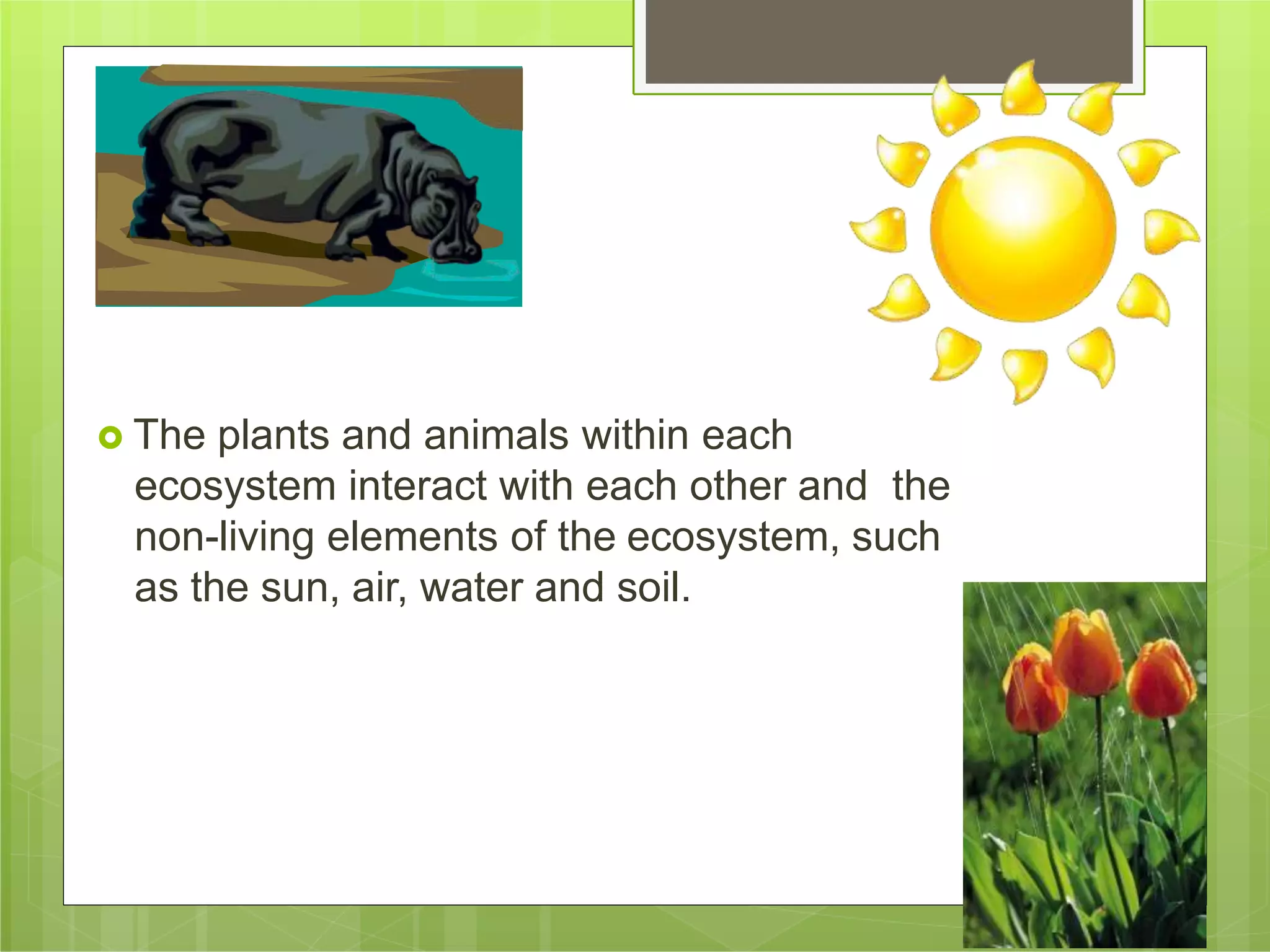
 The plants and animals within each
ecosystem interact with each other and the
non-living elements of the ecosystem, such
as the sun, air, water and soil.
Interactions between Biotic and Abiotic Factors
 An ecosystem can be very small such as a
puddle or under a rock.
 It can also be as big as an ocean or a
desert.
 The balance of an ecosystem is important. All
things must work together to provide a good
living environment.
 For example, if there is not enough water,
plants and animals will die and the
ecosystem will not exist.
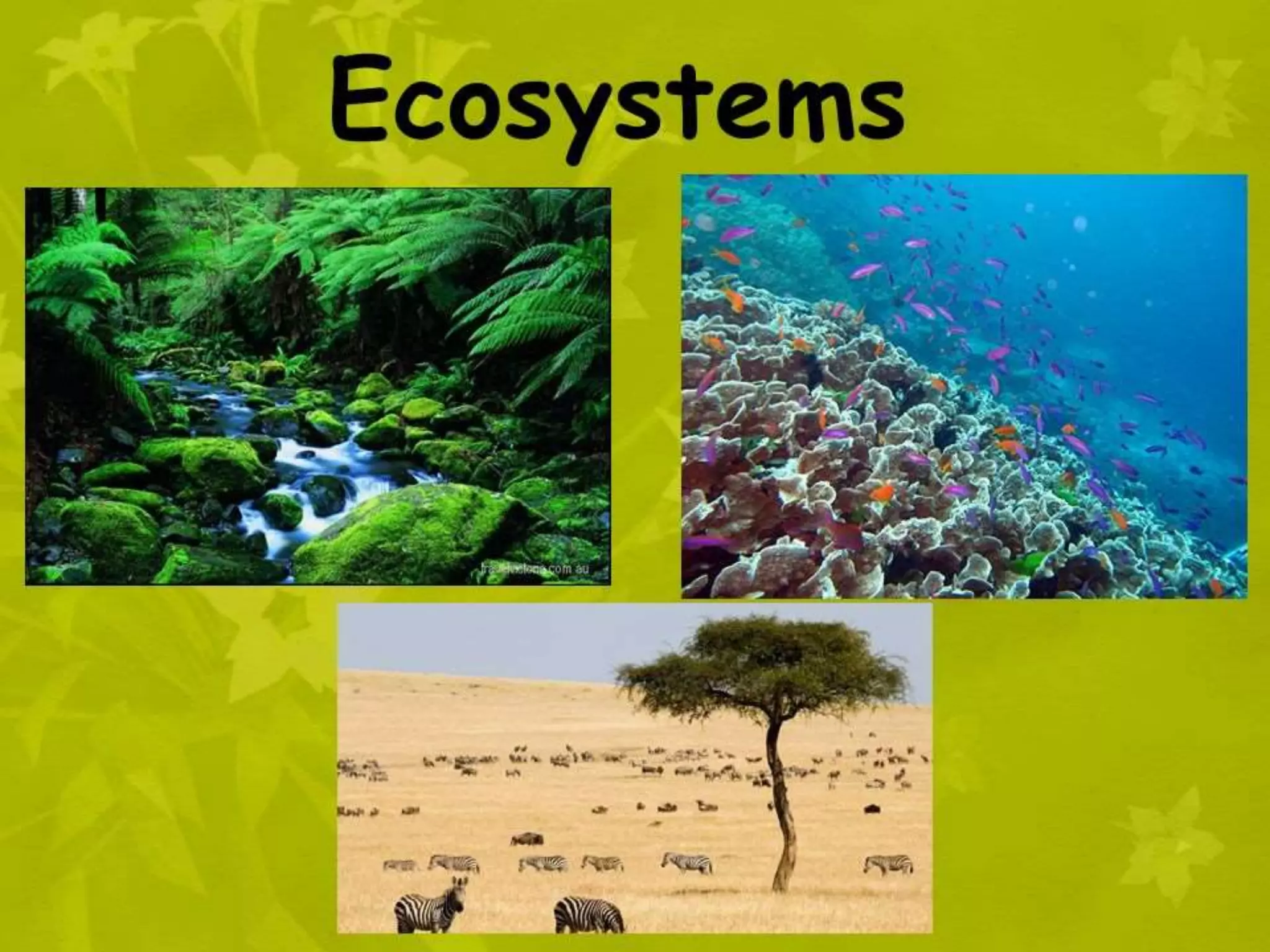
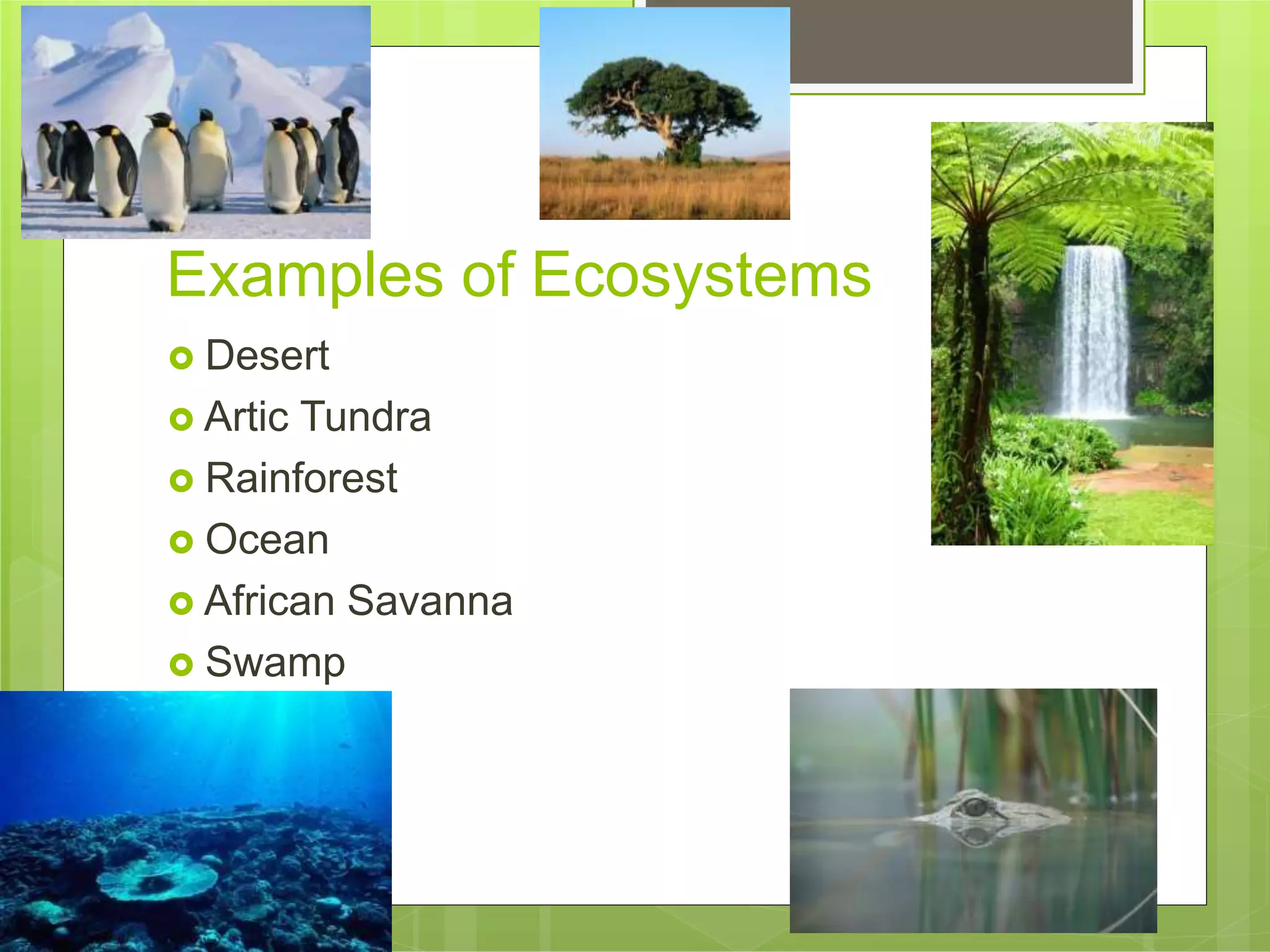
Examples of Ecosystems
 Desert
 Artic Tundra
 Rainforest
 Ocean
 African Savanna
 Swamp
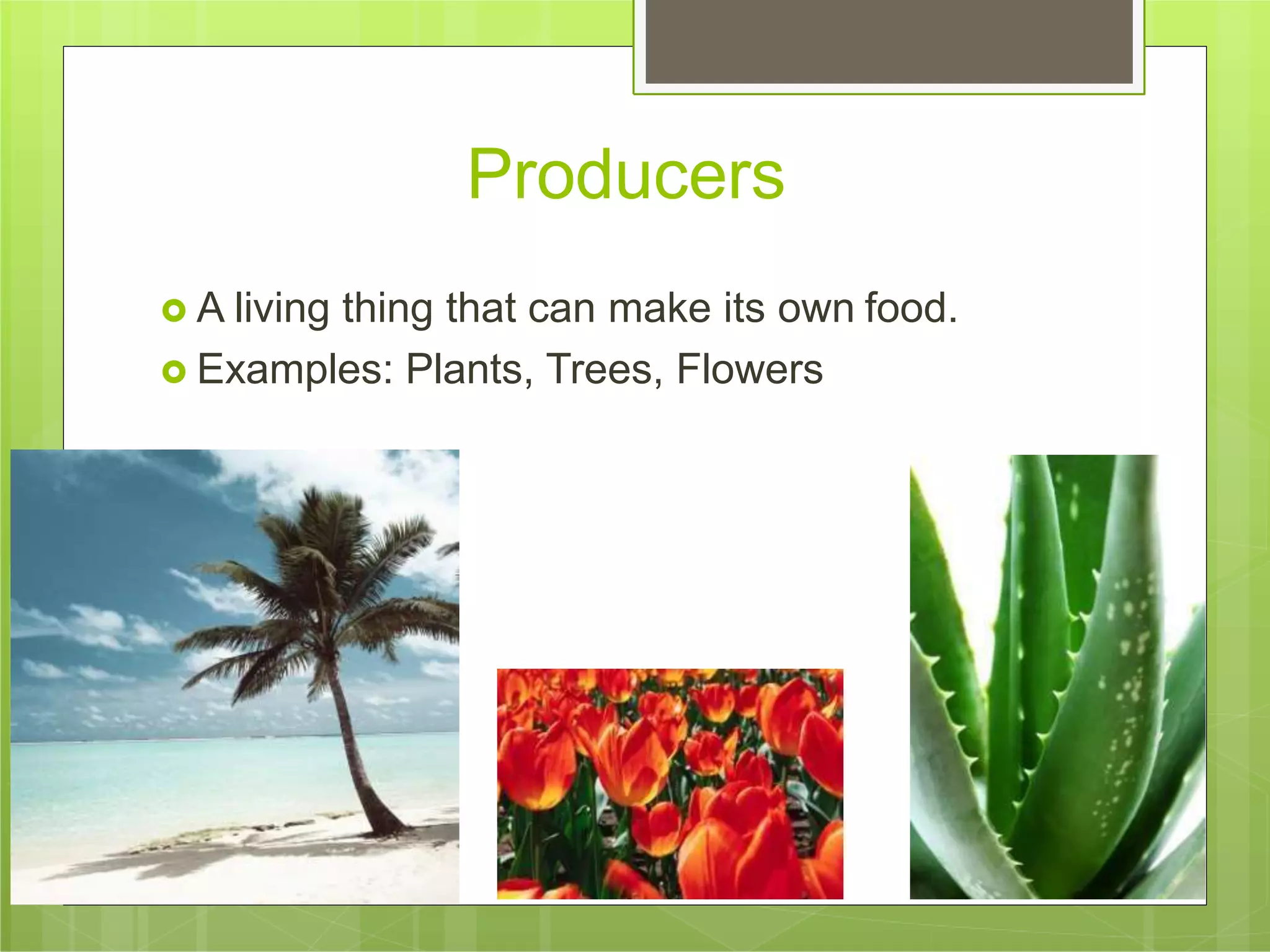
Producers
 A living thing that can make its own food.
 Examples: Plants, Trees, Flowers
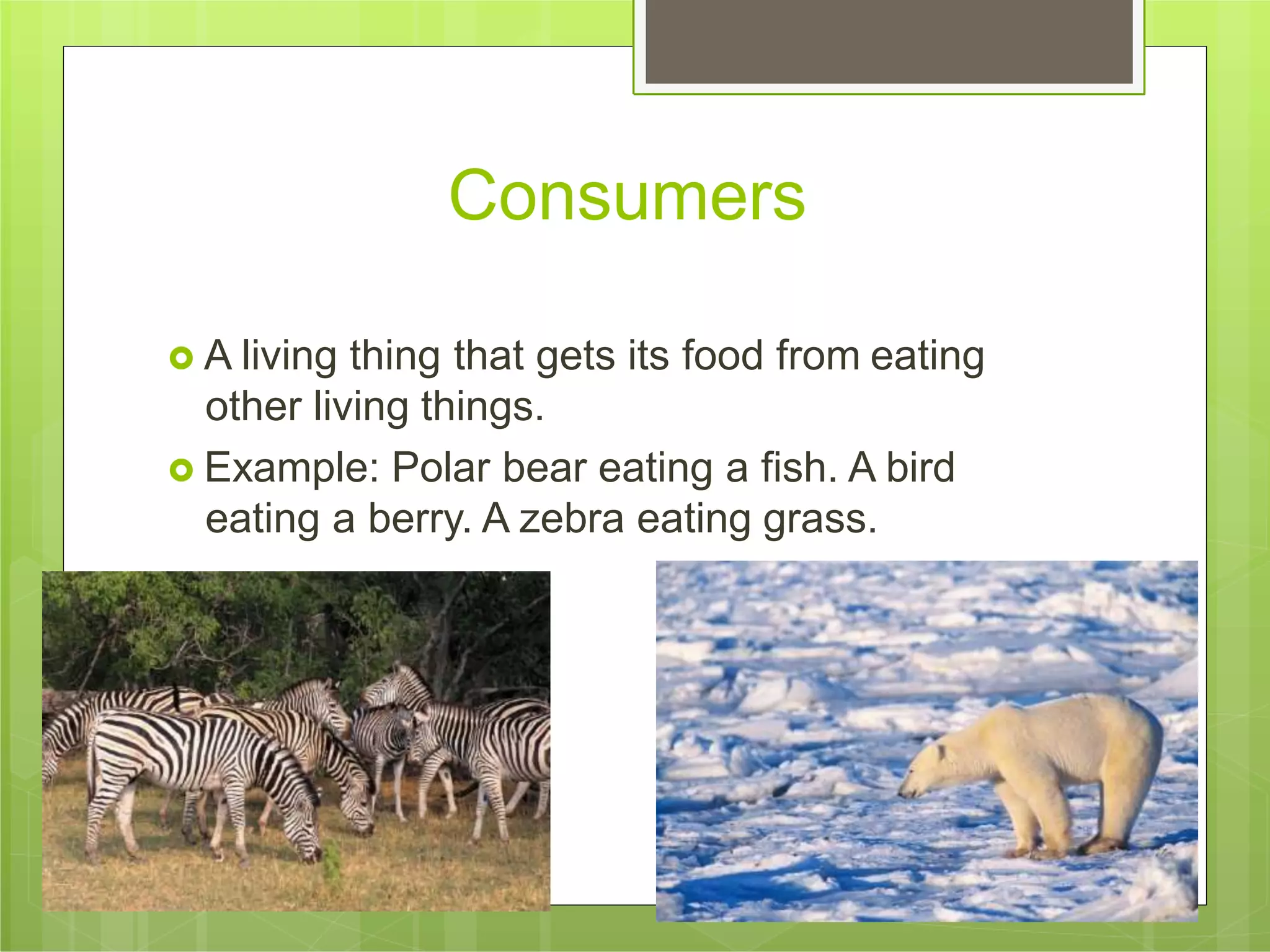
Consumers
 A living thing that gets its food from eating
other living things.
 Example: Polar bear eating a fish. A bird
eating a berry. A zebra eating grass.
Decomposers
 A living thing that breaks down other living
things to get nutrients and energy.
 Examples: Vultures eat dead animals.
Worms and beetles eat dead decaying
plants.
Population
 A group of living things that live in the
same place at the same time.
 Example: many penguins live in the artic;
many elephants live in the African Savanna
Community
 When different populations live together in
the same habitat and interact with each
other.
 Example: Elephants, giraffes, and zebras
all live together in the Savanna.
Abiotic
 Any non-living organisms in an ecosystem.
Biotic
 Any living organisms in an ecosystem.
Food Chain
 Shows what eats what in an ecosystem.
 Example:
All About Ecosystems

All About Ecosystems

  • 2.
    What is anEcosystem?  An ecosystem is a community of living things that interact with each other and with the physical world.
  • 3.
    What is anEcosystem?  The ecosystem is the 4th Level of Biological Organization.
  • 4.
     The plantsand animals within each ecosystem interact with each other and the non-living elements of the ecosystem, such as the sun, air, water and soil.
  • 5.
    Interactions between Bioticand Abiotic Factors
  • 6.
     An ecosystemcan be very small such as a puddle or under a rock.  It can also be as big as an ocean or a desert.
  • 7.
     The balanceof an ecosystem is important. All things must work together to provide a good living environment.  For example, if there is not enough water, plants and animals will die and the ecosystem will not exist.
  • 8.
    Examples of Ecosystems Desert  Artic Tundra  Rainforest  Ocean  African Savanna  Swamp
  • 9.
    Producers  A livingthing that can make its own food.  Examples: Plants, Trees, Flowers
  • 10.
    Consumers  A livingthing that gets its food from eating other living things.  Example: Polar bear eating a fish. A bird eating a berry. A zebra eating grass.
  • 11.
    Decomposers  A livingthing that breaks down other living things to get nutrients and energy.  Examples: Vultures eat dead animals. Worms and beetles eat dead decaying plants.
  • 12.
    Population  A groupof living things that live in the same place at the same time.  Example: many penguins live in the artic; many elephants live in the African Savanna
  • 13.
    Community  When differentpopulations live together in the same habitat and interact with each other.  Example: Elephants, giraffes, and zebras all live together in the Savanna.
  • 14.
    Abiotic  Any non-livingorganisms in an ecosystem.
  • 15.
    Biotic  Any livingorganisms in an ecosystem.
  • 16.
    Food Chain  Showswhat eats what in an ecosystem.  Example: