Celestial Objects
in Space
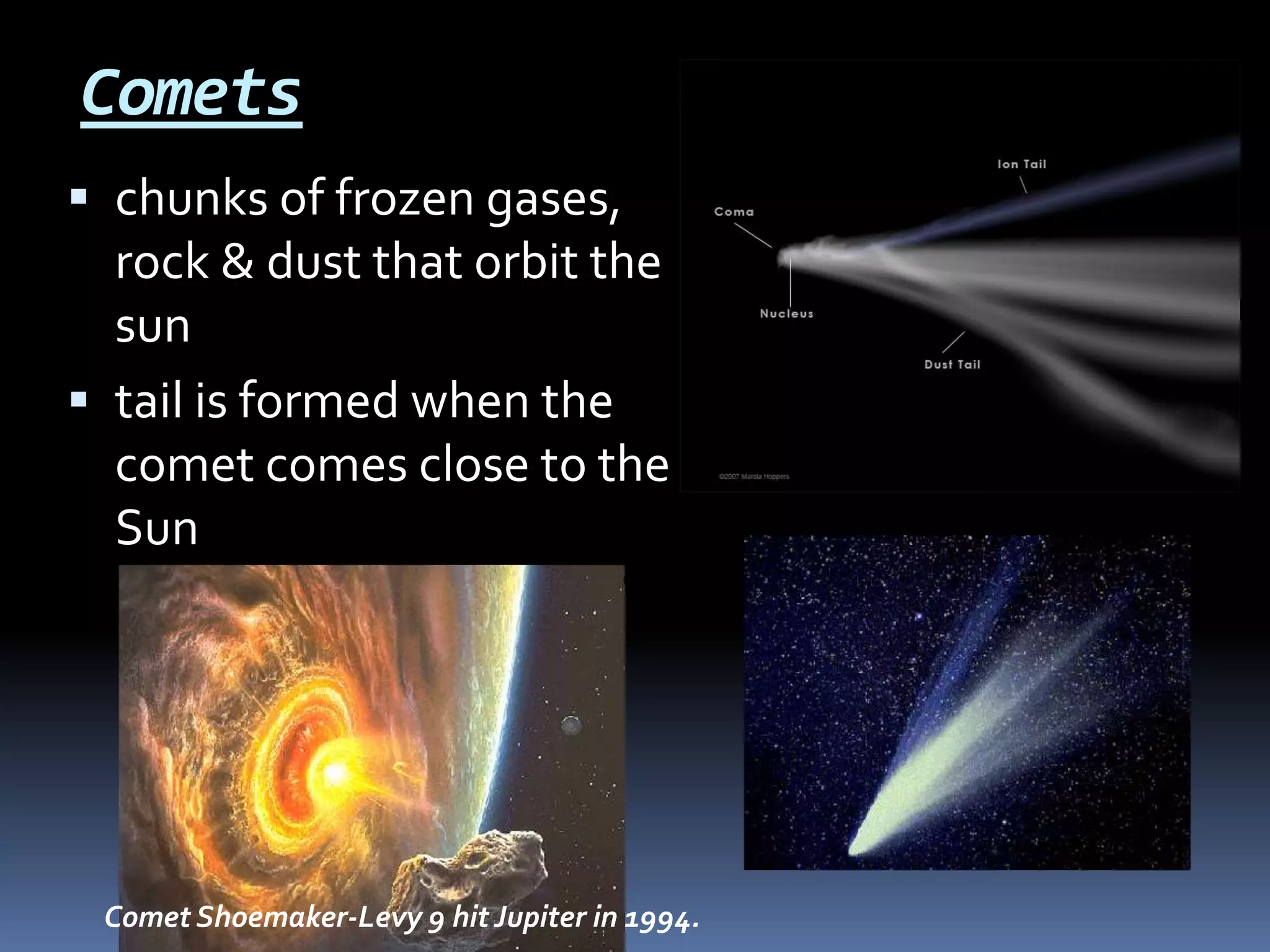
Comets
 chunks of frozen gases,
rock & dust that orbit the
sun
 tail is formed when the
comet comes close to the
Sun
Comet Shoemaker-Levy 9 hit Jupiter in 1994.
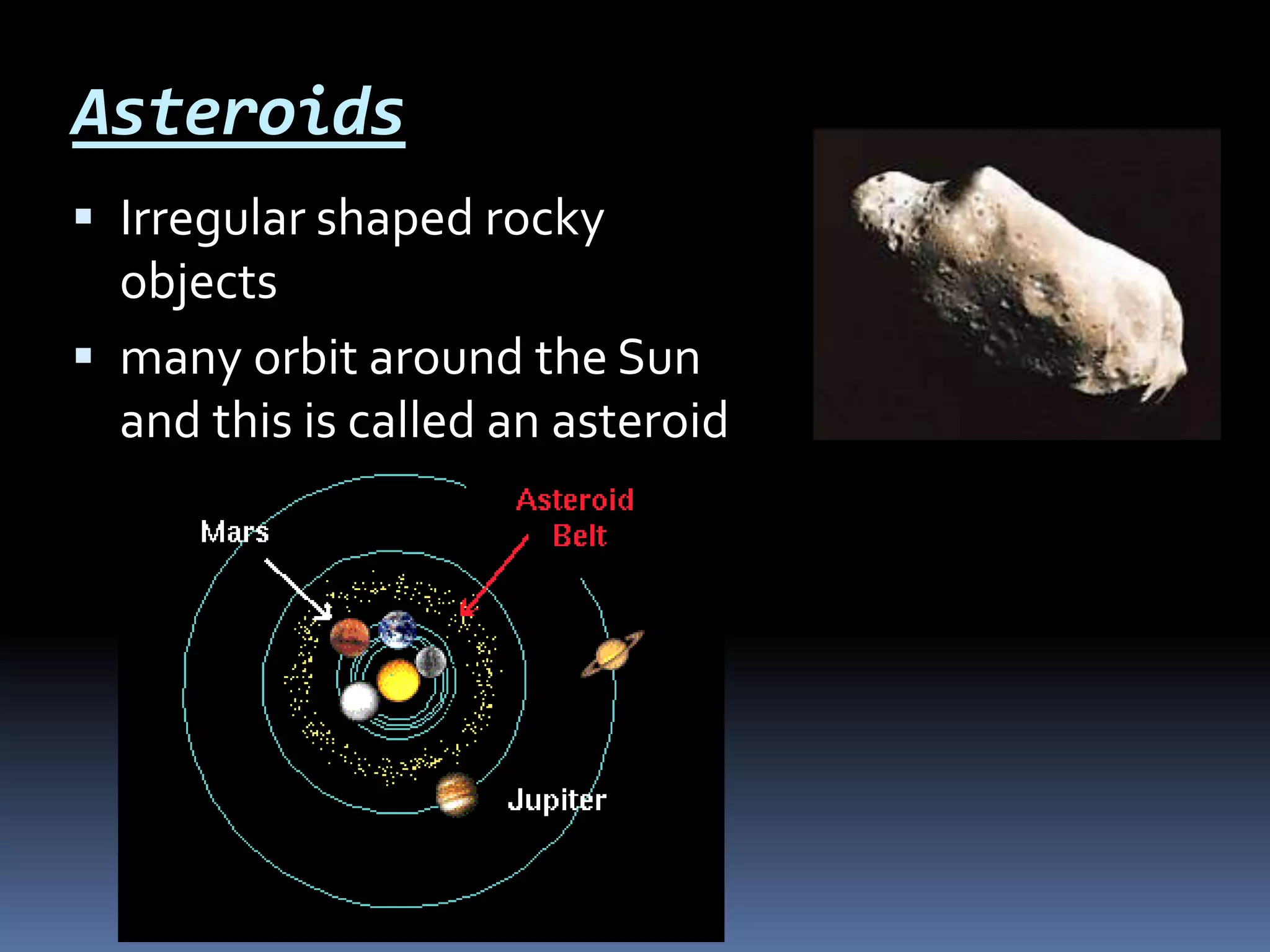
Asteroids
 Irregular shaped rocky
objects
 many orbit around the Sun
and this is called an asteroid
belt
Meteors & Meteorites
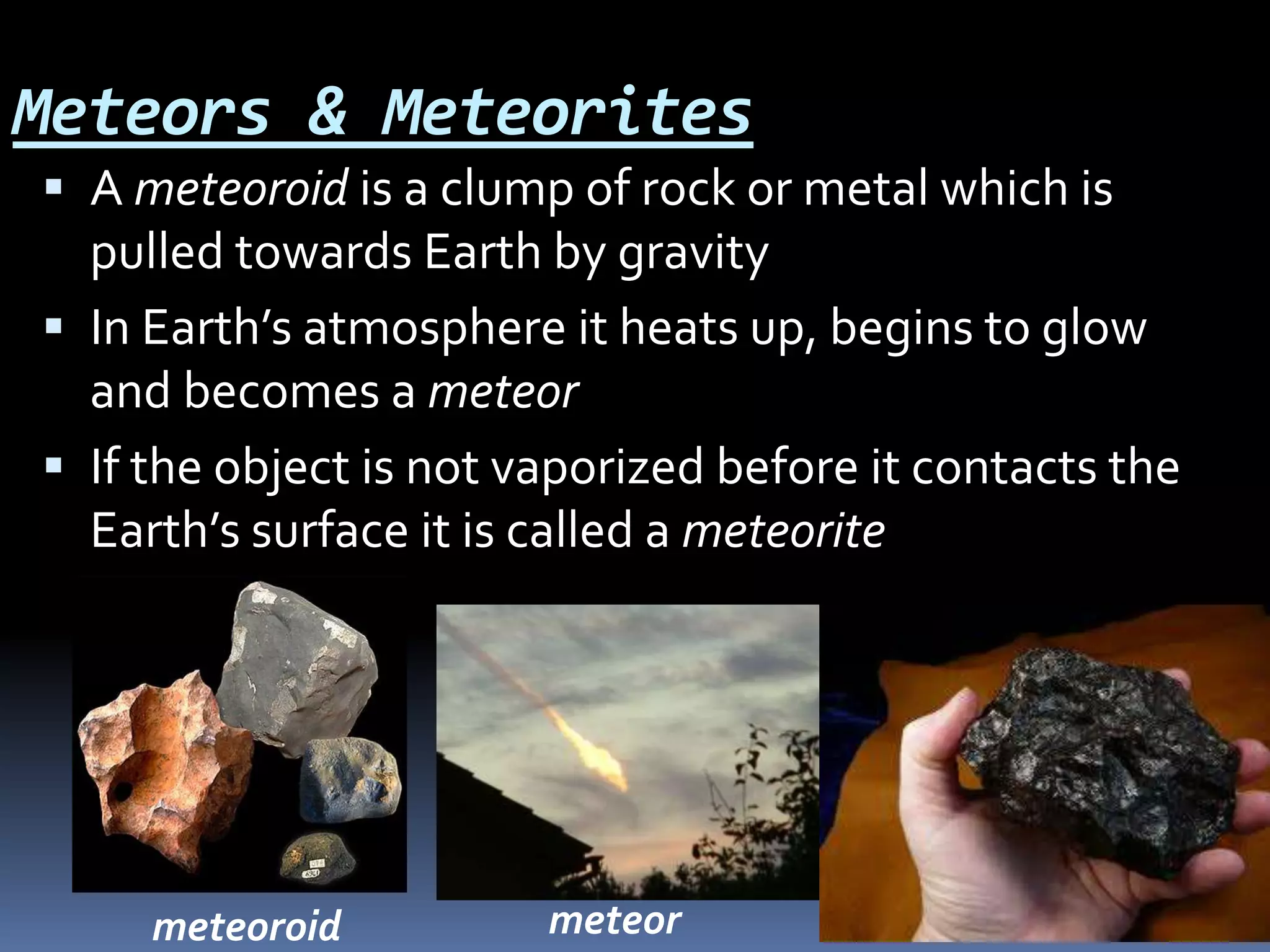
 A meteoroid is a clump of rock or metal which is
pulled towards Earth by gravity
 In Earth’s atmosphere it heats up, begins to glow
and becomes a meteor
 If the object is not vaporized before it contacts the
Earth’s surface it is called a meteorite
meteoroid meteor meteor shower
Asteroid: -Small; inactive
- made of rock, carbon or metal
- Orbits the sun
Comet: - small; sometimes active object
- made of dirt, gas and ice
Meteoroid: - small particle from an asteroid or comet
- orbits the sun
Meteor: - A meteoroid that burns up in the Earth's
atmosphere - a shooting star.
Meteorite: - A meteoroid that survives its passage
through the Earth's atmosphere and impacts
the Earth's surface.
What’s the difference?
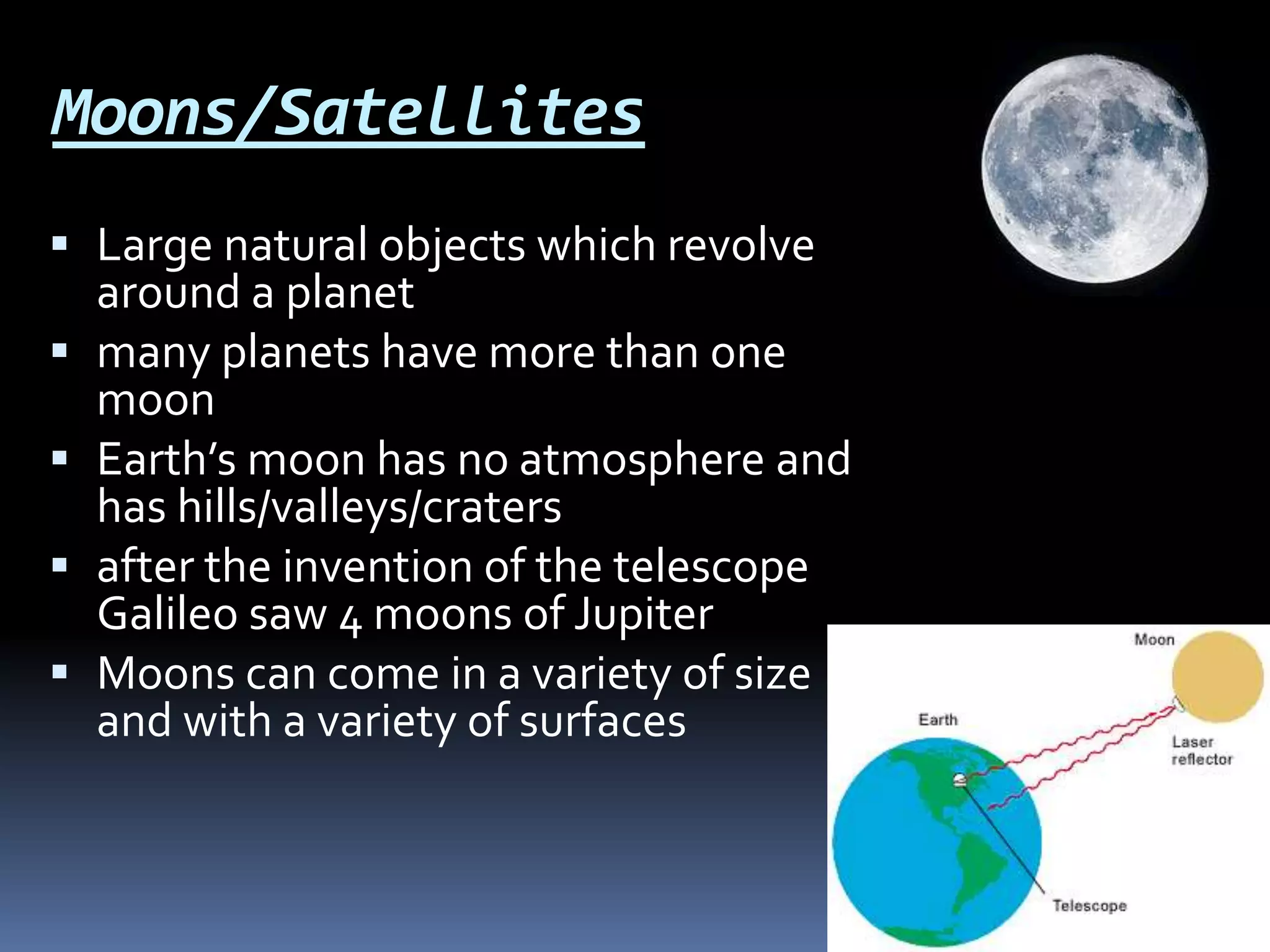
Moons/Satellites
 Large natural objects which revolve
around a planet
 many planets have more than one
moon
 Earth’s moon has no atmosphere and
has hills/valleys/craters
 after the invention of the telescope
Galileo saw 4 moons of Jupiter
 Moons can come in a variety of size
and with a variety of surfaces
Stars
 A STAR is a luminous ball of plasma that is held
together by gravity.
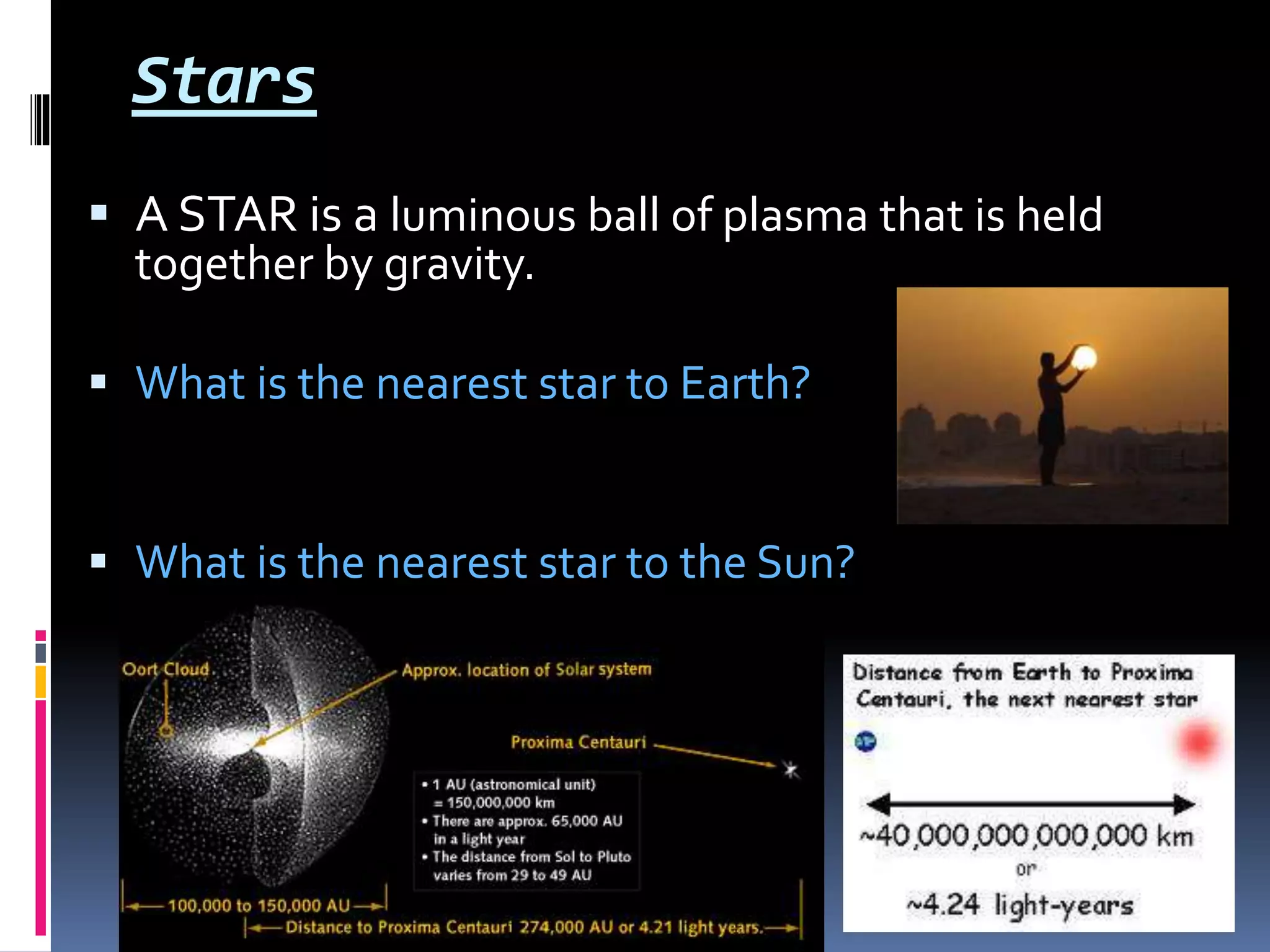
 What is the nearest star to Earth?
 What is the nearest star to the Sun?
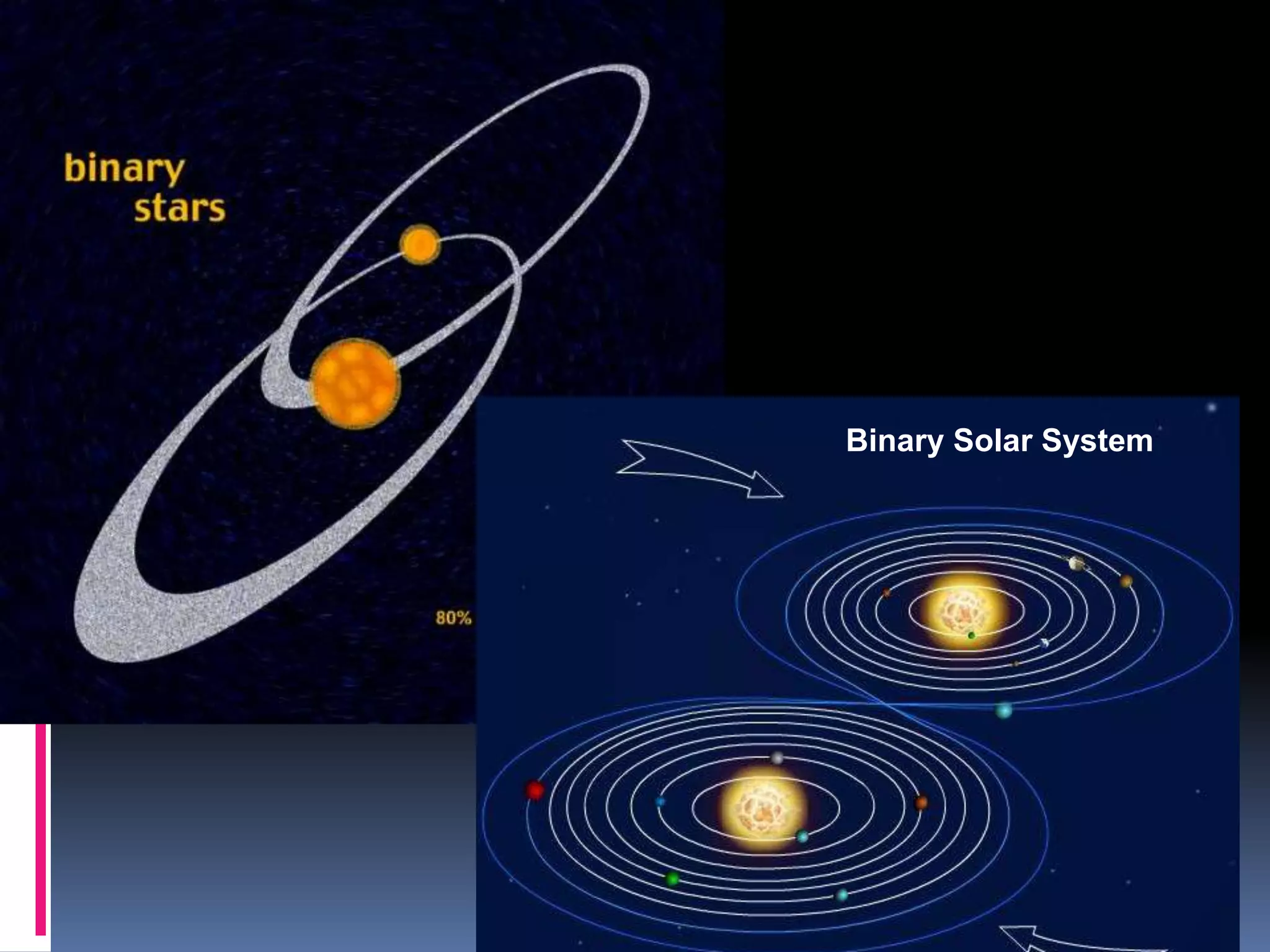
Binary Solar System
Stars
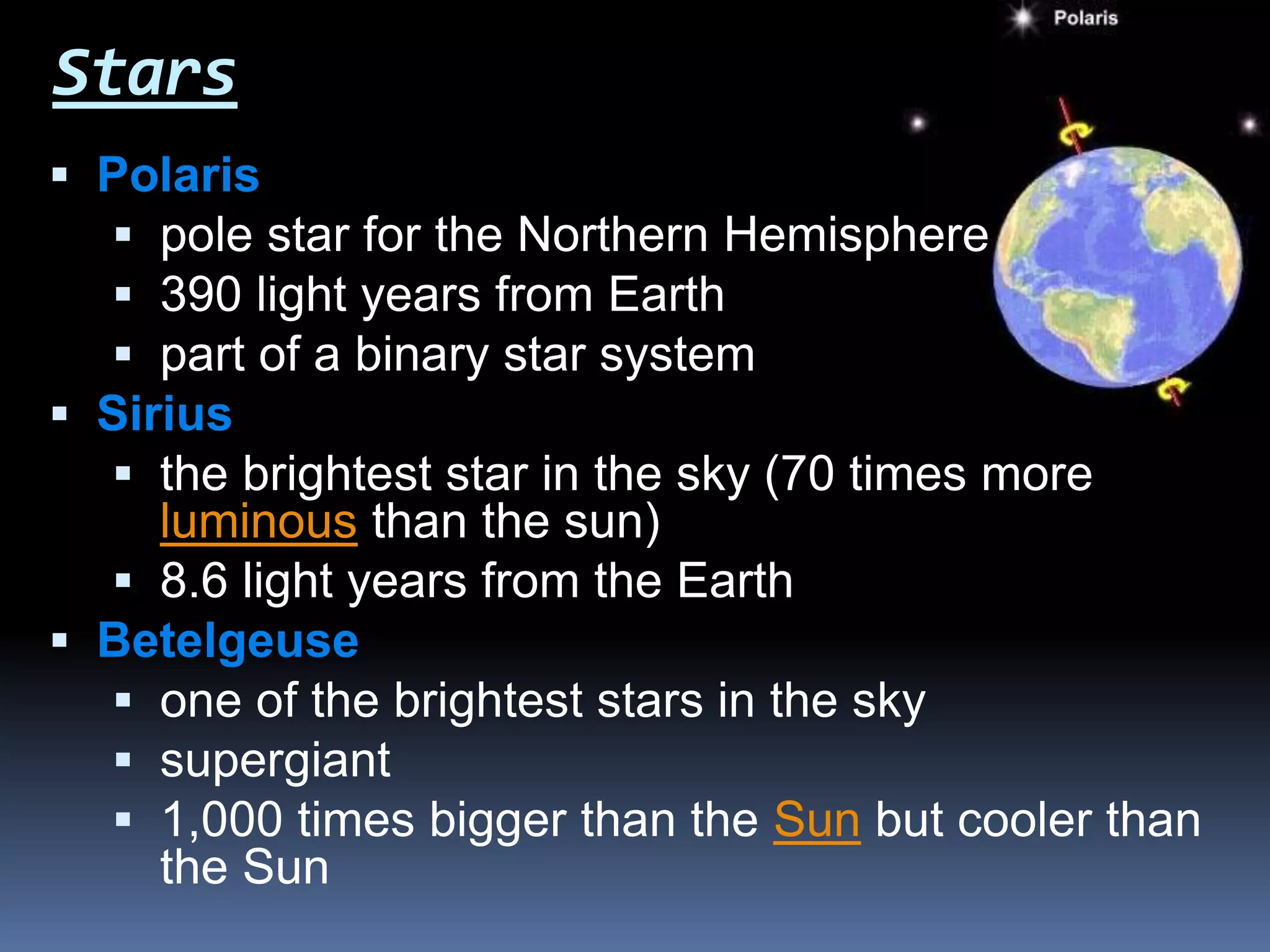
 Polaris
 pole star for the Northern Hemisphere
 390 light years from Earth
 part of a binary star system
 Sirius
 the brightest star in the sky (70 times more
luminous than the sun)
 8.6 light years from the Earth
 Betelgeuse
 one of the brightest stars in the sky
 supergiant
 1,000 times bigger than the Sun but cooler than
the Sun
Outside our Solar System
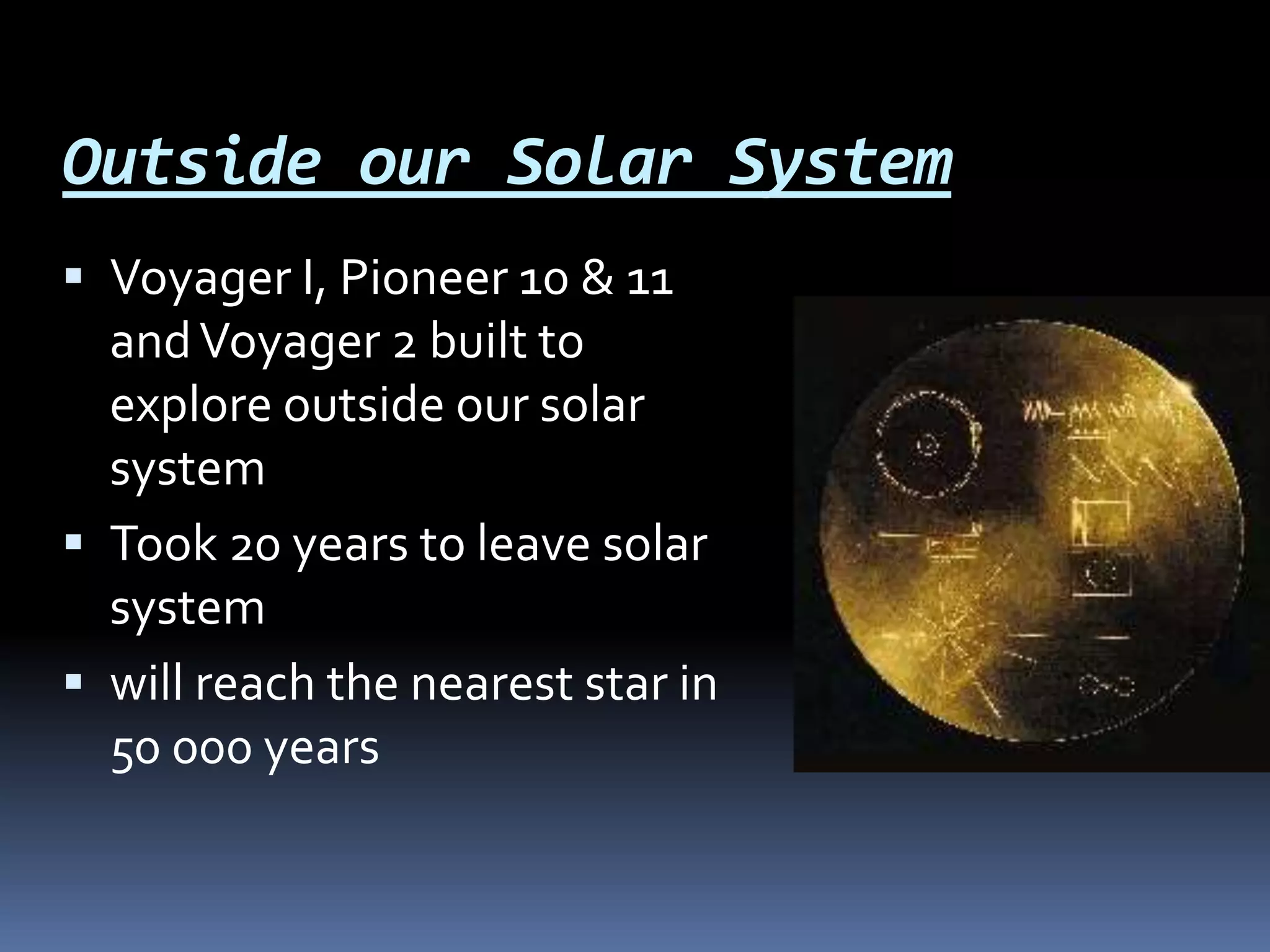
 Voyager I, Pioneer 10 & 11
andVoyager 2 built to
explore outside our solar
system
 Took 20 years to leave solar
system
 will reach the nearest star in
50 000 years

Grade 6 Space Unit - Celestial Objects in Space | Alex Noudelman

  • 1.
  • 2.
    Comets  chunks offrozen gases, rock & dust that orbit the sun  tail is formed when the comet comes close to the Sun Comet Shoemaker-Levy 9 hit Jupiter in 1994.
  • 3.
    Asteroids  Irregular shapedrocky objects  many orbit around the Sun and this is called an asteroid belt
  • 4.
    Meteors & Meteorites A meteoroid is a clump of rock or metal which is pulled towards Earth by gravity  In Earth’s atmosphere it heats up, begins to glow and becomes a meteor  If the object is not vaporized before it contacts the Earth’s surface it is called a meteorite meteoroid meteor meteor shower
  • 5.
    Asteroid: -Small; inactive -made of rock, carbon or metal - Orbits the sun Comet: - small; sometimes active object - made of dirt, gas and ice Meteoroid: - small particle from an asteroid or comet - orbits the sun Meteor: - A meteoroid that burns up in the Earth's atmosphere - a shooting star. Meteorite: - A meteoroid that survives its passage through the Earth's atmosphere and impacts the Earth's surface. What’s the difference?
  • 6.
    Moons/Satellites  Large naturalobjects which revolve around a planet  many planets have more than one moon  Earth’s moon has no atmosphere and has hills/valleys/craters  after the invention of the telescope Galileo saw 4 moons of Jupiter  Moons can come in a variety of size and with a variety of surfaces
  • 7.
    Stars  A STARis a luminous ball of plasma that is held together by gravity.  What is the nearest star to Earth?  What is the nearest star to the Sun?
  • 8.
  • 9.
    Stars  Polaris  polestar for the Northern Hemisphere  390 light years from Earth  part of a binary star system  Sirius  the brightest star in the sky (70 times more luminous than the sun)  8.6 light years from the Earth  Betelgeuse  one of the brightest stars in the sky  supergiant  1,000 times bigger than the Sun but cooler than the Sun
  • 10.
    Outside our SolarSystem  Voyager I, Pioneer 10 & 11 andVoyager 2 built to explore outside our solar system  Took 20 years to leave solar system  will reach the nearest star in 50 000 years

Editor's Notes

  • #3 Comet Tails – the white tail is sunlight reflecting off the particles that have been released; the blue tail is made of gases (ion or gas tail)
  • #4 Left over from the formation of the solar system