Ecosystem By: JOSHUA LANCE BRENT HONREJAS
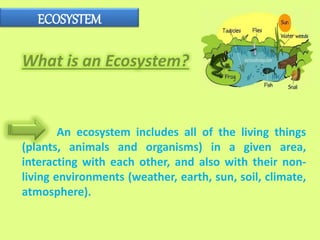
An ecosystem includes all of the living things
(plants, animals and organisms) in a given area,
interacting with each other, and also with their non-
living environments (weather, earth, sun, soil, climate,
atmosphere).
What is an Ecosystem?
ECOSYSTEM
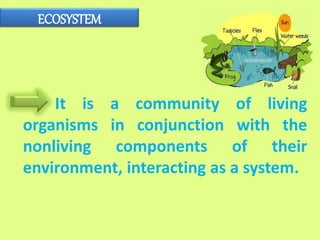
It is a community of living
organisms in conjunction with the
nonliving components of their
environment, interacting as a system.
ECOSYSTEM
ECOSYSTEM
Every factor in an ecosystem depends
on every other factor. A change in the
temperature of an ecosystem will often
affect what plants will grow there, for
instance. Animals that depend on plants
for food and shelter will have to adapt to the
changes, move to another ecosystem,
or perish.
ECOSYSTEM
Three major principles of ecosystem
ECOSYSTEM
ECOSYSTEM
ECOSYSTEM
ECOSYSTEM
ECOSYSTEM
ECOSYSTEM
ECOSYSTEM
ECOSYSTEM
ECOSYSTEM
The whole surface of Earth is a series of
connected ecosystems. Ecosystems are often
connected in a larger biome. Biomes are large
sections of land, sea, or atmosphere. Forests,
ponds, reefs, and tundra are all types of biomes.
They are organized very generally, based on the
types of plants and animals that live in them.
ECOSYSTEM
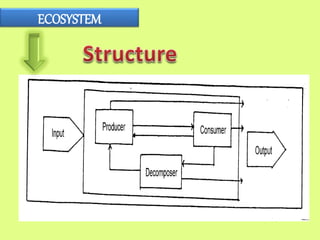
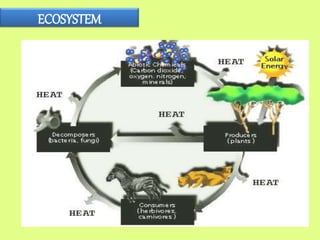
Components of an ecosystem
ECOSYSTEM
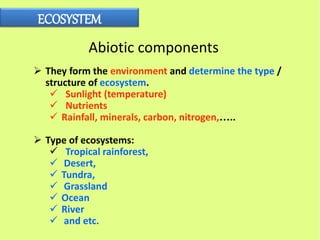
Abiotic components
 They form the environment and determine the type /
structure of ecosystem.
 Sunlight (temperature)
 Nutrients
 Rainfall, minerals, carbon, nitrogen,…..
 Type of ecosystems:
 Tropical rainforest,
 Desert,
 Tundra,
 Grassland
 Ocean
 River
 and etc.
ECOSYSTEM
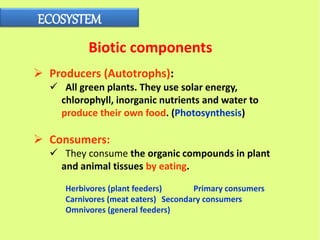
Biotic components
 Producers (Autotrophs):
 All green plants. They use solar energy,
chlorophyll, inorganic nutrients and water to
produce their own food. (Photosynthesis)
 Consumers:
 They consume the organic compounds in plant
and animal tissues by eating.
Herbivores (plant feeders) Primary consumers
Carnivores (meat eaters) Secondary consumers
Omnivores (general feeders)
ECOSYSTEM
Biotic components
 Decomposers
 They are tiny organisms includes bacteria
and fungi, which turn organic compounds
in dead plants and animals into inorganic
materials.
 They cause the continual recirculation of
chemicals within ecosystem (nutrient cycle)
ECOSYSTEM
Biotic Interactions
– relationships between 2 living organisms.
Predation
When an organism,the predator,
kills and eats another organism,
its prey.
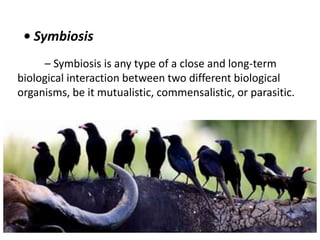
• Symbiosis
– Symbiosis is any type of a close and long-term
biological interaction between two different biological
organisms, be it mutualistic, commensalistic, or parasitic.
• Competition
The competitive
exclusion principle says
that 2 species cannot
coexist if they occupy
exactly the same niche.
ECOSYSTEM
Threats to Ecosystems
For thousands of years, people have
interacted with ecosystems. Many cultures
developed around nearby ecosystems. As
human populations have grown, however,
people have overtaken many ecosystems.
ECOSYSTEM
Biotic members of an ecosystem, together with
their abiotic factors depend on each other. This means
the absence of one member or one abiotic factor can
affect all parties of the ecosystem.
Threats to Ecosystems
ECOSYSTEM
Unfortunately, ecosystems have been disrupted,
and even destroyed by natural disasters such as fires,
floods, storms and volcanic eruptions. Human
activities have also contributed to the disturbance of
many ecosystems and biomes.
Threats to Ecosystems
ECOSYSTEM
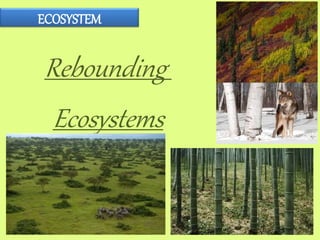
Rebounding
Ecosystems

ecosystem

  • 1.
    Ecosystem By: JOSHUALANCE BRENT HONREJAS
  • 2.
    An ecosystem includesall of the living things (plants, animals and organisms) in a given area, interacting with each other, and also with their non- living environments (weather, earth, sun, soil, climate, atmosphere). What is an Ecosystem? ECOSYSTEM
  • 3.
    It is acommunity of living organisms in conjunction with the nonliving components of their environment, interacting as a system. ECOSYSTEM
  • 4.
    ECOSYSTEM Every factor inan ecosystem depends on every other factor. A change in the temperature of an ecosystem will often affect what plants will grow there, for instance. Animals that depend on plants for food and shelter will have to adapt to the changes, move to another ecosystem, or perish.
  • 5.
  • 6.
  • 7.
  • 8.
  • 9.
  • 10.
  • 11.
  • 12.
  • 13.
  • 14.
    ECOSYSTEM The whole surfaceof Earth is a series of connected ecosystems. Ecosystems are often connected in a larger biome. Biomes are large sections of land, sea, or atmosphere. Forests, ponds, reefs, and tundra are all types of biomes. They are organized very generally, based on the types of plants and animals that live in them.
  • 15.
  • 16.
    ECOSYSTEM Abiotic components  Theyform the environment and determine the type / structure of ecosystem.  Sunlight (temperature)  Nutrients  Rainfall, minerals, carbon, nitrogen,…..  Type of ecosystems:  Tropical rainforest,  Desert,  Tundra,  Grassland  Ocean  River  and etc.
  • 17.
    ECOSYSTEM Biotic components  Producers(Autotrophs):  All green plants. They use solar energy, chlorophyll, inorganic nutrients and water to produce their own food. (Photosynthesis)  Consumers:  They consume the organic compounds in plant and animal tissues by eating. Herbivores (plant feeders) Primary consumers Carnivores (meat eaters) Secondary consumers Omnivores (general feeders)
  • 18.
    ECOSYSTEM Biotic components  Decomposers They are tiny organisms includes bacteria and fungi, which turn organic compounds in dead plants and animals into inorganic materials.  They cause the continual recirculation of chemicals within ecosystem (nutrient cycle)
  • 19.
    ECOSYSTEM Biotic Interactions – relationshipsbetween 2 living organisms. Predation When an organism,the predator, kills and eats another organism, its prey.
  • 20.
    • Symbiosis – Symbiosisis any type of a close and long-term biological interaction between two different biological organisms, be it mutualistic, commensalistic, or parasitic.
  • 21.
    • Competition The competitive exclusionprinciple says that 2 species cannot coexist if they occupy exactly the same niche.
  • 22.
    ECOSYSTEM Threats to Ecosystems Forthousands of years, people have interacted with ecosystems. Many cultures developed around nearby ecosystems. As human populations have grown, however, people have overtaken many ecosystems.
  • 23.
    ECOSYSTEM Biotic members ofan ecosystem, together with their abiotic factors depend on each other. This means the absence of one member or one abiotic factor can affect all parties of the ecosystem. Threats to Ecosystems
  • 24.
    ECOSYSTEM Unfortunately, ecosystems havebeen disrupted, and even destroyed by natural disasters such as fires, floods, storms and volcanic eruptions. Human activities have also contributed to the disturbance of many ecosystems and biomes. Threats to Ecosystems
  • 25.