Why do you think colour is an
important element of design?
Colour is the most
expressive element
of art.
It shares a powerful
connection with
emotion.
Colour is an element
of art that is derived
from reflected light.
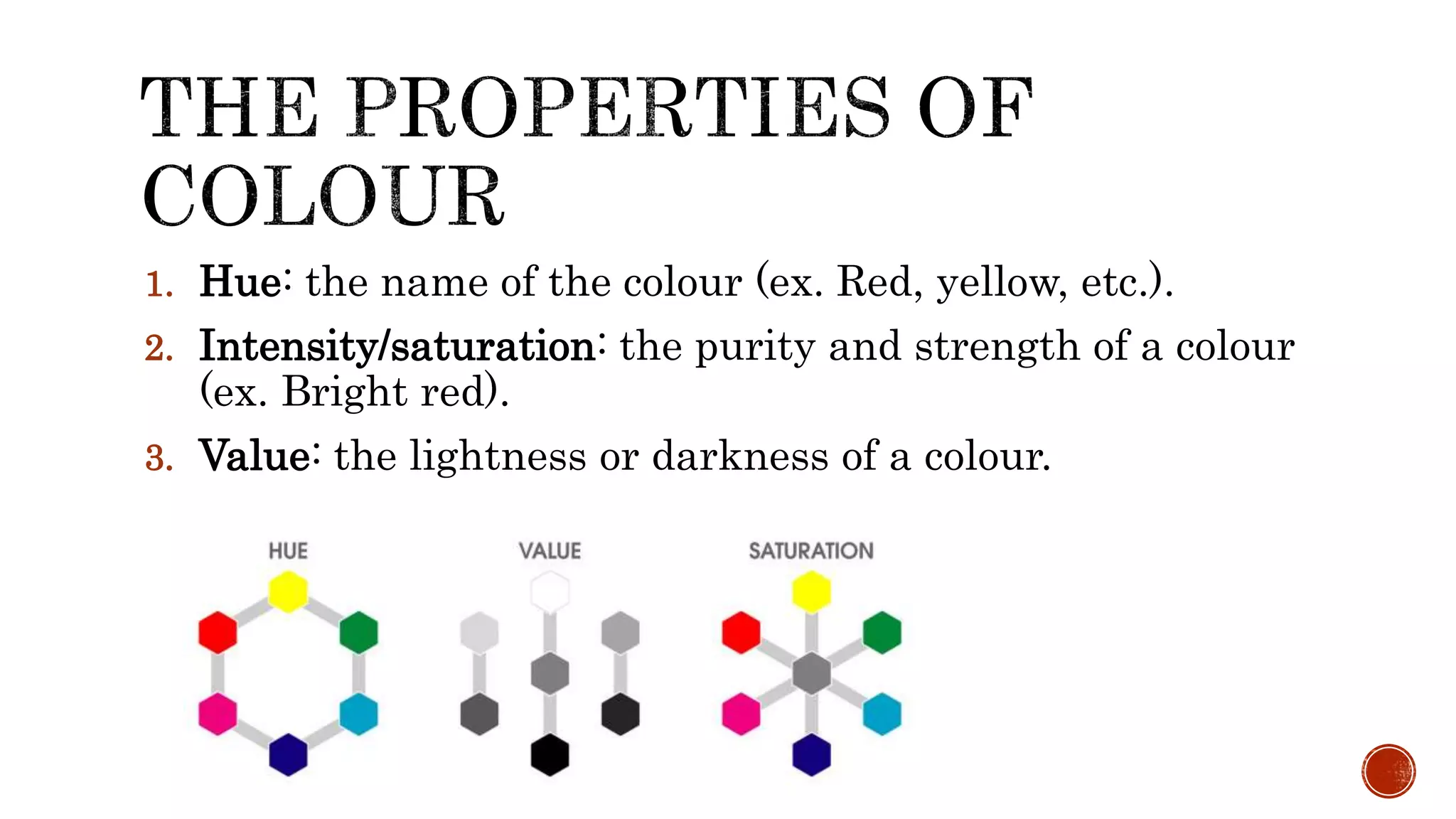
1. Hue: the name of the colour (ex. Red, yellow, etc.).
2. Intensity/saturation: the purity and strength of a colour
(ex. Bright red).
3. Value: the lightness or darkness of a colour.
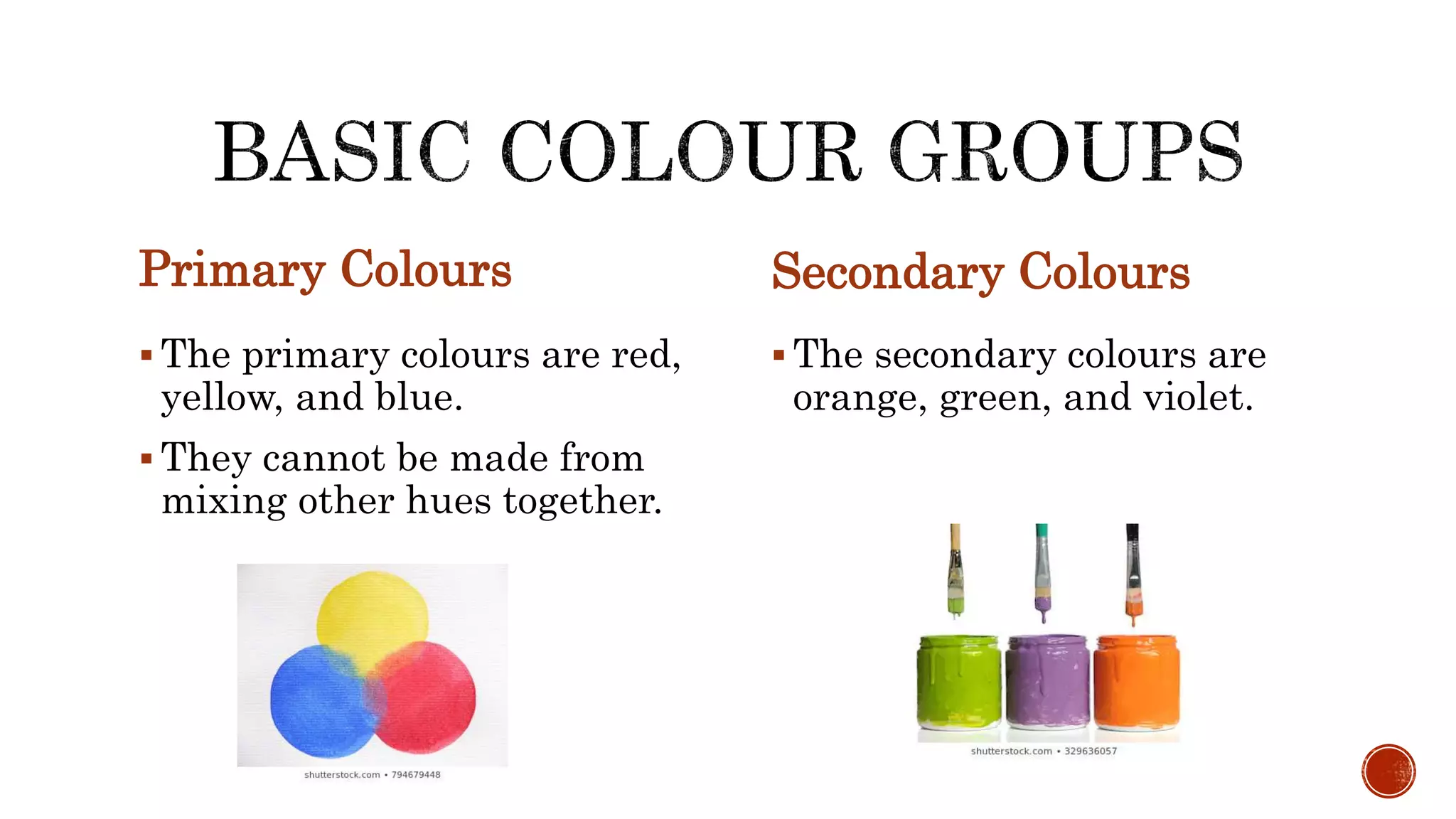
Primary Colours
 The primary colours are red,
yellow, and blue.
 They cannot be made from
mixing other hues together.
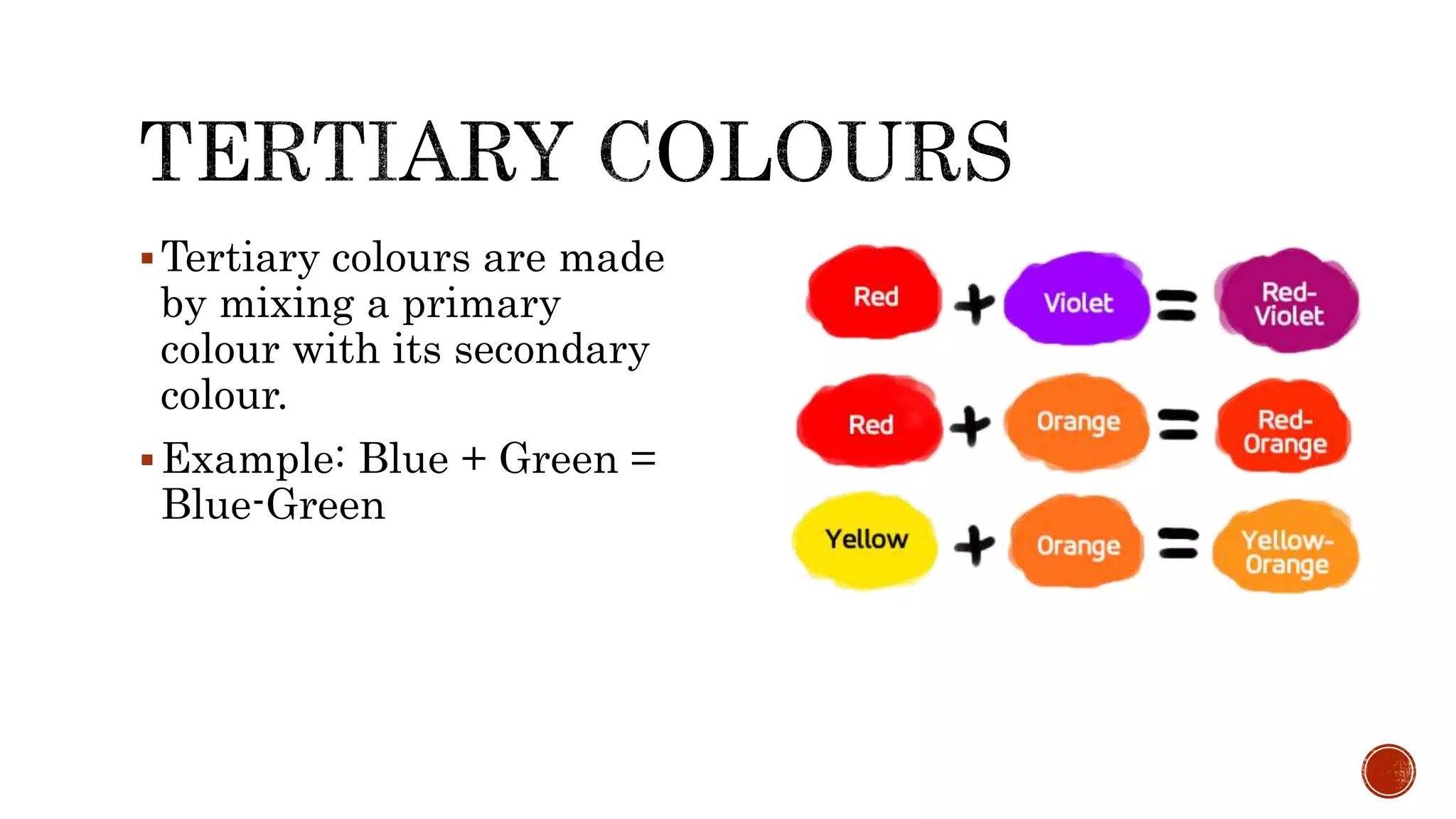
Secondary Colours
 The secondary colours are
orange, green, and violet.
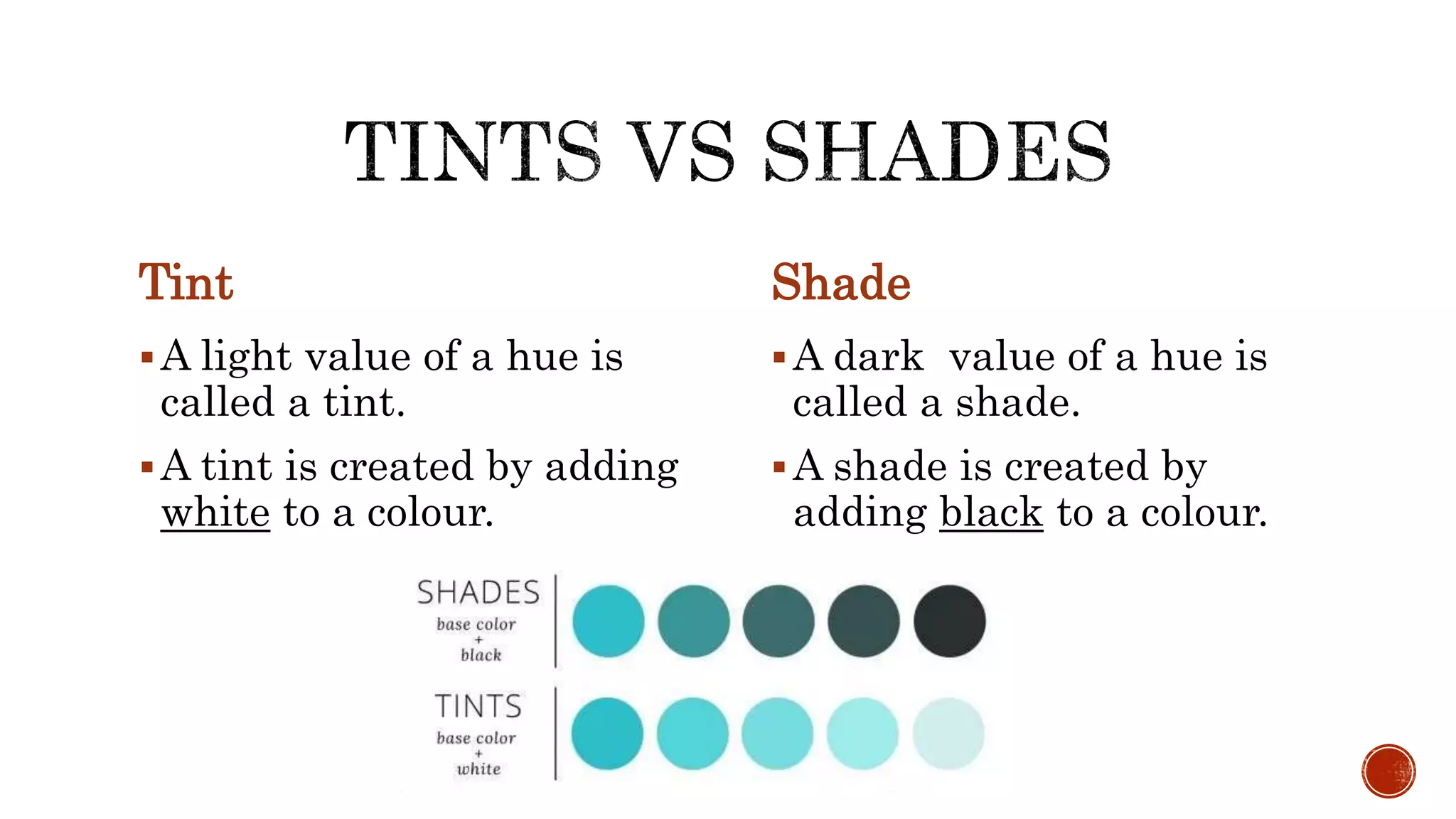
Tertiary colours are made
by mixing a primary
colour with its secondary
colour.
Example: Blue + Green =
Blue-Green
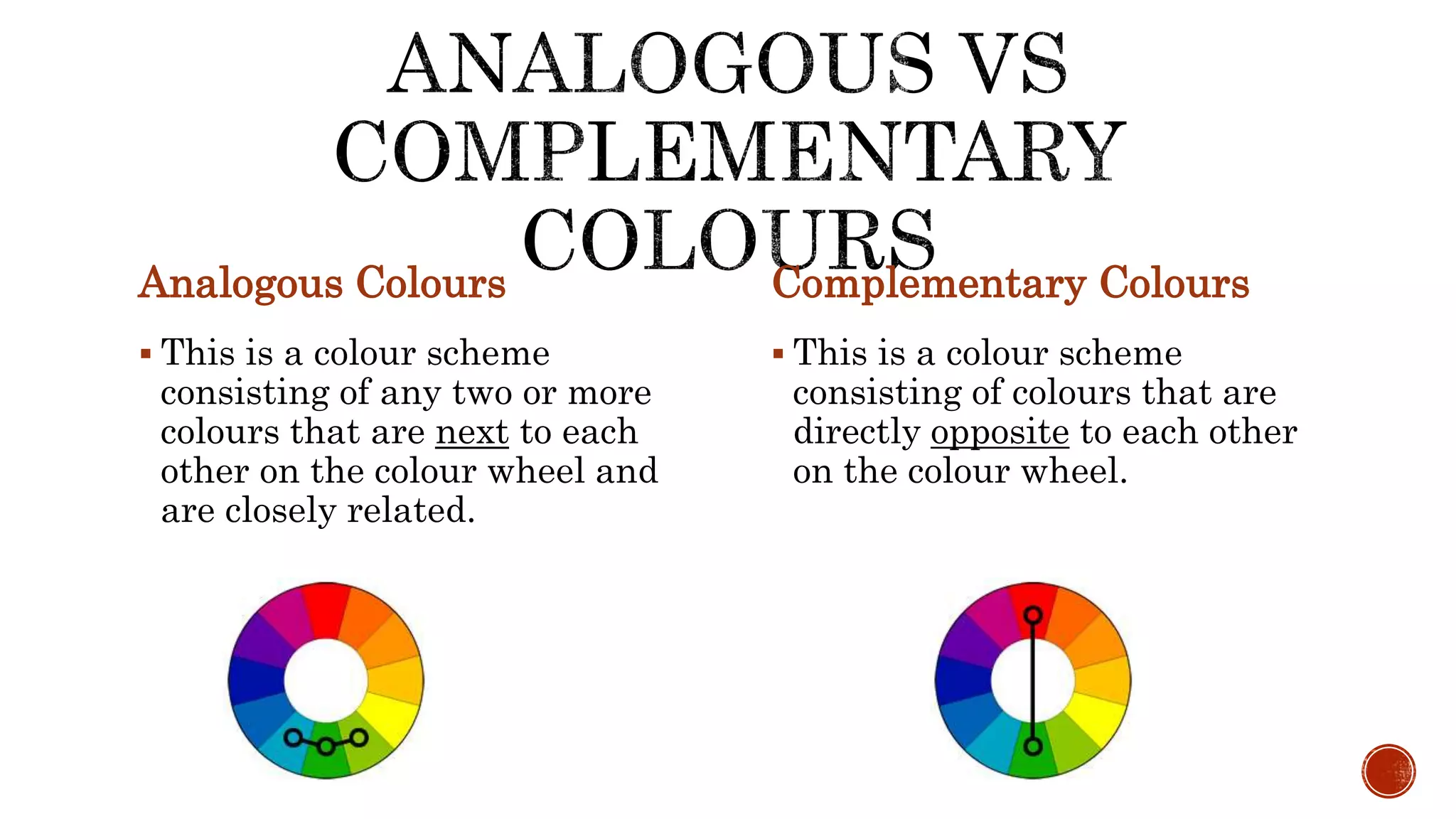
Tint
A light value of a hue is
called a tint.
A tint is created by adding
white to a colour.
Shade
A dark value of a hue is
called a shade.
A shade is created by
adding black to a colour.
Analogous Colours
 This is a colour scheme
consisting of any two or more
colours that are next to each
other on the colour wheel and
are closely related.
Complementary Colours
 This is a colour scheme
consisting of colours that are
directly opposite to each other
on the colour wheel.
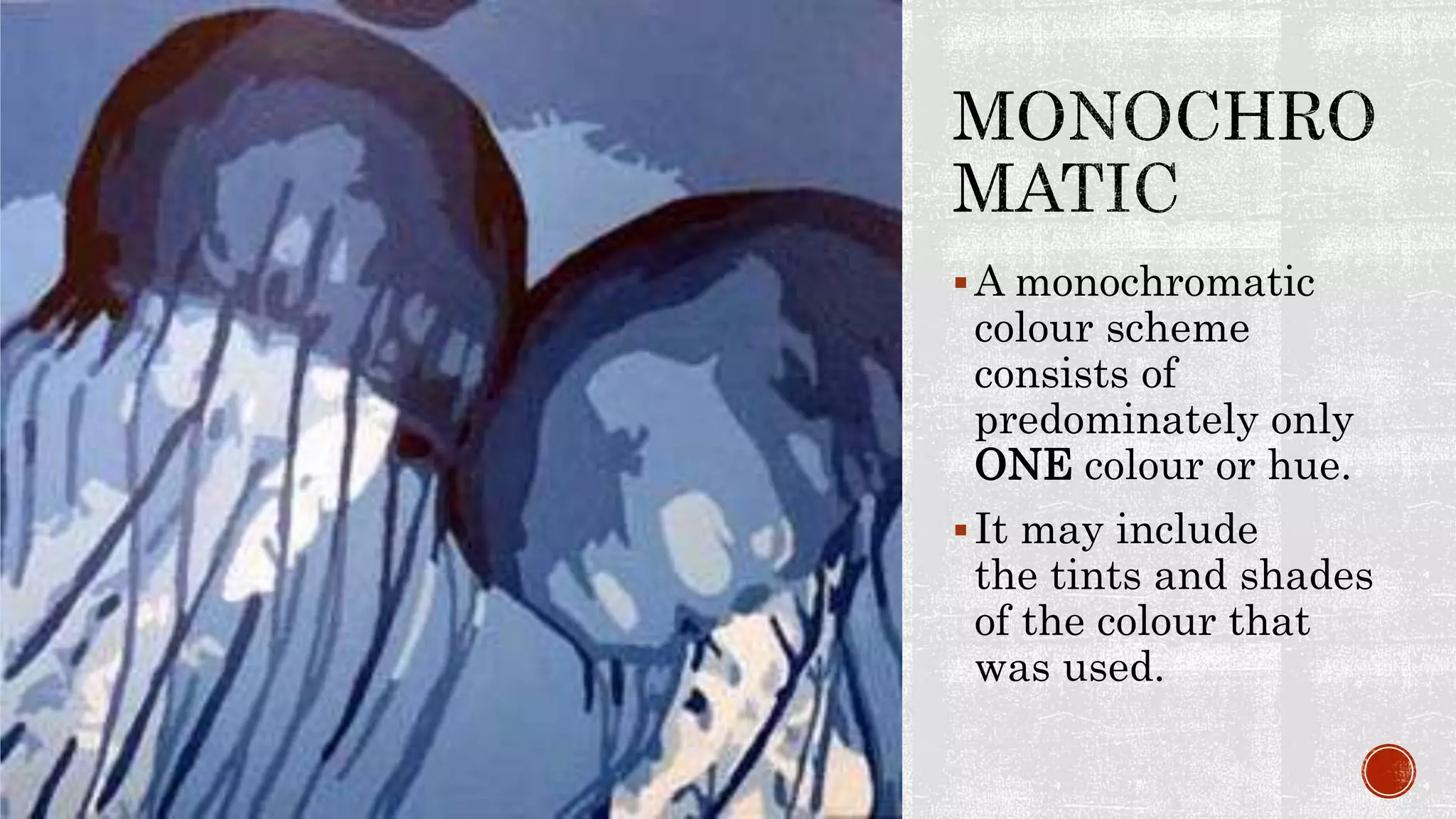
A monochromatic
colour scheme
consists of
predominately only
ONE colour or hue.
It may include
the tints and shades
of the colour that
was used.
With your elbow partner, discuss and answer the following
questions:
1. What colours come to mind when you think of the word
"warm"?
2. What colours come to mind when you think of the word
"cool"?
3. When might an artist would use warm colours?
4. When might an artist use cool colours?
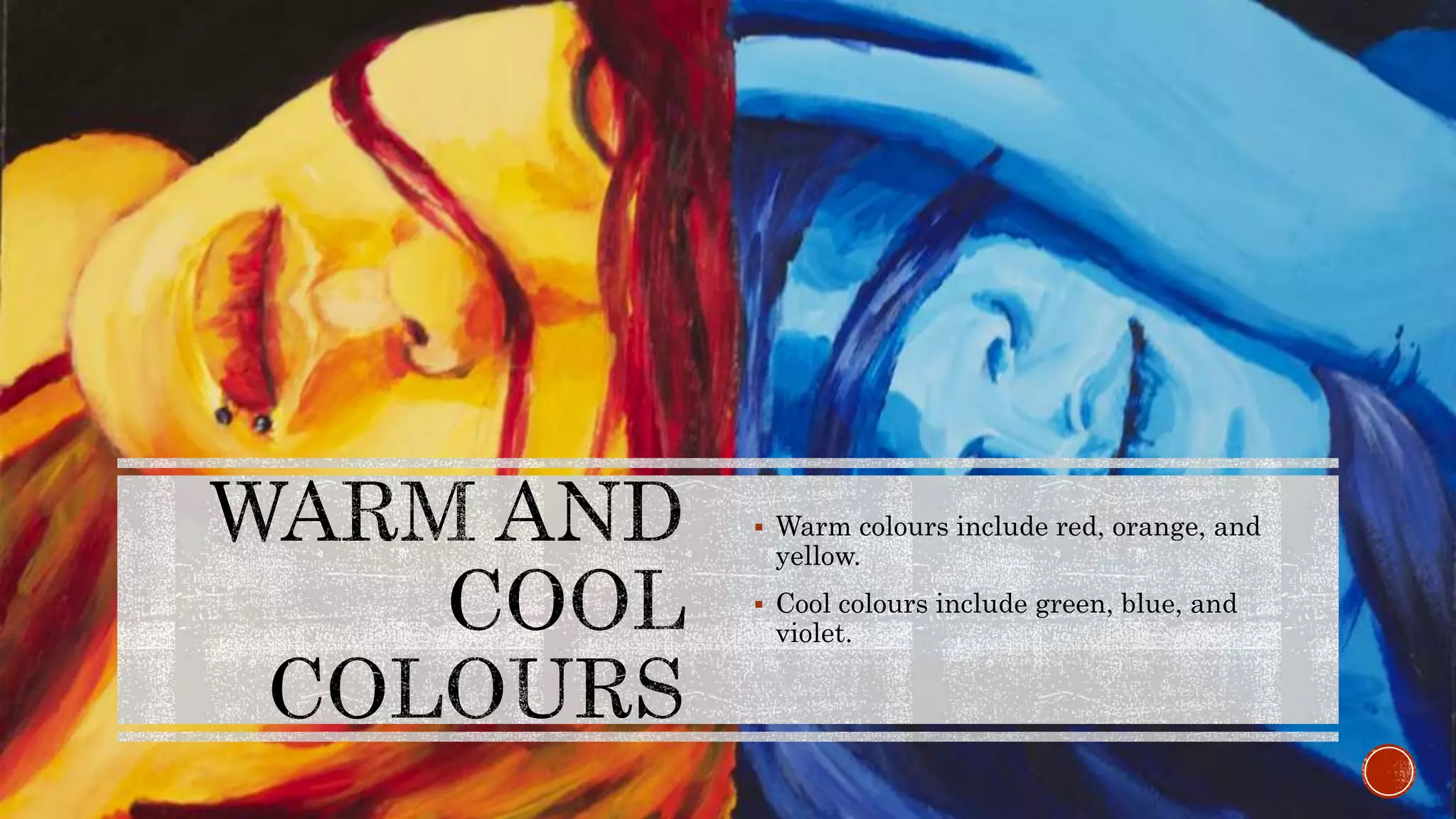
 Warm colours include red, orange, and
yellow.
 Cool colours include green, blue, and
violet.

Intro to Colour Theory

  • 2.
    Why do youthink colour is an important element of design?
  • 3.
    Colour is themost expressive element of art. It shares a powerful connection with emotion. Colour is an element of art that is derived from reflected light.
  • 4.
    1. Hue: thename of the colour (ex. Red, yellow, etc.). 2. Intensity/saturation: the purity and strength of a colour (ex. Bright red). 3. Value: the lightness or darkness of a colour.
  • 5.
    Primary Colours  Theprimary colours are red, yellow, and blue.  They cannot be made from mixing other hues together. Secondary Colours  The secondary colours are orange, green, and violet.
  • 6.
    Tertiary colours aremade by mixing a primary colour with its secondary colour. Example: Blue + Green = Blue-Green
  • 7.
    Tint A light valueof a hue is called a tint. A tint is created by adding white to a colour. Shade A dark value of a hue is called a shade. A shade is created by adding black to a colour.
  • 8.
    Analogous Colours  Thisis a colour scheme consisting of any two or more colours that are next to each other on the colour wheel and are closely related. Complementary Colours  This is a colour scheme consisting of colours that are directly opposite to each other on the colour wheel.
  • 9.
    A monochromatic colour scheme consistsof predominately only ONE colour or hue. It may include the tints and shades of the colour that was used.
  • 10.
    With your elbowpartner, discuss and answer the following questions: 1. What colours come to mind when you think of the word "warm"? 2. What colours come to mind when you think of the word "cool"? 3. When might an artist would use warm colours? 4. When might an artist use cool colours?
  • 11.
     Warm coloursinclude red, orange, and yellow.  Cool colours include green, blue, and violet.